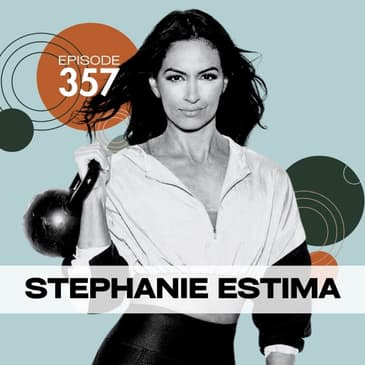
In this episode, Dr. Stephanie delves into the various factors that influenced her career path and discusses the critical ways in which nutritional and training needs evolve as we age. She explains why you might notice weight gain in your 40s despite maintaining the same routine and explores the importance of meal timings and how to maximize the benefits of exercise. Dr. Stephanie also addresses the role of intermittent fasting, the benefits of HIIT and cardio as we get older, and how to determine the right cardio intensity for your fitness level. Finally, she discusses whether hormone replacement therapy is suitable for all women. Tune in to learn more from Dr. Stephanie!
Barefoot Mini-Course - EARLY BIRD SALE:
Experiencing aches, pains, and niggles in your feet and ankles. Join the Barefoot Mini-Course as it contains all the tools you need to assess what could be contributing to your aches and pains and what exercises are best for you to address those limitations! With educational videos, a workbook, and lifetime access, you will begin to feel something different and work towards your movement goals faster! Learn more about how to better take care of your feet, what type of shoes best support your outdoors, and how to reduce the pain you’re currently dealing with. JOIN US HERE! Prices go up next week!
LMNT Discount Code:
Fuel every system within the body and the brain with LMNT! Keep yourself hydrated on a cellular level by replenishing the sodium, potassium, and magnesium that our body needs for basic cellular processes like nerve signalling, smooth muscle contractions, unnecessary fatigue, aches and pain, brain fog, and recovery! Get a free gift with every purchase and try some new flavours as you stay hydrated! Get Your Free Gift HERE!
What You Will Learn in This Interview with Dr. Stephaine Estima:
04:00 - What led Dr. Stephanie down her career path?
10:45 - Why do nutritional and training considerations change as we age?
13:15 - How do nutrition and training change?
21:50 - Why are you putting on pounds in your 40s with the same routine?
28:10 - Do meal timings matter and how do you maximise gains from exercise?
31:40 - Intermittent fasting? Should you do it?
38:38 - Can HIIT and cardio play a role as we continue to age?
42:40 - How do you calculate your cardio intensity?
44:15 - Should all women do hormone replacement therapy?
48:00 - Learn more with Dr. Stephanie!
To learn more about this episode and view full show notes, please visit the full website here: https://jen.health/podcast/357
Thank you so much for checking out this episode of The Optimal Body Podcast. If you haven’t done so already, please take a minute to subscribe and leave a quick rating and review of the show!
Hosted by Simplecast, an AdsWizz company. See pcm.adswizz.com for information about our collection and use of personal data for advertising.
[00:00:06] Welcome to The Optimal Body podcast. I'm Dr. Jen.
[00:00:08] And I'm Dr. Dom. And we are doctors of physical therapy, bringing you the body tips and physical
[00:00:13] therapy pearls of wisdom to help you begin to understand your body, relieve your pains
[00:00:17] and restrictions, and answer your questions. Along with expert guests, our goal of The
[00:00:21] Optimal Body podcast is really to help you discover what optimal means within your own body.
[00:00:27] Let's dive in. I am so excited to announce that we are officially launching the Barefoot mini course
[00:00:34] on sale. This is a huge sale and we're all moving through it together. And because you're a podcast
[00:00:38] listener, and I appreciate you being here so much and continuing to learn, you get an extra special
[00:00:44] discount if you use code optimal at checkout. You get an additional discount on top of what we're
[00:00:49] already discounting this course for. Plus, you get to move through with an incredible community
[00:00:54] to help hold you accountable to actually showing up and doing just 10 minutes a day. It's 10 minutes
[00:00:59] of assessment and exercise on your foot. So you really understand why you might be having pain,
[00:01:05] plantar fasciitis, bunion pain, whatever it may be. There's a reason and a root cause. And I'm
[00:01:10] going to help you discover exactly what your foot needs in this. Just listen to this. Someone said,
[00:01:15] this was the best decision ever. I'm walking without pain first thing in the morning. I'm
[00:01:20] paying attention to my feet, my alignment, my balance, and what my body is saying. I've learned
[00:01:24] so much and I'll continue to go back and make these movements part of my daily and weekly
[00:01:28] activities so my feet can be my best foundation. Oh, it just makes me want to cry reading things
[00:01:34] like this. It is possible within two weeks to learn what your foot needs and start to feel
[00:01:38] something different. So join us in the Barefoot mini course, especially if you haven't learned
[00:01:43] from this one yet. It is on discount use code optimal. We're going to have it linked up below,
[00:01:47] but it's just gen.health backslash barefoot. I cannot wait for this. I'm excited for you to
[00:01:54] to this next guest with Dr. Stephanie Estema, because especially if you are in the paramenopause
[00:01:59] or menopause stage of life, or you probably will be headed there. This one is for you. Now,
[00:02:05] Dr. Stephanie is the founder of Hello Betty, a community centered around female empowerment
[00:02:10] through health and business coaching. She's a doctor of chiropractic with a special interest
[00:02:14] in metabolism, body composition, functional neurology, and female physiology. She's the host
[00:02:19] of the Better podcast with Dr. Stephanie featuring world's leading voices in health and
[00:02:24] wellness. As a creator of her signature female centric ketogenic protocol, the Estina diet,
[00:02:29] Dr. Stephanie has helped over 10,000 women worldwide regulate hormones, reduce adiposity,
[00:02:35] and get off medications in the paramenopause stage and beyond. Following her success of the Estina
[00:02:41] diet, Dr. Stephanie released the bestselling book, The Betty Body, where she shares her proven
[00:02:46] strategies to help women jumpstart and calibrate their metabolism, revive their libidos, rest
[00:02:50] guilt free, and elevate their emotional well being. Dr. Stephanie's mission is to inspire women on a
[00:02:56] global scale to be able to be their best versions of themselves both physically and emotionally
[00:03:01] through the power of easily accessible female education. Because let's face it, women are not
[00:03:06] little men and should be taught about their unique physiology. And when she's not busy teaching inside
[00:03:12] Hello Betty or recording a podcast, she enjoys spending time with her partner Giovanni salsa
[00:03:16] dancing on Tuesdays and her three boys in Toronto, Canada. So let's dive into it. Dr.
[00:03:21] Stephanie, thank you so much for being here and spending time with us. We I mean, your knowledge
[00:03:27] and the way that you educate and what you're educating about I know is so impactful for so
[00:03:32] many here, especially those going whether you're postpartum or you're in paramenopause, post
[00:03:38] menopause. So lots of questions I know we're going to dive into today.
[00:03:42] Well, I'm so excited to be here with the both of you. Thank you for having me.
[00:03:46] And like Jen mentioned, our audience is so into these hormonal changes that are going on
[00:03:54] in the woman's body through all these different stages of their life. And so I kind of just want
[00:03:59] to get a gauge of have you always been interested in health and fitness and optimizing health or
[00:04:07] what kind of led you to this career path of being somebody who likes to educate in hormone health?
[00:04:14] Well, I think I've always been pretty crunchy. Sort of a crunchy person in so far as you know,
[00:04:20] the way that I paid for my schooling was I'm going to totally date myself here,
[00:04:23] but I was a step instructor and I was doing like the Thai bow and the high low and all of that.
[00:04:28] So I've always been into fitness, always been into moving and feeling good. And of course,
[00:04:34] you know, being doctors of physical therapists, you know, as well that,
[00:04:38] you know, movement is life, right? Our bodies are designed to move. So that always really felt
[00:04:43] very natural for me and it informed a lot of my passions in life. I was for a brief moment in
[00:04:49] time, I was also competing in fitness competitions and things like that. So I've always been into
[00:04:57] movement. Quick pause from the interview to talk about an aspect of our health that we could all
[00:05:03] focus on a little bit more. And that is hydration. Raise of hands quick, who thinks that they drink
[00:05:08] enough water or stay hydrated throughout the day? It's something that people just aren't thinking
[00:05:12] about. And that's why Jen and I use element electrolyte drink mixes to make sure that we're
[00:05:17] staying hydrated, not just by getting enough water in, but by making sure we get those
[00:05:21] electrolytes that we are losing naturally throughout the day. Element has the sodium,
[00:05:26] potassium, and magnesium that really help replenish those electrolytes and help keep us
[00:05:31] hydrated on that cellular level. These electrolytes are so important in so many of our
[00:05:36] bodies' cellular processes. It can help with brain fog, fatigue, that crash that you feel in the mid
[00:05:42] afternoon instead of going for an extra cup of coffee or caffeine. I put a little element in my
[00:05:46] water and it's inevitably the pick-me-up that I feel like I need. If you go down to the link in
[00:05:52] the show notes, it's just drinkelement.com backslash optimal. That's element spelled out
[00:05:57] like L-M-N-T dot com backslash optimal. You can get your element and get a free sample pack with
[00:06:04] every single order. I love this because it helps you taste all the flavors and know which one you
[00:06:09] like best for when you inevitably come back to order more. Check out the link down in the show
[00:06:13] notes and get your sample pack. All right, let's get back to the interview.
[00:06:17] In terms of female-specific or female-centric health pursuits, I personally struggled with
[00:06:27] my reproductive cycle. Specifically, I always had issues with my period. It was always the week
[00:06:32] before leading up to my period, the week of. It always really felt like it knocked me off my feet
[00:06:38] and I couldn't understand why that was, why I was always struggling every day. I was always
[00:06:45] always struggling every single month. I sort of felt like it was a curse in some ways.
[00:06:51] The long story short is I started in my private clinic running nutritional programs and really
[00:06:58] looking at the difference between the outcomes in my male patients and my female patients. We would
[00:07:04] run these programs to help our patients eat healthier, to prioritize protein, and prioritize
[00:07:10] fats and all of these different things, which at the time were very contrary to the narrative.
[00:07:15] It was like protein is going to give you kidney disease and fat is going to give you cholesterol,
[00:07:19] that kind of thing. We would see these amazing results in our men and the wives that had signed
[00:07:25] up for the same program were sort of hanging their heads in shame, not understanding why they
[00:07:31] weren't able to elicit the same outcome as their husbands. They're in the same environment, eating
[00:07:38] the same foods, that kind of thing. My practice was really the birth, if you will, of my interest in
[00:07:47] female-centric strategies and protocols. That led to a nutrition program that was designed for women.
[00:07:58] Then through that whole process, I also figured out my own hormonal issues, was able to
[00:08:02] heal my own hormonal issues through diet and exercise and by not overdoing it on the cardio
[00:08:09] and prioritizing lifting weights and recovery. Those things have become even more important to
[00:08:14] me now that I'm in my mid-40s than it ever was, even in my 20s and 30s. I think you can get away
[00:08:20] with a lot when you're younger. Certainly in schooling, I was sitting for 8, 10, 12, 16 hours
[00:08:27] a day studying and not really having the opportunity to move as much as I wanted and
[00:08:33] eat the way that I wanted. Of course, that wrecks havoc on your body. For women, we're exquisitely
[00:08:39] sensitive to our environment. All that to say, that's sort of my back-of-the-envelope story,
[00:08:44] if you will, in terms of my interest in hormones for women, why we are not sort of smaller men with
[00:08:51] the reproductive cycle. We are distinct entities and we have to look at ourselves differently. We
[00:08:57] have to treat ourselves differently in what can be sometimes a more male-dominated society.
[00:09:04] The last thing I'll say is the other thing that I started doing, I'm retired from physical practice
[00:09:09] now, but even just my protocols for women in the clinic, so women who are coming in
[00:09:14] with neck pain or back pain or an ankle injury or shoulder injury, whatever it was,
[00:09:17] I started also modifying the way that they were being cared for based on, if they were cycling
[00:09:22] women, where they were in their cycle because they were able to tolerate, and I'm sure we'll
[00:09:28] get into this, but more aggressive interventions, let's say, in the follicular phase of their
[00:09:33] cycle. They needed a little bit more love and a little bit more hand-holding,
[00:09:37] a little bit more gentle touch, if you will, in the luteal phase. It sort of followed me
[00:09:43] everywhere and yeah, that's my story in a nutshell.
[00:09:46] That's great, and I think you just mirrored every woman's bane of existence when they're like,
[00:09:52] yeah, my husband can stop eating something for a day and loses 15 pounds and I look at
[00:09:57] a cookie and I gain weight.
[00:09:58] You just look at the chocolate and you're like, damn it.
[00:10:00] And I gain fat.
[00:10:03] Let me take that chocolate off your hands, baby.
[00:10:06] Yeah, so it's always this, well, and I think what gets even more confusing is when you're
[00:10:14] looking at social media influencers who are doing what I eat in a day and okay, well,
[00:10:19] I'm gonna try to mirror exactly what they're eating and doing these HIIT workouts and doing
[00:10:25] more and more and restricting and restricting and it becomes really overwhelming to understand
[00:10:32] what you should be doing as a woman, especially as we age.
[00:10:36] And like you said, it even changed for you as you started going into 40.
[00:10:40] So why does it need to change?
[00:10:44] Why do we need to be a little bit more mindful of how we're eating and training
[00:10:49] as a woman and how does that start to change as we age?
[00:10:54] Well, it needs to change because we change.
[00:10:56] I mean, that's the simplest answer I think I can give.
[00:10:59] When we are moving into perimenopause, this is a time period of somewhere between, call it 10
[00:11:06] to 15 years for some women where they will start to see and notice changes in their body composition,
[00:11:11] changes in their mood, changes in their affect, changes in even their carbohydrate tolerance,
[00:11:16] their insulin sensitivity changes.
[00:11:18] So I think we have to change because our bodies are changing.
[00:11:21] And the way that I like to sort of frame this up is when we think about some of the biggest
[00:11:28] changes that are happening in the body as we are in perimenopause.
[00:11:31] So for most women, I'll say a lot of women will start to feel different in their 40s,
[00:11:36] but you can start seeing things as early as sort of mid to late 30s.
[00:11:40] And that might be changes in your cycle, changes in the length of the cycle,
[00:11:45] changes in the quality of the bleed.
[00:11:48] It can also be subtle things like really being more sensitive to noise, not wanting to socialize,
[00:11:55] feeling burning or itchiness in the skin.
[00:11:58] All of these things are indications that we're seeing sort of wilder fluctuations
[00:12:03] in our sex hormones, in particular estrogen or estradiol more appropriately.
[00:12:09] And the overall trend from call it mid to late 30s through to when menopause happens,
[00:12:16] which you know the average age of onset is about 51, is there's an overall decline in estradiol.
[00:12:23] But in that timeframe, your estrogen or your estradiol can be going up and down
[00:12:28] and around and sideways.
[00:12:30] So it can be very difficult for a woman even month to month for her to feel like she's
[00:12:35] like herself, for her to even track her cycle.
[00:12:38] So that's one of the biggest reasons that we have to change the way that we're approaching
[00:12:45] to your question, Jen, around nutrition, around exercise, because we are changing ourselves.
[00:12:49] And I think that a lot of women have, I would say humans, not just women.
[00:12:56] We are resistant to change.
[00:12:57] But I think once we lean into the fact that we are changing, we can now adapt the strategies
[00:13:02] to better suit the environment, the hormonal environment, the metabolic environment, the
[00:13:05] metabolic, you know, where you are in your life.
[00:13:08] You can change the constructs around your life to better suit that.
[00:13:13] So the second part of your question was how does it change?
[00:13:17] And I think for women in particular, there's two things that I really like to double down
[00:13:24] on and that is prioritizing muscle mass.
[00:13:27] And the second is injury prevention, which I know that both of you probably love and
[00:13:32] have talked about a lot on the show.
[00:13:35] So as we are seeing our anabolic hormones decline, estradiol, as I mentioned, testosterone
[00:13:41] is another one that we see declining as well.
[00:13:43] And the other sort of thing that's happening at the same time is we're becoming more insulin
[00:13:47] resistant.
[00:13:48] What we know from the research is that we become, the place that insulin resistance starts is
[00:13:53] usually in skeletal tissue.
[00:13:56] It's in skeletal muscle, right?
[00:13:57] So it's the muscles that we see become insulin resistant first before we see sort of that
[00:14:04] systemic problem.
[00:14:06] So there's been a lot of really interesting research.
[00:14:10] Dr. Gerald Shulman, if anybody wants to look him up and nerd out on some of his graphs,
[00:14:15] I find it fascinating.
[00:14:16] But he looked at even like men in, you know, a lot of our literature comes from university
[00:14:22] students because university students will sign up for things because they'll get extra
[00:14:26] credit or money and they're broke and they need stuff.
[00:14:28] And so his work is in university men and he was able to demonstrate in 20 year old otherwise
[00:14:36] healthy men.
[00:14:37] So they're not obese.
[00:14:38] They had normal, you know, BMI is that kind of thing that they could already see insulin
[00:14:43] resistance settling in, in this gletal tissue.
[00:14:46] So we can start whether you are a new mom as you are Jen or you are in, you know, 30s,
[00:14:52] 40s, 50s.
[00:14:53] You know, I always say like the best time to start prioritizing your muscle was 10 years
[00:14:57] ago and the second best time is today, right?
[00:15:00] So it doesn't really matter how old you are.
[00:15:01] You could be 65 listening to the show and you can start your weightlifting or your lean
[00:15:08] muscle or your muscle mass preservation journey today.
[00:15:12] So that is, you know, the big way that you can drive increased muscle mass is going to
[00:15:18] be at the gym with weight training.
[00:15:21] And the other way that you can drive increased muscle tissue is in the kitchen.
[00:15:25] So increasing your protein intake, muscle protein synthesis, which is a just a process
[00:15:33] that, you know, creates more muscle protein is stimulated chemically in the amount and
[00:15:39] it's directly stimulated by the amount of protein that we are consuming in the diet.
[00:15:44] So consuming more protein I think is very important.
[00:15:47] And then of course the mechanical stimulus of getting to the gym and essentially ripping
[00:15:52] apart the muscle fibers, right?
[00:15:53] That's what weightlifting is, is, you know, you're basically breaking down the muscle
[00:15:57] so that you have muscle cell turnover and you're actually creating stronger, better
[00:16:02] muscle tissue over time.
[00:16:04] So that's the first thing.
[00:16:06] And then the second thing, as I mentioned, is injury prevention.
[00:16:09] A lot of women and I'm actually curious to know if you hear this in your community as
[00:16:14] well.
[00:16:14] We see a lot of times in social media, people like lift heavy, lift heavy, lift heavy.
[00:16:18] And like I'm a proponent of lifting heavy as well.
[00:16:21] But I think a lot of women who have grown, who are now in perimenopause have sort of
[00:16:25] grown up in the 80s and 90s as I have where it was high carb, low fat and do all the
[00:16:30] step aerobics that you can and, you know, do all the, you know, be a cardio bunny.
[00:16:34] They don't have the form or the technique and they might be scared of what it means
[00:16:41] to go into the weight area of a gym, right?
[00:16:43] You see all these, you know, what can be really scary looking individuals who are making
[00:16:49] really big grunting noises, who have huge muscles.
[00:16:51] And I think that women are at least what I've heard from my community and I'd love,
[00:16:56] Jen, for you to tell me if you hear this as well, is a lot of women in their 40s or 50s
[00:17:00] I don't want to get injured.
[00:17:01] Like, I don't want to lift heavy stuff because I feel like I'm going to hurt myself.
[00:17:05] So I don't really know where to begin.
[00:17:07] And then a lot of us have that sort of all or nothing mentality where we're like, well,
[00:17:11] if we can't do it, we just might as well not do it.
[00:17:13] Right?
[00:17:13] So injury prevention is another big topic of concern for women.
[00:17:18] So I always like to talk about you can still, you can lift heavy if that's what you want
[00:17:23] and you have good technique and you've been in the gym for a while.
[00:17:26] But if you are someone who has never lifted heavy or you don't feel like you have good
[00:17:30] form, like strip, like leave the ego at the door, strip off the weights and you can actually
[00:17:36] have quite an intense workout with subjectively, you know, with lighter weights.
[00:17:42] Oh yeah.
[00:17:43] Um, but you are really dialing in your form and it's when you have that lighter weight
[00:17:48] is when you can drive that neuro mechanical integrity anyway, because you're not struggling
[00:17:53] to lift something that's really heavy.
[00:17:55] You're just focusing on creating like neural patterning, right?
[00:17:59] Like that motor patterning that you can remember when it is time for you to increase the weight.
[00:18:04] So tempoing your, like a couple of like actionable tips for your audiences, tempoing the movement.
[00:18:11] A lot of people, and the reason why some of those gym bros are so scary is because they
[00:18:16] are throwing the weights around.
[00:18:18] Don't do that.
[00:18:19] Like you move the weights, you know, like the weights don't move you.
[00:18:23] So really focusing on, you know, that concentric or when you're shortening the muscle, that's,
[00:18:28] you know, most people get that well, but where I think a lot of people miss out on is the
[00:18:32] eccentric, right?
[00:18:33] That elongation of the muscle.
[00:18:35] So really focusing on controlling that elongation piece.
[00:18:39] So if you think about a bicep curl, that's like a really easy example.
[00:18:42] You know, you curl the, the, the, you know, you're holding the dumbbell in your hand,
[00:18:45] let's say, and you are flexing at the elbow that you're shortening the bicep muscle.
[00:18:49] And then as you don't just drop the arm back down to starting, like really control that
[00:18:54] down.
[00:18:55] And of course, there's a lot of literature to support the idea that when you are focusing
[00:19:00] on the eccentric portion of the whatever movement you're doing, whether it's a pull up or a
[00:19:05] squat or a bicep curl or bench press or whatever it is, it's the eccentric where all the juice
[00:19:11] is.
[00:19:11] It's the eccentric that's going to drive a lot of that muscle hypertrophy, which is what
[00:19:14] a lot of women should be focusing on in their forties.
[00:19:17] So that was a really long answer.
[00:19:18] So I'll just stop right now because I'm sure you have something.
[00:19:22] I'm sure you want to jump in here.
[00:19:23] I mean, this is, this is perfect.
[00:19:25] This is truly what, you know, we get asked from the community.
[00:19:29] And I think what people are so afraid of in my community of what I hear is, you know,
[00:19:35] maybe they've had a previous injury.
[00:19:37] So they've been told, okay, avoid that, avoid that, avoid that.
[00:19:40] And so there becomes this fear avoidance of ever squatting, of ever deadlifting because
[00:19:44] I've had a previous injury rather than empowerment of how the body is adaptable and resilient.
[00:19:50] And if we start with lighter weights and understanding our body awareness and understanding this
[00:19:55] eccentric control, there's so much more that we can do to build up our body.
[00:19:59] So I love that you're talking about this because this is what I feel like I'm hammering into
[00:20:05] my own head and into a wall sometimes trying to get people to understand this concept.
[00:20:10] So I love so much that you're bringing this around.
[00:20:15] Well, and I think there's so much that we're battling, like you mentioned from
[00:20:19] older styles of workouts where people would do, you know, the step classes,
[00:20:23] like you mentioned, you being an instructor or, you know, just the cardio machines.
[00:20:27] It literally was a cardio machine that all, you know, everyone was getting into where,
[00:20:34] and then even the stigma around pregnancy and childbirth of, oh, don't lift weights.
[00:20:41] And then after, you know, the challenges that we have with people who,
[00:20:46] you know, women who have birthed a child and getting back to movement and how we have,
[00:20:50] you know, desperately underserved that population in their recovery and getting back to exercise.
[00:20:55] I feel like there's many challenges that women have faced over the past decades in
[00:21:01] feeling confident lifting heavy and feeling confident getting back into
[00:21:05] the gym. And just to, you know, speak to Jen's and what Jen's audience says, she does a lot
[00:21:12] of the things that you just mentioned, like, oh, not used to lifting heavy, slow down,
[00:21:16] go tempo, use a very lightweight. I promise you, you will feel it if you're not used to doing these
[00:21:21] movements. And, you know, that's the feedback that we get. It helps people with that motor
[00:21:27] programming, that neural programming that you're saying, and it helps them just feel confident
[00:21:32] going up and down stairs again without having that knee pain or that hip pain.
[00:21:38] And you may have actually answered the next question I was going to ask, because I feel
[00:21:43] like we hear so many people ask about, or just say, comment on, I haven't changed anything.
[00:21:50] I've, you know, eaten this way my whole life, or I've eaten consistently and done these workouts,
[00:21:57] and that might even include strength training, but now I'm having so much trouble losing weight,
[00:22:02] or I'm gaining that extra five to 10 pounds. Particularly in perimenopause.
[00:22:06] Yeah. When it gets closer to perimenopause, and I can't seem to lose it. Like, why is that? And
[00:22:13] I feel like you just answered a bit of that with the, you know, issues with insulin sensitivity
[00:22:19] going down and, you know, reprioritizing protein and strength training. So what would you say to
[00:22:25] the person who says, like, I do some strength training, but now I'm just having trouble getting
[00:22:30] the same results? Yeah. Oh gosh, so much good stuff here. Okay. So first, I will, I want to,
[00:22:37] let's go a little layer deeper with the woman who say, oh, I'm doing everything I was doing when I
[00:22:43] was 25, and now I have this, you know, extra role, you know, I have extra weight through my stomach,
[00:22:48] or I can't seem to lose that last, you know, I keep gaining and losing the same 10, 15 pounds.
[00:22:53] And part of the reason, again, coming back to what we were talking about before,
[00:22:57] is that our bodies are changing, right? What we see very clearly in perimenopause, and particularly
[00:23:04] in menopause, is we see this change in body fat distribution. So for a woman, we know that,
[00:23:11] you know, under the influence of estrogen, again, estradiol being the main one in a cycling woman,
[00:23:17] that's going to be developing her, you know, secondary sex characteristics, right? So we have,
[00:23:21] breast development and hip development, and it also directs where the fat is deposited, right?
[00:23:26] So we will deposit typically fat in the hips, in the bum, the thighs, lower tummy area, that sort of
[00:23:35] region. And that's, you know, the ones that we always want to get rid of, right? That's,
[00:23:38] we're always trying to diet that away. That's what we would call subcutaneous fat, right?
[00:23:43] So it's just underneath the skin. While it jiggles, and we have a general disdain for it,
[00:23:49] it's generally harmless, you know, up to a point, right? As long as you have, you know,
[00:23:53] healthy BMI and your fat-free mass index is good and all of that. When we start our journey in
[00:23:59] perimenopause, and then through to menopause and beyond, because of that declining level,
[00:24:04] those declining levels of estradiol, we now begin to change the way that we deposit fat. So instead
[00:24:12] of depositing fat in sort of the lower half of the body, if you will, a lot of women will say,
[00:24:19] I'm starting, I'm just getting this tummy, like I just have this, you know, and I don't like these
[00:24:24] words, but I'll just use it because I know that it's used a lot. It's like this muffin top kind
[00:24:29] of, you know, the spare tire kind of presentation. And what's happening there is that we are seeing a
[00:24:36] switch from this subcutaneous or under the skin fat to fat that's being deposited in the viscera,
[00:24:43] or on top of our organs. And that's the stuff that's going to kill you. Like that's the stuff
[00:24:47] that we really want to be thinking about. That's the stuff we really want to be avoiding, right?
[00:24:52] So the protein as we talked about is going to keep you fuller for longer, which is always great. We
[00:24:57] never want to have hungry, you know, people who are hungrier or opening their, you know, their
[00:25:00] faces in the pantry every 45 minutes. But we can, the other thing that we can do is we want to be
[00:25:06] thinking about our calories, but more importantly, the macronutrient composition of the calories.
[00:25:11] So what we know from, you know, the literature on visceral fat accumulation, which is just like fat,
[00:25:18] let's say on top of the liver or on top of, you know, different organs is that we can,
[00:25:23] and I'll say this gently, and I want to double underline and bold the word gently, if I can,
[00:25:30] we want to gently reduce some of our carbohydrate intake. Now that is going to,
[00:25:37] what that means for each individual is going to vary wildly based on their activity,
[00:25:44] how much they're lifting in the gym, how active they are. But if you are seeing, you know,
[00:25:49] you've been doing the same thing that you've been doing when you were 25 or 35, let's say,
[00:25:53] and now you're 45 and you have more weight through the, you know, through the midsection than you
[00:25:58] ever did before, what we can think about is upping your protein. We can think about some of the,
[00:26:04] some of the strategies that we've been talking about in the gym. So you've probably, if you've
[00:26:08] been staying at the same weight, if you're also in the gym and lifting the same way that you have
[00:26:13] been when you were, you know, 10 years ago, it's time for a change. So you can, you know,
[00:26:17] you can either progress with more weight to make it more intense, or if you're not used to that,
[00:26:22] then you can, you can have the tempo manipulation that Jen, you mentioned that you talk about a lot,
[00:26:28] I love. And we can think about even like, how about full range of motion ladies? Like, can we,
[00:26:34] can we think about doing a full range squat or a full range? You know, if you can't do a pull-up,
[00:26:41] maybe you can do a scapular, like dead hangs with some scapular retractions. Like, can we
[00:26:45] fully stretch the muscle? Because again, when you're controlling the eccentric or the elongation
[00:26:51] portion of any movement and you have it, you are training the muscle essentially in the weakest,
[00:26:58] in its weakest position. That is how you are going to gain that lean muscle mass. And of course,
[00:27:04] we know that the more lean muscle mass you have, the more better metabolic, metabolically flexible
[00:27:10] you're going to be. And that's going to also eat up some of that visceral fat. So there has to be
[00:27:14] sort of a combination, there has to be sort of a multi-pronged approach. So it's like in the
[00:27:18] kitchen where we are gently maybe reducing some of our carbohydrates and it can just be like the
[00:27:24] process, it can just be like the sauces, you know, and it could just be like the chips or the,
[00:27:28] you know, the tortillas or whatever that you have in the pantry. Like just reducing some of those
[00:27:32] snacks in your diet, bumping up your protein and then changing the way that you are stimulating
[00:27:39] the muscle, changing that mechanical stimulus again in the gym. And you'd be surprised,
[00:27:43] like sometimes just dropping the dressing, like you can see like incredible, incredible changes
[00:27:49] just by sort of dropping the dressing, having an extra cup of water at, you know, with your meals,
[00:27:54] that kind of thing where we are starting to see that change or we can start to see ourselves
[00:27:59] optimizing or maybe a better word is like maximizing that fat distribution in the way
[00:28:04] that we want to. That's huge. Now, is there, I get this question a lot as well, is there a specific
[00:28:12] time that I'm supposed to be eating prior to a workout and after a workout? And what do the,
[00:28:17] what are those meals really supposed to look like to help maximize the benefits that I'm trying to
[00:28:21] get out of the exercise? Yeah, this is it that I get this question a lot as well. It's a really
[00:28:27] good question too. I think, I think it depends on your level of fitness. So if you are someone who
[00:28:32] has been training for a long time, I think that the, you know, the timing of your meals, let's
[00:28:41] say in the peri-exercise area or peri-exercise time matters less than your total protein
[00:28:50] consumption, let's say, or your total caloric consumption over a 24-hour period. I think if
[00:28:56] you are new to weight training, I think if you are, and when I say new, like maybe less than six months
[00:29:02] of regular training, that peri-exercise window is a bit more important. So we do want to be thinking
[00:29:08] about if you can, fueling before, that's my strong preference. And that's something I've actually
[00:29:15] changed my mind on over, I used to train fasted and all of that when, you know, fasting and not
[00:29:22] eating until 12 was sort of in vogue. I was following that for a little bit and I've changed
[00:29:26] my mind on it. But if you can fuel beforehand, it doesn't actually make any change. It doesn't
[00:29:32] make any difference on your body composition, but it will change your performance in the gym.
[00:29:37] So you'll actually be able to push harder, you'll have more substrate to fuel your workout.
[00:29:43] But if you like to do it fasted, you know, have at it, you can still do that as well. But
[00:29:47] people who are newbies in the gym, if you can eat prior, great. If you're working out at like
[00:29:52] 4am or something and, you know, eating something feels like a brick in your stomach, just make sure
[00:29:57] that you have something after you get home or have a protein shake or something like that after
[00:30:01] the workout. It is more important for someone who is more new to weight training to really be timing
[00:30:06] her protein intake to help with the remodeling and the carbohydrates. I always like to have protein
[00:30:11] and carbs if you can after a training session because you've used up some glycogen, you've used
[00:30:17] up some of that stored glucose. You've, you know, essentially, if you've done the workout properly,
[00:30:22] you've broken down some, you know, muscle cells. So we want to be giving our bodies a substrate,
[00:30:27] the amino acids and the glucose to be able to remodel, to be able to repair and to restore those
[00:30:33] glycogen stores. So the answer is it depends. It's a long way of saying it depends, but it really,
[00:30:40] it depends on your level of fitness. If you're someone who's been doing it like,
[00:30:44] you know, for both of you, you've been working out for years, it doesn't matter as much anymore
[00:30:49] because the rate of turnover, let's say in yourselves is much slower. It's actually,
[00:30:52] you know, the better you get at fitness, you know, the harder it is to make, you know, change,
[00:30:56] right? Like the first six months to a year of somebody weight training, we have this sort of,
[00:31:01] and you've probably heard of the term like newbie gains, right? So like the newbies,
[00:31:04] they get all the gains. They get like 10%, 20%, you know, stronger in a year, which is,
[00:31:09] you know, if I get 4%, 5% stronger in a year, I've made really great, like excellent progress.
[00:31:16] Yeah. I feel like all the most, all the best, but most frustrating answers when it comes to
[00:31:21] general health questions is it depends, but I feel like you gave enough specific examples to give
[00:31:28] people an idea of what they might want to try or at least start experimenting with a little bit.
[00:31:35] You briefly brought up fasting and how this is something that you have kind of
[00:31:39] changed your mind. And I know that intermittent fasting is something talked about a lot just
[00:31:44] in the nutrition space in general. And there's a lot more conversation now circling around
[00:31:49] is intermittent fasting something that is healthy, good, beneficial for women to do?
[00:31:56] So what have you changed your mind about? And is intermittent fasting good at certain times,
[00:32:03] bad at certain times, or depending on where you're at in perimenopause, menopausal or
[00:32:09] premenopausal? Yeah, I think this is a great question. And I still get asked this a lot,
[00:32:15] because I've said to my community, I've changed my opinion on fasting. Like,
[00:32:19] do you mean that you don't fast anymore, doc? And that's not what I mean. When I first started
[00:32:24] fasting, when we look at sort of time restricted feeding, and you look at some of the work of,
[00:32:31] let's say, Dr. Sachin Panda, out of the Salk Institute, he looks a lot at circadian biology.
[00:32:39] He would talk about this idea of restricting your window of eating. And somehow that was translated
[00:32:46] to the public as don't eat until noon. That was sort of the takeaway. So you can still,
[00:32:55] and that sort of goes against our circadian, our natural circadian rhythm. We are much more
[00:33:00] insulin sensitive in the morning, and much more insulin insensitive as the day goes on.
[00:33:08] So the same, you know, if you equate for calories and macro composition, the same meal that you eat,
[00:33:16] let's say at eight in the morning, is going to be tolerated different and have a different,
[00:33:21] we'll say metabolic consequence than the meal that you eat at 8pm, right? So when you eat is
[00:33:29] very important. So where I've changed my mind, I used to be the, you know, I'm just gonna not,
[00:33:35] I would work out in the morning as I often do. And then I would not eat until noon, like come hell
[00:33:42] or high water. Oh, actually, I'm sorry if I'm sorry if I swore. I don't know if we're allowed
[00:33:45] to do that. Like it didn't matter. It didn't matter. I was, I could be starving, I could be
[00:33:53] hangry and I was not going to eat until 12. And for women, I would say that this is a terrible idea.
[00:34:02] And I did this for years. So I'm calling myself out here. It's a terrible idea because we are
[00:34:07] always in terms of our reproductive cycle, we are always scanning the environment for safety. I mean,
[00:34:13] we do this at every level. We do this in our psychology, right? We want to feel safe with
[00:34:17] our partners. We also want to feel like there's an abundant supply of food so that we can go
[00:34:22] through the normal reproductive function of creating an endometrial lining that can,
[00:34:28] that is getting ready to receive a fertilized egg, right? So irrespective of whether you want
[00:34:34] a child or not, that's what your body's going to do every month. Your body is going to prepare
[00:34:38] this five-star hotel, you know, this endometrial lining to receive a fertilized egg. And if you are
[00:34:45] restricting excessively where you are not eating in the most insulin sensitive time of your day,
[00:34:54] your ovaries, I mean, if we just want to talk about concentration of mitochondria,
[00:35:01] just as an example, your listeners may, this is like just for the nerds that are listening,
[00:35:06] you know, in the ovaries we have something called the oocyte, which is just like,
[00:35:11] you know, the cells of the ovaries, which is a fancy word for that. There's a hundred thousand
[00:35:15] mitochondria per oocyte. If you contrast that with something like a hepatocyte, which is a cell
[00:35:22] of the liver, it's like 2000 mitochondria per hepatocyte, right? So your ovaries are all,
[00:35:29] they are the eyes without an optic nerve, you know, in the female body. So they are always scanning
[00:35:34] the environment. If there's scarcity, they might say, you know what? There's not enough food here
[00:35:39] for her. This will be a terrible month for her to get pregnant because her baby is not going to have,
[00:35:43] you know, the baby's not going to have enough nutrients. And so what we see is with women who
[00:35:48] aggressively fast, you can become amenorrheic. Like you can go a month or two or more without
[00:35:56] having your period. We actually see this a lot in the fitness community, right? We see these fit,
[00:36:00] you know, you mentioned social media at the top of our conversation and some of these women who
[00:36:04] are excessively lean are not menstruating every month. They, you know, I think it's around half
[00:36:10] of the women that are sort of competing or they're, you know, considered, let's say,
[00:36:14] fitness influencers don't have a regular period. And so for women, I think it's a terrible idea to
[00:36:21] be restricting until 12 or one o'clock. I think if you're going to do something,
[00:36:26] you know, have this sort of phasic shift, like front load your food, eat in the morning,
[00:36:30] eat around the time that you're exercising. And maybe, you know, you do what I do, which is,
[00:36:35] you know, I finish eating somewhere around four o'clock, five o'clock. And then I go to the,
[00:36:40] you know, whenever we go, my husband and I, whenever we go for, you know, dinner, we go
[00:36:44] like seniors, but we get the senior special, right? Because we're eating at like 4.30 in the
[00:36:50] afternoon, which is what, you know, we have lunch with like all the grandmas and all the grandpas
[00:36:53] and the nonnas and the nonnies, whatever. So I think if you're going to fast, you can move that
[00:37:00] food consumption up in the day. And then the other thing I'll say is don't be so restrictive
[00:37:06] on the window. So I used to do like the 16-8 all the time, like 16 hours of fasting and eight hours
[00:37:11] of eating. And I don't do that now. So I'm usually, you know, I don't even know what I do.
[00:37:17] I don't even track it, but it's something like 10 to 12 hours of eating time and then whatever the,
[00:37:23] you know, 10 to 12 hours of fasting time. Yeah. Well, and I think that helps to reduce
[00:37:28] the stress on it as well for our bodies and not being so obsessed of what is the time that I have
[00:37:35] to do this and I have to eat by. And I kind of used to be the same of not really eating until
[00:37:40] the afternoon or, oh, quote unquote, I wasn't hungry. But once I got pregnant, oh, how quickly
[00:37:46] that shifted. And I was like, I don't care anymore. I need food right now or else I might murder
[00:37:52] someone. And since then, it's just kind of been like, now I just listen to my body. If I'm hungry,
[00:37:58] I eat. And if I'm not, I, you know, I mean, I don't think that I ever skip a morning anymore.
[00:38:03] It's just, I'm hungry. I need a fuel. I want to eat in the morning. So it's completely shifted
[00:38:09] just naturally, I guess, based on getting pregnant and nursing. But another thing I want to talk
[00:38:17] about, you know, for shifts that happen, especially in the fitness industry, you know, seeing that
[00:38:22] shift happen with intermittent fasting and the strictness of it, there's also the shift of,
[00:38:30] you know, going from that cardio and doing all the HIIT training to now it's strength training. So
[00:38:36] can HIIT and cardio still play a role as we continue to age? And how does, and how can it
[00:38:43] be successful when we're also trying to really focus on strength training?
[00:38:49] This is an excellent question. Yes, I think that cardio absolutely plays a role. I think for women
[00:38:56] who are still in their cycling years, you can get away with not doing as much cardio.
[00:39:02] I think one of the things that we do see in perimenopause and of course in menopause,
[00:39:08] and this is again, this estrogen deficient state, estrogen in many ways makes us metabolic
[00:39:14] superheroes. And I'm using that quote from Dr. Ben Bickman because he said that when he was on my
[00:39:19] podcast and I love that so much. So I'll continue to repeat it and give credit where credit's due,
[00:39:24] but we are really metabolic superheroes when we are in our fertile and in those cycling years.
[00:39:29] When we are in perimenopause and menopause, we have to work at our cardiovascular health.
[00:39:34] So obviously without getting into like type one fibers and type two fibers and all of that,
[00:39:40] strength training is very important. It typically will train more fast twitch,
[00:39:44] like more of the type two fibers, type two A. And then if you're doing like explosive movements,
[00:39:48] like sprinting, you'll also in more anaerobic conditions, you'll get into type two B.
[00:39:53] But cardiovascular work is very important. I think that zone two training, which has gotten a lot of
[00:40:00] sort of hype around the benefits, it's very beneficial for men. And partially because
[00:40:06] they're not the metabolic superheroes that women are. We typically have our type two fibers are
[00:40:11] much smaller. We have more of a percentage of our type one fibers females do than our
[00:40:15] male counterparts. So type two is really important for guys. And as we lose our estrogen for women,
[00:40:22] type two becomes very important. Zone two, I should say. Zone two training becomes very important
[00:40:27] for women as well. So we do want to be thinking about cardiovascular disease in our forties and
[00:40:32] fifties. It is the number one killer of women. A lot of us will ascribe like cancer, breast cancer,
[00:40:38] and there's a lot of fear around cancers for women. And I'm not downplaying that, of course,
[00:40:43] that's a very scary disease. And cardiovascular disease is the number one killer for women. So
[00:40:50] making sure that you have the strength training regime dialed in that is by like, if you were to
[00:40:55] make a Maslow's hierarchy of importance in terms of fitness, for me, strength training is at the
[00:41:03] bottom. It is the foundation of your health. And then you would be adding on to that cardiovascular,
[00:41:08] like if you were to go up one tier, let's say cardiovascular, cardiopulmonary fitness is going
[00:41:13] to be there. Recovery is also very important. I think that a lot of type A's such as myself,
[00:41:21] we, I for many years would just like throw recovery out the, I didn't want, I didn't want to rest. I
[00:41:26] never, I never wanted to do any of that was, that was for weak people. But of course, recovery is
[00:41:32] where all the gains happen, right? It's like, that's where your muscles grow. They grow when
[00:41:35] you're on, when you're not in the gym, you break them down in the gym, when you're recovering,
[00:41:38] that's actually when they grow. So can you give them the right environment with which to, with
[00:41:43] which to flourish? So I think that cardio and strength training to answer your question, I know
[00:41:48] I'm going off on a bit of a tangent here, Jen, but cardio and strength training absolutely are
[00:41:53] so important for women. I think all through the lifespan, but particularly it's, you know, we
[00:41:58] want to, we want to strike a nice balance in perimenopause and menopause and you can like
[00:42:02] zone two, you know, I can get into zone two by doing a yoga class. Like I've, I've, I've brought
[00:42:07] my heart rate monitor a couple of times to my there's this vinyasa class that I love. And I'm,
[00:42:13] I'm there, like I'm in my zone two, you know, in that heart rate zone for that. Or you can,
[00:42:19] you know, things like salsa dancing or, you know, gardening or, you know, rearranging,
[00:42:24] you know, I like to rearrange my house like every spring I'm like where, you know, the time
[00:42:28] that we're recording this is around, you know, the beginning of spring, I'm getting the itch to
[00:42:32] like rearrange things, right? So all of that can also be, you know, cardiovascular work, let's say.
[00:42:37] Can you just define quick, I'm forgetting the exact percentages, but zone two cardio
[00:42:43] Yeah, it's, it's going to vary for everyone. But the way that I calculated it is based off of my
[00:42:49] FTP or my functional threshold power. This is getting a little technical here. But if you have
[00:42:53] a bike, you can probably do, you can either do a ramp test or like a 20 minute test, which is like
[00:43:00] how long, how fast and how hard can you bike for 20 minutes? It's a terrible test by the way, just
[00:43:06] pre-framing. It's awful. And then, and then your zone two is going to be 80% of that. So let's say
[00:43:12] you're able to, gosh, I don't know, like let's say you're able to, you know, have a, on the bike
[00:43:17] is easier because it has watts. So let's say you have, I don't know, 130 watts, let's say you can
[00:43:23] punch out 130 watts and you can do that for 20 minutes, your FTP is going to be 80% of that.
[00:43:30] If you don't have a bike or you don't have like an exercise, you know, science lab around the
[00:43:34] corner from you, Phil Maffetone has come up with a, you know, 180 minus your age is going to be
[00:43:41] around your zone two. Although I find that at least for me, my, it underestimates my heart
[00:43:47] rate a little bit, but that's a really great place to start. Like whatever your age is, just
[00:43:51] take it off of 180 and then you multiply that number by 80% and that's going to give you your
[00:43:56] zone two heart rate target. Gotcha. No, I think that, yeah, quick method that probably won't fit
[00:44:03] for everybody depending on, especially depending on what, what age you're at. It's probably more
[00:44:08] accurate for some than others, but last quick question that I know in no way is a quick
[00:44:13] question, but when we're talking about hormones and people having difficulties and frustration with
[00:44:20] getting hormones balanced, hormone replacement therapy often comes up as a potential solution or
[00:44:27] part of a treatment plan. What are your thoughts on when this might be appropriate, when it might
[00:44:33] be appropriate for people to start seeking out those types of options? Yeah, this is, as you said,
[00:44:40] not an easy question. I would say, I'll start by saying that I'll state my bias in that I'm a fan
[00:44:48] of it. I think that HRT can be life-saving for many women and unfortunately there is still a
[00:44:59] persisting myth, we'll say that HRT, it's hard to talk about it without getting into the weeds,
[00:45:04] but it will say this, like there was this study, it's called the Women's Health Initiative
[00:45:10] published in 2001 and they stopped the study early because, you know, they were running the stats and
[00:45:16] they found that there was an increase in heart attacks, an increase in cancers, an increase in
[00:45:20] all these, you know, increase in death from taking essentially from taking HRT. And of course we know
[00:45:26] now that, without getting into the details of the study, like the participants were well past
[00:45:31] menopause, they were usually like six, they were, I think the average age was like 65. They were
[00:45:35] smokers, they were obese, it's like if there was ever any condition for cardiovascular disease,
[00:45:40] it would be a smoker who was overweight, right? So these are the participants and the way that
[00:45:45] they were sort of slicing the data unfortunately was, I'll just say unethical. So they stopped it,
[00:45:51] they sensationalized this, you know, the headlines like HRT causes heart attacks and then
[00:45:58] every single, people who were on, women who are on HRT went off HRT, doctors were told not to
[00:46:03] prescribe this and this still persists today, you know, 23 years later. So you'll find a lot of
[00:46:13] women who are listening will probably nod their heads and say, yeah, I've spoken to my doctor about
[00:46:17] HRT and they said it's dangerous or it carries risk of breast cancer, it carries risk of a sudden
[00:46:23] cardiac death, SCDs. So I think that we have to evaluate every individual, we have to evaluate
[00:46:32] the individual on their risks, so you have to look at their history. Is there histories of things
[00:46:36] like CVD and heart attacks and breast cancers and all of that? Does the person have a uterus still?
[00:46:42] All of these different things we have to sort of take into consideration, but I do think that on
[00:46:48] balance it is a net positive for women. But you do have to have a conversation with your PCP, you do
[00:46:53] have to have a conversation with your primary health care provider and make the best decision
[00:46:56] that's for you. And if your doctor is telling you that this is just, you know, you're aging and this
[00:47:01] is, you know, part of life, like find a new doctor. That's an unacceptable answer because if someone,
[00:47:06] you know, if you were to go, you know, if any guy were to go in to their medical doctor and be like,
[00:47:10] you know, my libido is not what it was and I'm feeling anxious and I'm feeling depressed and I've
[00:47:15] never felt this way before. And he said to you, you know what? It's just because you're getting
[00:47:19] older and like maybe you should just take up woodworking. Like you'd punch him, right? That's
[00:47:25] not an acceptable answer. So if anyone is telling you like it's part of aging or take up a hobby or
[00:47:32] here's some SSRIs, you know, I mean maybe the SSRI piece, like maybe that is justified, I can't say
[00:47:37] either way, but you deserve to have a, you deserve to be spoken to about the possibility of taking
[00:47:43] hormone replacement therapy. I couldn't agree more. Education and understanding about your body is so
[00:47:50] key and that's everything we try to provide and I know you are too. So Dr. Stephanie Estema, I just
[00:47:56] really appreciate all of the knowledge that you just brought for us today and I know there's so
[00:48:01] much more that we could dive into. I had a lot of questions written down for you. So for people who
[00:48:06] are, you know, wanting to understand this information a lot more, where could they go
[00:48:12] to find your information and learn from you? Oh, thank you so much. Yeah, so if you want to,
[00:48:18] I talk about this a lot on my podcast. So my podcast is called Better with Dr. Stephanie
[00:48:22] because that's my philosophy for life. It's not about being the best, it's about being better. So
[00:48:25] Better with Dr. Stephanie was just a free resource, another free resource I try to post regularly on
[00:48:31] Instagram. I'm probably there a couple times, at least a couple times a week posting something on
[00:48:36] building muscle, healthy, you know, meals, mindset, all things menopause. So those are two
[00:48:44] free resources if you are someone who's still cycling and you want to figure out how to eat
[00:48:48] and train in accordance with your cycle. I wrote a book about that, it's called The Betty Body
[00:48:53] and we named it Betty after our better listeners. So they started calling themselves Bettys which I
[00:49:00] loved and spoke to my vintage heart so we named the book after them. So The Betty Body,
[00:49:04] you can find that, you know, Barnes and Noble, Amazon, anywhere where books are sold.
[00:49:09] That's amazing. Well, if you're listening and interested, go check out Better and Dr. Estima
[00:49:15] on the socials. And Stephanie, thank you so much for spending some time and dropping your wisdom
[00:49:20] with us. Oh, it's been a delight spending time with you both. Thank you for having me.
[00:49:26] Thanks for sticking around for that interview. Such great information from Stephanie and we hope
[00:49:30] that you took a few things away from this podcast. If you heard anything that you feel like could
[00:49:34] benefit a friend, a family member, please consider passing this episode along because that can help
[00:49:39] this information get out to the people that really need it. If you haven't yet,
[00:49:43] please consider leaving a rating and review on your favorite podcasting platform. And remember,
[00:49:47] we have a massive discount going on right now on our Barefoot mini course. So if you're somebody
[00:49:51] out there who has had plantar fasciitis or bunions, or just feel like you want to optimize
[00:49:56] your foot health that little bit extra, go check out the link in the show notes and get the discount
[00:50:01] on that Barefoot mini course while it is still live. We'll have a significant discount for this
[00:50:06] week only. So make sure you check that out. And of course, we'll see you next time on the Optimal
[00:50:10] Body Podcast. Transcribed by https://otter.ai