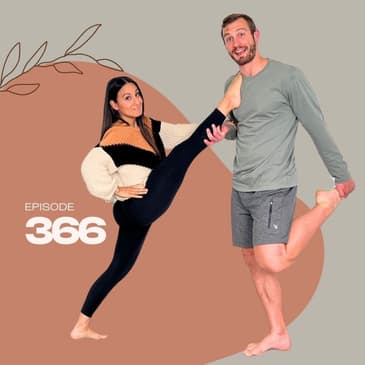
In this episode, DocJen and Dr. Dom delve into the difference between flexibility and mobility, providing insight into increasing hamstring range of motion. They dive into the role of flexibility as an addition to mobility to improve quality of life as we age, as well as the research insights on the physiological effects of different types of mobility training. Let's dive in!
Free Week of the Jen Health Membership:
Looking for a movement community that gives you the plan specific to your body? Need accountability and a plan that is specific to your restrictions?! Come grab a free week of our Jen Health Membership! You'll have access to 12 plans that were all curated by Doc Jen, Dr of Physical Therapy. We make sure you get set up with the plan that will be best for your goals and the rest is laid out for you to follow! Come check it out today! You can even get a discount on your first month using code OPTIMAL at checkout!
Vital Proteins Discount:
Do you love coffee? Why not add a scoop of collagen to compensate for the loss of efficient collagen production with age! We know that while our body's collagen production slows as we age, our need for it only grows as our bodies become less efficient. By providing nourishing collagen and promoting our production of collagen, Vital Proteins helps people feel better and live fuller lives through HIGH-QUALITY nutrition products. Use code ‘OPTIMAL15‘ at checkout. Build resilience from the inside because topical is so typical. This is the perfect addition to your topical skin care routine. Check out their new "Skin Complex." This product is not intended to serve as a replacement for sunscreen**
What You Will Learn in this PT Pearl:
1:50 - Is mobility the same as flexibility?
9:05 - What does mobility help with?
14:50 - The hamstring example.
18:03 - The role of eccentric load on muscles.
21:23 - Active loaded mobility.
23:50 - Studies on passive and active stretches.
To Watch the PT Pearl on YouTube, check out DocJenFit on Youtube here: https://www.youtube.com/watch
For the full show notes, visit the full website at: https://jen.health/podcast/366
Thank you so much for checking out this episode of The Optimal Body Podcast. If you haven’t done so already, please take a minute to subscribe and leave a quick rating and review of the show!
Hosted by Simplecast, an AdsWizz company. See pcm.adswizz.com for information about our collection and use of personal data for advertising.
[00:00:06] Welcome to the Optimal Body Podcast. I'm Dr. Jen. And I'm Dr. Dom and we are Doctors of Physical Therapy bringing you the body tips and physical therapy pearls of wisdom to help you begin to understand your body, relieve your pains
[00:00:17] and restrictions, and answer your questions. Along with expert guests, our goal of the Optimal Body Podcast is really to help you discover what optimal means within your own body. Let's dive in. So excited to share about one of Vital Protein's new products. It is Vital
[00:00:33] Protein's new main attraction and that is main spelled M-A-N-E because it is their Vital Protein's Hair Complex. You can turn bad hair days into a thing of the past thanks to Vital Protein's Hair Complex, which promotes hair health through a combination of scientifically backed,
[00:00:50] high quality ingredients. Vital Protein's Hair Complex contains ingredients clinically shown to help grow thicker and fuller hair in as little as three months. Unlike other hair growth solutions, Vital Protein's Hair Complex is designed to be consumed once daily in a powder format,
[00:01:06] making it easy to incorporate into your existing routine. Simply add one serving of the unflavored complex to your favorite hot or cold beverage and enjoy. This is so exciting. We actually got it
[00:01:17] ourselves and are excited to try it out. You can go down to the link in the show notes and use code Optimal15 to get 15% off site-wide, including this hair complex. So head to the link in the
[00:01:27] show notes, make sure you use code Optimal15 at checkout to get that 15% discount. Stephanie So we're talking about stretching today. More specifically, what is the difference between doing mobility and flexibility? And I think this
[00:01:40] is such a big topic and something I've talked about on our webinar actually with GenHealth because I want people to understand. I mean, typically when someone is telling me that they do mobility, they're showing me some passive stretches that they're doing. So I'm like, okay, so you're doing
[00:01:59] flexibility. Mike Yeah. Oh, I do this one, touch my toes or I sit in this pigeon or I do this or that. And that is what a lot of people- Stephanie It's not bad.
[00:02:06] Mike No, it's not bad. And we don't want to say that flexibility or just passive stretching is bad. It's a huge component of mobility and we see mobility as kind of this more overarching thing
[00:02:18] that includes a lot of other steps. Passive stretching, which is what a lot of people see as flexibility, is one step and a very important one at that. Stephanie Exactly. So we want to help you
[00:02:29] understand, okay, what's the difference between them and when is it most appropriate for me to start to integrate it based on my body's needs? And I think that's what's most important is understanding when should you be doing passive stretching versus active mobility? And that's
[00:02:47] the main difference. Interrupting really quickly just to talk about when supplementation is really needed. And this is, for me, has been crucial not only in trying to conceive, and this is when I found needed actually because they have their egg quality support and I was super interested in
[00:03:02] that. But what I also loved is that they have men's support as well. So they have the sperm support plus, they have the men's multivitamins. And I love that it wasn't just about the women's journey
[00:03:15] in trying to conceive because it's not, and it's not talked about enough. It is the men's role as well in how that baby is going to be made and what's going to happen. And I just loved that
[00:03:28] we looked at using support for both of our bodies and coming into this new pregnancy. And then when it came into pregnancy, I love that they have a variety of supplementation so that it's not only
[00:03:41] in capsule form, but you can also take the prenatals and powder if you're like, I cannot take another pill or I know friends who just like could not swallow pills. So they would just use
[00:03:50] the powder form, which I think is brilliant. I have no problem with it, but I just love the variety because especially say you don't like eggs or you're not getting eggs in the morning,
[00:03:59] you can't stand them. All of a sudden, I kind of went from that. I like would have my huge egg breakfast to really not wanting them at all. So they have the choline support, they have iron
[00:04:10] support, they have support for any nutrients that you're really needing to help support your body. So especially when you're trying to conceive, pregnant, postpartum, or really beyond, they have supplementation for so much to really help to support your body. And that's what
[00:04:26] supplementation is. It's a supplement, it's to help support. And in first trimester, I literally only wanted bagels, like bagels, pizza, burgers. Like I just wanted all of the carbs. So I know
[00:04:39] I wasn't getting the most nutrient rich diet. So I needed the support and it is so crucial to me, especially just having lost a baby and knowing that there's so little that I can control,
[00:04:51] but I can control what I put in my body and what I trust within my body. And after I asked my RD as well, after I found Needed, I just felt so supported. And especially knowing that Needed is recommended and used by more than 4,000 women health experts from
[00:05:04] nutritionists to midwives, functional medicine doctors, and OBGYNs. I just love that they're providing more than just amazing products. They're advocating for better maternal and infant health outcomes and doing groundbreaking women's health research through their clinical research
[00:05:21] arm, Needed Labs, which is just amazing. So if you haven't, I just highly recommend go check out Needed. Head over to thisisneeded.com and use code optimal. This is going to get you 20% off of your first order. That's T-H-I-S-I-S-N-E-E-D-E-D.com, use code optimal. That's going to
[00:05:44] get you 20% off your first order. So to kind of define the difference a little bit, we see mobility as the ability to actively control your joints through the full range of motion that you
[00:05:56] have. Where flexibility is that passive ability to go into a range of motion. So an example that we will often talk about is for the hamstrings, if you're doing some sort of forward fold or
[00:06:11] folding towards your toes, you're passively going into that stretch because you're using the ground to press your legs up as you lean your body forward. That's a passive stretch versus if
[00:06:23] you lay on your back and try to keep your knee straight and lift your leg as far as you can go, that's more showing you what kind of active hamstring mobility you have because you're actively bringing that leg into that range of motion as far as you can.
[00:06:38] Or even challenging it more and standing. And doing it standing. And trying to lift your leg. Straight and lifting it up. And where we think mobility is the end goal where we should get to is that's a lot more functional. If we have this range of motion,
[00:06:52] we want to be able to control our bodies through it. Exactly. I mean, it's going to help if you're suddenly falling, if you're needing to run after something quickly, if you step out to the side. If you don't have that
[00:07:04] active ability to control that range of motion within a muscle or a joint, this is where oftentimes we'll see people quickly strain or pull muscles or get injured because we haven't prepared the body to handle load in these various quick ranges, right?
[00:07:24] So, being able to understand how to work on that is something that could be really effective. It's funny and I think of this just recently. I've thought about almost exactly this without
[00:07:37] realizing it but when I run on this trail with our dog, there's a lot of sections that are downhill and it's really gravelly and it's really loose. And often I will be, don't tell Jen, but I'll be running and my foot will hit a spot and slide.
[00:07:54] And if I didn't have active hamstring control, eccentric control because my leg is sliding out, my hamstring is lengthening, and I'm needing to slow down and control my body, that's actually a position a lot of people hurt their hamstring in, have a hamstring strain,
[00:08:10] tear. But because it's something that I work on, that active loaded eccentric hamstring control, my body is a little bit more prepared where foot slides, no problem. I wait until my foot gathers its control. My hamstring does the work to basically control my whole body weight running
[00:08:30] downhill on a single limb. Again, it's like it's where my physical therapy and biomechanics brain starts nerding out because those are the things you prepare yourself for in the gym. Running downhill on loose gravel.
[00:08:46] It sounds weird to say but yeah, I mean, you're helping prepare your body for a life circumstance and that's what we're really wanting to do. That's what I train for. I don't train so I can do deadlifts in the gym. I train so I can feel
[00:08:58] safe and comfortable running on relatively risky trails with my dog. Now to break down a little bit more specifically, what does mobility do? What does it help with? Some key points that I think is really important. It helps to improve your joint range of motion.
[00:09:16] So not only where flexibility is more so going to help to improve that overall ability for the muscle to move around a joint where you're now being able to control that full range of motion within a joint. It improves your joint sense or proprioception as to where that
[00:09:37] limb is in space when we're moving or rotating about the joint because now we're using control and strength around that joint, not just kind of throwing it wherever. It improves muscular balance around a joint to help prevent one muscle group from taking over
[00:09:54] during a movement and it improves overall control and stability of the joint which is especially important for those with hypermobile joints and this is where that comparison especially of mobility versus flexibility becomes really important because- People with hypermobility are very flexible. Yes, they're already very flexible.
[00:10:14] They don't often have good controlled mobility and that's where when people say, oh I don't need to do mobility. Like well, no you don't need to do the passive stretching part. You have beautiful, incredible range of motion in most of your joints.
[00:10:28] Where we can work is the control and here's where we'll go through kind of the four main steps of mobility or what we think people should do to gain full controlled mobility in their joints. Step number one, passive stretching which is that flexibility that we've been talking about
[00:10:45] and is really an important especially for somebody who may have different tightnesses like me. I need to spend a lot of time in these passive stretches so that my body feels comfortable going into a more range of motion.
[00:10:58] This is where a couple episodes ago we talked about the muscle spindles and the Golgi tendons. This is where you're talking to those Golgi tendon organs that are in our muscle tendons saying,
[00:11:09] hey it's okay to let this muscle relax a little bit more and that's why during passive stretching, we want to stay in these passive stretches for a long time. Especially research done in these areas
[00:11:20] say up to two minutes is a good minimum to sit in this stretch because it's such a neurologically driven process that by the end of that two minutes there's no way your Golgi tendons and
[00:11:34] your muscles will have been able to ignore and they will definitely have allowed you to gain more range of motion. Because that's the main thing with flexibility. We're looking at improving the
[00:11:43] muscle's ability to tolerate more stretch. If you were ever to be in an operating room and you're completely out, your nervous system is not part of the picture and they're just wanting to test
[00:11:54] range of motion for something, all of a sudden you're like a super bendy flexy person. And it's kind of weird to see because I've been in rooms where people have been under anesthesia
[00:12:03] during hip replacements and they take the person's leg and basically put it up over their shoulder. And I'm like this is like an 80 year old woman. Right and when she is conscious and her nervous system is working with her muscles that would
[00:12:16] never be able to happen. Right. So but when we add in more time like Dom said spending more time in this we're able to tolerate going into more of that stretch. So our nerves communicate back
[00:12:30] to our brain which indicates you know a new range of motion is safe and so over time the brain reduces the need to protect or restrict that range of motion and so we can gain more range of motion.
[00:12:41] It decreases fascial muscle and some tendon stiffness immediately after the stretch. It adds tensile load into a muscle similar to strength training. So there's actually some really cool studies on this you know. If you were to hold for 30 to 60 minutes for a stretch you can
[00:13:02] actually see some similar tendon thickening similar to strength training which is pretty, I mean I don't know who's holding for you know an hour but you know and it also reduces maximal contractile force and power production immediately after stretching and this is only why we want to
[00:13:21] say okay am I using stretching and passive mobility prior to a workout, immediately prior to a workout? I probably don't want to just be like using a strap and stretching my hamstring and then going in deadlifting. That's going to reduce my power production and my force within
[00:13:40] my muscles. Yeah and knowing when to use each of these is always one of the most important parts of the question too where passive stretching might best be used at the end of a workout to help relax
[00:13:53] and down regulate which is kind of similar to our warm-up cool-down plan which if people haven't seen there's a one-week warm-up cool-down plan that we've added into the GenHealth membership. It is a great way to get a better understanding of what an effective warm-up looks like and then
[00:14:11] a great way to cool down and down regulate your system. You can basically do this whole plan for free if you sign up for your free week trial. You can go through all of these exercises. They're
[00:14:22] specifically geared for an upper body lift or a lower body lift or a full body lift or cardio and there's multiple examples of each of the lifting ones. There's one that is meant for more
[00:14:34] cardio or aerobic activity. Yeah if you want to check that out you can go down to the link in the show notes. Show notes get signed up for your free week trial but enough of that on to the next step
[00:14:45] of mobility. The warm-up within it. Yeah the warm-up. The next step is getting more into active mobility so that's essentially what we were talking about before where even if you're just laying on your back it's actively bringing that leg up and doing the hamstring stretch
[00:15:03] without using anything to pull passively. There's tons of different examples of this where you can even do it like a lateral lunge where you're putting load through your groin and then coming
[00:15:16] back up. Again, you're kind of using gravity in the crown to get into the stretch but you're still needing to activate to get back out of it. Yeah I mean essentially we're trying to say okay I
[00:15:26] just passively stretch into this range motion so maybe I did just use a strap to kind of down regulate my system. I used my my breath to help find more range, tolerate more stretch within my
[00:15:38] muscle and now I'm going to kick that strap off to the side and I'm going to just lift my leg actively a few times or I'm going to stand and try to or sit up and lift my leg actively. Now I'm going to
[00:15:51] turn on my hip flexors. I'm going to explore how that muscle can move with it with activating the other side. So now I'm activating my quad and my hip flexor to allow my hamstring to have more space
[00:16:06] and I'm actively controlling that range. What this really helps with is it's going to ensure okay I'm trying to make sure that I'm not over stretching a muscle now at this point right. I'm actively
[00:16:20] going into the range available for my hip, my shoulder, my upper back, whatever it is and I'm making sure that I'm just not over stretching it and that's what really people fall into especially
[00:16:32] if you're already hypermobile. I love yoga because maybe you're already a hypermobile person it's so easy for you to go into these stretches and and and really you know deepen into some of these poses
[00:16:45] however we could be pushing the limit of how much you're stretching and cause some over stretching. If it's just passive you're not supporting, you're not, you may not be supporting in that range. Yes. A good example is if you realize your active mobility is significantly
[00:17:01] less than your passive mobility. Yeah. Then it might not be super healthy for you to hang out at the end of those passive stretches because that's telling us something. If I can get into a
[00:17:13] passive hamstring stretch where I'm laying down on my legs but I can't actively lift my hamstring past 90 degrees if I'm laying on my back that tells us that your hip might not be fully supported
[00:17:25] when you're in that end range stretch and that's where some people start getting joint issues because they just hold those end range positions. Exactly and I know like Jill Miller was someone. Yeah, she talks about it a lot. Yeah, she's hypermobile. She would put herself in really
[00:17:39] extreme poses and it's, she's had to pay for it down the road. So, it's just we want to be very cautious of yes I want to use passive stretching and flexibility maybe it feels
[00:17:50] good in my body but we need to add in an active component. Yeah and then the next step which is working on eccentric loading. I mentioned it earlier in my trail running example but eccentric essentially means the lengthening portion. So, for my bicep curl. Yeah, bicep curl
[00:18:08] is easy to understand. I'm holding a weight and as my arm is coming out I'm still holding the weight so I'm still like activating that muscle but now it's lengthening through that range. Yeah,
[00:18:19] so strengthening as we're lengthening and the reason that we want to focus on this first is one we're stronger our muscle can tend to take more load during the eccentric phase and also we
[00:18:32] tend to gain strength faster or another way of saying that is we cause a little bit more micro damage to the muscle which essentially then makes it heal to be stronger. So, we tend to gain
[00:18:44] strength faster if we focus a little more on this eccentric phase of the movement. So, with our hamstrings that's like during a straight leg deadlift when you're doing the hinge and folding forward your hamstrings are lengthening but you might have some weight so you're strengthening
[00:19:02] while lengthening during that slow eccentric phase. And talking about you know getting your brain to tolerate more stretch like this is where we really gain that mobility is now I'm not only
[00:19:15] just laying on the ground or lifting my leg or doing now I'm actually putting load into that stretch muscle because if we think about it for our examples of passive hamstring stretch and an active hamstring stretch the active hamstring stretch though my hamstring is lengthening
[00:19:32] there's no load into it because all the muscle contraction and force is in my hip it my hip flexor and my in my quad so the front of my leg rather than the back of my leg but now with eccentric
[00:19:44] mobility or using that deadlift example right I'm going to be putting load and making my hamstring work as it's lengthening as I'm dropping that weight slowly to the ground keeping relatively you know straighter legs on like a Romanian deadlift or a stiff leg deadlift I'm now
[00:20:05] working and loading that muscle as it's strengthening or as it's lengthening. This is where I get that better connection to my brain to say it is safe to go down into this range
[00:20:18] I you know I'm going to let go a little bit more we're strong we're resilient in this range of motion so I'm going to allow us to increase that range of motion in general. So this is where we
[00:20:29] get a really good impact in our range of motion with resilience to have really like this is where for me it's most impactful to kind of see how we can try to reduce our risk of injury the most
[00:20:45] is building that resilience through that length. And this eccentric training is something that is a commonplace and as you see it in all sorts of rehab protocols because it is one of the best
[00:20:56] ways to strengthen up areas that we may be rehabbing that we may have injured previously to increase their ability to take that load whether it's Achilles tendonitis or rehabbing from an Achilles rupture or working on tennis or golf elbow like eccentric strength is hot
[00:21:12] and people use it in almost all rehab protocols so that's why we only think it's fair that we just build it into our general mobility principles anyway. Right and then going on to the last
[00:21:24] area that we kind of look at mobility which is active loaded mobility. So I mean it's going to kind of play a role in all of them besides passive mobility but now I'm you know putting
[00:21:38] some weight on it. So I mean it's essentially strength training this is now going to challenge my muscles and joints in not only improving how we move through a particular motion but what it
[00:21:51] but how to control it through that motion and how to control the external load beyond just my body weight right so. And that's where we start to train for those variable things that happen in life
[00:22:03] that we may not have expected. Yes, exactly. Better carry over. The quick step that you need to take to the side because you lost your footing on loose you know loose ground or you slide on ice but
[00:22:13] you're able to catch yourself and your quads can take that because of the strength training you've been doing. I mean so many examples of this from a regular squat to doing a lateral lunge or like a
[00:22:27] Cossack squat for your groin holding weight. Really any loaded strength exercise is going to be taking certain muscle groups through the lengthening and shortening process and that's where we start to one notice the benefit from those three previous steps we took. Some of these
[00:22:44] strength exercises might feel a lot freer, might feel a lot easier to get into the deep range and like oh wow I didn't I couldn't squat this way before because you didn't maybe work on the
[00:22:56] passive and the active range of motion before you started trying to load it all up. Exactly, I mean just think about reaching overhead or putting you know a bag over in the overhead department
[00:23:07] when we're loading a plane like a lot of people get they feel like their shoulders are hurting or they need help they can't do it because we're not using these four steps to progressively then
[00:23:18] add that load to get overhead and better move in the joints like we need all four steps. I don't think that you know it's mobility versus flexibility I think it's it's using them
[00:23:32] as needed for your body. Maybe if you're more hypermobile you probably don't need more of the passive stretching unless you want to get out of some muscle guarding and a lot of protection
[00:23:41] that's happening within the body. There's still a place for it it's just then how are we actively loading the body after that I think that's so important and when we're looking at like some
[00:23:51] of the studies and stuff like how long should we hold a passive stretch we kind of talked about this a little bit right majority of studies use a protocol of like four to six sets 30 to 45 seconds
[00:24:04] done four to six times per week or six to twelve weeks. Improvements were found in both short-term and long-term range of motion and increases in muscle thickness and increases in muscle range by
[00:24:16] like 22 to 23 percent but studies with longer holds up to an hour per session done seven times a week at an eight to ten intensity for six weeks showed changes in muscle thickness by 15 percent range of motion increases by 27 percent and increases in strength by nearly 17 percent
[00:24:40] increases in strength by doing an hour of stretching so higher intensity stretching also leads to an increased fascicle length however what I'm taking from both of these is like let's
[00:24:54] not just live in the 30 to 45 second range if we really want to get the most out of our passive stretching let's go more to that minute to two minutes we're probably not going to be doing
[00:25:03] something for an hour. You don't need an hour mobility routine in general but to be able to focus on one exercise one stretch but just to be able to focus on that mobility in a few muscle groups for
[00:25:16] 90 seconds to two minutes a day is going to make a profound difference like you said the research supports that holding stretches for those lengths give you the most benefit but ultimately there's the four-step process doing your passive stretching then moving into your active mobility working on
[00:25:34] eccentric control the strength while lengthening and then number four is loaded up through the eccentric and then the concentric you know contraction of the muscle so through the whole range of motion are we able to load it and feel safe and secure. Right which is basically your
[00:25:50] strength training process now right so I think when it comes to using this better if you want to do flexibility say you're super stressed you're super tense you've been sitting all day long
[00:26:01] you just want to feel like you're you're getting a little bit of a stretch and you're kind of relaxing in your body you've been super stressed and tense all day I would say it's okay if you
[00:26:11] still want to use that before a workout it is okay to do it for a little bit but immediately following that it is important to not just jump into your workout if you're going to do passive stretching
[00:26:22] and just holding the holding positions passively that you need to add an active or eccentric component into your warm-up prior to your workout because that's going to reduce any of the negative
[00:26:35] side effects that would have happened from static stretching right into a workout as long as you do an active component prior to your workout you are fine yeah and then on the flip side especially if
[00:26:46] you've had that long day using that passive stretching as we mentioned before after the workout to down regulate and get the body to relax a little bit and like I mentioned earlier
[00:26:55] we have the warm-up cool down plan in gen health that you can literally do the whole plan during your free week trial so go down to the link in the show notes sign up for that get access for a
[00:27:06] full week to all of the plans as a part of the gen health membership which there are 12 plans now check out that warm-up cool down plan and if you're just more interested specifically in
[00:27:15] mobility we have the mobility foundations course that basically takes you through all four of the steps we just outlined over four weeks going through five different areas in the body that people specifically tend to be really restricted if you want to check out the mobility foundation
[00:27:31] scores you can use code optimal 20 to get an extra bonus discount for our podcast audience oh that's a big discount yeah big discount so check out mobility foundations that's just gen.health backslash foundations and of course reach out if you have any other questions about any of the
[00:27:46] programs or if you have any questions about mobility where you might want to want to be focused reach out to us at gen.health gen.health and we will try to get answers back to your questions
[00:27:59] thanks for listening into another pearl if you know anybody who just struggles they're that person who's always stiff who doesn't know what to do for mobility or their flexibility send them this episode hopefully it will help them out in their journey remember we have that warm-up and
[00:28:13] cool-down challenge now you can get the whole week free during your free trial check out the link down in the show notes if you haven't please consider leaving a rating and review of our podcast
[00:28:23] on your favorite podcasting platform that just helps out so much and of course we will see you next time on the optimal body podcast