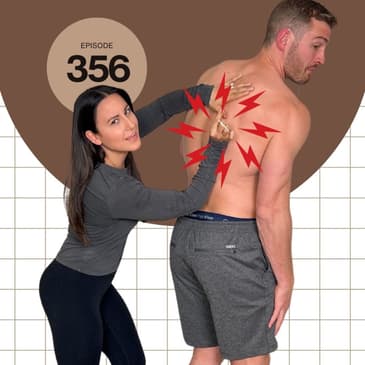
Heard of Dry Needling? DocJen and Dr. Dom give you the rundown on what Dry Needling is, the effect it has on the body physiologically, and who might need it! They discuss the limitations of measurement bias in research, the benefits of dry-needling, how long it lasts, and what it means to have expectations and beliefs about dry-needling, also considering the role of supervision and emotions. Let's dive into all things dry needling and what the systematic reviews say about Dry Needling!
VivoBarefoot Discount:
Save your kids feet! Your feet have the components they need to support themselves! That's why we love VivoBarefoot because the shoes themselves help us gain mobility and strength in our feet. Live that barefoot life in style, choose VivoBarefoot and use code TOB at checkout to get 15% off! Your foot and body will thank you (affiliate link)!
**Vivo offers a 100-day trial period. If you are not completely satisfied, you can send the shoes back and get a refund.
Needed Discount:
Prenatal supplements? Male prenatal vitamins for sperm support. No unnecessary fillers at the highest quality of nutrients and it's all sustainably sourced! With 7x more choline, 6x vitamin B3, 20x more vitamin B6, use code OPTIMAL for 20% off.
What You Will Learn in this PT Pearl:
2:40 - What is Dry Needling?
5:30 - Dry needling - how is it used?
8:05 - Limitation of measurement bias
11:55 - Dry needling benefit
14:12 - How long does the benefit last?
15:20 - Expectations and beliefs of dry needling
19:13 - What the research says! Systematic reviews!
22:40 - Emotion ,Supervision, and Pain?
To Watch the PT Pearl on YouTube, click here: https://www.youtube.com/watch
For the full show notes, visit the full website at: https://jen.health/podcast/356
Thank you so much for checking out this episode of The Optimal Body Podcast. If you haven’t done so already, please take a minute to subscribe and leave a quick rating and review of the show!
Hosted by Simplecast, an AdsWizz company. See pcm.adswizz.com for information about our collection and use of personal data for advertising.
[00:00:05] Welcome to the Optimal Body Podcast. I'm Dr. Jen.
[00:00:08] And I'm Dr. Dom, and we are Doctors of Physical Therapy bringing you the body tips and physical
[00:00:13] therapy pearls of wisdom to help you begin to understand your body, relieve your pains
[00:00:17] and restrictions, and answer your questions. Along with expert guests, our goal of the
[00:00:21] Optimal Body Podcast is really to help you discover what optimal means within your
[00:00:26] own body. Let's dive in!
[00:00:29] Before we hop into the pearl, I just need to talk about one of Jen and my favorite
[00:00:32] topics, which is foot health and how important it is to start from that foundation to really
[00:00:37] build up your movement health and how beneficial it can be to use barefoot shoes. And that's
[00:00:43] why Jen and I have worn vivo barefoot shoes almost exclusively for the last four to five
[00:00:48] years now. They have shoes for every type of occasion. And something super exciting
[00:00:53] for me is one of their new shoes has actually cracked into my top favorite vivos to wear.
[00:00:58] It's the Vivo Census. It literally feels like you're wearing nothing. It is a barefoot shoe
[00:01:03] that is true to form and allows my foot to move and grow how it's supposed to. Their
[00:01:09] shoes are wide, thin and flexible so they allow the toes to move and naturally build
[00:01:13] in that mobility. And just by wearing them throughout the day your feet will gain strength
[00:01:18] through the arch, through the toes. Again, building our foundation and our movement
[00:01:23] from the ground up. So if you go down to the link in the show notes, whether
[00:01:27] you're adding in a new shoe, I would recommend taking a look at that census or getting your
[00:01:31] first pair. Some of our absolute favorites are the Primus light knit and the Primus Asana
[00:01:36] just because they're so darn comfortable and you can use them for just about everything.
[00:01:41] Grab the link in the show notes. Make sure you use code TOB at checkout to get 15%
[00:01:46] off your entire order. All right, let's hop into the PD Pearl.
[00:01:49] Quick update before you go. There has been a code update. So you can actually
[00:01:55] get 20% off only now through July 1st. So you've got to get on this now. 20% off any
[00:02:03] Vivo Barefoot shoes that are not already discounted using code TOB20. So get on it.
[00:02:10] We're talking about dry needling today. Now, this is a pretty hot topic, especially if
[00:02:15] you have been to a physical or physiotherapist that does dry needling. What is it really
[00:02:20] doing? What did the study say? When is it appropriate? Is everything that we want
[00:02:24] to cover so that you're well informed and understand what you can ask for when it's most
[00:02:29] beneficial within your body? Yeah. And just get down to it because we have done another
[00:02:33] podcast with one of my good friends, Dr. Alex Anderson, who kind of touched on this a little
[00:02:39] bit in her episode. What episode was that again? That was episode 171.
[00:02:43] 171. And that's a great episode just on pain neuroscience in general. She does
[00:02:48] a little talk about dry needling as well and where that can be beneficial. But we
[00:02:53] wanted to look a little bit into the research. What is dry needling claiming to
[00:02:58] do? How effective is it in what scenarios might it be beneficial? And we do this
[00:03:03] about a lot of these, what we call manual therapies. I mean, essentially this is
[00:03:07] in the umbrella or under the umbrella of manual therapies because it's something
[00:03:12] someone is doing to you so that we can hopefully see a physiologic change in
[00:03:17] the body and in the way that you're feeling. And pain reduction. I think
[00:03:20] a lot of people go because it's like, Oh, I have this scar tissue or this, you know,
[00:03:26] trigger point and I'm going to go and get this done to help me. So is it really?
[00:03:31] You know, let's let's understand it.
[00:03:35] Interrupting your episode really quickly just to remind you about element. Now,
[00:03:39] if you have not tried it yet, you have to, I'm telling you the flavors are
[00:03:42] incredible, delicious, but it helps anyone stay hydrated without the sugar
[00:03:47] or the dodgy ingredients found in popular electrolyte and sport drinks.
[00:03:51] This is something that you can trust. This is something we've been taking for
[00:03:54] years when I was pregnant, when I was postpartum. This is really what helped
[00:03:59] to hydrate me and allow me to feel like I had the energy throughout the day
[00:04:03] because we don't realize that electrolyte deficiency or imbalance can cause
[00:04:07] headaches, cramps, fatigue, brain frog and weakness. So if you're feeling
[00:04:12] any of these things throughout the day, rather than reaching for that
[00:04:15] other cup of coffee that's going to help to energize you, reach for an element
[00:04:20] and try this out. I'm telling you, you're going to feel so much better.
[00:04:23] And if you already have it, we would really appreciate if you use our specific
[00:04:27] link, it really helps to support our podcasts and the information that we
[00:04:30] continue to provide you. That is drink element lmnt.com backslash
[00:04:37] optimal. So that's drink element.com backslash optimal. We're going to
[00:04:41] have it linked up in the show notes as well. So you could just click
[00:04:44] and go from there. And with any purchase, you get a free sample pack.
[00:04:48] So you can see all the amazing samples that we talk about and all the
[00:04:51] different flavors that we highly recommend, but definitely get yourself some element.
[00:04:58] And that's something that dry needling again, like claims to be
[00:05:02] attacking is these trigger points because it's such a specific area.
[00:05:08] And another thing we see overlap in is, you know, with the acupuncture
[00:05:12] community and the art of acupuncture in general, it looks similar, you know,
[00:05:17] using needles, putting needles into the body in order to feel something
[00:05:21] different. I think that there's just like a theoretical difference
[00:05:27] in what they're saying is happening or, you know, what they're
[00:05:30] purporting is happening in the body. What are the intention behind it?
[00:05:34] The intention behind it, what acupuncture is aiming to address
[00:05:38] versus dry needling being much more specific to actually trying to address
[00:05:43] the trigger point areas or the exact pain points.
[00:05:46] Right, right. Rather than the meridians and flow of energy that is
[00:05:52] the practice of acupuncture, which I know very little or nothing about.
[00:05:55] So we're not going to talk about acupuncture. We're just going to
[00:05:58] stick to dry needling on this one. But essentially it's the insertion
[00:06:01] of these thin monofilaments into typically muscles, ligaments, tendons,
[00:06:07] subcutaneous fascia and scar tissue without the use of injectables.
[00:06:12] However, the needles can be, you know, inserted near peripheral nerves
[00:06:18] and or neurovascular bundles to manage various neuromuscular pain
[00:06:23] syndromes as well. However, it's primarily found in intramuscular
[00:06:27] procedures targeting myofascial trigger points.
[00:06:30] And that's typically what you're going to go and see and be reported
[00:06:35] that what is happening is kind of getting to the trigger point,
[00:06:39] something that feels taut within the muscle.
[00:06:41] And I think even when we say trigger point, people kind of understand
[00:06:44] what we're talking about. It's that not or that knob that you feel that
[00:06:49] you just want to rub out.
[00:06:50] Yeah, that tight band, that tight bundle of muscles.
[00:06:53] And when we look at muscle physiology, this is a thing that
[00:06:59] we talk about the muscle spindle and essentially what the muscle spindle
[00:07:02] is, it's something within our muscle that regulates kind of the
[00:07:06] length of the muscle and it senses changes in the length of the muscle.
[00:07:10] And so when these muscle spindles become overactive,
[00:07:14] they might just be holding really tight on a certain section of muscle
[00:07:18] fibers. And that is what we think is causing these really tight bands of muscle.
[00:07:25] Yeah. I mean, I look at it more of like a theory of, you know,
[00:07:29] trigger points and the physiology of what's really happening behind
[00:07:32] that tautness and what is also interesting when we look at the research.
[00:07:36] This is very similar to like when we look at research where we're looking at
[00:07:40] trying to measure.
[00:07:41] Yeah, trying to measure between physical therapists.
[00:07:44] So the reliability from therapist to therapist in kind of finding these
[00:07:49] exact trigger points on people and are they the exact location each
[00:07:54] in every time? Or are we kind of finding differences?
[00:07:57] And it's the same kind of idea of when we're measuring the pelvis
[00:08:01] alignment and like where we're kind of finding, you know, rotations or differences
[00:08:07] or even anterior versus neutral and all these differences.
[00:08:10] We have a low reliability therapist to therapist.
[00:08:14] So you could be going to one therapist saying, Oh, here's your trigger point spot
[00:08:18] where another one is going to find it somewhere else.
[00:08:20] So that's where for me, it lacks a little bit of the
[00:08:25] reliability and, you know,
[00:08:28] concrete evidence to be able to say, OK, we're looking at trigger points alone
[00:08:33] and this is what's really going to help.
[00:08:35] However, you know, we're going to get into it more of like how this can help
[00:08:39] along the pain journey and when it's appropriate.
[00:08:41] Yeah, there was different studies that we saw one done by Lucas and his
[00:08:45] colleagues and one done by Lou and his colleagues.
[00:08:48] I'm just read what it says here.
[00:08:51] Lou at all highlighted the absence of an accepted reference standard
[00:08:55] for trigger point diagnosis with conflicting data on the reliability
[00:08:59] of physical examination for trigger points.
[00:09:02] Lou at all reported low inter examiner agreement,
[00:09:06] 21 percent while Scotty at all noted significant error rates among
[00:09:13] examiners attempting to identify specific trigger point locations.
[00:09:17] So just what Jen said, you go to one therapist and they say,
[00:09:21] here's your trigger point.
[00:09:22] You go to another therapist to say, here's your trigger point.
[00:09:24] Even if it's an inch apart, that's thousands potentially of muscle fibers,
[00:09:30] you know, away from where the other therapist is saying your trigger point
[00:09:34] is so very low reliability on if we're actually hitting the same spot every time.
[00:09:38] And if we're actually identifying that first study says there's a low
[00:09:42] agreement on what qualifies as a trigger point, what is a trigger point?
[00:09:47] So again, every time you go to physical therapists,
[00:09:50] are they hitting the exact same spot?
[00:09:52] Are they hitting the exact same muscle fiber or muscle fiber bundle that,
[00:09:58] you know, is tight and is that quote unquote trigger point?
[00:10:02] Maybe maybe not.
[00:10:03] Yeah.
[00:10:04] I think take that with, you know, the grain of salt.
[00:10:07] It doesn't have to be perfect and that's okay.
[00:10:09] You know, we're still going to see benefits that we're going to kind
[00:10:12] of talk about when that's appropriate again.
[00:10:15] But you know, we're more so attacking the theory behind
[00:10:18] what people might be saying they're doing.
[00:10:20] Yes.
[00:10:20] You know, like, oh, I'm going to get this exact trigger point.
[00:10:23] Well, are you, does that mean it's going to feel any different?
[00:10:26] Or does that mean it's not going to feel good?
[00:10:27] No, you know, like it's still very well might feel beneficial,
[00:10:32] but are they doing exactly what they're saying?
[00:10:34] I think that's what we're trying to outline.
[00:10:35] Yeah.
[00:10:36] And we can see that, like, you know, we looked at another study
[00:10:39] looking at organizations teaching physical therapists, you know,
[00:10:43] to look for a trigger point to search and destroy
[00:10:46] and kind of use that method of dry kneedling is really not evidence
[00:10:49] based. So if we're just, you know, really using dry
[00:10:52] kneedling because I'm going to hit every trigger point and I'm
[00:10:55] going to help you and this is what it's going to do.
[00:10:58] Like that's actually not evidence based physical therapy.
[00:11:02] Physical therapy should be a little bit more targeted based
[00:11:05] on your pain experience and your current symptoms, not just
[00:11:08] we're going to randomly go through your body and look for
[00:11:10] any trigger points and say this is related to your pain.
[00:11:14] It has to be specific to what you are experiencing always.
[00:11:18] It's individual.
[00:11:20] And I think that's what's really important to point out as well.
[00:11:23] And when it comes to trigger points, whatever they are and
[00:11:27] wherever they are, essentially the thing that's important to us
[00:11:30] is pain, like we're in pain. That's real, you know, like,
[00:11:34] like we're not trying to discount that there's pain in the area.
[00:11:37] And when we have consistent pain or feeling of tightness in an area,
[00:11:41] it does a lot to us physiologically and neurologically
[00:11:45] in a way that the more we feel pain in an area and the more
[00:11:49] consistently it is, we start to have sensitization in that area.
[00:11:53] So that means that our body is more susceptible to feeling
[00:11:56] more pain in the area. We start to have altered muscle
[00:11:59] contractions and also like altered coordination of the
[00:12:04] muscles in the area. So the pain itself can be very
[00:12:08] detrimental to the operations in that area, to the
[00:12:11] functionality of where we're experiencing that.
[00:12:15] And so essentially what we're doing with dry needling is very
[00:12:18] similar effects of what we see in a lot of different types of
[00:12:22] manual therapy that involve touch and pressure to the system.
[00:12:26] We're stimulating particular nerves or tissues by needles,
[00:12:30] in this case, which can increase the input of the central
[00:12:32] biasing mechanism. And this kind of closes the gate on the
[00:12:36] pain inputs from selected body areas. So we're essentially
[00:12:40] trying to, you know, talk to our central nervous system,
[00:12:44] talk to our brain to mitigate some of those influences of
[00:12:48] pain that's really coming and decrease that pain threshold
[00:12:52] leading to that muscle or that particular area of the body.
[00:12:55] And so it's again, where it becomes very similar to someone
[00:13:01] using a massage gun in the same area, using a grassden type
[00:13:05] scraping method in the same area, using deep tissue
[00:13:09] massage in the same area trigger point massage. You know, a
[00:13:14] lot of these become start to become very familiar even
[00:13:18] though the idea behind dry needling is that I'm going to put it
[00:13:23] into this tight band and as I take it out or if I put some
[00:13:27] stimulation on it, it's going to help to release that
[00:13:30] tension. But the same thing can be said in general with
[00:13:35] touch. And I think that's an important thing to remember.
[00:13:37] And that's the thing that I mean, that's the benefit that Jen
[00:13:40] just outlined is that we do see people have pain reduction. We
[00:13:45] do see people feel that they have more freedom and more
[00:13:49] accessibility to that area. And just like Jen said, we're just
[00:13:53] talking to the nervous system, and we're hoping that we get a
[00:13:56] positive result or a positive adaptation in our body's ability
[00:14:01] to feel a reduced amount of pain in the area, feel like
[00:14:04] we have more mobility. But what a lot of the studies show is
[00:14:08] that in one dry needling session, those benefits might only
[00:14:12] last between 24 and 72 hours. And that is similar to the
[00:14:17] research we see in a lot of other the modalities that Jen
[00:14:19] just outlined, you know, these passive manual type therapies,
[00:14:24] we tend to see benefit for 24 to 72 hours. So how do we get
[00:14:30] that to last longer? How do we get to have long term
[00:14:33] change? It tends to and we say this at Nazim and all our other
[00:14:38] podcasts too, it tends to require including some sort of active
[00:14:42] therapy or exercise therapy.
[00:14:44] Exactly. And the other important thing to know in order to
[00:14:48] kind of get this positive effect, because I've known
[00:14:50] plenty of patients who have gotten dry needling in the
[00:14:53] past and it didn't work for them, right? It wasn't the
[00:14:56] thing that was the magic fix as they were told. And one
[00:15:00] thing that's very beneficial in a 2005 study, they looked at
[00:15:03] the expectations and beliefs around dry. And this is where
[00:15:08] studies have shown that the expectancy level significantly
[00:15:12] influences acupuncture anesthesia or dry needling
[00:15:15] with patients optimism and anxiety playing a role. So this is
[00:15:21] huge, right? If I feel really nervous about the dry needles
[00:15:25] and I'm very hesitant whether this needling is really going
[00:15:29] to be beneficial, it probably won't. But if I am going in
[00:15:33] because I've been told from a friend or family member or the
[00:15:36] physical therapist that this is what's gonna really help this
[00:15:40] is going to release your muscle tension. This is going to
[00:15:42] get us moving again. As long as you're combining that with
[00:15:45] exercise and education, it's probably going to be the thing
[00:15:48] that's going to help because you believe in it so much. So
[00:15:50] belief and what you expect to happen plays a huge role in
[00:15:56] the actual what you're feeling.
[00:15:58] Which is kind of tough for me because I feel like that's the
[00:16:02] reason physical therapists grab on to Oh, tight band of muscle
[00:16:07] stick the needle in release the type and a muscle that's easy
[00:16:10] for people to understand. That's that's like easy. Oh yeah,
[00:16:14] stick the muscle stick the needle in it and the muscle
[00:16:16] is going to release like I get where that messaging can be
[00:16:19] effective and it can get people to buy in and say like, oh,
[00:16:22] that's what's happening. This is gonna work. And it gets
[00:16:25] people on that positive mindset. Not too dissimilar to when we
[00:16:28] talk about manipulations and adjustments, it's gonna put you
[00:16:31] back in a place gonna put you back into place and when people
[00:16:33] believe that and you go in and you get the crack in the pop
[00:16:36] and then it feels great and you're like, oh man, it worked.
[00:16:40] Do that's where sometimes I don't want to say I feel bad
[00:16:43] about giving the education because we want people to
[00:16:45] understand exact like actually what it's doing. But are we
[00:16:49] breaking those beliefs down that will help people help it
[00:16:53] be effective for them because they go in optimistic or should
[00:16:57] we want you to be optimistic for a different reason? Like, yes,
[00:17:01] this still can work. Even though it might not be releasing the
[00:17:05] type and a muscle like,
[00:17:06] Yeah, like you think it is like people are telling you it is
[00:17:08] like, it still can work and it still can be effective part
[00:17:12] of the treatment.
[00:17:13] And we want you to understand why we want to understand
[00:17:15] that this isn't a magical fix. Unfortunately, a lot of things
[00:17:18] that we do on you is not a magical fix. You are your
[00:17:22] magical fix like what you do with an own body and how you're
[00:17:25] guided and educated from a clinician is going to be the most
[00:17:29] beneficial thing. And your magic pill, your magic fix rather
[00:17:33] than what we're doing on you, what we're doing on you is just
[00:17:37] assisting in the symptoms of pain so that we can get you
[00:17:41] along that journey of movement and your own magical fix
[00:17:45] even more. And I hope that is, you know, the message
[00:17:48] like because when you go and get that manipulation, you
[00:17:51] rely on that to put you back into place. What are you going
[00:17:53] to rely on every single time? Yeah, that right? And episode 90,
[00:17:57] if you want to understand a little bit more on adjustment
[00:18:00] and manipulation, we talk about that a lot. Or that is the
[00:18:03] whole episode. But I think understanding, you know, okay,
[00:18:07] how can this when can this play a role? Is it really
[00:18:10] needed? I think you get to decide that too. If you feel
[00:18:14] like you're moving well in your body and you can just
[00:18:16] rely on exercise to help you feel something different than
[00:18:19] I think that you don't have to have the dry needling though.
[00:18:23] But if it is beneficial, then great.
[00:18:25] Jen's looking at me like, don't say that. Don't feel bad if
[00:18:28] we're educating people, put the power back in the people's
[00:18:31] hands. Yeah, but that's actually what we want to do. And
[00:18:35] you know, be optimistic, if you're going to go get dry
[00:18:37] needling, be optimistic about it. It will change. It
[00:18:40] will make change for you. So just looking at some studies,
[00:18:43] you know, there are a decent amount of like meta analysis
[00:18:46] and like high quality research studies. There was one from
[00:18:50] 2021 that showed there is a large treatment effect within 72
[00:18:54] hours after the treatment. That's kind of what I just said.
[00:18:56] However, there were no significant differences
[00:18:58] found between dry needling and other therapies like
[00:19:01] kinesiotaping or manual therapy in chronic neck pain.
[00:19:05] Also what we've kind of already said that we will see
[00:19:08] similar changes in many manual therapies when it comes to
[00:19:12] pain or functionality. A single session of dry needling was
[00:19:16] effective in reducing neck pain due to decreased muscle
[00:19:19] fatigability and or increased motor activation in the area.
[00:19:25] Okay, that's that.
[00:19:28] Well, when we touch something, when we stimulate
[00:19:31] something, we're helping the brain kind of better map
[00:19:33] where that is. And these are just kind of points that
[00:19:35] we had highlighted from these studies that support a lot of
[00:19:38] what we've already said.
[00:19:40] Exactly. Overall, I think what we can look at from that
[00:19:43] main study is that we can see that dry needling can be a
[00:19:46] cost effective way of like kind of aiding into a physical
[00:19:49] therapy treatment plan, especially if we're talking
[00:19:52] about reducing pain, right? You're not going and you're
[00:19:54] not getting drugs, you're you're able to move, you're
[00:19:56] working with a physical therapist. It's it's a great
[00:19:59] tool to be able to utilize. However, when we're looking
[00:20:02] overall at the evidence, like it's just lower quality
[00:20:05] evidence. So we can see that it's more effective than
[00:20:08] you know, a sham dry needling session or just exercise
[00:20:12] alone sometimes. But still, it's not the great quality
[00:20:18] of evidence that we want to see to really say that
[00:20:20] definitively and prove that so take that for what it is
[00:20:25] you know, just meaning to say again, this can be
[00:20:28] something that you include, it doesn't have to be
[00:20:31] the only way.
[00:20:32] Yeah, this 2020 study, again, to kind of outline a
[00:20:36] point that we've brought up already, the addition of
[00:20:39] trigger point dry needling to an evidence based
[00:20:42] therapeutic exercise program is more effective at
[00:20:45] achieving long term functional disability reduction
[00:20:48] compared to exercise alone. And that's something we
[00:20:52] see in a lot of the other passive or manual
[00:20:55] therapies that having the manual therapy plus
[00:20:58] exercise might show faster or quicker or better
[00:21:02] results long term than just exercise alone. And
[00:21:05] that's something that we support. If you're using
[00:21:07] that therapy to get the pain reduction, to get the
[00:21:10] improved range of motion or mobility so that you can
[00:21:13] exercise easier and get better faster, quicker,
[00:21:17] you know, great.
[00:21:18] Now something I thought was interesting from this
[00:21:20] 2017 study we kind of looked at. And in short,
[00:21:24] they're kind of showing how dry needling, you
[00:21:27] know, in short term and after a week after
[00:21:29] three weeks, it's seeing more benefit, you know,
[00:21:32] with exercise than just exercise alone. However,
[00:21:35] but they also pointed out which I thought was
[00:21:37] really crucial here is that the dry needling group
[00:21:42] is receiving the who's receiving the additional
[00:21:45] procedure also spent more time with the physical
[00:21:48] therapist as a result of getting this extra
[00:21:52] treatment. So you're not just working with a
[00:21:54] physical therapist or an aide who's doing, you
[00:21:57] know, exercise with you, but you're also
[00:21:59] working and spending a little bit more time with
[00:22:01] the physical therapist, which that alone can be
[00:22:04] more beneficial because you're talking about
[00:22:06] what's happening. I've had patients cry on the
[00:22:08] table when we spend more time together. You
[00:22:10] know, we're getting emotionally to understand
[00:22:13] deeper the whole bio cycle social model of
[00:22:16] what's happening with your pain, what's
[00:22:18] happening within your life that could be
[00:22:19] contributing to this pain. Is it the dry
[00:22:22] needling alone? That's really helping or is
[00:22:25] it the fact that you're spending a little
[00:22:26] bit more time with a physical therapist
[00:22:28] able to talk through things that are
[00:22:30] happening, getting more of that socialization,
[00:22:32] that connection, which also helps to reduce
[00:22:35] pain symptoms. So I think that's a really
[00:22:38] cool point to bring up and why even though
[00:22:41] Dom and I will talk about, you know, all of
[00:22:43] these manual therapies and say, you know, are
[00:22:46] they as effective? Who knows? However, we
[00:22:48] still do them. We still use it with our
[00:22:50] patients because we do believe that this
[00:22:51] connection, this understanding, this touch,
[00:22:53] this talk is 100% a part of therapy and
[00:22:58] understanding where your pain is really
[00:22:59] coming from. So I love that this study
[00:23:02] kind of like pointed that out as well.
[00:23:03] I mean, just getting extra 20, 30 minutes
[00:23:05] with somebody who's going to be able to
[00:23:07] talk to you, maybe give you some extra
[00:23:09] education and again, like in the methods
[00:23:11] of the study, I don't know if the
[00:23:12] therapist just like sat there put the
[00:23:14] needles in and was quiet or
[00:23:16] But you had to spend more time with
[00:23:17] someone who's a professional.
[00:23:19] You're talking, they're educating you a
[00:23:20] little bit more so the amount of
[00:23:22] benefit that can come from that is
[00:23:23] something that we can't really measure
[00:23:25] and we can't really take into account
[00:23:27] or take control as a variable per se.
[00:23:31] So I don't really know what more we can
[00:23:34] say about dry needling in general that
[00:23:37] is it actually attacking these top
[00:23:39] bands and muscle trigger points?
[00:23:42] The research isn't super solid on that.
[00:23:45] Is it reducing pain and potentially
[00:23:47] making us feel better in the short term?
[00:23:49] Yeah. Yeah, you know, we definitely
[00:23:51] are seeing that, especially if you go
[00:23:53] in positive. So if you go into have
[00:23:55] dry needling believe it's going to change
[00:23:56] you. If it's done with exercise, is it
[00:24:00] a lot more effective than when it's
[00:24:01] when you're just getting the dry
[00:24:03] needling? Yes, absolutely.
[00:24:05] And that's what our main message is
[00:24:07] pairing a passive modality like dry
[00:24:10] needling with exercise and a research
[00:24:13] based therapeutic program is going
[00:24:15] to be the thing that's more effective
[00:24:17] than just doing dry needling alone
[00:24:19] or just doing exercise.
[00:24:21] So I think that's a good idea.
[00:24:23] Thanks so much for tuning into another
[00:24:24] PT Pearl. Have you had dry needling done?
[00:24:26] Do you know of somebody who's been doing
[00:24:28] it or considering it?
[00:24:30] If so, please pass this podcast along to
[00:24:31] them. That is the best way for the word
[00:24:33] to continue to get out if you haven't
[00:24:35] consider leaving a rating and review
[00:24:37] on your favorite podcasting platform.
[00:24:39] And of course we will see you next time
[00:24:41] on the optimal body podcast.