
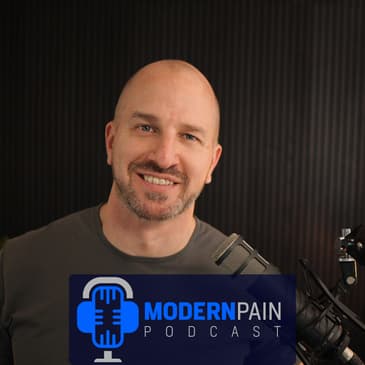
In this conversation, Mark Kargela interviews Ian Harris, an orthopedic surgeon and researcher, about the challenges and problems in healthcare. Ian discusses his journey from being a practicing surgeon to becoming interested in the scientific method and evidence-based medicine. He talks about the resistance he has faced in challenging the status quo and the difficulties in changing the way surgeons think. They also discuss the placebo response in surgery, the blurring of normal and disease states in healthcare, and the overuse of procedures like spinal fusion and regenerative medicine. Ian shares his projects on placebo studies for rotator cuff repair and spine fusion, which aim to provide high-quality evidence to change practice.
Takeaways
- The scientific method and evidence-based medicine are crucial in improving healthcare practices.
- Surgeons often face resistance when challenging the status quo and trying to change the way they think.
- The placebo response in surgery is complex, and contextual factors play a significant role.
- The blurring of normal and disease states in healthcare leads to unnecessary interventions and medicalization of normal conditions.
- Procedures like spinal fusion and regenerative medicine are often overused despite limited evidence of their effectiveness.
- Placebo studies for rotator cuff repair and spine fusion aim to provide high-quality evidence to guide practice.
Books (Affiliate Links)
Surgery: The Ultimate Placebo
Hippocrasy: How Doctors are Betraying Their Oath
*********************************************************************
📸 - Follow us on Instagram - https://www.instagram.com/modernpaincare/
🐦 - Follow us on Twitter - https://www.twitter.com/modernpaincare/
🎙️ - Listen to our Podcast - https://www.modernpaincare.com
____________________________________
Modern Pain Care is a company dedicated to spreading evidence-based and person-centered information about pain, prevention, and overall fitness and wellness
When patients go to a surgeon for a surgical consultation, how often are they armed with the complete story around surgery? How many of you have seen people who simply trusted the recommendations of a surgeon without even considering the lack of evidence that sometimes can inform the surgery they are deciding on? I know I've seen it more than I'd like to admit. This week's guest, Ian Harris, Australian orthopedic surgeon, and epidemiologists shared some amazing perspectives from his work and has been shedding light on a lot of the issues around the lack of alignment of surgical care and evidence-based practice. Ian himself had an epiphany in his practice that really shook the clinical foundation that he, like most of us, just assumed stood on solid evidence
Ian Harris:I started to look I looked completely differently at everything I was doing and I realized that a lot of what I was doing just didn't have evidence and I just assumed that it did. I mean, everybody was doing it. And so I just assumed that stuff worked and I realized that, quite likely a lot of it didn't.
Mark Kargela:There's been plenty of controversy over the use of regenerative medicine or orthobiologics and Ian didn't mince his words on the evidence we have to support these interventions.
Ian Harris:it's big business here as well. And it's another thing I'm interested in. A lot of surgeons sports medicine physicians and practitioners in the musculoskeletal field use a lot of these, poorly evidence based interventions. And yeah, PRP is one of them. We had a run on stem cells for a while until they put the lid down on that somehow. I'm not sure what they did. But people were paying$10, 000 for a course of stem cell injections. The best evidence we have is
Mark Kargela:When faced with the reality that many of these surgeries failed to elicit a specific effect or mechanism of improvement beyond natural history, regression to mean, and simply doing nothing, his colleagues had some interesting responses.
Ian Harris:I've had surgeons say that to me, believe it or not. They looked at these placebo studies and they said, okay, well, that's fine. It's, this is a placebo response we're getting, then I'll just keep doing the operation. I don't care what the mechanism is, as long as the patients get better. And you have to explain to them, no, they would have got better had you never touched them
Mark Kargela:It was such a privilege to get a chance to sit down with Ian. Make sure you check out his book, Surgery, the Ultimate Placebo and Hippocrasy, how doctors are betraying their oath that are linked in the show notes. If you would like to go deeper and have discussions about these issues and more, and most importantly, how we can help people make fully informed decisions on surgery, then make sure you check out our community at modernpaincare.com/community. Now, on to the episode.
Announcer:This is the Modern Pain Podcast with Mark Kargela.
Mark Kargela:Welcome to the podcast, Ian.
Ian Harris:Thanks for having me.
Mark Kargela:I really appreciate you taking your time. I know you're very busy in your academic career and I know you're also obviously still practicing as an orthopedic surgeon. Sounds like you're very busy and maybe we'll clarify exactly all the roles you have, because it definitely looks like you have quite the range of roles. resume and obviously written two amazing books I've really enjoyed and really get to some of the problems that we talk on the podcast here about as far as some of the challenges we face in healthcare. But before we get deep into that I'd like to get right into kind of your journey and maybe obviously we don't have to go to that everything you've done, but I'm just curious how it got to where, coming out of school. to being an orthopedic surgeon to where your journey progressed to you've had these challenging thoughts and obviously challenged maybe the status quo of what we think in the professions and then of to where you are today.
Ian Harris:Yeah, I think that's a good question. It's a pretty traditional path from school just straight into medicine without really thinking much about it and and always had a a bent for surgery and in particular You know, the simplistic, I think, mechanistic aspects of things. And so I got drawn towards orthopedic surgery and then I got drawn towards fracture surgery. And so my main area of specialty is trauma surgery. So just fixing broken bones and very appealing to me as you, you know, I think anyone can see the appeal of that kind of thing. But I was just an average orthopedic surgeon, but Always, you know, ever since I was at school, I had an attraction towards the idea of science and the scientific method as a way of knowing things, and I wanted to be a better scientist, and it wasn't until I had been in practice for a few years that I realized that I didn't have the training and the scientific method that I should have. really in medicine. We didn't have it in those days. It's a little bit different now, but probably not a whole lot different. And I tried to find out how to get this training. I didn't really know how you'd did it. And I thought, Oh, do I need to do a degree in statistics or something like that? And I soon realized it's not a lot of people think that I think, Oh, you just got to know about statistics. And then, you know, about the scientific method. And it's, that's not the answer. The answer is to actually learn how to do science properly. And so I eventually found my way to doing a master's in clinical epidemiology or evidence based medicine. And that just completely removed the blinkers from my eyes. And I started to look I looked completely differently at everything I was doing and I realized that what I was, a lot of what I was doing just didn't have evidence and I just assumed that it did. I mean, everybody was doing it. And so I just assumed that stuff worked and I realized that, quite likely a lot of it didn't. And a lot of it hadn't been exposed to evidence and around about that time, some of these placebo randomized trials were coming out in orthopedics and I was, You know, it, you know, sent shockwaves and I was stunned by the great science in this, you know, these are really good studies. And so I really wanted to do that kind of thing. And I'd, so I turned a master's into a PhD and I took on an academic role. And for the last, you know, Nearly 20 years I've been in academia and doing studies and studying the way we do things and why we do things that don't work and why we believe things that aren't true and and really trying to counter balance the prevailing feeling about medicine is that it's all good, you know, and people wouldn't operate on you unless it worked right. You know, that this is default mentality. So I've been trying to challenge the status quo, challenge the way we think about things and challenge this blind, really belief. And a lot of what we do is healthcare practitioners. So that's what got me there and that was the switch, the light switch that went off when I started doing Clinical Epidemiology and I started learning about how we really know if things work or not. And that completely changed the way I practice and it completely ignited my interest. My interest in academia and learning more about this.
Mark Kargela:You bring some good points. I'm curious with this, you had a great epiphany with, in realizing some of the challenges with, Some of the status quo knowledge other and some of the beliefs and then some of the just I guess blind trust You could say a lot of the public has in medicine as far as that It's all good. And if anything is being recommended, it must be evidence based yet. You found that's probably not the case I'm wondering if you can speak to maybe a few things one The challenges you may have faced as you've been bringing up some of these inconvenient truths that I think are out there. I got to imagine that's not always been received. Well, I know we've, you know, I've personally mentioned some of the challenges within our own profession and we have, you know, similar challenges of maybe the, not the most scientifically rigorous, you know, treatments being portrayed out there and and utilized. And I know for me personally, it wasn't always received well. I'm curious what's been the response and how have you been able to handle as you've of progressed in your career?
Ian Harris:The response has been interesting to me. And it has never really been, you know, hostile or very antagonistic. I guess maybe, you know, sometimes it is. But it's just been interesting to me the way surgeons in particular, which is what I mainly deal with have reacted to things and how they, different surgeons react differently. And that's just been a really interesting to me because my aim is to get them to change the way they think and And it's been interesting trying to work out how to do that because it's not easy at all. So, you know, there's certainly been successes and I've got lots of, you know, there's lots of surgeons that I work with. There's surgeons that I've trained and supervised and there's colleagues that support me, you know, so it's not like I, I think people have a picture of me sort of standing alone against all the other surgeons, but that's not the case. You know, I've got. You know, I do multi center studies in dozens of hospitals across the country with dozens or hundreds of surgeons who join me on these studies. So you know, in general, there's a lot of support and people I think realize that these studies are the way to finding out how things work. But it's just been fascinating to see when I've come up against surgeons who just Don't believe the evidence and the reasons they give and you've seen it all before, you know, it's this, and this is what I've written about. It's this problem surgeons have with the dissociation between what they see and what I'm telling them. And so they see people get better. And so they assume that what they're doing works because they don't necessarily understand that the patient may have gotten better anyway. Know, and these other factors, they don't understand the sort of the causal, you know, association and not causation kind of thing. And just these entrenched beliefs. So I've got, I find it very difficult with older surgeons to get them to change their mind. And when you think about it, you've got a surgeon who's, you know, 65 years old and he spent the last 30 years doing 20 knee arthroscopies a week. It's difficult for somebody like that to be told that operation doesn't work. It's just, it just doesn't make any sense to them. You know, I don't even know how to digest that kind of information. And probably naturally suspicious of where it's coming from and question the studies. So it's just, you know, it's been interesting. Certainly it's been challenging just getting the message across, but it hasn't really been, you know, there are moments when it gets, you know, antagonistic or whatever, but that's not a big feature.
Mark Kargela:It's great that you some folks supporting you and obviously a research team that's and people working with you of help change some of the narratives out there around healthcare and some of the maybe over medicalization that goes on out there. I'm wondering if you could speak a little bit to the placebo response. We've talked about it within. physical therapy, within manual therapy, within any intervention, there's placebo effects. You know, anytime you're doing any kind of therapeutic intervention, that's part of the gig. I'm wondering, and it sounds like that's the part that maybe some of the old school surgeons aren't really recognizing as placebo. Likely driving a bit of the outcomes they're they're doing their 20 scopes a day or whatever it may be I'm wondering if you can speak to Kind of the placebo response. I know that could be a hour long lecture in of itself but maybe a bit about how you've seen that kind of impact the surgical industry and The responses you see within that industry.
Ian Harris:I would challenge the assumption that there's a strong placebo response in surgery. And I think it gets really difficult and I know that I've written about this and it gets really difficult to tease out. a true placebo response from just the contextual factors. And I think when a lot of people say placebo response, what they mean is these contextual factors. And so particularly in physiotherapy but also in medicine and surgery when you're dealing very closely with the patient you're talking face to face with them for a prolonged period of time. You've literally got your hands on them. There is, you know, there are probably some contextual features of this relationship and the way you talk to the patient and the way you bring them along with you and, you know, try and help them and they, they tend to, you know, want to get better than if you get them in the right frame of mind. This to me is not really a placebo response. This is part of the therapeutic interaction which can help people. And I think by calling it a placebo response, which many people do, you know, I don't, you know, I don't want to get into an argument about the terminology, but by calling it that, it's it's just something that's ingrained and it'll just happen. It doesn't, you know, you have to work on this relationship with people and it's, so it's not a placebo response. It's something you have to do. Yeah. And the way I try and frame this discussion is by saying there is no placebo response. But by definition, placebos have no effect. That's why they're placebos. And so the effect you're getting is from something else. It's from the way you interact with the patient or largely in surgery. It's from the natural history and regression to the main and what would have happened to the person anyway, even if you had not done the surgery. So recently we published a paper looking at trying to measure the placebo effect in surgery, and we found that it was. Basically not there. So when you look at the improvement in patients who had placebo surgery, because everybody improves in studies, you know, they improve in the control group, they improve in the treatment group, the differences between those groups that you have to look at, but when you look at how much people improved after placebo surgery, and you compare it to how much people improved in similar studies where they had no treatments. And it's the same. So there isn't really a placebo effect of surgery. And that was quite surprising. We thought we would find something, but we didn't. And in a way that means that you probably don't need to do a placebo study. When you're looking at surgery, I, we still do them because they have other advantages of patient blinding and avoiding crossover and other methodological advantages. But it also means that you can't be doing surgery and assuming that you're just getting a You know, a placebo response and that's why you do it because I've had surgeons say that to me, believe it or not. They looked at these placebo studies and they said, okay, well, that's fine. It's, this is a placebo response we're getting, then I'll just keep doing the operation. I don't care what the mechanism is, as long as the patients get better. And you have to explain to them, no, they would have got better had you never touched them.
Mark Kargela:That makes sense. And I appreciate you clarifying that. I know Dan Moerman'a somebody who's talked about the meaning response and in your book, you've talked about the art of medicine. And I'm wondering what's been your experience when we. I know for just experiences I've seen in other professions where it's hard to focus on that therapeutic ritual, right, that interaction effects that really often drive a lot of outcomes as you mentioned on top of regression of the mean and all the things you talk about. But yet we have professions and I'm wondering if you can speak to that kind of orthopedic surgery. I'm guessing it's similar where we get so caught up in the hyper technical components of our craft that make us feel. I don't know, like accomplished or where we were doing something really skilled, where it almost, I see some people get threatened by the fact that it may not be this amazing and complex technical Maybe it's a manipulation for a physiotherapist, but, or maybe it's a very complex surgical technique for a surgeon. I'm just wondering, have you seen a big struggle with a lot of surgeons to an orthopedist and maybe other professions to just grasp that? Maybe I also need to work on my interaction effects. I know sometimes orthopedic surgeons get the tag of not having always the best bedside manner at times, but I'm just wondering what's been your experience with that.
Ian Harris:No, it's true. And you see it all the time. The orthopedic surgeons in particular love the minutiae. They love the technical aspects of what they do. Yeah. And they do get caught up in that and that's what they spend all their time concentrating on. I don't think that necessarily means that they don't make good doctors or get along well with patients. And I don't know that there's a real correlation because I know there's people who are very good at the technical aspect, but also very good at talking to patients but many orthopedic surgeons aren't very good at talking to patients and don't give them the time, for example and often they're the ones that it's this lack of communication which is the biggest cause of being sued, which is a big problem in orthopedics. And it's just because the, often the patient doesn't feel as if they're being heard, properly acknowledged and considered. And perhaps that's the reason why they got the complication, whereas the patient who's very, the surgeon who's very good with the patient will tend not to get sued, even if they get complications because the patient feels, well, at least, you know, he understood where it was coming from, he or she understood where it was coming from and you know, listened to me and did their best. But, you know, complications occur, I can't blame the surgeon. So communication is very important, not only in bringing the patient along with you in the journey and getting them to support you and therefore more likely to have a good result but it's also fundamental to avoiding fracturing the patient doctor relationship and ending up in court or wherever. Thank you.
Mark Kargela:I'm wondering where you find training. In this type of thing. I know, obviously our training often is very steeped in the technical components and these nonspecifics aren't easily examined on a examination, but I'm wondering where you feel like training maybe fall shorter and maybe where it needs to improve.
Ian Harris:Yeah, it does. I'm very critical of the training of surgeons because we train them just mainly on the technical aspects of the surgery. We train them how to do it. And this is something that is necessary. I mean, we need to train surgeons so that when they do surgery, that they do it correctly and that they know what they're doing and understand the anatomy and all of that is necessary. But the focus on that and not focusing on a broader understanding of the evidence and the science supporting what they do means that you end up training people that do operations. And we don't teach them very well when not to do operations and discerning when to and when not to. And there's a recent case there was you come at a good time. So here in Australia, there were just two nights ago, there was a big, um, Like it's a current affairs TV show it's not called a current affairs, it's another topical news show. And they focused on the problems with chronic back pain and the overuse of surgery. And they featured this surgeon who's Had his practice restricted and been in all sorts of trouble, but is now operating again. So I've been not knowing him. But they featured this surgeon who had just come out of training and was doing these massive operations on people and operations that I would never think that would be necessary. And trying to, you know, Fix the spine on people with osteoporosis doing massive fusions from the top of the thoracic spine down to the pelvis. All this kind of, you know, really over the top stuff for back pain. But to me, and the focus of the investigation was, oh, this is a bad individual surgeon. And to me, it's like, no, this is, this surgeon just came out of the training program in Australia. This is what this surgeon was trained to do. And this surgeon was signed off. by the College of Surgeons that, that he's okay and he knows what he's doing. That's the problem. The problem isn't, you know, this sort of one rogue surgeon. The problem is that surgeons across the board are doing too much surgery because that's the way they're being trained.
Mark Kargela:Do you see it in Australia? I know in the U S obviously we probably are the worst example of maybe financial incentives ruling the day, but I'm just curious, you I'm sympathetic a bit to. a new physio. mean, I can't imagine new surgeon who's trying to build up a practice and there's pressures of trying to have, you know, a schedule that's full and different things. I'm just curious what pressures you see out there that some folks face systemically and in Australia and maybe what you see internationally when it comes to know, some of the maybe pressures to perform these procedures, even though the science is staring them in the face that it may not be necessary.
Ian Harris:You know, there's lots of, there's lots of pressures and there's lots of incentives that drive surgeons towards operating. You've got to fill the operating lists that you have. You can certainly make more money by operating than not operating. There's a tendency to want to be, you know, to be the sort of in the top shelf of orthopedic surgeons, there's a tendency to want to be the one that does the most cases, you know, so the top hip surgeons are the surgeons that do the most hip replacements. Now, ideally that would come from getting more referrals than any other surgeons, but it can also be easily gained by just simply operating on everybody. And so there's a lot of incentives. The private hospitals incentivize surgery, financial incentives drive surgery. The desire to be a good or well known surgeon drives. The incentives to do surgery and there's other things that are you know, not so blunt but just this doubt we have whenever I have a patient that's well, I'm not sure whether this one needs surgery or not. There's always a tendency to say, well, I better do it because, you know, then I've at least tried, you know, the worst thing for a surgeon is to not operate and have the thing fail. Whereas for some reason, just the mentality, even for patients, it's like, well, we operated and it didn't work, but at least we gave it a go. Whereas if we don't operate and it doesn't work then it's well, you didn't even try. I'm trying to describe a mentality that patients and surgeons have. That tends to default to having a procedure and operating when there is doubt. And I think that drives a lot of it. So I have a little saying when I'm in clinical practice that when in doubt, don't operate. So if I'm faced with a patient and I had, yesterday I was on call and I had a patient You had an unusual elbow fracture in the distal humerus, and it wasn't one of the typical fractures that we always see and we know what to do, it's like a weird fracture. And I looked at it and the trainee that rang me said, Oh, I'll book them for surgery tomorrow, you know, we'll operate on it and put screws in. And I looked at it, I thought, it doesn't look that bad, you know, this patient's probably going to be okay. You know, I don't think we really need to operate. And so when in doubt, I just said, No, we'll just leave it. You know, we'll check him in the clinic in a week. We'll see how he's going. And I'm fairly confident this patient's gonna be okay, but it's very difficult to do that. And I think for over 90 percent of surgeons in the same situation, they would just say, Well, I'll just operate on you, put some screws in and, you know, and then it's done. And then if it falls apart, well, bad luck. At least I think it's done. gave it a go and tried to help. And that's the thinking of most surgeons. The default is to operate.
Mark Kargela:Yeah, there's obviously that kind of bias that we all have in our craft of trying to see it fit in everybody. I'm wondering where you feel our role is, and you're obviously you've written two great books, one with a co author, who's an amazing co author, Rochelle Bush binder, and I'm probably butchering her last name. So I apologize if I'm doing that. But I'm wondering what our role you see as folks that maybe recognize this evidence and the lack of translation to the front lines of patients like this information getting in patient's hands. You're obviously putting books out there that hopefully are making their way to I don't know how many patients pick it up and maybe you have feedback you've gotten some discussions from patients thanking you your work But I'm just curious where you feel our role is to start getting this information and in just of an everyday person's orbit
Ian Harris:Yeah, that's another one of my jobs. So apart from trying to change the way surgeons practice, I, Also want to change the way patients think about medicine because they too easily believe whatever it is that the surgeon tells them. And so I'm trying to reeducate patients as well about what questions to ask their doctor to consider a second opinion you know, to be more scientifically literate themselves. To understand biases and things like that. So that's one of the reasons behind writing the books is to, they're not aimed at necessarily practitioners. They're aimed at everyone. And I think unfortunately most of the people that read the books are practitioners. Not patients but educating the public and looking at getting patients more involved in the decision making is something else I'm trying to do. But I do often, because of my reputation, I do often get contacted by patients who have said, all over. been to see someone they've recommended spine surgery. Can I see you for a second opinion? And I say, yeah, that's fine. And but I can only ever change one mind at a time doing that, you know, that's not a very efficient way of changing the public's mentality. So I do that's why I appeared on this television program the other day and I write articles. You know, online and things like that because I want the public to think differently about it. I don't want them to think that spine fusion is the answer for their back pain. I don't want them to think that just because the surgeon recommended a surgery that they have to have it.
Mark Kargela:Yeah, we really appreciate it. Obviously, I really appreciate you allowing me to hopefully help spread it a little bit within our profession, within our audience. And I know we occasionally have some patients that listen in and we'll be pushing this out on YouTube and all the distribution channels to try to help give this message a, you know, front and center look for some patients. You speak a bit about chronic pain, chronic spine pain, infusions and things. One thing you've also written about was this blurring the normal to disease state within healthcare. I'm wondering if you of talk a little bit to that as far as how you see that and the negative impacts it's had on kind of healthcare in general. When we see that kind of blurring of what to, we used to think normal now all of a sudden is getting labeled and diagnosed and specifically treated. I know we see in physio and in healthcare spine stuff, a lot of the, findings that we used to think on MRIs and x rays that were pathological, we're now seeing are very much prevalent in non painful asymptomatic populations. I'm just curious if you can speak to that blurring that you talk about in the book.
Ian Harris:I could probably speak all day about that. That's one of the biggest problems that we face is the medicalization of normal. And this is what drives a lot of unnecessary interventions, and that can be physio or surgery or medical treatment or anything else. And you mentioned MRI scans. It's a great example. They've been lowering the threshold for definitions of other diseases in the field of medicine over many years, not necessarily to the benefit of those included. But, I face this all the time. Nearly every patient I see has got an abnormal MRI scan of something, their shoulder, their back, their knee. There isn't anybody over the age of 30 or 40 with a normal MRI scan of anything. It just doesn't happen. You know, and it, people don't realize that, that the association between the findings on MRI scan and pain are not as clear as we think. And I have to explain to patients that a lot of patients have an MRI scan like this, but don't have any pain. And a lot of patients who have terrible pain in their shoulder or back or knee don't have any changes on their MRI. It's just, it's, the correlation just doesn't work. very strong and, um, That's how we decrease the fear and the worry that people have. And this is the problem with MRI scans. When they go, I was, I've been around long enough to know when they came out. And when MRIs came out, this is the answer. These things show everything. It's fantastic. But we didn't realize that not everything they show is necessarily important. And so we have this ongoing argument about dehydrated discs and You know, changes that we see on MR and unfortunately, again, it's the system, it's the mentality in the system that drives all the problems. So for example, radiologists basically live by the code that they don't want to miss anything. Yeah. So that, that that's all they care about. It's a hundred percent like, I don't want to miss any, I'm going to list every single thing I see on that MRI because the only way I can possibly fail in my job is if I don't mention something that's there. And so they list everything and every disc is bulging and every bulging disc is possibly touching the nerve root and it's all over the place. And so you end up with a two page MRI report of every spine. And. And I just wonder how patients would react and how actively they would seek treatment if their MRI report simply read a single line that said no changes beyond those expected in this age group. Which is basically what nearly every MRI shows, and wouldn't patients react differently if they read that rather than reading the list of annular tears, disc protrusions, nerve effacements, all this kind of stuff that they read in their report.
Mark Kargela:It goes back to some of the challenges of educating the public on some of these things. I agree. I think there's been some studies showing when we start pairing up epidemiological data with these findings that there's a little bit improved outcomes, yet it's hard when you have a, like you said, two pages worth of kind of very scary sounding terminology that oftentimes, as a physio, it's definitely sometimes talking people off the cliff's ledge of Trying to normalize what they're having and, you know, validate their concerns yet, you know, try to explain a little bit of the data that we know that you've spoke to a bit. If we can go back to some of the procedures, I know you spoke about spinal fusion. It's one of the ones that I guess maybe struggle with a bit because I see some of the often in our clinics, we see that where it didn't go well and it's not going well. Yeah, and it's, I mean, there's definitely probably people who've had fusions who, and I've met some people who've said, gosh, you know, great. Yeah. It was an amazing thing. Yet, we see some countries in the world really struggling to even improve them or, you know, if all but said, we can't be doing these anymore. Yet, there's countries that maybe have other incentives in play. Probably us in the U. S., definitely one of them, where they still are quite rampant. I'm just wondering if you'd speak to you. Some of the things you've seen around spinal fusion and maybe other procedures too that are out there that just, I know you obviously you've, you spoke in your book about your knee scopes and we've seen some of the studies around that with, you know, you know, sham surgery versus real surgery. I'm just curious if you maybe can speak maybe first to the spinal fusion challenge that we face.
Ian Harris:Spinal fusion is an interesting one. It's probably one of the most important ones because even though it may not be one of the most common, it might not be as common as, Neon. Those could be It's a much bigger operation, it's a much more expensive operation, it's a much more dangerous operation. And they're actually, even though, you know, with every surgical technique, the techniques are getting better, so the technical aspects of doing it are a lot neater, they're a little more accurate. Et cetera, and the implants that they use are better. They're making up for that by doing bigger fusions. So these days, people are doing fusions that involve the front and the back of the spine. They're doing longer fusions than they were doing before. Much more complex fusions. And it's a big operation. It's dangerous, and it just isn't the evidence for it. or back pain. There's very little evidence for it for anything else for that matter. And it's even overdone because people say, Oh, well, I mean, if you've got a fractured spine, then you need to have a fusion. That's understandable. Well, no, it isn't because even when you have a fractured spine, a lot of the time fusion is not necessary and it's overdone. And one example I saw recently was an elderly patient with a osteoporotic compression fracture in the middle of the thoracic spine. I mean, that kind of, Fracture occurs every day and these are really common injuries and they heal and they get better. Surgeons now trying to operate on these. They're putting screws in the spine and and then injecting cement in the spine around the screws because they're so osteoporotic, the screws don't hold and they fall out. And then, The cement sometimes leaks into the spinal canal and causes paralysis or paraplegia. These are things that are completely unnecessary. There's no evidence that this operation works whatsoever. And yet that's what's being done. So it's certainly being overdone and you can see it in the practice variation. In the U. S. it is rampant. In U. S. it's the highest rate of spine fusion per 100, 000 population anywhere in the world. Much higher, at least five times higher than the UK, where you'd think the population would be similar. Australia is somewhere in between. But what we've published on in Australia is we've found that there's a huge difference between the private and the public sector. So in Australia, we have an unusual health system where we have universal healthcare, but half of the population also has private insurance, which allows them a little bit more flexibility in that they can, they don't have to go on a waiting list, they can go to the private hospital and get. whatever they want done by whatever specialist they want, you know, that kind of thing. And that two tier system has shown us something interesting that spine fusion is almost solely done in the private sector. So surgeons aren't doing it. in the public sector. They're doing it in the private sector. And you might think, oh, well, that's probably because of access. You know, it's easier to get things done in the private sector. That's where the availability is. And to some extent that's true, but we're not seeing these differences in other things. So if you look at hip and knee replacement, which are very common orthopedic operations they're being done in the private and the public sector. They're being done in large numbers in the public sector. because they need to be done because people need to have the operation, but spine fusion is not being done in the public sector. Why is that? And my argument is that because it's not necessary because people don't need to have it done. And and that shows that this is not an operation that's necessary. It's a, an operation that's you know, related to surgeon preferences and the surgeons seem to be preferencing that operation when patients are insured and not preferencing it when they're not insured. And I can see the conversation in my mind, I, when a patient comes into a spine surgeon, you know, and I used to do spine fusions I can say to the patient who's not insured, I could say, well, look, you know, you've got back pain, I know spine fusion is one option and some surgeons do this, but there's not really very good evidence for it. We, you know, the results are not, you know, not that predictable and I, it's a big operation and I wouldn't recommend it. But if the same patient comes in and they're insured I could almost have the same conversation, but result in surgery. So I could say to them, well, look, spine fusion is one option. You know, we don't really have good evidence for it. And you know, not everyone gets better. And you know, some patients don't do very well and there's complications. It's a big operation, but you've tried everything else and we won't know whether you're going to be one of the ones that gets better until we do it. So, why don't we do it and have a go? And I think that's what's happening, unfortunately, which explains why it's being done in the private sector and why it's being done in the U. S. Because in the U. S., you get paid a lot to do a spine fusion. You don't get paid much not to do a spine fusion.
Mark Kargela:Yeah, we always gripe in physical therapy here in the U. S. that, you know, we can barely get a three to four hundred dollar belt of physical therapy covered yet, you know, these massive hundred and something thousand dollar, you know, well, you said it massively complex involved surgeries with all these, you know, side effects and things. It's frustrating and definitely in the U. S. is probably some of the worst examples of maybe where science be damned when it comes to some of the Things that are done.
Ian Harris:This is a reflection of the power that doctors and surgeons in particular have. They have far too much power in society and in, in government and politics. And I've dealt with a lot of government organizations here in Australia, and they do not want to take on the surgeons. Because when they take on the surgeons, they often lose. Because if they say for example, okay, we're not going to fund spine fusions, then it just takes one, you know, neurosurgeon to wheel a patient out in a wheelchair in front of the cameras and just say, you know, I'm a brain surgeon. I know what I'm doing. I want to operate on this patient. The government won't let me. won't pay for it. So they're scared of doing that. You know, they, nobody wants to take them on, unfortunately. We,
Mark Kargela:Yeah. You wonder what it would take, but obviously we haven't got to the point where it hits a critical point with healthcare. I just sometimes wonder how our healthcare system and the costs that just seem to skyrocket, whether there just comes a time where it just becomes unsustainable, but
Ian Harris:we keep wanting, we keep thinking we're going to hit that point and we've never hit it, but it is a huge problem. The money we're wasting on expensive, unnecessary treatments that could be diverted to simpler, more effective treatments.
Mark Kargela:I'm wondering one big hot button topic recently in social media. I don't, I haven't seen you involved on social media and probably good for you for not if you aren't. But there was an orthopedic surgeon who was speaking to orthobiologics. He was phrasing more regenerative medicine, PRP and different things. I'm wondering, and this may not be your expertise, obviously this falls within, but it may not be something you utilize in your practice. I just see a lot of discussions even in the orthopedic surgery. presence there on Twitter X, where it was quite a dialogue of it's seeming to fall into the same challenges of science lacking yet, you know, financial opportunity definitely abounds. And it seems to be that there's the same push some to move. Cause our insurers rarely are reimbursing this anymore either, but it's, this is mainly something come out of pocket and we have people paying 30 to 40, 000 for some of these treatments with. Pretty scant evidence, you know, and part of me wants to just jump on the like we need to get rid of it yet There seems to be some maybe moderate voices there to say hey, we haven't figured it out yet type thing with maybe there is a possible Treatment but or a possible, you know, right patient. I'm just wondering if maybe you've had any exposure to that and your thoughts on it
Ian Harris:It's big business here as well. And it's another thing I'm interested in. A lot of surgeons sports medicine physicians and practitioners in the musculoskeletal field use a lot of these, poorly evidence based interventions. And yeah, PRP is one of them. We had a run on stem cells for a while until they put the lid down on that somehow. I'm not sure what they did. But that was, that people were paying, you know, 10, 000 for a course of stem cell injections. The evidence, the best evidence we have is that these don't work. And so it's another complete waste of effort, resources, you know, it's not just the 10, 000, it's the, where that 10, 000 could have gone, the waste of time the possible harms that come from it, it's just completely fruitless. It's an example of how we generate healthcare activity where everybody makes money and everybody gets turned over and everybody's really happy, but we don't actually generate health. It's this problem of health care activity over health itself.
Mark Kargela:Yeah Definitely some systemic issues for sure. I wanted to respect your time today. I really again appreciate you spending it with us. I've greatly enjoyed the discussion. I'm wondering if you can share maybe some of the things you see on the horizon of maybe or maybe projects you're up to
Ian Harris:yeah, I can tell you some projects I'm involved in which I think you'll find interesting. One study that I'm leading is a a placebo study of rotator cuffs. repair. And this is for people with degenerative tears. And this has been a very interesting project to, to get up and running because it's a very common operation, as you know, and it's a common condition for physios to treat, is shoulder problems. And a lot of shoulder, you know, this is not the young people with like, Instability or interdislocations, but these are the people over the age of 40 who have some kind of rotator cuff pathology and they have shoulder pain. They often end up having surgery, arthroscopic surgery to clean out the shoulder or to actually repair tears in the rotator cuff. So we're doing a study where patients will be blind and they'll either have the rotator cuff tear repaired or not. And I think that'll be interesting because that kind of study is. It's never been done before in the shoulder. And the only studies that have been done, there's only been a handful of studies that have compared rotator cuff repair to non operative treatment. And the summary of those studies is that there's probably not a whole lot of difference between them. So, you know, we need really high quality evidence, which is why we're doing this study. Also involved in the study that's due to start. Very soon this year which will be a new study looking at spine fusion versus best non operative treatment. And there were a handful of studies done in that area, but they're all over 20 years old now. And so they get criticized a little bit for not really, you know, using modern techniques, et cetera. And and so I think it's long overdue. I think it's not a placebo study. It's a study of surgery versus best non operative care. For back pain, I think a study like this is way overdue. So I was really happy when I heard that this study was running. I'm not leading that one. I'm just helping with it. And so I think when studies like this come out, these are often the game changers. These are the ones that, that really impact. practice. No study ever really impacts practice as much as it should, unfortunately. And it never impacts it straight away, but it does eventually. If you look at the studies on the arthroscopy, which were many studies over many years, none of them had an immediate impact, but by now they have had a big impact. And I don't really know what the rates have done in America much, but I know that in parts of Europe, particularly northern Europe and in Australia. The rates of neopthaloscopy have significantly declined. And I think that if we get enough high quality studies in spine fusion, particularly this one we're looking at, which is a multinational study, should be quite good. It will really change practice, hopefully. So that these are the things that I try and promote. And I guess I do believe that they're necessary to change practice.
Mark Kargela:I think I can speak for our entire audience that we really appreciate you and the research teams you're involved in to start bringing this evidence to light and hopefully continue to chisel away till eventually some of these things are changing. Like you said, I would agree in the U. S. I definitely see in my 20 years of being a physio, I used to see scopes all the time coming through the clinic. I see significantly less. So things change. It takes time and sometimes it's like pushing a big rock uphill. But I'm happy we have folks like yourself and some of your great research partners that are doing it. So thank you again for all your contributions and the great work you're doing.
Ian Harris:My pleasure.
Mark Kargela:For those of you listening, we appreciate if you would subscribe on wherever you're listening. If you're watching on YouTube, if you could subscribe on YouTube, we'd greatly appreciate that. Spread this message to someone maybe who's considering surgery or doesn't have the full story on some of the things they're considering in their own healthcare. We appreciate you listening to us today and have a good week. We'll talk to you next time
Announcer:This has been another episode of the Modern Pain Podcast with Dr. Mark Cargilla. Join us next time as we continue our journey to help change the story around pain. For more information on the show, visit modernpaincare. com. This podcast is for educational and informational purposes only. It is not a substitute for medical advice or treatment. Please consult a licensed professional for your specific medical needs. Changing the story around pain. This is the Modern Pain Podcast.