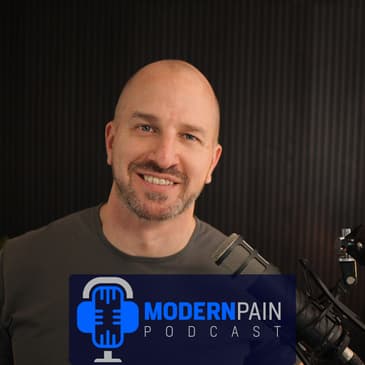
In this episode, we explore the critical role of empathy in clinical settings. As a clinician, acknowledging a patient's pain by simply listening and validating their feelings can be profoundly impactful. Learn the importance of saying 'I hear you' and offering sincere apologies to foster a deeper connection and support for those in need.
A Path Forward - Keith's Facebook Blog
Keith's X Profile
*********************************************************************
📸 - Follow us on Instagram - https://www.instagram.com/modernpaincare/
🐦 - Follow us on Twitter - https://www.twitter.com/modernpaincare/
🎙️ - Listen to our Podcast - https://www.modernpaincare.com
____________________________________
Modern Pain Care is a company dedicated to spreading evidence-based and person-centered information about pain, prevention, and overall fitness and wellness
[00:00:00] Welcome back to another episode of the Modern Pain Podcast. This week we sat down with Keith Meldrum. For those of you who have listened to the episodes in the past, Keith was one of the first episodes
[00:00:08] we created on the podcast. Since then, the production value and hopefully the quality podcast has improved. Keith is a lived experience of pain and is an active advocate for people living with pain. He has an amazing story that we can all learn from. And he's another example
[00:00:21] of how we need patient voices at conferences and in settings where we are trying to teach healthcare professionals how to manage patients who are dealing with complex pain issues. In this episode, we talked about his experience with healthcare and the interaction that made a
[00:00:34] massive impact in his trajectory. Here we go again. He's going to tell me it's not that bad and whatever. In that moment I had just all of these thoughts of here they're going to go,
[00:00:44] they're just going to throw me out again. So I looked at him, just resigned. I'm like, okay. And he just looked at me. His name is Dr. David Hunt. And he just looked at me
[00:00:55] with absolute clear compassion and empathy. And he just said, it's okay. We believe you. And I was just, I was stunned because up to that point I had doctors say, yeah, I can stick a needle in you, but nobody ever actually said we think it's real.
[00:01:13] Keith spoke to his thoughts on how healthcare professionals trained in a healer and fix it mentality struggle to validate the experiences of people in pain. I don't think most people who get into the healthcare profession get into it to be invalidated.
[00:01:27] We have a system of healthcare that spoke the systemic healthcare system and then the education system that feeds people into healthcare, which is still too focused on a healer mentality. Keith discussed his recommendations to help healthcare professionals not burn out and
[00:01:46] suffer from compassion fatigue. In that setting, if that's the one time that you mark as a clinician, you actually hear somebody say, and that's a lot to hear. But if you don't hold it is like I need to fix it, but if I can just say,
[00:02:00] I hear you and that must be really hard. And I'm sorry it happened. That sometimes can be so important to people that like, it's the David Hunt for me. It's like somebody actually heard me. Like they actually heard what I said. I continuously am questioning when someone
[00:02:14] is ready to make a change in how they approach their pain. And if they need to go through challenges and struggles with a fix it focused healthcare approach before they can commit to
[00:02:22] live well with pain versus no living until pain is gone approach. We spoke about this and much more in this episode. These are episodes every healthcare professional and student should be listening to. We must never lose the perspective and the expertise of the person sitting in front
[00:02:36] of us as a patient. With that said, I would be grateful if you would share this episode with students and clinicians, you know who are trying to figure out how to better help people understand and manage their pain onto the episode.
[00:02:48] This is the Modern Pain Podcast with Mark Karjula. Welcome to the podcast, Keith. Great, Mark. Thanks. It's good to see you again. Thanks for having me. We were talking this, you were one of the initial guests of the podcast. And I'd like to say
[00:03:01] since our first recording are the production value probably has bumped up a little bit. Technology has done it. And I've, I think that was again, single digits. And I think we're at visit or episode like 158 or 159 somewhere in there with this. So it's come a long way.
[00:03:14] Congratulations. That's awesome. Thank you for joining us for episode two. And I've mentioned as I've kind of watched you online and I love to keep connected with patients because I think it's, it's one thing that keeps us grounded as clinicians, as the folks that
[00:03:26] have kind of our walk in the walk and dealing with persistent pain and hearing their perspectives and things like that, that really keeps us kind of focused because I, you and I think both agree that conferences often are woefully short on the patient perspective
[00:03:40] and really making sure that stays intact. Before we get into more of that discussions, if you could just introduce yourself for maybe folks who haven't listened to that wonderful first episode that we had together, we'll link it in the show notes so folks can
[00:03:52] go back and hear, hear your perspective that time. But if you can introduce yourself, I'd appreciate it for the audience. Great. Yeah. Well, I appreciate it, Mark. And it's really great to be here again.
[00:04:01] And like I said, it's really cool to see how far things have come in. And like you have been watching you as you, you've grown modern pain in the podcast. And so it's, it's really an honor
[00:04:10] to be here. So I said my name is Keith Meldrum. I, one of the many 40 plus million crazy Canadians, I live in British Columbia in the southern part of the province only about an hour and a
[00:04:22] half from the border with our friends to the south, the Okanagan Valley. So, so by day I am an engineer, technologist, vice president of a civil construction company. And that's what sort of keeps me busy throughout the day. But like one of many people in Canada
[00:04:39] under the 8 million, I'm a person that lives with persistent pain. And that's from a really poor decision I made at 16 to get behind the wheel of a car after a little too much alcohol
[00:04:50] and not enough sleep. And I rolled my car down a bank and caused myself lots of abdominal trauma, which led to many, many surgeries and then just since sent a life with persistent pain.
[00:05:00] And after a number of years of not dealing with it well and going through a medical system in the late 80s and the 90s that we think it's challenging now for people that live with pain back then,
[00:05:11] it was pretty, pretty archaic. So after a lot of challenges and having some opportunities presented to me to be able to see pain differently in my life with it, that's what kicked off my
[00:05:23] advocacy. And in the last about 13 or 14 years, I've decided that my job is to stand on a soapbox and beat a drum wherever I can for whoever listened. So here's a perfect opportunity
[00:05:35] to be on that soapbox. I appreciate it. If I can provide any soapboxes for some patients, I'm happy to do so because folks can listen to our first episode, which again, we'll link in the show notes. But I want to just reflect back to kind of that big
[00:05:50] epiphany moment I think or that big kind of turning point for you in your kind of journey with it. Because you had, as you mentioned, really dealt with a healthcare system that was very poorly managing pain if you even say that we're managing it well at all.
[00:06:05] Where there's just a lot of skepticism folks challenging people's moral integrity. I know if our friend, Gillette, has went through some of the similar stuff with her work compensation journey. Can you kind of talk a little bit about that encounter? Kind of how you were
[00:06:18] going into it as far as what had kind of built up to where you were, I think you had mentioned being kind of an angry, really frustrated under which a lot of folks who'd gone through that type
[00:06:26] of journey would be. And how that kind of interaction and encounter really maybe shifted your kind of approach going forward from that. Yeah, no, I appreciate that. But yeah, so from like 86 to the 2004 where I kind of had that moment, it really was a struggle and part
[00:06:46] of that. I mean, you're young, it was 16, so you're not even, you're still the developing person. But I had this terrible car accident and just about killed me. And that's a lot to deal with
[00:06:58] at that age. And knowing that I did it to myself and there's all this psychology that goes with it, but nobody ever dealt with any of the psychological side. It was all very mechanical. I had damage, they took things out, put things in. I had lots of surgeries,
[00:07:12] but I still had this pain. And in early on, I was about 19, I had my family doctor tell me, and I'm getting old 54 now, but I remember it was 18 or 19. And it was in his office and he just
[00:07:25] lifted me and he said everything that can be fixed has been fixed. And this is all in your head. So this starts this path of like, what is wrong with me and how crazy must I be and why
[00:07:35] am I making this up? And that didn't add to the challenges in my healthcare, then interface with the healthcare system where you're like, geez, I got pain and you're told, what do you
[00:07:46] want me to do about it? There's nothing I can do. It can't be that bad. You're just drug seeking. You have all these painful ER visits because when you're at this crisis moment, you've got nothing left in your tank because you don't know how to deal with it.
[00:07:59] And all you know is I'm hurt. So I have to go to a doctor. So you go to an ER, which are just like terribly dismissive dehumanizing experiences. And I mean, I did receive treatments in that. I mean, I tried every needle intervention or anything
[00:08:13] they could do to me, but it was often just very mechanical from the clinicians. They're like, yeah, I can stick a needle in you. Oh, it didn't work. So there's nothing. And they would say
[00:08:20] there's nothing more I can do for you. And then they just, that's it. So you're fighting through all of that. And then in the back of my head is my family doctor telling me it's all
[00:08:31] in my head. And I'm like, oh, like I'm really screwed up. And after another set of needle interventions, they're doing a pair of vertebral nerve blocks and one of them went a little deep
[00:08:43] and gave me a partial pneumothorax. And that doctor was like, okay, like this, you know, there's the risk and it happens. So we should probably stop. He was the first one who said,
[00:08:53] and it wasn't without compassion, but he was like, you might want to try and look at this thing called spinal cord stimulation may or may not work. And I was at this point,
[00:09:01] I would have taken anything like I was going to jump at whatever they offered. So long story short, the referral happens. I get sent to the clinic and it's not in my hometown. It's in a major
[00:09:13] center in British Columbia. So down I go and I'm doing the intake and I'm sitting there in the doctor's office or in the clinic's office and they're taking your history and I'm reciting
[00:09:24] it for literally the 30 or 40th time because every time you talk to a doctor or something, you got to recite your history. And I'm just, I'm not even looking at him. I am like,
[00:09:33] dude, I'm looking this way and he's sitting off here and he's asking this and asking that. And he's right in the way and out of the corner of my eye, see that he stopped writing.
[00:09:42] And he's put his pen down and I'm like, oh, you know, here we go again. He's going to tell me it's not that bad and like whatever in that moment ahead, just all of these thoughts
[00:09:52] of here they're going to go. They're just going to throw me out again. So I looked at him, just resigned. I'm like, okay. And he just looked at me. His name is Dr. David Hunt.
[00:10:02] And he just looked at me with absolute clear compassion and empathy. And he just said, it's okay. We believe you. And I was just, I was stunned because up to that point, I had
[00:10:16] doctors say, yeah, I can stick a needle in you, but nobody ever actually said we think it's real or it's that bad. And in that, it's okay. We believe you moment. That was the most important
[00:10:29] thing that any healthcare provider can provide to a person that lives with pain is validation. Because most people when you live with this, you do think maybe I am crazy. What's wrong with me? What's wrong with my body? It's a really challenging thing.
[00:10:43] And so when somebody who's in this position of authority called a doctor says we believe you, it can change your path. And that's what it did for me. It didn't happen overnight. I didn't jump
[00:10:54] up and go on better. But I was going down a path of anger and fighting and not living my, I was living an okay life because thankfully I had support, but not a great life. And that gave me the opportunity to shift that perspective.
[00:11:10] Yeah. Just a huge amount of invalidation and finally reaching a healthcare professional who could just like you said, step back, validate what you've gone through and how powerful that can be for patients. You've now done a lot with interfacing with healthcare professionals
[00:11:28] in a lot of your advocacy work and what you're doing, which I think is amazing. You've probably had some great conversations I can imagine. And I'd love to hear your perspective on where you think that invalidation comes from as far as like,
[00:11:42] I don't think people wake up trying to be invalidating or under a really consider the what, how those words land with people and how their behaviors and how their actions land with somebody who's gone on a journey like yourself. I'm wondering based on your,
[00:11:57] you know, experience with all these different healthcare professionals and being able to come full circle with everything, where do you think that challenge for the validation comes from when it comes to healthcare professionals? I love that question, Mark, because I agree with
[00:12:10] you. I don't think most people who get into the healthcare profession get into it to be invalidated. They do it, whether you're a doctor, nurse, physical therapist, occupational therapist, whatever, you do it because there's an underlying feeling of wanting to help people and
[00:12:30] get people better. And I think a lot of it comes from we have a system of healthcare that's both the systemic healthcare system and then the education system that feeds people into healthcare, which is still too focused on a healer mentality. And I know that may
[00:12:50] wrong. I mean, when I'm sick and I have an illness, I want to be healed. But unfortunately, these bodies are terribly complex. And sometimes there is no panacea and there's no way to
[00:13:01] actually fix it. But healthcare is still founded in that fixed mentality. And I think a lot of people get into healthcare and they're like, I am here to help people and I'm going to make them
[00:13:13] better. And then over the years, I think it can be a bit of a grind. It can beat people down. And then when you see people that live with a long-term illness like pain,
[00:13:23] I can only imagine how difficult that is as a healthcare provider because you often get a lot from these people because you're not just getting the pain that they live with. You're getting their life and their social issues and their psychological issues and their emotional
[00:13:36] and it's a big dump on them. And I think part of it is just a self-protection of like, I can't get into all of that. And if I can't fix you, then I can't fix you in. And
[00:13:48] I think it's some of it as a little bit of self-preservation. Otherwise, you'll wear every single person's illness. And I don't know how you're going to work the next day. So I agree with you. I don't think most people would wake up and go to their medical school
[00:14:04] or their PT school and say, I'm going to dismiss people for their illness. They go into it because they want to help people and then they get into it and realize this is complex and these people
[00:14:12] have so many issues and I don't know how to address it because I've been taught how to fix it bio mechanically. And while, you know, biomechanically in all pain is biomedical, there's so much more to it. And if we allow those that are in these professions to better
[00:14:31] understand that and address those issues is equally if not more sometimes than just the biomedical, I think that would be less frustrating and challenging for them. Agreed. It's tough when and it's in a university setting, I'm always trying to
[00:14:48] dance a line because as an educator and somebody who works with, you know, students in the physical therapy profession trying to come up, it's we're trying to train these students to pass a board
[00:14:59] exam. So right, it's hard to quantify emotions and psychosocial components into a nice ABC or D on a scan tron sheet so I can just can put a rubber stamp on you as a clinician that
[00:15:13] you are safe to go out there and navigate the clinical world, which again, I think comes back to mentorship and find connecting with clinicians early in your career that can help guide you as
[00:15:24] you're, because it's a tough thing. You mentioned a lot of this fix it mentality and healer mentality. It is a tough thing when you come into the clinic with that and it depends on your setting, you know, especially if you're going to see if it's an average community
[00:15:36] setting where you're seeing the gamut of things, you're definitely going to see folks that are navigating the healthcare system and struggling to navigate it were because of the issues that you discuss as you face some of those challenges in your journey.
[00:15:50] I'm wondering, you mentioned having clinicians not wear it because I totally agree. There is something to compassion fatigue and burnout and these different things in your discussions with folks and in your experience, what do you think is kind of the key to kind of
[00:16:06] that balance of like being able to show empathy and validate these experiences and often again, having patients come to you with very difficult stories that have some things that pull out your heart strings as a clinician where we're trying to kind of just hold it together as
[00:16:23] we're hearing just some horrible situations that people have gone through. Is there anything you would recommend or maybe any advice you've heard along the way to kind of balance that for clinicians? Unfortunately, not really because that is such a real problem and
[00:16:38] in a perfect world, we would sort of tear down the healthcare systems that we have in North America and we would rebuild them so that they are truly interdisciplinary and that every clinician has
[00:16:50] supports that they need so that as a PT when you're dealing with somebody who is carrying not only their physical pain but all of the emotion and psychology goes with it, you actually have the ability to connect them quickly and efficiently with the right people.
[00:17:05] That unfortunately doesn't happen very often. I think the best that I can offer is, I do believe that as clinicians, we're all human beings, you need to find that better protection so you can't go all in and be their emotional savior and their physical savior
[00:17:24] but just listening and hearing people and saying, I think even things like, I'm sorry that happened or that must really be hard. Sometimes people are looking for somebody to solve all their problems. I get it, I was but often people are just looking to actually be heard
[00:17:43] and in that setting, if that's the one time that you mark as a clinician, you actually hear somebody say, and that's a lot to hear but if you don't hold it as like I need to fix it but
[00:17:55] if I can just say, I hear you and that must be really hard and I'm sorry it happened, that sometimes can be so important to people. It's the David Hunt for me. It's like somebody actually heard me.
[00:18:05] Like they actually heard what I said and sometimes I can give a little more space and time to find things that they can do for themselves as well because as people that live with these
[00:18:16] long-term conditions, we do need to get to a place where we can start to help ourselves as well because if we keep looking outwardly that's not going to be a long-term solution. Yeah the system doesn't really equip our clinicians with the ability to have that support
[00:18:33] to either have that multi-term support but I'd argue too like clinicians need to be able to chat and talk about what they're hearing and experiencing with somebody from a mental health perspective. I mean I've had my periods where some of the stories weighed quite heavily upon me
[00:18:48] and I felt like it was just a lot to bear and just you know I'm fortunate we have a kind of interdisciplinary setting at our university and just kind of being able to bounce thoughts and
[00:18:57] ideas and some of these struggles off of some of our psychology colleagues has been huge for me just to be able to not feel like you have to shoulder all that challenge and burden
[00:19:07] of like some of these very challenging and you know some of my heartbreaking stories that some of our patients bring to us each time. I'm wondering with you know some of the patient perspective you obviously bring an amazing perspective having gone through it and some of
[00:19:25] significant challenges that folks navigate with it. If we're having some patients listening to us right now which we often do some patients who tune in and kind of listen to the podcast what would you say are some of the key things because everybody's at different
[00:19:39] parts in their journey and I'd love to. There's a period of like pain, nervous, and education. Man I am going to teach people about pain and they're going to make a complete 180 and man it's going to be and granted there are those epiphany moments where people just
[00:19:52] make a massive shift and like this aha of like oh my gosh there is a different way to kind of go about it. What do you think are some of the key parts of somebody's journey that as a patient
[00:20:02] who's kind of maybe navigating this struggle you know key steps or key parts of the journey for someone who's trying to get to the other side and start doing things like you are where
[00:20:11] you're living well with pain versus this constant struggle of like I need to eradicate it fix it remove it from my life so I can then move on with life. What have you found or what would
[00:20:21] you recommend to some people who are listening? I think there is one there is an absolute building block to that and it's tough to get there sometimes so as we talked about my experience and I've heard this from so many others this lead up to that point
[00:20:37] and not everybody gets to this point so I mean everybody has different issues and supports in their lives but as you go through that fighting and we talk about fix it mentality from healthcare well there's also the person who is with pain like they just haven't tried hard
[00:20:52] enough I haven't had the right surgery I haven't had the right needle intervention so you continue to look for that. The turning point that building block is when we come to this point of
[00:21:06] I'm not going to use the word acceptance because that can be such a challenging word but willingness and I use that term because I got that from my lovely friend Bronie Lennox-Solson there at a New Zealand what we were talking about this years ago
[00:21:18] she said acceptance can be just such a harsh word and it can feel like people are being told there's nothing more we can do and it's all on you and that's true so willingness and by
[00:21:27] willingness we mean you have this I'm going to really simplify this but you have this moment where you sort of take a step back you sit down you go and this is kind of in a way what I did
[00:21:36] everything that I've been doing up to this point I think I was doing it the right way which was by fighting it and pushing it and making terrible decisions like life decisions taking
[00:21:44] on careers to show the world how tough I was and just creating more pain as much as I thought that was the right thing it was the wrong thing so I needed that space David Hunt gave me that
[00:21:56] to take a step back and say I ain't gonna do it wrong so what am I willing to do and what am I able to do to look at this a little differently to try and live better with this because I had to
[00:22:07] come to the point and say this pain might actually be with me through the rest of my life because I was stuck I used to have this thought a lot I broke my collar I broke a lot of
[00:22:17] bones when I was a kid because it was stupid I broke my collar bone when I was 12 I really dumped bike accident I broke my collar bone I was fine until I walked my bike home until I
[00:22:26] saw my mom my mom looked at me she said oh my god what happened then I cried let's talk about the psychology behind that right didn't hurt until I saw my mom but I broke my collar bone
[00:22:34] the whole I had pain the collar bone healed and the pain went away so for my car accident I'm like why isn't it going away like it did when I broke my collar bone sometimes it doesn't
[00:22:46] and I struggled with the fact that it would never go away and when I was willing to understand that it might not that gave me an opportunity to say okay what am I able to do to try and help
[00:22:59] myself live better with it that turning point is founded on having a moment of validation from somebody it's I don't can some people get there without that validation moment I haven't
[00:23:12] met them yet so the two kind of go hand in hand so if somebody can validate somebody's pain that can give them that opportunity to say maybe there is something I can do to look at this differently
[00:23:24] and start to help myself because we do we do have a role to play in this that's why I'm a big fan of the term supported self-management because it's between healthcare and the person
[00:23:34] to come together and say let's do the best we can to help you learn to live with this you have had also some great experiences with brawny uh Lennox Thompson she's a mentor of mine
[00:23:47] as well and that acceptance piece is key like the this willingness and I like the way she's kind of rephrased the willingness because I think acceptance gets unfortunately portrayed as like
[00:23:56] you just got to suck it up and deal with if this is you going forward versus hey are we willing to maybe have pain with us the rest of life but yet still pursue things that give us meaning
[00:24:08] that give us joy that give us happiness versus I can't do any of that stuff until somebody removes this pain from my life yeah do you think that there's a degree of a struggle that we all have to get
[00:24:20] through before we're ready to kind of face that because I do think culturally and especially with our healthcare systems we position it of like what's your zero to ten zero to ten zero
[00:24:29] to ten we bombard you with that dang number where like your measure of success is where that dang zero to ten is at all times with people yet I think shelf in that worry about
[00:24:39] that numbers is probably the the key to to moving forward for a lot of people I'm wondering do you feel like it's possible with the right maybe clinician early on where you might have been able to make that shift earlier in your journey or do you think there
[00:24:52] was a degree where you had to kind of see that this fight and eradication pursuit of getting to that zero to ten before I can be successful and move on did you feel like you
[00:25:03] needed to go through that struggle or do you think that if a well armed clinician who understands this stuff and maybe can recognize that hey maybe Keith's got something that's probably going to be a lifelong thing that we need to help him manage and live well with versus
[00:25:17] don't live until it's gone what do you think about that yeah again it's a great question mark so I just a bit of a cop out but you know it's it's person dependent
[00:25:29] in and I offer that because in my case I think there was a little bit of me that did have to go through that any part of that was I was just I was young when it happened and I carried so much
[00:25:40] emotional day and I didn't realize it till I was old I didn't realize how much of this emotional baggage I carried that I did this to myself therefore it's my responsibility to fight
[00:25:48] through it like because accepting it to me was like giving up and I had a lot of sort of baggage that I carried with me because when I had my car accident I did nearly die and
[00:26:00] I was lying on the ground outside of my car and I don't remember a whole lot but I do remember giving up like I was just like I'm done like I'm ready to die I just it hurts so much I'm
[00:26:11] done and then after I got out of the ICU and I got home I'm like you big wimp you gave up like these are these thoughts that go into your head and then frame how you look at things going
[00:26:20] on so I had this fight at mentality and I had one of the surgeons the surgeon who put me back together initially about five years later after I was in his office going it still hurts he's like
[00:26:30] I can't do surgery anymore I'm probably gonna make it worse which I was like you can't make it worse like you know you're gonna cut me open I'll be fine well we know
[00:26:38] how wrong that is and he said to me you're probably gonna live this with this pain for the rest of your life and I'm like that's just not possible like you just make pain go away
[00:26:47] so for me because a lot of the other things going on in my life I think I needed to fight through that I think that fight could have been lessened because after my car accident 16 years old nearly
[00:26:59] died I got lots of good trauma care I mean the ambulance showed up they kept me alive I went to the hospital I had surgery that lasted seven or eight hours they pleased me back together
[00:27:09] as in the ICU for two weeks not once did anybody ever come along and say that's pretty traumatic how are you feeling mentally it was all like I mean I had colossus put in and taken out mesh put
[00:27:22] it like very medical but nobody ever said Jesus you almost died how does that make you feel I think if we can catch some of that kind of trauma earlier people can get to that place
[00:27:34] of willing it's a little sooner I do believe that you don't have to go through a long road of fighting it but it does require an earlier intervention into that
[00:27:43] it seems healthcare is just so full of people that are ready to step next in line to be that person to join the battle with this patient we're going to fight we're going to get rid
[00:27:52] and again I think it's motivated as we've mentioned through good things it's we want to help and we want to help but I think it's hard when we're not trained to recognize when it's time to live well with versus fight till we're living without it yeah
[00:28:06] and it's I think we got to do better as healthcare educators to help clinicians and one of my mentors and and folks that I really look up to Jason Silbernail really
[00:28:17] had pushed this like we have to put the pressure of the take the pressure of this outcome off of us like you know there's things in our patients worlds that despite our best efforts and investing as much of our energies we can possibly into situation there's sometimes
[00:28:30] things that just influence and encounter that we can control and that if we put that pressure on us that's going to be a very quick path to to burn out and I think I've mentioned on this podcast
[00:28:42] a few times where I've kind of nearly said I just can't do this anymore partly probably due to some of the compassion fatigue partly due to just I just feel like I had no way to help
[00:28:51] do this fixing that I was you know feeling that I had to just do something I had to learn something more right to be able to handle a Keith there there's something that I'm
[00:28:59] missing that that I found it I would be able to fix Keith and feel like one I'm adequate as a clinician because it kind of gives us this this burnout and this feeling of like I'm an imposter
[00:29:10] in my profession because I got these people that are coming through my doors that that just aren't responding and um and I just see patients you know day after day who are lining up with
[00:29:19] clinicians I had a patient recently uh where she was on her 14th pain physician and asking me did I know any more pain physicians and it's it's tough and we tried to have a very compassionate empathetic discussion of like man you've tried that 14 times and how's it worked
[00:29:37] yeah got you closer to life you want to live yeah you feel like 15 is going to be the answer or maybe would you be willing to try a different approach with it and that
[00:29:46] you know it was it I would I'd love to say it wasn't a pit for any moment she has moved since to a little bit more recognition of that but that's right that that's a tough journey
[00:29:56] for folks to make especially when you know healthcare keeps punting the football around to the nextologist and specialists here to keep them on that pursuit and I think it's it's lovely when we have pain docs like the gentleman that you encountered that really
[00:30:11] you know understood that hey it's time to maybe look a little bit differently at it and one validate what you've gone through and then and put you on a different path what are your thoughts on we've already talked a little bit about some of these mechanisms
[00:30:26] and protection for clinicians but what and I love what you talked about too with the if we could interject and just understand a person's psychosocial existence around an acute injury you nearly died this had to be a heck of a lot traumatic for you how you how
[00:30:44] you handle and that do you feel like there's resources out there to help clinicians or are there any resources you're aware of with some of the amazing advocacy work you do to help clinicians
[00:30:54] kind of better be able to integrate these type of you know thought processes earlier in their career what have you seen out there that's been something that you feel like hey that's that's something I think if clinicians could engage in might help them get into this ability
[00:31:09] to help somebody on their journey versus help them in their battle that unfortunately may not be one if it's just about getting rid of pain what do you what have you seen unfortunately I see a huge gap there and I can only speak from the Canadian medical system
[00:31:24] and I and you know I don't live in the clinician side so I don't know what um sort of supports and resources they have but from the outside looking in I constantly
[00:31:35] see the same thing over and over again there's that big gap um clinicians are still going through the similar types of of training and education in their system and many like yourself go through this
[00:31:48] just sort of this growth and they get to this point where like maybe not everything I was taught in my school is really the right thing because what I'm seeing in the real world doesn't align
[00:31:56] with this but I'm not aware not aware of anything they have available to them now they like you said you know you're fortunate you have you know colleagues that you can go to but
[00:32:06] I think it's most I see it as mostly ad hoc or they have to sort of go out on their own and find it I think that's one of our biggest gaps and one of the things that I'm fortunate to just
[00:32:16] starting to be working on and we'll see if it goes anywhere is here in Burgess Columbia working with a provincial organization it's part of our provincial health care system to get in there and understand what healthcare education is in their curriculum so it's medical school
[00:32:30] nursing PT all of that and and and talk to those universities and start to say that's great here's all because they do teach like in medical school they do teach pain but it's very um disease specific
[00:32:45] they talk about people who have cancer pain and people who have these other types of pain which is really important but there is no education about people who just live with long term
[00:32:56] pain and here are the things that you can do if we teach you these things you can bring those to your practice immediately and I'm kind of stuck right now on this if we get in early and start to
[00:33:09] integrate that education into healthcare provider education they'll have that knowledge and understanding and I'm hoping that can start to be a bit of a building block on how we change because I think it has to be really really tough to get into this profession realize that it
[00:33:24] isn't everything that you were taught in school it doesn't go in let this person open and put this in or do you know 10 sets of this three time and somebody will be better like Jesus that doesn't
[00:33:35] really work all the time sometimes it does and then I'm absolutely not anti interventions or manual therapy 100 percent time in a place but when it's not the answer I think too often clinicians or stuff was well I I just don't know what to do
[00:33:52] and I think if we gave them the right tools which is education and understanding early on I'm hoping that could help change that trajectory both for the clinicians so that they feel like they're doing something and for the person. Agreed there's a woeful lack of preparation in the
[00:34:10] graduate you know as people are kind of coming up in their professional education to I just for me I felt like it was just like I had these expectations of what I was going
[00:34:19] experience when I went on I think to a degree I think we see this in our clinical rotations but oftentimes I witness clinicians again great people who are trying to battle that that feeling of inadequacy and not being a help and oftentimes it was casting the blame and
[00:34:32] pushing it back on the patient of the malingerer or the symptom modifier or the whatever yeah when it wasn't us issue and it was us that's our defense mechanism like you said to kind
[00:34:42] of just I don't know what to do I don't feel adequate I feel like an imposter so it's got to be a you issue I can't face the fact that I'm not you know prepared for it so
[00:34:51] love your thoughts on that I want to make sure we touch upon a topic that I think is one that's better understood being better understood I won't say I mean obviously science continues to
[00:35:02] roll forward and we every month it feels like I'm having to update my thoughts on various topics but might a conjoal disease it's something that obviously you have a personal experience with and one that I think is an important one for us as clinicians to
[00:35:15] recognize because it brings some unique variables to the equation and has been I think something as we've understood it something that's kind of you know opened up a better understanding why maybe some people are predisposed to developing chronic pain because I know that can tend to be something
[00:35:30] somebody who has mitochondrial disease could you kind of discuss a little bit obviously you have the first hand experience with it but I'd love if you could kind of unpack you don't
[00:35:38] have to give me a a phd you know dissertation level thing because I wouldn't be able to give it on my best day yeah but I think honestly I think hearing it from somebody who's got that
[00:35:48] more patient language patient view of things would be helpful for the audience I'm wondering if you could kind of go a little bit into mitochondrial disease and then we'll definitely talk about
[00:35:57] some of your work on it yeah although I appreciate that in it's you know I appreciate the opportunity to talk about it I wish I didn't have as the opportunity to talk about it because
[00:36:08] it's a didn't see this one on my bingo card but so I was definitively diagnosed in the summer of 2021 after what turns out to be a very very short diagnostic odyssey of two years because it's
[00:36:21] typically anywhere from five to seven years to figure it out because it's this very strange thing and it's not well understood um so I was diagnosed in and what led up to the diagnosis I was
[00:36:32] starting I was having these different symptoms and challenges but because I live with chronic or persistent pain I kept rationalizing a bunch of stuff away to that um and balance issues and just
[00:36:44] more pain in my body and anyway so we get to a diagnosis because they start to realize know there's something going on and they say and I have the the gold standard um diagnosis that
[00:36:57] they do a large muscle biopsy and they go yep you have meldorm you have large scale mitochondrial DNA deletion and I went what the hell is mitochondrion so I look it up and I read it and I go to the
[00:37:10] science papers and I read all that and I'm like oh interesting the mitochondria is this terribly important organelle that converts the simple in the simplest terms it takes the
[00:37:18] food that we eat and it converts it to the energy of our body need ATP um for a muscle health and for and mitochondrial disease it's actually mitochondria myopias because there's a number
[00:37:31] of different type of diseases that fall into this I have a specific one um but what happens and in my case is because they don't have enough of my mitochondria um it causes
[00:37:44] basically muscle atrophy breakdown um the muscle protein sort of goes away um and with it so that leads to weakness and in my case balance issues vision issues swallowing issues eating issues
[00:38:00] walking lifting like it's just um but all you know on top of all of it is like oh my god I have pain in my arms and my legs and throughout my body and that's they think that's just part of um and it's
[00:38:16] it's one of the top three reported symptoms with mitochondria diseases pain um 60 percent of people report it and they think it's just because of the muscle breaking down um so a lot
[00:38:26] of this pain that I was having in my body and my balance issues that I thought was from my pain turns out that it was um due to this mitochondrial disease but it's it's not a it's they call it
[00:38:38] a rare disease but they don't really know um they're starting to learn and they think that it affects more people than they realize because the mitochondria is so terribly important um to your health um but the biggest thing for me was to realize that it presents these other
[00:38:57] really strange bizarre symptoms that I have trouble swallowing I balance issues I fell in my driveway once cracked my head on the concrete driveway gave myself a concussion like oh this is going to be a fun life um just uh you know walking issues movement all of that
[00:39:13] but it's the pain and I'm like well uh now that I kind of understand what it is and there's no cure there's no cure and there's no medication there's not you there's they put it right out there there's
[00:39:24] not a needy they can stick in your ability you can take they just don't know so it's all about having to learn how to live with it manage it the best way you can so I'm fortunate after a
[00:39:33] life of learning of living with persistent pain I just shifted my focus and said well I need to do the same thing now with mitochondria and cease because I I'm not going to fight it like I did the
[00:39:42] first time because that sure it didn't work so I'm gonna learn it I'm gonna own it and I do the best I can to live with it but um I think there's people walking around in this world that that
[00:39:54] live with a mitochondria myopathy and just don't know it because it's so hard to pin down and understand you mentioned some of your early thoughts with this to be just chalking it up to your chronic pain situation I'm wondering with that experience in mind do you feel like
[00:40:12] it's harder for somebody who's dealt with that going into a healthcare system where there are there are chronic pain sufferer or person with chronic pain I shouldn't say suffering because that's not people aren't necessarily suffering if they're living well their lip can be having
[00:40:25] a fruitful fruitful life with um but with that said do you feel like it's a challenge sometimes for folks who are dealing with a persistent pain condition to get a diagnostic you know kind of
[00:40:39] consultation with a healthcare system without them immediately wanting to pin it towards well this is just your persistent pain this is just your chronic pain issue did you get any sense of that
[00:40:48] you it seemed like you got a sense of it yourself it's like that was just the understandable thing why deal with this this must just be part of the gig of my persistent pain thing do you
[00:40:56] feel like there's any of that the view maybe that you experienced or maybe that you see out there with with healthcare I think it absolutely can happen I was in my case I was fortunate in that
[00:41:07] I didn't experience that because the lead up to it was just me and I realized going back so the first symptoms that really struck me occurred in 2019 but the lead up to that I realized I just
[00:41:18] kept pushing it off and it's going like oh it's just your pain I'm like you're not you're you know you got to manage your stress and you got to up yourself management and
[00:41:27] all of this but because I had such a dramatic symptom that happened and it was the very first system that I had was double vision while driving I was coming back I had my parents in the car
[00:41:39] were coming back from an uncle's memorial service and mom's asleep in the back and dad's sitting there and I'm driving and all of a sudden the highway just doubled on me just
[00:41:49] I didn't know what lane I was in I and I closed one eye and everything came back in a perspective open my eyes they're being doubled and I'm like well that's not good so
[00:41:59] so that was the first thing that led me to go and talk to is my optometrist and that started a whole the diagnostic odyssey I was very fortunate throughout that nobody they're like oh you have chronic pain whatever that's that doesn't affect this having said that I think
[00:42:13] often that can happen because people who live especially with non-specific pain you know my chronic pain is neuropathic left abdominal and flank pain due to the trauma from a car accident so they can always say that's what caused it the majority of people who live with things
[00:42:30] like lower back pain they're like you know we you know you can talk about imaging it shows something it doesn't matter it doesn't matter people have pain so in the absence of something pathological
[00:42:41] to pin it on I think healthcare can often say oh you have another pain that's just your body because they just don't know so yeah having experienced you know idea was some anxiety that
[00:42:53] I have to work on myself my wife does as well and haven't she had a health care where thankfully she had a mild stroke you know was able to recuperate fully thankfully from it but I
[00:43:04] I remember sitting bedside with her you know we're very worried distressed she's you know weak on one side of her body and it was just a scary time as it would for a be for anybody
[00:43:13] and I was so mad and so frustrated because the first things that were kind of portrayed to her when she was in well this could just be your anxiety going on when she's getting worked up and diagnosed
[00:43:23] with this thing I get the love maybe mentioning and passing or with a validating narrative on the front end and then say hey but we need to be mindful that maybe this could be and she wasn't
[00:43:34] going through any major stressors at the time so it just strikes me as like sometimes I think folks see like depression anxiety or maybe a persistent pain thing on there and it's so easy
[00:43:45] for people to be kind of invalidated and pushed off into well that's just that and thankfully and we had to advocate quite a bit to get her to get the
[00:43:54] work up I mean they ended up giving the work up but it was all done with this is probably your anxiety and then finally like oh boy yeah this isn't your anxiety when it just it just
[00:44:02] doesn't seem like it needs to be that way it just like can we just validate each person who's coming and maybe it is their anxiety but gosh that's not what you should be portraying
[00:44:10] on the front end validate that man I'm so sorry your experience that this must be very hard for you I can imagine this is scary for you and how that was absolutely not what we experienced so
[00:44:19] I that's the kind of point behind that question was just seeing it myself as a as a husband as any one the patient side of thing um it's just how frustrating it can be when folks tend to get
[00:44:30] invalidated that it's just and kind of brushed aside that hey these serious symptoms that you're freaked out about and there's completely put your life into like a distressing you know stressful situation it's just probably your anxiety so I think good you know lessons for us to learn
[00:44:45] in healthcare that we need to kind of validate and give people you know a validating empathetic empathetic narrative and then you can still have that as your differential but gosh to how you the language that just gets used and again I don't think any of these folks were
[00:44:59] out there like let me just see if I can invalidate and piss these people off yeah it just I think it just because it was literally it just was part of their like you know their their vernacular and how
[00:45:09] they were just going to have lingo and I just just a lack of awareness of it was just kind of mind-boggling and and this was that one of the preeminent healthcare systems in the world
[00:45:17] that we were in thankfully we're fortunate we live close to to one here in Phoenix that that I'm not going to name names and they're great people I used to work there too so it
[00:45:25] I have no doubt that there was no I have zero doubt there was malice behind it or anything like that but it just the yeah just the basic operations of healthcare seem to be so lacking in that kind
[00:45:36] of compassionate curiosity yeah validation narrative and we've spoke to it a bit but Keith I want to respect your time and we could talk for hours and I always enjoy my conversation
[00:45:48] with you I want to make sure we talk and let folks know where they can find you online I know you got a Facebook page and you're active kind of talking about some of these topics and those
[00:45:59] you are listening I think the Keith Melgiams the Pete Moores the Gillette of Belt and the Tina prices and I know I'm probably missing some people that are patients that went through this that
[00:46:08] are now letting their voice be heard and advocating for patients they need to be on your social media feeds and they should be in our conferences that's for for darn sure for so we cannot lose
[00:46:17] sight of what the what it's all about and it's the people we were privileged to serve so where can folks find you online Keith well and then I'm on a few so like say I'm on Facebook
[00:46:26] I've got a I write a Facebook blog and these thoughts usually come in the middle of the night and I have to write them down but it's just a Facebook blog called the path forward
[00:46:36] and that is really a tie back to my experience with Dr. David Hunt and over the years I realized he gave me a new path forward so and I think for many of us those paths can change so
[00:46:47] on Facebook it's called the path forward I got my own personal just keep Eldrum most of the times you'll just see Parker the dog pictures of her but a path forward is my my advocacy I'm on X
[00:46:58] as crazy as that social media platform has become I still I'm still there because there's still some great brilliant minds on it and I will be there until it is not so I'm on X
[00:47:10] Instagram under Keith Meldrum and finding LinkedIn using more you know that's really a business tool but I'm seeing more and more health being moved there so those are my four main platforms that I
[00:47:23] use through my social media and we'll make sure we link Keith's profiles in the show notes so y'all can can check him out make sure you add him into your feed because it's it's definitely
[00:47:32] like I said some some great pearls of wisdom and I think the viewpoints of people who are living it and dealing with it and helping us as healthcare profession professionals better manage
[00:47:42] patients who are in their shoes is so valuable so can't thank you enough for the work you're doing Keith and thank you so much for your time today. Appreciate it was great to see you again and I
[00:47:50] really appreciate having the opportunity to do this with you thank you. Yep now we'll wait maybe for a year or two before we get our third recording together for the for the podcast so
[00:47:59] again thank you so much and for those of you listening we'd love to have you subscribe to the podcast wherever you're listening if you're watching on YouTube subscribe like and if you share this especially if you have a patient in your world who's kind of navigating some situations
[00:48:10] who might benefit from here in Keith's journey and some of the things that he found helpful to move himself forward make sure you share it to folks out there but we're going to leave it there
[00:48:19] this week we will talk to you all next week. This has been another episode of the Mott Change the Story Around Pain for more information on the show visit modernpaincare.com. This podcast is for educational and informational purposes only it is not a substitute for
[00:48:38] medical advice or treatment please consult a licensed professional for your specific medical needs changing the story around pain this is the modern pain podcast