
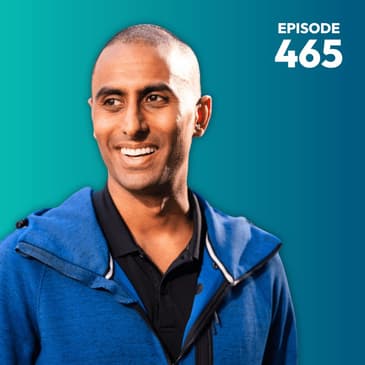
In this episode of the Optimal Body Podcast, Doc Jen and Doctor Dom welcome running expert Doctor of physical therapy Vikash Sharma to discuss how to run safely and effectively. They cover key topics like avoiding the "too much, too quickly" trap, using walk-run intervals for beginners, and following the 10% rule for mileage progression. Dr. Sharma also shares valuable advice on strength training exercise (especially calf and hip work), managing common running injuries and pain, and choosing the right footwear. Plus, there's helpful guidance for women returning to running postpartum. A must-listen for anyone looking to run smarter!
Zulu Weighted Vest:
Upgrade your everyday movement with the ZULU Weighted Vest — designed to increase calorie burn, naturally engage your core, and improve posture with every step. Perfect for walks, workouts, and daily errands. Use code OPTIMAL for 20% off at checkout.
Needed Discount:
Jen trusted Needed Supplements for fertility, pregnancy, and beyond! Support men and women’s health with vitamins, Omega-3, and more. Used by 6,000+ pros. Use code OPTIMAL for 20% off at checkout!
Dr Sharma's Resources:
- Perfect Stride Website
- Dr Sharma on IG
- Perfect Stride on IG
- Perfect Stride on YT
- Perfect Stride on FB
We Think You'll Love:
For full show notes and resources visit https://jen.health/podcast/465
What You'll Learn:
4:13 Dr. Sharma shares his personal history with running, which started in middle school and became a lifelong passion.
8:19 Dr. Sharma explains that the most common reason for running injuries is doing "too much, too quickly" without proper adaptation.
10:08 Recommendations for beginners include...
Hosted by Simplecast, an AdsWizz company. See pcm.adswizz.com for information about our collection and use of personal data for advertising.
[00:00:05] Welcome to the Optimal Body Podcast. I'm Dr. Jen and I'm Dr. Dom and we are doctors of physical therapy bringing you the body tips and physical therapy pearls of wisdom to help you begin to understand your body, relieve your pains and restrictions and answer your questions. Along with expert guests, our goal of the Optimal Body Podcast is really to help you discover what optimal means within your own body. Let's dive in.
[00:00:29] So before getting into the episode, I want to talk about something that both Jen and I have been using and absolutely loving and it ties directly into what we talk about on this show every single episode and that's the power of everyday movement. It's the Zulu weighted vest and here's why it's worth your attention. Adding load to your daily walks is one of the easiest way to burn more calories without changing your routine at all.
[00:00:53] But what I find really interesting from a movement standpoint is what the added weight does to your body awareness. It naturally encourages you to stack your ribcage over your pelvis and engage your core. You move much better with it on. It's a built in postural cue that most people don't even realize they need. Jen and I have been wearing these vests when we go on our long walks with our kids and we go to the park and do some calisthenic workouts.
[00:01:17] And I just love knowing that that added weight is helping build more resilience in my tendons, ligaments and tissues. Again, without really doing anything different other than just putting the vest on. The vest itself is super well designed. It has adjustable straps for comfort and fit, phone pockets, reflective details for low light walks and a removable washable cover. So it stays fresh with daily use. It comes in 12, 16 and 20 pounds.
[00:01:44] So if you're interested, head to the link in the show notes and use code optimal for an extra 20% off at checkout. If you're already walking or already doing any body weight workouts, you might as well make your movement work harder for you.
[00:01:58] Well, it's about time we bring somebody in who specializes in running performance and rehab. And that's why we are bringing in Dr. Vikash Sharma, who earned his Bachelor of Science in Exercise Sports Science from Elon University and his Doctor of Physical Therapy from George Washington University, completing his orthopedic residency at Temple University.
[00:02:18] He is also a board certified orthopedic clinical specialist and certified orthopedic manual therapist. He holds a number of certifications around performance, running, manual therapy and so much more. He also founded Running for Life Education to educate clinicians and coaches and serves on the advisory board of men's fitness. Outside of the clinic, he is an avid runner, golfer, skateboarder and self-proclaimed iron chef.
[00:02:45] I absolutely love this interview because Vikash really dives into what is important, whether you're a seasoned runner or thinking about picking up running casually. Let's get into it. Vikash, thank you so much for being with us today. We love interviewing our fellow physical therapists. And this is a topic we haven't really covered with anybody. Not a ton. And haven't covered on our podcast in a while being running. I mean, you are an expert in running optimization and rehab, and we can't wait to kind of dig into that with you.
[00:03:15] Yeah, no, I'm excited. Hopefully, maybe convert a few people into runners themselves after listening to this. I know that's going to be your goal is converting me. I am up to once a week. That is. And we have lots of hills around our house. So I feel like very good about myself. I'm like pushing through two miles. But this is something that for me personally, I've had to adapt my footwear and get to understand my stride and get to understand what exercises I need.
[00:03:44] So I'm like, I'm really excited about this topic as well, because so many people, I think, like the idea of running and getting back into running or starting running, yet have no idea where to start and sometimes end up injured and in pain and hating running. So I want to help break down, like, first of all, why kind of dive into this topic a lot? Is this something that you're passionate about? Are you a runner in your background? Tell us a little bit about your background.
[00:04:13] Yeah, no, it's funny that you actually bring it up. I think the story still might be running on my Instagram. I forgot if it is or not. I was just back home in Portland, Maine at my parents' house. And I was staying in my childhood room from growing up. And, you know, I'm sure as other people's like childhood rooms have happened, like, you know, they got started getting taken over by your parents, your siblings or whatever else it might be. But I found a few like little areas where I had some stuff that was from like, you know, back all the way back to middle school.
[00:04:38] And I dug out this like book that we had done of poems. And in the back, it's like about the author listed there. And about the author, you know, it was like, Vikash Sharma, like, you know, lives in Portland, Maine. He was born in Slough, England. He enjoys running, skateboarding. And I forgot what else was in there. And it kind of just like made me start thinking a little bit more about how like, deep rooted my relationship with running is, you know, it goes back to sixth grade. For me now, that's been like 20 years or something, right? So that's like, yeah, 20, there are about 30 years, 30 years, sorry. Oh, my God.
[00:05:11] Semantics. Yeah, that was fine. Details. So it's just like, I'll be really thinking of like, how long this thing has been in my life for, right? And it's just been with me. It's been with me through ups. It's been with me through downs. It's helped me like, you know, socially, it's helped me psychologically, it's helped me physically. And I think that's where I kind of like started just like naturally gravitating towards that. Because as like, you know, as cheesy as it sounds for people in healthcare, for us as PTs, you know, we got into this field.
[00:05:38] Because we want to make a difference, right? We want to help people, we want to work with people. But for me, at the same time, I also wanted to do it, you know, in a way that it's something that I enjoy, it's something that I'm passionate about.
[00:05:50] And that's where, you know, kind of putting the two together came for me, right? Like, it's like, I have this strong passion for running, I really want to try to make a difference in the best way that I possibly can. And I kind of started realizing just like, as soon as I started practicing, that's where I started gravitating. Like even in residency, like most of my projects were done, like geared towards running. And then just when I started working with runners in the clinic, I just kind of had that moment where I was just like, this is it. This is what I was designed to do. And this is what I want to do.
[00:06:18] When it comes to supplementation, there's a lot of noise out there, which is why I've always turned to my registered dietitian friends to actually understand what I need to maximize my bone tendon and muscle health. As I continue to age, I already know what to do in the gym and movement wise, but I need to know nutrient wise, what I could better do to help support my body as I age. And I have always turned to needed when it comes to supplements because I trust their third party testing, the research that they do and the evidence behind their products and especially how they dose.
[00:06:46] They dose at optimal levels, not bare minimum. This is what I relied on trying to conceive, pregnancy and postpartum. But now that I'm not nursing, I've been using their vitamin D to support my bone health. I've been using the omega-3s to support my heart and brain health. And I've been using their sleep and relaxation supplement. I absolutely love this. I put it in a little bit of my hot chocolate bone broth at the end of the night.
[00:07:11] And it's something that helps because it has L-theanine, which helps with sleep latency, which means you're not going to take as long to fall asleep, which is key when I have these two littles that don't love to sleep right now. So I cannot recommend Needed Enough. And if you have not checked them out, I highly recommend heading over to thisisneeded.com. Use code optimal for 20% off your first order. That's T-H-I-S-I-S-N-E-E-D-E-D.com and use code optimal to get 20% off your first order.
[00:07:41] That's awesome. Love that. I love how you mentioned because I've heard this from people before how running becomes like their therapist. If they're having a bad day or a down day, they go out for a run and it seems to like give them the space to think about things and think things through. And I was mentioning to you how when I do run, I love to trail run. And I think I get glimpses of that just being outside because I just love being outside. And that is a form of therapy for me running while outside.
[00:08:08] I'm still trying to make that connection. But Jen brought up, there's so many people that want to get into running or attempt to get into running, but then they have injuries. They have aches and pains that start popping up. What is the number one reason that people who start running or start trying to get into running get injured? I think this is that kind of just that story of just too much too quickly.
[00:08:34] I think people just get very excited about running, but with the repetitious nature of running, you're putting in a lot of work in a very quick period of time. And your body also needs to adapt to that skill set as well. And it's not going to adapt that quickly. So I think it'll be a sunny day out. People just recently watched the London Marathon, saw probably one of the best marathons in history go down. And they want to get out there and lace it up themselves. And next thing you know, they're out doing like five miles on day one.
[00:09:04] And then they start to wonder, where do these aches and pains come from? And us as physical therapists, it's simple for us to think about like, yeah, your body just wasn't... It was underprepared for the demands of what you were asking from it, right? But for other folks, they don't really put those two things together. Or they think like, oh, back in college, I used to run all the time. And that was 5, 10, 15, like we were talking about earlier, 32 years ago. So it kind of just stacks up really quickly where you don't realize like, you know,
[00:09:31] that you've either taken so much time from it and your fitness isn't where it used to be, or just you haven't been doing it and your body just hasn't adapted to it yet. Do you have to... You know, I've heard this in the past before, actually, from one of my professors. And it was people shouldn't run to lose weight. You lose weight and then run, something like that.
[00:09:54] But is that, you know, I feel like that's such a simplistic way of approaching an exercise form that different people can do. But maybe there's a different approach people can take if they're wanting to start out running. Like, do you have recommendations of what should people be focusing on, you know, if they're just wanting to get started in those first four to six weeks? So instead of going out and going for a five mile run, maybe, like, what does that...
[00:10:22] Is it taking intervals? Is it like what... Like how often during the week is this... I know this can be really hard because it depends on everyone's level of where they're starting. But like, is there a first approach that you typically recommend someone getting introduced to running who is saying like, this either used to be my exercise form or this is the only thing that sounds interesting for me for exercise? Like, can this be something that anyone kind of starts to take on? Most definitely.
[00:10:52] And like you said, there are some nuances to it for sure. But if somebody, let's say, just, you know, doesn't have like a big history with running, let's say maybe they're not super active, but they're just looking to start their fitness journey. I definitely think, you know, walking is a great predecessor to running. We're just kind of building up your capacity a little bit, like is a great thing. Maybe doing some incline walking, some faster brisk walking, and then kind of just like, you know, sequencing that into some run walks
[00:11:21] is like a really good way to get started for a lot of people. Because if you're just at that place where, yeah, maybe going out for a 30 minute walk is something that you haven't really been doing. Maybe that's where we want to start, right? You got to walk before you can run. And I think it kind of applies here as well, too. Because even with injuries, a lot of times I'll have, you know, people like hobbling in here, you know, as runners will. They'll be like kind of limping. And I see them walking with a limp and they're asking me, can I be running? Right. And like the very simple thing is, are you having difficulty walking? Yes. You know, and then we kind of like, you know,
[00:11:50] I think they have that moment in their head where they're like, okay, that was a dumb question. Maybe not to say there's dumb questions, maybe a little bit, you know? But so I think that's like a good way to kind of like start that process. Get some walking under your belt and then kind of like use that to work into some run walks. So then once somebody finds that initial capacity and say that they're like, okay, I found my sweet spot right now to start.
[00:12:15] I'm doing these run walks or I'm at a one mile run to maybe three times a week or something like that. What does an appropriate load increase each week look like? Because somebody can start to feel like, okay, I've done these, you know, mile runs three times a week for a couple of weeks. Now I'm just going to go to two miles. Like how does somebody know how much they should be increasing week over week? That's a good question.
[00:12:43] So like I think the big thing out there generally speaking is like, you know, everyone talks about this like, you know, 10%. Like some people even call it a rule of 10%, right? And I know in the past couple of years, there was a big study that came out that kind of investigated this a little bit more to understand it better. And what they found was there really wasn't much truth to that. But where they found that that was actually beneficial was when you looked at like your line run, your longest run in the week, right?
[00:13:09] So a lot of times when you're training for something, you're going to have like different runs that serve different purposes. And what I call like your running diet and you have one long run that'll be there. So that's kind of like used to build more aerobic fitness to kind of like, you know, get build out to kind of get to that point where you're either hitting your race distances or kind of like getting close to that place as well and getting more time on your feet to drive physiological changes.
[00:13:32] And in that run, increasing it by no more than 10% of what you've done in the past 30 days was a good rule to follow. And they found that if you increase by more than 10% of what you've done in the last 30 days, there's a really big statistical like chance of having being injured at that point. I forgot exactly what it was. I want to say it was like 60 ish percent. And if you've increased by 100%, it was like 123% likelihood of getting injured at that point.
[00:14:00] So that's where like one rule kind of applies. And I kind of say like, you know, that's something we probably want to keep in mind when we're building on our running a little bit. And then otherwise, on top of that, you know, I just kind of will think about just like, what are that person's goals? What are we working towards? And how are we going to get to that too, right? So I think if you're working for like towards a race, it's kind of easy to understand at that point, like how do we need to logically progress some of these things to get to where we want.
[00:14:26] But if it's more for general fitness, I usually tell people just slow and steady really kind of like wins the race here. And once you get that good like aerobic base under your belt of where your tissues have started to really get conditioned to the demands of running or building a little bit more durability, I'll start to layer in some speed work for those people too, to kind of like, you know, I say it's kind of like adding some weights to your running. You start doing a little speed work or some hill work to kind of work different energy systems at that point and be a more robust and stronger runner.
[00:14:56] That's such a good, you know, point to remind people about because I don't think when you think about increasing load with running, it's like, well, increasing distance. But you don't always think about, well, changing up your speeds, changing up what you're running on, changing up where you're running, you know. So I think it's great to point that out and have people thinking about these different types of progressions that can help keep them strong across the board.
[00:15:20] I know, you know, as a physical therapist, a lot of people would come in with, you know, well, I don't have pain the first couple miles that I'm running. But after two, three miles, now my knee is starting to hurt. You know, why might someone be able to be fine for the first part of their run or walking or moving throughout their day? No pain. But then after they increase to a certain point, their tissues are like, no more. Sure, I'm getting pain, you know, whether that's knee or foot or hip.
[00:15:49] Like, why might those kind of be happening past a certain threshold? Yeah, that's a good one, too, right? I'm sure like sometimes like, you know, I think a lot of clinicians will see this and sometimes they're just like, you know, what's going on here? Right. Like somebody will come in and be like, yeah, mile 17, like the outside of my knee really starts hurting, you know. And it's just like, yeah, it never bothers me outside of that. That's the only real complaint I have right now, you know. And they're kind of like, what do I do with this? You know, I think what I've learned over the years is it comes down to a little bit more of like a running durability question.
[00:16:18] Like what starts to happen as like that mileage goes along? Like what starts to happen to your running economy? What starts to happen to your running form as you're progressing through those miles? And I think that's where like, you know, sometimes some of these injuries stem as your form starts to break down and tissues that weren't used to getting stressed. Are starting to get stressed a little bit more and people will start to notice those aches and pains kicking in. And that's where something like even like strength training can be very helpful.
[00:16:47] Strength training has been shown to improve like running durability, which is kind of like, you know, how efficient are you at running? Like as you know, the time kind of goes on as well, too. So that's like a really kind of like, you know, advantageous tool to put in like the tool belt for a runner to help them a little bit. And then I also think like the fueling aspect of things can be like very like, you know, kind of, I guess, like something that's like not spoken to as much and running. But especially as you're running those longer distances or if you're running like at higher intensities.
[00:17:16] I mean, if you're running in the heat, you really do want to be mindful of, you know, how are you fueling and are you getting enough energy into you to actually carry out like, you know, what you're trying to do as well. So it's tough to have somebody run 17 miles in a PT session to see what happens to their running economy after that amount of distance. So, yeah, they have to kind of cut that cat a little bit differently. You brought up strength training, so I kind of want to stay on that topic.
[00:17:42] What does a supplementary strength training program for somebody who's say they are a somewhat seasoned runner and they have their running, you know, protocol down and you recommend, okay, I think we need to start working in some strength training here. What does that look like? Yeah, this is like this is like something, you know, we hit on like a lot here at the clinic. And it's something I think that runners are starting to better understand a little bit more.
[00:18:08] Like if you talk to me like, you know, like early in my career, let's say like 10 plus years ago, it wasn't really out there much. Like some runners would be doing a little bit of it because like they thought it was beneficial. And now we're starting to get a place where I think a lot of runners understand they really do need to be strength training. But I think where they're missing the mark now is just understanding like how to execute that strength training. I'll see a lot of runners who, you know, will say that they've just been doing like home body weight workouts for like a couple years now or they've been using bands for a couple years.
[00:18:37] And, you know, I think for a starting point, that's a great place to be. Like if you're not really doing anything, like something will move the needle. But, you know, if you've been kind of just doing the same body weight exercises for like, you know, many, many months now, I think we're kind of leaving some performance on the table. And what we need to start thinking about is we need to start thinking about kind of like loading that up a little bit more. And with running, what we really realize is that we need to be lifting heavy.
[00:19:02] And when we say heavy, we mean like 80 to 85% of one rep max, which might be like seven to 10 rep max. And what I'll usually tell people is like, hey, I want you to lift heavy where you only have like maybe one to three reps left in the tank. And I want it to be a single digit rep count. Like if you're hitting double digits, we know we got to add some more weight to that. So that's kind of how I think about like my strength training for most of my runners.
[00:19:28] And are there specific muscle groups or exercises that you typically recommend people start with? And how many days a week? Like is this I'm supposed to start strength training four to five days a week or I'm supposed to start strength training, you know, two to three times a week? Like how does that start to fit into someone's already running program? I'll address like the frequency part of it first, I guess. So in the frequency part, you know, I like to see at least two to three times a week. That's like if we can get three times a week, that's great.
[00:19:57] For a lot of people I work with, like, you know, people who are doing like races, you know, we kind of might have like our off season and then we might have like our on season and our training block. So I'll really try to get people to like switch the focus up a little bit if they've been doing a ton of running while they're training for a race. I may then have them switch it up and say, hey, this is your off season. Let's focus on like building some different characteristics and kind of starting to kind of like, you know, get you more powerful, get those like, you know, where we have those opportunities. Let's build some strength here.
[00:20:24] And then as we move into the in season, like as a running kind of volume starts to go up a little bit more, we have to be mindful that there just isn't enough time in the day. So, you know, if somebody is trying to train for like a marathon or half marathon, we may then need to kind of like taper down their strength training a little bit. So if they had been doing three times a week, we might go down to two times a week.
[00:20:44] And as they really kind of start to pick up their running and I call it like the meaty chump, like when you get into like that, like, you know, the weeks or like the month or so before like your race and you're doing like your highest volume of running. We might actually just go down to one session a week because we know that one session a week can help you maintain your gains because it's much easier to maintain than it is actually gained. So once you've had those gains, then yeah, we can just kind of stop down to like, I'll go down to once a week and it's much easier to maintain it.
[00:21:12] And then after a race, we can pick it back up again, too. I was just going to say that's an amazing point based on the goals. Again, we're talking about goals, talking about somebody in this scenario who's training for a race. You're going to have your off seasons, your tapering seasons, and you're going to need to be training slightly differently based on where you're at versus somebody who is just running as their form of exercise and not necessarily training for races. They might have more of a consistent program, but should they within that program still think about because I feel like so
[00:21:42] many people get into this habit of here are the strength exercises do I do at the weights and they don't progress. They kind of get in this comfort zone, right? How could we encourage those people that they need to continue to be progressing? So I think that's a big thing I see 100%. Then I've had some ideas like of how to move the needle there. Like what I'll usually have is I have some metrics that I'll talk to people about, right?
[00:22:08] So we'll come in and like, you know, kind of circling back to your question from before, Jen, about like what like things should we be training as runners? And I'll always say like my number one like muscle group to be training is your calf, right? As a runner, like 50 to 70% of your propulsive force, especially when you're running slower, comes from like your calf, your Achilles tendon. So that's like number one for me.
[00:22:32] And then to speak to your question, Dom, I'll tell a lot of my runners when you're doing like a single leg deficit heel raise. So meaning like, you know, off of a stair by letting your heel go below the level of your toes. I love to see my runners being able to do 25 to 33% of your body weight with that exercise. So just holding like, let's say if you're doing like a right leg, single leg heel raise off of a step and let's say you weighed 100 pounds. I want you at a minimum holding 25 pounds at your side while you're doing that exercise.
[00:23:02] And that's what really I think sparks some people to just be like, oh, okay. I got to really start like moving this needle a little bit, you know? Yeah. Oh, yeah. I mean, especially for me, single leg heel raises, I'm body weight, especially deficit. It's hard. So definitely something I get to add into my routine as well. And I think something, you know, people always talk about as well is like, okay.
[00:23:28] You know, when we're talking about protecting the knees, are we talking about the hips and what kind of exercises really help with the hips, especially when we're talking about running? And and and how does that relate to, you know, potentially protective forces that we might put on the knee joint? Do we need to do specific knee training? Like, how does this work in with strength training when it comes to running? No, 100%.
[00:23:54] I think you have to think about it as like, what are the demands of what you're trying to do, right? Like we talked about before, you know, I think a lot of injuries, they just stem from being underprepared for, you know, meeting the demands of what you're trying to do. So if we're thinking about like, hey, I really want to be mindful of not injuring my knee, but I want to be also starting to run and pick up my running a little bit more for fitness, let's say. So you kind of have to think about like, okay, how can I train my knee to be able to help with this, right?
[00:24:23] So I think a lot of things that we have to be mindful of is, you know, what is running? It's a series of single leg hops that occur over and over again, right? So I think a lot of the things that are missed, you know, some of the things that are missed with runners is like, yeah, they might be strength training. But a lot of the research also shows like pairing your strength training up with plyometric training is where you get the best results, right? So trying to incorporate some form of plyometrics that are also being kind of worked into your training routine, I think are very, very helpful.
[00:24:52] And then I also think like, you know, if you are running a lot of hills, especially downhills, thinking about those like eccentric forces, right? So maybe we want to kind of start doing some work where we're like elevating our heels and we're maybe doing a goblet squat. And we're really focusing on that like slow descent, whether it might be like four to five seconds on each, like, you know, each squat that we're doing. So we're really kind of like working that stuff that's in the front part of the knee, right?
[00:25:17] Like your quad, your patella, your quad tendon a little bit more, which are those things that might be working a little bit, you know, when you're going downhill more so than you would be going uphill. So I like to kind of think about, you know, putting the puzzle together that way. So your strength training helps kind of like address what you're trying to do as well. I always say strength training is like that armor. If you do it well, it's going to kind of like protect you for life for like anything that you really want to do. When you said single leg hops too, it made me think of long time ago.
[00:25:47] I mean, you brought up the whole age thing and it makes me think about how long ago some of these memories that I have are now. But I was working with kind of elite level high school baseball athletes. And I was trying to do some just slow controlled plyometric stuff with them. And it shocked me how difficult it was for so many of them to just hop from leg to leg in a controlled manner.
[00:26:13] And I just say to them, you realize every time you run, you're just throwing your body from leg to leg. And if you can't do it in a controlled environment like this, what do you think we're doing to our body on the field when we're sprinting across the outfield on a somewhat unsteady grass, you know, surface? So that's just crazy to me. One thing I do want to bring up is injuries that a lot of people report when running.
[00:26:40] To me, it's kind of a nightmare list because it's your runner's knee, the patellofemoral syndrome category of pain, IT band syndrome, Achilles tendonitis, tendinopathy, plantar fasciitis, fasciopathy. All of these injuries that are just what we're learning more like these pain, pain sensitization issues related to tissue changes that are happening in these areas.
[00:27:10] And I feel like they can become such a repetitive thing for runners that, oh, yep, I feel better now. I'm going to go back to running up the pain's back now. How do you approach these things, especially with the people who are like the avid running addicts? Yeah, right. I think that's a tough one, especially with runners, right? Like, I mean, I think it's kind of within most sports. So I feel as a runner, you get the reputation of just kind of, you know, just at any length, just continuing to try to run.
[00:27:37] And, you know, there's all those memes out there of just like, you know, like the x-ray and the bones, like, you know, one part's over here and one part's over here. And the runner's like, so can I still run? Yeah. Right? Like, I feel as though like, you know, that's like kind of the mentality of a lot of runners is just like, what can I do to like just keep going? But I like to set some ground rules for a lot of my runners of like, hey, when do we maybe need to like understand that we do need to shut this down? And like, we need to kind of cross train and maybe still continue to do some strength training while we're figuring out what needs to happen here.
[00:28:06] But, you know, at the goal is always to try to keep the runner, you know, running. That's like, you know, going to be the best thing for their running and to kind of, you know, improve their performance and their fitness with running. But if we're just not able to do that, if it's one of those scenarios where, hey, like, within the first few steps, I start feeling my pain and I go up for a run. Yeah. Then I kind of like have to, you know, work, we have to kind of work through purely like, you know, the rehab side of things. And then also like some things I'd like to look at is like, what is your pain level when you are right?
[00:28:34] Because if it is like a low level pain and like sometimes, you know, we'll use like the stoplight system, your green, your yellow and your red. But you're kind of in that one to four zone and it's staying stable. We can kind of work for that depending upon what the injury is. If you're kind of feeling that your stride isn't being changed, right? Like if you're kind of feeling like you're limping or that your mechanics are off because of this like acher pain that you're feeling. I always say we probably want to be shutting it down at this point as well, too.
[00:29:03] And then another like thing is like, oh, this is one that always kind of like riles me up a little bit. It's just like the pain medication and running, you know, like people will just like, nonchalantly just be like slamming pills down and then just like using them to be able to run. And that's just like a big no, no in my book. And I kind of will get on my like soapbox a lot with that and just kind of have to like educate people. Like this is like, you know, probably one of the worst things that you could be doing for yourself right now.
[00:29:27] So that's another reason why I'll kind of also, you know, kind of like make sure people aren't running. And then also like what happens to that pain after, right? Like let's say if you get like a, like, you know, like a level three pain when you're running, but it's still there three days later. Right. That's something that's also giving us some pretty important information. So I'll usually say like, if it calms down within like 36 to 48 hours, then I'm okay with you continuing. Like once it subsides to like kind of like repeat that previous hour of running that you had done before as well too.
[00:29:57] And I think those are kind of like some of the rules that I have around like running. If we can kind of stay within those guardrails a little bit, we're okay. But if we start to like move outside of those guardrails, we really want to be careful. And I think like also like night pain is another one. If you're having pain, that's like just present at rest, that's present at nighttime. And that's like preventing you from sleeping. So you're not going to be able to recover as well. Yeah. We really want to be mindful of that too. Yeah.
[00:30:22] I mean, those are all such important things to continue to remind people of who love that runner's high. And just, I mean, it's such a mental aspect to running and there's such a, you know, a good thing for people. So it's like finding that other toolbox that you can use alongside while you're kind of rehabbing and stuff, I think is really important to remember. And now I do want to shift just a tiny bit because I'm just curious myself as well.
[00:30:52] Um, I know a lot of my friends who are pretty avid runners love shoes that I don't necessarily love. And in grand, I'm not running in barefoot shoes, although I'm a huge barefoot proponent. Everyone knows that I'm running in cushioned shoes that give me enough support so that I could actually do the thing because I'm not great at it. However, I love shoes that have a wider toe box as well, because I feel like I've been in barefoot shoes for so long. I hate my toes to feel scrunched.
[00:31:21] But a lot of my friends who are like very avid runners love like that tightness of the shoe and love to feel like super secure in shoes that I normally wouldn't feel good. And so can we talk about like what, what should be, what should people be running in? Does it matter? Um, could people run barefoot if they wanted to run barefoot? Like what does this kind of spectrum look like?
[00:31:47] Yeah, that's a, that's one of the things that, you know, we educate people on a lot here on the regular, you know, sometimes we just have runners coming with like whole bag of shoes and they just throw them down in front of us, you know, and it's like, Hey, what's the best one here? You know? So very well prepared to answer that. And I agree. There's a lot of like, you know, obviously we kind of understand that like, you know, a lot of footwear is designed for like, you know, fashion minded individuals. It's not really functional for the most part.
[00:32:11] And I think running shoes are in that same, you know, kind of avenue and vein as well, where it's just geared towards looks and for performance. So you do kind of get a lot of these like narrow toe box shoes that are out there. And that's something we have to really, you know, be mindful of, but sometimes also I think we have to work with that individual. So I think about it as like a spectrum of footwear, right? I really love minimalist footwear. I think like, yeah, I'm a big fan of it.
[00:32:36] There's research studies out there that show you put on a pair of minimalist shoes for six months and your foot strength will go up like, you know, up to 57%. Like the cross-sectional area of your muscles will like grow by up to 10%. And that's just by putting a pair of minimalist shoes on your feet and carefully, like progressively working into them. And to the point where that study even mentioned that it might be a better alternative to time intensive physical therapy, right? I'm just like, oh man, that hurts a little bit.
[00:33:05] But that's like the study concluded. So I think like, you know, every human, it's just like a low hanging fruit that we should all try to incorporate some sort of minimalist footwear into our shoe spectrum that we wear. So I'll encourage my runners just to like wear minimalist footwear for their everyday tasks. You know, like if you're just, you know, going to meet some friends up, you're taking a walk, you're going to the store, whatever things like that. So you can have that like, you know, baseline foundation there.
[00:33:33] And then I encourage like, you know, my runners to have like a mileage shoe, which is a shoe where like, you know, we'll call it like your workforce. It's going to be where most of your mileage is getting done. It's not, you know, it's not going to be your speed shoe because your speed shoe might be one of these like new like super shoes that's out there, right? Like I'm sure you've been like, everyone's been hearing about it, even seeing these shoes, like look like almost like moon shoes because like the height of the soles is getting like so big. But there's like, you know, those are really helping performance.
[00:33:58] And I think like, you know, for us, for anybody who is considering performance, we want to make sure that, yeah, we are encouraging that because, you know, research has shown that that will help improve your running time. So I think that could be for your speed and like maybe a race day and then you have like more of a traditional shoe that uses not as much of that squishy kind of like foamy midsole and like the carbon plate for just like your everyday like workhorse shoe. And then you have like a minimal issue that lets your feet be feet.
[00:34:25] But that being said, like, you know, anything else, there's innovation happening everywhere. And there's a lot of companies now that are creating a little bit more foot friendly footwear. And for me, I run an ultras. I love ultras. They have a wide toe box. But at the same time, they also consider performance. They have like a carbon plated shoe as well, which is like what I use for my speed shoe. And then they have a lot of other just like wider toe box shoes that are running shoes, which are, you know, like very comfortable. And like you were mentioning yourself, right? I love like I have my toe spacers. I have my minimalist shoes.
[00:34:55] When I try to frame my feet into a pair of like, you know, like dress shoes or something that aren't like that, like, you know, foot friendly, like it hurts. Like I'm like trying to get out of them as quick as I can. Yeah. Same. I do not wear traditional dress shoes anymore because it's like if I wear them anywhere out to dinner at a wedding, I take them off. I just go barefoot because they're so uncomfortable. I can't can't even sit at dinner in those shoes. You bring up so many good points, though.
[00:35:22] And I always laugh because it's it's such a nuanced conversation. And it's hard for people to understand that when they're watching a video that Jen might put out or a YouTube video where we're talking about minimalist footwear. Inevitably, there's always a comment that says, yeah, try throwing that shoe on and going for a five mile run. I'm like, that's not that's not what we're recommending you do.
[00:35:46] We're saying that there is many benefits to having minimalist footwear somewhere in your routine. And like Jen said, we have been barefoot shoe advocates and avid wearers ourself for the longest time. And I just recently because I was trying to wear my my Vivos. So it's like cardboard thin shoes. I was trying to wear my Vivos for trail runs. I was trying to wear them playing pickleball.
[00:36:13] And I did OK, but I knew I was just beating the out of my feet. And so I transitioned into wearing ultras much more comfortable. My performance improves. I can cut when I play pickleball much more effectively because I have a little more shock absorption. And people just need to understand that this is a conversation ideally had with somebody who has experience and knowledge in the area.
[00:36:38] But it's so individual for each person on what type of shoe they should be wearing. And it's funny when people like we have friends who say, I love that super, super tight shoe because it just makes me feel more stable. And my PT brain is like, yeah, what is that shoe helping you cover for? And if you're using that for if you're using that for competition or for race day, great, that's fine, because that's more of a performance based goal.
[00:37:07] But when we are training, how can we start to train slightly differently to make up for? That potential weakness or that potential restriction that we have that our performance shoe is covering for? No, 100%. I think you hit the nail on the head there as well. And also, if you have some recommendations for good looking dress shoes that you enjoy putting your foot into, please let me know. I wear Vivos for everything.
[00:37:36] They have a lot of lifestyle and some nice kind of leather type loafers or even high, you know, higher ankle ones that they look like a barefoot minimalist shoe to some extent. But they're getting a lot better at making them, you know, look a little more mainstream or even boots that, you know, still have a lot of that space. But you can kind of dress up. So that's what I wear.
[00:38:01] And inevitably, at any event or wedding, people are like, what is that shoe? Because it looks a lot comfier than what I'm wearing. And I'm like, I promise you, it is. Yeah, exactly. Now, I do want to shift conversation just a tiny bit because talking, I mean, from experience for me, I have never really been a runner. But it's something that I've always wanted to add in because I know when I like to challenge myself, like, why isn't why am I not great at it?
[00:38:30] What can I be doing? So I never was great at keeping up with it through pregnancy. So I definitely have started, especially a year postpartum now. I'm like, OK, I want to get better at this. Like, this is my goal. Now, how does someone who was a runner maybe had to stop in pregnancy due to pains or issues that they were having? How do they approach returning to running?
[00:38:53] And this could be the same potentially for someone who's had injuries or surgeries or wanting to get back to that thing that they love. Like, what is the safest approach that you kind of recommend people take when they're thinking about returning to running? Yeah, well, that's something. Yeah, we definitely see a lot here. And I think one of the things that I kind of see a lot is like there's this I don't know like where it comes from. But it just seems like there's this like thing out there where I don't know if it's like OB-GYNs or just like programmed to say like, hey, six weeks.
[00:39:24] Like six weeks, you are ready to go. You know, and I have so many females coming in and they'll kind of be like, hey, you know, my OB-GYN told me I could start running at six weeks. And I started running and now like, you know what, this hurts, that hurts or whatever it might be. So I think once again, when you're just throwing these like blanket statements out there, you're going to miss the mark a lot of times, right? Like, yeah, maybe that works for 50% of the people, but it doesn't work for all people.
[00:39:48] And I think that's like the biggest area for improvement I'm seeing is because I've had I've just seen that six week number just come up in conversation so many times. And I think it really needs to be a conversation about where are you, right? Like, and once again, like, are you prepared to start running again? And I think that's where we need to kind of like back it up a little bit and think about like, you know, once again, like, hey, are you able to walk? Like, can we walk briskly for 30 minutes? And does that feel good? Can we start doing some run walking?
[00:40:17] How strong are you? Have you started to kind of like get back and start working on some strength training as well, too, right? Like, so I think those are the conversations that we need to be having a little bit more. And just thinking about is your body prepared to run? And, you know, we have like a like a movement assessment or screen that we usually do with a lot of our runners to kind of understand, like, you know, are you strongly in places that you need to be for running? And we'll kind of put them through that. It's like a series of movements that moves from like, you know, non weight bearing to weight bearing.
[00:40:45] And I call it like weight bearing plus, which is a lot of like the biometric based movements. So if you're really not able to move through that, like there's opportunities there that we want to work on and identify and then kind of like move you into like probably like a run walk program at that point. So I think having a little bit of that framework and understanding like, you know, how those loads increase based on the activity you're doing and where running sits in relationship to that is really, really important.
[00:41:10] And I think that's where a lot of like women that I work with that are, you know, postpartum really go wrong is they're just kind of like thinking that, you know, I was told at this time I should run and I really hadn't been doing much of anything before that. And then I just started running. So I think that's like a big problem. And then I think the other thing is like the whole health ecosystem is also at play here as well, because generally speaking, you know, you're going to be sleep deprived. And then if you're going out there and you're trying to, yes, I saw your eyes there, John.
[00:41:38] So it's like, you're going out there and you're trying to like, you know, just get back at it and really kind of try to push yourself. That's another recipe for disaster there too, right? And then we have to look at your nutrition stress levels. Like where are those sitting too? Because like we could be doing everything right in terms of just like ramping you up appropriately. But if you're sleeping like four hours a night, you're super stressed out and really just not eating well, we're going to be hitting a lot of roadblocks to kind of successfully getting you back to where you want to be.
[00:42:04] I feel like it sets up kind of an unrealistic expectation, that whole six week mark thing. And I mean, of course, when you're in the health professions and you kind of understand things better and Jen coming into her postpartum phase, you knew at six weeks, okay, I'm not just going to jump right back into what I was previously doing. There's a stepwise process to it. Starting at day zero, which again, people don't realize like, yeah. There are things you can even do prior to the six week mark.
[00:42:35] It's a whole conversation about how postpartum care needs to start changing and the needle needs to continue to move in our country. There's glimpses of where things are starting to improve, but yeah, we need to do a better job from a healthcare perspective for these people for sure. I appreciate all the knowledge you've had. And I know that Jen and I could chat with you for hours, but we're not going to put the audience through that conversation. I feel like there's so many specifics.
[00:43:01] Maybe we'll have to have you back on if people are like, well, but I want to know this one thing about, you know, this one specific injury. Definitely. Where can people go if they want to continue to learn more from you, learn more about running or even work with you in person? Yeah, no, a hundred percent. So I got, um, I would say usually like three channels are like, uh, where you can find me or associated me things. Uh, one is my personal professional, which is Vikash Sharma DPT.
[00:43:29] Um, Perfect Strive PT is where you can find, uh, my clinic here in New York City on Instagram. And then running for life dot education is kind of like where we coach, um, sorry, we educate coaches and clinicians how to be better with runners. And you can always go to perfectstridept.com as well, which has like, you know, you can find everything there. Amazing. We'll definitely have all that linked up. I think this is such an incredible resource that you've really like niched in on because it's incredibly valuable.
[00:43:59] I mean, running is one of the best exercises because people could just go out and do it as long as they're in the safe area, you know, and they feel comfortable. Like they can just go out and do it. And I remember even when we first moved to the area that I'm in with my parents and I'd go to the park and I'd see people in jeans sometimes running because that's just, you know, they didn't have running clothes, but they could afford to go to a park for free and run, you know? So like this is so important and so needed.
[00:44:27] It's a free resources that people can stay can use to stay healthy. So I appreciate what you're doing for everyone. No, thank you guys for having me on. It was a pleasure. And then, yeah, if anybody has questions, too, just don't hesitate to drop me a DM or a thing more than happy to help out and answer questions as well. I always love having a fellow physical therapist on. We learned so much. We can continue to have nerd out conversations, but I hope that you enjoyed it.
[00:44:52] And if you know anyone who is into running or wants to get back into running, please pass this podcast along. This is how we can help other people feel better in their bodies. And we'll see you back on another episode of the Optimal Body Podcast.