
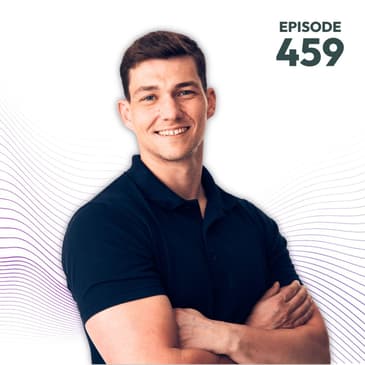
In this episode of the Optimal Body Podcast, Doc Jen and Doctor Dom, both doctors of physical therapy, welcome physiotherapist Will Harlow, who specializes in helping people over 50 maintain independence and achieve movement longevity. Will shares his journey from sports physiotherapy to focusing on older adults and introduces his four pillars of independence: mobility, strength, balance, and skeletal health—all essential for movement longevity. He offers practical advice, including strength training, "balance snacks," and bone-strengthening exercises, emphasizing how these habits contribute to movement longevity. Will also highlights the importance of diet, quality sleep, and social connection for longevity, while addressing common concerns about osteoporosis and arthritis pain. He promotes his new book, "Independence for Life".
Lifting for Longevity:
Check out our NEW movement longevity course -> Lifting for Longevity! Build your Strength, Mobility, Power, Balance and more regardless of what stage or age you’re at! Podcast listeners get a bonus discount with code OPTIMAL20
Needed Discount:
Jen trusted Needed Supplements for fertility, pregnancy, and beyond! Support men and women’s health with vitamins, Omega-3, and more. Used by 6,000+ pros. Use code OPTIMAL for 20% off at checkout!
Will's Resources:
We Think You'll Love:
Go HERE for full show notes.
What You'll Learn:
4:29 Will describes his career path, leaving pro sports, and discovering his calling in helping people over 50.
9:51 Will shares about working for...
Hosted by Simplecast, an AdsWizz company. See pcm.adswizz.com for information about our collection and use of personal data for advertising.
[00:00:05] Welcome to the Optimal Body Podcast. I'm Dr. Jen and I'm Dr. Dom and we are doctors of physical therapy bringing you the body tips and physical therapy pearls of wisdom to help you begin to understand your body, relieve your pains and restrictions and answer your questions. Along with expert guests, our goal of the Optimal Body Podcast is really to help you discover what optimal means within your own body. Let's dive in.
[00:00:28] This is such an incredibly important conversation that we're going to have with Will and I just have to say we went through Lifting for Longevity, our brand new course last month with a huge community of people and it was incredible to hear the results because this course really focuses on building that strength, power, balance and mobility that we can have for life and I just have to read to you what Karen said. She said,
[00:00:52] I'm writing to say how much I already love lifting for longevity. I repeated the first week because I liked it so much. I feel sturdier in my hips and I have more stability while walking and maneuvering around obstacles. The exercises are fun as well as challenging and it's nice to see your mom and how inspiring she is because yes, my mom does the entire program with me who's 73 with osteoarthritis. Now she goes on to say,
[00:01:15] I'm turning 60 this year, but it's keeping track and this plan will be a big part of my self-care going forward. Today, I stepped on the top broken stone stair in a garden and could have fallen forward a few steps but caught myself before having a mishap. A couple weeks ago, I might have lost my balance and would have felt worried about my stability. It felt amazing to feel more confident and know I can continue to improve. I think this is my favorite workout plan so far, which Karen, oh, reading that just warms my heart so much.
[00:01:43] To know that people are getting real help. And that is from one week. She repeated it twice, but one week of a program and that is why we created it because yes, this is a four week plan, but there are so many variations of the exercises that you can use to choose one that works for your body and keep progressing in all of these areas that matter most when it comes to living and feeling better in your body long term.
[00:02:07] So if you want to get into it, you can go to gen.health.com. Use code optimal 20. That's going to give you a $20 discount and this is lifetime access. So again, we're going to have that linked up in the show notes or use just go to gen.health.com. Backslash longevity and start working on improving the longevity long term in your health.
[00:02:29] We are excited to welcome a fellow physiotherapist to the podcast today, Will Harlow, who is on a mission to show the world that aging doesn't have to mean getting stiffer, losing independence and giving up on the things you love doing. After discovering a passion for helping people regain mobility and independence, Will started his own business, HT Physio in 2018 and quickly growing a fabulous reputation in the local area. Will decided to share the same guidance he shared in his in-person clients with a wider community.
[00:02:59] And this led to the creation of his YouTube channel, which has gone to amass over 1.5 million subscribers worldwide with videos gaining millions of views every month. Will also published his book, Thriving Beyond 50 in 2024, which became a Sunday Times bestseller.
[00:03:17] And today, Will spends his time building and training his highly skilled specialist team at HT Physio, supporting his lifelong mobility program members, creating content for his YouTube channel, and working on his newest book that releases at the end of this month called Independence for Life, The Complete Guide to Building Strength and Regaining Mobility Beyond 50.
[00:03:42] I'm excited for you to have some incredible takeaways, research, and things that we can do to maintain this independence for life. Well, Will, thanks so much for being here to spend some time with us today. We love having our fellow physios on, especially someone who's going to be talking more about independence and staying independent for life and what that means and how we can focus on movement a little bit differently to stay active and independent in our later years.
[00:04:10] Yeah, it's so good to meet you, Dom. Thank you for the intro. And nice to meet you, Jen, as well. Thank you, you too. Now, I know that you started more in pro sport and NHS. So how did you shift to having this huge platform that you do on social media, on YouTube particularly, and helping people over 50? Yeah, so it's an interesting story. And I'm sure many of your viewers, especially the ones who are a bit older, are looking at me and thinking,
[00:04:37] well, what does this guy who looks about 20 years old know about people over 50? And I get that question a lot. But working with people over the age of 50 was never the plan from the start. It's almost just something that I discovered. And people say to me, well, how did you find your passion? And I say, I'm not convinced it's a passion. I think it's more like a calling. I just found that I had a particular set of skills that helped these people. And that's why I leaned really hard into it.
[00:05:04] But I started off like many young guys interested in pro sport. I wanted to go down the professional sport route, particularly football or soccer, as you guys call it. And I just from day one, I thought I want to be a physio. I want to be the guy running on the pitch, helping the players. And I never considered any other part. And I went through university with this thing in mind. I finished uni and the biggest stroke of luck happened to me.
[00:05:33] I landed not just a job in professional football, but working with my boyhood club, the club that I'd supported my whole life. It was literally a dream come true. But I got into the job and very, very quickly realized I was in the wrong place. It wasn't the right environment for me. Something about my personality and that setting, it just didn't fit. And I realized I'd made a horrible mistake.
[00:06:00] And it was one of those moments when you think, gosh, everything I'd assumed my whole life is actually not, it was not right. It was, it was wrong. And I've chased this dream and I'm now in a position where I don't know what to do next. So I made the decision to leave. And while I was still figuring out what I wanted to do next, I went into the National Health Service, which is like our big healthcare system. Where you see lots and lots of patients. And I thought I'll be here for six months. I'll figure out what I want to do next. Then I'll move on. Maybe I'll go and work in a different sport or something.
[00:06:30] And most of the people coming into the National Health Service are a bit older. You know, they're in their 50s right through to their 90s. You know, they've got aches and pains. They're losing mobility. And I was spending every day helping these people to improve the way they move and to get stronger. And I remember just looking back one day and I had this patient who'd been coming in for a while. And after four months of treating her, she came in starting off with a stick. She could barely get in. Her husband had to bring her in.
[00:06:57] And after that few months of treatment, she was walking independently. She was driving herself to the clinic where I was working. And she said to me that you've literally changed my life. I didn't think this was still possible. And I remember just looking back at this and just thinking, this is the most fun and the most rewarding thing I've ever done. And it was almost in that moment where I thought there's something here and I don't want to go back to sport like that dreams dead. This is what I enjoy. This is what I want to keep doing.
[00:07:28] And basically, I just continued with it. So I left the NHS because even though I was helping people, there's a lot of constraints there. Like you're only allowed to see people a couple of times. Then you have to discharge them to make room for someone else. And I knew I could offer more. So that's when I set up my own little practice in a town called Farnham here in the UK. And things just grew from there, basically.
[00:07:51] Okay, interrupting because understanding our nutrition alongside what we're doing in movement is so incredibly important, especially as we age. And something that we need to consider as we continue to age, especially for women over 40 and going through perimenopause, are multivitamins. Because there's so many different things that get told to us. And this is why I continuously and always go back to needed.
[00:08:15] Not only when I was trying to conceive and pregnancy and postpartum, but still I am taking needed for optimal health and nutrition because we can't get everything through nutrition. And what we really need to be looking for when it comes to a multivitamin is that we're getting one that is prioritizing our bone health. So we're looking at calcium, vitamin D, K2, energy production, our B vitamins, cardiovascular support, our omega-3s, CoQ10.
[00:08:42] All of this is so incredibly important when it comes to a multivitamin, especially one that is third-party testing and bioavailable. And this is, again, why I'm turning toward needed. And this is the only brand I recommend. Now, their Women's Health multivitamin targets nutrition for women's health, including cycle support, healthy hormones, metabolism, energy, mood, cortisol levels.
[00:09:07] You get 22 nutrients in just two capsules, delivering four times more nutrition than the average of leading women's multivitamins. This is serious. This is when it comes down to what actually matters and what you're buying and what you're taking to make a difference in how you are feeling. And this is why we always recommend needed. If you have not tried it, I highly recommend head over to thisisneeded.com and use code OPTIMAL.
[00:09:36] You're going to get 20% off your first order. That's T-H-I-S-I-S-N-E-E-D-E-D.com and use code OPTIMAL to get 20% off your first order. All right, let's get back into the episode with Will. Amazing. First question is, what is your childhood club that you were working for? So it's a club that probably no one's ever heard of. It's Portsmouth Football Club. So on the South Coast. And once upon a time, we were a big team.
[00:10:05] But now, not so much. But we've been doing okay the last few years. We've had some tough times. But yeah, maybe we don't talk about Portsmouth too much because we're going through a bit of pain at the moment. And I don't know how annoying this is, but the only reason I know anything about UK football is because of Welcome to Wrexham. So have they made appearances in Welcome to Wrexham? Have they been?
[00:10:33] I don't think so because when they were filming that, we were a couple of leagues above. But now we're pretty similar pegging to that kind of level as Wrexham. So they've done very well and we're kind of static. Yeah. Well, I love that story that you shared and specifically bringing up that one patient. Because even when Jen and I talk about our initial time in PT or working in traditional settings,
[00:10:58] we all kind of hone in on this one or two patients that we just had this story with. And I worked out of a hospital-based setting, both in acute and then an outpatient clinic attached to a hospital. And I loved working with those older populations because you can see such massive growth in such a short amount of time just by introducing a couple little things.
[00:11:21] Versus if you're working with that elite athlete, you don't really notice them shaving the quarter of a second off of their sprint times or their endurance improving by that marginal amount that's going to help them on the pitch or on the field. So I can definitely relate to that. And you brought up independence, this woman becoming more independent. And that's a huge topic of the new book that you just put out.
[00:11:46] How would we define independence for somebody later in life? Yeah, it's such a good question. And the way I define independence is being able to do what you want, when you want, for as long as you want. And I think that's what most of us really want. If we want true quality of life, we don't want to have to rely on other people and we don't want to have to limit what we do because of pain or stiffness or injury.
[00:12:13] So you have to prevent pain, stiffness, injury, weakness in order to be able to keep doing what you want. So I think independence is one of those things where we take it for granted until something threatens it or until we lose it. And I think many people don't pay any attention until something goes badly wrong. And then it's like that saying where it's like a well man wants many things, a sick man wants only one. And I think that's the same for independence.
[00:12:43] Like people who start to lose it, their number one thing above everything else is I need to regain this because everything hinges on it. So it's so, so important. And I think it's a mistake to wait until things go wrong to start to think about it. And I mean, you guys will know this from your practice too. Like people might lose their independence in their 70s and 80s, but the real decline starts much earlier. It starts in your 40s and 50s.
[00:13:09] And if you catch it early, that's when you can still do something about it much easier than if you wait until the warning signs are already there. So what is it within your 40s that you're kind of looking for? What is that thing that you're trying to catch prior to something happening? Like how does someone, because like you said, it's like it takes something major for people often to start to pay attention. So what is it that we should start paying attention to earlier in life to know that we should start making changes? Yeah, great question.
[00:13:39] And I break independence down into four pillars and all of these things have got signs if they start to go wrong, but they're all things that are within our control and we can do something about. So the four pillars are mobility, strength, balance and skeletal health. Okay. And we need to start thinking about these things early, preferably 40s, 50s obviously is fine. If you're leaving it until your 60s, you've got more work to do.
[00:14:06] And when we talk about mobility, what I'm talking about is how well your joints can move. Like you guys know that if you've got a stiff joint, that's an unhappy joint, that's going to have knock on effects everywhere and start to limit your movement. The second thing is strength. And with strength, obviously strength is just a great proxy for how much you can do. If you're strong, you can get off the floor, you can get out of a chair without using your hands. But strength also encompasses your muscle mass.
[00:14:30] And you guys know that if you lack muscle mass, that's basically a negative thing for every aspect of your health. So we need to maintain that muscle and that strength for as long as we possibly can. Then the balance aspect is the third pillar. And that's just about being able to stay on your feet, particularly when you're knocked out of kilter. Because if you can't correct it, that's when it leads to a fall. And falls are a massive problem as we age, but we can start to build balance to safeguard ourselves early doors.
[00:15:01] And then the final pillar is your skeletal health. And I split that into the health of your bones and the health of your joints. And we know particularly for women over the age of 50, osteoporosis is a huge problem. One in three women over the age of 50 are going to get osteoporosis. But it's not just something we have to accept and that there's nothing we can do about it. With osteoporosis, it's actually more a lot of it to do with our lifestyle. It's not just to do with, well, you're a woman and you're over 50. What do you expect?
[00:15:30] It's not that at all. With the right approach, there's a lot we can do. And then when it comes to the health of our joints, the most common thing we talk about here is arthritis, arthritis, which again, people think is just something that happens with age and there's nothing you can do. But the truth is there's so much you can do to both protect against it. And if you already have it, you can treat it without pills and surgery if you take the right approach. So if you wrap all of those things into one umbrella, it becomes independence.
[00:15:58] And all of those things we should be thinking about as early as possible, in my opinion. So many things that we want to dive into in all of those aspects because that is, I mean, I think you're saying triggering words to people too that like, I know I've heard plenty of times. It's like, well, I have osteoporosis. How am I supposed to work out? Because now I'm afraid, right? If my bones are weak, how am I supposed to add load and impact? Because won't that make it worse? Like that's what the mentality is, right? Or arthritis.
[00:16:27] Like I can't squat. I haven't been able to squat since my late 40s or 50s. It's like, how am I supposed to build strength without being able to squat? And people kind of get that backwards idea of it hurts to do it. So I stopped doing it. And then it's kind of that feedback loop of... Well, it becomes that cascade of fragility, right? Then we lead down that road. So particularly, I want to address osteoporosis first because there is so much fear around,
[00:16:57] you know, osteopenia, osteoporosis. Now I'm here. What do I do? So can we dive into that a little bit? Like what should we be paying attention to when it comes to osteoporosis? What helps it? And are there things that we can do within our lifestyle and our exercise that can actually improve it? Yeah, 100%. And first of all, I want to just come back to something you said earlier about the fear that's around it. And I want to be very clear. Everyone is different.
[00:17:27] So everyone's going to have a different starting point. And there are some people where the osteoporosis is so severe that they do need to be very careful with what they do. So I'm not saying that's not true. But when you've got early osteopenia or you've just received a diagnosis of osteoporosis and you've had it confirmed that it's safe for you to exercise, you absolutely have to get moving if you want to have any chance of strengthening those bones up.
[00:17:55] And there's three things you can do that have been proven in the science that are super effective and hopefully are accessible to just about anyone. And we can discuss how to make these things more accessible. So the three things, the first is strength training. So any kind of resistance work has been proven to help to strengthen your bones. The second thing is impact training. So you mentioned impact and jumping, Jen. Again, this has been shown to strengthen the bones.
[00:18:24] It sends a signal to your bones that they need to be strong. And bones need a signal if they're going to change. And then the third thing is walking. Now, walking gets a bad rep for bone density because there's some evidence to show that maybe walking doesn't increase your bone density, but it sure as hell maintains it. And we can tell this because if you put someone in a hospital bed for two weeks, what happens to their bone density? Well, it goes down significantly in that tiny period of time.
[00:18:52] So just walking is enough to help you maintain it. Now, there's a really nice study to show that women in their 50s and 60s, if they have a habit of brisk walking just three times a week for 30 minutes, compared to women who don't have a brisk walking habit, their bone density is 11% higher. So just that one thing, controlling for all other factors can make a huge difference.
[00:19:19] Now, what I've said there, some of those things are probably going to seem a little bit scary to people who have a diagnosis of osteoporosis. Like, are you saying I need to get in the gym and lift heavy weights? Well, maybe, but you start where you are right now. Okay. So it's about building things up and resistance training doesn't necessarily mean going to a gym. You can quite happily do resistance work from home with just your body weight and it should help. And then you build up over time. Same with the impact.
[00:19:45] We're not telling people in their 80s to suddenly go and jump and land on one leg from a height. That would be crazy. But you can start by just going up onto your tiptoes and then dropping back down just to get a feel for it. The big thing I want to drive home about osteoporosis that people often don't understand is that bone is a living tissue. It's not just this thing that lives inside our body. It's just like your skin. It turns over. And every 10 years or so, we end up with a completely new skeleton.
[00:20:14] So there's cells inside the bone that are both adding new bones, they're building, and there's cells that are taking away old bone. And they're both really important. And the exercise we've just discussed can help to change the balance of which type of cell is working harder. So the resistance training stimulates your builders. So your builders work harder. So the pace that you're building bone outweighs the pace that you're taking it away. Same for the impact, same for the walking.
[00:20:43] So those are the three sort of exercise levers we have. And all of those are proven in the science. Couple that with various changes to diet and just a healthy lifestyle, you know, avoiding smoking and drinking. And there is a lot you can do for your bone health that's underestimated. I'm really glad that you bring up kind of the relativity of exercise, especially when it comes to strength training and impact training. Because those, as you mentioned, are scary things.
[00:21:12] And when people think of jump training, your example, they think of people jumping up and down from boxes and doing crazy things when, yeah, as we get later in life and depending on your starting point, the heel drop that you just brought up is a very, very effective technique for somebody to start putting more impact through their skeletal system. So I think that's great. Yeah. The one thing that I want to touch on too, is that you bring up these four pillars, right?
[00:21:39] And especially for somebody who hasn't had exercise and movement as, you know, something of importance or it hasn't been, you know, a regular thing for them. Anytime we talk about multiple things, somebody should be focusing on. It can get a little bit overwhelming. So is there one pillar somebody should start focusing on? Is there one place that somebody can start moving that needle without getting overwhelmed? A hundred percent. And this is a question I try and answer for people every single day, because I think the
[00:22:09] biggest barrier to most people getting started is not that they're not motivated, because I think most people know they have to do something. They're just overwhelmed because it seems like I've got to do all of this. And then some expert online tells me now I need to do this complicated stretching routine. Now I've got to do, you know, two hours a day of zone two cardio. Like what, what should I focus on? And I have spent a lot of time and effort trying to work out what is the minimal effective dose
[00:22:38] for people over 50 who just want to stay independent. They're not exercise fanatics. They just want to stay healthy. And to your question, if you're going to focus on one pillar, it should be strength every single day of the week. Now, strength is the foundation that everything else is built upon. And when you improve your strength, the research shows that you also improve your mobility and your flexibility. You also improve your balance.
[00:23:08] You also probably improve the health of your bones and you certainly improve the health of your joints. And there's really strong evidence to show that all of those things can be improved with a strength training practice. And when I say a strength training practice, I don't mean going in the gym six days a week for an hour. The research shows that you can make these changes with about one hour of strength training per week, ideally split into a couple of blocks. So I recommend to people to split it into two.
[00:23:37] So to do two blocks of 30 minutes or three blocks of 20. And choosing the right exercises is important. And obviously we can go into that, but the golden rule really is to pick exercises that give you bang for your buck. So big compound movements, things like the goblet squat or the Romanian deadlift or the farmer's carry. These are amazing exercises. You don't have to do much of them to actually see an improvement all over the body. So definitely strength.
[00:24:07] That's the first domino. If you can knock that over, everything else starts to improve as well. I mean, I love that you're bringing this up, especially I think the misconception has always been, I need to be in the gym for an hour or I need to be having this elaborate routine with all of these different exercises or just the misconceptions that we've been fed about exercise in order to make it effective.
[00:24:33] So you mentioned a couple exercises that are key and essential. Can you like, can we just make a whole kind of not routine, but like the lay down the foundation of what we really should be focusing on? Like what are the types of movements and the types of patterns that we need to be strengthening when it does come to going into the gym? And what does that look like? For sure.
[00:24:58] And I've broken it down into five things that I think are vital, particularly for people over 50 that will just cover all your bases. And what these movements represent is everything we do in real life, because you need to be able to do things in real life if you actually want to stay independent. It's no good just being able to do things in the gym that needs to translate across to what you do at home. So carrying shopping or opening heavy doors, things like that. Super important.
[00:25:29] So, and before I tell you what they are, I need to obviously tell people at home that you don't need to do all of these in one session, but if you can do them in the course of a week, that would be amazing. So the five are a squat, a hinge, a push, a pull, and then the last one might surprise you, but that's a calf raise. So these are really, really important, particularly for people over 50. I'll come to the last one at the end, but a squat is any kind of movement, basically where you're squatting down or getting up and out of a chair.
[00:25:59] So a sit to stand counts. You can progress that to just a body weight squat, then a goblet squat. Then you might want to put some weight on your back and do some squats like that. Foundational movement. We do it all the time. Anytime you get into the car or up and down from a chair or on and off the toilet, you're doing that movement. The second is a hinge. So that's where you're hinging forward at your hips without rounding your spine. And the reason I like the hinge so much for people over 50, if we go back to when we
[00:26:28] were talking about osteoporosis, one of the movements that people with more advanced osteoporosis do have to be careful of is this rounding the spine to lift. Because there's evidence to show that that does put the vertebrae under more pressure. Now, if you learn how to hinge, you can lift from the floor without rounding your spine, which means that even for people who don't have the strongest bones, they still have a safe way to do that movement. So I love that action as well. Then you've got a push, which is an upper body push.
[00:26:58] So either pushing out in front of you or pushing up overhead. And that trains all the muscles at the front of your body here and your shoulders. And then a pull is pulling things back towards you. So opening a heavy door, that kind of thing is where this comes in handy. And that trains all the muscles at the back of the body, which also give you that posture and stop you from rounding, which is a big, big problem for the people I treat and the people I speak to.
[00:27:22] Um, and one of our most popular videos online is about how to try and reverse this rounded posture that so many people get. And I know a lot of people worry about that. The pulling movements are one of the best ways to do that. And then the final thing I want to come onto is that calf raise. Now, if we're talking about someone who's in their twenties, the, I wouldn't give that as advice. I don't think it's as important, but as we get over the age of 50, the calves become one
[00:27:49] of the areas of the body where we lose most strength and strength and muscle mass decreases quite rapidly in the calves. And your calves are responsible for 70% of your forward propulsion when you walk. So if you lose just a fraction of that strength there, walking immediately gets harder. Now, not to mention that weak calves have been associated with slow walking and falls and just general poor health.
[00:28:14] I think it's well worth just dedicating an exercise to that and the other movements don't catch it. So some kind of calf exercise is well worth including in your routine. But if you took my advice from earlier and you did two sessions per week, you could do your squat and your hinge and your calf raise on day one, and then you do a push and a pull on day two. That's going to take you 30 minutes and you've just covered all your bases for that week.
[00:28:43] I love that. And I mean, it's beautiful breakdown. That was a great breakdown. And yeah, you know, we're new parents, newish parents of two young kids. And it's funny because even when I'm thinking of my workouts, I have, I have a goal each week to get two 25 to 30 minute workouts in incorporating all of those minus the calf raise, you know, the, the four main, the four main movement patterns. I'm not as focused on the calf raise right now because I'm still doing sprints and other
[00:29:12] things, whatever that, that helped me cover that. But great breakdown. Another thing that I love that you said, and this is kind of a personal bias of mine is getting up off the toilet. I love when people talk about getting up off the toilet because that is the pinnacle of the thing that people do not think about until you're stuck on a toilet, you know? And when I started working in hospitals, it just was the most important thing for some of the people that I worked with.
[00:29:40] They're just like, I just want to be able to get up off the toilet without someone having to come into the bathroom and lift me up. Like that's, it's kind of humiliating, you know, at that point. And I started in my early young twenties mind developing this. I would tell every person, like if there's one exercise you can do every day, just find a chair, stand up as strong and powerfully as you can and lift your arms overhead and sweep them around and do that about 30 times.
[00:30:08] And if you did that every day, you'd be amazed at how much easier getting up off the toilet is. And so, um, yeah, yeah, it's funny just hearing you say that. I think you've just touched on, sorry, Dom, I was just going to say, I think you just touched on something really important there. And that is how, what we're talking about today is not just about, you know, maintaining your muscle. It's actually about maintaining dignity. And I think that's one of the biggest things that people come to me for is getting, I just
[00:30:37] don't want to get stuck in one of these situations where you can't do something that you feel you should be able to do. And you have to ask for help in an embarrassing situation. Now I've had patients who have come to see me because they got down on the floor to pull up some weeds from the garden and then they couldn't get back up. And they were so shocked by this. They had to call for help and they'd never had to do that before. And they weren't in any pain, but they came to see me because they said, you know, I just never want to be in that situation again. It was embarrassing.
[00:31:07] I had no dignity in that moment. People were looking at me. I felt awful. And I just think it's such an underrated thing, this word dignity. And it's one that I've been kind of paying attention to in the last few months because I just think it's so, so important. So going back to the strength bit that you talked about, we talked about how that can help with osteoporosis, osteopenia. Now let's shift to the person who has that joint pain, the arthritis, the, well, I can't,
[00:31:35] you're saying squat and my knees are hurting just thinking about doing a goblet squat or thinking about doing any variation of a squat. How can we make it important to the person who has joint pain to the point where they are afraid to do these exercises? Like what would you say to that person? Yeah, definitely. And, um, the, the exercises I listed or the movements I listed should only be done if they don't cause you pain. If they do cause you pain, you need to start somewhere else.
[00:32:05] And that might be breaking the movement down in half or into even a quarter to try and just build that pattern within the realms of comfort before you build it back up. And I get this all the time. So a few months ago, we had a patient who came in and it was like, everything hurts. I can't squat. I can't get up from a chair. Um, I, I certainly can't get off the floor. It's all painful. We tried a couple of exercises in weight bearing, like standing on their feet and getting down to a chair and back up. It was too painful. They couldn't do it.
[00:32:35] So we said, right, let's start from the absolute basics. Let's just start by teaching you how to switch those muscles back on. So completely off their feet, sitting in a chair, we worked on just contracting the muscle and then relaxing it. And you know what? After a couple of weeks, they came back and they said, I'm getting pretty good at this exercise. And I said, let's try the sit to stand again. They tried it again and they said, I can still feel it, but the pain's less.
[00:33:03] Now nothing inside the joint has changed. This is the really important thing. The joint hasn't healed overnight. It's still the same. But what's happened is around it, the muscles have started to get stronger. The actual movement of the joint has become more. And as such, their symptoms are getting better. And this is one of the big things I want to pass on to people is that the results of your scan are not your destiny.
[00:33:29] Or how your knee looks in terms of how the joint looks, that is only a very small piece of the whole puzzle. And a much more significant piece of the puzzle is the mechanics around that joint. So if we can get your muscles strong, if we can get your joint to be less stiff, and if we can get those muscles flexible, quite often pains that people have had for years can start to resolve. And this is why I always say in the practice that most pain is mechanical.
[00:33:58] I truly believe that. I don't think most pain is down to the pathology that someone's got, the disease or the arthritis. It's just a small part. The mechanics of the joint, the mechanics of the way your body moves is far, far more important. And that's something that we can change. I think that's so good to continue to hopefully point out for people because whenever you get
[00:34:23] a scan or you get told this diagnosis, it could be such a scary thing, especially when you have doctors sometimes who are like, this is the worst I've ever seen. Or this is, you know, and we know from research, we've talked about this a million times on our podcast of how much things are going to continue to pop up on MRIs the older that we get. That's just the reality of the gift of aging. But what doesn't have to come with that is the pain and the disability alongside it.
[00:34:52] So I love that you're giving people the tools and the mechanisms that actually help to relieve that pain so that we can remain more independent. I think that's so incredibly important to understand. Now, when it comes to balance, balance is something that really threatens independence as we continue to age, right? It's something that people don't really necessarily think about until maybe they have a stumble
[00:35:22] or fall. But it is something that can take confidence away really, really quickly. So what are some of these balance snacks that you kind of recommend? Like how can someone start to add balance back into their life beyond just strength training? Because I know you talked about how strength is so important to kind of enhance balance just naturally. But what are some of these things that we could be doing in our everyday that can help? Yeah, definitely.
[00:35:49] And I think balance is one of those things just like independence where it can slip away quietly without people realizing it until one day, bang, you've either lost all your confidence or God forbid you actually do have a fall. So it's vital that we start to address it early and we don't wait for it to get to that point. Now, balance snacks are one of my favorite ways with my patients to help them improve their balance for a couple of reasons. First reason is they're so effective. Second reason is they don't take much time at all.
[00:36:19] And I'm all for maximum gains with minimal effort and time. And then the third reason is they're just so easy to fit into your day. There's almost like no excuse not to do them. And what a balanced snack is, is just a very short burst of exercise, typically 30 to 60 seconds that you do little and often throughout your day, ideally in otherwise dead time. So, I mean, we all have dead time throughout our day. You know, you're brushing your teeth, you're waiting for the kettle to boil, you're on hold
[00:36:49] to the bank, like all of these times we could be using to improve one of the most vital attributes for our health. So the typical ones that people think of when they think of a balanced snack are standing on one leg while you're brushing your teeth. And that is a great way to build up your static balance. But I actually think we can do better than that. And what I would first bring people's attention to is the fact that if you're going to fall, a fall happens when you're moving. It doesn't happen when you're stood still.
[00:37:17] So if you're just standing on one leg, yes, you're going to improve that aspect of your balance, but you can do better if you actually want to prevent a fall in real life. So we need to practice our moving balance, which is technically called dynamic balance. And one of my favorite exercises for that is something called the tightrope walk. And the tightrope walk, you basically just imagine that you've got a tightrope on the floor in front of you. The big drop on either side is optional. So you don't have to picture that if you don't want to.
[00:37:45] And then you're just going to walk along it in a heel to toe pattern like this. And you've narrowed your center of support down so much. It's almost like riding a bike. So you're going to get a lot of sideways movement like this. It's actually really good. That is your balance system adjusting and getting better. Now, really important thing for people to understand about balance is that balance is a skill.
[00:38:11] It's like a golf swing or if you strike a football or a soccer ball, it's a skill that you can develop over time. So the more you practice it and the more frequently you practice it, the better it gets. And I've had a couple of patients where I've taken this approach with and I've said, don't do anything else. Just whenever you get a minute, just do 30 seconds of this tightrope walk and see what happens in a few weeks.
[00:38:38] And it's almost like by magic in a few weeks time, they say, do you know what? I've been wobbling less and my confidence has come right up to where it was a couple of years ago. So it can work really fast, but you have to be consistent. And ideally, it's every day. I know that can sound overwhelming for people, but once you start to build it in as just a pattern, it really, really does improve over time. I mean, I love the concept of exercise snacks. We talk about that all the time. And you brought up dead time.
[00:39:06] I mean, with how much people are working from home, because I feel like that's one of the biggest barriers. People are like, I'm just at work and I work at a desk. And I ask them, do you take calls? Are you on Zoom calls or Zoom calls that you don't need to have your video on that you're just listening in on? And people are like, oh yeah, I've got hours of calls every day. Or I've got at least an hour long call every day. I'm like, great. Get on the ground. Do some of your exercises.
[00:39:33] Now we can mention building these balance snacks. Because balance, like you mentioned, it's one of those things that has so many different inputs. You know, our strength, our mobility, what's going on in our inner ear, our vision. So there's a lot of different aspects of balance that people can train. And you brought up, people notice that they can train this quickly. How fast would you say people can make a difference in their balance?
[00:40:02] I think in a couple of weeks, you start to notice a change. And when I say start to notice a change, it's usually just a rise in confidence. So you won't fix your balance in a couple of weeks, but you'll feel more confident. You'll sort of trust your feet more. I always say that to my patients. It's like, you're going to start to just trust your feet. You won't have to be looking down all the time and grabbing hold of things. You'll trust that you'll be able to maintain your balance within a couple of weeks.
[00:40:28] But if you want to see really transformative change, we're talking 12 weeks plus, and that's of consistent effort. So what we find in the practice is 12 to 16 weeks is about where we start to see the biggest changes for balance for people. But to kind of drive this point home, the more you practice it, the better it will get. And I had a patient who came in, she was in her eighties and she had some back pain and I always test people's balance. And I got her to stand on one leg and she did it with no problem at all.
[00:40:58] She didn't even have to hesitate. And I went, can you do that with your eyes shut? And she went, oh yeah, no problem. Bearing in mind, this lady is in her mid to late eighties. I said, how is your balance so good? And she goes, oh, I've just, I've done yoga my whole life. I've, I've done yoga since I was like a teenager. I never practiced balance, but in the classes we do it all the time. You know, at home I'm doing my yoga moves and I'm doing the poses and the postures. So she'd been a lifelong practitioner and she was in her eighties and her balance was better than mine.
[00:41:26] So age is not the thing that's stopping your balance. It is the thing that starts to chip away at it if we don't do anything, but it's not deterministic. You can build it back up. And the more you put in, the more you'll get out. So such good reminders. I'm just loving everything because it's making it practical. It's making it make sense, you know, that someone can actually do this within their life and start to see and feel the meaningful change, which is what we want to create here.
[00:41:54] You know, now I know you talk about some longevity habits as well that go beyond just exercise. And I think that these are habits that people might not necessarily remember or think to include, you know, really impact longevity. So can we talk about how important some of these other aspects are within our life that we should be adding in, you know, like just the basic sleep or other, you know, habits that
[00:42:20] we should be including that really impact what we're doing and how we're even moving? Yeah, absolutely. And I'm not going to pretend to be the longevity expert. But when I was doing the research for my book, there were three things that came up time and time again over and above the exercise stuff we've spoken about. And those three things were diet, sleep and social connection. Okay.
[00:42:47] And there was tons of research on these three things. Now, I'm not going to dive too deep into diet because I'm not the guy to do that. But if you minimize your ultra processed foods and try and increase protein to roughly 1.6 grams per kilogram of body weight per day is what the research is showing at the moment. So that's going to really help with the muscle loss stuff that we spoke about earlier and the strength and maintaining, you know, a healthy body overall.
[00:43:16] Now, sleep is a really interesting one because sleep is one of those ones where people assume that the older you get, the less sleep you need because people just tend to sleep less with age. But the research shows we actually don't need any less sleep as we get older. We need the same. So that seven to nine hours per night seems to be the sweet spot for health. And there's actually some pretty shocking overall population data to show that people that get
[00:43:41] less than that seven hours of sleep every night consistently, they do have many more health problems. All the ones we've spoken about today that we're trying to prevent are more common in people who don't sleep so well. So I like a couple of different rules. So I like the three to one rule for people who want to improve their sleep. So that's you stop eating three hours before bedtime.
[00:44:04] You stop drinking fluids two hours before bedtime and you stop screens one hour before bedtime. And that's actually a really good way, a simple thing people can do to improve the quality of their sleep. But then the last one is probably the most impactful and that's social connection. And we know that loneliness has one of the biggest detrimental effects on health of anything we've discussed so far. It is worse for your health than high blood pressure.
[00:44:34] It is worse for your health than smoking in some studies. It's worse for your health than many cardiovascular problems, as in people who are lonely do end up having a shortened life expectancy. So social connection is vital. And I think that goes hand in hand with independence because we find that people that lose their physical capability, they tend to become lonely as well. Because many of the things that we do, we do with someone else.
[00:45:03] And if we lose the ability to do those things, suddenly those relationships suffer as well. Now, when I have my physios in the practice, sometimes they'll come to me and they'll say, oh, Mrs. Smith has been coming into the practice for her knee for the last six months and her knee's much better. But Mrs. Smith wants to book another appointment. What shall I say to her? And I always say to them, how many people is Mrs. Smith seeing each week?
[00:45:33] Does she have family? And they say, well, I don't know. She's got a daughter a couple of hours away, but she never speaks about friends or family. So I don't know. And then I say to them, is there a chance that your appointment with Mrs. Smith is the one meaningful interaction she has all week? And quite often it's probably true. And it was probably true, particularly in the pandemic, but even so now. So we can't underestimate the impact this has on health and anything we can do to, you know,
[00:46:03] try and end this loneliness epidemic. I think we should seriously be talking about it in the same breath that we talk about strength and balance and mobility. So huge. Yeah. I mean, when you talk about that, I think about a few specific patients in my short time working specifically out of hospital or skilled nursing settings that got very emotional at discharge when I was discharging them from my care. Because like you said, it was that one social connection that they were getting every couple days.
[00:46:34] And that's something that at that time I didn't even realize. And so I don't think which coming back to the independence conversation, how you can make it important to so many people is I want to be independent enough where I have the confidence to walk from my car across a gravel parking lot, go up a hill so that I can watch my grandson's baseball game. You know, important. And when they don't have that confidence or when they have that fear that that could possibly
[00:47:02] result in some detrimental health outcome like a fall or humiliation and a lack of having their dignity in those moments, needing help to walk across the parking lot, it starts taking away those social interactions. And so that's where your four pillars help somebody achieve, you know, reducing that loneliness. So I think that that is so massive. I know that you wrote a book about all of this, which I commend you for writing a book.
[00:47:32] I know that's a massive undertaking, Independence for Life. And for the person who's listening, maybe myself included, who feels like their best physical years are behind them. And I know I'm still young, so it's bad that I'm saying that. But that feels like as a former athlete, yep, I had my physical peak back in my 20s. How can you make, you know, them interested in reading more about this and learning more
[00:48:01] from you in your book, Independence for Life? Yeah, I think we have to be realistic. So if you're looking at your athletic peak, that absolutely does happen in our 20s. You know, there's no getting around that. But I think people get confused with the fact that just because your athletic peaks in your 20s doesn't mean that it's all downhill from here. We can still improve many of the things that people think are just due to their age. Those things can quite often be reversed.
[00:48:29] And my biggest fear is for someone to go all the way through their life with a treatable problem and then never have it fixed just because they didn't think there was any way. And it's like, there was a way. There was a way you could improve it. So I wrote the book really to try and give people that way. And the toughest part of the book, as I said earlier, was condensing it down into what is the minimum you have to do to get that meaningful change?
[00:48:56] Because I know that the people who watch my stuff and they read my books, they're not in the gym for hours every week. They just want something they can stick with that doesn't cost the earth and doesn't take loads of time. So basically I did the hard work in putting that together so you don't have to think about it. And the book basically gives people the step-by-step plan to building that strength, that mobility and that balance and the skeletal health that we spoke about.
[00:49:21] And also how to adapt the plan if you've got back pain or knee pain or hip pain or whatever discomfort you have, there's strategies to help you fix that problem first. So then you can focus on your independence plan. So it's amazing. And I, again, we commend you for writing a book and helping so many people who often, you know, start to neglect themselves as they age. So I think this is an incredible resource. And of course, we're going to have it linked up.
[00:49:50] And because I think by the time this airs, I know that it will be out. So, yeah, so everyone can grab that book and hopefully continue to learn more of what they could do to stay independent in life. And we just thank you, Will, for your knowledge, your education, the way that you're helping people and the way that you're helping it make sense in a simple and practical approach. So thank you for all the work that you're doing. Thank you, guys.
[00:50:19] I really, really appreciate you saying that. It means a lot coming from fellow professionals. Thanks for sticking around for another interview. We always love having our fellow physios on it. And Will was an absolute wealth of knowledge, especially when it came to keeping independence later in life. I absolutely love his four pillar approach. If you know somebody who might value this information, please pass this episode along and go check out Will's book because I'm sure there is a roadmap there for you if you
[00:50:47] are someone who's looking to stay independent later in life. And remember, Jen just recorded a program, Lifting for Longevity, that we launched a couple months ago that focuses specifically on these four pillars. And we didn't even know that when we were going to be interviewing Will. So go check that out. You can get a discount as a podcast listener using code OPTIMAL20 at checkout. That's Jen.Health backslash longevity. We'll also have a link for that down in the show notes. And of course, we'll see you next time on the Optimal Body Podcast. We'll see you next time on the Optimal Body Podcast.