Stem cell therapy is at the cutting edge of healthcare. A proper understanding of the procedure and rehabilitation of this unique treatment is critical to maximize patient outcomes.
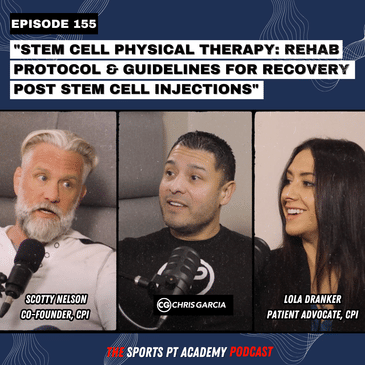
In this episode, I interview Lola Dranker, patient advocate, and Scotty Nelson, co-founder of Cellular Performance Institute - a global leader in stem cell and cellular optimization treatments. We discuss what to expect after stem cell treatment, tissue healing timelines, and how to safely guide patients back to sport or their desired level of activity.
If you're a physical therapist or rehabilitation professional who wants to ensure you're staying at the forefront of stem cell rehabilitation, this episode is perfect for you! Enjoy!
If you're more of a visual learner, check out my YouTube video on this topic: https://youtu.be/QmeI9tWzU6g.
Below is more information on the guests and Cellular Performance Institute (CPI):
CPI Website: https://cellularperformanceinstitute.com/
CPI Instagram: @cpistemcells
CPI Co-Founder: Scotty Nelson (@scottyotm)
CPI Patient Advocate: Lola Dranker (@loladranker)
ATTENTION PATIENTS: have you recently had stem cell treatment? Are you looking for a skilled physical therapy team to help you reach your maximum healing potential? Click the link to get started: https://ww.drchrisgarcia.com/stem-cell/. Located in three locations around San Diego, my physical therapy team at Sports Performance Physical Therapy is paving the way for treating clients who have gone through stem cell therapy and specializes in helping you reach your maximum potential of healing, return to your desired activity level, and remain healthy & active for life.
ATTENTION PHYSICAL THERAPISTS: download Dr. Chris's exclusive stem cell guide with a proven step-by-step rehabilitation process after stem cell therapy to safely and successfully maximize your patient outcomes today: https://www.drchrisgarcia.com/podcast/episode-155/.
_____________________________________
Are you a physical therapist or physiotherapist looking for tips, tools, and strategies to work with more athletes, become a sports specialist, or get a job in a sports setting...so you can finally enjoy the career that you've always dreamed of? If so, you're in the right place...this podcast is for you. Your host is Dr. Chris Garcia, a physical therapist, business owner, entrepreneur, nationally recognized public speaker, and residency-trained sports specialist.
Dr. Chris Garcia, PT, DPT, SCS, CSCS, USAW has worked in professional sports and traveled around the world working with elite athletes throughout his career, and he's learned a lot of lessons along the way. He created this podcast to share his experiences and give you everything you need to know to help YOU become a successful clinician. Dr. Chris Garcia talks about everything from sports rehab and injury prevention to developing athletic performance and the path to getting your dream job...even if it is in professional sports.
If you want to become a successful clinician so you can finally enjoy the career you've always dreamed of, visit www.DrChrisGarcia.com.
LINKS:
www.Instagram.com/ChrisGarciaDPT
www.Facebook.com/ChrisGarciaDPT
***DISCLAIMER: This content is for educational & informational use only and & does not constitute medical advice. The content is not intended to be a substitute for professional advice or medical recommendations, diagnosis, or treatment. Please consult with a qualified medical professional for proper evaluation & treatment, or beginning any exercises or activity in this content. Chris Garcia Academy, Inc. and The Sports PT Academy Podcast are not responsible for any harm caused by the use of this content.***
[00:00:00] Welcome all new listeners and welcome back to those who've heard my content in the past.
[00:00:03] If you're a physical therapist and you really want to maximize your outcomes and you are
[00:00:08] starting to see an interest in stem cell therapy and post rehabilitation and you are looking
[00:00:14] for the next best answer on how to help your patients stay more active after these procedures.
[00:00:21] This episode is perfect for you.
[00:00:29] Are you a motivated healthcare fitness professional?
[00:00:31] Are you looking to work with more athletes, become a sports specialist or even get a job
[00:00:34] in a sports setting so you can finally enjoy the career that you've always dreamed of.
[00:00:39] If so, you're in the right place.
[00:00:41] My name is Chris Garcia, physical therapist, business owner, entrepreneur and residency
[00:00:45] trained sports specialist.
[00:00:46] I've been fortunate to work in professional sports and travel around the world working
[00:00:49] with elite athletes throughout my career and I've learned a lot of lessons along
[00:00:53] the way.
[00:00:54] I created this podcast to share my experiences and give you everything you need to know
[00:00:58] to help you become a sports expert.
[00:01:00] Welcome to the Sports BT Academy.
[00:01:02] Thank you for everyone for being here.
[00:01:07] For those of you who are not on YouTube watching this podcast, we have two amazing humans
[00:01:12] that are with me today and thank you for the invitation.
[00:01:16] I have Scotty Nelson and Lola Drinker here and I am here today really to get
[00:01:23] an understanding on how we can help the planet, how can we help the patients
[00:01:28] that come to see you after STEM self therapy and ultimately what is it that you
[00:01:33] want physical therapists all over the country and world to know.
[00:01:36] That is my goal today so thank you guys for having me.
[00:01:38] I'm really excited to be part of this.
[00:01:41] You know, I think we've worked with Scotty.
[00:01:44] When did we first see you?
[00:01:46] It's been a few years.
[00:01:48] Yeah, it's been a few years now and it was right after.
[00:01:53] So I was the first person at the Cellular Performance Institute to get my discs injected.
[00:01:58] My business partner Francisco had already done something like 900-1 so I wasn't the
[00:02:03] guinea pig of the world by any means but the first person at our hospital to get it done
[00:02:09] and after I got the procedure done, Francisco and my doctors had really
[00:02:15] encouraged me to get physical therapy.
[00:02:19] It was, I broke my back in 2010.
[00:02:22] I got back surgery 2011.
[00:02:26] It was two years ago, almost three years ago now so it was about 10-11 years post-surgery.
[00:02:35] My surgery was not what I would consider successful.
[00:02:38] When I got my surgery they told me three months I'd be fine back in doing things.
[00:02:43] Took me eight months to be able to walk and then I did two years of physical therapy.
[00:02:48] I was a competitive jujitsu fighter before then for many years.
[00:02:51] So basically it took me almost three years to get back on the mat.
[00:02:56] Wow.
[00:02:57] And then that road was really, really painful.
[00:03:00] I ended up re-injuring my back actually down in Costa Rica at what is now heroes
[00:03:07] which was a non-profit that Lola helped work with and create to get the local kids there free jujitsu.
[00:03:14] I was there with Rafael Lovato.
[00:03:16] Felt a click in my back.
[00:03:18] I could not walk for eight days later the trip back and on that trip back it was like
[00:03:23] I have to give up jujitsu.
[00:03:24] It was super depressing for me.
[00:03:27] Fast forward about five, six years later I got the stem cells and now my back's like 100%
[00:03:34] a lot because of you guys.
[00:03:35] So you know what my schedule is hard for me to get into sports performance.
[00:03:40] But I was getting there once a week, once every two weeks with my back
[00:03:43] and I just saw what you guys were doing.
[00:03:45] First of all it's completely different than any other physical therapist I've ever been to
[00:03:49] especially on the level of caring your team has.
[00:03:52] But on the improvement between each time I was going back I was getting better and better.
[00:03:58] That's amazing.
[00:03:59] And so that's been a few years now.
[00:04:01] And now if you were one of the first ones here at CPI to get stem cells
[00:04:07] and you've had the therapy that was probably three or four years ago.
[00:04:12] And here you are today at a different level.
[00:04:14] You're seeing so many more patients with stem cells.
[00:04:17] How did you find your path into CPI in terms of now being part of growing this
[00:04:22] and helping people over the world?
[00:04:24] Sure.
[00:04:25] Well I found my path in here because of my business partner Ed Clay.
[00:04:29] I mean the guy's just a genius.
[00:04:31] And he had an experience with blowing out his knees
[00:04:35] that led him to look into alternative stuff.
[00:04:38] Something called Ibogaine which is for opiate addiction.
[00:04:43] After he was able to basically fix that in a matter of days his mother was actually
[00:04:48] in a really bad place because of rheumatoid arthritis.
[00:04:51] And the doctors had basically failed standard of care on her.
[00:04:54] Nothing had worked.
[00:04:56] And he found a treatment that was no longer legal in the United States
[00:04:59] that was available in Mexico.
[00:05:01] Chipsa Hospital had done a lot of that treatment
[00:05:04] and that started on the process.
[00:05:06] It had actually closed.
[00:05:07] It had been closed at that time I think for about a year.
[00:05:09] So he couldn't take his mom.
[00:05:11] So that started the process of what eventually became buying
[00:05:15] and reopening the hospital which was it had been closed I think for about 18 months.
[00:05:22] His mom's name is Regina.
[00:05:23] She was the second patient that we had.
[00:05:26] She came in a wheelchair and she left shortly after walking.
[00:05:29] She's been doing amazing ever since.
[00:05:31] That move Chipsa was originally a cancer hospital.
[00:05:35] So when we reopened it and brought the doctors back they wanted to do cancer again.
[00:05:40] And we started working in cellular therapies for cancer.
[00:05:43] We always knew we could do regenerative medicine.
[00:05:46] But really that's quite frankly easy compared to cellular therapy for cancer.
[00:05:51] Cancer is the hardest one of them all.
[00:05:54] And so as we got the cancer program going and we're happy with results
[00:05:58] and growing that we moved into the regenerative medicine.
[00:06:02] It really only became the Cellular Performance Institute instead of Chipsa
[00:06:07] because Google changed the rules on advertising stem cells
[00:06:11] and they shut down our Chipsa page
[00:06:14] and we couldn't run ads for cancer or anything like that.
[00:06:16] They listed us.
[00:06:18] So we said we got a shift and create a whole new company.
[00:06:22] Wow that's amazing.
[00:06:24] So I know Scotty's story a little how I mean it's great to have you on.
[00:06:28] How did you how are you part of this whole process?
[00:06:31] Great to be here.
[00:06:32] I mean that's also a long story.
[00:06:34] But I know Scotty and Ed from Jutsu Mastermind
[00:06:39] we were part of a decade maybe 11 years ago now.
[00:06:43] We're down with that now.
[00:06:44] Yeah maybe longer than that.
[00:06:46] And during the mastermind around that time was when the guys got the hospital
[00:06:52] and about a year after that in early 2018
[00:06:57] my dad was diagnosed with lung cancer in New York.
[00:07:01] So they gave him two weeks to live in New York.
[00:07:06] The tumor was 13 centimeters across this whole lung.
[00:07:10] Was it his hip bone collar bone
[00:07:13] and they said look we could try a palliative chemo
[00:07:16] and my dad is a Soviet guy who are from Uzbekistan
[00:07:20] so he was like doctor is authority doctors are like whatever they say goes
[00:07:26] and I've been a holistic health coach for 12 years now
[00:07:30] and he was like I don't want any of your voodoo medicine
[00:07:33] I'm gonna do what the doctor says.
[00:07:35] So it went to Sloan Kettering he got his chemo dose,
[00:07:39] ketruda and a platinum based chemo
[00:07:42] and in three days he couldn't walk
[00:07:45] and it was just getting so bad that they wouldn't do the second chemo round
[00:07:50] and I messaged Ed and I was like Ed these are the records
[00:07:55] and he said I don't think you can get him here
[00:07:57] because how are you gonna fly cross country
[00:08:01] and he said you just leave it up to the doctors
[00:08:03] if our doctors can say that you know that they can try just bring him
[00:08:09] and I brought him and it was the most amazing thing that happened to my family
[00:08:16] I'm getting first podcast so I'm gonna cry.
[00:08:21] Two weeks his tumor is down 40%
[00:08:26] from all the amazing treatments who did a chip so which gurson therapy cellular therapies
[00:08:31] he was one of the super responders who VG5000
[00:08:35] and a couple other things that we're doing
[00:08:38] and it was just I got my dad back you know he went from his death bed to thriving
[00:08:45] he went back to work full time
[00:08:48] and then a year later he had a heart attack that he didn't survive
[00:08:52] but he had an MRI the day before he passed
[00:08:56] he had only scar tissue left in his lung
[00:08:59] nothing else.
[00:09:00] So caught the heart issue you know I always
[00:09:05] think that in an alternate universe he would have made it
[00:09:09] but it was a year of another birthday another Christmas
[00:09:13] and other and everyday's gift right that's I think a lot of people
[00:09:18] just like with stem cells they're looking for the cure
[00:09:22] they're not thinking about the improvement in their quality of life
[00:09:26] the improvement in you know if you're in pain 50% less of the time
[00:09:33] less pain meds that that's an effect on your liver and your kidneys you're you're saving
[00:09:39] a big part of your life even though you're not 100%
[00:09:42] where you want to be and with my dad that even though he's not with us anymore I got to
[00:09:48] meet all these amazing patients who got more life
[00:09:53] many of them are still in remission and did get the results that you know they were
[00:09:58] working hard for and the doctors were working really hard for
[00:10:02] and I at some point decided to move here and the guys hired me and it's all history from there
[00:10:10] it's been blessing I'm very grateful every day to see the healing journey of thousands of people
[00:10:17] and they're really humble so they don't talk about it so I will
[00:10:22] so that's how I got here it's through my dad yeah
[00:10:25] he sucked her in yeah
[00:10:27] yeah and and just seeing the facility and seeing you guys as team and culture I understand that
[00:10:31] I'm just being introduced to the doctors they're already they're already throwing firing questions
[00:10:36] and trying to figure out things so they're very passionate clearly you guys are passionate
[00:10:39] about what you do and for those at you out there in the podcast listening to this you know
[00:10:45] I've met both of these great human beings through probably one central source
[00:10:49] probably Dominic Cruz kind of centralized a lot of us and I'm very grateful to be able to help him
[00:10:55] and and everyone the extended family and be part of this we started seeing patients I think
[00:11:01] through probably you were one of our first cases we've seen PRP we've seen a lot of regenerative
[00:11:05] medicine but as we've seen more and more patients over the last few years because our high focus on
[00:11:12] patient experience and outcomes and we individualize things for people every single person that
[00:11:16] comes in as much like you guys everybody has a story and the reason why we care is
[00:11:20] because we're passionate about the outcomes we understand that your dad is there we understand
[00:11:23] that your back is debilitating you don't have that function that's a very big part of your life
[00:11:28] that's like your independence and nobody can strip that from you and for us that's a big factor on
[00:11:33] how we treat patients we know that you just want to get back to doing something that you want
[00:11:37] to do for walk live a better quality of life have another birthday whatever it is and so we get
[00:11:42] that and so we're passionate about it and so as we saw patients post stem cell procedure
[00:11:47] it just made sense we just needed to figure out what the healing times timelines were this
[00:11:51] is a newer procedure what changes with regenerative medicine how does it affect healing rates and then
[00:11:56] we just customize the treatment sessions now the big reason why I wanted to have this podcast is
[00:12:01] because you guys are getting patients from all over the US maybe even world all over the world
[00:12:07] all over the world and he obviously said he's humble about it so I'm glad yeah that's fantastic
[00:12:12] and there's a lot of physical therapists who have that passion to help people just as we do
[00:12:18] however they're not familiar with seeing patients post stem cell procedure and they are different
[00:12:24] it's not a prp injection this is very very different the the the science behind it the healing timelines
[00:12:30] the progressions changes so really my goal today is help the planet understand if they see a patient
[00:12:37] post stem cell what should they expect what an ideal world would you want what do you want
[00:12:42] them to know what precautions are contraindications how do we set up these people who
[00:12:47] investing a lot of time money and energy and passion and they're really you know they have hope
[00:12:53] and you don't want to crush that by doing something that was preventable like being too aggressive or
[00:12:58] being too conservative so Scotty I have a couple questions for you Lola too so Scotty can you
[00:13:04] tell me the science behind this so as a therapist you know at a basic level what's
[00:13:10] happening post stem cells to help them understand now what's happening at the tissue level
[00:13:15] the answer to that question is no I'm not a scientist I won't even try to go there and butcher it
[00:13:22] yeah but I can tell you you know it the thing is is that you know especially Americans like
[00:13:30] everybody wants everything to happen immediately you know I got the stem cells how come it
[00:13:35] hasn't grown back it's been 30 minutes but you know one of the things that I've learned is
[00:13:40] you know the stem cells first they take time to kind of get accustomed to being you know in the body
[00:13:46] and then tissue takes time to grow especially cartilage disc material we do get people we call
[00:13:53] super responders and their body really takes to them very well they tend to be high level
[00:13:59] athletes that break their body down a lot and their body is used to be going through that
[00:14:03] phase you know as opposed to somebody who is not you know going to you know going to the gym every
[00:14:10] day yeah is different than like what Dominic Cruz does yes right yeah let's be honest here are some
[00:14:16] of the other pro athletes that we that we get here so it takes time for that tissue to grow
[00:14:22] then it takes time for that tissue to mature then it takes time for that tissue to strengthen
[00:14:28] and one of the biggest problems that we have is pain tends to go away pretty quickly but that
[00:14:34] tissue hasn't had time to really mature and strengthen so it's very fragile we see it a lot
[00:14:42] people start feeling great quickly and they want to go right back into what they were doing jujitsu
[00:14:47] weightlifting these golf guys my god if you play golf relax it's not the end of the world
[00:14:53] you know you want to go beef swing you just got your back injected and in three weeks you think you
[00:14:58] can go crack the ball for a drive as hard as you can yeah you wouldn't be doing that if you had
[00:15:03] back surgery so I don't honestly I don't you know like I'm not a big science guy I can't tell
[00:15:09] you the exact science behind what what they are and how they work I'm sure there's a
[00:15:14] YouTube video out there that could do a way better job so I don't want to butcher it
[00:15:18] um so I'm gonna default a little bit on that question yeah and I appreciate this guy I think that
[00:15:25] the thing you're seeing is the volume of people you're seeing the success stories you're seeing
[00:15:30] the challenges you're seeing people who don't do well or the the the the super um you know people
[00:15:36] that you mentioned earlier now you said something interesting that I really appreciate um that
[00:15:41] really challenges physical therapists um we our goal we understand tissue healing but here's
[00:15:46] the challenge that we have we know that when somebody has surgery an ACL or knee replacement
[00:15:52] there is a scar and we know there is healing in there right then we know that that person
[00:15:58] is responding with I'm in pain I'm very hesitant to put weight on that so I'm gonna just be
[00:16:02] reserved about it and we as a physical therapist we know that we can rehabilitate somebody it's
[00:16:06] going to take 12 weeks to rehabilitate that no matter what it's going to be 12 weeks why
[00:16:10] because that's normal tissue healing repair six weeks of inflammation or two three days of
[00:16:14] inflammation six weeks of of proliferative remodeling and then going to a true remodeling phase
[00:16:20] that's the basic science behind everything that happens when you have surgery the difference between
[00:16:25] post stem cell procedures and post surgery is that there's no incision there's no localized
[00:16:31] blown up tissue typically that is telling the person I'm in pain and I need this to heal
[00:16:38] it's actually the opposite no incision and this person feels great within three days
[00:16:42] that's a danger zone to physical therapists because we're like wait a minute your symptoms are great
[00:16:48] I can't see what's happening in the in the actual joint so let's push you yeah they think they're
[00:16:53] incredible Hulk and that's a lot of what we're seeing in the physical therapy world I have people
[00:16:58] who call me who say hey Chris I don't know what to do with these stem cells because they're
[00:17:03] reporting 100% you know one weekend and I'm saying no you treat it like a surgery you
[00:17:09] treat it like 12 weeks of healing no matter what even if they feel amazing your job is to make sure
[00:17:15] this tissue healing happens in the best possible um like way and I think that's the hard part they
[00:17:21] can't see the repair they can't see the localized tissue they don't see the incision site and that's
[00:17:26] deceiving because they're like subjectively symptomatically they're like I feel great
[00:17:31] and for us as physical therapists what do we do with an out person who wants to be active
[00:17:34] wants to go to golf what do we say push it let's go let's party and that's the danger zone so
[00:17:41] all in all there's several factors that we said that you mentioned that I want to touch on but the
[00:17:45] first one is they feel great but they're not there yet inside that joint and that as a physical
[00:17:51] therapist you have to keep in keep in mind and I'll I'll review tissue healing timelines but
[00:17:57] for you the people who do best these um high active individuals why do you think that
[00:18:04] they do better than other community members who are going to the gym one to two times a week
[00:18:10] you know again I don't know my guess is you get somebody who's you know breaking their body
[00:18:18] down every day in training yeah when I used to train it was trained till exhaustion and then push it
[00:18:24] and the recovery time you start learning your body and you want to speed your recovery up
[00:18:30] you're doing everything you can do to speed your recovery up so I think anyone who's done that for
[00:18:37] years is listening to their body post stem cells and they are they're implementing whatever worked
[00:18:46] in the past for them for that rest recovery period I understand so strictly hypothesis
[00:18:53] you know and it's not always those people that are super responders yeah super responder is just
[00:19:00] somebody who's the uptake of the stem cells their body seems to process them and put them to work
[00:19:06] quicker it tends in my experience I have no scientific data behind this whatsoever I just
[00:19:12] try to meet every patient and listen to them of course so all anecdotal yeah my experience it
[00:19:17] tends to be those types of people but it's not always those people yeah people that you know I would
[00:19:24] say people that are saying they feel amazing in a week you know that's a super responder or could even
[00:19:31] be placebo you know let's face it how much too she's growing in five seven days yeah much now
[00:19:37] infomations can come way down yeah especially people that do a lot of IV stem cells I always
[00:19:43] tell my patients if you can afford it max your IV stem cell dosage out because the
[00:19:50] positive side effects that we see from that unintentional effects that people are getting
[00:19:57] sometimes they're like miracles it's crazy you and you so do you do you feel that you guys
[00:20:05] get better outcomes if you do IV stem cells versus locals oh sorry in addition to sorry not or
[00:20:11] so if you do a local plus an IV stem so in my opinion and Lola talks to a lot more after care
[00:20:16] patients than I do um I don't think that you need to do a lot of IVs I did zero IV stem cells
[00:20:25] after I got my first bad injection at that time we weren't producing the volume of stem cells
[00:20:31] yeah that we that we do now now we're doing seven eight nine ten billion a week um so I didn't
[00:20:38] do any I don't think that uh IV stem cells are going to change the effects of 20 million stem
[00:20:45] cells in your needs again I don't have any scientific data this is just in talking to people yeah
[00:20:51] what I have noticed when I've done IV stem cells is that all of my joints feel better less
[00:20:58] cracking less pop it I'll get a mass few days of inflammation happened really to me and my wrist
[00:21:06] you know one time I did break this wrist when I was a kid but I hadn't really had problems with
[00:21:11] this wrist but since then after IV stem cells I'm guessing around a month in it just blew up swelling
[00:21:19] and hurt like crazy I hadn't done anything but type on a keyboard with it and went away started
[00:21:24] feeling a lot better I noticed that it loosened up my understanding is that the IV stem cells
[00:21:29] will go out through your body and where they find yeah inflammation they can potentially
[00:21:33] start to heal so there is like a real sense of wellness that grows especially after the first
[00:21:40] month from doing the IV stem cells asthma patients that don't need inhalers anymore
[00:21:46] diabetics that lower their insulin dose we've gotten lots of great results with people with
[00:21:51] heart function liver function different things like that well and and we kind of know why but
[00:21:59] that's not what they came here to get treated and I'll always throw this out there the brain is
[00:22:05] the most powerful drug in all if you think you're going to start feeling better you're likely to
[00:22:10] start feeling better so I won't I won't come away from it saying that maybe it's placebo yeah
[00:22:16] you know the things that we've seen when people change their mind and the whole it teaches
[00:22:21] the power of mind class along with Sarah at the hospital right the effect from one day to
[00:22:27] another on the healing process of cancer patients when they can get their mind right it's it is one
[00:22:34] of the most powerful things so I don't know yeah and so and I'll direct this to you Lola because
[00:22:44] if somebody has a work as a physical therapist we're used to body regions right we treat the
[00:22:49] back and then we treat the knee and then we treat shoulders and all these other things
[00:22:52] and we're very segmented our profession is very segmented with it's just purely based on insurance
[00:22:58] insurance says well you can't treat the shoulder and the knee at the same time unless it's approved
[00:23:02] so for us we have to look at this now when somebody has IV and a localized shoulder
[00:23:07] we're now having a systemic response but we've only gotten approval to treat the shoulder so it
[00:23:12] does change our rehabilitation process and I think Lola you have mentioned this to me before
[00:23:17] where if you have people who have had an IV uh a stem cells via IV it does change their immune
[00:23:24] response or their response with flare-ups or inflammation not just at the localized site
[00:23:29] but other things and as a physical therapist we're not used to that we're like hey we're
[00:23:32] treating your shoulder why these other knee these other joints being flared up can you
[00:23:36] speak to that like what do you typically see in terms of what happens when you add the IV
[00:23:41] and the responses to it yeah I'm also not a scientist or a doctor but I have spoken to
[00:23:48] I would say 90 percent of our patients that have completed treatment I follow their aftercare
[00:23:55] process and my understanding is from our doctors and scientists that we work with is as soon as
[00:24:03] the stem cells go into the bloodstream via IV they work with your body's ecosystem so they become
[00:24:11] a lot of people think stem cells just turn magically instantly in five seven days into
[00:24:17] the tissue that you need but it just simply doesn't work like that stem cells are responsible for a
[00:24:23] lot of signaling right so maybe there's things in your body that you already have to build tissue
[00:24:29] but the signaling is off or the blood flow is not optimal so when they get to that place and
[00:24:35] the signaling is right you get more more healing now we can't every person's different every person
[00:24:42] has different injuries and I hear it all the time like Scott said you know of an injury that hasn't
[00:24:49] bothered a person for 20 30 years they just remember they had a car accident or something hit their
[00:24:55] elbow got IV stem cells three weeks in their elbow is swollen and in a few weeks after that
[00:25:01] they feel amazing because they had a response there does that happen for everybody no but it can
[00:25:09] so we see a lot of it's kind of like a domino effect one thing gets better whether it's from
[00:25:16] a direct injection or IV cells and then they stop overcompensating for an injured you know
[00:25:25] joint so their posture changes or they start doing physical therapy and but then they might have
[00:25:31] pressure on another joint because they're altering their gait and it's so complex right and I think
[00:25:41] the key is I hear your questions and where you're going with it and I think the main
[00:25:48] challenge I would say is what you mentioned is that there's no incision right you can't
[00:25:57] a lot of our patients argue with me on the phone and like try to get my permission to do stuff
[00:26:03] like but but what if I what if I just go light on the bike right after both knees ankles
[00:26:10] injected two weeks ago and right and not your mom I'm not going to tell you no you can't
[00:26:16] do that but we recommend you go to physical therapy and make sure that all your muscles are
[00:26:24] firing properly because you might have the the inflammation and everything go down and you
[00:26:32] feel great now there might be space in the joint where there wasn't before all these things
[00:26:38] but you're still walking and moving as if you were injured right and you see a lot of that
[00:26:45] you did that for me with running yeah so I see that all the time yeah and now I understand
[00:26:51] what kind of patient I was so and I think so both of you have a role that you you see people
[00:26:59] pre or post you see them through um and you help them kind of maximize their experience and
[00:27:04] maximize their outcomes so from start to finish I imagine you're in contact with them throughout
[00:27:08] that time period yeah and the doctors are obviously they know the science behind it they know
[00:27:12] all these other things the challenge to the physical therapist is that say for instance they come here
[00:27:18] in a typical bout of treatment might be one to five days or seven days what what is a normal
[00:27:24] five six days five six days right so they'll come here they'll fly in from out of state
[00:27:29] they stay here for the week and then they fly back home that's pretty common for people that
[00:27:33] that you guys treat here now they're gonna go and look for a physical therapist to help
[00:27:38] them recover with rehabilitation now here comes the next challenge a lot of these individuals
[00:27:43] aren't coming with the prescription from a doctor saying you have to hear none of them are right so
[00:27:50] this is where physical therapy that's the first barrier already for a physical therapist if you
[00:27:53] work in an insurance hospital style system or outpatient where you're not used to seeing these
[00:27:58] people just straight off the the street without a script the first question you ask is uh well
[00:28:04] where's the script what am I treating and then what do I do with this as a physical therapist
[00:28:09] you should know what normal healing rates are and it was done to a body region so you know your
[00:28:13] timeline inherently and i'll explain those timelines so you guys understand a little
[00:28:16] bit more but these people are stuck not knowing what to do next these physical therapists and
[00:28:22] now the patient's like well i was informed that i could now start to work with um work with
[00:28:28] this patient but i don't know what to do because it's been so many weeks or so many months
[00:28:32] my goal is to outline what normal tissue healing guidelines are have an understanding to everyone
[00:28:39] else out there that in an ideal scenario what would you do with these healing rates and what would
[00:28:43] you do with rehabilitation it's not that hard so let me outline just a little bit and you guys
[00:28:49] can see where your patients struggle which which weeks or which months and it's great to hear
[00:28:54] your your input because you see maybe the before maybe the after or the results afterwards
[00:28:59] so let me let me outline this this healing rates all right in the first 72 hours of any trauma
[00:29:06] an injection whatever it is it's the inflammatory state this is where your knee balloons up
[00:29:10] your purple it's blue it's green it's all the above after that after the inflammatory state
[00:29:15] right around day six or day seven it starts another phase called proliferative phase proliferative
[00:29:20] phase basically means all these good healing uh cells are starting to work over time you have
[00:29:26] repair cells coming in and proliferative phase from day six to about day 35 okay so you're getting
[00:29:32] into the five week mark okay so from there at this point that's why they say for the first phase is
[00:29:37] four to six weeks that's very common for anything post-surgical after that you have a remodeling
[00:29:42] phase which is day 35 forever so most people post-surgery or post-injury flare up in the
[00:29:50] first six weeks why because they're now having all these cells coming into them as a physical
[00:29:56] therapist we know that because after surgery in two weeks after surgery we're gonna they're gonna
[00:30:01] come and remove sutures from you right all the stitches are gone that's a normal process at
[00:30:05] the two week mark after that at six weeks is when we can start to push you a little bit more
[00:30:09] now we can start to add a little bit more strengthening then after six weeks it's
[00:30:13] another six week mark so basically at two weeks we know that's a normal healing rate
[00:30:17] at six weeks that's stage one six weeks to 12 weeks is stage two and then at stage two
[00:30:24] is 12 weeks that's when people can start to run jump start to go back to sport so normal healing
[00:30:29] rates post-surgery 12 weeks is the minimum before you can add that stress going back to sport jiu-jitsu
[00:30:35] those type of things so if I had you post stem cells I would have been stretching you getting
[00:30:41] you a stable good balance for the first six weeks but I wouldn't have had any load on you
[00:30:46] until week six why because I have to have those cells repairing then I get six weeks to get
[00:30:52] stronger and then at week 12 then I get to introduce you into any form of training that you would do
[00:30:57] now that's a conservative approach everywhere inside there if I have a dominant cruise or somebody
[00:31:02] pro fighter I'm probably gonna play with the timelines a little bit more but I have to respect
[00:31:07] healing I have to no matter how good you feel and you say Chris I want to roll tomorrow come on
[00:31:13] just a little bit like you know I won't I won't do anything on the mat it'll be standing the
[00:31:17] whole time I know what happens I know what happens I give you a little bit you take
[00:31:21] I give you an inch of take a foot for me if I know that 12 weeks is normal every physical
[00:31:27] therapist should take that same approach the only thing I've heard talking to the doctors here
[00:31:33] is that the IV stem cells just change that a little bit more in low life talk to you about
[00:31:38] this and I think physical therapists out there if you're like hey Chris how do I work with
[00:31:43] these post stem cell patients it's no different than your 12 week timeline it's no different
[00:31:48] than a normal 12 week timeline and after talking to the doctors that's exactly what they said
[00:31:52] they're like an ideal world you're just understanding it's going to be 12 weeks
[00:31:56] to get these people better now there's always cases of super healers and people who don't have
[00:32:01] the best outcomes we get that but inside 12 weeks you're doing nothing different
[00:32:07] than if it was a post surgical case and you're progressing them through that
[00:32:10] now the thing that happens there is the IV Lola in your experience and what people have
[00:32:15] done after talking to the docs they said those first two weeks are they do change because
[00:32:20] people have immune responses what has been your experience with people who get the IV stem cells
[00:32:27] I would say that after the first couple of weeks people can get back to their normal life
[00:32:32] generally but we just never know those old injuries that they don't even remember about
[00:32:38] his wrist yeah exactly like we could there's no way for us to predict that your wrist was
[00:32:43] gonna have that response but generally those flare-ups don't last more than a few days to a week
[00:32:54] and we just advise people that when they have a flare-up reach out we have an aftercare
[00:33:01] doctor medical team that gets in touch with people and kind of guides them through that
[00:33:07] and so that's important to know so but what you don't want and I imagine this can happen
[00:33:14] is if the physical therapist or anybody helping with rehabilitation if they don't know what to do
[00:33:18] they're just gonna keep directing the patient to you and you're like I'm we can only do so much
[00:33:23] remotely you know there's clinicians who know what they can do the promise is a new procedure
[00:33:28] they're scared to mess it up obviously they don't want to do anything wrong
[00:33:33] our goal is to educate them so that they have the normal standards and they can actually work
[00:33:40] with these patients on their own without having to call you for every question that to me would give
[00:33:45] you give them so much more power and give the patient so much more independence without having
[00:33:50] to rely on you guys calling you every single day I imagine there's some people I can't imagine a world
[00:33:55] so all right so
[00:33:59] you're surprised the calls we get sometimes I stub my toe is it gonna ruin my stem cells
[00:34:03] I see okay so to lighten your load and help clinicians because the biggest thing that they
[00:34:11] don't know is what's happening why is this different than any other procedure I've ever done
[00:34:16] and if they have a flare up at their wrist but I'm treating their knee what do I do
[00:34:20] is this a is this a negative side effect that's the biggest concern honestly that's all they're
[00:34:25] caring about but if they understand that with IV stem cells that they could have responses all over
[00:34:31] the body that have maybe nothing to do with the localized site that's a big one for them to know
[00:34:37] that there is some normalcy inside that after talking to the docs I heard two weeks is a good
[00:34:43] timeframe where they might have immune responses to these IV stem cells so if that were the case
[00:34:49] all I would do is push the 12 weeks of recovery shift it plus two weeks basically so it wouldn't
[00:34:55] be 12 weeks it'd be 14 weeks if they get IV stem cells that's the only thing I would change inside
[00:35:00] this so now you have a 14 week recovery with IV stem cells but if you don't and you just have
[00:35:05] localized it's going to be the normal 12 that is probably one of the biggest takeaways that
[00:35:10] I took after talking to the doc so it was so helpful to understand patients will have
[00:35:16] immune responses that's very normal and it might not be at every or it might not be at the localized
[00:35:22] site that's important to know from you your guys is response you're a patient advocate you see them
[00:35:28] throughout this whole process you might see them pre-post what are the things that they struggle
[00:35:32] with that you wish that physical therapists or healthcare providers would know about this
[00:35:37] procedure to help the patient outcomes what are some things back up one before that the first
[00:35:43] real question is how do I pick a physical therapist oh oh yeah just go on google and type in physical
[00:35:52] therapy oh that's a phenomenal question I was not ready for this guy and I appreciate that
[00:35:59] all right so 100 you're going to go on google and you're going to say uh physical therapist
[00:36:05] and then you're going to look at google reviews and the problem is it's associated with a clinic
[00:36:10] right so clinic will say 305 star reviews and you can go through all those things and you're
[00:36:15] going to look for the person who's been mentioned the most that's probably what people are going to
[00:36:19] do naturally right there are some credentials that help you as a consumer understand qualifications
[00:36:27] so we all know that if you have more certifications it that person is hungry for
[00:36:31] education they want more it doesn't always mean that their care is going to be better
[00:36:36] so it's hard to it's hard to present that okay so the first thing I would do is look for people
[00:36:41] who have certain credentials is one of them there's a good starting point you can do the google reviews
[00:36:46] perfect you've locked you've locked it into the top five clinics that you like in
[00:36:50] indianapolis indiana perfect then you're looking for some credentials there are some
[00:36:54] credentials that are highly respected in our profession uh an OCS orthopedic clinical
[00:36:59] specialist is a very tough exam to do not everybody has it a sports clinical specialist
[00:37:04] an SCS these tell you that they are progressive then you might have some strength and conditioning
[00:37:09] certifications like a CSCS this person likes working with athletes or active people from there
[00:37:16] then you can read on their bios you know what is this person what type of training has this
[00:37:20] person had have they done a residency that's a big one not everybody has a residency in medicine
[00:37:25] in the us all physicians have to go through residency some do fellowships in the u.s now
[00:37:30] only a certain proportion of physical therapists go through residencies i at the time i did mine in
[00:37:35] 2008 and 2009 i was one of five people in the us who did residency i explained why you're so good
[00:37:43] i appreciate that scottie um but you what you really understand this is a hard part of of
[00:37:48] healthcare i care about what i do right like i'm obsessively passionate about humans right
[00:37:54] i asked you earlier before the podcast i was like hey um where are you from and you you said
[00:37:59] that's a hard question it's a hard question and ultimately what you really understood was
[00:38:04] you just got to know who people are why they make the decisions and who they are you can figure that
[00:38:08] out upon meeting somebody you like you can read that person to me that's my passion so when i have
[00:38:13] patients in front of me i just i'm a gypsy too so i get that so i just need to know what is that
[00:38:18] you're looking for i'm going to help you attack that i don't care that you stub your toe i
[00:38:21] respect that but what do you want to do you want to roll perfect how far how how far out
[00:38:25] can i get you to to be patient with me 12 weeks can you wait for me for 12 weeks all right you
[00:38:30] will need to be with me let's let's barter let's bargain i understand your goals as a human i get
[00:38:34] that you want to run lola i understand that and most physical therapists they just want to change
[00:38:39] the knee range of motion they want to get more flexible and the concept of getting the human
[00:38:43] to where they want in a time that they want is foreign to people that's the only reason
[00:38:47] why i love what i do and every member of my team has that same vision now every healthcare
[00:38:52] provider doesn't have that that's the challenge so i can't tell you that you're you're gonna have
[00:38:56] to stumble upon that but what you're gonna do is you're gonna go on google i appreciate that go for
[00:39:01] the reviews you're gonna free people who with higher level credentials doesn't mean if they don't
[00:39:05] they're not good i'm just telling you how do you kind of filter a little bit more um and then
[00:39:10] you look for their bios and and see if they've done a residency of fellowship um and that
[00:39:13] they've gone beyond the baseline level of education that's probably what you would do
[00:39:17] for a dentist you're looking for like somebody who is highly qualified has done this before and
[00:39:22] works with active people that's probably what you're searching for because the people that you see
[00:39:26] want to be more active or else they wouldn't have this right they're currently debilitated sure
[00:39:32] and they want to be more active than they currently are so for me um those would be my
[00:39:36] three standards um to help you choose a physical therapist um what has worked for you guys in
[00:39:40] the past what's been the what's been the algorithm that you guys do i hate yelp so i tell
[00:39:45] people go on yelp um and look for people that have a lot of good reviews the thing the first
[00:39:50] thing i always do is ask for personal referrals like just ask me a lot of the people that we get
[00:39:55] not everybody but a lot of people that we get down here are athletes in some way or another
[00:40:01] but i would say most of them that are getting treated obviously for muscular skeletal stuff
[00:40:06] are active people yeah and so the first place i say is you know go ask around at your gym
[00:40:11] ask around on the golf course ask around find somebody who's happy with the person that
[00:40:16] they went to the other thing i've heard from a lot of patients is that um well two different things
[00:40:23] you know one if you call your your pc and you say oh doc the pain my shoulder right you can
[00:40:28] probably get your insurance company to pay for your physical therapy however i've heard from other
[00:40:35] patients that if they go through their primary care kind of like what you said like well they
[00:40:41] i got three places injected they want me to come back three times a week you know that's how the
[00:40:46] insurance system people complain about big pharma but you can play about big insurance they control
[00:40:51] more of our health care right then pharma ever does um and so they find it's more valuable
[00:40:57] to just go in and say i don't have insurance and cash pay boom it's usually cheaper and they
[00:41:02] can get everything they want done in one session that is a um a big thing for patients to do and
[00:41:11] physical therapists believe or not we're just not used to that we're not used to a cash pay
[00:41:14] person come in saying hey i would like to direct my care and have you help me alongside that the
[00:41:19] physical therapist usually uh whatever the primary or the ortho says this is what we're supposed
[00:41:24] to do here the five things you can touch and here's the six sessions you're allowed
[00:41:27] so it's very boxy in this scenario patients it could be their back their neck they had six
[00:41:33] injections their neck four at their low back and two at their big toe and now you have to be
[00:41:38] able to get that and they want to be able to roll in six weeks or 12 weeks what do you do with that
[00:41:42] well it's just an equation but it's 12 weeks let's figure this out we'll do it all but physical
[00:41:47] therapists were used to segment it i can only touch the neck for six weeks can only touch the
[00:41:52] back for four weeks i only got eight sessions for the toe sometimes it is better for these
[00:41:57] patients to pay cash pay why they're already investing a lot of time and money to come down here
[00:42:01] and i don't know what your guys ratio is what ratio would you say how important it's a procedure
[00:42:06] and how important is the rehab afterwards what percentages would you say
[00:42:10] like 50 50 like 63 to 64 talk to this too but when patients come in to me especially with
[00:42:16] like shoulders or instability and they're unhappy with their results i'll say i'll because i don't
[00:42:21] want to say like hey did you do physical therapy i'll say what did your physical
[00:42:25] therapist have you do fair you've already assumed and then look at that and they'll go
[00:42:31] i love that i love that one physical therapist i'll say
[00:42:35] then if it's a shoulder i'll say so are you a side sleeper yeah they'll go uh yep and i go
[00:42:40] well you're never gonna get out of pain until you've got a physical therapist so that's fair
[00:42:44] even if the stem cells completely reattach your rotator cuff if you're you know not doing
[00:42:49] something to realign your shoulder you're never gonna get out of pain yeah and then another
[00:42:55] patient favorite is i'll ask i'll be the did you do physical therapy and uh and they'll be like oh yeah
[00:43:05] you know i do physical therapy in my garage all the time and that i already know why they're in
[00:43:11] pain what they did and i can you know i fill in the blanks and then i just follow up with
[00:43:17] the doctors after and when they re-injure or re flare up or hurt themselves it's because they were
[00:43:26] trying to do some something that they did post their injury before that they think they remember
[00:43:32] the proper way the physical therapist showed them which i have to have you remind me after
[00:43:39] 25 visits what we did last time of course you're like you're doing it wrong you're human yeah and i
[00:43:46] patients try to try to do that and um a lot of times like we do put a huge emphasis
[00:43:54] on physical therapy just for them to find one and do it and commit to it um but people
[00:44:01] create their own interpretations of what that means and a lot of times get themselves in trouble
[00:44:07] yeah um but the people who do follow through aftercare instructions and have a great physical
[00:44:15] therapy partner we just we tend to see that those people do better long term and don't re-injure
[00:44:20] themselves and give themselves time to to heal properly and strengthen all the tissue around
[00:44:26] the area that got injected is that i know that the doctors also um are always concerned about
[00:44:34] preserving muscle tone yes and that's like a big thing after surgeries but after surgery
[00:44:41] you're laid up you're doing nothing because you can't put weight on like if you get a knee
[00:44:46] surgery you're in a boot and on crutches and uh it's it's a different uh different process right
[00:44:54] right and that's interesting what i'm comment on is that we hear from patients that they're
[00:44:59] physical therapists say oh you're gonna lose muscle mass if you don't hurry up and start
[00:45:03] doing something i can tell you we've had crossfitters power lifter guys that come down here to do IV stem
[00:45:09] cells um and when you have all those stem cells in you that mass is going to come back a lot quicker
[00:45:15] than before you have 150 extra million stem cells running through you yeah and and i think the fear
[00:45:22] of the muscle mass is because we're not used to these cells that help angiogenesis the cells
[00:45:31] that help you promote um cellular growth and activity we're not used to that we're used to
[00:45:36] something's been carved out of your bone and now you have inflammation but you don't have these cells
[00:45:41] are actually helping growth factors so for us that's the barrier it's almost like we wish that
[00:45:47] they were in the boot because now now they actually are like yeah it's so crazy because you guys
[00:45:52] are doing a procedure that's non-invasive non-operative that mimics recovery operative
[00:45:58] which is that that's that is the biggest thing that physical therapists need to understand
[00:46:03] your question i really appreciate your question how do you find the best physical therapist
[00:46:07] anytime little ask me hey who do you know in silicon valley who do you know in austin texas
[00:46:13] that's the first thing that i'm going to do now i'm a physical therapist so i can read through
[00:46:16] a lot of the jargon i can read through a lot of those things and i can see the bio and then
[00:46:20] i'll do a couple phone calls and texts and be like hey i have a network here's my my 50 studs
[00:46:25] all over the the u.s so i can help with that i get that but obviously that number one has that time
[00:46:31] so we're trying to create a resource for physical therapists who are interested and knowledgeable
[00:46:36] in treating these individuals that we can create almost like a google map and you have like a really
[00:46:41] easy place to identify well somebody's in minneapolis and somebody's in florida um these
[00:46:46] are your kind of your go-tos so that's currently what i'm working on at the moment to help
[00:46:50] you guys with this obviously for me i'm passionate about physical therapists who want to be above
[00:46:56] the baseline level of care and it's really unfortunate in this planet there's people who
[00:47:01] did their do the bare minimum um and the people who listen to this podcast you're clearly
[00:47:05] wanting to do something more um and so if you want to be on that list and you want to be able
[00:47:09] to see you know patients with post stem cells and you want to help people um get back to rolling
[00:47:14] get back to running um and you're not scared of treating these people you're you're not timid
[00:47:19] when it comes to doing these things um you know send me an email uh send me a direct message i love
[00:47:23] to be part of this um going back to the question what is the biggest challenge you guys see with
[00:47:30] people going back to physical therapy give me you found a good physical therapist what are the
[00:47:35] challenges that you guys are seeing for the first 12 weeks um it's twofold uh one side is
[00:47:44] you know somebody's been in pain for 10 15 20 years and suddenly they're not yes so there's this
[00:47:49] really really like impatient period of time where they understand they appreciate the result
[00:47:57] they're like i feel so good and they're doing physical therapy and they're not having flare-ups
[00:48:02] and they're not in pain and they really try to rush that 12 14 week timeline because they're
[00:48:09] they're trying to make up for a lost time you know especially the people who get rid of nerve
[00:48:13] pain yeah those are the ones that are like you know they've been on pain meds for a decade yeah
[00:48:21] you know we have people who weren't able to feel uh they're because of really bad pinch
[00:48:27] nerves or sciatica and stuff weren't able to feel or move their toes and how they can so they
[00:48:32] want to do all the things and um slowing people down because not only is the patient impatient yeah
[00:48:41] but a physical therapist can you know get a little ego involved like look i'm i'm doing so well
[00:48:48] pushing you you're improving so there's that twofold so that's one challenge is that the
[00:48:54] super responders or people who are just out of pain and want to get back to life and this is
[00:48:59] why they did this yes and then there are people who are slower in the recovery timeline um
[00:49:07] and have a lot of inflammation and when we work especially with like shoulders like really
[00:49:12] banged up shoulders with people after multiple surgeries and that takes time yeah and they're
[00:49:19] impatient with the physical therapy because they'll do a little bit and then they have
[00:49:24] a flare up yeah because there's so much stuff happening there and the injuries just some people
[00:49:31] take a longer time to heal you know somebody might at four weeks be pain-free somebody
[00:49:37] might take the full 14 weeks to get to that point where they have yeah you know inflammation
[00:49:42] come down and their range of motion is back so just understanding where you're at in the healing
[00:49:50] timeline where you were in your injury timeline yeah and respecting that and just patience on both
[00:49:58] sides of the spectrum you know softer tissue takes it usually grows faster and harder tissue
[00:50:08] cartilage bone will take a long time and just people respecting that timeline is
[00:50:15] really difficult to communicate so when they do go to physical therapy and the physical therapist is not
[00:50:23] respecting the timeline or appreciating how the healing process works it feels
[00:50:30] very conflicting sometimes I feel like it's not supportive to the patient if a physical
[00:50:35] therapist was like well you should be able to be to do this by six weeks yeah I try
[00:50:42] no and I appreciate that the thing I'm taking from this is as a physical therapist let's assume
[00:50:49] let's assume they're gonna heal in 12 to 14 weeks that's going to be the healing rate
[00:50:54] so if they feel good in between there it's okay no need to try and put them into like a
[00:51:00] super healer phase just respect the timeline get them to the 14 and play it safe because
[00:51:05] this is a procedure you don't want to do multiple times if you could have done it right from
[00:51:08] the beginning exactly yeah you can have touch ups two and ups whatever it is that they come in
[00:51:12] you know a couple times or I don't know if you have people who come in for multiple injections over
[00:51:16] one two three years you know we do we do most of our patients could and are one and done
[00:51:22] the thing is is our goal is to get these stem cells FDA approved yes I need data to do that
[00:51:28] I see so when we first started out you know somebody that was doing well or somebody that
[00:51:34] wasn't either way begging them to come back to Tijuana for no real benefit of their own didn't work
[00:51:42] got it you know so we had to develop what we call an ethical bribe say you come back I'll pay for your
[00:51:50] MRIs I see you need the data I'll give you $10,000 in free stem cells yeah so not good for my
[00:51:57] short-term margins but you need data yeah yeah especially when we have an MRI machine shortage
[00:52:03] down here in Tijuana but the data is is fantastic yeah to get all of that data and sure the people
[00:52:11] that are doing well is is great and I love that they're doing well but when patients aren't doing
[00:52:17] well and getting to figure out why that's where the real value is and that's where
[00:52:24] my experience of people I talk to yeah if you you know there are people that do great
[00:52:30] that don't do any physical therapy wow the people who aren't doing as well as they like
[00:52:35] they might have like a lot of improvement everything like that but you know like I said
[00:52:39] shoulder pain is a huge one knee stability like hey I have no pain in my knee but it still feels weak
[00:52:45] you know I can almost guarantee you every time they did no physical therapy I got it so I went
[00:52:49] through for the sub the subjective response there like hey I feel great so they went off of
[00:52:53] that which is crazy too if you have knee surgery that's what I'm saying it's almost better
[00:52:57] if you didn't do physical therapy I say you guys just put a little incision so that way
[00:53:00] it's a little floor you know one thing I was going to mention is I always I always uh
[00:53:06] I always encourage our patients to bring their radiologist report if not the MRI film there
[00:53:11] they know where they get got injected yeah they can point it out now all of my MRIs are in Spanish
[00:53:17] guess what country we're in it's another thing hello Americans guess what not everywhere in
[00:53:21] the world is English is the first language I know some of you never travel out of the
[00:53:24] country you're clueless about things like this but we have this thing called chat gpt where you can
[00:53:30] take a picture of your MRI and it will translate it all for you end of public service tell them Scotty
[00:53:37] I appreciate this how many times a week I have to say that you know that should be part of like
[00:53:42] your post uh your your discharge packet like oh really screenshot chat gpt enter copy paste
[00:53:49] read report completed you know find me a good health facility isn't full of Latinos anyways like
[00:53:56] come on son you know the most caring ethnic people I've ever met you know like there's
[00:54:02] some way to speak Spanish wherever you go in any health industry in this country so that that's
[00:54:06] a thing that that pts run into right so it's obviously in Spanish so like I'm in the middle
[00:54:10] nowhere Alabama what do I do with this yeah so chat gpt great we got that um for you
[00:54:16] um what are when you have these people who are flying from from in and then they're coming out
[00:54:23] what are you using as your data besides subjective like I feel better um obviously FDA will have a
[00:54:28] challenge with just a report of zero to 10 pain and actually they like that oh really and we
[00:54:33] have an automated survey system uh that goes out where they starts out weekly and then it goes
[00:54:40] to monthly okay and then we have a series of uh MRIs uh depending upon you know so I can't do this
[00:54:47] forever you know yeah um so each month we kind of look at how much how many people because you know
[00:54:53] people that live far away that feel great yeah I don't they don't give a rat they're out they're
[00:54:56] done you're giving them yeah coming back yeah I get that so and that's okay you know what I mean
[00:55:00] I want the data right but that's okay um so you know each month we kind of take a look at it
[00:55:05] and see okay how much more data do we need to collect you know so we did only three months for a long
[00:55:11] time yep but then we started after the three months having patients return six eight months a year later
[00:55:17] that just wanted to come back for treatment a lot of times we just want to come back for IV or they
[00:55:21] hurt something else and these are paying patients and they would come and I'd say hey yeah let me get
[00:55:26] an MRI I'll pay for it there we go okay okay and then we're looking at it and we're seeing
[00:55:31] man this guy's you know just like mine yeah if you look at if you go on it's on my Instagram if you
[00:55:36] go on my Instagram you'll see that even though 90 days after my stem cell procedure I have an MRI
[00:55:42] there the week before nine uh 90 days out in one year out yep at the 90 day mark completely out of
[00:55:50] sciatic pain for the first time in a decade like well I can do anything run up and downstairs
[00:55:56] I couldn't walk up and downstairs before and but the improvement in the discs yeah there were some
[00:56:05] looked a little bit better sure a year later they don't even look like the same discs
[00:56:11] Dr. Beaho our interventional radiologist here was like Scott if I didn't know you personally
[00:56:16] there is no way you could convince me that before and after MRIs we're the same person so as
[00:56:23] we started to see that we said hey you know when we saw mine let's get more data and so right now
[00:56:30] we're actually doing two free returns 20 000 plus all free MRIs to get the data to get this to get
[00:56:37] this data I appreciate it and we're seeing more and more that with our type of hypoxic stem cell
[00:56:42] low low oxygen stem cell that these cells are living for a long time and people I wouldn't
[00:56:49] be surprised is after we finished getting all of our year data we started inviting people back at 18
[00:56:55] months or two years because you want that you want to see where the where the peak is because you don't
[00:56:59] right now you know that the one year is kind of a peak but you don't know if that's going to continue
[00:57:02] we've had patients that felt nothing for three four months and then in months six or eight they
[00:57:08] call all of them and they're like oh my god I feel fantastic you need more data I understand
[00:57:13] I see no one's collecting data like this you know there's a lot of really good stem cell
[00:57:17] places yeah out there yeah but you have to really be willing to take a bite in your bottom line I
[00:57:24] understand to collect data like this and to me it's like you honestly have to care is a long game yeah
[00:57:28] yeah of course of course creating the long term the best experience possible for the patients and
[00:57:34] you know data is valuable too but it's not cash in your business sure in five years worth of
[00:57:39] having all that data we can move forward with the FDA and if these become approved with the
[00:57:45] FDA with the patents that we hold that's a lot of money right right but you gotta you gotta stay in
[00:57:51] business all that time before that I understand before you get to that payout and that payout may
[00:57:55] never come yeah I understand so you have a risk there yeah sure um so obviously doing MRIs we talked
[00:58:00] about CT scans there's another option um but MRIs right now you're going to be your standard to
[00:58:04] look at what does that look like pre and post correct that's your ultimate goal and of course
[00:58:08] it has to be on the same MRI machine with the same radiologist to be accepted into a study
[00:58:13] wow people always say why can't I get an MRI back home and send it to you
[00:58:18] I'm like oh the FDA would let you do it it's a lot easier for me but it doesn't work like that
[00:58:23] you know you appreciate our accents and tone change I can't imagine what your office is
[00:58:27] like I love this because I get it I understand um I a couple more questions one um do you see
[00:58:35] something um that can help facilitate or supercharge this person's healing and minimize
[00:58:41] the risk of flare ups um what would that be inside their first six or 12 months what do you hear that
[00:58:48] if done will help minimize or improve their outcomes with a reduction of uh an injury
[00:58:56] or flare up what would that one thing be what do you hear Lola and then I'll tell you the biggest
[00:59:00] one is not having a physical therapist give them weights at four weeks oh really really yeah I would
[00:59:09] have never done great let's start weights four to six weeks I see they're not ready yet because
[00:59:13] they're having hit that marker now if it normally was six now they're pushing out to eight because of
[00:59:17] the two weeks IV so they have a month more to go so they push them early yeah because if there's no
[00:59:22] flare up yeah you know they they could have stayed the path and stayed the course stayed the course
[00:59:29] stayed the course give you an example my mom uh tore her meniscus in June of 2022
[00:59:37] it's almost a year and a half ago um she was so scared of surgery we went to Mount Tynan New York
[00:59:43] they were like 100 you need surgery yeah at that time she was 65 they're like you you need
[00:59:51] surgery you're not going to recover on your own you don't work out you're not an athlete her knee
[00:59:55] ballooned like the three times the size and she had a cyst so after three months of trying to
[01:00:01] convince her to do stem cells she finally caved I brought her down they joined the cyst put the
[01:00:07] stem cells in and then I had her on proper physical therapy protocol in New York amazing
[01:00:17] Dr. Dr. Stern and he kept her on that timeline yeah and just follow the path she had zero flare
[01:00:24] ups yeah she didn't overdo it we have stairs in the house it and let her go up and down
[01:00:29] the stairs all the time like she would with a laundry basket which is weight right people don't
[01:00:34] think about the household daily things that they do which put stress on the area um she had zero
[01:00:42] flare up we got MRI did her 12 month follow-up um this past few months ago and her meniscus is
[01:00:51] 80 healed like complete like there's one little patch left she's 67 now and at that she's not an
[01:00:59] athlete but she is a super responder because she was like really follow the path right the path and
[01:01:06] does that mean that every person who's going to follow the aftercare 2t is going to respond the
[01:01:11] same no but do you have higher chances of having a good response if you're not aggravating
[01:01:19] that area over and over yeah yeah so you would say just follow the path don't push too hard even
[01:01:25] if they feel good that's really especially at that early mark that four to six week mark yeah just
[01:01:30] patience and like our golfers like we could say it over and over again but it's it really comes
[01:01:37] back to the same thing be smart listen to your body and you know it's it's a lot of money
[01:01:43] protect your investment yeah of course that's the biggest thing that's real no sky what would you say
[01:01:49] you know i would say is not people not listening to their to their bodies and um many of the people
[01:01:57] think they're going to get the flare up in the instant of when they're exercising and they're
[01:02:01] doing something yeah i see frequently it comes in the middle of the night interesting and so
[01:02:08] you know i always tell patients when i talk to them i said if you start feeling the least bit
[01:02:12] of uncomfortable or pain say you're walking a mile yeah you know that's what you're doing is to
[01:02:17] stay active and at a half a mile point you're like oh my knee feels a little bit weird walk home
[01:02:24] you know sure if you if you wait till you actually feel some pain or start feeling a little swelling
[01:02:30] you're gonna be hurting i see you're gonna have a bad bad flare up but it
[01:02:35] i think people think that it's it's gonna happen in the instant of that you know i think
[01:02:41] you know your body is doing some healing while you're sleeping and that's why it comes about when
[01:02:46] that's happening also the pain that's caused by flare ups is bad the immune response that's caused by
[01:02:55] it is just kicking in your immune system right so it can't have advanced the healing process
[01:03:01] if it's not overdone right frequently with runners i try to explain them if you're trying
[01:03:07] to grow cartilage back and you want to hurry up and go run again the same thing that pounded the
[01:03:12] cartilage out right that brand new baby cartilage right isn't gonna last right so you might need
[01:03:19] to do something different than trying to run five miles a day right but that's what they're used to
[01:03:25] because that's i get it yeah and in their head they have an expectation i imagine you're just
[01:03:29] managing people's expectation all day that's all we're doing that's literally right and and okay
[01:03:35] so you guys come to our clinic we're gonna do the same thing because you're like hey i want to run a
[01:03:39] marathon in three months and we're like oh i love that you feel that way but there's some things we
[01:03:44] got to do to make sure if you're like hey i want to roll yeah your calves don't agree with your hips
[01:03:49] don't agree with that and you're like hey cuz i want to roll in uh six months and my back is
[01:03:53] thrashed or whatever it is it's now we have to match expectations have been like that's possible
[01:03:58] but that means you have to have zero flare ups for the next six months now that's not my job
[01:04:03] that's your job because now you have to manage stress outside of me and that the problem becomes
[01:04:07] physical therapists we're not used to where our profession is based on progressing stress
[01:04:13] you guys like that is our job if you're weak we get you strong our goal is to take you from
[01:04:18] here and up we're not used to keeping you at bay meaning if you're healing our job has always
[01:04:24] been well let's get you stronger let's get you more mobile let's go more flexible and what
[01:04:28] this procedure you're saying is you're actually not progressing you're keeping them at bay
[01:04:32] with good stability working on things but you cannot add stress or load early because if you do
[01:04:39] you're going to flare them up and our profession is based on adding stress to create change and
[01:04:46] metabolic and physical changes that's why this procedure is foreign to us because you guys
[01:04:52] are saying don't add stress until week four six or eight whatever that marker is because these
[01:04:57] things are healing well the patient is coming in saying expectations are i am i'm going to be running
[01:05:03] soon because i now have new baby cartilage in my knee and i'm ready to run a marathon physical
[01:05:08] therapist says i've never seen this procedure let's add more stress because i want you to look good
[01:05:12] so we just keep adding stress so the patient's expectation the PT expectation is
[01:05:16] let's add stress and yours is and then rip there we go so that's where this is all going haywire
[01:05:23] your expectation and the doctor's expectation of what healing should be
[01:05:27] is don't mess this up for 12 weeks it's a brand new procedure you let it sit you let it bake you let it
[01:05:33] marinate and you just let it cook for 12 weeks physical therapist is like well what am i going
[01:05:38] to do for 12 weeks they're just sitting twilling the thumbs and patients i want to golf i want
[01:05:43] to golf but you're feel great yeah so you're basically buying time for the first six to eight
[01:05:48] then you get to load them at the six to eight week mark and then you get to have fun
[01:05:52] but most patients if even if you tell them that they didn't hear it oh no they don't hear anything
[01:05:59] i say one month they all they heard i say three months they heard one did you say well did you
[01:06:03] say tomorrow is that what you said right there yeah so our job is to provide a roadmap or an
[01:06:08] outline for patients but knowing that what you want we can deliver on that we're just not used
[01:06:13] to it and that's really why i wanted to bring you guys on here and like if you can talk and
[01:06:17] speak to a physical therapist after you've been googled yelp and you know word of mouth they
[01:06:21] searched you out and you're going to be the physical therapist you've earned the honor
[01:06:25] to work with this patient post stem cell and especially if it's your first one
[01:06:29] you're gonna want to be a superhero i know you i every physical therapist at a certain level
[01:06:35] they're type a ocd they're they're very very good academically and in the clinic they're
[01:06:42] great human beings they're type a drivers they're good at what they do so they don't want to be
[01:06:47] wrong so what they're gonna do they're gonna flare them up because they don't they don't intend to
[01:06:51] right this is physical there because you guys see they're like studs they want to be good at what they
[01:06:55] do they're just not used to hold on yellow light we're just going to cruise for the next six to
[01:07:01] eight weeks they're not used to that and so those who are listening to this if you can understand
[01:07:05] it at the grand scheme your job is not to mess them up for the first six to eight weeks add
[01:07:11] the load at six to eight at 12 you then you can have the discussion of going back to the
[01:07:15] gym or rolling or whatever it is but you're not doing anything inside that then what we don't know
[01:07:20] is where is the peak of their of their healing is it six months is eight months is it one year
[01:07:25] or could it be 18 or 24 we don't know that yet so just know this is not a prp injection
[01:07:31] this is not a post surgical procedure this is a stem cell that is healing and growing
[01:07:36] and they need time on their hands with a little bit of stress that's fine tuned
[01:07:40] and if they flare up it's okay bring them back down you don't have to call the patient out of a
[01:07:46] kid every single 30 seconds if they stub your toe just know this is a long journey with immune
[01:07:52] and localized flare ups and that's a normal part of the process that to me is really
[01:07:58] wanted to accomplish to have you guys on this podcast to share your knowledge you guys are
[01:08:01] doing amazing things and there's physical therapists out there that who can benefit from it and
[01:08:06] really just wanted to share that with the world so I appreciate you guys having me on here
[01:08:12] if a physical therapist had questions I'd love for them to reach out whether you're listening
[01:08:18] on YouTube or Spotify or whatever it is there I'll have a link to having a direct call with me
[01:08:23] if you guys need any help or support I'm happy to help any patients that you guys have
[01:08:27] ultimately we have a network of patients who need the help and we're trying to create a
[01:08:33] network of people who want to be able to be part of this to help people like yourself
[01:08:37] who've broken back to knees and all these other things we appreciate the stories and that's what
[01:08:41] we want to do um and if these patients are excuse me if these physical therapists had any
[01:08:46] questions about the procedures where can they find you how do they find you guys
[01:08:51] well dr chris slow your horses I'm seeing 35 40 patients a week I was planning on sharing
[01:08:59] this podcast with every one of them I think you probably have your own patients that you want to
[01:09:06] deal with you don't seem to understand how the phones blow up here at cellular performance
[01:09:12] institute so I would say to stem cell patients listen listen to the doctor here listen to this
[01:09:19] is the best the best physical therapy I've ever had I feel so great all over the place you guys
[01:09:23] are great I'm two plus years out I still get in there every time I'm part of your
[01:09:28] subscription package um I send everybody I say hey you live in SoCal they got two locations go to
[01:09:35] sports three now uh three locations oh where's the third one pretty amazing right yeah even better for
[01:09:39] those c people okay good I thank you I'm gonna have to let people know about all three of them now
[01:09:46] but just listen to what he said even if you feel like you're physical you know I get it you
[01:09:49] want to get better faster quicker yeah but listening to what dr chris just said for that
[01:09:55] first 12 month 12 week period listen to what you're saying and listen to your body even if all
[01:10:01] of a sudden your physical therapist is like let's double the load on the stack take it take a breath
[01:10:07] and say hey let me go slow this is baby tissue um that I'm growing and it takes time it really
[01:10:14] takes time you know it's like a you know a baby isn't made in a in a week right that's a good
[01:10:20] point nine months growth how do you expect that to happen in so your body in a week
[01:10:25] I now do I say all the time I say hey if you want to know whether or not you should do something
[01:10:29] for the first three months ask yourself if you would do it with a three month old baby and
[01:10:33] everyone laughs but I'm pretty serious that's a pretty good way to see you know can I drink a
[01:10:37] bottle of wine a night would you have a three month old baby drink a bottle of wine no can I
[01:10:41] go back to benching 250 pounds would you have a three month old baby bench can I clean out my
[01:10:47] garage would you have a three month old baby clean out my garage can I go on a five mile
[01:10:51] hike would I have a three month old it works pretty damn good you know right but people don't use it
[01:10:55] they think yeah just joking that's actually probably one of the best things I might just
[01:11:00] introduce when when patients are on the table that's a easy way to see it because they can
[01:11:04] internalize they can visualize that oh you think it works yeah I'm not saying it works at all
[01:11:10] I mean that's that's a beautiful way to say that I saw spoke to the docs and they said you
[01:11:14] know honestly if it takes nine months for a baby to develop from like fetus all the way through
[01:11:19] how do you expect this truly to work the miracles that you expect in a week it's just not possible
[01:11:24] now might not take nine months it might actually depend on your data. Well you know they've been
[01:11:28] trained by the programming of pharmaceuticals to you know get shot feel better right yeah and as
[01:11:34] Americans we want every media application you know as you know as you know as you know as you
[01:11:37] know as you know as you know as you know as you know as you know as you know as you know as
[01:11:40] dopamine dopamine dopamine right and I tell people all the time I said please put yourself in the
[01:11:45] mindset of are you willing to give up swinging the golf club for three months right give me three
[01:11:53] months expectations so that your swing will be better for 10 or 15 years can you do that yeah if
[01:11:59] you can't let me just give you your money back and go home you know I get people refunds all the
[01:12:03] time if I think they have it for if they have like crazy expectations and they feel like someone
[01:12:09] guaranteed them something I said listen there's no guarantees yeah for some people this does not
[01:12:14] work the only thing that doesn't that works for everyone is if you stop breathing you die I used
[01:12:19] to say everyone had to pay taxes but certain people with last names they don't have to pay taxes
[01:12:23] please adopt me so I will yeah you know if someone comes down and there's like no one told me it's
[01:12:29] gonna it was gonna hurt I was guaranteed this is gonna work I thought I was gonna be back on the
[01:12:34] mat in 10 days yeah I said listen let me just give you your money back right now I'll send
[01:12:39] you home and because that's not gonna happen yeah there is no guarantee yeah no it's fair
[01:12:46] no I appreciate that yeah I didn't know how many how many times your phone ring
[01:12:49] going into the CPI so I won't put myself I'm gonna say I'm feel you know 40 times four that's 120
[01:12:57] I've already treated probably 2,000 patients only half of them watch this that's a thousand
[01:13:03] plus another hundred and twenty phone calls a week I don't want to kill you you know fair fair yeah so
[01:13:10] we get we get two to three thousand phone calls a week for treatment yeah let's not uh let's not
[01:13:15] put that out there we won't um we won't answer any of those calls or emails yeah can we have
[01:13:20] your personal cell phone number please doctor no and thank you guys I really appreciate your time
[01:13:26] I know you guys are doing amazing things I just want to share it with the world and you know
[01:13:30] really help other people I think that I think the ratios they could be 50-50 in terms of you know
[01:13:36] how important is this stem cell how important is rehab in either case it's a large percent and
[01:13:42] we have a big role to play and the role that we're currently playing is we don't know what to do
[01:13:47] so we push them we have more stress and we flare them up I think that if we just understand
[01:13:51] the cruise control a little bit don't flare them up you have a baby growing in there a
[01:13:56] little baby cells growing in there your job here is not to drink the wine in the first three months
[01:14:00] it's to really allow that healing to happen maximize the the healing time and just allow them to have
[01:14:08] a little bit of freedom and independence in their own recovery because you're right if they say the
[01:14:12] physical therapist is gonna you know push me they have to have their own independence to be
[01:14:17] able to say like that doesn't seem right with what I've read and what I've seen and we don't
[01:14:22] have to just listen to the doctor you said before we're partners in this yeah yeah I chose to have
[01:14:27] this procedure and I selected you physical therapist so therefore I'm going to use your knowledge to
[01:14:33] make the best decision for myself especially when that physical therapist doesn't know what to do
[01:14:37] now it's a partnership versus healthcare it's like doctor patient in a lot of things that we do
[01:14:44] the reason why we get the outcomes we want is because we're partnering with people I get
[01:14:47] you want to do that I'm gonna barter with you I get it you you don't want to golf
[01:14:50] you want to golf next month how about we golf in four weeks or four months because you're not
[01:14:55] willing to sacrifice that if you can wait three months I can promise you you're gonna have better
[01:14:59] outcomes at 10 so the physical therapist out there to work and partnering with your patients
[01:15:05] this is not top-down approach that's pretty old school especially when somebody selected to
[01:15:10] have this procedure you're not telling them what to do you're helping them get to where
[01:15:13] they want that is a big takeaway so appreciate your guys's time anything to say to physical
[01:15:19] therapist out there before we head out there what would you tell them or
[01:15:24] thanks for taking care of my patients you know do the best that you can with them feel free we you
[01:15:29] know anyone can contact our aftercare apartment who's a physical therapist and will do our best
[01:15:34] I you know I think this podcast was an excellent idea thank you for making the time coming all the
[01:15:39] way down to Tijuana you know I'm happy you didn't get kidnapped or be hanged I have to drive home
[01:15:46] you know happy to take you out some of the best tacos you've ever had anywhere on this planet and
[01:15:53] you know and thank and thank you guys sports performance for what you've done
[01:15:56] you know you've done for me your team really is awesome it took Dom twist in my arm a little
[01:16:01] bit to get me to come see you guys because I had done so much physical therapy and none of it was
[01:16:07] successful and I I bring you guys up every week I talk come in I do a little bit of a
[01:16:14] Q&A with the patients and I explain my my process and my experience with you guys you know when
[01:16:22] when I blew out my knee grade two meniscus tear 50% PCL and I went in to see you guys
[01:16:28] I remember I think I only went like every two weeks because I was crazy busy but I was doing
[01:16:32] my exercises at home you guys gave me the rubber band which was super cool and I have to go find
[01:16:36] to buy one you know like that physical therapist yeah if you don't give your patients the
[01:16:41] tools you know for me like I probably never would have gotten one if you guys didn't say hey this is
[01:16:44] part of the deal I'm just that busy and that's stupid but you know just I think that you know
[01:16:54] you guys took the time because my knee did get I remember one time one of your therapists over
[01:16:59] there was like this is probably like my third or fourth visit pulling on my knee and they were
[01:17:03] like I never seen a knee tighten up this fast like this is crazy you know what I mean and
[01:17:11] and I was super happy with the results that I was getting from from doing that and so having them
[01:17:19] you know like they noticed it right they remembered me from all the different I'm a little
[01:17:24] memorable maybe but you know all of the different times and for them to you know actually and maybe
[01:17:30] you guys keep notes or I don't know how it works but to notice the difference that in just two months
[01:17:34] where my knee was sliding so far forward before if I held my leg up like this it just dangled
[01:17:40] you know uh to you know that tightening up you know that that type of attention to detail
[01:17:46] physical therapists you know it's what we all want yeah it's what every one of your patients
[01:17:50] wants and you know Lola and I we didn't get into this for any other reason is that
[01:17:57] you know we saw people get better we want we wanted to get better and I want every one of
[01:18:04] my patients not just my patients you know there's lots of great stem cell places yeah of course
[01:18:07] out there we're not the only one there's tons of places doing good work and this is the next
[01:18:13] generation of medicine so get ready for it now yeah because it's coming if you want to be a
[01:18:18] head of the head of the game you know there's going to be a day where stem cells is the first
[01:18:23] line of option before surgery that's a good point actually yeah we talked about that on our call
[01:18:31] and setting this up is that it's inevitable that this is the future of medicine so to have
[01:18:38] for our patients to have partners on their journey because it is such an integral part of healing
[01:18:45] it's amazing and the worst thing for a patient after you know coming down here having amazing
[01:18:52] result and knowing that physical therapy is an important part and then going to a physical
[01:18:57] therapist wherever they are and the physical therapist not being open-minded and being like
[01:19:03] I don't know what this is I don't know what you got done I need the order I need the thing I
[01:19:07] don't know how to work with this I won't work with this and kind of rejecting the patient
[01:19:12] because they just they're not familiar and instead of educating themselves and being
[01:19:18] open-minded more than anything else and seeing the future of where medicine is going that that's
[01:19:26] discouraging to somebody on the healing journey of course we always are in touch and we just say
[01:19:31] just find a new physical therapist and they always do and they find the right person for them
[01:19:36] but if you're a physical therapist listening to this open your mind like the world is moving
[01:19:42] and the medicine is moving at a fast pace so be like Dr. Chris. No I appreciate you guys' time
[01:19:50] thank you to the listeners for being part of this yeah the thing I can walk away with is
[01:19:56] this is the future this is a big part of what will be seen anyways so either you stay ahead of it
[01:20:03] or you wait till it hits you and you don't know how to manage these patients and when you
[01:20:07] push patients away we've all had that feeling when somebody leaves you that's a horrible feeling
[01:20:11] you're like I could have done better and I'm telling you right now these patients want the top
[01:20:16] the best and if you will want to be the best and stay ahead of that and stay on the top line of
[01:20:22] healthcare you need to stay in touch with where we're going with stem cell treatment so thank you
[01:20:27] everyone for being on the podcast and we'll see you guys on the next episode. Take care.
[01:20:31] Thanks for tuning into the Sports PT Academy podcast it means the absolute world to me
[01:20:35] if you enjoy my content subscribe to the podcast so you know exactly when
[01:20:39] new episodes come out next help me help others by giving me a five star review on apple podcast
[01:20:44] I personally read all the reviews and I appreciate your support this gives me an opportunity to provide
[01:20:48] healthcare professionals and fitness professionals just like you with great information to become
[01:20:53] sports experts if you have any questions reach out to my team at drchris at drchrisgarcia.com
[01:20:58] and tell us exactly what you're looking for do you want more head over to my website
[01:21:03] drchrisgarcia.com and sign up for my VIP email list to stay in touch with my latest
[01:21:08] updates on courses and mentorship programs if you know someone who would benefit from my content
[01:21:13] please share this episode with them until next time have an incredible day