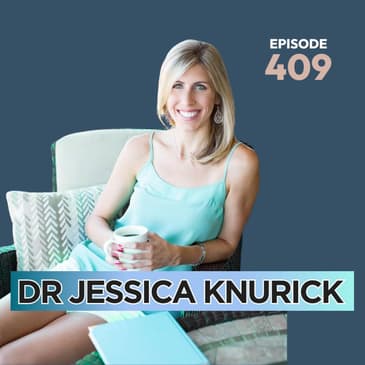
In this episode of the Optimal Body Podcast, hosts Dr. Jen and Dr. Dom, doctors of physical therapy, welcome Dr. Jessica Knurick, a registered dietitian with a PhD in physical activity, nutrition, and wellness. The discussion focuses on pregnancy and postpartum nutrition, debunking common myths and providing evidence-based guidelines on nutrition for women throughout different phases. Dr. Knurick emphasizes the importance of personalized nutritional support, addressing nutrient deficiencies, and clarifying misconceptions about foods like deli meats, fish, and caffeine. The episode also covers gestational diabetes, formula feeding, and optimizing breast milk supply, aiming to empower women with reliable information for their perinatal journey to achieve optimal health for themselves and their families.
Needed Discount:
Jen trusted Needed Supplements for fertility, pregnancy, and beyond! Support men and women’s health with vitamins, Omega-3, and more. Used by 6,000+ pros. Use code OPTIMAL for 20% off at checkout!
VivoBarefoot Discount:
Support your feet and ankles with VivoBarefoot shoes—perfect for any occasion! Boost mobility and strength from the ground up. Use code OPTIMAL20 for 20% off. 100-day trial included—return if you’re not satisfied!
**Vivo offers a 100-Day trial period. If you are not completely satisfied, you can send the shoes back and get a refund.
Free Week of the Jen Health Membership:
Get a free week of Jen Health Membership! Access 12 plans crafted by Doc Jen, PT. We’ll match you with the best plan for your goals. Check it out today and use code OPTIMAL for a discount on your first month!
Dr Jessica's Resources and Links:
We think you’ll love:
For full show notes and resources, visit: https://jen.health/podcast/409
Hosted by Simplecast, an AdsWizz company. See pcm.adswizz.com for information about our collection and use of personal data for advertising.
[00:00:05] Welcome to the Optimal Body Podcast. I'm Dr. Jen and I'm Dr. Dom and we are doctors of physical therapy bringing you the body tips and physical therapy pearls of wisdom to help you begin to understand your body, relieve your pains and restrictions and answer your questions. Along with expert guests, our goal of the Optimal Body Podcast is really to help you discover what optimal means within your own body. Let's dive in.
[00:00:29] Before we jump in on everything pregnancy and postpartum nutrition, I want to talk foot health and more specifically wearing barefoot shoes. Jen and I have worn Vivo barefoot shoes exclusively for more than the past five years and we wear them for everything. That's probably one of my favorite thing about Vivo barefoot shoes is they have a style for every occasion. You can work out in them, you can lift in them, run in them, just use them for walking or casual wear, but they also have shoes for hiking.
[00:00:59] Dressing up, dressing up, dressing up, the beach, they have sandals, they have boots for cold weather, which is one of my favorites because we have a place in Minnesota and I can now keep my feet warm and still get the barefoot benefits, but they literally have a style for everything. And barefoot shoes isn't just a fad. There's actually research that shows wearing barefoot style shoes the majority of the time can improve your foot strength significantly in just six months. And that is an absolutely incredible statistic.
[00:01:28] Anything else, just wearing these shoes, you're going to start to naturally gain strength and mobility in your feet to help your body move the way it should and to set up your foundation, your feet, which we move upon. So if you go down to the link in the show notes, you can get 20% off your entire order of Vivo barefoot shoes using code optimal 20 at checkout and start treating your feet right today.
[00:01:52] So excited for our guest today being young parents ourself and having just welcomed our second little boy into the world not too long ago. Today we have Dr. Jessica Nurick. Dr. Jessica is a researcher speaker and mom of two. She's also a registered dietitian with a PhD in physical activity, nutrition and wellness.
[00:02:11] And she has spent the last decade working on the wellness side of healthcare in the research lab in clinical care and with innovative medical tech startups aimed at improving the health of individuals on a person centered ongoing basis. Through this experience, she came to realize that prenatal and postpartum nutrition and health guidelines were often confusing, outdated or non-existent.
[00:02:33] She became passionate about helping women to bypass the overwhelm and easily understand evidence-based prenatal and postpartum nutrition and health guidelines so that they can thrive in pregnancy and beyond. And we absolutely love Jessica and the content that she puts out. Jen and I would encourage you to go look at her Instagram right now because she has so much great content on there. And we're just excited for you to enjoy this interview. Jessica, thank you so much for taking the time to sit down.
[00:03:03] And drop your immense knowledge and education with us. I admire what you do, your work, your education, your evidence-based knowledge that you really bring to your page. I mean, I have been obsessing over it. So I just really appreciate you taking the time and being here with us. Oh, thank you so much. I'm really excited to be here and talk to you guys. Yeah. And especially, I mean, I know we talked about when this podcast goes out,
[00:03:31] we will have had our second little baby for a few months, maybe like six months already. But right now we are on the doorstep of welcoming them in. So like Jen said, she has been obsessed with the content you put out because she's in it. Where did your interest come from in making this your primary area of study and research? Yeah, well, my interest came from, you know, lived experience.
[00:03:56] So I also I have two children and I was I was a college professor in nutrition science. And then I kind of transitioned out and was working with medical technology companies. And I just started and this was even before I got pregnant myself. I started to have a real interest in in working with women kind of who were at a similar life stage of me trying to conceive, pregnancy, postpartum, that sort of area.
[00:04:25] And I had studied that in school. And so I was kind of thinking through like what I would do. So and so I started working one on one with people initially. And then I started seeing an immense amount of misinformation and incorrect information that was really targeted at this particular demographic in this area. And so that's kind of what made me take the leap to go on social media and not just work kind of one on one in real life.
[00:04:53] But yeah, it was it was lived experience just because I was in that stage of life as well. Now, one thing I think we can all agree on when it comes to pregnancy and postpartum is that having the proper nutritional support and additionally adding on your prenatal supplements is so key and crucial. This is what's going to help us feel like we're thriving, not just surviving as our body is doing so much because we have to understand that 95%
[00:05:19] of women in the perinatal stages have nutrient deficiencies. And most prenatal vitamins have the bare minimum nutrition based on outdated guidelines and still research. And that's why I turned to needed because they really offer radically better nutritional products, education and advocacy rooted in clinical research and practitioner validation. And that's why they're recommended and used by more than 4000 women's health experts from
[00:05:48] nutritionists to midwives, functional medicine doctors, OBGYNs. And I personally had asked my registered dietitian friend when I was getting into looking at a prenatal and really researching and she recommended them. She gave the go ahead and said, yep, they're great. That's why I've been taking them. That's why I trust them. And that's why I'm talking to you about it. And I hope that no matter what stage you're in, even if it's way beyond the years of pregnancy
[00:06:14] and postpartum, they have anything that you need to help support your body and even male supplements. So if you haven't yet, I would highly recommend head over to thisisneed.com and use code optimal for 20% off your first order. That's T-H-I-S-I-S-N-E-E-D-E-D.com and use code optimal. You'll get 20% off your first order.
[00:06:40] Yeah, which makes it even more real and authentic for me to really see and be able to hear your own experiences with you going through, you know, because I know I've seen a lot of videos of you talking through your own experience with your children and what you've done. And so I want to kind of dive right into some of those myths that we get to hear on social media, which are so frequent and, you know, it's been really interesting to observe.
[00:07:09] And a lot of it, you know, comes especially during pregnancy, which I'm very much in my later stages of pregnancy right now. But some of the what are some of like the top myths you think that are out there right now? And then we can kind of break down some of the more specific foods. But are there some top myths, especially in pregnancy that you hear kind of going around a lot right now? Well, I'll tell you, when I first got into this and making content on social media, it's been an evolution.
[00:07:38] So initially, I actually what I was really focused on was just helping to alleviate a lot of the anxiety that people felt in pregnancy because of all these foods that they can't eat. Right. And so I wanted to bring, you know, we talk a lot about informed consent. I wanted to bring information to them to help them understand why these recommendations were made. So I would say initially when we're talking about myths, it was really based on like foods that you can or can't eat in pregnancy. Right.
[00:08:05] And so a lot of my content is based on that as well. And I think a lot of people don't realize that the reasons that these kind of like foods to avoid lists are handed out, which I think is the terrible way to do it, because it doesn't really explain why you need to avoid these foods or if you even do need to avoid these foods, it doesn't really like consider risk. But a lot of those foods are based on food safety. Right.
[00:08:31] And so they look at, OK, well, what are maybe the most unsafe foods in terms of foodborne illness risk? And let's just have them avoid them all. Right. And so it's a very precautionary way of approaching it versus kind of looking at what is this overall risk? Is it is it a high risk food? Well, it may have a little bit higher of a relative risk compared to all the other foods, but is the absolute risk really that high? And then you have to weigh, you know, like personal personal things with that as well.
[00:09:00] So, for example, if I'm working with someone who's pregnant, who literally cannot stomach protein because they have so many food aversions or they're nauseous, you know, there's so many symptoms in pregnancy that women deal with. And so they can't stomach protein, but they can stomach a sandwich. Right. They can eat a sandwich. And that can be where they're getting their protein. Maybe for that person, it makes sense to eat deli meat. And also you can reduce the risk even more by heating that deli meat up to 160 degrees. Right.
[00:09:26] So so maybe if you just tell everyone don't eat deli meat at all, that person doesn't know that for them because they can stomach it and they could heat it up if they wanted to to even reduce risk even more. That might be an OK option for them. I talk about eggs a lot with a similar approach. Eggs are an incredibly healthful food during pregnancy. I mean, they're the main source of choline, which is really helpful for neurocognitive development in infants. And so, you know, and outside of like meat, which has a little bit of choline, eggs are the best source.
[00:09:56] So eggs are a common pregnancy aversion. Right. And a lot of people can't eat eggs and a lot of people don't like cooked eggs. And so if runny eggs have a little bit of a runny egg is the only way that person will eat eggs and the and the risk of eggs is pretty low. I mean, it eggs account for about two percent of all food poisoning cases in the United States. Then maybe it makes sense for that person as at an individual level to eat eggs. So I would say a lot of the misconceptions really come from kind of like what can you include? What can't you include?
[00:10:25] And then what is your risk tolerance at an individual level? And that gets lost in these conversations a lot. Yeah, I think you bring up a great point in that. And I think that this is this happens in our medical system a lot. It's just like the blanket recommendations, the blanket like yes or no. They like to live in the black and white because then nuance takes time and nuance takes time in the in the room with your provider and stuff. And it's just time that our medical system, the way it's built, is not afforded for somebody
[00:10:55] to dice through all these. Your answer right there was about as long as the average OBGYN appointment in some cases. So so it's like, you know, I I don't always want to fault the provider versus the system that they live within because it's not that they don't care. They just aren't afforded the time as much sometimes. Are there certain foods and I guess foods in general that you would say these are things you should avoid?
[00:11:24] Yeah. Yeah. So mercury is a big one. So high mercury fish. Right. And honestly, we all should avoid high mercury fish, even if we're not pregnant because of mercury accumulation. But I think this is a good example of how a recommendation of what to avoid really can can be misconstrued and at a detriment to kind of healthful foods that that are important in pregnancy. So what I mean by that is let's say the recommendation is avoid fish high in mercury.
[00:11:54] A lot of times that will be translated to mean avoid fish. And a lot of people I get questions all the time. I heard I should avoid all fish. And that's not the case. And so I really try to get people to kind of think more like what should we include kind of a question versus what should we exclude? Because if I say to you avoid high mercury fish, you could take away avoid fish. If I say to you include a lot of low and moderate mercury fish. Right. So like choose low mercury fish options because they're so healthful and they contain a lot
[00:12:24] of DHA and a lot of important nutrients in pregnancy. Then you're going to hear include low low mercury fish. Right. And so so that's really what what we want to to go like what we want to work towards. So fish is a really big one. So including low mercury fish, but but excluding high mercury fish. There's a great resource that the EPA puts out. It's and it shows low and moderate and high mercury fish options. So tuna is a big one. A lot of people just say avoid tuna, but there's low mercury tuna options.
[00:12:53] So for example, a canned light tuna like the canned tuna we're used to is a low mercury fish option and that can be eaten a few times a week. And there's some good research to show a very interesting research that looked at fish consumption in pregnancy and then neurodevelopmental outcomes in their in their offspring and multiple years out. And what they found is that the people who consumed fish in pregnancy had higher mercury levels in their body. And obviously it's not the mercury that's causing beneficial things for neurodevelopmental
[00:13:24] outcomes. Right. But what it is, is that the mercury is superseded. The like problem with mercury is superseded by the positive impacts of fish intake. And there's other aspects in fish. There's selenium, which binds to mercury, which can help to excrete it. And so it's a very nuanced conversation. But to answer your question, which should have been a short answer, high mercury fish is one that I would avoid. Another one is alcohol, you know, alcohol you should avoid.
[00:13:52] Let's see, what are some like other just like definite ones you should avoid? I'm kind of kind of blanking. Do you have to avoid caffeine? Where does caffeine fall on that scale? So current recommendations for caffeine and this has been, you know, there's a lot of research that's lacking in the pregnancy and postpartum and breastfeeding space. But caffeine is something that's been studied quite a bit and more research is coming out now.
[00:14:18] The current recommendations, global recommendations are to keep caffeine intake below 200 to 300 milligrams daily. ACOG in the U.S. actually says 200 milligrams daily. And so that's kind of my recommendation to kind of following along those lines. I'm interested to see more research come out in the next few years, though, because they're really monitoring even low caffeine intakes and the effect that that could have. But again, that will probably be an individual thing, too, because we know there's some people
[00:14:47] who are really quick caffeine metabolizers and some people who aren't and they're more negatively impacted by caffeine and some people aren't. So it'll be interesting to see. But right now, the recommendation is to keep it under 200 milligrams of caffeine, which is about, you know, less than two cups of coffee a day. Which is totally fair. I think we should all be trying to do less than two cups of coffee a day. What about protein powders? What about protein powders? I know that's a big one that people ask about a lot.
[00:15:15] And I personally have felt OK taking, you know, particular types of protein powders, especially in my first trimester when it was hard for me to eat healthfully and getting, you know, a protein shake was one of the best ways I got protein. Yeah, it's a great question. And I get it all the time. I think that obviously I want to preface it with we should always take a food first approach to nutrition, right? And get our protein from food whenever we can.
[00:15:42] Pregnancy is a really interesting time, which I've already talked about, where there's lots and lots of symptoms and a lot of food aversions. And sometimes that can make it very difficult to get in protein. And so especially in like the first trimester, I find that protein powder can be helpful for a lot of women who are pregnant. Now, in the United States, our supplements are not regulated well by the FDA. And so what that means is that they don't have to go through the same scrutiny.
[00:16:08] And what can happen and what does happen is a lot of things can be found in supplements that aren't necessarily on the label. And so what I recommend is finding a protein supplement that goes through third party testing. And that means that an independent party like NSF is testing the product and making sure it has in it what it says it has in it. And there's no extra additives. And they test for heavy metals a lot of the time. And so finding one that's third party tested, finding one that doesn't have a lot of extra
[00:16:37] vitamins and minerals because you're already taking a prenatal vitamin in pregnancy. And so you don't really need those extra vitamins and minerals and you don't really want them in pregnancy. So finding one without that and then finding one that also doesn't have a proprietary blend, which is like, you know, an herbal blend that some of these protein powders have that you really don't want in pregnancy either, just because a lot of those herbs are really untested in pregnancy. And so and there's plenty of options out there for for those proteins that meet all of those recommendations. Yeah. Do I dare bring up?
[00:17:06] It's like the last thing on on our list for this specific topic, raw milk or raw cheeses, because I know that that's another popular social media thing. People liking to or wanting to proclaim all the benefits of eating different raw dairy products. What are your thoughts there? Yeah, I mean, so in terms of it's it's a very big thing in the anti-science space on social media.
[00:17:32] In terms of raw milk, what we know is that there is no there when you look at health outcomes, there are no improved health outcomes from drinking raw milk. I just want to make sure that everybody understands pasteurization is essentially heating up the milk. So there's it's a it's a slow kind of lengthy heating of the milk to destroy pathogens and things that can cause issues. Right. I mean, pasteurization is one of the greatest public health initiatives of all time.
[00:18:00] And so what that does is it can destroy the pathogens in the milk to to protect people from harmful things that are in the milk. So when we're pregnant, one of the things that we want to do is minimize our risk of food borne illness. Right. There's some evidence to show that like cheese from raw dairy that hasn't been pasteurized is 60 to 160 to 160 times, I think, more likely to cause food borne illness.
[00:18:29] Let's just go with the lower one. 60 times more likely to cause food borne illness than than from than from pasteurized sources. Right. So if we're looking at what the relative risk is, my recommendation would absolutely be to avoid raw cheese and raw milk when you're pregnant because there can be some scary things in raw milk. If you talk to microbiologists, I'm not a microbiologist, but if you talk to microbiologists, they almost exclusively will recommend not drinking raw milk.
[00:18:58] And what about, you know, then we go to raw meats like sushi, raw fish. Um, I know some people feel comfortable consuming sushi. So where does that fall also within this scale? Yeah. So sushi is a little different, right? They're not, um, it's, it doesn't have the same kind of like it, you can get pathogens in sushi, but it's a little different than milk and coming out of kind of the milk. But, um, sushi, again, if you, if it's raw, like raw fish, we use sushi colloquially to mean like raw fish. Yeah.
[00:19:27] It's not actually the real term, but let's just say it's raw fish. Um, it's going to be a higher foodborne illness risk. Right. Um, now how high that is. I mean, you look at other cultures, um, that we have some good data, like for raw milk, we don't have good data on cultures that, you know, overwhelmingly drink raw milk to look at like, what are the outcomes? Um, because everyone pasteurizes their milk. Um, we do have some from, from like raw cheese, but for sushi, we do have data from other
[00:19:54] parts of the world, like Japan where, um, raw fish is regularly consumed in pregnancy. Um, without, without a lot of issue. And so, um, obviously when you are thinking about that though, you have to be thinking about where you're sourcing it from. Right. So if you're going to like a gas station in the middle of Nebraska, you, that might not be the most high quality sushi, right? Like people in Japan, they live on the sea. They're getting their sushi very like, you know, sourced very closely to where they are. So that's a little bit different.
[00:20:24] So it's going to be a higher, higher relative risk. The absolute risk is probably still going to be low. So stepping into a slightly different topic, um, gestational diabetes, and I know there's a lot to talk about here. Um, I don't know how many questions to preface with, but like, is there anything that people should be doing or focusing on to reduce risk of gestational diabetes? Can anyone get it? Um, and then maybe your thoughts on like different testing options for gestational diabetes during pregnancy?
[00:20:54] Sure. Um, and then you, you probably already had, obviously you had your gestational diabetes test, right? In pregnancy. I did. I did. You're at the end of your pregnancy now. Yeah. Yeah. Yeah. So, um, I'll say, so, so traditionally how we test for gestational diabetes is between 24 and 28 weeks of pregnancy. The reason we test at that time is because that's when, um, insulin resistance increases to a point where you would see issues with blood glucose regulation. Um, and to answer your question, can anyone get it? Yes.
[00:21:22] So people who are seemingly very low risk can still get gestational diabetes, which is the reason we screen everybody and not just the people at a higher risk. Now there are risk factors for gestational diabetes. Um, and so if you come into pregnancy with two or more risk factors, so, um, they'll look at, um, BMI is one of them. So if BMI is over, and that's because BMI is the number one, and I know BMI is like a triggering word for a lot of people.
[00:21:49] So I just want to clarify, um, BMI is, it is not great at an individual level and testing shouldn't be done based on BMI alone. That's why it's kind of like one of the risk factors. And then you look at multiple other risk factors as well. Um, BMI is a great tool that we have for public health to look at really, really large data sets, but on individual levels, it's not the best. Um, and so that's one. Um, and then, uh, family history of gestational diabetes is another risk factor. Physical inactivity is a risk factor.
[00:22:18] Um, having something, uh, something like PCOS is a risk factor. So there's a lot of different risk factors. Um, and so if you come into pregnancy with multiple risk factors, oftentimes what they'll do is they'll have you test early in pregnancy and then they'll have you test again at 24 to 28 weeks. Um, because if you, um, what we've seen is in recent decades, a lot of people are coming into pregnancy with, um, either prediabetes or undiagnosed type two diabetes. And so they already have blood glucose regulation issues.
[00:22:47] Um, and so we want to catch that as early as possible, um, because that can lead, and I can just kind of explain what, what, why that's a problem. If you have too much blood sugar in your, in your blood, because your cells aren't taking them up enough, because you don't have enough, you have too much insulin resistance, which means that glucose is staying in your blood. Um, that will, that directly goes, uh, through the placenta. So it's, um, permeable to glucose is permeable, uh, goes right through the placenta to the baby.
[00:23:17] And so the baby's blood sugar levels get really high and then their insulin, their pancreas has to overproduce insulin. And that's what leads to something called macrosomia or a large baby. And so what the goal with glucose testing is, is to, um, reduce risk of, of that because that can cause a lot of issues for the baby and for the mom. Um, I think you had other questions in there, but. Well, is, is there a way that, you know, someone coming in who may have some of these risk factors,
[00:23:45] is there something that they could be doing to help mitigate, um. Or reduce their, reduce the risk. Of, of getting gestational diabetes? Yeah. So what we know is, um, yes, since there are risk factors, the idea would be that if you like lowered those risk factors, the modifiable ones, right. Cause some of them are age is another one. That's a risk factor. Can't really modify that unfortunately. Right.
[00:24:09] But, but the modifiable ones coming into pregnancy, if you can reduce those risk factors, um, then, then theoretically, yes, your, your risk for gestational diabetes would be reduced. Now, once you get into pregnancy, um, people will ask me this a lot. Well, can I like, you know, eat a certain diet to reduce risk? Once you're already into pregnancy, the, the data suggests that there's not a ton you can do to kind of like reduce your risk of gestational diabetes. Again, it can affect anybody.
[00:24:36] It can affect people that don't even have, have seemingly no risk factors. Anybody with a placenta can get gestational diabetes. Um, but some people are at a higher risk. Now, once you're in pregnancy, um, there's, you know, there's not a ton you can do. Um, it's not like lowering, you know, exercising more, um, that, that can, that can be helpful, but there's not strong evidence to suggest that's going to reduce your risk of gestational diabetes once you're in pregnancy. Got it.
[00:25:03] So it's something that if someone would want to start prior to getting pregnant. Yeah. Like coming into pregnancy with as few risk factors as possible would be, would be the most beneficial thing you can do. But again, it's not a hundred percent foolproof. Right. And so I do want to just talk about this one aspect of gestational diabetes, because I think there's a lot of shame associated with gestational diabetes and people quote unquote failing the test. And I always try to drive home this idea that you're not failing the test.
[00:25:29] You are correctly identifying, you're, you're identifying if your body can or cannot regulate blood glucose the way that it needs to, to keep you and your baby healthy. And so, so it's a win either way. It's a win if you, if you don't have it. And it's a win if you find out that you do have it because gestational diabetes is incredibly manageable once you know that you have it. Right. And, and it's not, it's not easy, but it's definitely doable. Um, and a lot of people manage it with just lifestyle modification, right?
[00:25:57] With diet and exercise and movement, I should say. Um, and, and, and then if not, um, we have medications like insulin that can also help to manage gestational diabetes. Um, and so, so I, I would love us to like reframe and I know we all use this terminology like pass fail the test. And I just really want us to try to like think about reframing it. Like it's a win either way. I know it's a disappointment sometimes, but like you figured out that your body wasn't regulating blood glucose. It's so much better than the alternative of not knowing. Exactly.
[00:26:26] And I think that's an important reframe. Like they don't call it a failed test. They say the test came back positive. Right. So that's where we start. The positive is I know that I'm dealing with this now and that there are other things that I can do to help manage it. And like you said, there might not be a ton you can do once you're pregnant to prevent having a positive test for gestational diabetes. But I know my sister-in-law had pretty severe gestational diabetes. Her blood sugar would skyrocket when she ate anything.
[00:26:56] And in her fourth pregnancy, she completely managed it with lifestyle, had a very healthy, smooth pregnancy and birth. And, you know, it just goes to show like there are things you can do, but you just need to be well informed. And so, um, yeah, I like that reframe. Yeah. Well, and I just wanted to ask too, because this is, you know, a big thing that goes around is what the type of tests that you do. And even at my office, I was offered, you know, you can go and you can bring in the fresh
[00:27:23] test if that's really what you want, or you can do the glucola and test. And personally, I don't eat perfect. So having a glucola test isn't a huge deal to me because it's a one-time test. It's a one-time drink. Um, and it's the most effective. So can you talk about, you know, the difference in testing and why someone might want to do something else versus the glucola test? Yeah. So, um, the traditional way, the only validated way to diagnose gestational diabetes is through
[00:27:52] something called an oral glucose tolerance test. Um, my dissertation work was actually in the field of diabetes and we ran many, many, many oral glucose tolerance tests in the lab. Um, and so what that is, is you come in and you drink a solution. It's a, it's, it's a sugar solution. So in the United States, we do two, a two-step process. So we do a screening test and then a diagnostic test. And the screening test is 50 grams of glucose and it's an hour. And the diagnostic test is a hundred grams of glucose and it's three hours.
[00:28:21] Um, and so every, like I said, everybody's screened. And the idea of having a screening test is that, um, you're dealing with a population who is pregnant and you don't want to have to like burden them more than they need to be burdened. Um, and so doing a screening test kind of helps to screen people who are really low risk out and then, um, um, looking at their blood glucose levels and then people who might be on the fence or might be more high risk to having gestational diabetes, screen them in and have them go do an actual diagnostic test. So that one hour test is not diagnostic.
[00:28:51] It's generally unless, unless you hit a really high level. Um, so it's not diagnostic. It's screening. That's why usually it's non-fasting. So you can eat before you can go in because the whole idea and just be there for an hour because the whole idea is to make it as low burden as possible on the individual. Um, and so the vast majority of people don't, um, don't need to move on to a three hour test. So they just do the one hour test. They're screened out and they're, they're good to go. Um, if you do move on to the three hour test, there's a good, good, um, chance that you won't be diagnosed with gestational diabetes.
[00:29:21] And I think sometimes there's a misconception that like the testing is not, um, it's not a good test because I had to go do, I failed the first one and I passed the second one. And so I didn't, it's like a bad test, but that's actually the whole point is to just see if you're more high risk and then have you go on for a diagnostic test that if you, if you, you know, um, don't, I'm trying not to use don't pass and don't fail. See how hard it is. Um, but if you, you know, if you, if you screen out from the, if you don't screen out from
[00:29:49] the first test and you go on to do the three hour test, that just means that you were at a little bit higher risk, but, but that doesn't mean that you have gestational diabetes. You have to do that diagnostic test. So, so having said that, that's the way that the, why we do a two-step process. Um, the, as I said, the oral glucose tolerance test is the only validated way to diagnose gestational diabetes. And so, um, that's the recommendation and it's the recommendation all around the world, um, because of that.
[00:30:17] And, and the reason, and some of the pushback I hear from that sometimes is, well, I would never drink 50 grams of sugar. And so that's not representative of what I do in my daily life. And, um, I really want, and I think sometimes we get confused because it's like a sugar drink and we think of it like soda or juice. And so that people don't identify it as a medical test. Like they might with like oral contrast for a CT scan or the laxative solution for a colonoscopy, which are both also liquids that you drink for medical tests.
[00:30:46] But with glucose, this is also a medical test, right? And so the whole idea is to have a standardized validated drink that you're using to stress your body. So we're trying to stress the glucose mechanisms, the glucose metabolism mechanisms in your body. And you can't do that by just eating as you normally eat, right? Cause that could very well like miss cases of gestational diabetes when you look at it at scale. So that, so that is the gold standard recommended way to test.
[00:31:14] Now there are some people who have contraindications, which means that they can't do that test. Um, people who have had previous gastric bypass, some people who have, um, hyperemesis gravidarum and, and literally throw up the test when they try. Um, and so that, that happens. And so the, the recommendation is to do at home monitoring for those people now, but it's important to know at home monitoring is not as effective as the oral glucose tolerance test. It's not a validated, validated way to diagnose gestational diabetes.
[00:31:43] It can just look at home monitoring can look at if your blood sugar is at a level where you would need medication. Right. And so that's really what we're looking at there. Um, and so generally what's recommended is two to three weeks of at home testing for those people. Um, and then what I personally would recommend is you don't just stop there. You test frequently throughout your pregnancy because insulin levels can increase. Insulin resistance can increase rather as your pregnancy goes on, which can increase glucose
[00:32:12] levels. Yeah. Gotcha. Yeah. No, I think that that's important clarifiers that you put in there about the screening versus the diagnostic test. Right. Um, and that is the only true validated test. And like you said, we don't question these things with other processes, like what we will drink for MRIs or CTs, but there's pushback when it comes to this. Um, and it's not meant to be representative necessarily of your day-to-day diet, but so let's, let's keep
[00:32:40] creeping along this pregnancy journey. And we're coming up to the time that we want to induce or assist the body in naturally entering the labor process. And I know there's a lot that people put out there on things you can do like eating dates or eating pineapple cores or what are some of the other things? Cause I went to 42 weeks. Jen went to 42 weeks in her first pregnancy and was trying anything and everything that
[00:33:09] people would throw out there. So are there things that you can do to start helping the body prep for labor or help with cervical ripening? Those types of things. Or is that not true? So I cannot believe you went to 42 weeks. I was 40 plus five and 40 plus three and thought I was dying every day that I went past my due date. So I completely understand how people feel at the end of pregnancy and they're willing to just try anything. I think I walked like five miles the day before I went into labor, um, which,
[00:33:39] again, that's not, that doesn't mean that walking helps you go into labor. There's no evidence for that, but I've heard about it. So I was like, let's go for a long walk. Um, in terms of what's, what's evidence based out there, um, to actually put you into labor is honestly just oxytocin, um, which is usually, you know, in the form of Pitocin to, to induce labor. Um, there's some evidence that maybe, you know, oxytocin another way, um, through like sexual intercourse or something can, can help to induce labor.
[00:34:08] It's a little bit outside my area of expertise. So I am not going to speak to the research on that in terms of food and nutrition. Um, there's just not much. Um, so the pineapple thing, it's just not real. Um, there was some data to show that like if you took pineapple extract or pineapple juice and put it directly onto the uterine tissue of pregnant racks, rats, it would induce contractions. That's it. That doesn't mean that humans eating a pineapple, um, and digesting it, it's going to induce contractions.
[00:34:36] And actually I've heard of people eating like full pineapples right before they go into labor. And, um, that would be, I mean, a lot that could cause a lot of gastric issues. Um, and that's not really what you want when you go into labor. So I would recommend against doing that. Um, there is a little bit of evidence. I've done videos on dates, um, kind of, uh, for cervical ripening, not for inducing labor, not for putting you into labor, but, um, just to kind of help, uh, kind of your cervix
[00:35:01] relax, essentially, that's not really the proper term, but, um, and, uh, and kind of help when you're in labor. Um, there, there's a very little evidence, so it's, it's not strong. It's not something that I'd like lay my hat on or anything, but it was enough for me to do it. So it was like 60 to 100 grams of dates daily, starting at like 36 weeks of pregnancy, I think. Um, and it had shown, it had been shown to help like your cervix to ripen and things like that.
[00:35:30] Um, so yeah, I did it personally. I don't know if it helped, probably didn't, but, um, as I said, there's a, there's a little bit, but in terms of labor induction, there's not really much else, um, from a nutrition standpoint. Thank you for clearing that up because I just wanted to do all the things so that I could prove to everyone. This is not true. There was not one thing. That being said, I just bought two boxes of dates yesterday. So I am going to still do the dates and the red raspberry leaf tea.
[00:36:00] And I'm writing down pineapple extract directly on the uterus. Yeah. And red raspberry leaf tea is another one. There's, um, I've looked extensively into this research and there's just no research to suggest it. I mean, it's been used medicinally for thousands of years and midwives certainly suggest it. Um, and so I think they've seen it in real life, but, um, it's not, it's not supported by evidence. Um, I did red res relief my first pregnancy and then I didn't my second pregnancy.
[00:36:26] Um, and my second pregnancy went way faster and was a much easier labor. So I don't know. There, there's one anecdote for you. Yeah. And I feel like a lot of where it comes from is the anecdotal. I was doing this and then I went into labor and those stories seem to get grouped and then passed on. And it's somebody who's like 40 plus five, like I was right. And I'm like, I did this. And then I went into labor. It couldn't have been that. I just went into labor because I was 40 weeks and five days. Yeah. Your body wasn't just ready. Okay. Yeah. Yeah. I know.
[00:36:56] Never know. Um, okay. So let's dive into postpartum phase now. Um, and I do want to get into, um, because what I have also been seeing on your page lately, um, is a lot of the conversation around formula versus breastfeeding and how, you know, shamed some women can feel for having to choose formula for whatever various reason that they need to.
[00:37:22] Um, so can you just break down the specifically why some formulas look different than others in terms of the ingredients that they start with and then why formulas include seed oils most of the time? Sure. Um, well, first just let me say that, um, formula, I am someone who breastfed both my children and I'm still currently breastfeeding my almost two year old. I need her to, to wean. I'm not sure how to do that. Does anyone have suggestions?
[00:37:50] Um, when this comes out in six months, you say, I hope that she's not still breastfeeding, but having said that, um, the science behind formula is fascinating and it's incredibly life-saving. Um, and people are often like, what did we do before formula? And the answer is what it always is, which is a lot of babies were malnourished or didn't make it. Right. So, um, and even the science in the last 50 years has come so far with formula.
[00:38:20] Um, and the whole goal of formula is to as closely as possible mimic what's in breast milk. It's never going to be a full, you know, exchange or perfect exchange. It's never going to be perfect, but as closely as possible with food science, be able to mimic what's in breast milk. Um, and so most of the, um, fear mongering around formula and ingredients comes from kind of diet culture, to be honest. And a lot of people who don't understand ingredients, um, and why they might be used
[00:38:49] and a lot of misconceptions. So for example, um, the sugar is about 40% of the calories in breast milk is sugar. Right. And so formula has to contain sugar and people will often get very upset when they see that formula contains sugar, but babies need sugar. If you've ever tasted breast milk, it's quite sweet. Right. And so, um, when we, when we talk about formula, the reason that some formulas have sugar, um, well, let's just talk about the types.
[00:39:18] So oftentimes when you see people making videos on social media, that formula ingredients are terrible and they're trying to keep babies sick. It's oftentimes that they're holding up a hypoallergenic formula. And what that means is those formulas are specifically made for babies and infants who cannot, um, tolerate, uh, milk. So they have like a milk protein allergy perhaps. And so what happens is you have to dress to either reduce significantly the lactose in, in the formula because lactose is a milk sugar, um, or you have to eliminate it.
[00:39:47] So people who can't have it at all need, need a formula that doesn't have it at all, which those exist as well. And these are the formulas they're always holding up. And so there's only three main monosaccharides. I don't want to get like too, too deep into the chemistry here, but there's galactose, fructose, and glucose. That's what sugars are made out of. And so galactose is a milk sugar. And if you reduce the galactose, which galactose is bound to glucose to form lactose. So if you have to reduce lactose, you have to reduce galactose or eliminate it.
[00:40:15] Um, so then you're left with two sugars and you're left with fructose and your glucose. Fructose is not found in breast milk too much. There's not much fructose in breast milk and it's not tolerated well by infants. And so it's not used. So you're left with glucose. So you have to get that glucose from somewhere and you get it from chains of starch. Now in the United States, we identify the starch where we get that glucose and we call it corn syrup, um, in the EU, they call it glucose syrup, syrup, but it's the same thing.
[00:40:44] It's just glucose. It's a hundred percent glucose. Um, so in these hypoallergenic formulas that can't have galactose, they use glucose and they use corn syrup in order to, um, in order to get the glucose that it needs. Um, a lot of people have a misconception that that's high fructose corn syrup. Um, again, it's glucose. It's, it's a hundred percent glucose corn syrup. Um, high fructose corn syrup is 55% fructose and 45% glucose. So it's completely different sugar than, than what high fructose corn syrup is.
[00:41:13] It's just the glucose. We don't want that fructose. Um, and there's no infant formula that contains high fructose corn syrup. Um, so, so that's kind of on the sugar side. Do you have any follow-up questions to the sugar part? No, I think like that's exactly what I want to identify because that's what people aren't understanding, especially when they don't understand ingredient levels. Yeah. And I do, oh, I'm sorry to cut you off. I just don't want to forget this. I do want to say you don't have to take, you don't have to use a formula that has corn syrup, right?
[00:41:42] If your baby, if your baby can tolerate milk, if there's no issue, which the vast majority of babies can, right? These hypoallergenic formulas are for babies who can't. Um, so, so you don't have to choose one of those. Every major formula manufacturer in the entire country of the United States, um, has a milk based of milk and lactose based formula that does not have corn syrup. So you can choose that one and not the one that the wellness influencer is fear mongering on social media. And why might seed oils be in a lot of these formulas? Okay.
[00:42:10] So seed oils are in every single infant formula. There's not a infant formula out there that doesn't contain seed oils. Um, and so the reason is because, um, seed oils are very high in polyunsaturated fatty acids and breast milk is very high in polyunsaturated fatty acids. And so the fatty acid profile of the two closely mimic or of, of, uh, seed oils closely. And we call them vegetable oils. Seed oils is like such a, I mean, my whole life I've been in nutrition for 15 years.
[00:42:40] They've been called vegetable oils. And now all of a sudden we're like seed oils because that's such a word. Um, but seed oils are vegetable oils. And we, um, we use them because their fatty acid profile closely mimics the fatty acid profile of breast milk. And so they're in, you know, people like to say that EU formulas are so much better than the ones in the U S seed oils are in every single EU infant formula. And if you find a formula doesn't contain seed oils, it's a toddler formula. It's not, it's not for infants.
[00:43:08] Um, and they don't have to go through the same regulatory process and meet the same nutritional standards that infant formula has toddler formula is really unnecessary for the vast majority of toddlers. I actually think it's more of a marketing gimmick for formula companies in order to expand their, um, their reach and their, their market share. But that's just my own personal opinion. Um, but yeah, every single infant formula will have seed oils because the fatty acid profile is really important.
[00:43:34] And again, just like key breakdowns here in ingredients being included so that it as closely as possible can mimic what's in breast milk or what, what would be in the breast milk that they would be receiving from, from their mother. Um, talking about milk supply in general, I know that that's something, you know, Jen was really focused on after it, cause she wanted to exclusively breastfeed for a while at like,
[00:43:59] what is there, or is there any research on what people can do to optimize breast milk supply from a dietary standpoint? Yeah. So I talk about this a lot because it's a, it's a really common question, you know? And I, I think that, um, number one thing that I would say is, uh, IBCLCs or lactation consultants can be very helpful here and, and they can help. And I went through this too, cause you know, you have your baby, you're, you're at such a vulnerable time when like, you're just anxious about everything.
[00:44:27] And I, and I never thought I was producing enough. I was like, oh my gosh, how do I even know if my baby's even getting enough food? Cause I wasn't like pumping or anything in the early days. And so I just had no idea. And so I, they would cry because they're a newborn and they're constantly crying. And I'd be like, oh my God, I'm not producing enough. And what I've learned from people who know more than me about this topic is that generally most people are producing enough and we all just think we're not.
[00:44:52] Um, and so I think starting there, um, and then specifically nutritionally, um, people think that there's a, they're, they're called like galactogs, like, um, foods that can like increase your milk supply. There's not a lot of evidence behind these. Um, there is the best, the absolute best things you can do nutritionally is to make sure you're meeting your calorie needs, which can be difficult in the postpartum period. So you have to be intentional about it, have snacks on hand, be meeting your protein and calorie needs. Um, and then second, make sure you're meeting your hydration needs.
[00:45:22] And those two things, if you're meeting those two things, there's not a lot else that you can do nutritionally to improve your milk supply. Um, milk supply is very much a supply and demand thing. So the more demands there is, the more supply that will come. And so, um, that's where I'm kind of stepping a little bit outside my area, my scope of practice. And that's where I would kind of hand it off to an IBCLC to help, um, with strategies to increase milk supply from a demand perspective. And you can do that through things like power pumping and that kind of thing. Yep.
[00:45:49] And I definitely did some power pumping myself during, um, but I, and I, again, appreciate the breakdown because there's so much that people will all of a sudden, I need to get this supplement. I need to get this bar. I need to get this, you know, this type of food or whatever in order to, because, because there is so much fear and there's so much unknown in such a vulnerable. It was almost like you were replaying recordings of the things that Jen said when she was first breastfeeding our child too. Like, Oh my gosh, I'm not producing enough. Oh my God.
[00:46:18] We all go through it. It's just, yeah. I don't know a person who thinks, Oh, my supply is perfect. Maybe an oversupplier. I don't know. Right. Yeah. But yeah. Yeah. And I guess when you're talking about like the cookies, you know, it's so funny. I, even as much as I know, I like saw those lactation cookies and I was like, maybe I need those lactation cookies. And I even know there's no evidence for those lactation cookies. So, um, you know, you can just cook, bake yourself, whatever kind of cookies you love at home.
[00:46:46] Um, and, and you can call them lactation cookies because they're giving you plenty of calories and that's what you're trying to meet is your calorie needs. Um, and they'll be far cheaper than those, you know, $12 lactation cookies. Yes. And that was something that I was really conscious about too, because I love working out, but you know, I want to make sure that my calorie demands were met. And it was so sad for me to go on some of like the, the early postpartum apps and see moms who are like, I need to drop this much weight. And so I need to do this.
[00:47:13] And I'm like, Oh, what about, you know, let's not think about that so much. It, it's just a hard, it's such a hard time postpartum, you know, and that's why it makes me so like angry for lack of a better word. When people target that population, um, with all of this like fear based marketing, um, I, I like hate it so much. And that's, that's why I do so many of those response videos to just like correct that kind of misinformation. Cause, cause you're at, I mean, I went through it. I was at a vulnerable time and I was kind of like buying some of the stuff, like buying
[00:47:42] into some of the stuff. And I'm like, wait a second, what am I doing? Like, I know that this isn't correct, you know, but you're just at such a vulnerable place. Um, so yeah, it can make it really difficult. I know, Jessica, I feel like there's, well, there are so many more questions that I would have for you. Uh, but I don't want to take up more of your time. I appreciate how much time you've provided us in the education that you've provided us as well. And your page is full of much more education and highlights and things that people can really
[00:48:12] dive into. And I know you do a lot of question boxes every week and you answer personal questions that people have. So you're putting out a ton of information. Where can people find all of that information and find you? Thank you so much. I really appreciate that. Um, so I am pretty active on Tik TOK and Instagram. Those are kind of my two platforms. Um, and they're the same username. So it's at, and then DR, and then my name. So DR, Jessica Nurik with a K. Perfect. Awesome. And of course we're going to have those linked up.
[00:48:41] Um, are there any other resources that you want to tell people about or that they can grab from you? Um, I, I actually, I do have a, um, prenatal nutrient guide that I could send to you guys and you can link in if you want. Um, it basically helps you walk through kind of what are the most important nutrients when you're pregnant and where to look for them and then what to consider when you're choosing a prenatal vitamin, um, based on kind of your own individual needs. Um, so I'm happy to kind of send that over if you, if you want to include that. Oh, amazing.
[00:49:11] Awesome. Yeah. That sounds great. We'll have that in the show notes. And like Jen said, we, she especially, but we have loved your information. We will keep following. Um, yeah. Thanks so much for spending time with us. Yeah. I really appreciate it. Thank you guys. Thanks so much for tuning into another episode. Dr. Jessica is absolutely incredible with her knowledge. And I hope that you head over to her Instagram and continue learning from her. And of course, if you heard something that you think can support someone else, please pass the episode along.
[00:49:40] The more that people get to hear this information, the more that we continue to feel better and more supported with adequate evidence-based research and education within our bodies. So I hope that you are able to take this and share it out. And I hope to see you back on another episode of the Optimal Body Podcast.