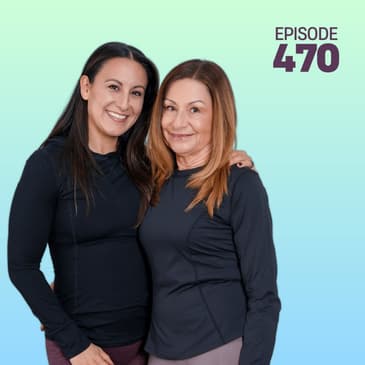
In this empowering episode of the Optimal Body Podcast, Doc Jen and Doctor Dom tackle the realities of aging head-on with research-backed insights. They debunk common fears around MRI findings like disc bulges and osteoarthritis, explaining—using research-backed evidence—that many are normal age-related changes, not reasons to stop moving. From research-backed benefits of weighted vests for improving strength and posture, to the critical role of strength training for bone density and joint health, the hosts emphasize that movement is medicine. Whether managing osteoporosis, herniated discs, or arthritis, a proactive, guided approach to exercise can help you age with strength, confidence, and independence.
Zulu Weighted Vest:
Upgrade your everyday movement with the ZULU Weighted Vest — designed to increase calorie burn, naturally engage your core, and improve posture with every step. Perfect for walks, workouts, and daily errands. Use code OPTIMAL for 20% off at checkout.
Lifting for Longevity Discount:
Check out our NEW movement longevity course -> Lifting for Longevity! Build your Strength, Mobility, Power, Balance and more regardless of what stage or age you’re at! Podcast listeners get a bonus discount with code OPTIMAL20
We Think You'll Love:
What You'll Learn:
1:54 The Truth Behind Aging
3:42 The Power of a Provider's Words
6:07 Misconceptions About Aging and Exercise
7:13 Understanding MRI Findings
11:07 Knee Osteoarthritis and Exercise
14:21 Running with Osteoarthritis
15:45 Osteoporosis and Heavy Lifting
18:23 The LIFTMOOR Trial for Osteoporosis
20:58 Herniated Discs and Fear of Movement
25:47 Red Flags for Back Pain
27:11 Four Pillars of Healthy Aging
28:19 Pain Monitoring Rules for Exercise
For the full show notes and resources visit https://jen.health/podcast/470
Hosted by Simplecast, an AdsWizz company. See pcm.adswizz.com for information about our collection and use of personal data for advertising.
[00:00:05] Welcome to the Optimal Body Podcast. I'm Dr. Jen and I'm Dr. Dom and we are doctors of physical therapy bringing you the body tips and physical therapy pearls of wisdom to help you begin to understand your body, relieve your pains and restrictions, and answer your questions. Along with expert guests, our goal of the Optimal Body Podcast is really to help you discover what optimal means within your own body. Let's dive in. Okay, I have to talk about something that's actually improved my strength that is really quite shocking but it's so relevant to the conversation.
[00:00:35] We're going to have today. I have been wearing the ZULU Weighted Vest and as a result, yesterday I was able to do five push-ups with a 25 pound weight on my back. Not only that, but I got nine reps in. I thought I would barely be able to do the five and it was shocking, but it's because I've been wearing the 16 pound onyx weighted vest on my walks and my body weight workout. So my push-ups and my pull-ups and it's honestly become a real staple in my daily routine. And what I love about it as a movement nerd is how thoughtful I'm going to do this.
[00:01:05] So it's adjustable across the chest and the sides. So it actually stays put plus it has pockets on the straps for your phone, which as a mom, this has been key. But here's what I want you to hear. Wearing a weighted vest doesn't improve your bone density, but it can make a meaningful impact in your strength, especially if you're using it with your body weight exercises. Not only that, but wearing a weighted vest naturally cues your body into better posture.
[00:01:31] That added load encourages you to stack your rib cage over your pelvis and subtly engage to your core just as you move. So it's like this passive posture reminder with every single step. So if you're going to get more output on the same walk, I'll take it. So if you've been eyeing a weighted vest, I would highly recommend going to our show notes. We'll have it linked up there and use code optimal. You get 20% off at checkout.
[00:01:54] Okay. Going into the truth behind aging. Now, this actually comes from a talk I did with our Lifting for Longevity community, which is, I'm going to say, one of our flagship programs at this point.
[00:02:08] Like so much incredible feedback, people still repeating and going through it right now. And it's just like so cool to see because I think we're empowering people with tools through that course and what we're going to talk about today as to what is natural normal when it comes to aging, what we need to be aware of, how we can move forward and not be too afraid of the things that happen as we age normally.
[00:02:35] It's helping people reclaim their exercise, reclaim their movements, go back into forms of exercise that they haven't done recently or they haven't felt like they could do because of what they've been told. You should never jump. You should never lift heavy again. And change and tissue change is normal. And it's a part of life. The thing that doesn't need to be normal is having pain, weakness or a loss of confidence in your movement.
[00:03:04] Exactly. And I think the hardest thing, especially as providers, as physical therapists, we hear really scary messages that people are reporting from usually from their doctors, but also from friends and family members or what they've been told or what they think or what they hear. And so it's like, oh my gosh, my MRI shows this wear and tear or like it is the worst MRI that the doctor has ever seen.
[00:03:31] And I should never do anything because I'm not, I don't want to create more damage. And I think that's the thing I'm told all the time. Like, I don't know what to do because I don't want to make it worse. And this is something that I need to put on providers because providers really hold so much power here. When people reach out to us, what are they telling us? Oh, I saw this new osteopath. I saw this new orthopedist. I saw this new physical therapist. And this is what they told me.
[00:03:58] And sometimes as providers, I don't know if we understand truly how much weight our words can hold in someone's confidence and how much it can change the trajectory of what they do, which then will impact how their body, how their muscles, how their tissues develop.
[00:04:19] So, you know, we would love to be able to encourage providers to change that. Whereas instead of showing them the image and focusing on the wear and tear as a provider, first educate yourself and look at the research on that person's age bracket.
[00:04:36] Is this age related normal wear and tear that we would expect to see in this type of, you know, age, you know, sex related demographic? And often it is. And that should be the message. You know, there are some changes. There are some age related changes in your knees or in your low back.
[00:04:58] The great news is there are so many people that have images that look like this that have no pain. I know you're dealing with pain right now, but there is a path like this is encouraging because there is a path back to moving without or with less pain. And when you say that, it actually reminds me of when we when I we had our first child, Dante.
[00:05:18] And the only thing that the OB could tell me is like, listen, the only thing that we can say is that you had the cesarean or he didn't come because your pelvis is too small. But with that, I have seen other moms go on and then have vaginal births just fine. And so I love that he said, listen, this is what we see or what we've been told or what the only reasoning that we can provide.
[00:05:45] But this can still be OK. And that gave me more of an empowering message that this isn't the end. Your your pelvis isn't like you're not stuck in this position. It could change. And it did. I had my V back after. So with a bigger baby. So, yeah. So I hope that the messages continue to become more empowering rather than.
[00:06:07] Yeah. Other things that we hear people say is, oh, stick to low impact forever because you have osteoarthritis in your knees or your hips or your feet. So you don't want to have impact. So it'll make that worse. Or if you are diagnosed with osteopenia or osteoporosis, this means you should avoid heavy lifting because you have osteoporosis. Where there are definitely ways to deliver the message about someone's diagnosis and bring it with some empowerment.
[00:06:35] Right. Because we see that OA responds well to exercise. Common activities like running don't appear to speed structural progression. And when we are properly screening, properly doing, you know, resistance training and impact in a safe, progressive manner, we can improve that bone function. So I just hope that the message that we continue to say today and whoever you need to share this with, please share it.
[00:07:04] I hope that it continues to be an empowering one, knowing that the goal is not to deny aging. It's to stop equating aging with fragility. Yeah. So let's move into one of the first topics, which is our readings on MRIs, which is one of the things that I would honestly say is the most common thing we hear. People say, I have X diagnosis. I have osteoarthritis in my knees. I've got degenerative disc disease. I have disc bulges.
[00:07:34] The disc bulge is one, too, is one that gets me because people will say, oh, I had a disc bulge back in my 30s or 40s. And that's a decade ago or more now where. In the research, and we've brought up these studies before, degenerative findings become more and more common in asymptomatic individuals.
[00:07:55] So people without pain, without any reports of pain or issues in those areas, they are showing that they're having degenerative disc disease, knee osteoarthritis, disc bulges at progressively higher rates as we age. What does this tell us? It tells us that there can be normal age related changes in all these areas and joints pretty much anywhere in our body without the presence of pain.
[00:08:24] And I think that's what is also shocking. And I talked about this a little bit on the episode where I talked about my back injury. I could go and see on an MRI that I have a disc bulge or a disc herniation. However, I don't know if that was already previously there. And I, due to the circumstance, the way that I was lifting my lack of sleep, all of those overloaded my system enough to finally feel the symptoms of pain.
[00:08:50] Right. So I don't, I don't know that it's a new injury or something that was already prevalent. And especially as we age by age 60, the asymptomatic prevalence was 88% for disc degeneration and 69% for disc bulge by the age 60. So you can't say that, oh, see, my MRI is saying this, this is why. Well, we don't know if that was already there. That's all we're saying. Yes, it plays a role. Yes, it plays a part.
[00:09:17] Yes, we're going to take that into consideration when we're discussing your rehab and what exercises are going to be best. But just know that, you know, this could also be normal. And these are people with asymptomatic prevalence. So this is people who have no signs and symptoms of pain. So that's 60 year olds. But even in 40 year olds, it's like 50% of people will have disc bulge. 70 plus percent of people will have disc degeneration.
[00:09:47] That's in 40 year olds. So it's if somebody hurts their back, they're 40, they're in their 40s, they hurt their back and they go to get an image. There's a three quarters chance that that person already had disc degeneration and a 50% chance that person already had a disc bulge prior to getting that image. So what more information is that image getting us?
[00:10:11] That you have one of these things present that very well could have been present two days ago before you had the injury. So. Again, the last thing that we want to do is discount people. So people might be listening and thinking like, oh, I had a disc bulge and that is when my pain started. The MRI findings can give us good information.
[00:10:36] It can give us information about the loads that we're placing in certain areas and where we might be putting more stress in our body. Again, we just want to try and take some weight away from those specific diagnoses and give people more power to say, regardless of if this diagnosis shows up on my image five years from now, if I ever have a, you know, get reimaged.
[00:11:01] So I can, by that point, have no or less pain and move better and move with more confidence. Right. And I think the last statistic that I think is surprising to bring up is about knee osteoarthritis because that's a huge one as well. And when they looked at a study from 20, this was 20 year olds all the way to 70 year olds, they saw that 62% of people had signs of osteoarthritis with 41% showing level four severe osteoarthritis.
[00:11:30] And still these people all had no knee pain. So, again, not saying that knee osteoarthritis is not painful because I see it. We see it as providers. It is painful. It is something that can feel very debilitating. But if we can say this person can have knee osteoarthritis and not have pain, can I do that for myself? So let's go into that osteoarthritis. Like what can we do? I know you work out with your mom multiple times a week.
[00:12:00] She has what would probably be classified as severe osteoarthritis in her knee, left knee specifically, but probably both knees if they got imaged. What is she doing? She did that whole lifting for longevity plan with you. She is the star of the lifting for longevity plan. She has strength training. She is doing more impact type training. She is doing a lot of mobility, core work, doing it all.
[00:12:30] Doing the things that we have seen in research should be the first line defense to help create more strong and resilient joints. And this is not to say, you know, just stay gentle. It's active treatment. It's active treatment.
[00:12:52] And I think when we talk about weight management as well, we have to just, you know, the overall picture is the more pressure that we're putting on a joint that isn't as cushioned, you know, anymore. And so we are also seeing good effects. And obviously, we're physical therapists. We're not ones to prescribe this, but there have been good reports of research showing that people who are going on a GLP-1 are seeing reductions in pain symptoms with knee osteoarthritis.
[00:13:21] So could this be, you know, due to taking off some of that weight and we're seeing some inflammatory effects be, you know, being taken care of as well with the GLP-1. So something to talk to your doctor about, though, if you are concerned, you know, is my increased weight potentially putting a little bit more pressure and holding me back from being able to exercise and feeling good with, you know, increasing movement.
[00:13:44] We have to understand that exercise is safe for our joint structures. So MRI-based reviews found no harmful effect on exercise therapy on cartilage thickness, volume, defects, or composition, meaning that you are not going to create more damage.
[00:14:03] If anything, we have to find positions and ranges of motion and the load that suits your body so that you can comfortably and safely progress in a way that you feel good about strengthening the muscles that actually protect the joint. And something that I think is so common, this is with your mom also, is people get told they should stop running. You know, they're avid runners.
[00:14:29] Your mom was a lifelong runner up until she was told by somebody, you need to stop running because of your knee arthritis. And so she stopped. And that's kind of when she stopped most, if not all, impact activity.
[00:14:43] But when it comes to that, an overview found walking, running, and some other recreational sports are not related at all to structural progression of knee osteoarthritis and can actually be found to be protective or rehabilitative to the pain symptoms if progressed correctly. Right. And that's what, you know, I think the main message is it's not stop moving, stop lifting, stop doing all this stuff, but find different ways in which you can start to rebuild.
[00:15:12] So even if it's like, okay, running is off the table right now, it's increasing a lot of symptoms. What if we tried backwards walking with a friend? What if we tried strengthening our legs in a different way so that we can now start to walk uphill and not feel as much pain or walk downhill and not feel as much pain? My mom is still doing hills almost every day because she walks the trails in her backyard.
[00:15:35] And so it's possible to still be able to modify the load and activity in a way that makes sense so that you can more safely and confidently progress. And I think that's the main point. It's like, how do I more confidently progress? And that's what we want to talk about next with osteoporosis as well. So bones need load to adapt. Yeah.
[00:15:57] I don't know where the recommendation of you have osteoporosis, so you need to be careful lifting heavy or you shouldn't lift heavy things anywhere. You shouldn't round your spine forward. I don't know where that recommendation ever came from. It doesn't make sense to me, even from a physiologic standpoint, when there's a doctor.
[00:16:18] I feel like, and I'm going to bun doctors a little bit here, but I feel like the further into education some doctors get, they forget the physiology 101 of like, oh, this person has low bone density. What do we need to do to increase their bone density or stop the progression of the osteoporosis? We need to load the bone so that the bone knows that it needs to build itself back stronger. And yet, instead, they give recommendations, oh, you shouldn't lift heavy.
[00:16:49] Right. Or you shouldn't lift heavy things. You shouldn't round forward and bend your back, do the things that you need to do every day just to get through the day. So, I mean, literally, it's only going, I just took a whole course on working out with older populations as a physical therapist. And the main thing is if we're not building strength for all of these things that we have going on in our body, we're increasing the fragility, which we kind of talked about. But also, we're increasing our risk of falls.
[00:17:17] And then if we do have osteoporosis, we increase the risk of a fracture, especially depending on the way we fall. And then if we increase our risk of fracture, we increase our risk of dying shortly after we have a fracture. That's just based on research. Yeah. It's kind of a cascade like, okay, you're told to avoid certain movements. So now you need to have this avoidance and then you become slightly fearful about those. And fear avoidance behaviors are one of the highest predictors or have a high correlation with risk of falls.
[00:17:46] So it's kind of this cascade where, again, that frontline provider, how can we do it differently? How can we say, okay, we're noticing you have a reduction in bone density. This would place you in the osteoporosis category. I'd love to get you with a physical therapist so we can work on safely and progressively loading your bones. This is going to be a great way and shows great evidence in being able to stop the progression of osteoporosis and maybe even start to build your bone density back.
[00:18:16] Like, imagine if that was the message that most people got. But I unfortunately think that we're a long way from that. So overall, the best message is going to be graded loading, not blanket avoidance. That is the most important thing that we have to remember. And we do have, luckily, this Lift More trial, which was a trial done over eight months. And they did two supervised sessions a week. Let me find the exact. The sessions were only 30 minutes.
[00:18:44] So I think that's also good for everyone to hear. It doesn't have to be an hour, hour and a half at the gym. The intensity was determined by how each individual could perceive their high intensity load. Right. So they did machine-based isometric exercises and they also did some free weight training. So they did a deadlift, a squat, overhead press, and then impact loading. So this was on like a low barbell or a low bar.
[00:19:14] They kind of jumped up to like a chin up and then landed with as much stiff leg as possible. So that they would, they were putting that stiff-legged load throughout their body. They focused on five sets of each exercise with as much weight as they could with good form. So of course, they were supervised, but think about it. That's only two exercise sessions a week. That's 30 minutes. And that's focusing on like five big movements.
[00:19:42] And what they saw from that trial was improved bone density. So they actually had a 2.9% improvement in the lumbar spine and a 0.3% improvement in the femoral neck. So it's really cool to see that there's actually an improvement in the bone density when we do trials like this. Which 0.3% might not sound like a lot, but compared to the control, which was doing nothing,
[00:20:08] they had almost a 2% reduction or, you know, progression of the osteoporosis reduction in their bone density in the femoral neck. So that's more than a 2% difference by doing these sessions. And so I think, you know, hopefully that encourages you as well to say, the only way that I can start to make positive impact is not just by walking more, is not just by wearing a weighted vest.
[00:20:36] We know that that's not enough load to actually stimulate change in your bones. You have to be loading your body enough. Not just Pilates, not just bodyweight exercises, but actually putting load. And if you're worried about it, getting into a program that instructs you or working with a personal trainer, working with a physical therapist is the best way to at least start your journey so that you know where you can feel safe progressing. Okay, moving on to the next, which is herniated discs, which we mentioned a little bit earlier. And this kind of relates to the MRI conversation.
[00:21:06] And I really think herniated discs, I think herniated discs is like the pivot point for a lot of people. The first time that they get an image and get told that they have a herniated disc, I feel like it does something to people where they're like, oh my gosh, one of my discs is broken. One of my discs is broken. How am I going to do all the things I want to do? How am I going to lift? How am I going to pick up things off the ground without hurting that more,
[00:21:35] without injuring my broken disc further? And even me saying this, I'm like, I can understand how people get into a really quick cycle of becoming fearful towards certain movements. But if we return back to the MRI studies that we went over, so many people have these bulging or herniated discs on image already with no pain.
[00:21:58] So again, taking some of the focus off of the herniated disc and what can we do to get ourselves more comfortable and confident getting back to movement quickly? And that's where we just want to look at like this graded return to load exposure, right? Starting to expose our bodies to what we can do to first calm down our symptoms,
[00:22:23] restore our daily movement patterns and feel more confident and safe within those movement patterns. So we're wanting to improve just general walking. Like if you can't exercise right now, can you get out and walk? How long can you walk before symptoms kind of, you know, start to progress? And then how can we find better positions of relief? I remember like I've done, how many hip posts have I done on sleeping and what you could do to like set your body up for sleep? And I had a friend who said, who had such bad back pain.
[00:22:52] And she was like, I just asked chat GPT and it told me to put a pillow between my legs. And I'm like, I have been talking about this forever. Like support your hips, put a, have a body pillow, have your leg on something or a pillow between your knees. Like that's so key. So there's different ways that we could find what is the position I need to find relief in this moment. And, and, you know, explore my mobility. Where am I limited? How can I start to improve that? How can I start my, improve my nerve mobility?
[00:23:19] Like all these basic things to just calm down symptoms. And if you want like kind of a, a better week, I mean, I feel like the recent episode we just did with my back, with my disc and feeling it, especially after a deadlift. I went into the exact movements that I did immediately after that happened. And I think that's a really good place to start, especially for like when you're just starting to get back into movement. Something I always think about is Matt, our friend, Matt Hall. And this was during COVID.
[00:23:49] He hurt his back. We have an episode with him as well. Yeah. We have an episode with him. And it was like really cool to see, obviously not that he was in so much pain, but he was getting these messages from doctors. He was getting these, oh, you have a 10 millimeter disc herniation. Oh, you have a, you know, they're trying to quantify it to make it sound more scary. Maybe that's not their intent, but they're, you know, every time he came back to me, he's like, I saw this other specialist. He really thinks I need to get the surgery, but he really didn't want the surgery.
[00:24:19] He just knew he was in a lot of pain and I kept giving him just like these little bits of encouragement and we would have sessions together and we would work on what we could work on. And it may have been four or five, six months where he saw no to minimal like improvement. Again, this isn't going to be the case for everybody. And then it just kind of hit and he saw a really drastic improvement over the course of a couple of weeks.
[00:24:46] And he's just like, I'm so, I'm so glad. I'm so glad I'm weighted. I'm so glad that I had you giving me these messages. That is not the end of the world. This will resolve and pass. But that took months. Yeah, that took months for him to. That was almost a full year of recovery. Yeah. And then after that, slowly working back and finding the things he could do. So that's where this graded approach, calm the symptoms down. Once we get to that point, which again, that stage is going to be different for everybody.
[00:25:14] Stage two is rebuild strength and your trunk to hip capacity. Reintroducing those hinge patterns, leg strength, endurance, those types of things that in stage one will sound a bit scary. And then step three is reintroduce the higher impact, especially if those are activities you do regularly, like running. For me, it'd be like pickleball or basketball. How do I get back into those movements that are a lot higher impact? That my trunk variation is going to be a lot higher.
[00:25:44] Making sure I can control through all of those movements. Yeah. And just like red flags that you really want to look out for where you're like, okay, we need immediate medical attention is if you have bowel and bladder changes. So that's something we want to be aware of. Saddle. So that's like your seat, your bottom area anesthesia. So you're starting to feel tingly or numb around that bowel bladder area. Progressive weakness anywhere along the leg. So that could be the leg, the foot.
[00:26:14] And then acute fracture concern. So, you know, and that is like a high impact accident. That would be more of a traumatic type car accident. You fell off something high or downstairs. And we're not saying that surgery isn't something that people might need. We've had friends who have had surgery and it has been something that's helped. We've also worked with patients that have had surgery and it hasn't been something that's helped for pain.
[00:26:41] So that's why surgery isn't necessarily our first go-to if it can be conserved or treated conservatively. And this can take anywhere from 4 to 12 months, maybe even longer for some people. Like it takes time. Give your body the opportunity. It sucks in the moment. Trust me. I know. I'm in it. But give your body the time and the progression it adequately needs.
[00:27:10] After going through all of this, I know it can sound overwhelming if you're someone listening and you are experiencing one or more of these things. And you don't have a consistent program or weekly exercise routine that you're going through. It can definitely sound intimidating. That's why, one, we always recommend like get with someone in person, even if it's one or two sessions with a physical therapist and come in telling them,
[00:27:39] hey, I want to work on getting back into these types of exercise to help with these things that I'm dealing with. And hopefully, if they're a good physical therapist, they will work with you on that. But there are four main categories that we kind of want to focus on when we talk about rebuilding this capacity in our body. And that's strength, impact and power, our aerobic capacity and balance and confidence.
[00:28:05] These are all aspects that we want to be focusing on as we age, no matter what we have going on in the body, because that is really what's going to keep us most resilient so we can continue to live as independently as possible for as long as possible. We are all going to be aging. No matter what age you are, we're going to be aging. So within like the course that I just took, it is we are all old people in training.
[00:28:30] So what are we doing today to impact our future self is so incredibly important no matter what we have going on. And I think the biggest thing that people always want to understand is, well, how do I know when to push through if I'm feeling a particular pain or if I need it back down? And so we just want to go over a simple pain monitoring rule as well. So it's good if, you know, it's OK.
[00:28:58] I don't say it's good, but it's OK to kiss the pain. I like to say that. So if I am doing something and I'm feeling it, I'm not pushing beyond that feeling. I'm not going into like, OK, let's just really ramp up that pain. But I'm going into a squat where I feel that and I'm back in right back off. So I'm going to arrange that I can kiss the pain, but I'm not avoiding the pain.
[00:29:23] OK, and then after I do that movement, I should be able to see, does that pain go away? Does it reduce back to where I started? Even if that's not a zero out of 10, if before you started the movement, it was already a three out of 10. Does it return back to that three out of 10? And the next kind of within the next day even. Yes, that's what I was going to say. And then you want to monitor it within 24 hours after that. Does it still return to that three out of 10 pain?
[00:29:47] And there's a caveat here, because especially if you're getting back into exercise and you wake up the next day and you have this crazy pain feeling sensation in your quads or in your glutes. And it's the first time that you had done any sort of strength training based squats or deadlifts. In quite a while. In quite a while. That is also a quote unquote good pain because that's more of the muscle soreness.
[00:30:16] If it's not your specific knee or low back pain that is elevated. So being able to delineate between muscle soreness versus, you know, my specific pain that is related to whatever knee, low back. And there are also muscle soreness rules. If that muscle soreness sticks around for a week, maybe we overdid it. If that muscle soreness is there for 24 to 48 hours and by the end of 48 hours, it's kind of resolving.
[00:30:43] That was a good level for that strength workout. Right. And that's where it is starting like two to three days a week. It's not a ton. Right. And you're not putting it back to back. You're breaking it up so that you're not overdoing your system, especially when you're starting to really focus on that higher end strength or getting a little bit more impact. We just want to continue to encourage you that it's OK to feel a little bit of discomfort.
[00:31:11] And we have to be OK getting into that discomfort a little bit in order to get to the other side. And you have to become a little bit of your own investigator. Yes. You know, there will be times that you overdo it. There will be times that you're not loading enough. And finding that sweet spot. Really, it comes the most easily, the better we get to know ourselves and how our body responds to movement. So that was the green light.
[00:31:37] And then there's like more yellow and red light situations where yellow light. We want to have pause if that pain lingers, if it lingers beyond like if we do an exercise or exercise routine, pain elevates from a three to a five or a six and stays elevated for more than 24 hours. And it lingers two to three to four days. That probably means we overdid things a bit. And we should make sure that the next session that we return to is at a lower intensity.
[00:32:06] And then red red light. Hey, we should probably stop and go get something checked out. Similar to what you mentioned earlier is escalating neurologic signs. So tingling numbness, major night pain, bowel and bladder changes, fever, suspected fracture. Night pain is tough, too, sometimes because I know that people who have significant arthritis can have night related osteoarthritic pain.
[00:32:37] So, again, getting to know yourself, getting to know how your body reacts to things. Super important. Yes. At the end of the day, we want to make sure that what you got taken away from this is that aging changes tissues. Just like we see changes on the outside of our face as we age or our body. Changes are happening on the inside as well. And training changes what those tissues can do. And so that's what's really, really important here. MRI findings are common.
[00:33:06] Pain and disability are modifiable. Low impact only is one option, but it's not a life sentence. And strong, mobile, active is a trainable outcome. Something we can get to. Thanks so much for sticking around for another episode with us. And we'll have a discount in our show notes for lifting for longevity.
[00:33:28] If you want to see someone who has osteoarthritis, has osteopenia, moving through strength, impact, balance, and what this can really look like in your life. You get lifetime access to this. Again, so much education, so much incredible feedback. So if you've been needing something to get started with, this would be the thing that I would say, you know, start here. Go in. Join us. And we hope to see you back on another episode.