
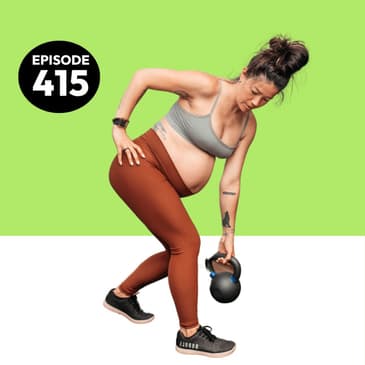
In this episode of the Optimal Body Podcast, Dr. Jen and Dr. Dom welcome Gina Conley, founder of MamasteFit, to discuss prenatal exercise and postpartum fitness. Gina shares her personal journey, debunks common myths about exercising during pregnancy, and highlights the importance of tailored movement for pelvic health and pain relief. The conversation emphasizes listening to one’s body, gradual postpartum recovery, and the need for compassionate self-care. Together, they encourage expectant and new mothers to embrace prenatal exercise, challenge outdated advice, and celebrate the strength and resilience of the postpartum body. When it comes to women's health and fitness, specifically prenatal exercise expertise and postpartum movement rehab, there aren't many better than Gina.
VivoBarefoot Discount:
Support your feet and ankles with VivoBarefoot shoes—perfect for any occasion! Boost mobility and strength from the ground up. Use code OPTIMAL20 for 20% off. 100-day trial included—return if you’re not satisfied!
**Vivo offers a 100-Day trial period. If you are not completely satisfied, you can send the shoes back and get a refund.
Free Week of the Jen Health Membership:
Get a free week of Jen Health Membership! Access 12 plans crafted by Doc Jen, PT. We’ll match you with the best plan for your goals. Check it out today and use code OPTIMAL for a discount on your first month!
Gina's Resources:
We think you’ll love:
- Get A Free Week on Jen Health!
- Pelvic Floor Foundations Course
- Jen’s Instagram
- Dom’s Instagram
- YouTube Channel
For full show notes and resources, visit: https://jen.health/podcast/415
What You Will Learn from Gina:
04:28 Gina shares her first pregnancy experience, lack of resources, and how she started MamasteFit.
07:24 Gina describes forming a supportive community of new moms and developing her fitness programming.
09:54 Discussion...
Hosted by Simplecast, an AdsWizz company. See pcm.adswizz.com for information about our collection and use of personal data for advertising.
[00:00:05] Welcome to the Optimal Body Podcast. I'm Dr. Jen and I'm Dr. Dom and we are doctors of physical therapy bringing you the body tips and physical therapy pearls of wisdom to help you begin to understand your body, relieve your pains and restrictions and answer your questions. Along with expert guests, our goal of the Optimal Body Podcast is really to help you discover what optimal means within your own body. Let's dive in.
[00:00:29] As we're going to talk into prenatal exercise, I have to remind you that your feet are going to change and a lot of people end up feeling symptoms like plantar fasciitis because we have increased fluid where our center is massive changing so it's going to put different pressures onto our feet and we have increased laxity due to the hormones that are changing in our body creating less tension across even the feet. And that's why we can get a lot of feeling like our feet are getting bigger, like we have less support.
[00:00:56] And this is why having that internal strength built into your feet is going to be crucial. I cannot stress this enough. Wearing Vivo Barefoot shoes throughout both my pregnancies really helped to eliminate and reduce any foot pain that I was dealing with. And I didn't even increase sizing in my feet.
[00:01:12] That's crazy. A lot of women experience this because we're not supporting the health of our feet. We have to realize that wearing shoes like Vivo Barefoot shoes for six months alone can increase your foot strength by 60%. That's a huge number just by wearing barefoot shoes. And this is going to help to build that internal support because all we can rely on is our muscle strength as we're going through pregnancy and we're having all these other changes that we really can't prevent.
[00:01:41] So helping to support the feet through stability is going to be crucial and beyond. Of course, this is not just talking about pregnancy. But if you have not checked out Vivo Barefoot shoes yet and you are thinking about getting pregnant or you are pregnant, I would highly recommend snagging some shoes now. You don't want to wait until the symptoms are already here. You want to have your feet in Vivo Barefoot shoes prior to feeling any symptoms. And as our podcast listener, use code OPTIMAL20. That's going to get you 20% off any shoes that are not already discounted.
[00:02:11] Again, that's code OPTIMAL20. And we're going to have that linked out, but you can go to VivoBarefoot.com and use code OPTIMAL20. I am so excited to welcome back onto our podcast Gina Connolly, who is the founder of Mama Stay Fit, a company that specializes in childbirth education and pre- and postnatal fitness training. And she just came out with a new book called Training for Two, which provides safe and smart prenatal exercises for a smoother pregnancy, easier birth and healthier newborn.
[00:02:40] Now, if you are thinking about getting pregnant or you are currently pregnant, this is the resource that you need. I'm telling you, it's going to provide you over 90 resistance training, mobility, birth prep, labor support exercises. And Gina is a wealth of knowledge. So a lot of what we've been told about pregnancy is just not true. And she's going to break it down and tell you exactly what you can do and help you feel safe and connected in your body all throughout your pregnancy.
[00:03:06] Now, Gina has her master's in exercise science and a birth doula certification. She's the head coach for Mama Stay Fit and exclusively trains in-person and online fitness clients during their pregnancies and as they return to fitness in postpartum. Gina is a mom with four littles and she is a army veteran and currently a military spouse. Her and her family live in North Carolina, where they operate their fitness training facility, Mama Stay Fit.
[00:03:33] I'm so excited about this podcast episode. Break down some of those myths and get down to the truth about training in pregnancy. Gina, thank you so much for taking time and being here. I know you have four children. We were just talking about this. I can't imagine. And I know both our brains are still a little bit in postpartum craze and phase, but I just appreciate you being here because I know you just wrote, well, last year you got your book that was released,
[00:04:00] which is training for two, which is exciting and we have it here with us. And I love all you do. I've been a huge fan. So again, thank you for being here. Thank you for having me. I really appreciate it again. Of course. And so just give us an idea of why or how your career ended up landing in this space of specializing and becoming an expert in pre and postnatal fitness and just pregnancy education in general.
[00:04:28] So I gave birth to my first daughter in 2017. And at the time, there was not a lot out there about pregnancy fitness. Like there was like, I think like a prenatal yoga class you can take. I bought one on Venmeo that was like one for first trimester, one for second trimester, one for third. And I just did that like every day because there wasn't anything specialized for that time frame. It could be because there's a lot of misconceptions about the safety of exercise, but there just wasn't any resources.
[00:04:58] And so I spent most of my pregnancy just kind of confused on what I can do. Very fearful of movement. Like fortunately, I still did exercise, but I was very cautious with like everything that I was doing. Like I wouldn't lay on my back. I was really hesitant to like even lift like heavier weights. And so I was just like overly cautious with everything that I was doing because I was just really scared of exercising. I didn't fully understand how beneficial it was, but I knew that exercise felt good for me.
[00:05:27] So I just tried to do what I felt was good for me, but didn't really have like a lot of information to help support me in developing what I was doing. So I was just kind of making it up as I went. I did struggle with some SI joint pain during my first pregnancy. I went to my doctor and I was like, hey, this seems abnormal. What can I do? And they're like, sorry, you just got to give birth. That's the only solution of pelvic pain. And I was like, surely that is not true. Like there's that's a long I could barely walk. And I was like five months pregnant at this point.
[00:05:56] So being told that I need to like hobble around for the next five months just seemed pretty silly. Fortunately, I found a chiropractor that was like really helpful for me with doing some alignment or I don't really know what chiropractors do. But whatever she did helped give me some like instant relief. And then I was able to start exercising. And whatever reason, the exercises that I was choosing were really helpful for me and to kind of manage that SI joint pain. But I kind of struggled with it through my whole pregnancy.
[00:06:23] And then I came into postpartum and I was like, what am I supposed to do now? And fortunately, my mom is from South Korea. So she really pushed on me like you have to rest. It's really important to like take your time right now. Like it's really good for your body. And for whatever reason, I was like, mom, you're right. I'm going to listen to you. Like I'm going to do what she's saying. And I was like really mindful with my rest and really took my time getting back to my workouts and really eased my way back into it.
[00:06:51] And then I was like, well, what do I do now? Like I have this baby. How do I like what do I do? I had just left my full time career. I used to be in the army. And so I transitioned out of active duty and decided I was going to be a stay at home mom. But I wanted something that was just for me, like a creative outlet. And so I was like, I'm just going to train people in this phase of life. I'm going to be a perineutal fitness trainer.
[00:07:15] I don't remember exactly how I came to this like conclusion of what I was going to do, but it made tons of sense for me. And one of the guys that I was deployed with, his wife was a personal trainer. And so I asked him like, hey, can you give me her number? I want to like sit down with her to go over how I even get into personal training. And she worked at a gym near us that was specialized in personal training. And the gym owner was really welcoming and allowed me to come into the space with my baby.
[00:07:43] And then allowed me to have other moms come into the space with their babies. And that's kind of how Mama Stay Fit started. It was a bunch of new moms trying to figure it all out together. We were helping to normalize things for each other. One of the moms, like she was, we were talking a few months ago and she was like, I was terrified of breastfeeding public until I saw you just whip out your boob and start breastfeeding your baby. And then I was like, I'm just going to breastfeed my baby too. And so we just kind of supported each other in those early days to figure out what was an animal?
[00:08:12] When should we go seek help? And we explored movement together and they all really helped me to develop my programming to figure out, okay, what made sense for pregnancy? What made sense for postpartum? What movements are helping my C-section clients feel better versus the ones that had a vaginal birth? Because, you know, all birth is birth, but the healing is a little bit different. There's a little bit more to it depending on how you gave birth and like what happened during your labor.
[00:08:37] And so this gave me like a few years to figure all of this out, which was like really exciting. And then in 2020, when COVID hit and the world shut down, we expanded online. And so I had about three years of experience at this point. And then we went online with our childbirth education course, with our fitness programming. And so now we offer a ton of support around the world to help other women feel really empowered during this entire experience. So that's kind of how I got my start in this phase.
[00:09:05] I was a new mom and was just trying to figure it out. And fortunately, I had a great community nearby to help support me as I figured it out. And we kind of did it together. And now I get to support people all over the world. Which is so incredible. And I love what you guys do. I love your page, your education and the way that you do it. And you have so many free resources that people can, you know, from your podcast, your Instagram, to your YouTube. Like you guys have a lot of free resources, which is incredible as well.
[00:09:34] And, you know, even just in the very beginning, you hit on some of the myths that people, it's so common for people to hear. And it's something that I get asked about all the time, you know, while I'm pregnant and I can't lay on my back. Or I thought you weren't supposed to lay on your back. Or I thought you weren't supposed to do this. And it's sad to know that we have research that is starting to come. And yet I know some OBs from my friends that are still being told you can't lift more than 20 pounds.
[00:10:02] So, and I know I just listed a couple myths. But can you go into some of the most common myths that you hear when it comes to training during pregnancy? And why those are just simply not true? Oh, absolutely. So we'll start with the scariest one is, is exercise dangerous for you or for your baby? Because we'll sometimes get folks that will message us and be like, I'm going to start your program in the second trimester when it's all safe. Yeah.
[00:10:29] Like, I don't want to do anything that hurt my pregnancy right now. Which I totally understand why folks have this belief that exercising in the first trimester is dangerous. That it's going to increase your risk of miscarriage. And that's just not true. And research has repeatedly demonstrated that exercising, even in your first trimester, even more vigorous exercise, does not increase your risk of miscarriage. Miscarriage, unfortunately, happens due to chromosomal abnormalities, which there was nothing that you did to cause it. And unfortunately, there was nothing that you could do to prevent it either.
[00:10:58] And so it's just one of those things that happens, unfortunately. Like, I've suffered from two miscarriages. I know that you've had a miscarriage as well. Like, it's a really tragic and sad thing to happen. And it's worse when somebody tells you that it's your fault. Like, well, you probably shouldn't have been lifting those weights. Well, that's not being, like, that's not being very kind. And also, it's not true. Like, your exercising did not cause your miscarriage. And there's a lot of benefits to exercising, even in the first trimester, if you feel up to it. The other myth is, is this going to impact my baby's growth?
[00:11:28] Is this going to cause preterm labor? And the answer is no to both of those as well. Exercising during your pregnancy can help to reduce your risk of developing prenatal complications, such as gestational diabetes, which is something that can cause your baby to be too big. It's going to decrease your risk of developing preeclampsia, hypertension by, like, 30 to 40 percent, which is significant. Like, baby aspirin is one of those things that your provider may recommend to you. But going through a walk three times a week can decrease your risk of developing it, which is pretty substantial.
[00:11:55] And not always something that's, like, advertised when it should be. Like, exercise is really helpful for us during pregnancy. And so, those are the two, like, main myths. Like, is this going to hurt my baby in some way or impact the length of my pregnancy? And the answer is no to both of those. And there are a ton of benefits, not only for us, but for our babies doing exercise. One, it's going to help to improve their stress resiliency. So, they're going to be more tolerable to stress during pregnancy, during labor, and then even in the postpartum as well.
[00:12:25] Their cognitive function is improved because they have more nervous system development during pregnancy because they're kind of reaping the benefits of your workouts. And so, that translates to better language skills in the first year of life, better motor skills in the first year of life. Like, those are big deals. Big deals. Like, just as some, like, introduction things that you can do to help your baby. So, my baby is six months now and she's starting to crawl. And I don't know if it's because of my workouts I did during pregnancy, but it probably didn't hurt.
[00:12:52] And so, I don't want to say, like, if you exercise, you get all of these for sure, but it doesn't hurt you. It's very beneficial to do. So, some of the common myths that I hear about exercising during pregnancy is one, I have to keep my heart rate below, like, 120 or maybe it's 140 or maybe it's 110. Like, there's no set number because it was made up. It was thrown into an ACOG, like, annual paper. I can't remember what they're called. Like, one year where some doctor was like, hey, we should make sure everyone's heart rate stayed below this.
[00:13:20] And then it was, like, redacted because they were like, we have nothing to back that up. We just made it up. But it stayed. And so, now we're like, well, that's not, like, a real thing. Heart rate is also not something that you can rely on during pregnancy to assess your effort levels because our blood volume changes. Our blood pressure fluctuates throughout pregnancy. So, it's just not a helpful tool. Like, I'm working at a vigorous effort level, but my heart rate is, you know, X. It doesn't always translate well during pregnancy. So, your heart rate can be more elevated. It can stay low.
[00:13:48] You may find that it's really hard to get your heart rate really high or, like, just walking upstairs gets you out of breath. So, it's kind of all over the place. But the heart rate thing is made up. It's not an actual thing. It's not based on any studies. Now, I will say during pregnancy, it can be beneficial to maintain more of, like, a moderate level of exercise. Like, I don't know if I would be doing, like, 90 to 100% effort levels just because there's a lot of other things going on within our body. We have more relaxants. We have more joint laxity. The way that we stabilize is a little bit different.
[00:14:18] So, if we then add on, like, high intensity activity, it could potentially increase your risk of injury or just not feel good in your body. So, I would say, like, at 70 to 80% in, like, the first and second trimester is, like, a good, like, effort level to aim for. And decreasing that probably to, like, 50 to 60 in the third trimester because we're just more tired at that point. But, again, each day is its own journey. Go by how you feel each day. If you feel more energized, do a little bit more.
[00:14:48] Like, don't lay on your back. Don't ever twist. Like, I'm not sure how you're supposed to move during pregnancy if you can't twist or, like, lay on your back. The laying on your back thing is going to be more for, like, the third trimester when your belly is a little bit bigger. Uterus is larger. Baby is grime. They could lay on an artery that can make you lightheaded or dizzy. So, if you are feeling any symptoms of, like, you're seeing spots, you feel dizzy, you feel lightheaded, just roll to your left side and just rest there for a little bit and then get off your back.
[00:15:16] But, generally, doing exercise on your back for a short period of time is totally fine. Like, I don't know if I would, like, take a, like, lay down on my back flat and, like, take a nap in the third trimester just because you're going to get uncomfortable. But if you're exercising for, like, a minute or two here and there to do bench press or to do something on your back, it's totally fine unless you've had symptoms. If you have symptoms, maybe being on your back is not for you anymore.
[00:15:41] And I've had clients who are there towards their third trimester and they're, like, being on my back makes me really symptomatic. I'm, like, well, just incline. We're not going to lay flat on our back anymore. And so, we can always modify as well based on the symptoms that you're feeling. So, all right, isn't that a real thing? But still monitor your effort levels and see how it feels for you laying on your back, usually not until the third trimester, but even then short periods of time is totally fine unless we're having symptoms.
[00:16:04] The other thing will be twisting, which is, like, a big one that I hear, especially if you are in, like, the yoga world at all. But I'll even see it, like, folks will sometimes comment on our Instagram where they're, like, oh, my God, you're twisting. Like, that's so bad. Like, I think the myth is that if you twist, it'll, like, somehow compress your belly and, like, detach your placenta. It gets really dramatic really fast with pre-muteal exercise. You should absolutely twist your spine during pregnancy. And I know that you guys are, like, real big on living a pain-free life.
[00:16:34] Like, if you never twist your spine, you are going to be a pain. Like, it is not going to be a good time. So, you should 100% still continue to twist. Now, I wouldn't maybe find, like, the deepest twist and the most compressive twist possible because it's not going to be comfortable for you. Like, it's not going to be harmful, but it's just not going to feel good in your body. But we absolutely should find some movement within our spine to include closed hip positions, open hip positions, thoracic rotation, like, all sorts of stuff. But that'll be another big one that I hear is never twist your spine.
[00:17:04] Like, it's going to hurt your placenta. And that's not true. So, generally, during pregnancy, there's really not inherently dangerous exercises that you can do other than ones that have really big fall risks. Like, maybe don't go skydiving. I would probably not go skydiving. Maybe not. Horseback riding is, like, another one. Like, there's probably a higher risk of falling. Maybe not great. Even things like box jumps at a certain point may not be comfortable for you. Like, there's a higher risk of falling with those.
[00:17:29] So, just being mindful of, like, what is the potential danger with this exercise that could harm me due to, like, falling would be, like, the biggest thing. Now, there are exercises that may be more or less beneficial for you throughout pregnancy that we can totally discuss as well. But, in general, the myth of prenatal exercise is a lot of fear-mongering. There really isn't, like, a ton of, like, dangerous exercises that you can do. Paying attention to how your body is feeling. Do you feel super fatigued? Are you feeling really lightheaded?
[00:17:57] And, like, is this just not feeling good for you? Then maybe we need to adjust our intensity levels. Maybe we need to adjust our position. You should absolutely twist your spine. You can lay on your back if that feels comfortable for you. Like, move your body. And, yeah, there's a lot of fear-mongering. So, it's really hard and it's really scary. And I totally, like, sympathize with the fear involved with being in an exercise. Yes. Yeah, I think, I mean, you covered so many important ones. And you also kind of mentioned about where some of these things came from.
[00:18:25] And I think a lot of it came from places that had baseline good intent because, in the past, we didn't have a lot of research on people who were pregnant. So, we just need to, like, limit them to make sure they're not doing anything that could potentially be dangerous. And then that just continued to trickle through the medical system to where a lot of it is now persisting today. Or people who are at extremely high risk during their pregnancy might get certain recommendations.
[00:18:51] And then those kind of transformed into more blanket recommendations for everybody, even if you're very low risk or in a very low risk pregnancy. So, I think that, you know, what you brought up is super important. So, being that so many people have different fitness levels, different baseline fitness or current movement exercise regimens.
[00:19:13] Like, how would somebody go about figuring out what the best type of fitness plan or routine is for them during their pregnancy? So, another one of the myths, because that's going to really tie in with this, is just do what you did before pregnancy, just less. Just lift lighter. Just run a little slower. But what if you're doing nothing before pregnancy? Like, how do you do less than that? And so, the general guidance, again, is to just do what you did before. Don't start anything new. Just do less.
[00:19:41] Which is not helpful for most people. Especially if you were more sedentary. Or if you were performing at a really high level, like, what does that mean? Like, what do you mean do less? And so, if you have not been exercising and you're like, hey, I heard about the benefits. I want to get into this. What do I do? Start slow. Like, start. Remember that you're a novice. You're new to this. We're not going to be, like, training for the CrossFit Games day one. We're going to do, like, a 10 or 15-minute workout the first day. And then maybe we add in a walk the next day.
[00:20:09] And then we're going to just kind of gradually add on over the weeks. It's okay if you don't do all of the workouts in one week. And if you're brand new, I would say working with somebody can be really helpful. So, either a personal trainer, joining, like, a group fitness class where they have experience working with prenatal clients can be really helpful. Following, like, on-demand videos where it's, like, a video that you follow along with can be really helpful. Especially if you're not familiar with exercise. Seeing someone else do it where they talk you through it can be really helpful. It can be a prenatal program.
[00:20:37] It can be, like, one that's not specific for pregnancy. Like, most general workout programs are totally fine to do during pregnancy. Now, if it's, like, intense core exercise, maybe not that one. Like, do, like, the low-impact one. And then you can also follow a program. Like, sometimes following a program can be really helpful as well. Both for brand new people and for people that are really experienced with lifting.
[00:21:00] And so, if you are more experienced with exercise or you're more of a high-level athlete or even if you're just a recreational athlete but you like to lift weights and you like to go running and you like to do stuff and you're like, well, what do I do now? Like, surely I can't do everything that I did prenatal or pre-pregnancy. Like, and yeah, you should do every single thing that you did before. And so, this is where we really need to actually tune into our body. And so, most athletes are pretty good at ignoring their body. Like, I'm not tired. I'm going to keep going. My knee hurts. It's fine.
[00:21:27] And so, pregnancy is, like, a really good opportunity to really tune into what is your body actually saying. And then this is me giving you permission to not. So, if you go to the gym and you're like, I had this whole workout that I had planned. I'm going to do it just like this. And you're like, I'm really tired today. Or, man, I feel really unstable at the bottom of my squat and this weight feels too heavy for me. Well, this is me giving you permission to do a box squat with lighter weight or to get rid of the barbell and just use dumbbells or to just go for a walk on the treadmill.
[00:21:57] Like, this is me giving you that permission. And understand that if you are moving your body with intention during your pregnancy, that's more beneficial than, like, brushing your workouts every single day. So, it's okay if the workouts look a little bit different, if the intensity is a little bit higher or lower than pre-pregnancy. It's totally fine.
[00:22:15] And I think really accepting this letting go of your ego during pregnancy really helps a ton during labor where we cannot necessarily plan exactly what is going to happen during our labors. Even if everything goes the way that you're wanting it to, your contractions might be a little bit more challenging than you were anticipating. Where you're like, oh, no, like, this was a little bit harder than I thought it was going to be.
[00:22:38] And so, this is, like, where your pre-pregnancy workouts can be really helpful because you have spent all of this time letting go of your ego and just kind of surrendering to what you need each day with your workouts. And so, all of the athletes that are probably listening, this is me giving you that permission to not. To take the rest day, to go for a walk instead, to lift lighter weights, or to modify your workouts in a way that feels good for you during your pregnancy.
[00:23:04] And again, if you are an athlete and you're like, well, I don't know how to modify my workouts, this is where following a program can be really beneficial. And so, my book, Training for Two, I have tons of modifications in there for pregnancy, for lifting especially. Like, I wanted to make a book that was for the athlete. Like, people that don't consider themselves athletes, there's still beneficial stuff in there for them. But if you like lifting weights and you're like, I don't know how to modify X, Y, or Z, I break it down for you in my book. We have online fitness programs that you can follow as well.
[00:23:32] So, the biggest thing for, like, the non-athlete people is ease into it. Find someone to help support you during it. And the same thing is going to apply for our athletes as well. Like, ease into it. It's not going to be like it was before. It's okay to modify and it's okay to do less. And learning how to surrender to this is going to be so beneficial for you during your pregnancy, during your labor, and then into motherhood.
[00:23:56] Because if you didn't know, your children have opinions on how they would like, like, your baby has an opinion on how long they would like to sleep at night. So, being able to surrender to that already and to let go of the ego, I think, just really serves you well beyond your prenatal workouts. Thousand percent. And how you're going to feel postpartum and lifting that baby, bending over and sitting and standing and rocking and all the things you're going to be doing is starts for what you did prenatally.
[00:24:26] And, you know, how you supported your body through pregnancy. It makes me sad when people are afraid to move or afraid to lift, afraid to get strong. And then they end up postpartum in a lot of pain. So, you know, I love that you brought that up. And also that you gave permission to be like, it's okay to take a break. Like, it's okay not to do all the things. I think social media can, you know, create that comparison of what I should be doing every single day. Um, so that's huge.
[00:24:54] And I know, you know, just going from pregnancy one, pregnancy two, for me personally, I felt like nothing in pregnancy one, which is also why I feel like he didn't want to come out. But in second pregnancy, I felt all of the things. Like, all of a sudden, I had a lot more compassion for what people said when little, um, you know, sensations would come up along the pelvis or different things would pop up.
[00:25:19] And I felt grateful to have the knowledge, especially from what you guys do and from your book, um, to understand what to do in my body to help support that. But even for you going from first pregnancy, feeling a lot of symptoms, not maybe knowing as much what to do into fourth pregnancy, because I hear that it progresses sometimes in the body and what you can feel and the sensations and they might get stronger.
[00:25:44] So how can someone use exercise and how does that help to support the body? Like, are there different things that we need to be paying attention to and adding in? Like, does it become really specific? So for me personally, my pregnancies have got progressively easier, like physically because of the knowledge that I've gained over the years. So my first pregnancy, I was probably in the most pain with the pelvic pain, especially the SI joint pain for me.
[00:26:11] The fourth pregnancy, my discomfort was I just had a lot of prodromal labor at the end. I think that gets worse with each pregnancy, but physically in my body, I felt really good. And I know it was because of all the movements that I was doing. And so one of the biggest things that I would incorporate into that we do incorporate into the Mama Stay Fit prenatal programs, but I would recommend that everyone incorporate into their routines is exercises that emphasize the myofascial slings.
[00:26:35] And so pelvic pain and like lower back pain, sciatic pain, SI joint pain, kind of all that pain in the pelvic region can be related to like two main things. And there's obviously other things as well. But the first is there's too much movement kind of happening at the joint where like the joint is like not able to like well aligned to itself during movement to stabilize. And this could be that there's not enough movement or that there's too much happening. So it's kind of one or the other, but the joint is not like puzzle piecing together the way that it should.
[00:27:04] And the second is going to be the muscles that kind of support that joint are not coordinated with each other to where they are not helping to compress and support that joint during movement. And so during pregnancy and even prenatal or pre-pregnancy, we can incorporate exercise that target the myofascial slings. And so these are different fascial lines throughout our body where these are different muscles that are connected to one another to help to support functional movement.
[00:27:27] And so we have the anterior oblique sling, which is kind of like your chest through your obliques crosses the front pelvic joint into your opposite inner thigh. So this is really going to help with that front pelvic pain. This is something for my clients that have had C-sections. We really emphasize as well because that sling is essentially severed during a C-section. And so there's a lot of reconnection that needs to happen during postpartum and then in subsequent pregnancies to help.
[00:27:54] If somebody has like a diastasis, that's kind of lingering postpartum, really emphasizing this sling can be really helpful because it gets really stretched during pregnancy. So for the anterior oblique sling, essentially we're thinking like one shoulder is moving towards the opposite knee. So kind of like rotation to the front side of the body.
[00:28:10] So if you have like a pressing motion with the opposite inner thigh activating, like payoff presses, like upward chops, diagonal pulldowns, those kind of things can be really helpful to strengthening the anterior oblique sling if you're having pain to the front part of your pelvis. When it comes to the backside, there's three different slings that kind of help to support you. We have the posterior oblique sling, which is our lat. So your back muscle towards the opposite glute. It doesn't cross the SI joint, but it kind of crosses all the fascial line there to help support your SI joint.
[00:28:39] So this is going to be exercises where you're rowing with one arm and extending in the opposite hip. So we do a lot of like lunge rows where you do a lunge and you row a band or a cable machine back or a step up row. So we're thinking hip extension, opposite arm is rowing and this helps to stabilize across that SI joint. So if you're having like low back pain, SI joint pain, sciatic pain, folks have all sorts of different names for like similar types of sensation. The posterior oblique sling is going to be your best friend.
[00:29:08] We also have a lateral sling, which is your glute to your inner thigh. This can be helpful for the front and back pelvic pain. This is like single leg stability type movements. And then we have the deep longitudinal, which is kind of from like the back of your neck all the way down, kind of like one side of your body. And so this is going to be hinge type motions where we're helping to support that back pelvic joint as well. So incorporating movements that involve these different slings is going to be really helpful for you during pregnancy to help stabilize your pelvis, to help keep you really comfortable.
[00:29:36] We incorporate them a ton within our programming. I have like an entire chapter dedicated to it in my book because it's stuff that works that is like really, really helpful. Like it has been a game changer for in-person clients. We have so many folks that reach out to us that have been doing our programming that are like, hey, I really was suffering from pelvic pain like a week ago and I feel great now because I've been doing the exercises or in my past pregnancies. I was really struggling with this and I was so nervous for this one. So I was doing all these movements and I feel great.
[00:30:05] And movement can absolutely help you to have a pain-free pregnancy. Like so pain is not a requirement of pregnancy and you may have been told, hey, when you give birth, it'll just go away. And then you're postpartum and you still have pelvic pain because the pelvic pain was not because you were pregnant. It was because of a movement pattern that was preexisting that just you sunk deeper into these positions during pregnancy. And that's why we're having that discomfort.
[00:30:28] And so if we can incorporate all of these movements during our prenatal, this is going to help to prevent pelvic pain or overcome pelvic pain because that can also help to support us during labor as well. Because we get a lot of folks that will see like our birth prep exercises, the labor positions that we recommend. And they're like, there's no way that I'm getting into that position because I have so much pelvic pain. And they're like, what should I do instead? I'm like, well, first, we need to address the pelvic pain. It can go away. Like we can resolve that. And then we can do these different types of labor and positions as well.
[00:30:58] It's so cool just like thinking about your journey and almost seeing the full circle moment in your last answer there. When you were sitting there at five months having all this pain and were just told, hey, you just need to wait until you give birth. It's just a part of it. And then now at this point in your career, you have all these people reaching out to you saying, oh my God, I have no pain.
[00:31:21] It's like you have now become the solution that you so desperately were looking for or told that it wasn't there when you were pregnant for the first time. And I also think it's kind of funny that so many of the movements you talked about when you're talking about the fascial slangs included rotation because it's one of the things that so many people don't do on a regular basis. And just my one of like the foundational PT principles that it doesn't always stick.
[00:31:47] But if something's loose or if you have a lot of movement, strengthen it, stabilize it. And that's what I always think of when I'm thinking of someone's pelvis during pregnancy. They're getting so much more movement there. It only makes sense to strength train. It only makes sense to find out how to shore up those movement patterns, how to provide stability to the area. So I think that it just makes sense to me in my physiologic, my biomechanical brain. It's like, okay, yeah.
[00:32:13] When so many people are like, I'm having pain, why would I want to move? It's just painful. It's kind of counterintuitive, but that's what you need. I think something that comes up a lot for people during pregnancy for good reason is the pelvic floor. What should people be doing or thinking about when it comes to the pelvic floor? Are there specific exercises that they should do for that? Or is that kind of included and wrapped into a lot of the other strength training?
[00:32:40] So I always get some hate whenever I say like Kegel, they're stupid. Don't do Kegels. Like there's always like one PT out there who is like, how dare you say these are evidence-based. The evidence is weak. Kegels are not beneficial for pregnancy. And your Kegel can change based on the way that you are positioning your hips and your back. So like I'm just going to say it. And if you guys get hate for it, you could direct them to me and have a conversation with them. Kegels are not beneficial for pregnancy.
[00:33:08] They are like I can almost guarantee like that they are not going to be a helpful birth prep exercise. So what we're thinking about during pregnancy is the pelvic floor is attached to our pelvis. And so different hip positions, different pelvic positions are going to kind of change the tension within the pelvic floor. So if anyone has been following me, you should hopefully know that there's no one movement that's going to open your entire pelvis for labor. There's so many different types of positions that we have to kind of move through and you'll intuitively move through them.
[00:33:38] And so the same thing is going to apply to our pelvic floor. There's no one stretch that's going to stretch your entire pelvic floor because it's going to depend on your hip positioning, your pelvic position in relation to your femur. What orientation is your pelvis in? And all of these things can really change how you can activate your pelvic floor and also how you can stretch it. And so there's four like main movements that I would say are beneficial to incorporate into like a mobility routine or to your lifting routine or both.
[00:34:04] And this is also going to be really helpful to creating space within your pelvis and kind of preparing your pelvis for birth as well. The first is going to be that wider knee position. So like those deep squats, butterfly poses, this is like the standard. If you see like a pelvic floor prep for birth video, I could nine out of 10 times, it's going to be all wide leg positions. And this is helpful to stretch more of the front half of our pelvic floor. So you'll probably feel more pressure to like that front area of your pelvic floor.
[00:34:32] And but a lot of us favor this position already during pregnancy. So we're there. It's already stretched. So if you feel more stretched there, it's because it's already stretched and you stretched it more. So not a huge focus of where I would say that we should be spending our pregnancy. But it's not bad if you're like, this feels good for me, though. I want to do like a deep squat position or a butterfly pose. So that's going to target more of the front half of the pelvic floor. But we want to think about the back half of the pelvic floor, where a lot of us tend to have more tension, even into the postpartum, just in life in general.
[00:35:02] We need to think about more internal hip rotation. So this can be like a hero's pose, like knees in, ankles out. You can do more an internally rotated child's pose. And you'll feel more of a stretch to kind of like the back half of the pelvic floor. And then to enhance it, we want to think a little bit more of a rounded back. So kind of like a cat position, I think. So that's going to help target more of that back half of the pelvic floor, where a lot of us hold a little bit more tension. So incorporating those type of exercises can be really helpful.
[00:35:29] In addition to thinking about exercises that strengthen the hamstrings and the inner thighs. So deadlifts, hinge type movements are really helpful. Nobody likes Copenhagen planks, but they're my favorite. I think everybody should do them. They're really beneficial to strengthening the inner thigh musculature. And those are the two muscles that pull your pelvis into internal rotation, which helps to stretch the posterior part of the pelvic floor. So if you do a deadlift and you're reaching down toward your floor, you probably feel more of a stretch in the back half of your pelvic floor area. That's where we kind of want to target when we think about first preparation.
[00:35:59] But we also have asymmetrical movements. For one side, it's doing something different than the other. And so we can incorporate internal and external hip rotation and internal and external pelvic rotation, which are just a little bit different from one another. And so external and internal hip rotation would be like a 90-90 position or like windshield wiper, shin box flow, I think is another name for it. Where like one leg is actually rotated in front of you and the other is like in front of you and rotated towards your side. This is going to help to kind of target different parts of the pelvic floor more diagonally as well.
[00:36:29] And then we have internal and external pelvic rotation, which is the orientation of the pelvis to the femur. And this is where a movement called a hip shift is going to be really helpful where we're essentially like moving belly towards the thigh. And this is really going to target kind of that sacral area or like if you have your jeans. I don't know who wears jeans anymore, but some people do, I guess, where you put your hands in those pockets. That's kind of like the target area for a hip shifted movement. I mean, we demonstrate the hip shift on our Instagram page probably once a week.
[00:36:59] We have a whole free birth prep circuit that incorporates two different types of hip shifts. And there's like, again, like a whole chapter on it within my book because it is really, really beneficial. So if I was thinking about how am I preparing my pelvic floor for birth, we can do movements that are both strengthening the pelvic floor by helping it move through its full range of motion. Because tight does not equal strong. And your pelvic floor is likely not like just loose where you need to do all these kegels.
[00:37:25] We probably just need to learn how to move it like with our inhale to stretch it, exhale to tighten it or exhale to relax. In addition to how can we change our hip position to target different parts of the pelvic floor with different types of stretches. So we have our wider knee position. So like deep squats, butterfly pose. This is where just like squatting in general can be really helpful as well. We have our internal to external hip rotation. So like 90-90 positions. You can be doing like elevated lunges. You can be doing forward lunges where we're kind of finding all that movement.
[00:37:55] We can also incorporate internal to external pelvic rotations. So this is where that hip shift is going to be really helpful. We incorporate hip shifts as more of like a mobility movement. But you can also incorporate them with single leg exercises like lunges, stagger stance for many deadlifts, single leg deadlifts. And then more of the knees and ankles out to stretch more of the back half of the pelvic floor. And this is going to be like a hero's pose for mobility or like deadlifts and Copenhagen planks for strengthening exercises. So there's a lot of stuff that we can do to help support the pelvic floor.
[00:38:24] Or it's just a small piece of the birth preparation. We also want to be incorporating movements that help to create different types of space within the pelvis. But yeah, Kegels are stupid. Don't do them. I don't care. I do not care if somebody is angry at me for saying that. Like there are some folks that are like very passionate about Kegels. And I'm like, but does it really help anybody? Like maybe. I don't know. There's so much more that you can do. There is.
[00:38:52] And I think it's important to say that because a lot of people think I need to do Kegels to help with my labor. And I think that's one of the myths that kind of has gotten wrapped up in people's minds as well. So you're saying, no, that's not actually going to be something that's helpful because the pelvic floor doesn't push the baby out. It just needs to move. I usually use the analogy of if a Kegel was helping you to prepare for pushing, it would be like tightening the tube of your toothpaste to think that's going to help your toothpaste come out better.
[00:39:21] Like, no, we need the pelvic floor to release and we need it to let go. We don't need it to get really, really tight. And most folks are not going to do Kegels correctly. Like a lot of folks are just kind of tightening and squeezing as much as they can. But they're not really incorporating the relaxation portion that is important. So the way that I would incorporate a Kegel if somebody is like, but Kegels are so great, is I would incorporate with my breath. And so if I was doing a movement, for example, we'll say a squat. At the top of my squat, I'm going to inhale.
[00:39:51] I'm going to feel kind of my pelvic floor stretch where my backside and my body stretch. I can either maintain that as I lower down. And then as I come up, I'm going to exhale to lift up in my pelvic floor and kind of tighten it as I stand up. So that would kind of be like the Kegel or the pelvic floor activation. But it's incorporated with a lengthening. And then I have the lift as well. So it's going to be synced with my movement. This is also helpful, I think, for people to start to wrap their brains around like, OK, I don't have to be in pain.
[00:40:19] I can I can safely work out and it's going to be beneficial for me and my baby rather than the opposite. And it's also going to help postpartum. And I know you kind of touched on, you know, early postpartum rest is so crucial. If there was something that you were going to if you could give someone as well as in terms of what else should I be focusing on? You know, I hate when sometimes I'm in the forums and people are like, how do I lose weight right away or how do I do this?
[00:40:48] And people are so eager to go back to work out. So what would you say is really crucial postpartum as you're starting to ease back into thinking about working out? So I think it is really common to put this pressure on ourselves to become as small as possible. I think it's like a societal thing that we've just put on ourselves as women from like a really young age. It's a pressure that I feel as well. And I fight it and then I get angry that I feel it. I'm like, why? No, I'm coming to the patriarchy like this is no.
[00:41:15] And so it's something that I think is really normal to like have this desire to bounce back or to fit back in my genes or to look like pregnancy didn't impact me. And so I think where where I would start postpartum is to acknowledge how incredible what you just did. Like you grew a human being from scratch. Like that's that's amazing. You birthed them however you birthed them. Like when you have a vaginal birth, you got an epidural, you went on medicated, you had a C-section.
[00:41:45] Like regardless of how that baby came out of your body, like that's incredible. Like and now you're taking care of them while you're healing. Like you're sleep deprived. You've got milk leaking out of you. Like you've got crazy hormones like and you're taking care of this human being. That's incredible. Like no other time, like no other body has ever created life than the postpartum body. Like you are literally a goddess.
[00:42:08] So I think when we kind of reframe how amazing this feat is and it's I think it's really easy to dismiss it and like kind of put it down. Like it's not something that I think is overly valued in our society, but we can value how incredible that is. And I think when we can reframe that, you give yourself a lot more compassion and you give yourself a lot more grace where you're like, I don't care that I'm softer looking because I literally grew a human being.
[00:42:37] Like, what did you do today? That's incredible. So if we can appreciate what we've actually done, I think that is like a really good starting point. Now in regards to, okay, that's great, Gina. I feel really good about myself. I'm amazing. But my body hurts. Like postpartum kind of sucks. Um, I totally acknowledge. I would say, look, I would rather do labor over postpartum, especially that first week because it is not a fun time. They're crampy. Things are feeling weird. It hurts.
[00:43:06] And then you've got this little person that's trying to figure out how to breastfeed and however you're planning to feed your baby. Um, so I would say like the first thing that I would do is try to stay off your feet if you can, if that's, if that's feasible for you. Try to set up to have as much support as you can, if possible. Um, I know not everybody lives near family. And so that's not always like an option. I know not everybody has paternity or maternity leave.
[00:43:28] Um, but if you can stay off your feet as much as you can, either if you can't stay off your feet because you have other kids to tend to, then wearing like supportive garments can be really helpful. So either like, um, love study has like these bloomers that are really nice where they have like perineal support. Like mama strut has like a perineal support, like pair of shorts that you can wear. Um, so if you can't rest, then wear something to help support you.
[00:43:50] And then we can incorporate like gentle mobility, diaphragmatic breathing, just kind of gently moving our body so that we're not getting super stiff and uncomfortable. Cause you get kind of stuck in these positions where you're trying to like figure out how do I get this little person to like eat, like survive. Um, and then like, I don't know, like the, like the two or three week mark, like going for some walks, trying to get some sunshine, um, maybe incorporating some gentle, like, like core exercises, like nothing too crazy. It's really like loose.
[00:44:18] Like I wouldn't make like a schedule for myself or anything. Mostly the mobility is what I would say is going to help you feel better in your body, especially like thoracic mobility stuff will feel just really good. It doesn't have to be crazy. It can be five minutes, 10 minutes here and there. We've got like a few YouTube videos that are like early postpartum mobility routines that you can incorporate. I'm pretty sure that you have some mobility stuff as well that they can grab, um, which I would also highly recommend.
[00:44:45] But the first month I would say mobility, go for short walks, just enjoy time with your baby and really just kind of like appreciate this accomplishment and kind of like, I can't think of what the word is like swimming it, like exist in it and like take it all in and be like, yes, I am amazing. I know I made this person all by myself or I guess not by ourselves, but like by ourselves to get all the credit. But yeah, that's what I would recommend for the postpartum. Take the pressure off yourself. You don't need to rush back to the gym.
[00:45:15] It's still going to be there. It's going to be there in a month. It's going to be there in six months. It's not going anywhere. Your workouts can come to you. If it's hard to get back into working out like with a little baby, it'll come like it'll it gets easier. My seven-year-old just walked in here with a bowl of rice for me to eat. Like it gets easier as you go to. And so if it's if this phase right now doesn't feel like moving your body intentionally doesn't feel accessible. Let's just take like bite-sized pieces, some mobility here, go for a walk.
[00:45:44] Maybe it's 10 minutes. It's going to look different than pre-kids. It's going to look different than pre-pregnancy. And it's okay. And this is me giving you that permission again to kind of surrender to whatever this journey is for you. Because yeah, motherhood is amazing. You grew a person. That's amazing. We can move our bodies and feel confident about that. But it's really hard to feel confident when there's so many people trying to tell you all of these things that are incorrect. I mean, that's such a cool message.
[00:46:10] And bringing it back to that appreciation for yourself for having grown a human. But also just like giving a kick to society a little bit. Like why don't we honor and appreciate our mothers and the people who are birthing the future children of our society, country, world. Like why don't we value them more and give them the time to live? I mean, you mentioned like some people don't even have maternity or paternity leave. Like that's an absolute travesty.
[00:46:39] And that we don't give people the ability to be there with their kids during the most vital times of their growth. That's a whole other podcast full of topics that we could cover right now. But yeah, I think that was a really cool message about how to approach getting back into movement and exercise postpartum. And I know you have a whole chapter of that at the end of your book.
[00:47:02] And like you mentioned, I mean, there's 200 photos, hundreds of exercises, QR codes that I'm sure bring you to videos that you can try to follow along with. So after all you had already done with starting your business, all the courses you've created, the podcasts that you have, being a mother of four, what possessed you to also want to write a book?
[00:47:27] Oh, so a publisher actually reached out to me because I was definitely like tapped out. Like I cannot do anything else. Like I am all. So we had a publisher reach out. I thought it was a scam at first. I was like this Nigerian prince is trying to get my money. But then it was real. And I was like, oh, OK. So they kind of pushed me on the journey to start writing the book. It took me about 18 months to kind of consolidate and get together and for them to get it and create it.
[00:47:56] They did a really beautiful job with this like full colors. We filmed all the videos. Our editor took care, like got all the edits and stuff done. So it's a really beautiful book. It was a labor of love for sure. It was a really cool experience doing. It really helped me to figure out how to simplify my language as well and how to communicate to like a normal person can understand what I'm saying. Because it's really easy to talk to like other fitness professionals and be like really technical with my jargon.
[00:48:25] And it's like really easy for them to understand. But when I try to explain this really important thing to somebody who is not as familiar, it's much harder to do. And so the book was like really helpful for me in figuring that out. I'm glad it's over. I'm sure like I'm sure I hope that we get to write more books in the future. But I'm glad that that journey is done for right now and that it's out in the world. And yeah, folks can grab it on Amazon. You can grab it at like Barnes and Nobles.
[00:48:52] I don't I don't know that many places that have it like in person on shows, but you can definitely get it online. I obviously recommend it. I think it's great. I think we had one person that gave us like a three star review that said this book is for athletes. It is for athletes. There are exercises in it, but it's also for like normal people. Yes. Yes. Everyone who is wanting to take care of a baby and move and get on the ground and squat and pick them up is an athlete. So you are an athlete.
[00:49:22] Motherhood is athletic and, you know, supporting your body in a way that helps you to do that without pain is so crucial. So thank you for writing this book. We're going to have it all linked up, including, you know, where people can find you in terms of all of the amazing work that you guys put out in the world.
[00:49:40] So thank you, Gina, for taking the time and dropping the knowledge and helping people feel more connected in their body in a time when you probably feel like you have no idea what's going on in your body. So thank you. Thank you so much for having me. So amazing to have Gina back on the podcast to talk all about her book.
[00:50:01] If you're interested in her book or learning more from her and any of her resources, check out the links down in the show notes, especially in this space of prenatal fitness, prenatal exercise and health. It's so muddy online and Gina is absolutely a trusted source. So go check her out. We also on our Gen Health platform have our pelvic floor foundations course. If you're looking for a way, whether you're prenatal, postpartum, any point along the stage of your pelvic floor health, check out our pelvic floor foundations course.
[00:50:29] We've gotten so much feedback from people who have found an incredible benefit from going through that and being able to reintegrate, reaccess their pelvic floor and make it work with their entire core. You can get a bonus discount as our podcast listener using code optimal 10 on that at checkout. That's just gen.health backslash pelvic floor. And of course, we'll see you next time on the Optimal Body Podcast. Optimal Body Podcast.