
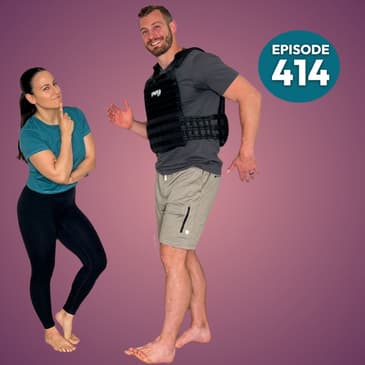
In this episode of the Optimal Body Podcast, Doc Jen and Doctor Dom, both doctors of physical therapy, explore the benefits and considerations of using weighted vests during walking, especially for individuals in menopause. They discuss how weighted vest walking can help improve bone density, especially for women post menopause, and offer practical tips for safe use. The hosts emphasize that while weighted vests can enhance fitness routines, strength training remains essential for bone health. They highlight that the "best" exercise tends to be the one that you enjoy the most and are able to stay the most consistent with. The episode provides actionable advice for listeners interested in boosting their health through walking and strength training.
Jen Health Annual Membership Discount:
Huge discount on Jen Health Annual Membership! Podcast listeners get nearly 50% off with code OPTIMAL20. Access 12 Therapy Plans and start your free trial now—move with us!
LMNT Electrolytes: Free Gift with Purchase!
Stay hydrated and energized with LMNT electrolytes—sodium, potassium, and magnesium for brain and body. Get a free gift with every purchase and try new flavors! Get your Free Gift now!
We think you’ll love:
- Strong Healthy Joints Program
- Jen Health Membership Discount
- Jen’s Instagram
- Dom’s Instagram
- YouTube Channel
For full show notes and resources, visit: https://jen.health/podcast/414
What You Will Learn:
03:27 Weighted Vests and Bone Density in women surrounding menopause
05:36 Why Weighted Vest Walking is Trending
06:53 Calorie Burn and Weighted Vest Guidelines
08:46 Bone Density Benefits and Research
09:49 Research Study: Protocol and Results
11:03 Comparing Weighted Vest Walking to Strength Training
14:18 Cardiovascular and Calorie Burn Comparisons
16:14 Bone Density: Strength Training vs. Weighted Vest Walking
19:16 Combining Weighted Vest Walking with Strength Training
Hosted by Simplecast, an AdsWizz company. See pcm.adswizz.com for information about our collection and use of personal data for advertising.
[00:00:05] Welcome to the Optimal Body Podcast. I'm Dr. Jen and I'm Dr. Dom and we are doctors of physical therapy bringing you the body tips and physical therapy pearls of wisdom to help you begin to understand your body, relieve your pains and restrictions and answer your questions. Along with expert guests, our goal of the Optimal Body Podcast is really to help you discover what optimal means within your own body. Let's dive in.
[00:00:29] I'm so excited to get into this episode. Now, we're going to talk more about this, but know that this is one tool. One tool as we age and as we progress in our body, we need more tools. And that's why this is the perfect opportunity for you to check out Jen Health because we have a massive annual discount happening right now. Now, 57% off a year is less than you will ever see if you had a private session with me.
[00:00:53] And you get 12 different therapy plans, each with two to three phases to keep you progressing, plus a monthly live webinar where not only am I going over a topic requested from the community, but I also am there to answer any of your personal questions and help to better guide you along your journey. I mean, we've had someone who just recently let us know that she's been a body worker for 21 years now.
[00:01:15] And she said, I understand the body mechanics, yet this is the first program that has actually addressed my root cause issues and the use of correct form and muscle activation. I'm finally seeing progress. Progress not only in healing, but in strengthening the areas that have plateaued because I was engaging those muscles incorrectly, which of course would lead to many injuries I'm dealing with and currently have had those in the past.
[00:01:39] I'm a young 53 year old and I don't intend on slowing down or accepting that I repeatedly told that this is a normal part of aging. I feel like I finally have found the tools to support my body, not injure and age it. And I have been recommending your program to many of my clients. I mean, oh, my heart. It makes me feel so, so happy and honored when people get in and they're utilizing any of the therapy plans that are needed for them,
[00:02:05] whether it's a body specific plan on your SI, your low back, your knee, or you just want to explore your full body with a low impact plan that includes strength, mobility, core muscle activations, or a high intensity plan, a core plan. We have it all available for you and I'm here to help guide you. My entire brain has gone into this platform and we're continuing to put new videos out, new plans we have in the making.
[00:02:29] So I hope that you take the opportunity to get 57% off. We have it linked up or you can just head to gen.health backslash free trial. Everything that we talk about on this podcast is about providing you the tools to finally help your body feel something different. And I coach you through exactly how to do that on Gen Health. So I hope that I see you as part of the community. All right. Hot topic alert this week. We are talking about weighted vests and weighted vest walking specifically.
[00:03:00] Is this just a fad or is this actually a fitness game changer that you can add into your routine? I got to credit chat GPT for giving me that line. Is it a fad or is it a fitness game changer? Yeah. So many people I feel like are adding this in and saying, oh, this is amazing. And we just wanted to look a little bit into what research there is behind weighted vest walking and if people should actually be thinking about adding it in. Yeah.
[00:03:28] And I think it's a cool conversation that it's going around because it's in relation particularly. The reason I feel like it's been popularized and maybe I'm seeing it a little bit more is because it's been very popular in the perimenopause, postmenopause conversation. Of how do I help to improve my bone density? Because unfortunately we can't, we don't really know what our bone density is unless we go get it directly tested. Get the scans. Right?
[00:03:58] Or we fall and fracture something. Yeah. So I do love that this conversation about how do we maximize our bone health is so popular right now. But we just want to help you understand, is this something that you should be jumping on? How often should you be adding it in? Like what is the protocol and what is most important when it comes to bone density health? Okay. Hold up because we can't talk about walking more without talking about your need for electrolytes.
[00:04:27] And I'm just going to be here to remind you, are you drinking your water? Are you hydrating? And are you adding in electrolytes? Because besides electrolyte deficiency symptoms, literally like cramping during a workout, they really support strength training, endurance sports, and any activity that works up a sweat by preventing something called hyponutremia, which is a low blood sodium condition that can lead to a headache, brain fog, fatigue, and of course those dreaded mid-workout cramps. Sodium is the main electrolyte lost through sweat.
[00:04:57] And if it's not replaced, such as only hydrating with plain water, the body can't function optimally. And this is why we've been promoting and talk about Element so much. We've added it into our own daily life. And I cannot tell you more about how good we feel when we have it in our drinks. And it's just so much more enjoyable to drink your water because the flavors are amazing. So I highly recommend head to drinkelement.com backslash optimal. Support our podcast, of course.
[00:05:25] That's drinkelement.com backslash optimal. And you get a free sample pack with any purchase. So please go check out Element and grab yours today. And I think there's a few different reasons as to why it's becoming popular or why it might be catching on. It's pretty simple and pretty accessible. And a lot of people already walk.
[00:05:48] And so if you're already walking, is there something that I can do that's going to maybe increase the calorie expenditure? And if there is bone density improvements, great. Why don't I just add a weighted vest on if I'm already going on walks consistently throughout the week? There's a focus on longevity. And it's a low impact exercise.
[00:06:12] So people who might not be able to run anymore, this can be more attractive to rucking. There's a population who likes rucking, which is essentially wearing weighted backpacks. And there's a reason that wearing a weighted vest might be more comfortable. Wearing the weight just in a backpack on your back might have different postural changes in how you're walking.
[00:06:36] And the fact that Jen just brought up weighted vests have become a rising trend among the menopausal and perimenopausal population. Hopefully addressing challenges that people going through menopause face like bone loss, heart disease, and metabolic changes in their body. Right. And so like right off the bat, we do understand and I think it's important to bring up that walking with a weighted vest when you're walking.
[00:07:04] So you're doing movement and now you're going to add some load to that movement. So weighted wearing a weighted vest that's 10 to 15 percent of your body weight can actually increase calorie burn by about 12 to 15 percent compared to unweighted walking. Which makes sense. You increase the weight 10 to 15 percent. You increase the calorie burn 12 to 15 percent. Right.
[00:07:29] Now, I have also looked into things where it's like, well, walking probably not too bad to add 10 percent of your body weight. But if you haven't really been doing anything, maybe that is where you want to start with like 5 percent of your body weight. Yeah. Start a little lower. And that's also where like there could be unseen compensations. If you're not on a treadmill and also tracking the speed or if you're not using an app that tracks like how far you've gone and how long it takes, you might just be walking slower.
[00:07:59] Mm-hmm. And that then can kind of, you know, compensate for the weight that is giving you an increased calorie burn could then, you know, come down if you're walking slower because you have extra weight. So like Jen said, if you start lower, you know, 4 or 5 percent of your body weight, that could be more appropriate. And if you have some sort of walking app that helps you know, okay, I'm keeping the same kind of pace that I normally do. That's when, you know, you'll maybe see this benefit in increased calorie burn. Yeah.
[00:08:28] And then starting to progress it based on how you're feeling and how you're doing. Like everything should be gradually progressed. Right. It's the same with like going into strength training. We're not just going to put a heavy barbell on your back. We're going to say, oh, maybe start with some dumbbells or resistance bands and then build it up from there. So it's the same. I just want to put that out there. Same with weighted walking. Now, when it comes to bone density, so what's the what is the benefits for bone density?
[00:08:53] You know, it has been shown to be particularly effective for postmenopausal women, older adults and those at risk for osteoporosis or osteopenia. And weighted vest walking provides a vertical load because we're standing, we're putting that pressure axial down onto our spine. And so it's especially beneficial for the femoral neck. So think of the long bone in our thigh, the neck that connects into our hip. So it's going to be.
[00:09:22] A lot of the times when people have hip fractures, you're actually fracturing this femoral neck. Yes. So it's going to be really beneficial to help provide that load and that added pressure to help with bone density and just the lumbar spine. Because again, we're now standing vertically and we're putting that pressure down into the spine. So those are two really critical fracture sites. So that's why I believe that, you know, this has taken such a hit on social media. Yeah.
[00:09:49] And we were a little more interested in like, okay, well, how long does it take to see changes in bone density? And the one study that came up was actually done all the way back in 2000 that showed significant improvements in hip bone density. After nine months of walking with a weighted vest, the protocol they use was walking three days a week, 45 to 60 minute sessions for 32 to 36 weeks.
[00:10:17] And the vests were anywhere from 4% to 10% of somebody's body weight. So you could expect to, if you do this for nine months, see some of that bone density improvement. But I think that's so crucial too. It's the consistency of it, right? Yeah. Yeah. It was three days a week, but it was 45 to 60 minutes. So you're walking for almost an hour every time and you're doing it for 32 to 36 weeks. Yeah.
[00:10:44] And I think that's what's so crucial and what people forget. It's like the benefit isn't going to come within a month, within six months. Like it takes time. Which is also where if you're trying to start this habit and you're like, okay, I need to start weighted vest walking and you just hate it. Yeah. Would we recommend that to somebody who just hates walking in general or hates weighted walking?
[00:11:08] I think there might be other exercise options for you that could help you see the same bone density increases that you might enjoy more. And so that's another thing that you need to weigh. We also wanted to see if there was any research out there that compared this to other methods of training that have been known to increase bone density, like strength training. We found articles. We didn't find specific like randomized controlled research studies that compared these two things to each other.
[00:11:36] Some articles that we found said strength training is still more efficient per minute for improving bone density, especially at high loads, low reps. I would believe that. I don't think that, like I said, there's like a randomized controlled trial that is directly comparing both of those things. We need more research. And that's where we always need more research. Especially for women.
[00:11:57] But then on the flip side, it said, however, weighted vest walking is more accessible and still provides site specific benefits to the hip and the lumbar spine, which are two common, you know, fracture sites. And then the last point was combination programs of strength training plus weighted vest walking would be more effective, which again makes sense.
[00:12:19] But I would love to see a trial that compares weighted vest walking, strength training and the combination program over nine months and see what it says. Exactly. That would be really, really interesting. So we're still waiting on more data to really see. And this is where we also, I saw one of our physical therapy friends, she actually put a post about talking about it. She's in the perimenopause state. And so her herself was like, okay, let me see how it benefits my body.
[00:12:47] And so she started doing this herself just to be an equals one person to kind of, you know, understand her own experience. And she said, you know, it's good, but if I'm going to tell someone to, you know, buy a weighted vest and do this consistently and all this stuff, I'm probably going to, and where you're going to want to put your time if you haven't been doing anything is going to be into strength training.
[00:13:12] She said, I'm going to want you to put some resistance and some load onto your body and really maximize your strength training benefits and start to progress there prior to worrying about, you know, weighted vest walking and if you should invest in this and what that means and what that looks like. She said, I believe the biggest bang for your buck is going to be strength training. I would definitely put my money behind that being more effective if we did a direct research comparison.
[00:13:39] And if you're someone that can tolerate any sort of higher impact jumping style workouts, hit type workouts, I would think that that might yield a little bit higher results, again, with the same consistency and over the same amount of time. Which we did a previous podcast episode on osteoporosis and osteopenia. And we talked about some of those protocols and what those entail. So I would go back and listen to those.
[00:14:06] But again, like Dom had said before, if you're already walking and this isn't going to add too much, you know, to purchase this, then why not? But still make sure you're strength training. Go wild. Another one of the purported benefits is cardiovascular health.
[00:14:24] And kind of how we mentioned before, if you're going the same distance at the same speed and you put on a weight vest between 10 and 15% of your weight, you could see an increase of 12 to 15% of calorie expenditure. How does that compare to other options, you know, during that you could do during walking? You know, one of them is running.
[00:14:48] Running is hard to measure what the increase in calorie burn is because there's a variety of different, you know, speeds, everything, you know, that goes into that. A lot of variables. So the calorie burn, it was just reported as higher than using a weighted vest during walking. Incline walking, about the same. So if you're going to go for a hike, you see about a 13% increase in calorie burn. Again, that's very dependent on the grade of the incline and the speed that you're going at.
[00:15:18] Rucking, like I said, using a backpack or a weighted backpack, about the same 10 to 15% increase in calorie burn. And then strength training, again, very variable on what you would see in the percent increase in calorie burn. I don't know if they're comparing this to walking for 30 minutes and doing 30 minutes of strength training or what the comparison was there.
[00:15:42] But then again, each of those come with a different, you know, bone density benefit and accessibility. Like running is not accessible to everyone, especially if you're getting into that perimenopause phase. You know, you might have some issues getting just jumping right into running and same with weight training or strength training. You might not have the equipment. You might not have the access.
[00:16:06] So the highest accessibility is walking with a weighted vest or incline walking, at least of the ones that they reviewed in that article. But the biggest bone density, the highest impact for bone density is going to be strength training. Yeah, would be strength training. So again, something to take into consideration. In the cardiovascular section, so.
[00:16:26] Now, when it comes to, you know, understanding the risks and the safety considerations, this is where we go back to start like, you know, 5% to 10% of your body weight. You don't need to go to 10% to 15% of your body weight right away. I think that's too aggressive. You're already walking, so you're already putting some impact into your body. So just starting with a lighter load can help. And, you know, you just want to be really cognizant.
[00:16:55] If you're already having balance issues, you know, you're already having a lot of pain in your joints or you recently had an injury. We then want to say, okay, maybe we don't start it yet. Maybe we're working on some of these other balance and strength issues where, again, going back into the gym, getting some strength training. Strength training is going to improve your balance because so many exercises we do on a single leg or a split stance. And so you automatically are working on balance in those areas as well.
[00:17:21] So, and then just making sure that you're getting one that fits better for your body. Like some people like it strapped under the bus. Some people like it strapped on over the bus. So kind of feeling what feels best and most appropriate for your body where you're not impacting your posture or your movement. We need our upper thoracic body to move, our upper spine to move as we walk. So we just don't want to be stiff up there.
[00:17:48] And then making sure that we're starting kind of on a flatter ground rather than jumping right to like hills and inclines. Definitely. And practical tips to incorporate this. Like I said, if you're already going on walks, you're probably already conditioned for the walk that you're doing. An increase of 10% is generally okay. So yeah, if you'd start somewhere in that 5% to 10% range of a weighted vest, you'll probably do okay with it. You might feel a little more sore.
[00:18:13] You might notice a little more exhaustion than you normally would during that walk. But if you aren't doing this, start with 2 to 3 walks a week, 20 to 30 minutes and build up from there. Like we said from the study earlier, what it was 3 times a week for 45 to 60 minutes. So if that's your goal, like work up slowly without noticing burnout, without noticing an increase in fatigue from week to week.
[00:18:39] Slowly work up to that 3 days a week, 45 to 60 minute sessions. You can stack with other habits. Walking a dog. Listening to your podcasts. Even running errands it says here. So I don't know if that means putting on your weighted vest and heading to the grocery store. If you know you're going to be walking around for 30 minutes at the grocery store. Maybe it's going to become a fad. Yeah. Everyone just wears it. I've seen when we were doing this, I saw some weighted vest like ads pop up because I was searching weighted vest. Yeah.
[00:19:09] And there are some that literally look like a vest you would wear out. And I'm like, wow, okay. That's hilarious. Yeah. And the last practical tip, consider combining with two strength sessions per week for the best results. Because we know that you get good bone density results from strength training in general. So as Jen mentioned, our PT colleague also said, that's probably where you're going to get the best bang for your buck.
[00:19:36] And strength training also has incredible cardiovascular benefits, especially if you're going heavy. And going heavy is when you're going to get the best bone density benefits as well. Yeah. Especially when we're talking about metabolically for the body and all these hormonal changes that you're experiencing. Like we're going to want to go heavy. Strength training is so key and so crucial. So I would say that, you know, this weighted vest walking can be a great supplement to strength training.
[00:20:05] But if you haven't started strength training yet, I would begin there and then think about adding this as your supplement to just help with bone density and all the other incredible things that it does for the body. But I mean, and walking is great. We love walking. I want to do walking more. I keep telling myself every day. I'm going to do more. Let's go out and walk every day. Yeah. So there's so many benefits to just getting out and walking in general. Adding a weighted vest can be a great option if you're already doing it.
[00:20:34] But again, supplement to strength training. Start there. Thanks so much for joining us on another episode. I hope that you enjoyed this and pass it along to anyone else who has been asking you about this or telling you that you should get one. Let's all join this conversation to understand how we can help to improve our body health, our bone density as we age, especially as women.
[00:20:55] And of course, if you need a strength training program to follow, if you have not been following something that really gets you into that higher load at a safe level in a way that you can really understand form and function of your body. And that's why I'm going to be a strong healthy joints. And it is specifically for that reason. So if you need a program to follow, we've had incredible feedback.
[00:21:20] It's one of my personal favorites because we get it done in a short, efficient timeline, but maximizing the benefits. So go check out strong, healthy joints. We'll have that linked up. It's Jen dot health backslash strong. And you can use code optimal 20 as our special podcast listener to get a 20% discount on that course.