
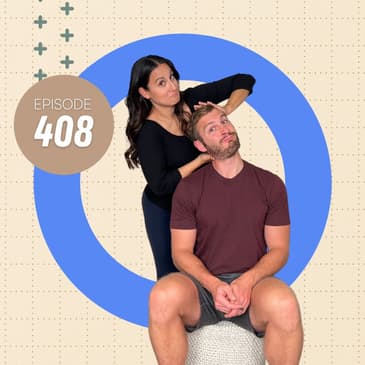
In this episode of the Optimal Body Podcast, Dr. Jen and Dr. Dom, both doctors of physical therapy, delve into neck adjustments, commonly known as "neck cracking." They debunk myths about spinal alignment, what neck adjustments actually do, and explain that the cracking sound is due to gas bubbles releasing in the joints, not bones realigning. They highlight the temporary pain relief and endorphin release from these neck adjustments, but stress the importance of combining them with exercise for long-term benefits. Emphasizing a holistic approach, they encourage personalized pain management plans and offer alternative methods for those uncomfortable with manipulations. The episode aims to empower women with knowledge for informed health decisions.
LMNT Electrolytes: Free Gift with Purchase!
Stay hydrated and energized with LMNT electrolytes—sodium, potassium, and magnesium for brain and body. Get a free gift with every purchase and try new flavors! Get your Free Gift now!
Free Week of the Jen Health Membership - Neck Plan:
Get a free week of Jen Health Membership! Access 12 plans crafted by Doc Jen, PT. We’ll match you with the best plan for your goals. Check it out today and use code OPTIMAL for a discount on your first month!
We think you’ll love:
For full episode show notes and resources, visit: https://jen.health/podcast/408
Also in this episode: body love, health optimization, pain relief strategies, exercise, health tips, physical therapy, neck pain, neck pain relief, mind body connection
Hosted by Simplecast, an AdsWizz company. See pcm.adswizz.com for information about our collection and use of personal data for advertising.
[00:00:05] Welcome to the Optimal Body Podcast. I'm Dr. Jen and I'm Dr. Dom and we are doctors of physical therapy bringing you the body tips and physical therapy pearls of wisdom to help you begin to understand your body, relieve your pains and restrictions and answer your questions. Along with expert guests, our goal of the Optimal Body Podcast is really to help you discover what optimal means within your own body. Let's dive in.
[00:00:29] Dr. Okay, so today we're talking about one of our favorite topics which is manipulations, adjustments, specifically of the neck. So getting your neck cracked to put you back. See if I can get another one. Dr. Ooh, mama. You had a great one. I mean that one was good too. Hopefully if you're listening, you could hear that. Jen just put her neck back into place. Okay. Dr. And so she should be good now. Yeah. You're fixed. Dr. Perfect.
[00:00:56] Dr. And it's funny like that this is a topic because I woke up this morning and my neck feels awful. I could hardly turn my head side to side. But even me, the first thing that I want to do is try cracking my neck, cracking my neck, cracking my upper back. Dr. And because we'll get into it because it feels good. And that's not anything that we will ever deny that getting a manipulation, getting an adjustment, cracking your neck feels good. That's why people do it.
[00:01:27] Dr. Right. We just want to understand or make sure that you understand the why and the reasoning and the research and you're making informed decisions about your body rather than someone else telling you what is needed for reasons that may not be true. Dr. Yeah. I mean, because I think one of the most common things is something that I said a couple times at the beginning, like, oh, it's putting me back into place. Dr. Right.
[00:01:51] Dr. It's putting my bones back into place. My spine is out of alignment. It's straightening it out. It's giving me all my natural curves or whatever it is that you've been told. And that's why I need to have it done. And that is not the case. There is no real evidence out there using imaging that has shown. Dr. Right.
[00:02:20] I mean, that's why I've taken theающ comprar because it's just blue сами. We need to be hydrating. This is key to pain.
[00:02:48] And one thing that I really use and have been using over the years now to help maintain my hydration, especially through pregnancy and postpartum when I'm feeling so clenched with thirst is element. And I'm telling you, drinking element, making sure that you have something that flavors your water, but also you're getting the electrolytes that you need for that extra little energy boost without going to the caffeine is so great for the body.
[00:03:16] Especially if you wake up, you're having a lot of calf cramping in the middle of the night or cramping just in general from workouts. You're going to want to make sure that you're getting some electrolytes in, especially as it's going to get warmer, the weather's going to start to change. You want electrolytes if you're going to be working out. It is so crucial to replenish the body. So if you have not checked out element yet, make sure that you go to drink element.com backslash optimal that supports our podcast.
[00:03:44] Plus when you check out and you get an element package, you also get a free sample pack with the purchase. So that's drink element, drink L M N T.com backslash optimal and check out the incredible flavors. I personally love the raspberry salt, but Dom loves the citrus. So find the flavor that works for you, check it out and start hydrating your body. All right, let's get back in.
[00:04:11] And, you know, we have to go back like in 2015, we did have the study that confirmed, you know, what is happening when we have a spinal manipulation. And what we're seeing is an exchange of pressure, right? So the joint is getting stretched and it creates a negative pressure, which creates a gas exchange and creates what's called a cavitation. And that is the noise that we hear, which isn't, we don't always hear the noise. Sometimes you still get that stretch of the joint and you don't always hear that cavitation or the noise.
[00:04:40] It doesn't mean that it wasn't effective or that you didn't get some stretching and some movement, you know, or some relaxation, some, you know, everything that we neurologically want to happen from this. Yeah. It just means that sometimes we don't always hear the cavitation, but what was interesting, there was a study where they kind of, you know, interviewed people essentially on what was happening with what they believed was happening with spinal manipulation.
[00:05:06] And 72% of the participants believed that the cracking sound was due to their vertebrae returning back to its normal position or the vertebrae rubbing against each other. Um, 5% attributed it to a ligament being released. 9% correctly identified it as a gas bubble forming as the cause. And 40% of the participants believe that the sound was evidence of a successful manipulation.
[00:05:32] So it just goes to show 9% of people. One in 11 people actually kind of knew what was going on. Right. Yeah. Which is kind of crazy. And again, in saying all this, we want to, we can't reiterate enough that we do believe there's a time and place for manipulations, manual therapy in general. We just want to kind of attack the message that's bringing up that, that 70%, whatever
[00:05:58] it was of people believed it was their joint returning back to anatomical position, which, which is, is not the case. You know, there's all this evidence that shows that's not the case. And so we just don't like when people use that messaging because it paints what we think is a harmful picture in people's mind of, I was out of place in the first place. I would, you know, there were joints of mine that were not right and needed fixing and what they did just fixed me.
[00:06:27] So then next time you're in pain, you're out of alignment again and you need to. And you're associating it and it continues to create that pattern, which can actually negatively, you know, impact pain cycles and pain patterns in our brain and our reliance on what we need to fix them. And in reality, there are all these great things that happen with manipulation where like Jen said, you get that stretch and that exchange of gas and general and some global relaxation
[00:06:57] throughout the body, you know, like regionally, but then also globally, because we also have this release of hormones that are happy endorphins that help reduce pain, increase relaxation around the body. So we actually get this more systemic and global effect, which I think is cooler than thinking that, oh, it made this one vertebrae that they told me is out of place, go back into place and line up and now I'm fixed. Like, no, it's actually cooler than that. Yeah.
[00:07:27] One, you weren't broken, which is great. But two, we get this amazing full body effect. And there, and that brings me to this one study that, you know, I looked at the importance of selecting the correct site to apply the spinal manipulation when treating spinal pain, myth or reality. I specifically am out of place at C5. Right. And so I'm only going to do this adjustment, which fingers will go in the correct place. That is true. You know, hands will go in the correct place from the clinician.
[00:07:57] But is it only affecting that one single area? The answer is no. Yeah. That was a really cool study. What they specifically said was spinal manipulation therapy given at a clinician. At the relevant site, they called it. Which is determined from the clinician based on either where you're saying you have pain or where they're saying that they're feeling. Or an image or whatever it is. Yeah. They're feeling like, okay, it's not moving well in this area. Right.
[00:08:23] So when you're going to do it specifically in this area, there was no difference at any specific level. And I've also heard prior to this and I did not go. Because they tested someone manipulating at that specific site, but then also someone just doing a global or general manipulation in that of the cervical spine. And there was no difference in pain, range of motion, disability measurements in all of the studies that they found that had low risk of bias.
[00:08:54] Exactly. And so what's important to note is that it doesn't necessarily matter how specific a clinician is getting or whether you think they're the most skilled or they're not or whatever it may be. It's going to affect basically the joints within that area. And then like Dom said, because we get this, you know, release of hormones and we're getting this relaxation and this general neurological effect that's happening from a manipulation,
[00:09:21] it can have a global effect of having this down stimulation response on the body, which helps to reduce our pain stimulus, reduce our pain sensitivity, help us to feel like we can move better, like we have improved mobility and like we can go do the exercises that maybe previously causes pain, which is what is so important about when and how to use this manipulation. Yeah. And that kind of brings us to what our ultimate takeaway is and when these should be a part
[00:09:50] of the plan. Like we said, like I said, first thing when I woke up this morning and could hardly move my neck, it's like, I need to crack my neck to release some of this tension to just give myself some relaxation because then I might be able to move better and do a few mobility exercises to open up my thoracic spine, my chest, find some more stability in my neck.
[00:10:13] And that is also supported by a study that Jen had found where they compared somebody doing like a group of people doing manipulation exercises plus exercise. Plus exercise. So manipulation therapy plus exercise. And they also compared that to myofascial release with exercise and just exercise alone. And the manipulation group actually performed significantly better than both the other groups.
[00:10:41] And this was specifically on people with tension headaches and associated neck pain. And the manipulation group showed statistically significant improvements in all outcome criteria when compared to the control group, which was just exercise alone. And we're exercise freaks as far as what exercise can do for your pain and for your body and your restrictions.
[00:11:05] And I also believe this, that add in a manual or manipulation technique and they can pair together to make even better outcomes. Right. And we can, you know, why would that be? Why? There's so many reasons why that could be the case that manipulation plus exercise, you know, really helped. But in general, we know that touch feedback is something that's so hugely important to the brain and to their pain response.
[00:11:32] We know that, again, we've talked about what manipulation really does. We talked about it in depth in the other podcasts if you want to go back and listen to that. But essentially, you know, helping us to feel that release of tension, neurologically switch things in our brain to help us feel like in that moment, I have the ability to move a little bit better. I have the ability to feel like I can do the strengthening and these exercises and not have so much pain.
[00:11:58] So that can be so huge when you're working with someone. Yeah. And so there is a time and place. We just need to be careful that we know it's not putting me back into place. I wasn't broken. I'm not fragile. I'm not unstable. It is a tool to help. Now, there's other tools. A lot of people don't like neck manipulations. I've run across so many people who are like, I don't like that sensation.
[00:12:23] And there's people who tense up against getting the manipulation. People who get them and are in a lot more pain and get a lot more muscle tension because of it. You don't have to do it. Yeah. You know, you can get more gentle mobilizations around the area. You can get massage that also gives you the feedback and the touch within our neck and upper back plan on Gen Health. I have you mobilized with a towel and I teach you how to do that.
[00:12:50] We do breath techniques to help to reduce that pain response. So there's other ways that you can get this neurological and touch response without having to do the manipulation if that doesn't feel good for you. Yeah. And like Jen said, if you're somebody who feels like you have been reliant, whether it's going to get manipulations or adjustments or going to another practitioner to get manual work but have never really had the movement plan to go along with it, go check out the
[00:13:19] neck and upper back plan on Gen Health. We've had countless testimonials about what it's done for people's neck pain or tension headaches like this study looked at. Um, you get a free week as a podcast listener. You can use code optimal to get an extra $5 off that gives you your first full month for $19.99, you know, less than 20 bucks. Um, we also have an ebook that we'll link up down below. It's more, more specific to back pain in general, but the neck kind of applies when it's, when we're
[00:13:49] talking about getting rid of back pain, spinal pain, really getting rid of back and neck pain. That's a 27 page ebook that we kind of have broken down into a five day course. You can go find that down below in the show notes. Yeah. So to wrap up, I think just having this idea that there's one way to treat neck pain is there, there's not essentially. So if someone is telling you, you have to get the manipulation or you got to get the adjustment
[00:14:14] in order to help your neck pain, that could or could not be the fix for a lot of people. And there was even a study that looked at comparing, you know, uh, thoracic or cervical manipulations to non thrust manipulations, meaning just mobilization kind of massage around the area. And they kind of looked at all of these studies and tried to pick out the most pertinent studies that reduce the amount of bias and had the best evidence.
[00:14:43] And it really revealed that there's no difference between doing a adjustment or manipulation versus doing just mobilizations that doesn't create that cavitation around the area when it comes to pain, intensity, disability, cervical range of motion, and really making a difference. So essentially it is always a personalized plan in terms of what works best for you. And that's always what we say.
[00:15:10] And there's no one way to treat any kind of pain. There's no, everyone needs an adjustment and manipulation. It could be a part of the treatment, but know that it's not putting anything back into place. We have to use our muscles, use our, our system as a whole in a different way in order to create a different outcome. And no one can do that for us. They can only give us the tools to help desensitize the pain. And then we get to do the work on our own.
[00:15:38] Hopefully that helps you ease your mind about what can be possible and helping your neck pain. And please pass this along to anyone who might be confused about what neck manipulations really are doing within the body and how they help or maybe don't. And of course, if you want to try the neck and upper back plan, use code optimal. When you're getting started, you'll get a little discount plus a free week. It's only a two week course and we have three different phases to continue to progress and move into. I really hope you try it out. It's helped so many people.