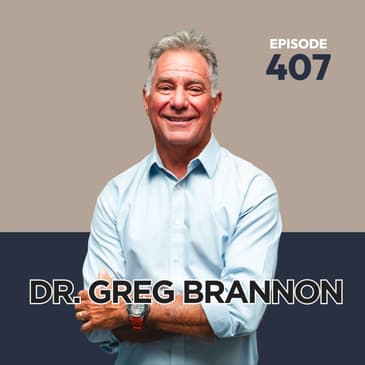
In this episode of the Optimal Body Podcast, hosts Doc Jen and Doctor Dom, both doctors of physical therapy, delve into hormone health with guest expert Dr. Greg Brannon, an MD specializing in bioidentical hormone replacement therapy (BHRT). Dr. Brannon discusses the critical roles of testosterone and estrogen in overall well-being, addressing the alarming decline in testosterone levels due to environmental factors like plasticizers. He emphasizes the importance of a holistic approach to health, covering sleep, nutrition, exercise, stress management, and hormone restoration. Dr Brannon emphasizes how hormone replacement therapy is vital to optimal health for men and women in today's modern society. The episode offers valuable insights for women seeking to optimize their health through informed choices and proactive care.
VivoBarefoot Discount:
Support your feet and ankles with VivoBarefoot shoes—perfect for any occasion! Boost mobility and strength from the ground up. Use code OPTIMAL20 for 20% off. 100-day trial included—return if you’re not satisfied!
**Vivo offers a 100-Day trial period. If you are not completely satisfied, you can send the shoes back and get a refund.
LMNT Electrolytes: Free Gift with Purchase!
Stay hydrated and energized with LMNT electrolytes—sodium, potassium, and magnesium for brain and body. Get a free gift with every purchase and try new flavors! Get your Free Gift now!
- Dr Brannon's Resources and Links:
- Optimal Bio Website
- Dr Brannon's Instagram
- Optimal Bio Youtube Channel
- Free Hormone Handbook
We think you’ll love:
For full episode show notes and resources, visit: https://jen.health/podcast/407
Also in this episode: hormone replacement therapy, women's health and nutrition, testosterone, testosterone replacement therapy, menopause, women's health and fitness, health tips
Hosted by Simplecast, an AdsWizz company. See pcm.adswizz.com for information about our collection and use of personal data for advertising.
[00:00:05] Welcome to the Optimal Body Podcast. I'm Dr. Jen and I'm Dr. Dom and we are doctors of physical therapy bringing you the body tips and physical therapy pearls of wisdom to help you begin to understand your body, relieve your pains and restrictions and answer your questions. Along with expert guests, our goal of the Optimal Body Podcast is really to help you discover what optimal means within your own body. Let's dive in. Now the number one thing I always am asked when it comes to talking about Vivo Barefoot shoes is what shoes should I get for whatever activity I'm going to get.
[00:00:35] that I want to do whether it's running or working out or just going for a walk and wearing them every day. So I want to break down so that you help understand what shoes I kind of recommend for different categories. Now also remember that these are barefoot shoes meaning there's not a lot of structure so you really can't go wrong if you see a style that you like it's going to be adaptable for no matter what activity you want to do because that is the beauty of barefoot shoes. They're not about structure it's about function and getting your
[00:01:05] foot back to performing the way it's meant to help support you no matter what you want to be doing. Now they did just recently come out with a running shoe. This is a barefoot running shoe. It is called the Primus Flow so I would check that out if you are a runner. Now for everyday workouts or just running around doing whatever cross training I always recommend the Primus Light Knit. These are so incredibly comfortable. My go-to shoe over and over again and something that is great to start with.
[00:01:35] Now if you want a shoe that you want to go out and about and still look cute with and have a sneaker that people are like hey where is that from? It's going to be the Gobi 2 Sneaker Premium Canvas. I love this shoe. I always get compliments and it looks so good. And with it being warmer now and especially as we get into summer if you're going to wear sandals ditch the flip-flops throw those out they're not good for the feet. I'm going to tell you the Sensus Yin sandal is
[00:02:05] your go-to. This is the one you want to get because having a back strap is so incredibly important when it comes to sandals so that they actually stay on your feet and you're not gripping in your toes to keep your sandal on. Now the other great thing about these sandals is that they have an adjustable strap on the back and the top so that it fits to your individual foot. How genius is that? This is so key. So again use code OPTIMAL20 and check out any of these shoes or any other pairs that you might be eyeing.
[00:02:32] I hope you're ready for this incredible interview with Dr. Greg Brennan. He is a wealth of information and goes over so much education within this podcast. I'm excited for you to learn with us. Now he is an MD, FACOG, ABAARM, FAAMFM, lots of letters behind his name.
[00:02:55] He founded Optimal Bio in 2012 and serves as a medical director overseeing eight offices across the South. Now Optimal Bio is a bio-identical hormone replacement therapy or BHRT, medical practice dedicated to returning people's bodies to optimal hormone levels they were initially designed to maintain.
[00:03:14] He became interested in BHRT method during his 30-year career as an OB gynecologist and uses his experience to educate others on taking ownership of their health. Dr. Brennan and his team at Optimal Bio have treated thousands of patients and the results have been astounding.
[00:03:33] Dr. Brennan is also the author of the Amazon bestseller Restore published in March 2024 and the 2020 published book The Hormone Handbook, Optimizing Your Health Through Bio-Identical Hormones, which he gives you a free access download if you pay attention and listen throughout the entire episode. So I know you're going to learn a ton. Make sure you're really tuning in. Go back and watch this and listen to this if you need to. It is such a great episode.
[00:04:03] Well, Greg, Dr. Brennan, I need to call you Dr. Brennan once and then I'll cut the formalities after that. Thanks so much for spending time with us. We're excited. We haven't had someone who has specifically come to talk about hormone replacement therapy. So we're excited to pick your brain a little bit. Oh, my honor. Thank you both of you. Yeah. Thank you for being here. And, you know, I don't think we've even had OB specific. We had Dom's dad on who is actually a family practice doc who specializes in OB.
[00:04:31] Yeah. So he practices life to death. But we haven't had specifically a gyno or an OB on and specifically one who's dove into hormone a lot, hormone health. So can you tell us, like, what was your your kind of shift to really diving into helping more so on the hormone and holistic pathway? Yeah, that's a good question. I've loved women's health care.
[00:04:59] I was an OB. I love delivering babies. I enjoyed it beyond words. And women are pretty tough overall. And gynecology is a great specialty because there's a multi specialty within those specialties. And I enjoyed the variety of that. And I really enjoyed the optimist. I thought I'd be a surgeon, which I love surgery, but it's not really a happy field. And for myself personally, delivering babies, even though it'd be a high risk, I really enjoy the happiness.
[00:05:23] But the problem I had with women is this biasness that, quote unquote, they're crazy because they have a uterus. And you look back at the definition of a hysterectomy, they named it that because if they removed the uterus, then your hysteria would go away. Cutting out the crazy. Yeah, it's crazy. And then the treatment for perimenopause and menopause in America today are antidepressants. And I have all these lovely women coming to me saying, I'm not depressed. I just feel different.
[00:05:53] And you're like, you'd never tell a type one insulin diabetic, eat right, workout right. You would tell them that you tell them that secondarily type two diabetics, you try lifestyle, but type one, their issue is they have no hormones. And the problem is, is we have no hormones anymore. And that's the thing that's really frustrating. The most abundant active hormone in the human body is not estrogen. It's not insulin.
[00:06:23] It's not cortisol. It's testosterone. And the level's literally three to six times lower than it was 60 years ago. So this body we have is now working at 20% of fuel it had 50, 60 years ago. And that's leading to depression and dementias, cardiovascular disease, infertility, decreased libido. It's not because I'm depressed. It's because I have lack of my fuel. I tell everybody the same thing.
[00:06:52] We're all Ferraris, but you need a gasoline and you need the fuel source and you need combustion. And that's the thyroid. So to me, thyroid and the sex hormones are the fuel for every other part of the body. Quick pause from the interview to talk about hydration. And I'm not just talking about drinking enough water. I'm talking about getting back in the electrolytes that we are losing naturally throughout the day without even realizing it. We're getting into the summer months. It's starting to get warmer.
[00:07:21] And you'd be amazed at how much sodium, potassium, or magnesium we naturally lose through our skin, especially on these hot days. And that's why Jen and I use Element electrolyte drink mixes every single day to make sure we're staying hydrated and replenishing those electrolytes that we're losing. Sodium, magnesium, and potassium are so vital for so many of our body's processes.
[00:07:44] Optimizing our electrolyte levels can help with things like brain fog, fatigue, headaches, muscle cramps, sleep, and even bowel movements. But that's not the only reason we take Element. We also do because it tastes so darn good and will keep you coming back to that water bottle throughout the day. If you order through the link in our show notes, you will get a free sample pack with every single order. So you'll get all the flavors to try out. And then when you inevitably come back to order more, you'll know which one you like the best.
[00:08:14] So head down to the link in the show notes. That's just drinkelement.com backslash optimal. That's drinkelement spelled out L-M-N-T dot com backslash optimal. Okay. Let's get back into the interview. That was a fabulous setup. And I, yeah, I mean, I've never heard of anyone really highlight testosterone as the fuel. I mean, people. Every single cell in the body has receptor for testosterone. Wow.
[00:08:44] Every cell has aromatase, the enzyme that converts estradiol based upon its need. Prostate has none. Bone has a lot. Brain and heart have a lot. So it depends on what the need has. So the intracellular control is the aromatase and how much estradiol you have. But every receptor has testosterone. And we were taught before that all sex hormones had receptors in the DNA, which is true. But they also, they call it genomic receptors.
[00:09:12] But they also have non-genomic on receptor sites on the surface of the membrane now, which is very, very important in brain. Probably that's 70% of our patients who come here on antidepressants are often four months. Because the brain is actually talking better. It's called neuroplasticity and symplasticity, the higher testosterone is. And remember, estradiol is a metabolite of testosterone. Women make 50 times more testosterone than estrogen. That's why I hate this phrase, male hormone and female hormone. They're human hormones.
[00:09:41] Again, I think that's setting the table perfectly. Can you, I feel like hormone health and hormone balance is just becoming kind of this umbrella term that people will use and say, oh, you need to balance your hormones. Can you explain in your elevator pitch what hormones are in general and why they're so important to human health and longevity? Hormone in Greek just means messenger. So it's a way to communicate information. It has a cascade of that.
[00:10:11] A man's major testosterone is our number one hormone. We also make estrogen. This is important. In humans, testosterone becomes estradiol in both men and women. But there's three pathways that your body eliminates estrogen. The two, 16, and four. And why that's important is because estrogen, estradiol has two receptors, an alpha and a beta. And alpha, we'll call it, they're both good, but alpha overdose could be a problem.
[00:10:41] Maybe breast cancer, prostate cancer. It's a proliferative way. Beta negates that. And the three pathways the body leaves, 16 and four, actually alpha, they're bad. They're potential growth for breast cancer and prostate problems. But the two pathway is the pathway that's neuter or out of beta, which actually protects the body. So that happens in everybody.
[00:11:03] But as testosterone increases in both men and women, estrogen, estradiol increases, which goes back to the brain, the hypothalamus, and says, we have plenty of testosterone. You're great. You can stop making it. The problem is this beautiful, closed system has been attacked from the outside by estrogen mimickers or endocrine disrupting chemicals, which look like estrogen. Okay. Phthalates, PVC piping, atrazine. There's hundreds if not thousands of them.
[00:11:32] So what it does is it tricks the body. We're hyperestrogen, which then tells the body, since we're hyperestrogen, we don't need testosterone. So your generation of tests, there's a range, there's a bell curve, and they just draw 10,000 people, and they get a bell curve of what's a healthy number of testosterone. In a woman today, it's roughly 4 to 40. When I was in school, I'm 64. The range is roughly 70 to 250. So why is it okay for your great-grandma to be 200, but you're okay to be 5?
[00:12:01] There's got to be something around the system. Men today, some universities here on the East Coast say a man is healthy at 170. Because remember, that was a woman's level 50 years ago. And today, so when I was in school, a man was roughly between 900 and 1,400. Now a man's roughly 100 to 500. And historically, 500 was considered extremely low for a man and 25 for a woman. Now we call those norm because everybody's sick.
[00:12:31] It's like if we all were diabetic, we'd call that normal. We'd never call the disease normal. But aging or low hormones is the precursor to multiple disease processes. Dementia, atherosclerosis, osteoporosis. All those things are a lack of hormone. Testosterone does hundreds of functions. The biggest thing is slows down aging. Wow. I mean, this is fascinating because it's like, especially what we hear a lot is talking about
[00:12:59] estrogen and is talking about, you know, oh, postpartum, estrogen dives, prayer menopause and menopause, estrogen dives. And that's why we're getting all these symptoms and all these things that are happening. But you're on the flip side just talking about testosterone. So can you like help understand like, okay, if estrogen is going low, why do we need to focus on progesterone? Okay. So we're going to go women. Men are easy. We're just flat. Testosterone becomes estradiol.
[00:13:27] Estradiol and they're both used in proper numbers in their cells. And then we pee it out or poop it out. Easy stuff. So a woman's cycle, a young woman who's ovulating, their estrogen level changes every day. It's low on their cycle. It peaks around 200 to 400 milligrams per deciliter right before ovulation. And then it goes up, down, back up again. That's the 30th cycle. Progesterone is zero to ovulate. Then it goes up on day 21. It's peak day and it goes back down.
[00:13:55] That's a beautiful cycle. But women, but people think sex hormones, testosterone, estrogen, progesterone are only for fertility. No, every cell in the body needs it. So there is a, even if a woman did not cycle a menopause, there is benefits for making testosterone. You make bone, you make brain, you protect the breast. So when we talk about this, how important testosterone is, because it's the precursor to the metabolite estradiol. So they work in unison.
[00:14:23] So the balances and the progesterone in a woman's, all three of them, is different parts of cycle of different benefits. But there is a, in my menopausal women, I'm trying to mimic day 21 of their cycle. That's when their highest progesterone, their highest, their estrogen coming down, but not too high and their testosterone higher. And what's very cool about what we do here, we treat symptoms at the root cause, not numbers. These are just ranges and limits. But I really want to stress again.
[00:14:52] Nobody's looking, my new book, I'll restore it on Amazon because I spend time going over the ranges. Why four or five generations ago, we were three, five, six times higher. That's the issue. That's the issue. All the things we're doing are band-aids on the root cause. Again, back to my, I know it sounds redundant, but you give a type one diabetic insulin first, then lifestyle. A type two diabetic makes too much insulin. The receptors are not sensitive enough.
[00:15:22] So lifestyle is the first cause. So that's what I'm trying to do here. Wow. So when we're talking about, you mentioned how there are so many things in our environment, these endocrine disruptors, the things that mimic, you know, how these hormones look in our body. So what are some of the major ones that you think are plaguing everybody's environment right now? The biggest one are plasticized or phthalates. Those are the biggest ones. Since World War II, there's been 80,000 new chemicals on the U.S. market.
[00:15:49] And you can't do studies on all of them until generations occur, right? If we were in a study and we were doing rats or flies, they multiply fast. You can see results of that. We can't see it overnight, right? So like thalidomide, they gave that in the 40s and 50s to decrease miscarriages and an increased miscarriage and cause limb defects. So we don't see things until later on, right? So the whole purpose of this is to understand the body optimizes at a certain number.
[00:16:18] But the big ones are phthalates. Organic pesticides, I mean, pesticides like atrazine has been shown to actually make male frogs actually produce eggs. Phthalates, you have PVC piping, but phthalates do a couple of things. Phthalates block the production of testosterone, increases the enzyme aromatase to make more of your endogenous estrogen, and also mimics estrogen. So it makes a very hyperestrogenic state. I believe it's the culprit for fibroids.
[00:16:45] I believe it's the culprit for endometriosis. I think that's definitely a root cause for this. And men, oh my goodness, our fertility rates have decreased 1% per year since 1970. 2% per year since 2002, which does not get a lot. When you add it all on, it's literally our sperm count is half. Your sperm count generation is half my generation. They predict by 2050, men in the Western world will be infertile.
[00:17:13] Right now, 4% to 10% of all men are infertile. I mean, it's crazy numbers. And I love also, and I appreciate that you're putting it on the men and not just the women as well when it comes to fertility. In years. Of infertility issues, 45% are men, 45% are women, 10% are no. All right? So it's a couple issue. It's not a one-person issue. And even if it is a sperm count, it's still a couple. If it is a tube issue, it's still a couple.
[00:17:41] It's very important that babies take couples. It's not your fault or your fault. That is the worst way to look at it because pregnancy, 25% to 50% of women have miscarriage. So they're happiest day ever they're pregnant. Their joy of being pregnant and within a week or two or six weeks, they lose a baby. These are real issues every day. And we've got to look at reasons why this is occurring. And I do believe it's the environment is really the culprit to most of this stuff.
[00:18:09] So if people aren't familiar with phthalates and what that means and what they're taking in, can you break down like, okay, where could this be direct examples of what you have within your environment? A plasticizer is what makes plastic soft. Okay? Tubing, hosing. Again, PVC piping in our house. Okay? Atrazine, glyphosate that's spread in our food. It's like, that's why I believe water filters are the crucial, number one, for overall health.
[00:18:39] I love the Berkey water filter system. It uses silver. It gets rid of fluoride and all the heavy metals and all the viruses and toxins. So I think water is, even when you bathe it, so water is crucial. Using inert vessels like glass. Glass is inert. When I used to work in a pharmacy lab, we knew the plastic and the tubing would actually suck up some of the medicine. So you had to pre-coat the IV bag and the IV tubing because you knew you were going to lose some.
[00:19:08] So these things are out there for decades, but we don't know the results. These microplastics are real. And this is the culprit. This is really the culprit. Wow. So bathing, I mean, not bathing, but using a water filter. What else is there to do? Because I know that, and you see the reports come out all the time, all of the microplastics that are found in all the tissues of our body. Like, I feel like in a way you're fighting a losing battle. We are, but I want to be very optimistic.
[00:19:38] Our body is amazingly made. The liver, the kidneys, it's amazing what it does. And that's why, we'll focus later on why I use bioidentical. Because when you use a structure that the body recognizes as same, it knows the potency of it. It knows how to metabolize it. It knows how to utilize it and eliminate it. It's very, very important. Pharma cannot own an organic molecule. So they got to tell me that the molecule they make is superior to what your body makes. I don't agree.
[00:20:07] So that's why it's very important to say bioidentical. Now, when you talk about different examples, I'm a very optimistic person. But you've got to go back to the basics. Clean filtered water. Try to eat grass-fed beef. Try to buy truly organic. And I know it's hard in packaging sometimes. I'm not a pro at that. But I do believe more local, more better.
[00:20:32] When you get this big, huge monolith called the government, and they're trying to make some rules out of D.C., that can't cover 350 million people. And I really believe, this is my passion, is on liberty, is the king and queen is in the mirror. So responsibility is dependent upon us. So there's enough information out there for us to ask questions. And if you get a doctor that will not listen to you, change doctors because you're the one in charge, period.
[00:20:58] And information, like if you go to a doctor, like I really love to say, go to Rumble, go to Google, study, research yourself. I mean, I've written three books on this. To me, it's the knowledge. If you say, hey, Greg, I'm Dr. Brand and believe what I say, you're an idiot. That's not what you do. You've got to quiz the crap out of us and ask why. You've got to ask, you know, are you on? Is your wife on? You know, what are you doing? These questions should be answered. And not because I'm the doctor, I know the answers.
[00:21:26] Because number four cause of death in America is FDA-approved medication. Let that sink in. 450,000 people a year. And so there's side effects to everything. And I think it's important that we ask questions. So clean water is obviously not, it's a no-brainer. How we get there is the issue. And I think that's why I'm grateful that there's our home system to do that. Eating organic, it's very expensive. And I understand that. I have seven kids. It's a big deal.
[00:21:55] But we have to ask these questions because putting things in boxes may become easier, but it actually gives us more chronic diseases. And I'm sure you've heard some of the books, you know, Tucker Carlson talking to Kenan people. And you look at all the literature out there with pharma and big agriculture. That's why it's important to get, I think, as local as possible and ask simple questions. I absolutely love this. And I also love that you give permission for people to not challenge their doctors, but ask more questions.
[00:22:23] Because a lot of times we've been conditioned to just like, oh, this is what they said. Like, I guess I have to listen and I have to follow. And I remember we've gotten pushback from, you know, from doctors who we do just want to educate ourselves more and ask more questions and we get pushback. Well, I'm the doctor. You should just listen to what I say. And it's... I almost got asked to leave the room because I was asking questions. She stopped listening to me. Don't get me wrong. We hire attorneys, electricians, and plumbers. I got it. I'm with you.
[00:22:53] But we ask... We do our research. We ask, who's your use for that law case? Who's your engineer? Who's your... We should do the same thing for doctors. And the thing about it is, is if you think I learned everything in four years of medical school and four years of residency, that's insane. And we have this internet, which has either a point of a finger. I could read volumes of papers. And I'm really big in that. You know, again, I've written books on this, but I got patients.
[00:23:19] I sat home with articles to read, and I always say, look for other things. Because this is in my body. This is in my wife and my kids. If I miss this, let me know. It took me when I first heard about what I do, these hormone pellets I place. And then you since 1935, I knew nothing about them. And I used to actually teach at pelvic surgery years ago, and I knew nothing about this. It's... I spent two years studying to see the science behind it. And it really is amazing to me how we just would rather take a pill or stick some in the
[00:23:49] arm without asking what's in it. And I believe... I'm caring if people stand on COVID, but the COVID thing was, did the best thing in the world to educate people to ask questions. That's the greatest thing that happened to COVID. It's no... Give me why. I want to know why. So taking a shift into it, you've brought up a couple of times this bioidentical hormone replacement therapy and why this is so much more beneficial than traditional or synthetic hormone replacement therapy. Can you talk us through a little bit of what that looks like and why it's different?
[00:24:18] In 1931, scientists isolated testosterone. In 1939, they isolated estrogen. That's how it is. It's built on the backbone of cholesterol. Cholesterol is not our enemy. It's our friend. Okay? Cholesterol is 75% of your brain. It's the backbone for every sex molecule we have. It is... Without cholesterol, we're dead. Okay? Period. Oxidized cholesterol is the issue. And that's from sugar, not from... It's from sugar and omega-6 fatty acid. Seed oil. Seed oils and sugars are poison.
[00:24:48] Okay? So in 1935 was the first study ever done. And they gave pellet. Now what they did is they got the hormone, they dehydrated it and crushed it and made it into a pellet. So it's just pure dry hormone. And they injected it in women who had hysterectomies because they knew women's ovaries made testosterone. That was the first series ever done. 1937 was the first series ever done on men. Same thing. Dried pellet.
[00:25:17] That's dried and condensed. And why is that important? The structure of the pellet. Picture a 4 million by 12, like a Tylenol tablet. Okay? The actual structure is the genius behind how it works. Because it's condensed. As you put it in fat under your skin, it hits the fluid. It dissolves at a steady rate. Okay? So it peaks in 48 hours and now it's steady. And goes down over a 3-6 month period. It goes down slowly.
[00:25:48] Injections do this every three days. And why the up and down is bad is if it's steady, the aromatase enzyme is in sync. So the estrogen can be made so you can eliminate it. When it's not in sync is when you get roid rage. You get gynomastia. You get those issues because that is an estrogen issue, not a testosterone issue. So you want the steady state of it. And from 1935 to 2002, hormone replacement in general was very beneficial.
[00:26:18] The famous WHI paper came out. In 2002. Which, by the way, has been destroyed in literature since it came out. Because they did not use estrogen. They used primarin, which is pregnant female horse urine. And provera, which is medoxyprogestin synthetic. Synthetic progestin increases breast cancer up to 60%. Bioidentical decreases by 10%. Because every molecule to position it in matters. And when it's off, throws off our system.
[00:26:46] So bioidentical Mayo Clinic defines it as body. Recognizes as saint. And I can't stress the importance of that. Yeah, I know it's man-made. I know it's synthetic because you're making it. But your body thinks your testicle is making it or your ovaries making it. And that's crucial. And there's no peaks and valleys. Because it's not in the arm. It's not in the muscles. It's not in the depot. So it's in your fat, which is basically your body thinks you have an extra testicle or an extra ovary. So when do you, like when in the lifespan, do you recommend someone starting to look into?
[00:27:16] 18 years old. Identical. 18. Yeah, it's crazy. Can you talk about why? Is that men, women? Is that everyone? This is, this is, when I started the practice, I believed I would be seen. I'm 64 now. I probably, I thought perimenopausal menopausal women and some men with androgen deficiency as an age. I was very fortunate to have a lot of babies in our military community. My first book, I had 35-year-old military men who read my book.
[00:27:44] And these guys look like Hercules, okay? And they're saying, Greg, I read your book. I got every symptom. I'm going, no way. That's I mean, a path to check younger men. Depression. Anxiety. No motivation. That's why I see people, regardless of age, 18 to 90, same symptoms. Brain fog, anxiety, mood swings, always tired. So the answer is, here's Ritalin. Here's Adderall. Here's your Zoloft. Here's your Prozac. Here's all those things.
[00:28:12] Not checking the hormones. Now, if you're an 18-year-old boy and your level is extremely low, the average 18-year-old boy I get that's complaining, their levels are under 200 all day, every day here. Every day. So why suffer through life when you actually get their levels proper and you see their motivation comes back? So if they're out of range, if they're a low number, you also don't treat for muscle. I can't stress you how muscle and libido is like the ninth and 10th reason people come. That's like way down the list.
[00:28:41] It's not close to the top of it. But you do get physically in shape. Your mind's, you have the energy level goes back. It just goes back. That's true. But people are coming in for, again, brain fog and tiredness. And that can at any age. These young kids are on computers. They have no dopamine. They're looking at computers all day. They're not outside. They're playing augmented games or virtual games. That's the problem. We're not eating the attack of red meat. All these things have lowered it. So on top of the chemical problems.
[00:29:10] So yeah, our average age person is 37, which surprised me as well. We've done over 100,000 placements. We have offices from Texas to Florida to the Carolinas and Virginia. Wow. So if someone starts getting on top of this early on in life, is that going to help significantly with, say, when a woman starts to hit that paramenopausal age? If they've been focusing on this earlier in life, is that going to significantly help the symptoms when they start to hit menopause?
[00:29:37] I started doing pellets and women on postmenopausal when I started because they're hypothyroid usually and they're low hormones. That's when I started doing this. Then I got to hit menopause. But the thing about this is, again, it goes back to this. It sounds redundant. It goes back to how would an insulin-dependent diabetic feel? You have a blood sugar of 800. You feel you're ready to get a coma, ready to die. You give insulin within minutes. You're back and alive. That's how these people feel.
[00:30:05] We have a 97% retention rate. Okay, regardless of age, regardless of male or female, nobody's forced to come to us. We put their levels optimized and they can't miss. They come back 97%. We have no contract. You're not committed. You don't pay in advance. None of that stuff. I produce, you stay. If I don't produce, you leave. And that's what our reputation is. Is this something that you then stay on? Like, say, you started early.
[00:30:34] Is this something you stay on for life? Is this something that you can cycle through? Is this something that you can integrate? Another thing, again, you would never say you're old enough for no insulin. You would never say that. I'm old enough for no insulin. So the answer is, yeah, you stay on for life. If you want to go on, you don't have to. But the answer is, you see the difference you go off. And you could be on this. Baylor University wrote a great paper on how young men, because now it's become an epidemic in young men. Because here's the problem with testosterone replacement therapy. 40% of men in 10 weeks have no sperm.
[00:31:04] Okay, 40% will have no sperm in 10 weeks. But if you stay on the pellets and there's ways to treat this, there's a clomid or HCG, you get to 80 to 90% pregnancy rate and stay on the testosterone. There's ways to do it. All right? So it's like, I always repeat the same thing on the insulin part. It's the most abundant hormone in the human body should ever be low. Our oldest person right now is 93. Our youngest is 18.
[00:31:32] So the question I have then comes to, like, how can we or why isn't this mainstream? Is it cost prohibitive? Are there certain insurances that are covering these things? Good question. Dr. Mark Richards, he was a consultant for the White House and Obama's administration, wrote a book called Nobody Wants You Healthy. And in his book, he talks about his exposure to pellets. And in his book, he talks about this.
[00:32:01] He said, before COVID, these are COVID numbers, America spends $2 trillion a year on health care. 90% is on chronic health care. He believes that if you have optimal testosterone levels on pellets, you could decrease health care by up to $1 trillion a year. There's no incentive for that to occur. That's his conclusion. And it makes sense. Is it cost prohibitive? It's $4 a day for a woman, about $6 a day for a man.
[00:32:30] So are you going to pay now or pay when you have a wheelchair? I don't know what that thing is. I wish I didn't exist. I wish this company, OptoBio, did not exist because we didn't have these plastics. We didn't have this environment. We didn't have this in this way. But what we've done in lives, and you get 70% of people off well, Butrin and Prozac and these medications. Their libido's back. Their energy level's back. Their N3C's back. Their belly fat's going down.
[00:32:58] Metabolic disease goes away because, again, visceral fat, blood print. All that things go away when the fuel's proper. So to me, it's a no-brainer. But, again, I'm going to tell you very clearly, I was a huge skeptic. It took me, again, two years of study if I put it in my body at 50. I wish I put it in my body at 40, but it is what it is. Right. And when it comes to starting to understand, okay, this is important.
[00:33:23] But just like you talk about how you would take insulin and then focus on the environmental factors that you can do outside of that. So is that still what you preach here? Yes, of course. Of course. There's no silver bullet to have five big backs. Of course not. It's a whole thing. But it goes back to this. We're never anybody's first doctor. We're their 10th doctor. Right. We're the last, you know, I went, I went, I'm not feeling better. I'm not feeling better. I still got migraines. I still got headaches. I still am tired. I'm still this. All these things. Right.
[00:33:52] So I come, I'm, once we're established, about 85% of our patients come from patient referrals. They just, they, they were told they would do well. And so they use their symptoms to come back. It's what I tell people is we're all, we're all Ferraris. We're all Bugattis. What are you going to say? If you sit in the chair and you say, Greg, I washed my, I washed my Ferrari. I put air in my tires. I waxed it. It's just not driving. And I asked a simple question. You check your gas tank. Okay.
[00:34:20] Now, once your gas tank is full, wash your car, wax your car, put it in your tires, change the filters. But the first thing I believe is Dr. Atiyah, you know, talks about four things to help your life. And I agree with him, but I added one sleep, learn how to sleep properly, sleep hygiene. There's nothing more important than sleep. Eat. I believe the fad is the food pyramid. I believe eating nine to 12 grains a day. That's a fad for 6,000 years. We ate eggs and meat and beef.
[00:34:49] So I'm a, I'm a big believer in that. Number three, exercise, lift heavy things twice a week, walk and be functional, flexible strength. That's important. Balance. As you get older, I mean, stand on all these things. I guess I'm an old geezer, right? Third thing, fourth thing is remove stress. Try to try things, try prayer, try whatever helps you with stress. But I don't believe you can do those four things without the fifth thing. Restore what you've lost. When you restore what you've lost, these things go away. And I don't care.
[00:35:18] We talk about diabetes, cardiovascular disease, breast cancer, prostate cancer. Everything is superior when your levels are optimized and balanced. There's not one paper showing you're healthier with lower values. Now, when they throw in all TRT with the synthetics, this is important. There are three classes of synthetic TRTs. There's the esters, the ciprinates, the propinates, the ethyranates. They're good. There is 19-nortestosterone, nordandrolone. There's injections.
[00:35:46] And there's D-balled, oral, 17-alculation. They all work. In fact, some of it can make you really huge, right? But there's side effects to those. Slight increase in blood pressure, maybe slight increase in blood clots. But the big one, there's a book out of Belgium called Sex Hormones and Urgent Diseases. It talks about those three categories increase neuronal hepatosis or brain cells dying off sooner. And they're fighting higher dimension Alzheimer's in that arm of synthetic TRT.
[00:36:15] I still believe the benefit outweighs the side effect. But the BHRT actually has no increased blood pressure, no increased blood clots, and just the opposite. It makes more brain, okay? Just because things are similar, it makes a light. So the bioidentical one is actually beneficial. Anti-Alzheimer's, anti-dementia. Those are things, anti-cardiovascular disease, inflammation. All of those things are beneficial.
[00:36:40] So we can sit and take any system you want, and I can walk you through how optimized testosterone and estrogen progesterone optimizes your health. And that's, I was going to say that next. And like you said, when you replace what you've lost, I feel like many people start to get motivated to do the other things. They have the energy, so they're like, great, I want to work out. I haven't felt like working out in 10 years. I'm going to go on a walk, a jog, a run, a hike, lift weights.
[00:37:05] And then it's almost that positive feedback loop because then you can sleep better because you're using your body how you should. And my last thing was you've mentioned a few things throughout, like hyper-hypothyroidism, insulin resistance. I'm sure once our testosterone levels are optimized, we start to see some of those other thyroid dysfunctions or thyroid hormones. Sorry, other hormone diseases. Thyroid works very closely with the testosterone together. Also, thyroid is very important.
[00:37:35] When you look at the older ranges again for that, the ranges have changed. In 1979, they took iodine out of our food and replaced it with bromine. It's a cheaper halogen. So you look at the periodic table, you look at the halogens, you go fluoride, chloride, bromine, iodine, a statin. They go from smaller to bigger. All those halogens are poison to our body except for one, iodine. So now you have fluoride in the water that lowers IQ. You have iodine that decreases IQ.
[00:38:05] And we used to eat 200 times more iodine. 200 times higher iodine. Japan still does. Their breast cancer rate is four times less than ours. Their prostate cancer is three times less than ours. Their hypothyroidism increased 800% in women in America because think of there's two major organs in women that need iodine. Well, obviously, your whole body does. But thyroid and breasts will battle out. That's why postpartum depression occurs right after because the breasts are taking the iodine to make milk. So it's a competition.
[00:38:35] We went from 200, we went from 20, about 25 milligrams of iodine a day to 120 micrograms. That's all these repercussions of this stuff. And so I think it's really important to get your thyroid optimized. T3 is the most important hormone of the thyroid. T4 has no pure function. It converts to more T3. And they call it 2.0 for your T3 normal. Well, 4.5 is much more efficient. Your hair gets thicker. You don't get bloated. You should get an alcohol all the time.
[00:39:04] Thyroid is crucially important to tie together with the sex hormones. They work synergistically together. Wow. I mean, so fascinating. And so much that I feel like it's just it could be very eye opening, hopefully, for a lot of people who are feeling a lot of symptoms and been told a lot of things. And then now, OK, here are some shifts that I can practically take to start to see some massive changes. I mean, that is that is the goal. Right.
[00:39:29] I was just going to say when it comes to optimizing longevity as well, not only are we talking about, you know, obviously, rebalancing our hormones and then all these other lifestyle factors that we want to include. People always ask as well about supplementation. Are there supplements that we should be taking to also help, especially because we're missing some of these, you know, especially iodine? 100%. I mean, I heard you know Sean Baker from the carnivore diet. Have you heard Sean? He wrote the book Carnivore Diet.
[00:39:58] He was on a podcast a couple years ago. He takes those supplements because he thinks he gets it off from the food, which I agree. The problem is our topsoil has been destroyed. OK, so the way they do crops now, we're not getting the nutrients. I'm a big believer in certain key ones. Iodine being one of them. Mammals need vitamin C and humans don't make vitamin C. Vitamin D affects 2,000 of our 20,000 genes. Vitamin D is called anabolic secosteroid. It's mandatory for life. So, yes, these are crucially important for that.
[00:40:28] But without the fuel to start it, it doesn't matter. Like there's not one key. You take this supplement, you'll live longer. No. The supplement is all this together is the idea. I believe the longevity and health span can be concurrent. They're not separate. You're not going to be healthier and die sooner. You're going to be healthier and live longer. The cornerstone of anti-aging medicine is testosterone. And I don't want to, you know, you talked before, Dom, about I don't want it overwhelming,
[00:40:57] overwhelming, because it can be overwhelming. The things we can control, we control. And you said something way back in that 20 minutes or so ago that you go to the doctor and you said, Greg, I'm glad you give me permission to ask. There's these writers from the 1740s that were big liberty people called Cato. These two guys, Gordon and Chetberg, they wrote pamphlets prepping America for the revolution. Okay. Basically what they were doing, but independent liberty. They were like 60 before Thomas Paine.
[00:41:26] And one of the, one of the quotes they wrote, which I love living the behest of another is slavery. So if you ever have to ask permission for something, you're a slave. And that's why I'm very focused on liberty because you look in the mirror and you see the queen, you're in charge. So it's not, you don't have to ask me for permission. I work for you, period. My job is to answer your questions so you can make an informed decision. There's a trust factor in the world. I got that.
[00:41:55] But you got to do your due diligence to get the trust. If I had to say trust and I have a white coat on, garbage, garbage. I mean, I think this has been fantastic. I love the empowerment you're giving people both to take control of what they can control and to ask questions. And you just mentioned, go out and continue to research for yourself. And I think you could be a great resource for a lot of people, especially if they're hearing
[00:42:21] you say things that are resonating with symptoms they're feeling or, you know, ways that they feel like they have not been served with other professionals. So where can people go to learn more from you, either get your books or learn more about bioidentical hormone replacement therapy? Our company is called Optimal Bio. So Optimal Bio, I love your podcast name, Optimal Bio, I love it. Yeah, right. Or Optimal Bio and .com. So there you go there. I have two YouTube shows.
[00:42:50] I have a YouTube channel. I have podcasts. We have seven, eight years of guests like you on this stuff as well. Well, I've written my book called The Hormone Handbook. That's on Amazon. It's about 120 page hearing back book, but I put it free on my website. If you go to my website and go to under my bio, link my name on our bio, there's a free PDF version. In fact, if you came to any of our offices, we give that book for free, for free. Then in March, I wrote a book called Restore.
[00:43:19] It's the first hardback book I know about on Pellis. It says 85,000 words or 397 references on how the history of all this stuff. In that book, I took a woman from the womb all the way through her life and a man all the way through her life. So there's a narrative there as well. And then there's a lot of science in the back part of it. And the last chapter is on medical liberty. So those will restore. We've been very fortunate to be with Amazon Gold Medallion. So this very, very fortunate with that.
[00:43:47] But the big thing is we have a ton of stuff out there on social media, TikTok, Instagram, Facebook. We have all that stuff like you do. It's just we have great guests like you, as I said, on our podcast as well. I want a community of people to ask questions. I want to be one of the leaders, not the one. I want to build a bazillion people to ask questions. That's the whole ultimate goal. If you had one of my providers here, my PAs, nurse practitioners, they can say the same things.
[00:44:17] It's just it's just the idea of listening to the individual and then educating so you can make it a form of decision. Beautiful. We absolutely love it. And we're going to, of course, have everything linked up in the show notes so that you guys can go and go directly to continue to learn more. Thank you so much for the work that you do and the work that you're continuing to educate and provide and research yourself. It's deeply, deeply appreciated. Well, again, I know you're doing your with your podcast, educating people.
[00:44:44] The internet podcast, the YouTube, these things are the greatest opportunity for knowledge the world's ever seen. And if we don't take advantage of it and have one person say they're the expert or they're science or they're this, that's garbage. We really have to take initiative and not be afraid to ask questions. And I think that's the greatest way to go. And I believe I've again, I'm very optimistic of the future.
[00:45:12] Your generation younger are asking questions I did not ask. And I think that is phenomenal because if you just do because you do, you're going to make you're going to mess up. There's a quote in my book by Frederick Bastia. He wrote he wrote a little book called The Law in 1850. It's basically response to Karl Marx's Congress Manifesto. And at the end of it, he says, we're not against health care and education, all that stuff.
[00:45:42] He says, we're against government control education, government control health care. He really believes we got to get back to liberty. And that's how I feel. I feel this knowledge time. If we stick our head in the sand and not ask questions, we're not going to improve. And I believe this is a great time to ask questions. And because there's so much information out there, it may get confusing, but it really isn't confusing. It gives you, I believe we're all intelligent adults to decipher and discern through this and ask questions.
[00:46:11] But we don't want to have one monopoly tell us what to do. When you have that, you have no freedom at all. Well, keep empowering people to not be content and keep asking questions. Greg, appreciate having you on. Well, you guys are great. Thank you very much for all your help. And again, anything I can help, let me know, please. Wow. Such a fascinating episode with Dr. Greg. So much information about hormone replacement therapy, what it really means, what kind of hormones we're looking at and how it can benefit people.
[00:46:38] So if you have heard about this, you've heard friends or family members talking about this and you want to pass this episode along to them, please pass it along. This is how we get the information out that really should be out in the hands of people who might need this, especially if they're experiencing these kinds of symptoms. So please pass this episode along. And if you are in Gen Health or you haven't started yet, we are focusing on the knee plan this month. And I'm really excited about this plan because we dive into so much about what's happening
[00:47:06] around the hip, what's happening around the ankles, and then directly the stability and the movement of the knee to keep it strong, mobile, and moving. So this is something, obviously we need our knees as we age and focusing on other areas, not just the knee, but also the knee is going to be so helpful. So you can still get in. And as our podcast guest listener, of course, use code optimal 10 and you get a little discount
[00:47:34] to still get in and join in the month of following along with the knee plan. I hope that you get in and check it out.