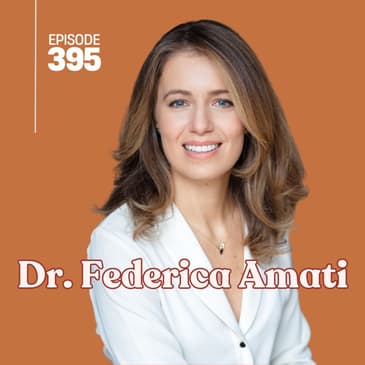
In this episode of the Optimal Body Podcast, hosts Doc Jen and Doctor Dom delve into the critical role of nutrition in women's health with guest Doctor Frederica Amati, a leading nutritionist at Zoe. The discussion highlights how dietary choices impact fertility, pregnancy nutrition, and menopause. Doctor Amati emphasizes the importance of a balanced diet rich in whole grains, fermented dairy, oily fish, and plant-based foods for overall health and pregnancy nutrition. The conversation also addresses the global fertility crisis, the benefits of the Mediterranean diet, and practical tips for maintaining nutritional health and pregnancy nutrition through various life stages.
LMNT Electrolytes: Free Gift with Purchase!
Stay hydrated and energized with LMNT electrolytes—sodium, potassium, and magnesium for brain and body. Get a free gift with every purchase and try new flavors! Get your Free Gift now!
Needed Discount:
Jen trusted Needed Supplements for fertility, pregnancy, and beyond! Support men and women’s health with vitamins, Omega-3, and more. Used by 6,000+ pros. Use code OPTIMAL for 20% off at checkout!
Free Week of the Jen Health Membership:
Get a free week of Jen Health Membership! Access 12 plans crafted by Doc Jen, PT. We’ll match you with the best plan for your goals. Check it out today and use code OPTIMAL for a discount on your first month!
Dr Federica's Resources and Links:
ZOE Science and Nutrition Podcast
What You Will Learn from Dr Amati:
3:29 Doctor Ahmadi's Educational Journey
She shares her background in public health and the importance of nutrition in chronic disease.
5:45 The Role of Nutrition in Pregnancy
Doctor Ahmadi emphasizes the critical impact of nutrition during pregnancy on lifelong health.
8:00 Nutritional Demands in Women's Life Stages...
For full Show Notes and Resources visit: https://jen.health/podcast/395
Hosted by Simplecast, an AdsWizz company. See pcm.adswizz.com for information about our collection and use of personal data for advertising.
[00:00:05] Welcome to the Optimal Body Podcast. I'm Dr. Jen. And I'm Dr. Dom. And we are doctors of physical therapy, bringing you the body tips and physical therapy pearls of wisdom to help you begin to understand your body, relieve your pains and restrictions, and answer your questions. Along with expert guests, our goal of the Optimal Body Podcast is really to help you discover what optimal means within your own body. Let's dive in.
[00:00:29] Before hopping into the interview, I want to talk about one of the most important aspects of health that I don't think people pay enough attention to. And that's our hydration. Not just by drinking enough water, but by making sure we're replacing the electrolytes that we lose throughout the day without even knowing it. Sodium, magnesium, and potassium are absolutely vital to so many physiologic processes that happen in our body. And that's why Jen and I use Element Electrolyte drink mixes.
[00:00:55] They absolutely make sure that we stay hydrated on a day-to-day basis. Now, Jen and I were skeptical when we first started doing this, like, is it really going to make a difference? But we can absolutely tell the difference when we're drinking plain water versus making sure we're getting in some of those electrolytes throughout the day. Optimizing your electrolytes can help with so many things like brain fog, fatigue, headaches, our bowel movements, even getting good sleep. And that's why we recommend everyone check out Element.
[00:01:24] Go down to the link in the show notes. It's just drinkelement.com backslash optimal. That's drinkelement spelled out L-M-N-T dot com backslash optimal. And you get a free sample pack with every single order so you can try out all their flavors and make sure you know which one you love when you inevitably come back to order more. Head to the link in the show notes and get your free sample pack.
[00:01:48] Now, I'm not kidding when I say that this next interview with Dr. Federica Amati might be one of my favorite to date, especially when it comes to understanding nutrition. As we go through different stages in life, especially as a woman, if you've had a baby, there are so many different stages in our life that can be impacted in different ways. And Dr. Amati just breaks it down so well and makes it practical and something that we can really understand.
[00:02:12] Now, she works as a head nutritionist for science and nutrition company called Zoe and holds a Ph.D. in clinical medicine research from Imperial College London, has a master's in public health and is an association for nutrition, AFN, accredited nutritionist. She is the nutrition topic head at Imperial College London School of Medicine and has led research teams for the NIHR Applied Research Collaborations and the WHO Collaborating Center.
[00:02:42] Alongside her research in nutrition, Federica has written two books, Recipes for Better Menopause and Everybody Should Know This, which was recently released in the UK. Now, again, such an incredible interview. Get ready to take notes, get ready to feel inspired and really take action on what you can do to feel better within your body. Dr. Federica, thank you so much for taking the time to be here with us.
[00:03:09] I know you have so much education when it comes to nutrition and I'm excited to dive in, especially for the new research that's coming forth on menopause because that has been poorly researched. You know, throughout our lifetime. So I'm excited for this conversation. So thank you. Oh, thank you for having me, Dan. I'm very excited to get stuck in. So I think the first thing we want to understand is like, where did your initial interest in this topic, in this field come from?
[00:03:36] Why were you so, you know, passionate about getting your education in this field and then really starting to do the research? Yeah, so I guess my passion for it really came from when I was studying public health. And during this time, it was, you know, very much chronic disease was where I was most interested in terms of epidemiology and how, what does it happen? Why do people get these diseases? And as I was going through this education process, I started seeing that themes were arising.
[00:04:05] And one of the strongest themes was definitely just how important nutrition is in terms of the etiology, so the causing of these illnesses and diseases.
[00:04:16] And, you know, that year that when I was doing this master's degree, it was just one very long aha moment the whole way through where I was sort of, I was shocked really to realize just how much of this burden of disease globally is attributable to dietary choices. And so something that is really preventable essentially.
[00:04:44] So that's how I started, that's where my interest was piqued. And what then happened is I did a PhD in clinical medicine and it was during that PhD, I really started finessing my like research skills and understanding data and also some of the barriers to implementing some of the science and stuff. So it was during my PhD, I decided to actually specialize and train further into nutrition.
[00:05:12] And I started doing my own research and actually published my first paper looking at maternal dietary patterns and infant and maternal health outcomes.
[00:05:23] So actually I was really interested in this, you know, if we take prevention to its very core, the time window of life where there's a huge amount of groundwork is during pregnancy because every single tissue, every single organ is created in the womb. You know, the entire being is.
[00:05:45] So it's when I started looking at this particular phase of life that I realized just how much impact nutrition can have in terms of setting a sort of life trajectory and course that can really support health or can be make health a bit trickier. Now, obviously, that's not to say that it's only about the first 1000 days.
[00:06:10] So certainly this like period of time between conception and second birthday is especially sensitive to nutrition and has this real opportunity to foster the best possible start. But there's so much we can do throughout our life course. There's so many other touch points.
[00:06:28] And so it was this combination for me of taking a life course approach to prevention and health optimization and this understanding that nutrition is so critical for good health and to prevent disease. And that in the end, my last degree was in nutrition specifically so that I could really understand the specific scientific rigor that is applied to nutrition science,
[00:06:55] but also understand the tools that we have to unpick and unpack what people are eating and other contextual issues like food preferences, food environment, the food supply chain, cost as a barrier to entry. So all together, my education was sort of not linear in a lot of ways. I'm not one of these people who went straight into nutrition as my first topic.
[00:07:24] I sort of got there on a path. But I think it was this way of getting to nutrition that in the end, basically, all my knowledge from my previous degrees led me to believe that nutrition would be the best tool to deliver change for the majority of people. Interrupting this great episode with Dr. Fetty to talk about just exactly what she's highlighting, that pregnancy and postpartum are some of the most nutritionally demanding times in a woman's life.
[00:07:53] Like this is what we're going to talk about in this episode. And 95% of women in the perinatal stages have nutrient deficiencies. This is why from preconception through pregnancy and now into postpartum, I have been using Needed because it offers radically better nutrition for women from conception to pregnancy to new motherhood and beyond. Now, I know there's so many options out there and there's so many supplements.
[00:08:22] It can be really hard to understand like what's the best option. But Needed is recommended and used by more than 4,000 women health experts from nutritionists to midwives and functional medicine doctors and OBGYNs. And that's because Needed offers products that are formulated by experts in women's health and are backed by clinical insights from their collective of over 4,000 practitioners.
[00:08:46] Their products offer the forms of nutrients your body can actually use, dosed at optimal versus bare minimum levels. And they go beyond, above and beyond third-party testing, testing every batch to ensure the safest product because they know who is taking this. And this is why I trust and I love them so much. So if you haven't yet, head to thisisneeded.com and use code optimal and you'll get 20% off your first order.
[00:09:13] That's T-H-I-S-I-S-N-E-E-D-E-D.com and use code optimal for 20% off your first order. Okay, let's hop back in. I mean, and I love that hearing that journey of how you got there because that shows the true passion of like, well, if this leads to this, then I need to go into this. And you just kind of see how you naturally evolved into what you're doing, which is really incredible.
[00:09:39] And I'd love to go a little bit more back into pregnancy conception and dive into this part of nutrition since this is really where I'm at right now. Well, because I mean, while we're recording this, you're pregnant, but this podcast won't come out until, you know, our little new one will be a couple months old. But still a very crucial time. Very much still within the first thousand day window. That's right. You're still right. You'll be right in it. Yeah.
[00:10:08] And I want to go even further back. Like fertility is something that I know a lot of people are struggling with and it seems to be coming a bigger deal. I could be wrong on that. So could you kind of talk through, you know, maybe what is the best form of nutrition when you're trying to become pregnant and conceive? And why might there be a fertility issue so prevalent right now? Yeah. I mean, it's a really big question.
[00:10:37] It's a very important question. There is like a fertility crisis globally. So it's something that we're seeing across a lot of countries, a lot of populations. And there's it's multifactorial. So there are lots of different reasons that are contributing to it. One of them is the delayed age of first child. So a lot of couples are choosing to have children later.
[00:10:59] And that's like partly through choice, partly through the fact that it's incredibly hard to have to start a family in the current way that a lot of countries are set up. Right. So like the governments aren't really that helpful in making parenthood easy or affordable. So it's like I use the word choice a little bit loosely because for a lot of people, it doesn't feel like a choice. You know, they feel like they can't. So that's a major factor. And I don't want to shy away from that.
[00:11:29] Biologically, our fertility starts to decline sort of in our mid 20s. And for men, it's late 20s, early 30s. So really, by the time we reach 35, men and women are past their peak by some years. And I think that's not spoken enough about enough. And of course, like fertility treatments and other interventions like artificial reproductive technologies have come such a long way.
[00:11:59] And it's really helping parents to become parents when they want to. But it doesn't like our biology has not caught up with our sort of change in approach to parenting. So that's a major factor. But aside from that, and that varies from person to person.
[00:12:16] So how fertile you are at different stages in your life is impacted by your age, but also by your genetics, by your lifestyle, by your nutritional status, by your stress. So actually, it's not as simple as this age is the same for everyone. So there's definitely movement within those age brackets.
[00:12:38] But as a general rule, what we know, our average age of first child now is 30, which only a decade ago, it was still in the 20s. So it's really changed quickly. So that's that. But there's and then there's also like the way we live our lives and the way that we nourish ourselves and the way that we approach health generally. So it's no secret that the majority of UK and US adults are either overweight or obese at this point in time.
[00:13:07] And living with overweight or living with obesity like reduces your fertility. So it's something that directly impacts and makes that harder. And that's like a status, right? So having living with overweight or living with obesity is a marker. But there's also other things like nutritional status, as I mentioned, more than 40 percent of women are iron deficient in the UK and the US.
[00:13:32] That also impacts fertility and stress is chronic stress. So I should really point this out. It's not just occasional stress or a normal level of stress that people have, but like chronic stress where you're constantly. So elevating yourself into a state where your body is really unable to sort of calm down directly impacts hormone balance and disrupts the cycle, like women's cycle.
[00:13:59] So you'll see that women who are really highly stressed for long periods may well lose their periods altogether. So they may have no cycles. And it's a similar state for men where testosterone is hugely impacted by stress. So if you're highly stressed, your testosterone levels are quite likely to lower and that will affect your sperm quality and it will affect the ability of their sperm to effectively conceive. So it's both men and women. I think that's a really important message.
[00:14:28] Often the onus of fertility does fall on women. And that's because we do have more of a time on our available eggs, essentially. But it's really important to stress that like men's, the part that men play in fertility is huge. And it truly is 50-50 when we think about the health of the pregnancy and the health of the baby. You can have an incredibly healthy egg.
[00:14:54] But if like the sperm is not really at its best, it's going to impact both the likelihood of conception, the pregnancy itself and the health of the baby in different ways. So that's what I find really interesting here is that like healthy sperm from a father who has looked after himself. And I'm using like gender normative sort of terms here, but it doesn't really matter how you conceive. We're talking about the sperm and the egg making the baby.
[00:15:25] So however that comes in your life. But the father's health directly impacts risks that are more strongly linked with paternal health than maternal. So I'll give you an example. So we know that like men who have a higher BMI or who have obesity, their sperm quality is changed and reduced. And they are more likely to have children who suffer with schizoaffective disorders.
[00:15:51] So it's like quite a different effect. So for example, if the mother has a higher BMI and suffers or has obesity, she's more likely to have lower fertility, but is also more likely to have a child who has disrupted metabolic health. So the effects are different on different parts of health, right? So it's really important to know that because everyone has to play part.
[00:16:20] Everyone has to like take responsibility and make the most of the opportunity and not just... When I work with couples one-on-one, if the mother comes to me, I go, okay, who's the partner? If it's a sperm donor, actually some of the work's been done for you from the screening process. But if there is a father involved, like where is he? He needs to be right here with you because otherwise it's not going to work, right?
[00:16:45] So, and in terms of dietary pattern, what's fascinating is that it's fairly clear what dietary pattern supports good fertility for men and women. There's some like minor differences in terms of micronutrients that seems to support, for example, like sperm swimming versus like egg or endometrial quality, for example. But the general dietary pattern that very clearly supports fertility better than any other we've studied, without a doubt, is the Mediterranean diet.
[00:17:15] And when we think about the Mediterranean diet, we look at the pyramid and we see leafy green veg, loads of plants, avocados, mushrooms, tomatoes, zucchini, name it. It's in there. All of the plants. Whole grains. Whole grains are lacking in pretty much everyone's diet. I don't mean whole grain bread. I don't mean brown pasta. I mean actually eating the whole grain. So, buying the barley, buying the buckwheat, buying the spelt and cooking that as part of your meal prep.
[00:17:46] Then we have like a layer which is really fermented dairy. So, traditional cheese, traditional yogurts, not flavored, not low fat, not unsweetened, just good old fashioned, you know, natural yogurt. Those foods are really beneficial. Then we have oily fish and shellfish. And this is where the omega-3 fatty acids come in. They play a really important role in fertility.
[00:18:13] And actually, when we think about shellfish, they also high in zinc. Great for their sperm to swim very effectively. And then we go above that and you get to poultry, white meats, eggs. But we're getting to the top of the pyramid. So, this is not the majority of your plate. We're now getting to like a quarter of your plate. Okay. And then above that, you get occasional red meat. And it's so different to how people eat now.
[00:18:41] So, most people would think, okay, I'm going to have some steak and like a bit of broccoli on the side with that and possibly some potatoes. We've just ignored like the foundations of the pyramid. So, we have to really, when we think about what does it mean to support fertility in couples, we have to really flip the narrative and look at abundance of plants, abundance of nuts and seeds.
[00:19:08] Nuts and seeds contain so many of the micronutrients that we need for healthy fertility. Look at incorporating oily fish and shellfish before we think about steak and chicken, right? Steak and chicken is great. It's easy. It's cheap. But like it doesn't do the thing. A little bit of it does, but it's not every day. And then when we start thinking this way, we start to actually have much more interesting dishes, much more interesting dietary patterns.
[00:19:33] And what's critical to say here is that the effects that we see for improved fertility with these dietary patterns cannot be replicated by taking this micronutrient in supplements. So, if you're trying to get fertile or sorry, if you're trying to improve fertility and trying to get pregnant and you hear me talk about zinc and omega-3 fatty acids and fiber, like just taking those supplements is not going to do the thing.
[00:19:58] So, very clear from micronutrient supplementation studies, it does not do the thing that the diet does. So, I'm not anti-taking supplements in fertility. We know folate and folic acid is very important and we should 100% be taking that. But above and beyond folic acid, like eat the food and that will stand you in good stead. Now, if you're somebody who, for example, doesn't eat fish and you don't want to eat oily fish,
[00:20:26] okay, you will need to really focus on the nuts and seeds to get those omega-3 ALAs and possibly supplement with omega-3 supplement. But really, if you can get it from the food, all the evidence points to the dietary pattern being key. And I love that you asked me this, Jen, because in an ideal world, you get this right for fertility. It puts you way ahead when it comes to pregnancy health.
[00:20:51] Because actually, intervening with a dietary change once someone is pregnant is A, harder because of morning sickness, because of changes in physiology. But B, the first trimester is critical. And the egg quality and the endometrial quality and the endometrial milk that your body produces to actually nourish the developing egg, right?
[00:21:18] That all comes from your existing nutritional status. So it's always good to make the dietary change when you can. So if someone's listening to this and they're like, oh my God, I'm 34 weeks pregnant. It's too late for me. It's never too late. But I love to start the conversation with preconception care. Because a lot of couples, especially those who haven't yet tried to conceive, so the ones that are toying with the idea, they'll just be like, oh, we'll just leave it. You know, we'll just see what happens.
[00:21:46] We'll just like, we won't change anything. We'll just see what happens and see if luck is on our side. But actually, like, if that's you, stack your odds. Like, actually do the thing, get involved, change your diet, cut out alcohol. If you're smoking, stop anyway. Even if you're not trying to conceive, just stop smoking. If you're vaping, stop anyway, because that reduces your fertility. So don't. And like, just do the thing anyway. It will help your chances.
[00:22:16] And if it doesn't help your chances and you actually decide you do want to get pregnant, you'll be healthier. So you're winning either way. But it really does start with this preconception care in an ideal world, definitely. I mean, that was a fantastic answer. And there, I think, is so much to unpack in there. And, you know, Jen gave you a question about the diet when you're trying to optimize fertility. And you gave a dozen things that can impact fertility positively or negatively.
[00:22:45] And by no fault of yours, that can seem very overwhelming. Yeah. Right. Because it's the reality. And something you said makes me really sad because we live in California, Los Angeles area. We have lots of friends who are incredible people. And like you said, that choice of do we want to have children is seeming like it's a very heavily influenced choice by the cost of living and by the cost of raising and rearing a child.
[00:23:14] And it's so sad for me when we have friends of ours who by no means are like the lowest of the low on the socioeconomic rung are questioning whether they want to have children or not. And that's just something that makes me sad in my heart because I'm like, these are good people and I want them to raise good humans because we need more of that in our world. But that, I think, is the point right there, the socioeconomic barriers.
[00:23:38] And you said the barriers to making some of these changes can be really overwhelming for people, especially when we're talking about trying to get the whole food version of a lot of these nutrients. And so, what would your consultation or your suggestions be for people who hear you say this and say, for us, it's a financial barrier? How can we still make some of this stuff happen if the financial concern is the biggest one for us? Yeah.
[00:24:07] So, I'd like to start by saying that actually whole grains, beans, lentils, like they're so cheap. They're not sexy ingredients, people. Yeah, it's true. Like, you can get kilograms of dried goods for not very much money. If you're not used to eating lentils and beans, I would recommend that buying them tinned or jarred takes away the guesswork around cooking time.
[00:24:35] So, like, because some people are like, I just don't know how to cook beans. I'm like, well, that's why if you buy the jarred versions or, like, the tinned versions, they're done for you. They're cooked. You just have to, like, add them to things. Yeah. And so, they're incredibly cheap. Leafy green veg is, you know, it doesn't have to be baby kale, right? It doesn't have to be, like, the hand-picked baby version that's packed and, like, $9 for a bag.
[00:25:02] Like, it can be your bulk standard, like, just your leaves that you can find from your farmer's market or in the grocery store. And actually, frozen leafy greens are extremely nutritious. They often have a higher amount of the vitamins, especially vitamin C and these vitamins that oxidize quickly in the frozen versions than you do in the fresh, just because they've been, like, frozen and sealed. And so, they're not getting, they're not perishing in the transport, basically. So, frozen is a great option.
[00:25:32] Tins, jars, you know, so cans in the States, sorry. And also, like, the dried goods are extremely affordable. Now, when we start, if that's the majority of your diet, you're already doing really well. Nuts and seeds are often cheaper when you buy them mixed. So, like, the mixed seeds. And that's better because you have a variety of fibers and a variety of polyphenols and a variety of nutrients. So, actually, you're winning when you're buying the cheaper product there.
[00:26:03] And, you know, on nuts and seeds, there's no need to buy, like, the activated charcoal. Like, just good old nuts and seeds are great. And often, serving size of those is relatively small. You just need a palm. Yeah. Yeah. So, if you have a big bag of them, that can last you and your partner a month. A long time, right? So, you know, you go to Costco and you get this sort of, like, tub. Huge.
[00:26:30] And similarly, when we think about things like very colorful berries, colorful berries are brilliant frozen. I can't, I mean, I mostly buy them frozen nowadays because they are, again, higher in phytonutrients. They've been oxidized less. They get less damage in transport. And berries do grow off quite quickly. But when they're frozen, of course, they don't. And you can add them to your yogurt. You can add them to your oatmeal. You can add them to, like, recipes so easily.
[00:26:59] And they taste absolutely fantastic. And actually, buying a bag of, like, wild organic blueberries, which are so delicious, is so much cheaper frozen than it is fresh. Unbelievable. So, there's all these foods which we just have to pivot into thinking, like, where can I get them from? Then, when we move to, like, the fish, for example, often people think, oh, I have to buy, like, wild Alaskan salmon to get omega-3 rich fish. But you don't.
[00:27:28] Anchovies are rich in omega-3. Buying mackerel in tins is rich in omega-3. There's actually a lot of tinned fish is omega-3 rich oily fish. And there's some brands that make absolutely delicious versions of this, if you want to go down that route. But also, they're so versatile. I mean, anchovies are probably the most underrated cooking ingredient. You know, you add anchovies to pretty much anything, and it's suddenly more umami, more savory, high in omega-3.
[00:27:57] And you need hardly any anchovies when you're adding them. So, I think that's really important to note. And then, like, sometimes the things that can cost a bit more are, like, the live natural yogurts or the kefir. Or, you know, if you're buying some traditionally made cheese, that can, like, bring the price up a bit. But you don't eat a huge amount of these foods. It's like, the portions, again, are fairly sustainable. And if you really want to explore with making your own, you can.
[00:28:26] So, like, actually making yogurt or kefir is not that hard. But you have to, like, have the time and the space to do that in your mind, which I personally don't. So, I do buy them. But some people absolutely love it. They're like, I've made this myself. And, like, here's my little... So, my argument against the cost thing is it takes a bit of time and planning and getting used to thinking about it this way.
[00:28:50] But once you've cracked it, your shopping bill will come down because meat's expensive, right? And if you're trying to buy high-quality meat, which I would encourage most people should, it really makes a difference to the animal welfare, to our environment, and to what the food tastes like, and to the micronutrient composition of the food. So, you know, buying high-quality red meat once a week, maybe high-quality chicken once a week,
[00:29:17] instead of buying it for every day, is a huge reduction in the kind of cost that you're looking at for those items. You also mentioned Costco. Sorry to cut you off. But you also mentioned Costco. And I feel like some people are turned away from Costco because of the membership fee. But if you go once and get the high-quality meat and protein options that Costco have, you will save your membership fee in just that if you get a big pack of the ground beefs that they have,
[00:29:46] you know, a big pack of the chickens that they have. The frozen prawns. And freeze it, yeah. And frozen, you know, prawns and some of the seafood options that they have. Shrimp for people in America, we're talking. Oh, yeah, shrimp. Sorry, I've got to keep remembering. And also, can I just say, this podcast is not sponsored by Costco. Yeah, yeah, yeah. Exactly. But I was shocked at some of the things at Costco, like a big, big jug of ghee that I was able to get,
[00:30:12] that you would get a tiny little pint of it at, you know, the regular grocery store for the same price. And so, I mean... It's amazing because it's the same with... So, extra virgin olive oil is one of those ingredients which is, like, really fundamental to the Mediterranean diet. But the costs have gone wild. Like... Yeah. And I love the stuff. And... But it's interesting. I was talking to somebody the other day and they said, you know, the cost of extra virgin olive oil, some of the brands,
[00:30:41] have matched, like, the cost of a bottle of wine. I'm like, if you're coming to my house for dinner, I would much rather you bring me a bottle of olive oil than wine. Yeah. It's going to last a hell of a lot longer and it's going to save my life instead of shorten it. So, bring it on. So, we have to also, like, recalibrate. Expensive compared to what? If it's something you're having every day that's going to improve your health, right? Should we spend that money here? Yeah. And then maybe you buy, like, one less bottle of wine, which your body will thank you for, by the way.
[00:31:10] Like, let's just look at what's worth spending money on. But... And also, Costco, you can buy really big extra virgin olive oils. And, you know, if you store them properly, keep them away from heat, in the dark, so, like, in a cupboard, never next to the hob, then it can stay, like, unperished for a good time. You break it down so well in a way that people hopefully can start to see, okay, this is how I can start to add it into my life.
[00:31:38] And this is where I can at least start. And there's so much to get into with you. But I know at the beginning, too, you mentioned how there is... We see lower iron levels. Yes. So, without, you know, getting the red meat all the time, what do you recommend in order to help improve those iron levels? Yeah, so, really good question. And we have to remember that iron is available in a lot of plants. And it's more highly...
[00:32:07] So, it's, like, easy to absorb when it comes in heme iron, so from animal sources. But it's not just red meat. If you're eating your oily fish, you're eating your prawns and your shellfish, they have lots of heme iron. So, that's a really nice way to get both your omega-3 fatty acids and your iron. And when we're eating things like lentils and beans, nuts and seeds, leafy greens, getting iron from those eggs... I love a good egg. They're really good. Just don't need to... You just don't need to eat, like, eight in a day. It's a bit too much.
[00:32:36] But, you know, having eggs in your diet is wonderful, too. And when we start to combine these foods together, so you're having, you know, eggs one day, you're having oily fish a couple of times a week, you're having maybe shellfish once a week, you're having maybe chicken and then red... Like, you're having quite a lot of heme iron. And then when you're having leafy greens and lentils and nuts and seeds as well, you're getting heme and non-heme iron in your diet. So, the iron status that we see in a lot of women nowadays,
[00:33:04] it relates back to a poor quality diet as opposed to, like, an iron-lacking diet. So, it's not the micronutrient itself that's the problem. It's the fact that we eat a diet that's lacking nutrients full stop. So, when we start reintroducing nutrient-rich foods and having this lens with women and girls who start their periods when they're teens, like, that's the point where we have to come in and really stop that from happening in the first place.
[00:33:31] So, you know, typically children before adolescence, this iron deficiency or insufficiency is pretty much even for boys and girls. Where it starts to go really wildly different is when menstruation sets in. And so, that's when we intervene in teenagehood, where we say, okay, if you have daughters, if you have grandkids who are girls, if you have, you know, if you're somebody who looks after teenage or adolescent girls
[00:34:00] who are starting their period, like, just think, are we offering a variety of iron-rich foods at this age? Because the issue is that if you're iron deficient or insufficient, you know, it impacts your learning, it impacts your growth, it impacts your mental health, energy levels, and your immune system. So, it's really important. This is this time of life, like, you know, adolescents already have to deal with exam stress and getting into college and all these things. So, supporting that is such a simple way
[00:34:30] to making sure that they don't have to worry about the side effects of having no iron. And then, moving forward, of course, it affects fertility. So, some girls are more prone to this if they have heavier periods, longer periods. So, also understanding menstruation is super important to help support girls and women because then we can actually advise them in a way that supports their physiology and we can focus. If you're going to be a family who has red meat maybe two or three times a month,
[00:34:59] then for the woman in the household, like, get that red meat in around the period, right? Let's restock those iron status, iron levels. So, yeah. So, it's not an issue if you have this varied diet. It is an issue if you don't eat enough food or you have a diet that's lacking in diversity. And I think you bring up, I mean, you talked about preconception, dietary changes and stuff. I mean, imagine if people were getting this type of education
[00:35:27] and starting the foundation when adolescence starts and just the head start that that gives, you know, a woman or a man, especially if they get to the point that they want to try having children, the head start that that gives them on the quality of their egg, their sperm, their fertility overall. I think that that's just a great point because we don't do a good enough job educating people around adolescence and the changes that are happening in the body, especially with women and how that can impact nutritional needs and overall health.
[00:35:58] We've spent a lot of time, you know, so far talking about pregnancy, fertility, but I know you've also done a ton of work in menopause, perimenopause, postmenopause and the changes that are going on in a woman's body during that time. Where do we go from here? I think it's a good one. You're right. So there's these really important phases in life. We haven't even touched on infants and like how to wean your baby. I know. Oh,
[00:36:27] that's like a whole other and actually the difference between like birth modes, but we'll come back. We'll come back. So the life course offers some really critical points where intervention makes a huge impact, right? And for women, there's this menopause, there's this time where there is such a seismic, I'm not going to say the word because I can't say it. Seismic? Seismic? Such a big change in their physiology, hormones and metabolism. So up until very recently,
[00:36:57] you know, menopause is understood to be the day where it's been a year since your last period. That's like, it's one of the few medical terms that is retrospective. So you can't actually diagnose it until it's happened, which is bizarre. And essentially, what we've unpicked really recently is that the perimenopause, which is like the years leading up to menopause and it can be, you know, a decade or so.
[00:37:27] And post-menopause, so like a decade or so after the menopause, that whole up to 20 years, for some people it's less, but like up to 20 year span is a state of flux for women which has this very severe sort of cut off at menopause where there's a real change, a real step change. But if you imagine perimenopause is like this wavy change and what's happening because of delayed motherhood is that for
[00:37:57] very many women it actually turns into post-natal perimenopause so they kind of come off the birthing journey which is hormonal chaos into some more hormonal chaos. And then for women who are sort of in their 40s when they give birth, they don't go back to baseline. It's just a bit more. And then you get to a menopause where it just goes from chaos to a drop. And post-menopause the readjustment to that new level
[00:38:26] of hormone levels is where there's still a settling in process of like physiology adjusting. And when I say talk about physiology adjusting is we've known about the hormonal flux for a long time. But at Zoe which is a science and nutrition company that I'm a head nutritionist at, you know, we've actually said but what's happening metabolically? Like what's happened to these women that actually changes the way their body responds to food? Because you know,
[00:38:56] you don't have to speak to a lot of menopausal women for them to tell you that they ate the same, exercised the same and everything changed. So like something is happening and we did this amazing study. We looked at women who were pre-menopausal so like no pre-menopausal symptoms, hormones were in normal state of flux so just, you know, your regular menstrual cycle and then pre-menopausal so women who had entered that phase of unpredictable flux
[00:39:25] and then post-menopausal women so those who'd already gone through the one year post last period and the difference in metabolic response between these women was so stark when you look at the paper and you look at the graphs it's literally for blood sugar response postprandial inflammation which is basically where after a meal you have this inflammatory response which helps our gut to absorb nutrients it's a perfectly normal response but you don't want it to be too high because inflammation is damaging so postprandial inflammation
[00:39:55] blood glucose response blood fat response and incident response all step change so pre-menopause per-menopause post-menopause if you just imagine that so it's like blood glucose stayed higher blood fat stayed higher incident for post-menopausal women compared to peri and pre and we also looked at the gut microbiome because we know from our research in predict one and in our randomized control trial method that actually
[00:40:25] microbiome composition impacts metabolic health and so we were wondering maybe something happened in their microbiome as well and it's completely different so if you're pre-menopausal perimenopausal your gut microbiome like gut microbiome signatures of women are quite similar there's this group of microbes that and the gut microbiome for anyone who hasn't heard the term is this collection of trillions of microbes that live in your gut and your large intestine
[00:41:20] intestine die
[00:41:52] bodies are working our gut microbiome composition our hormones and critically our symptoms so women know that they're going through the menopause or perimenopause because they get these symptoms and now what's the most recent study we did led by Professor Sarah Berry who's an absolute legend one of the best nutrition scientists in the world she we took 70,000 women so this is the biggest menopause study to date and we asked them about their symptoms and what was really clear from what we
[00:42:21] when we asked them about them we created a tool to actually help women track their symptoms because you know it's really hard to know whether something's changing if you can't track it and so we've created something called the Menoscale and this is a free to access tool for anyone who wants to use it you can find it at zoe.com forward slash Menoscale and it will give you a score which is compared to women your age so you can see where you sit in terms of where you're supposed to be
[00:42:51] productive timeline and the Menoscale score really gives women agency to understand whether their symptoms are getting worse or better whether that new diet that they started is helping or not whether their sleep is having an impact or not and it's really interesting because when we
[00:43:21] have symptoms headaches and joint pain and then you have the sexual symptoms which is vaginal dryness and then you have the psychological symptoms anxiety rage and when we talk about menopause often it's like oh yeah hot
[00:43:52] are the ones that drive women out of work that drive women into questioning their relationships and the psychological fascinating science we're just so excited to share that because of course there's other things like hormone replacement hormone therapy is very effective and we
[00:44:22] had women who were taking hormone therapy in our cohort of course but this effect of improvement was above that so it's like on top of it's like as well as there's several tools in our toolkit it's not like you just have to do one and for some but actually there is this amazing tool it's called your diet it's called the food choices you make every day and if you make smarter food choices you can
[00:44:51] actually improve the experience you have of menopause and you know I reported at least one symptom and there's this myth that you know some women just sail through and they feel nothing no not according to the
[00:45:21] 70,000 person cohort like at least one symptom it might not be affecting their daily life but every woman feels this somehow and so we're in it together it's gonna happen and we're just really trying to do this really good science to help empower women with tools and improve their well-being and help them feel better basically that is huge I mean the amount of people that you got to be able to study in order to
[00:45:51] see the impact and and be able to say this really does make a be great for some people but if you add in the nutrition if you add in the exercise and you add in the lifestyle changes how much of an impact that can
[00:46:21] have positively is really incredible would you say that's going back into kind of following more of that Mediterranean diet as well so it is like I sound like a broken record sometimes because you know it can't be said enough the most well studied well understood dietary pattern in the world and it's the one that consistently brings positive results across all aspects of health
[00:46:50] so if that's how you want to start I think looking there is a good place the study we did was actually following women who became Zoe members so the dietary changes they made were according to our personalized nutrition program now what we provide is obviously science based evidence backed advice but that also has the added layer of understanding your individual metabolic response thanks to the testing that we do but it's very aligned with the Mediterranean
[00:47:20] diet it just has an extra layer of personalization which really works with your specific metabolic response but it's all very well aligned to that research so yes again green leafy veg eat your fruit and veg get the berries out don't demonize fruit choose healthy fats so your fats really should be coming from these extra virgin olive oils avocados nuts and seeds try to avoid processed meats try to avoid using too much
[00:47:50] sort of animal based fatty acid in your cooking it's not helpful for health and reduce your alcohol intake these are sort of the tenets I mean I like to encourage people to incorporate the foods that we know are lacking across global diets that are driving more of the deaths and diseases associated to diet because unfortunately nowadays poor diet is the leading cause of early
[00:48:20] death and disease so it's overtaken smoking globally and we know that there's certain dietary components that are especially important but what's really interesting is that the evidence shows us that it's not the things we're eating too much of that are killing us it's what we're not eating enough of so that's why I bang on about adding whole grains to your day adding whole fruits to your day adding nuts and seeds to your day adding
[00:48:50] omega-3 fatty acids to your day and adding beans and pulses because those five are right at the top of the list for diets low in this food cause more death and disease so if those are your new five a day if you can try and get that every day then you're already doing better than the majority of the world and you're helping to get yourself to a place where your health is actually going to flourish and whether you are trying to conceive whether you are pregnant
[00:49:19] whether you are trying to maintain energy and health in the first few years of parenthood or whether you're entering perimenopause whether you're trying to feed your teenager food that's going to support their mental health and their well-being and as we look into later life so my book everybody should know this really breaks down the life stages that's how I've approached the life course approach as we get into later life the same dietary principles
[00:49:49] apply but there's other things we need to consider like reduced appetite reduced thirst signalling reduced circadian rhythm balance metabolic response changes so there's changes throughout life but if we can get the basics of nutrition right that will really help to stand us in good stead throughout the life course and despite what some influencers say online you know nutrition science the
[00:50:19] evidence is pretty it's clear like there's not that much contention around what what is a good dietary pattern for human health there's debates about specifics and classifications but really we've known and I would actually argue we've known predating nutrition science from ancient wisdom right that a diet that is rich in plants rich in a diversity of nuts seeds
[00:50:49] herbs and spices you know you can look to ayurvedic medicine traditional Chinese medicine for similar inspiration we've known this for a very long time that that is how you support good health and so any other thing anyone trying to tell you that you should eat butter for breakfast a butter stick for breakfast they're just creating noise it's not helping it's not there's no evidence for this like no so I think the foundations of like good nutrition are clear and we should embrace that because it's
[00:51:19] such a powerful tool that we can adopt to support our health I mean this has been such an incredible conversation and I wish we did go longer we said beforehand that we don't do three hour podcasts and this is like you said through the lifespan we could talk about so many different things the sound bite that I'm that I'm going to take which you just said it's not as much the things that we're eating that cause early death and disease related to nutrition it's the things that we're not
[00:51:48] eating and those primary five that make up the base of the pyramid that you can start to add in and really notice significant change I appreciate all the wisdom and knowledge you brought today in this short 45 minutes where can people go to learn more from you to look into Zoe and any other information that you have out there so yeah so I'm Dr. Fede Amati across all of the social media platforms Zoe is literally at Zoe
[00:52:18] we have a great Instagram account with lots of recipes that incorporate these foods Zoe.com is our website where you can find out more about our products and we have the Zoe Science and Nutrition Podcast where we interview loads of specialists from across the world including Stacey Sims who is such a hero and we really dive deeper into these topics and yeah my book everybody should know this unfortunately US publishers are being very slow on the uptake but I think you can hack it on Amazon apparently some people have managed to get their hands on it
[00:52:48] and so that's my latest book and yeah really just look forward to connecting with as many people on any of the platforms as possible perfect well we'll have all of that linked up so that people can get more information and learn more about you but thank you for the work that you're doing and the way that you're helping people and the knowledge that you're bringing it's truly incredible and it's really going to help a lot of people so thank you thank you guys so much for having me such a great interview with
[00:53:18] Dr. Fetty we are for sure going to need to have her back because we definitely want to dive into like she was talking about nutrition in the first thousand days of someone's lifespan if you enjoyed this episode or feel like you know someone out there that would really enjoy it please send it along pass it along to someone else that really helps this podcast and this information get into the hands and into the ears of more people consider leaving a rating and review on your favorite podcasting platform we are also in the gen health community focusing on
[00:53:47] the core this month so if you are somebody who feels like you can't quite activate your core rate if it's not coordinated if you just have questions come in join us we have a full 30 day core plan with multiple phases as our podcast audience you can get a special discount to get your first month for only $20 if you use code optimal at checkout so go down to the link in the show notes that's just gen.health backslash free trial and of course we'll see you on the next episode of the optimal body podcast