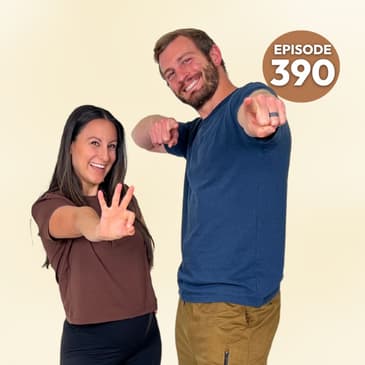
In this episode of the Optimal Body Podcast, pain and injury prevention are the main focus as hosts Doc Jen and Doctor Dom—both doctors of physical therapy and advocates of strength training—share their top pain and injury prevention tips for the new year. They discuss health optimization through nervous system downregulation, mobility training, and barefoot living, all essential for pain and injury prevention, optimal health, and functional independence. The conversation also highlights exercise, the mind-body connection, pregnancy nutrition, and how targeting hip flexors can help with pain and injury prevention for lasting body love and well-being.
VivoBarefoot Discount:
Support your feet and ankles with VivoBarefoot shoes—with perfect styles for any occasion! Boost foot health through mobility and strength from the ground up. Use code OPTIMAL20 for 20% off. 100-day trial included—return if you’re not satisfied!
Needed Discount:
Jen trusted Needed Supplements for fertility, pregnancy, and beyond! Support men and women’s health with vitamins, Omega-3, and more. Used by 6,000+ pros. Use code OPTIMAL for 20% off at checkout!
Release and Recovery Program Discount:
Looking for a way to start addressing your nervous system and feel something different in the body. Our Release and Recovery Course is a perfect place to start! It is a great way to get into movement, connect with your body, and down regulate to start into the new year. You can even grab a special discount using code OPTIMAL10 at checkout!
We think you’ll love:
Get A Free Week on Jen Health!
What you will learn in this Episode:
2:02 Tips for the New Year
5:41 Realistic Morning Routines
7:06 Breathing Techniques for Stress Relief
10:14 The Importance...
For Full Show Notes and Resources visit: https://jen.health/podcast/390
Hosted by Simplecast, an AdsWizz company. See pcm.adswizz.com for information about our collection and use of personal data for advertising.
[00:00:05] Welcome to the Optimal Body Podcast. I'm Dr. Jen.
[00:00:08] And I'm Dr. Dom. And we are doctors of physical therapy, bringing you the body tips and physical therapy pearls of wisdom to help you begin to understand your body, relieve your pains and restrictions, and answer your questions.
[00:00:19] Along with expert guests, our goal of the Optimal Body Podcast is really to help you discover what optimal means within your own body. Let's dive in.
[00:00:28] So before we hop into our three tips for the new year, one tip that Jen and I always have is trying to be barefoot more often.
[00:00:36] That's why we recommend Vivo Barefoot Shoes. They have been an absolute game changer for both Jen and myself.
[00:00:43] I'm someone who always had very stiff feet, very stiff ankles, and wearing Vivo shoes over the past five years has completely changed the way my feet operate.
[00:00:53] The flexibility in them, the strength, their ability to handle the ground. I even run barefoot now.
[00:00:58] And that's something that I never thought I'd be able to do. If you have ever considered doing this to start the new year, this would be an amazing thing to be able to do for your overall health and your movement health.
[00:01:09] I cannot overstate what being barefoot more often or wearing barefoot shoes can do to your overall movement.
[00:01:16] Our feet are our foundation and we need to be able to feel the ground.
[00:01:19] That's why Vivo Barefoot Shoes and their thin, flexible bottoms and their wide toe box allow our feet to operate the way that they should and will essentially automatically help us grow the mobility and strength that we need.
[00:01:32] If you haven't gotten a pair before, go down to the link in the show notes or if you want to add a new pair into your collection, go down to the link in the show notes and use code OPTIMAL20.
[00:01:41] That'll give you a 20% discount on your entire order and get yourself at some Vivo Barefoot Shoes today.
[00:01:47] I love them because they have shoes for absolutely everything from hiking to working out to even going to dress up events.
[00:01:54] I wear these shoes to every single wedding I go to and I love it because my feet feel great and I don't have to put them in stiff, uncomfortable dress shoes.
[00:02:02] Head down to the link in the show notes.
[00:02:03] Make sure you use code OPTIMAL20 at checkout and get yourself in some barefoot shoes.
[00:02:09] So as we do most times around the new year, we want to talk about tips and things that people might not be thinking about coming into the new year.
[00:02:17] In the past, we've talked about goal setting or how to create new habits.
[00:02:20] It's and I know that the new year is a time that people are so focused on how can I start working out again?
[00:02:27] How can I eat better?
[00:02:28] Things like that.
[00:02:28] And so what we want to talk about are three tips, our main three tips on things that can help prevent pain and injury coming into the new year.
[00:02:37] And it's things that we see as neglected overall.
[00:02:40] Things that people aren't thinking about adding into their routine when they come into the new year.
[00:02:45] And they can be really quite simple to incorporate on top of or along with everything else that somebody might be trying to do.
[00:02:53] And so insanely crucial.
[00:02:56] Like so insanely crucial.
[00:02:57] And like you said, often neglected.
[00:03:00] And I, you know, especially at the time this is released now, we are parents of two.
[00:03:07] Yes.
[00:03:08] Running our business and doing everything.
[00:03:11] So we understand that adding more isn't necessarily our goal for you.
[00:03:18] Our goal is to help ease your body by giving you quick solutions and tips that we recommend just adding throughout the year.
[00:03:27] Like this isn't something that here's your 10 step morning routine of what you have to do in order to set yourself up for success.
[00:03:33] Like, I'm sorry, we're not doing that.
[00:03:35] We're not going to tell you to do that.
[00:03:36] But taking a quick minute here now that I'm well into my postpartum journey to talk about how I'm really supporting my body during this time.
[00:03:43] Because, you know, there's a lack of sleep.
[00:03:46] There's a lot of adjustment and transition that we're getting used to.
[00:03:49] And something that I'm still using to help support my body is needed.
[00:03:53] Now, I took this preconception, pregnancy, and now postpartum.
[00:03:57] And the one thing that I'm really making sure that I do well with because I am wanting to continue to breastfeed is taking my prenatal multi capsules.
[00:04:05] So this is so crucial.
[00:04:07] And what I appreciate and love about Needed in particular and why I went with them from the very beginning is because most prenatal vitamins include bare minimum nutrition with outdated guidance and stale research.
[00:04:23] But at Needed, it's really about getting radically better nutrition products, education, and advocacy rooted in clinical research and practitioner validation.
[00:04:36] They're really, you know, how can we make this the most nutrient dense and really give the body what it needs during this time?
[00:04:46] And so they also have different packages, especially if you're in the postpartum journey like me.
[00:04:50] They have a lactation support plan.
[00:04:52] They have a sleep and cognitive support plan or just get the cognitive support because that's been helping me right now.
[00:04:59] Let's be honest.
[00:05:00] Our brain kind of like goes to mush.
[00:05:03] So I would highly recommend checking out Needed.
[00:05:06] I mean, it's just meant to support anyone's journey in any phase of life.
[00:05:11] Dom has taken their multivitamins as well, as well as sperm support when we were in the preconception phase of life as well.
[00:05:20] So just head over to thisisneeded.com and use code optimal and you'll get 20% off your first order.
[00:05:29] That is T-H-I-S-I-S-N-E-E-D-E-D.com and use code optimal and you get 20% off your first order.
[00:05:39] Okay, let's hop back into it.
[00:05:41] Even before we did this, I'm like, should we do a morning routine podcast?
[00:05:44] Which is kind of funny because there are things Jen and I both like doing in the mornings.
[00:05:48] Totally.
[00:05:49] If I had my ideal every day, I do have a morning routine that might take me between 20 and 30 minutes.
[00:05:55] But again, it's the realism behind the thing you see on Instagram where someone's like, how I start my morning.
[00:06:03] And it's the 10 different things that would take the average person an hour, hour and a half to do that's just not realistic.
[00:06:12] Oh my goodness.
[00:06:13] And so we're going to get into our top three tips and we want this to be a quick episode, but we want to give you a lot of actionable takeaways.
[00:06:20] Yes.
[00:06:20] Because it's new year and we want people to be enjoying their time, especially if you're off from work and stuff.
[00:06:24] So tip number one is a focus on down regulation.
[00:06:29] Yes.
[00:06:30] Again.
[00:06:31] Your nervous system.
[00:06:32] Focusing on the nervous system.
[00:06:33] And in, again, this time where people are talking about adding new things into their life.
[00:06:38] How can I start working out again?
[00:06:41] How can I start, you know, having a different focus on the foods that I eat and what I put in my body?
[00:06:46] That can be really stressful.
[00:06:48] Or in work, sometimes the new year coming back from a holiday break, you know, adds in more stress.
[00:06:55] And there's not a lot of focus on this down regulation and how we can keep our nervous system in a good place so that we can handle everything else that we're doing without psychologically burning out.
[00:07:06] Exactly.
[00:07:07] And so this can be really, really simple.
[00:07:09] I mean, obviously you could do things that are a huge routine and really long, but we want to make it really, really simple.
[00:07:17] So how can you, while you're driving, let's say, you're focused on driving, but what you're also focused on is can I take a long, slow inhale in through my rib cage and kind of feel like my back is actually pushing into the seat behind me as I take that inhale?
[00:07:35] And then can I take a super long exhale, just relaxing my neck, relaxing my shoulders, melting into the chair?
[00:07:43] And can I do that five times while I'm driving and help to remind my system where to come back to, especially if there's a lot of traffic, if a kid is screaming, if something stressful is happening in the moment, this is the time to come back into, okay, how can I help to manage the situation within my own body?
[00:08:04] And it's funny because as you do that, and I do this sometimes in podcasts because when we're doing podcasts, we're getting amped up, we're talking a lot, we're not focused on our breath.
[00:08:12] And sometimes when you're talking, I just now did about four or five breaths, got things to calm down.
[00:08:19] Anytime that I do that, but you know, I have consistent spots in my back that start to flare up, especially when we're sitting and doing podcasts.
[00:08:25] And anytime I do my breaths, I notice my back start to calm down.
[00:08:29] I notice my pains start to dissolve away.
[00:08:31] Okay, so like Jen said, this doesn't have to add any extra time into your day.
[00:08:35] If you have a 10-minute drive to work, doing something like this for 10 minutes, like you will be like shocked, astonished at the amount of change you can feel in your body,
[00:08:45] just focusing on those slow, expansive inhales and even longer exhales.
[00:08:51] And a question that I get a lot from people is, okay, am I doing this through in and out the nose, in the nose, out the mouth?
[00:09:01] And my first answer would be, it doesn't really matter.
[00:09:06] You know, yes, there might be slight differences, but whatever you feel in your own body, try it different ways.
[00:09:12] And if you feel one works better than the other, one reason that we recommend in through the nose is nasal breathing generally tends to be more parasympathetic.
[00:09:23] It generally helps you utilize your diaphragm and expand in the rib cage a little bit more than a mouth breath.
[00:09:30] And sometimes I'll tell people to initially start out the mouth.
[00:09:34] And the reason for that is it's easier to control your rate of airflow out the mouth than out the nose.
[00:09:41] Some people will find it hard to slow down and exhale to say 6 to 8 to 10 seconds out the nose.
[00:09:48] They'll say, I want to, but I'm out of breath.
[00:09:51] It all comes out too fast.
[00:09:53] So breathing out the mouth can help you train that diaphragm to slowly release air.
[00:09:59] And so that's where I'll tell people start in the nose, out the mouth.
[00:10:02] And then as you get used to it, see if you can start going in the nose and out the nose.
[00:10:07] And once you start being able to control your breath out your nose, that shows that you're really starting to hone in on how to control your diaphragm.
[00:10:14] This is like such an easy tip and something to always remember.
[00:10:18] The moment that you start feeling pain, the moment that you get into a stressful situation,
[00:10:22] the moment that, you know, anything that ramps up your system or causes pain and tension within the body.
[00:10:30] I want the first place that you think of coming to is the breath, whether that is sitting, laying down, getting comfortable,
[00:10:37] whatever that may be doing.
[00:10:38] You could use a gorgeous ball.
[00:10:40] We've talked about using the gorgeous ball in the gut and relaxing into the breath there.
[00:10:43] There are so many techniques and ways that you can use the breath.
[00:10:46] But coming back into this breath is one always can be quite neglected.
[00:10:53] And especially if you look in a mirror and say, OK, how am I breathing?
[00:10:56] Is my neck just turning on?
[00:10:58] Are my shoulders raising?
[00:10:59] I even did this with a group of clinicians in Peru.
[00:11:02] And so many people had everyone was a chest breather.
[00:11:06] Everyone's shoulders were going up.
[00:11:07] So trust me, this is across the globe, like something that's really hard for people to grasp.
[00:11:13] So really starting to retrain this in your system is really going to help.
[00:11:18] And it starts to compound because like you said, it's a training.
[00:11:20] And the more that we're doing this, the more that you will, you won't even notice,
[00:11:24] but you'll start to automatically be doing it when you're in a meeting at work.
[00:11:29] When you're with your kids, you'll start to automatically breathe with more of this
[00:11:32] rib cage expansion style, slower exhales.
[00:11:36] And so it almost compounds in this positive feedback loop that the more you do it,
[00:11:40] the more you train your body to do it automatically, which is our autonomic nervous system
[00:11:44] that is responsible for breathing.
[00:11:46] So finding a way to do it in the morning.
[00:11:49] I like to focus on taking a couple of breaths when I'm with Dante.
[00:11:53] Sometimes throughout the day, you know, when like Jen said, you're driving or on a meeting,
[00:11:59] at a meeting at work that you're not talking during, just focus on 10, 15 breaths.
[00:12:03] And then before you go down to bed for night, like those three touch points can make
[00:12:08] a huge difference.
[00:12:09] Astronomical difference.
[00:12:10] Exactly.
[00:12:11] Number two, you know, we're going to talk about it and it's mobility training.
[00:12:16] Yes.
[00:12:17] And this doesn't mean static stretching.
[00:12:19] And that's where people get so confused of the two of like, you know, I'm a fan of static
[00:12:26] stretching.
[00:12:26] I think it's great to help down regulate the system as well, especially using the breath
[00:12:30] and helping to, you know, relax into more range of motion.
[00:12:32] I'm not against static stretching, but I am for getting your body active in these new ranges
[00:12:38] of motion so that we can actually create change, long-term change and how we're going to feel
[00:12:43] that carry over.
[00:12:44] Whether I'm out for a walk or I'm chasing a kid, I'm going for a hike.
[00:12:49] Like we need to train in active mobility around all of our joints to help to feel better functionally
[00:12:58] when we're doing everyday activities, but also just to help also prevent or mitigate injury.
[00:13:05] And when it comes to mobility or doing something like, again, this seems like something extra,
[00:13:09] like, okay, I'm adding in something extra.
[00:13:11] And it might, yes, be slightly bit more time, but like we have on Gen Health, there are ways
[00:13:18] to have a three to five or eight minute mobility routine, a few exercises that can make a massive
[00:13:26] difference.
[00:13:27] And I really like this one because again, it's the new year.
[00:13:31] People are trying to get back into the gym.
[00:13:33] Gym admissions are at an all-time high and people are just getting into their cycling class or getting
[00:13:38] into a circuit training class or going out for a run, but they're not focused on that
[00:13:43] foundational mobility.
[00:13:44] And we find the people that tend to start to have those injuries, whether they're overuse
[00:13:49] or just acute injuries from compensation, a lot of it can stem back and be contributed
[00:13:57] to by mobility restrictions.
[00:13:59] And so the next component of getting mobility in is getting more of a familiarity with where
[00:14:06] you're actually restricted.
[00:14:08] You know, are there certain movements that you're restricted on both sides in like internal
[00:14:12] rotation in my hips?
[00:14:14] I'm restricted on both sides.
[00:14:15] Are there movements that you're more restricted on one side versus the other?
[00:14:20] You know, so finding a way to assess and find those areas that it's like, okay, I'm restricted
[00:14:26] here, here and here.
[00:14:28] So when I do a lower body lift, I should really work on some active internal rotation mobility
[00:14:33] before I go and do my deadlifts, which, you know, have an internal rotation bias.
[00:14:38] And so like, it really starts to help you become the investigator of your own body, finding
[00:14:44] those restrictions that downstream may contribute to injuries or maybe contributing to aches
[00:14:50] and pains that you already have.
[00:14:51] And this is where like quick warmups and we even have warmups and cool downs on GenHealth
[00:14:56] if you need examples of like what to do prior to a workout.
[00:14:59] Um, you know, this is where it's like five to eight minutes, like he said.
[00:15:04] And even in our release and recovery program, which people are now going through, which is so exciting.
[00:15:09] Yeah.
[00:15:09] We just started a release and recovery program.
[00:15:12] These are three to eight minute videos.
[00:15:14] Like I'm not trying to take a lot of your time.
[00:15:16] I'm trying to help educate you into your body.
[00:15:18] So you start to find ways and areas where you can start to add it in naturally.
[00:15:23] Right.
[00:15:23] So maybe it's like instead of just doing some leg swings or twisting out my back prior to
[00:15:28] my workout, I'm actually going to be a little bit more focused and intentional because I
[00:15:32] know my hips need a little bit more opening or my upper back needs a little bit more opening.
[00:15:35] So I'm going to do these specific mobility exercises.
[00:15:38] I learned that only take me three to five minutes and then get into my workout.
[00:15:41] Like it can be that simple or maybe between lifts you're doing a mobility movement.
[00:15:47] Like there are ways that we can add it in that don't have to take a lot of time.
[00:15:51] And I think that is our main goal here.
[00:15:53] Like we're not saying go out and do an hour of yoga.
[00:15:55] That's great if you have the time to do that.
[00:15:57] But I'm saying get intentional based on where your body is need is needing help.
[00:16:03] And we also completely for free.
[00:16:05] We have, I think, 12 assessment videos.
[00:16:08] Yeah.
[00:16:08] 12 or 13 self-assessment videos that bring you through a lot of different areas in the
[00:16:13] body.
[00:16:13] The thing that I love about Jen's self-assessment videos, she tends to focus on one
[00:16:17] that might be restricted in a high percentage of people.
[00:16:20] So those are absolutely free on Jen Health.
[00:16:23] You can go to the self-assessments collection in kind of our discover area on the platform.
[00:16:29] Go through all of those.
[00:16:31] They wouldn't take you that long or just do one or two a day or a week to start becoming
[00:16:36] more familiar with that body.
[00:16:39] Now, lastly, our last recommendation is cross-training.
[00:16:45] And so this means if suddenly you're like, I'm going to get back into my yoga and Pilates
[00:16:50] and this is what I'm going to do.
[00:16:51] And I love that it makes you feel good, right?
[00:16:54] I love that.
[00:16:55] I want you to keep doing what makes you feel good and not neglect other things that are
[00:17:00] going to keep your body healthy as you continue to age, like plyometric training.
[00:17:04] Are we doing dynamic work outside of just slow controlled movements?
[00:17:09] Yeah.
[00:17:09] Are we doing the strength training along with that yoga and Pilates?
[00:17:13] And yes, Pilates can work on a certain type of strength.
[00:17:17] And same with yoga.
[00:17:18] It works on a certain type of strength.
[00:17:20] But as we age, like Jen said, that the two things she brought up, plyometric training,
[00:17:24] having power in your body and being able to move quickly through your body and your joints
[00:17:29] and be able to lift and carry resistance and have that functional strength in case you're
[00:17:36] presented with a time you need to pick up a 40-pound child or presented with a time you
[00:17:40] need to pick up two heavy bags of groceries and carry them inside.
[00:17:43] Your body is prepared for that.
[00:17:45] I like that Jen brought up, especially in the new year when everyone's starting new exercise,
[00:17:50] it's good to do things you enjoy.
[00:17:52] Yes.
[00:17:52] You know, that is a key component to creating new habits is that it's something that you enjoy.
[00:17:57] So same with cross-training.
[00:17:59] When you are going into the cross-training realm, how can we find ways to strengthen that you
[00:18:06] do enjoy?
[00:18:06] If you're not somebody who really loves being in a gym with a barbell, you know, there are
[00:18:12] other ways that you can get that strength training in.
[00:18:15] Yeah.
[00:18:16] And this is like, for example, okay, my mom, she's in her 70s and she watches Dante, who
[00:18:20] is a growing toddler, right?
[00:18:22] And her main complaint is he's heavy.
[00:18:25] And so I love to get her into the gym with me and work out.
[00:18:28] And sometimes she's complaining, but oftentimes, almost every single time after we're done,
[00:18:34] she's like, I feel good.
[00:18:35] And we do HIIT type training together.
[00:18:36] We do lifting and I push her.
[00:18:39] I say, you've been lifting this weight.
[00:18:41] I think you can try this one.
[00:18:42] You know, let me help you.
[00:18:44] And so getting with a partner, getting into a class, getting a trainer for just like a
[00:18:51] little bit, even if you can't afford it for long term, like getting some directed attention
[00:18:56] or accountability can really help to guide you into how you can start doing things in
[00:19:02] a new way that you haven't really explored before.
[00:19:04] And there's so many different classes.
[00:19:06] There's so many different types.
[00:19:07] There's so many different people out there.
[00:19:09] You know, like Dom said, that you don't have to just be pinpointed into like, okay, I got
[00:19:14] to go bodybuild with a bunch of big dudes.
[00:19:17] It's like, no, you can find what works for you.
[00:19:21] But we're just saying like, you like one style of workout, like you love running.
[00:19:26] Great.
[00:19:26] But are you strength training as well?
[00:19:28] You know, like we have to add in these different components in order to help prevent injury
[00:19:33] along the way.
[00:19:34] And we see this time and time again in research studies of how important cross training is.
[00:19:39] And that's a super important point.
[00:19:42] You just brought up like a great way to make an activity that you don't like as much or not
[00:19:46] as excited to do is do it with a friend, do it with family and do it with somebody else
[00:19:51] who they're like, hey, we're not quite sure about strength training or not quite sure about
[00:19:55] this class, but let's go do it together.
[00:19:57] Because then you have that camaraderie, that accountability, and you can commiserate together
[00:20:03] in a fun way if it's something you don't enjoy.
[00:20:06] I'm not, yeah, there are things that I don't love doing all the time, but when I do them with
[00:20:11] Jen, like it's fun and I get to the end and I'm exhausted, but I'm like, hey, I'm super
[00:20:16] glad we did that together.
[00:20:18] Exactly.
[00:20:18] So we're just looking at other ways to help keep your joints and your whole body health
[00:20:24] really, really at top of mind here.
[00:20:27] We want you to go out.
[00:20:28] We want you to feel good in your body.
[00:20:30] We want you to enjoy what you do.
[00:20:32] We're not trying to say it's going to add a ton of time, but where in the week can you
[00:20:36] add at least one day where you're doing something different, you know?
[00:20:40] Yeah, sub out one of your yoga classes for a strength class at the same gym or, you know,
[00:20:45] a strength activity.
[00:20:48] Yeah, there's ways to do it and sub things in and out so that it's not taking a ton of
[00:20:53] extra time, but you're able to get in our three things, which is focusing on down regulation
[00:20:58] with the breath, focusing on our mobility and making sure that we're getting in focused
[00:21:03] and targeted mobility and also making sure that we're cross-training and we're not just
[00:21:07] holding down in one specific activity.
[00:21:11] Thanks for sticking around and joining us on another episode.
[00:21:14] We can't wait for all the incredible episodes we have coming up this year as well.
[00:21:19] And of course, if you have other recommendations, reach out to us at Jen at Jen.Health on email
[00:21:23] and we'd love to hear back from you.
[00:21:26] We'd love to hear what is it that you want to learn about?
[00:21:29] What is it that we can dive into the research for you so you don't have to do it yourself,
[00:21:33] right?
[00:21:34] We want to keep you informed this year and keep your body moving and feeling good.
[00:21:39] So we're so honored to have you here.
[00:21:41] And like we kind of mentioned in the episode, we do have people moving through our release
[00:21:46] and recovery program over on Jen Health.
[00:21:48] If you know that you have a lot of built up tension, if you're feeling a lot of aches
[00:21:53] and pains, if you've been stressed, if you're going into this new year stress, this is a program
[00:21:58] I'd highly, highly recommend.
[00:22:00] You could do it alongside any of your current workout programs that you're doing.
[00:22:03] It's just going to add a little bit to your life to help you feel an incredible amount
[00:22:09] different within your body.
[00:22:10] So we're going to have that release and recovery program linked up below.
[00:22:13] You can find all the information in our show notes and we'll see you back on another episode
[00:22:16] of the Optimal Body Podcast.