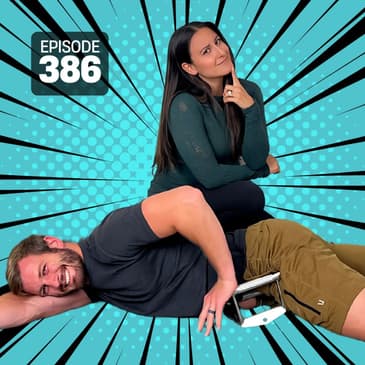
In this episode of The Optimal Body Podcast, Doc Jen and Doctor Dom, both doctors of physical therapy, discuss the pros and cons of using psoas release tools for tight hip flexors. They cover the pain and risks of hard psoas tools on hip flexors and nearby organs. Instead, they recommend a holistic approach to hip flexor health, focusing on movement, breathwork, and gentler tools like the Coregeous Ball. The episode offers health tips for addressing tight hip flexors and achieving optimal body health.
VivoBarefoot Discount:Support your feet and ankles with VivoBarefoot shoes—with perfect styles for any occasion! Boost foot health through mobility and strength from the ground up. Use code OPTIMAL20 for 20% off. 100-day trial included—return if you’re not satisfied!
**Vivo offers a 100-Day trial period. If you are not completely satisfied, you can send the shoes back and get a refund.
LMNT Discount Code:
Stay hydrated and energized with LMNT electrolytes—sodium, potassium, and magnesium for brain and body. It’s our favorite micro nutrition hack to get those essential minerals in! Get a free gift with every purchase and try new flavors! Get your Free Gift now!
Free Week of the Jen Health Membership:
Huge discount on Jen Health Annual Membership! Podcast listeners get over 50% off with code OPTIMAL10. Access 12 Therapy Plans and start your free trial now—move with us!
We think you’ll love:
Get A Free Week on Jen Health!
Get full show notes and resources here: https://jen.health/podcast/386
What you'll learn in this episode:
2:00 What are Psoas...
Hosted by Simplecast, an AdsWizz company. See pcm.adswizz.com for information about our collection and use of personal data for advertising.
[00:00:05] Welcome to the Optimal Body Podcast. I'm Dr. Jen.
[00:00:08] And I'm Dr. Dom, and we are doctors of physical therapy, bringing you the body tips and physical therapy pearls of wisdom to help you begin to understand your body, relieve your pains and restrictions, and answer your questions.
[00:00:19] Along with expert guests, our goal of the Optimal Body Podcast is really to help you discover what optimal means within your own body. Let's dive in.
[00:00:29] Before we hop into this episode, I want to talk foot health and how I truly believe that optimizing foot health is the pathway to optimizing our movement health and getting the most out of our bodies and life.
[00:00:41] Our feet are truly our foundation from which we move, and it is so vital that we are making sure we put them in the environment that can help us optimize the strength and mobility necessary to do what we need to do throughout the day.
[00:00:55] And that is why Jen and I wear Vivo barefoot shoes. We've worn them almost exclusively over the past five years, and the changes that we've seen in our feet and our movement is astounding.
[00:01:06] And the thing that I love that Vivo is doing the most right now is they're getting into the boot game, especially being winter and being chilly outside.
[00:01:14] One of the complaints I often hear is that barefoot shoes just don't keep my feet warm.
[00:01:18] That is not the case with some of these new boots that Vivo has come out with.
[00:01:22] They have winter lined boots that have the fur on the inside that is so comfortable, but it still comes with the thin, wide, and flexible benefits that you get from barefoot shoes.
[00:01:34] So if you're looking to get your feet in some boots that have those barefoot benefits, but will still keep your feet warm, go down to the link in the show notes.
[00:01:41] Make sure you use code OPTIMAL20 at checkout. That'll get you 20% off your entire order of regularly priced shoes.
[00:01:49] If they're on discount, you don't get that 20% off additionally, but they have shoes for everything.
[00:01:54] It's not just the boots. I wear them for everything, whether I'm in water, at the beach, working out, going to a wedding.
[00:02:00] They have Vivos for it all. So keep your style in check and make sure you're getting foot health benefits out of it at the same time.
[00:02:07] Link in the show notes. Code OPTIMAL20 gets you 20% off.
[00:02:10] Let's get into the episode.
[00:02:13] Okay, so right or so wrong?
[00:02:17] We hate doing that. We hate putting out specific names of products out there.
[00:02:22] But today we're going to talk about something that has been super common.
[00:02:26] I would call it kind of a fad is the psoas release tools.
[00:02:32] Specifically the ones that are super hard that people lay on and use to dig into the psoas because everyone's got tight hip flexors, right?
[00:02:40] So why don't we make a tool that just digs it out, that just helps release it?
[00:02:45] And so using these tools, the so right being one of the more common or popular ones has become more popular.
[00:02:52] Yeah, exactly. And I get a lot of questions, you know, should I get this tool?
[00:02:57] And will it be something that is finally going to help my tight hip flexors?
[00:03:01] And in short, we recommend not getting that tool.
[00:03:07] And we're going to talk about a tool we actually recommend.
[00:03:09] We've talked about it before on the podcast.
[00:03:11] And if you're watching on YouTube as well, we'll show you how to use this tool.
[00:03:16] Taking a quick pause from this episode to talk about one aspect of health that we could all focus on a little bit more.
[00:03:22] And that's our hydration.
[00:03:23] And I'm not just talking about drinking water here.
[00:03:25] I'm talking about replenishing and rehydrating the electrolytes that we're losing every single day without even knowing it.
[00:03:33] It's the sodium, potassium and magnesium that are so important to so many processes within our body.
[00:03:40] They can help with things like brain fog, headaches, fatigue, sleep, bowel movements and so much more.
[00:03:47] And that's why Jen and I drink Element.
[00:03:50] Element is the electrolyte drink mix that tastes so good, is backed by research and will keep you coming back to that bottle of water throughout the day.
[00:03:59] It also doesn't include added sugar or any of the extra junk that so many other electrolyte drink mixes include.
[00:04:06] So if you want to support our podcast a little bit and make sure you're optimizing your hydration, go down to the link in the show notes.
[00:04:12] You'll get a free sample pack with every single order so you can try out all the flavors and know which one you want to get when you inevitably come back to get more.
[00:04:20] That link is drinkelement.com backslash optimal.
[00:04:24] That's drinkelement.com backslash optimal.
[00:04:29] Let's get back into the episode.
[00:04:31] Yeah.
[00:04:32] And so really, why?
[00:04:34] Why shouldn't I use this?
[00:04:35] And some people will say like, oh, well, when I lay on it and I use it, I feel so good.
[00:04:40] Right.
[00:04:40] Or like it feels like it opens things up.
[00:04:42] It feels like it releases that psoas.
[00:04:44] And that may be true.
[00:04:47] Yeah.
[00:04:47] I can't tell you you're not feeling what you're feeling.
[00:04:49] So yeah, absolutely.
[00:04:51] Like the pressure placed on a muscle, especially for an extended amount of time, that's the mechanism that these tools are working on to get our muscle spindles to release and release some of the input that they're putting into that muscle.
[00:05:07] So it very well might make you feel like you have more length and more space in the front of those hips.
[00:05:13] But are we even touching on the psoas?
[00:05:16] Well, that's not to me.
[00:05:17] That's not even the actual point.
[00:05:19] Like people are saying it releases the psoas.
[00:05:21] And I think the point is that it's more indirect pressure.
[00:05:25] Like we're not touching directly on the psoas because there's so much over the psoas.
[00:05:31] There's so much that we need to work through.
[00:05:33] And that's where the problem comes in more so for Jen and I is that you're laying on this hard tool that has a hard point on it.
[00:05:41] And there is so many other things that we need to work through that could potentially be harmful, especially with sustained hard pressure.
[00:05:49] We have to realize that our iliopsoas is two muscles.
[00:05:54] And that's the primary hip flexor.
[00:05:57] So our psoas is going to connect from our upper leg and then along the inside of your hip bone and into your low back, into your spine.
[00:06:07] So think about what that's lying along, right?
[00:06:10] That's deep.
[00:06:12] Where's your spine?
[00:06:14] Right?
[00:06:14] Where's the top part of your upper leg?
[00:06:17] It's going to wrap underneath everything that is surrounding that.
[00:06:22] So that is our organs.
[00:06:24] That is our veins and arteries.
[00:06:28] That is our, if we're going to talk in layers, first we have our transverse abdominis, which wraps back to forward, right?
[00:06:36] And so we have this huge wrapped muscle that surrounds everything.
[00:06:42] Then we have our rectus abdominis, our internal obliques, our external obliques.
[00:06:46] So we have layers of muscle then surrounding everything.
[00:06:52] Not only that, but also crucial connective tissue around the area.
[00:06:57] Yeah.
[00:06:58] And like you mentioned, I was looking up right before we hopped on just pictures of the anatomy and the femoral veins, the femoral arteries, the femoral nerve bundles that come down and basically supply the whole front side of our legs with blood supply.
[00:07:13] And nerve supply are basically running right over the top of that psoas muscle, right over the top of the psoas.
[00:07:22] And then the iliacus, like Jen mentioned, that's the other muscle that combines with the psoas to make our primary hip flexor.
[00:07:28] So that's where for us, the hard sustained long-term pressure becomes an issue.
[00:07:35] Because if you're sitting on the wrong thing, if you're sitting over a vital organ, if yours, which again, like you have to work right through all of our abdominal tissue, abdominal tissue.
[00:07:48] And which laying there is our colon, which laying there is our small intestine.
[00:07:52] So we're needing to work, maybe not small intestine, depending on how high or low you are, but there's a lot that we need to work through.
[00:08:00] And to put pressure directly on that, right through that, that's so hard and aggressive, it can be detrimental.
[00:08:08] And I know that you've mentioned, our friend Jill Miller has looked at different case studies where people have actually injured or caused injury to different internal organs because of using hard tools like this.
[00:08:21] And I think the second issue that we have with a tool like this is we're not really proponents of using really aggressive hard pressure in the first place.
[00:08:31] Exactly.
[00:08:32] I mean, the whole point of having something sustained and causing this muscle feeling like it's going to release or getting that muscle to any muscle in the body to cause this relaxation effect that we're searching for is that it's more of the systemic effect from our brain
[00:08:50] into our body that's causing this parasympathetic relaxation so that we don't have so much tension into the muscle.
[00:08:58] We're giving that muscle feedback to say that you can relax.
[00:09:02] But if we're fighting into something, if we're wincing, if we're hurting, if we're almost crying, trying to do it, we're fighting our nervous system and we're giving a different input than the effect that we're trying to create.
[00:09:16] So harder is never better in these cases.
[00:09:20] For some nervous systems, there are people who want harder, right?
[00:09:24] They want the massage to go deeper and to go harder because they've kind of trained their nervous system into those hard pressures.
[00:09:32] And so there is like a level of variability here.
[00:09:37] But bottom line, when you're really trying to affect this relaxation, this release of the muscle, it's more about using the breath, down regulating the system and causing that overall tension release through the body.
[00:09:51] Yeah, if you're, again, if we're trying to just act on that mechanism, there are so many other things that don't have the risk of using such a hard tool through all of the organs and other tissues that can have a much more direct effect.
[00:10:04] You know, we've mentioned on previous podcasts that our diaphragm has direct connections into that hip flexor area.
[00:10:11] So if we are just laying on our back with our legs extended or laying on our back with one of our legs extended off the edge of a table or a bench in order to let that just hang there and then doing relaxed parasympathetic style breathing with our diaphragm, we're going to get a very similar physiologic effect in the relaxation of that psoas muscle without coming with the risk of using such hard pressure through a lot of other tissue.
[00:10:40] And you were talking about not wanting to be wincing or anything when you're using these tools.
[00:10:47] And that's exactly what I see with so many people who are using them.
[00:10:49] Yes, I feel like the marketing is getting better and telling people that they should be kind of like relaxing while they do it.
[00:10:57] But it's so hard when you have such an aggressive stimulus that I've seen people use them and they can't breathe.
[00:11:03] They're guarding.
[00:11:04] You see their shoulders coming up to their ears.
[00:11:06] And that is really doing the opposite effect.
[00:11:08] It's just putting more overall stress, more overall nervous system input into the muscles.
[00:11:14] When it comes to those muscle spindles, that's the specific fiber we're trying to address when it comes to getting a muscle to relax.
[00:11:23] They just get put more on guard.
[00:11:25] So in some cases, if someone's not using this tool right and just trying to relax and work with it, they're probably putting more tension into their system.
[00:11:34] And, you know, there are arguments that I've heard from clinicians where you can look at an ultrasound and a trained clinician who is doing slow, sustained pressure for long periods of time into like starting to melt kind of down into the tissue area, into the iliopsoas area.
[00:11:55] You can start to create more indirect pressure.
[00:11:59] You're still going to be over your abdominal tissue because you can't move all your abdominal tissue out of the way.
[00:12:04] But you can, because we have fascia that slides and glides and we have fluid around our entire body, we can cause some movement of things, right?
[00:12:16] So we can get organs out of the way.
[00:12:18] We can start to get tissues, important tissues kind of to move out of the way so we can get some indirect pressure directly onto, well, indirect directly, indirect pressure into that.
[00:12:29] So iliopsoas.
[00:12:30] Still kind of indirect because you're still going through all the abdominal layers.
[00:12:33] Yes, you still are on top of other layers.
[00:12:35] So sure, with a trained professional, not a hard tool, with a trained professional, could we potentially be getting some pressure on there?
[00:12:45] Sure.
[00:12:46] But we also then have to look at the flip side of why am I getting so much buildup of tension in my hip flexors in the first place?
[00:12:52] Because just laying on something or having someone do sustained pressure for long periods of time to start to cause some relaxation directly into the area, what is that going to do when you hop off the table or you hop off the tool and now you're back to living your life the way that you were and have no other change?
[00:13:13] Like just releasing a muscle does nothing if we're not changing our movement patterns that are actually causing us to feel that tension in the first place.
[00:13:22] I mean, that's the point we hadn't brought up yet is that it's really not solving the issue.
[00:13:26] No.
[00:13:26] Even if you do feel release right after you use one of these tools, it's not solving the underlying like root cause of why we have tightness or feel tightness in our hip flexors in the first place.
[00:13:38] We've done other episodes specifically on tight hip flexors that, you know, we can link whether you're listening or watching on YouTube.
[00:13:44] We'll try and link that so that you can find.
[00:13:46] We also have a free tight hip flexor guide that we've kind of broken up into a course that you should be able to get a better understanding of the complete picture of how do I address my tight hip flexors.
[00:14:01] And it's not with a tool.
[00:14:02] Even the tool that we talk about that is our favorite tool.
[00:14:05] Just using that tool is not going to long term help you fix your tight hip flexors.
[00:14:10] It has to come from the repatterning of our movement, of how our hips work with our core, all these other things in order to long term feel like, hey, I don't need to use a tool anymore.
[00:14:21] I don't need to do any passive techniques because my hip flexor is not feeling tight.
[00:14:25] So if you want to get our free tight hip flexor guide, we'll have that linked up in the show notes or in the description on YouTube.
[00:14:31] Yeah, it's like a free five day course.
[00:14:33] You'll essentially learn some stuff, try some videos each day.
[00:14:37] Now, why I like the tool that we love, which is the gorgeous ball from Tune Up Fitness.
[00:14:45] There's one right behind you.
[00:14:46] So we love the gorgeous ball.
[00:14:49] Grab that thing.
[00:14:50] Oh, grab it.
[00:14:51] Okay.
[00:14:51] Can you reach it?
[00:14:53] Sorry.
[00:14:55] Okay.
[00:14:56] So this is the gorgeous ball from Tune Up Fitness.
[00:14:59] And as you can see, it's a little deflated or you can't see, but it's like, think of it like a small Pilates ball.
[00:15:07] That's slightly deflated.
[00:15:08] That's slightly deflated.
[00:15:09] And you can deflate it to your preference.
[00:15:12] Like this is even more than I would probably have it.
[00:15:15] I would probably deflate it even a little bit more if I was going to use it into my psoas area.
[00:15:20] And the reality is we're using it underneath the rib cage, along the diaphragm, all the way down to our psoas area.
[00:15:28] It essentially will lie between like your rib cage and your hip bone.
[00:15:32] Yep.
[00:15:32] And what you're going to do as you're lying there is you're going to try to think of taking a deep breath in.
[00:15:39] And then you contract all the abdominal muscles and everything around it.
[00:15:45] And you kind of pull away from the ball as much as you can.
[00:15:48] And then as you exhale, I want you to think of relaxing everything over.
[00:15:54] And this is going to help you to melt deeper.
[00:15:57] And that long exhale is really going to help to downregulate the body.
[00:16:01] And then we have less guarding of the tissue that surrounds the psoas to help you melt into that area even more.
[00:16:09] And again, when we're addressing the diaphragm, we're addressing the psoas.
[00:16:13] And so we can get some amazing relaxation and release of tension.
[00:16:19] And a lot of people don't realize the tension that we have in the front of our belly.
[00:16:24] That could be causing a lot of the tension that we feel in our low back, right?
[00:16:28] We want our low back to be rubbed out all the time.
[00:16:30] But we're never addressing the front of our body.
[00:16:33] So this is an amazing tool to be able to do that.
[00:16:35] And anytime we have tension anywhere in the front, say the hip flexors, there's likely other restrictions elsewhere,
[00:16:41] whether it is in our abdominal muscles or in our rib cage or...
[00:16:45] Or just the fascia that lays around it.
[00:16:47] Yes, all of the visceral fascia.
[00:16:49] And while the Cordyce Ball is even more indirect with the pressure it's putting right on the psoas,
[00:16:55] it's helping address all of that.
[00:16:57] And it's kind of supercharging that relaxation effect that we get from focusing on the breath.
[00:17:04] And trust me, when you lay on this thing, you will feel things in your gut.
[00:17:08] And you will need to focus on keeping your breath even and staying relaxed and focusing on those big breaths.
[00:17:15] But just like Jen brought you through that process, do that for five breaths in one area and then move it.
[00:17:20] So move it to the center, move it to the other side, kind of get that whole abdominal area.
[00:17:26] Because like we always talk about, we're not just trying to address one muscle being the psoas.
[00:17:32] We're trying to address our systemic input and why we're feeling tense on the front side of our body.
[00:17:38] And this tool can really help us achieve that.
[00:17:40] Because it's so soft, it's grippy.
[00:17:43] So especially if you use it without a shirt on, you're going to help to downregulate that system.
[00:17:50] There's not going to be any damage to connective tissue or any of the tissue within the area.
[00:17:55] You eliminate that risk.
[00:17:56] Right.
[00:17:57] So and that's really like why take the risk, right?
[00:18:00] If we already know that there's case studies where people have injured vital tissue, why take that risk?
[00:18:07] It's not worth it.
[00:18:08] And then after you get this systemic downregulation, we need to understand our movement patterns.
[00:18:15] And we've talked about this before.
[00:18:16] And this is what we go so deep into with the guide that you can actually try different exercises on to see,
[00:18:23] okay, when I activate my core, am I just pulling from my hip flexor?
[00:18:26] Or am I actually using my core together?
[00:18:29] Like a lot of times people are, they're so used to only using their hip flexors when it comes to core exercise.
[00:18:36] They might hear a lot of hip popping.
[00:18:37] This is why their hip flexors feel overused a lot.
[00:18:40] Or maybe they have limited hip range of motion.
[00:18:43] So it feels so tense and tight in the front of your hips.
[00:18:46] There are so many other things that we have to be looking at when it comes to our movement pattern that just using a tool is never going to be enough.
[00:19:23] Thanks so much for joining us.
[00:19:24] So we're going to have a holiday giveaway happening right now.
[00:19:27] And within that, you can win a gorgeous ball.
[00:19:30] So we're going to have that linked up below as well so that you can enter into the giveaway.
[00:19:35] But keep an eye out on Instagram at DocGenFit and you're going to see all of the amazing giveaways that we have going on during this time.
[00:19:42] And we're just so excited because these are companies and brands we believe in, we use, and we love.
[00:19:48] So definitely check that out.