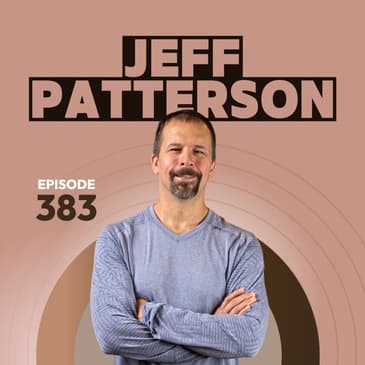
In this episode of the Optimal Body Podcast, hosts Doc Jen and Doctor Dom explore the transformative power of martial arts and meditating practices with guest Jeff Patterson, a martial arts expert with over 36 years of experience. Doc Jen highlights the importance of foot health and barefoot shoes, connecting these concepts to optimal health and the mind-body connection. Jeff shares his journey into martial arts and the benefits of meditating, while the discussion also touches on how meditating can enhance athletic performance, manage stress, and improve overall well-being. Drawing from their backgrounds in physical therapy and women’s health, the hosts and Jeff offer insights into how exercise and meditating together can support a holistic, empowered lifestyle. Jeff also introduces the concept of "yielding" and provides practical tips for integrating meditating into daily life.
VivoBarefoot Discount:
Support your feet and ankles with VivoBarefoot shoes—with perfect styles for any occasion! Boost foot health through mobility and strength from the ground up. Use code OPTIMAL20 for 20% off. 100-day trial included—return if you’re not satisfied!
Free Week of the Jen Health Membership:
Get a free week of Jen Health Membership! Access 12 plans crafted by Doc Jen, PT. We’ll match you with the best plan for your goals. Check it out today and use code OPTIMAL for a discount on your first month!
Jeff's Resources and Links:
Free Book Offer: The Yielding Warrior
The Yielding Warrior Youtube Channel
We think you’ll love:
Get A Free Week on Jen Health!
Check out the full show notes and resources at: https://jen.health/podcast/383
What you will learn from Jeff Patterson:
4:40 Jeff's Journey into Martial Arts
6:28 How meditative arts enhance athletic performance...
Hosted by Simplecast, an AdsWizz company. See pcm.adswizz.com for information about our collection and use of personal data for advertising.
[00:00:05] Welcome to the Optimal Body Podcast. I'm Dr. Jen.
[00:00:08] And I'm Dr. Dom. And we are doctors of physical therapy, bringing you the body tips and physical therapy pearls of wisdom to help you begin to understand your body, relieve your pains and restrictions, and answer your questions.
[00:00:19] Along with expert guests, our goal of the Optimal Body Podcast is really to help you discover what optimal means within your own body. Let's dive in.
[00:00:29] Gosh, this is such a cool topic because it's something that we have not dove into with anyone yet. And so I'm really excited about this podcast episode.
[00:00:37] Now, understanding how martial arts and the way that people move, what do you usually think about when you think about their feet?
[00:00:44] They're barefoot, right? When you see people in the park and they're doing Tai Chi and they're doing, you know, these meditative arts, they're not usually wearing shoes.
[00:00:57] Martial arts, you're not wearing shoes. And that's so beneficial to the body because not only are we connecting to all the different nerve stimulus that is connecting all the way up into our body because now our foot can feel the ground,
[00:01:11] but we're activating our muscles and our mobility of our foot as well, which is why we wear Vivo Barefoot Shoes.
[00:01:18] This is why we have our son in Vivo Barefoot Shoes. This is why we believe in it so incredibly strongly because your foot needs the environment in order to improve its strength and mobility and maintain access to the entire body.
[00:01:34] Our feet play such a crucial role. It's something that we have gone over and we're going over in our posture course even.
[00:01:43] So if you're concerned about posture, have you considered your feet? It is something we're looking at throughout this month and it is so crucial.
[00:01:51] So if you have not tried some Vivo Barefoot Shoes, I'm going to encourage you right now, use Optimal 20. This is 20% off.
[00:02:02] 20% off to either treat yourself, maybe you're already planning on gifts for the holidays. Optimal 20 gets you 20% off a pair of shoes that are not already discounted on Vivo Barefoot Shoes.
[00:02:14] Of course, we're going to have that link down in the show notes so you can easily just click and make sure that our code has not changed because sometimes it gets leaked and changed, but code Optimal 20 should be in access right now.
[00:02:26] It gets you 20% off any shoes, which is a huge deal and we're so appreciative that they're giving this deal and we use it ourselves.
[00:02:34] We have to get shoes as well. We get shoes for Dante. We get shoes for our friends and family members.
[00:02:39] We believe in it so strongly because of the effects of putting your foot in a more natural space in order to have the mobility and gradually build the strength, which we've seen in studies six months and your foot improves its strength within 60% just by wearing Vivo Barefoot Shoes alone.
[00:02:57] It's pretty powerful stuff. So if you have not yet and you're concerned about hip pain, back pain, different knee pain, whatever is happening within your body, address your feet.
[00:03:08] Start at your feet, improve the environment, even if it's just small walks and starting to do basic workouts in more barefoot shoes, your body is going to thank you over time.
[00:03:19] So again, that's code Optimal 20 at checkout.
[00:03:22] Our guest today is Jeff Patterson from Portland, Oregon, who has over 36 years of experience practicing and teaching the meditative and martial arts.
[00:03:32] As founder of the Northwest Fighting Arts, Portland Tai Chi Academy and the Yielding Warrior, he emphasizes the transformative power of meditative and martial arts practices, particularly the yielding concept, which we're going to get into with him.
[00:03:47] He has published two books and hundreds of instructional videos.
[00:03:51] He is the founder of the Yielding Warrior online program and has worked with thousands of students, practitioners and teachers from around the world.
[00:04:00] I'm so excited for you to listen in to his expertise and how these meditative and martial arts can really impact our health.
[00:04:08] Jeff, we're so excited to have you on today.
[00:04:11] It's funny, right before we hopped on, I asked you a question because I said I was going to call you a master of the arts.
[00:04:16] And I think what you were going to respond in saying is kind of what you said earlier is you're never really a master.
[00:04:22] You're always learning.
[00:04:22] And I think that's what I appreciate about you because you've been doing these meditative arts, Tai Chi and Qigong for 30 plus years, leading your academy for 30 plus years.
[00:04:34] And we're so excited to dive into your expertise a little bit.
[00:04:38] Nice.
[00:04:38] It's an honor to be here.
[00:04:39] Thank you for having me.
[00:04:40] Well, first of all, you know, I want to understand.
[00:04:43] So how did you get into the world of martial arts?
[00:04:47] What kind of led you down?
[00:04:48] Because I know, you know, and traditionally when people think martial arts, at least for me, and what is quite popular, I feel like is jujitsu.
[00:04:57] And I know that's something that you do and you practice as well, but you go beyond that.
[00:05:02] And you're teaching, you know, as Dom said, Tai Chi and Qigong.
[00:05:07] So how did you end up going into those practices as well when you started with martial arts?
[00:05:13] Yeah, so I started doing martial arts at a fairly young age in my teens.
[00:05:19] And it was something I was always intrigued by.
[00:05:22] However, I grew up with fairly modest means.
[00:05:24] So I didn't really have a family that could support that desire.
[00:05:28] And so once I was old enough to get a job, I got lessons at a local martial arts academy.
[00:05:35] And it wasn't until my later teens and early 20s when I was really into Western boxing where I met a boxing coach who, after following him around for a while, he told me one day, he said, you know, if you really want to be a good boxer, you should start doing meditation and Tai Chi.
[00:05:53] And, you know, at the time I was this young kid who didn't know much of anything thinking, you know, isn't Tai Chi for old people in the park?
[00:06:00] How's that going to help me be a better fighter?
[00:06:02] And and I started doing the practice and it changed my life in so many ways.
[00:06:07] And through the years, you know, I've seen thousands of students come through the academy and I've heard hundreds of stories of how the meditative arts has positively influenced people's lives.
[00:06:18] And so that's kind of what's made me so passionate about getting the message out there and writing my last couple books and creating the online program and the teacher training program that I have.
[00:06:28] So that's yeah, that's very interesting to me because I think that's the stereotype a lot of people might think of.
[00:06:34] Oh, Tai Chi, that's something that old people do in the park or when you see it, it's a very slow practice.
[00:06:41] So how does something like that translate into making you a better boxer or a better explosive athlete?
[00:06:47] So many ways, you know, and if you look today, there's many examples over and over again how athletes, professional athletes in all sports, football, basketball, baseball,
[00:06:58] are turning to the meditative arts to improve their performance.
[00:07:02] You know, when Phil Jackson was coaching the Chicago Bulls, when they won all their games, when Michael Jordan was on their team,
[00:07:08] he was having them practice meditation and Tai Chi and yoga to help improve their performance on the court.
[00:07:14] And so, you know, it's becoming very much more open and people are coming more kind of in tune to the idea of the meditative arts.
[00:07:24] But it works not only with your physiology, but with your mental state and your emotional state,
[00:07:30] giving you more control so you can be a better performer in pretty much anything you do.
[00:07:36] So what is the premise around it?
[00:07:38] What is the purpose of someone kind of going in and saying, you know, this might be good for me.
[00:07:43] Maybe I should start this.
[00:07:45] Why would someone kind of, you know, go into these practices?
[00:07:48] That's a great question because that's something I always try to get people to come to a realization of when they're starting to take on the practice.
[00:07:56] Because the most important thing to having a successful meditation practice is that you do a little bit every day.
[00:08:06] And if you don't have a strong why as to why you want to do it, you're going to, the alarm's going to go off and you're going to hit the snooze button.
[00:08:14] You're not going to want to get up and practice.
[00:08:16] And, you know, it's having that consistency, all of the meditative arts, whether you're doing a sitting practice, you're doing Tai Chi, Qi Gong, Bagua, Xing Yi, Yichuan, whatever form of meditation you're doing.
[00:08:31] It's meant to help you to experience a deeper feeling within the body and a deeper mental connection to that.
[00:08:38] And the only way you're going to ever experience that is by consistency and repetition.
[00:08:44] The Dalai Lama once said that everybody should meditate for 20 minutes a day unless you're too busy, then you should meditate for an hour.
[00:08:52] And I love that saying in that, you know, everybody should spend time and just reconnect with who we are because it's so common that in today's society that, you know, we're out and, you know, the busy to-dos and everything we have going on.
[00:09:09] And we've got people coming from all angles where oftentimes we're kind of forced to wear a mask and hide how we really feel and maybe not show our true emotions.
[00:09:21] And maybe we don't want to hurt somebody's feelings or we don't want to tell them what we see.
[00:09:25] And in doing this, we're so used to wearing these masks that eventually we go to start looking at ourselves in the mirror and we're still wearing that mask.
[00:09:36] Meditation is one of those things that helps us stay connected to who we really are and improves your performance in athletics and your own interpersonal communication and your relationships with other people.
[00:09:50] There's just so many different applications and how you can use the practice.
[00:09:54] And I feel like meditation is another thing that people struggle with at face value sometimes because it's like, how do I do it?
[00:10:02] What am I supposed to do?
[00:10:03] I just sit cross-legged in a room for 10 minutes and then what?
[00:10:08] You know, and so can you explain a little bit more about what a successful practice, a meditation practice should look like or feel like?
[00:10:17] And I know that you also talk a little bit about different types of meditation, some of which you probably just named.
[00:10:23] Yes. So with the meditative arts, it doesn't matter really what discipline you're practicing.
[00:10:30] What's important is to understand and know why you're getting into the practice.
[00:10:34] So I break down the meditative arts into five categories.
[00:10:37] We have more of our performance-based category, which is athletics or the combat of sports.
[00:10:44] There's the therapeutic side of the training, the medical side of the training, the philosophical side of the training, and then also the meditative or spiritual side of the training.
[00:10:53] And for whatever reason you're taking on the practice, you're going to incorporate different practices to help you achieve that goal.
[00:11:02] And if you don't understand why you're coming to the practice in the beginning, you might be going down a wrong path.
[00:11:09] And that's one of the things that I see happening so often with people is that there's pluses and minuses to everything, but YouTube is a great resource.
[00:11:19] But there's a zillion videos up there, and it's overwhelming for somebody that doesn't have any guidance.
[00:11:26] You know, you're looking at this and that and the other, and it's so easy to get confused.
[00:11:31] So if you're thinking about taking on a meditative practice, one of the first things I would recommend is to find somebody that can guide you down that path, and it'll save you a lot of time.
[00:11:43] It's easy to waste 10 years of going down these wrong paths before you find the next one, and I've seen that happen all too often with what I'm doing.
[00:11:51] And so take a little bit of time, figure out what your why is, and find somebody to help you figure out the best approach to doing that.
[00:12:01] And it's the same as anything else.
[00:12:03] I mean, you're not going to become a professional basketball player without having good coaches along the way to help guide you and find the best path there.
[00:12:12] And it's really the same thing with the meditative arts.
[00:12:16] So once you have that figured out and you know what direction you want to go and you have a guide to help you, then it's breaking it down into the different modalities of practice.
[00:12:30] And I kind of break them down into three categories.
[00:12:33] We have our ritual practices.
[00:12:35] Ritual practice is the first one where you want to set time aside every day, and it could be as little as 20 minutes.
[00:12:42] It doesn't need to be where you go retire to a cave and meditate for the rest of your life.
[00:12:48] But if you just do a little bit every day, kind of like you're brushing your teeth, that consistency, you're really going to see the benefits start to come out with that.
[00:12:58] Then there's active practices.
[00:13:00] And active practices are things that you can do when you're standing in line at the grocery store or sitting in your car at a red light.
[00:13:08] And they can be as simple as maybe counting out 10 breaths or doing some spinal rotations or a simple movement practice.
[00:13:15] And it's a way that you can stay in tune throughout the day and try to stay connected to your center.
[00:13:22] And then lastly, there's the philosophical side of the practice.
[00:13:25] And these can be either used as active practices or ritual-based practices.
[00:13:32] And so as you understand this and you start building an evolving life practice around meditation,
[00:13:37] we're pulling things from these three different categories and taking things from movement practices,
[00:13:44] from sitting practices, standing practices, breath work,
[00:13:47] and starting to build a practice around your lifestyle to help you go down the path that you're looking to go down.
[00:13:55] So meditation, in your words, doesn't necessarily have to mean that you're sitting down and meditating.
[00:14:02] It could be movement-based meditation.
[00:14:06] And is that what you kind of teach within your martial arts and your movement practices?
[00:14:13] Is it meditative as you're kind of moving through these?
[00:14:17] Or should it be separate?
[00:14:19] Should you have a time when you're just sitting and meditating versus moving and meditating?
[00:14:25] So yes, there are movement arts that are based on the meditation like Tai Chi or Qi Gong.
[00:14:33] But then there's also a lot of different sitting practices.
[00:14:36] And even in sitting meditation, there's hundreds of different breathing strategies.
[00:14:41] There's different energetic circulations that you do.
[00:14:44] And so even if that was all you were doing was a sitting practice,
[00:14:47] you could spend the rest of your life studying how to be a better sitting practitioner of meditation.
[00:14:54] Now, what I like to do is a combination of many different modalities
[00:15:01] because people come to the practice from different points of view,
[00:15:07] different places in their life, different energies.
[00:15:10] And some people, it's very difficult for them to sit down for 20 minutes.
[00:15:14] And for somebody like that, I would start them off maybe with a Qi Gong set
[00:15:18] or some Tai Chi and something to try to get them used to being in that meditative mindset
[00:15:24] and starting to build the consistency and see the success of the practice.
[00:15:29] And then once they have that, then we can start maybe adding some sitting practices
[00:15:35] or maybe some standing meditation practices or different breath work exercises.
[00:15:40] And then we start to have more of an evolving practice
[00:15:44] that's not going to be the same today as it will be in five years or 10 years.
[00:15:48] One thing that I like about, and I definitely am not somebody who has a daily practice.
[00:15:54] In the past, I've had periods where I've tapped into more of a daily ritual type practice
[00:16:00] and have seen profound impacts.
[00:16:03] And the thing that I loved the most about it was
[00:16:08] how it seemed to help me during stressful times during the day.
[00:16:11] So, can you speak a little bit to why doing a daily ritual practice might help you?
[00:16:19] Our day is full of constant micro, macro, and massive stresses.
[00:16:24] How does having a ritual-based meditation practice help us with the stresses
[00:16:29] that we might encounter in everyday life?
[00:16:32] So, that's a very deep question and there's lots of ways.
[00:16:36] I'm going to explain kind of the most common one that I hear people tell me all the time.
[00:16:41] And it's also a reason why a lot of people turn away from meditation
[00:16:46] in that they think when they do the practice that they need to be able to quiet their mind.
[00:16:51] And there's somehow along the way,
[00:16:54] the general population has got this misconception that
[00:16:58] to do meditation, you need to be reaching this state of nirvana.
[00:17:01] And that's still not the case.
[00:17:03] You know, I've been studying for a long time.
[00:17:06] I've met meditation practitioners from all over the world
[00:17:09] and been very fortunate to train with some really great practitioners.
[00:17:14] And I've never once met anybody that doesn't get distracted
[00:17:19] and doesn't have their mind wander.
[00:17:21] That's part of the practice.
[00:17:23] And the idea when you meditate is you learn how to,
[00:17:27] say for example, you sit for 20 minutes or you do a standing meditation for 20 minutes.
[00:17:32] Your mind might get distracted 50 times during that 20 minutes.
[00:17:37] But every time it gets distracted,
[00:17:39] you use your breath, you use your posture,
[00:17:42] you use the movement if it's a movement practice
[00:17:44] to help bring you back to focus and back to center.
[00:17:48] And every time you do that,
[00:17:49] it's a repetition of learning how to get out of that distraction
[00:17:53] and come back to focus.
[00:17:55] And if you do that 50 times a day in your ritual practice
[00:17:58] and you do that every day for the next one year, five years, 10 years,
[00:18:02] think about the muscle that you're building up
[00:18:05] to be able to deal with these distractions and conflicts
[00:18:09] and then come back to that central equilibrium.
[00:18:12] Now, when you're going through the day
[00:18:14] and something stressful comes into your life,
[00:18:17] somebody says something negative to you
[00:18:19] or whatever that you get overwhelmed at work,
[00:18:22] it's easy to go down that negative path
[00:18:26] and lead to the next negative thing
[00:18:28] and the next problem and the next thing.
[00:18:30] Whereas if we could learn to recognize that disturbance
[00:18:34] as soon as it happens
[00:18:36] and use our practice to bring us back to center,
[00:18:40] we can stop from going down these negative paths
[00:18:44] and keeping more of a level head
[00:18:46] and dealing with these different stressors
[00:18:48] that come up in our life over and over again.
[00:18:51] And that's one of the ways
[00:18:53] that it can benefit you with stress
[00:18:55] and anxiety and depression.
[00:18:57] And that's why so many people all over the world
[00:19:00] are turning to the meditative arts
[00:19:02] to help deal with these problems.
[00:19:03] I mean, I think that's so incredibly important to point out
[00:19:07] and hopefully people start to, you know,
[00:19:11] take a little bit more attention to,
[00:19:12] okay, how can I create more of a ritualistic practice?
[00:19:16] I mean, that's something I've even started to work on.
[00:19:18] Even if it's not 20 minutes,
[00:19:20] if I just first thing in the morning,
[00:19:22] open up my blinds, get some sunlight in,
[00:19:24] and sit down and take a few breaths,
[00:19:27] like how can I do that before I get down
[00:19:29] and see my son and go into, you know,
[00:19:32] the craze of the day?
[00:19:33] So how can I start just a little bit at a time?
[00:19:37] And maybe hopefully it will grow, right?
[00:19:40] To something a little bit longer,
[00:19:41] but just starting a little bit at a time
[00:19:44] to build and create more of that ritualistic practice
[00:19:48] to be able to handle life the way that you're talking about it
[00:19:53] and redirecting your brain
[00:19:55] and the interruptions that happen throughout the day,
[00:19:58] I think is so huge.
[00:20:00] And when it comes more to the movement-based meditative practices
[00:20:05] and the arts that you teach,
[00:20:08] you know,
[00:20:09] why would someone,
[00:20:11] like how does that physiologically kind of help them by,
[00:20:14] I mean,
[00:20:15] one thing that I can think of,
[00:20:18] you know,
[00:20:18] top of mind,
[00:20:19] I haven't done it myself,
[00:20:20] but just thinking of the slow controlled movements
[00:20:23] and how much awareness that's building within the body.
[00:20:27] Like why are these practices good,
[00:20:30] not just mentally and meditatively,
[00:20:33] but physiologically for the body?
[00:20:34] What benefit have you seen from students?
[00:20:37] I'm going to lead that into the idea of yielding
[00:20:39] because I think that could answer the question
[00:20:41] from a couple of different directions.
[00:20:44] And,
[00:20:44] you know,
[00:20:46] yielding to me is one of the coolest concepts
[00:20:48] in the meditative arts and the martial arts,
[00:20:51] and it's been used for generations.
[00:20:53] My newest book,
[00:20:55] The Yielding Warrior,
[00:20:56] is all based on this idea,
[00:20:57] and it talks about how to integrate
[00:20:59] the three different kinds of yielding,
[00:21:01] physical yielding,
[00:21:02] mental yielding,
[00:21:03] and emotional yielding.
[00:21:05] Physical yielding is the idea that I push you,
[00:21:09] you push me,
[00:21:10] whoever's the bigger,
[00:21:11] stronger person with the most leverage
[00:21:13] eventually is going to push the other person over.
[00:21:16] But with yielding,
[00:21:17] instead of us trying to see who the bigger meathead is,
[00:21:20] when you push me,
[00:21:21] I get out of the way of that force,
[00:21:23] and now I can respond with less effort.
[00:21:25] So I'm not trying to butt heads with you.
[00:21:27] And it's obvious how this is helpful in a combat situation,
[00:21:32] or in an athletic encounter,
[00:21:34] where you're coming up against somebody who maybe has 50 pounds on you.
[00:21:39] It's going to be very difficult to wrestle that person to the ground,
[00:21:42] whereas if you could yield to their force,
[00:21:44] a lot of times you can get ahead of them,
[00:21:47] and come out on top in that conflict.
[00:21:49] Now,
[00:21:50] in order to be good at physical yielding,
[00:21:54] a lot of things have to come into play.
[00:21:57] First,
[00:21:57] you need to be well-rooted.
[00:21:59] The lower part of your body needs to be strong and flexible,
[00:22:02] so you can change your central equilibrium without getting tight.
[00:22:05] The body has to be relaxed,
[00:22:07] the breath has to be calm,
[00:22:08] and the mind has to be present.
[00:22:11] Now,
[00:22:11] while this takes years and years to get to a high level of this,
[00:22:15] from day one,
[00:22:16] you start seeing the benefits of being more aware of what's going on inside yourself,
[00:22:21] which also helps you be more aware of what's going on in other people,
[00:22:26] and this is where we move into what I call mental yielding.
[00:22:30] Say,
[00:22:31] for example,
[00:22:31] I say something that unsettles you,
[00:22:33] and I pick up on it right from the beginning.
[00:22:36] It's a lot easier to adjust the conversation and keep us in a happy place
[00:22:41] than if I'm not paying attention to that,
[00:22:43] and pretty soon I'm so far off track,
[00:22:44] you want to knock me upside the head.
[00:22:47] Learning how to use yielding in all of your interactions is extremely powerful.
[00:22:52] One,
[00:22:52] you're just being more considerate,
[00:22:54] but two,
[00:22:55] it gives you the ability to see things from the beginning,
[00:22:58] so you can guide conversations and guide interactions
[00:23:02] in a positive direction towards the outcome you want to see,
[00:23:06] and this makes it good for both people,
[00:23:08] rather than just kind of forcing your way on somebody
[00:23:11] and making it happen the way you want it.
[00:23:14] And so,
[00:23:15] mental yielding can be used in,
[00:23:18] you know,
[00:23:19] relationships and business and negotiation and sales.
[00:23:22] I mean,
[00:23:22] there's so many different applications of this.
[00:23:24] If you ever read any old military strategy,
[00:23:26] you'll see that a lot of old successful military people use the concept of
[00:23:32] yielding in battles.
[00:23:33] And so,
[00:23:34] it's just across the board on the applications with it.
[00:23:38] This is very much like emotional yielding,
[00:23:41] which is the third one,
[00:23:42] except for it's with your own interpersonal conflicts.
[00:23:46] Oftentimes,
[00:23:47] things will happen to us and we'll respond
[00:23:49] and we'll go down this path
[00:23:51] and we might get an hour a day,
[00:23:53] a week down that road and realize
[00:23:55] maybe that wasn't the best choice.
[00:23:57] But with yielding,
[00:23:58] if we had that expanded awareness
[00:24:00] and we were in tune,
[00:24:01] as soon as it happened
[00:24:02] and we could sit back
[00:24:03] and maybe evaluate the scenario a little bit better
[00:24:06] and maybe make a different choice,
[00:24:09] a lot of times it can save us a lot of heartache on the other side.
[00:24:12] You know,
[00:24:13] and I've been explaining this idea of yielding for years
[00:24:17] and one of the most common things I'll hear people say is,
[00:24:20] ah,
[00:24:20] that makes a lot of sense.
[00:24:21] I do yielding all the time.
[00:24:22] And while I would agree,
[00:24:24] I think everybody does yielding to some degree all the time.
[00:24:29] It's kind of like if you or I were to walk into a crime scene
[00:24:33] with a detective who's been on the job for 30 years,
[00:24:36] he would see things about that crime scene
[00:24:38] and the series of events and the timeline
[00:24:40] that I know at least I would have no clue of.
[00:24:43] And that's kind of what the meditative arts helps us do
[00:24:46] with our own internal awareness
[00:24:48] and then also the awareness that we see in other people.
[00:24:51] And I feel like you're never going to reach that level of awareness
[00:24:56] without a meditative practice.
[00:24:58] It reminds me of,
[00:24:59] I hear people talk about a tactical pause a lot
[00:25:02] or, you know,
[00:25:03] using that tactical pause to then not go with your initial reaction
[00:25:08] or the gut reaction that wants to come blurting out of us,
[00:25:12] but do it a little more thoughtfully
[00:25:14] and in a way that is gonna,
[00:25:16] yeah,
[00:25:16] whether it's a conversation with somebody,
[00:25:18] whether it's physical,
[00:25:19] whether it's emotional,
[00:25:20] it's gonna help you respond with a little more tact.
[00:25:23] And I really like that.
[00:25:26] I think about many applications
[00:25:28] in which I could do a better job at that in my own life.
[00:25:33] On this podcast,
[00:25:34] a lot of people come here
[00:25:36] because they're in pain to some degree,
[00:25:38] whether that be,
[00:25:39] you know,
[00:25:40] a physical injury they had,
[00:25:42] whether it's a chronic or persistent pain condition.
[00:25:45] So,
[00:25:46] where does a meditative art
[00:25:50] or a meditative movement art
[00:25:51] like Tai Chi
[00:25:52] or Qigong
[00:25:54] come into helping somebody address pains in their body?
[00:25:59] So,
[00:26:00] there's,
[00:26:01] when I mentioned earlier,
[00:26:02] the five different directions of the practice,
[00:26:04] you know,
[00:26:04] we have the martial or athletic side,
[00:26:07] the therapeutic side,
[00:26:08] the medical side,
[00:26:09] philosophical side,
[00:26:10] the meditative side.
[00:26:11] Back in the old days,
[00:26:13] all of the old Chinese doctors
[00:26:15] were Qigong practitioners
[00:26:17] because they learned how to build up their energy
[00:26:19] and use that for healing other people.
[00:26:23] That's,
[00:26:24] that's one way.
[00:26:25] So,
[00:26:25] by doing this practice,
[00:26:26] we can increase our energy levels
[00:26:29] and there's different breathing strategies.
[00:26:32] Sometimes we can do,
[00:26:33] like,
[00:26:34] say you have a sore elbow
[00:26:36] or you have something,
[00:26:38] an ailment going on in the body,
[00:26:40] you could do different breathing strategies
[00:26:42] to help improve the circulation there
[00:26:44] to aid in the healing.
[00:26:45] The other thing is,
[00:26:47] by developing a deeper level of awareness,
[00:26:51] one of the things that often holds us back
[00:26:54] from rehabbing through injury
[00:26:56] is that we keep injuring it over and over again
[00:27:01] because we're not really in tune with our body.
[00:27:03] We don't know what our limitations are.
[00:27:05] By being more sensitive
[00:27:07] and more aware of what's going on
[00:27:09] and being able to pay attention to,
[00:27:11] for example,
[00:27:12] say what your range of motion is
[00:27:13] to stay out of that pain-free
[00:27:15] or that pain-free area,
[00:27:17] now we start being more in tune
[00:27:20] through our daily,
[00:27:21] day-to-day activities
[00:27:22] and it lets that injury heal a lot quicker
[00:27:25] because of that increased awareness.
[00:27:28] Now,
[00:27:28] if you were to follow
[00:27:30] the medical side of Qigong,
[00:27:32] you could study that
[00:27:33] for the rest of your life
[00:27:34] and,
[00:27:35] you know,
[00:27:35] they go into
[00:27:37] acupuncture,
[00:27:38] acupressure,
[00:27:39] they do herbs,
[00:27:39] they do
[00:27:40] twina,
[00:27:41] they do all these different things
[00:27:42] that are all part of Qigong.
[00:27:45] You know,
[00:27:46] Qigong is often referred to
[00:27:47] as the science of the breath
[00:27:48] and there's literally
[00:27:50] hundreds of different
[00:27:51] breathing strategies
[00:27:52] and we'll do these
[00:27:54] for different
[00:27:55] mental,
[00:27:57] physical states
[00:27:57] but we'll also do these
[00:27:59] for different energetic
[00:28:00] circulations in the body
[00:28:01] that we can use
[00:28:02] towards
[00:28:05] healing
[00:28:05] and that kind of thing.
[00:28:06] I mean,
[00:28:07] just the fact of awareness,
[00:28:09] what you brought up,
[00:28:10] like having that awareness
[00:28:11] in the body,
[00:28:12] I think so often
[00:28:13] we're told,
[00:28:14] you know,
[00:28:15] while you're doing work
[00:28:16] or you're just running
[00:28:18] through everyday life
[00:28:19] and then you get your workout in
[00:28:20] and you're just trying
[00:28:21] to get it done
[00:28:21] and move on
[00:28:22] and so often
[00:28:24] we're trying to get things done
[00:28:26] and that we're moving
[00:28:27] so quickly,
[00:28:28] we lose that awareness
[00:28:30] and that key point
[00:28:31] into our body
[00:28:33] and so
[00:28:34] that's where
[00:28:35] I can see it being
[00:28:37] so beneficial
[00:28:38] especially for
[00:28:38] chronic pain patients
[00:28:40] to slow down,
[00:28:41] to use their breath
[00:28:43] with movement,
[00:28:43] to gain that awareness
[00:28:45] through control
[00:28:46] and through
[00:28:48] that range of motion
[00:28:50] and understanding
[00:28:51] your body
[00:28:52] in a way
[00:28:52] that you probably
[00:28:53] haven't done
[00:28:54] or used
[00:28:55] in that way before
[00:28:56] so I could see it
[00:28:57] just being
[00:28:58] so beneficial
[00:29:01] and one thing
[00:29:02] that I wanted to go to
[00:29:03] as well
[00:29:03] is that you talk about
[00:29:05] five regulations
[00:29:06] that you refer to
[00:29:07] that could lead
[00:29:08] to a healthier lifestyle.
[00:29:09] what are
[00:29:11] these five regulations
[00:29:13] and what does that
[00:29:14] what does that mean
[00:29:15] when it's
[00:29:16] when you're leading
[00:29:16] down toward
[00:29:17] a healthier lifestyle?
[00:29:19] So the five regulations
[00:29:20] is used in any
[00:29:21] meditative practice
[00:29:22] it doesn't matter
[00:29:23] what style of meditation
[00:29:24] you're doing
[00:29:25] still or movement
[00:29:26] meditation
[00:29:27] and they are
[00:29:28] regulating the body
[00:29:29] regulating the breath
[00:29:30] regulating the mind
[00:29:31] regulating the energy
[00:29:33] and regulating the spirit.
[00:29:34] Briefly I'll go through
[00:29:36] and kind of describe
[00:29:36] what all five of those are
[00:29:38] to kind of give you an idea.
[00:29:39] So regulating the body
[00:29:41] an example of that
[00:29:42] would be
[00:29:44] think about
[00:29:45] you're sitting down
[00:29:45] at your computer
[00:29:46] for four hours
[00:29:47] and your shoulders
[00:29:48] are hunched forward
[00:29:49] and you start feeling
[00:29:50] lethargic and tired
[00:29:51] you get a stiff neck
[00:29:52] just this idea
[00:29:54] of having poor posture
[00:29:55] is affecting
[00:29:56] your energetic state.
[00:29:58] Now the flip side
[00:29:59] of that
[00:29:59] think about
[00:30:00] somebody walking
[00:30:01] into the room
[00:30:02] who is your most
[00:30:04] admired
[00:30:04] or respected person
[00:30:06] on the planet
[00:30:06] how your body
[00:30:07] is going to perk up
[00:30:08] and think about
[00:30:09] how your energetic state
[00:30:11] changes from that one thing.
[00:30:13] Well we're in control
[00:30:14] of that
[00:30:15] all day
[00:30:16] every day
[00:30:17] but most people
[00:30:18] walk around
[00:30:19] with poor posture
[00:30:20] they have their shoulders
[00:30:21] hunched forward
[00:30:22] their neck sore
[00:30:22] all the time
[00:30:23] and a lot of that
[00:30:24] is just because of
[00:30:25] how they hold themselves
[00:30:27] and so regulating
[00:30:28] the body
[00:30:29] is the easiest
[00:30:30] of these five
[00:30:31] to accomplish
[00:30:32] and usually
[00:30:33] most people
[00:30:34] with two to three
[00:30:35] months of consistent effort
[00:30:37] can learn how to regulate
[00:30:39] the body
[00:30:39] and have it
[00:30:41] close to their potential
[00:30:43] and so
[00:30:44] this is why
[00:30:44] it's the first step
[00:30:45] in this procedure
[00:30:47] and then
[00:30:48] next we have
[00:30:49] regulating the breath.
[00:30:52] Regulating the breath
[00:30:53] is a very deep topic
[00:30:55] and can be
[00:30:57] a lifetime journey
[00:30:58] however
[00:30:59] there's a lot of things
[00:31:01] with the breath
[00:31:01] that will benefit
[00:31:04] from day one
[00:31:05] and I mentioned earlier
[00:31:06] that Qigong
[00:31:07] is often referred to
[00:31:08] as the science
[00:31:09] of the breath
[00:31:10] and you know
[00:31:11] because there's so many
[00:31:12] different breathing strategies
[00:31:13] we kind of broadly
[00:31:14] categorize them
[00:31:15] into yin methods
[00:31:16] and yang methods
[00:31:17] yin methods
[00:31:18] are often deeper
[00:31:19] more holistic style
[00:31:21] of meditation practices
[00:31:22] and an example
[00:31:24] of a yin breath
[00:31:25] would be
[00:31:25] if you ever listen
[00:31:27] to somebody sleep
[00:31:28] their natural
[00:31:29] breathing pattern
[00:31:30] is a longer inhale
[00:31:31] and a shorter exhale
[00:31:33] and that's the body's
[00:31:35] natural way
[00:31:36] of bringing your
[00:31:36] conscious mind
[00:31:37] into your subconscious mind
[00:31:39] which is where we are
[00:31:40] when we're sleeping
[00:31:41] and dreaming
[00:31:41] so if we want to
[00:31:43] emulate that style
[00:31:44] of breath
[00:31:46] we can do longer inhales
[00:31:48] maybe soft retentions
[00:31:49] at the end of the inhale
[00:31:50] to get more of that
[00:31:52] deeper state of meditation
[00:31:54] in our practice
[00:31:55] this is very good
[00:31:56] for stress reduction
[00:31:57] this is good for anxiety
[00:31:59] and then on the flip side
[00:32:01] of that
[00:32:01] we have the yang
[00:32:02] side of the breath
[00:32:03] and an example
[00:32:04] of this would be
[00:32:05] if you ever had
[00:32:06] to push your car
[00:32:07] or you pick up
[00:32:07] something heavy
[00:32:08] your natural instinct
[00:32:09] is
[00:32:11] use the exhale
[00:32:12] side of the breath
[00:32:13] maybe put tension
[00:32:14] in the breath
[00:32:15] maybe make it audible
[00:32:16] and this helps
[00:32:17] generate energy
[00:32:18] and power
[00:32:18] and you'll see this
[00:32:20] over and over again
[00:32:21] with athletes
[00:32:22] or warriors
[00:32:22] they'll use this
[00:32:23] to get psyched up
[00:32:24] and get that energy flowing
[00:32:25] it's also good
[00:32:27] for creativity
[00:32:28] if you're an artist
[00:32:29] and you're looking
[00:32:29] to be inspired
[00:32:30] by something
[00:32:31] so once we learn
[00:32:33] to regulate the breath
[00:32:35] then we can use that
[00:32:36] to find more balance
[00:32:37] in our day-to-day lives
[00:32:39] so for example
[00:32:41] everybody
[00:32:42] and it doesn't matter
[00:32:43] who we are
[00:32:43] you know
[00:32:44] we all go through
[00:32:44] emotional ups and downs
[00:32:46] throughout the day
[00:32:46] but when we see ourselves
[00:32:48] start to get excited
[00:32:50] we can use the breath
[00:32:51] to bring it back down
[00:32:52] and when we see ourselves
[00:32:53] start to get a little bit
[00:32:54] depleted
[00:32:55] we can use the breath
[00:32:56] to bring it back up
[00:32:57] and this is a way
[00:32:58] how we can find more balance
[00:33:00] and be more stable
[00:33:01] throughout the day
[00:33:02] rather than being like
[00:33:03] on a roller coaster
[00:33:04] like some people are
[00:33:05] and this is very good
[00:33:07] for conserving our energy
[00:33:09] and keeping a more solid focus
[00:33:12] and closer to that center state
[00:33:14] then we have regulating the mind
[00:33:17] regulating the mind
[00:33:18] is again a lifetime practice
[00:33:21] however
[00:33:22] it's something that we work on
[00:33:24] day-to-day
[00:33:25] every day
[00:33:26] and
[00:33:27] we kind of touched on
[00:33:29] a little bit
[00:33:30] learning how to get away
[00:33:31] from these distractions
[00:33:32] the idea of this is
[00:33:36] rather than get caught up
[00:33:38] in these
[00:33:40] mental distractions
[00:33:42] that take us
[00:33:42] one way or the other
[00:33:43] by having the power
[00:33:45] to keep focused
[00:33:46] we can stay in tune
[00:33:48] there's this
[00:33:49] story of
[00:33:50] these two old monks
[00:33:52] that are walking down
[00:33:53] the dirt road
[00:33:54] right after a rain
[00:33:55] rainstorm
[00:33:56] and they come up
[00:33:57] to this beautiful lady
[00:33:58] and she's standing
[00:33:59] on the other side
[00:34:00] of a big mud puddle
[00:34:01] and she's crying
[00:34:02] and the older monk says
[00:34:04] ma'am is everything okay
[00:34:05] can I help you
[00:34:06] and she says
[00:34:07] yes
[00:34:08] I need to be somewhere
[00:34:09] and I can't get across
[00:34:10] this puddle
[00:34:11] without getting my dress
[00:34:12] all dirty
[00:34:12] so the older monk
[00:34:14] he rolls up his pant legs
[00:34:15] and he walks across
[00:34:16] the puddle
[00:34:16] and he picks her up
[00:34:17] puts her on his back
[00:34:18] and takes her to the other side
[00:34:20] and she's off on her way
[00:34:22] well
[00:34:23] they get two miles
[00:34:24] down the road or so
[00:34:25] and the younger monk
[00:34:26] he's just furious
[00:34:27] and he says
[00:34:28] you know we're not supposed
[00:34:29] to touch women
[00:34:30] and yet you did
[00:34:31] back there at the puddle
[00:34:32] and the older monk
[00:34:33] looks down at him
[00:34:34] and he says
[00:34:34] you're still thinking
[00:34:36] about that lady
[00:34:36] I left her back there
[00:34:37] at the puddle
[00:34:39] and you know
[00:34:40] we do this
[00:34:41] all the time
[00:34:42] in our lives
[00:34:42] we'll have something
[00:34:43] happen to us
[00:34:44] and we'll stew on it
[00:34:46] and we'll think about it
[00:34:47] and sometimes a minute
[00:34:48] an hour
[00:34:49] a week go by
[00:34:50] and we're still frustrated
[00:34:51] with this problem
[00:34:52] but we need to just learn
[00:34:53] how to let it go
[00:34:54] and it's one of those things
[00:34:56] like I said
[00:34:57] it's a lifetime practice
[00:34:58] but
[00:35:00] by just understanding
[00:35:01] that we do this
[00:35:02] you start to see
[00:35:03] and recognize
[00:35:05] these things
[00:35:05] that are happening
[00:35:06] in your day-to-day life
[00:35:07] from the beginning
[00:35:08] which is very helpful
[00:35:09] because that first stage
[00:35:10] is just
[00:35:11] that recognition
[00:35:12] that we're doing that
[00:35:14] then the fourth regulation
[00:35:16] is regulating the energy
[00:35:18] and if we have come
[00:35:19] to the point
[00:35:20] where we can regulate
[00:35:22] the body
[00:35:22] regulate the breath
[00:35:23] and regulate the mind
[00:35:24] regulating the energy
[00:35:26] is easy
[00:35:26] it's different circulations
[00:35:29] within the body
[00:35:29] it's our different
[00:35:30] energetic expressions
[00:35:31] which are very easy
[00:35:33] to control
[00:35:34] with the prior three
[00:35:36] lastly
[00:35:37] there's regulating
[00:35:38] the spirit
[00:35:38] and regulating
[00:35:40] the spirit
[00:35:40] is a very deep
[00:35:43] idea
[00:35:43] and you know
[00:35:45] most
[00:35:47] high level
[00:35:48] qigong masters
[00:35:49] or monks
[00:35:50] who live the life
[00:35:52] of meditation
[00:35:53] and that's all they do
[00:35:54] their ultimate goal
[00:35:56] is to reach enlightenment
[00:35:57] now
[00:35:58] I've been studying
[00:36:00] the meditative arts
[00:36:01] for 36 years
[00:36:02] I've traveled around
[00:36:03] the world
[00:36:04] many times
[00:36:04] studying with different teachers
[00:36:05] and
[00:36:06] I've never once
[00:36:07] met anybody
[00:36:08] who I would say
[00:36:08] is enlightened
[00:36:10] however
[00:36:12] by
[00:36:12] working
[00:36:13] towards this goal
[00:36:14] there's a lot of
[00:36:16] I guess
[00:36:17] if you will
[00:36:18] for lack of better
[00:36:19] terminology
[00:36:20] there's enlightened
[00:36:21] moments
[00:36:22] that you'll have
[00:36:23] and so we're working
[00:36:24] towards this stage
[00:36:26] and even though
[00:36:27] we may never get there
[00:36:28] and in today's society
[00:36:29] I kind of feel like
[00:36:30] that's a very difficult
[00:36:31] feat to accomplish
[00:36:32] but
[00:36:34] that path
[00:36:35] is where we're
[00:36:36] directing our energy
[00:36:38] I mean I think
[00:36:39] there's so much
[00:36:40] just within those
[00:36:41] five regulations
[00:36:42] that
[00:36:43] it gets me
[00:36:44] spinning
[00:36:45] and thinking more
[00:36:46] about
[00:36:48] ways that I can
[00:36:49] incorporate this
[00:36:49] into my own life
[00:36:50] in ways that I think
[00:36:51] would be
[00:36:51] very beneficial
[00:36:53] and
[00:36:53] again
[00:36:54] we haven't had
[00:36:55] anybody on the podcast
[00:36:56] who's talked
[00:36:56] in this depth
[00:36:57] especially about
[00:36:58] meditative or martial arts
[00:37:00] clearly you've been
[00:37:01] doing it for
[00:37:01] a long time
[00:37:03] yourself
[00:37:03] and I think
[00:37:04] my favorite thing
[00:37:05] is that you
[00:37:06] continue to say
[00:37:08] yourself
[00:37:08] that you're a student
[00:37:09] and constantly learning
[00:37:10] and I think
[00:37:11] that's one of the
[00:37:12] greatest thing
[00:37:13] about these practices
[00:37:14] is that they are
[00:37:14] lifelong practices
[00:37:16] and no matter
[00:37:17] how much we work
[00:37:17] on them
[00:37:18] there's always
[00:37:18] different things
[00:37:19] that we can
[00:37:19] continue to learn
[00:37:20] and different ways
[00:37:21] we can continue
[00:37:21] to incorporate
[00:37:23] these
[00:37:23] become more aware
[00:37:25] in all these
[00:37:26] different aspects
[00:37:26] of life
[00:37:29] and I know
[00:37:30] that you have
[00:37:30] a lot more
[00:37:31] information out there
[00:37:32] where could people
[00:37:33] go to
[00:37:35] learn more about you
[00:37:36] you mentioned your book
[00:37:37] already
[00:37:37] which is
[00:37:37] The Yielding Warrior
[00:37:39] but where could people
[00:37:40] go to learn more
[00:37:41] about you
[00:37:41] and how
[00:37:42] to learn from you
[00:37:44] or take courses
[00:37:45] so
[00:37:46] right now
[00:37:46] I'm running
[00:37:47] a special
[00:37:49] on the website
[00:37:50] where you can get
[00:37:50] a free copy
[00:37:51] of the book
[00:37:51] if you just go
[00:37:52] to the
[00:37:52] yieldingwarrior.com
[00:37:54] forward slash book
[00:37:55] you just pay
[00:37:56] for shipping
[00:37:56] and handling
[00:37:57] and we'll ship
[00:37:57] you out
[00:37:58] a free copy
[00:37:58] of that
[00:37:59] also on that
[00:38:00] same website
[00:38:01] you can get
[00:38:02] information
[00:38:03] about our
[00:38:04] online program
[00:38:05] for individuals
[00:38:06] learning how to
[00:38:08] build a life practice
[00:38:09] around the meditative arts
[00:38:10] as well as
[00:38:12] our teacher training
[00:38:13] program
[00:38:13] so if you were
[00:38:14] somebody who was
[00:38:15] a life coach
[00:38:16] or owned a yoga studio
[00:38:18] or a martial arts academy
[00:38:19] and you wanted to
[00:38:20] add a program
[00:38:22] like this
[00:38:22] to an already
[00:38:23] existing business
[00:38:24] or create that
[00:38:25] for a program
[00:38:26] that you've established
[00:38:27] there's that
[00:38:28] avenue as well
[00:38:29] and if by chance
[00:38:30] you're in Portland
[00:38:31] Oregon
[00:38:31] you're always
[00:38:31] welcome to come
[00:38:32] into the academy
[00:38:33] also
[00:38:34] amazing
[00:38:35] well if we're
[00:38:35] ever in Portland
[00:38:36] Oregon
[00:38:36] I think we're
[00:38:37] gonna have to
[00:38:39] slide in
[00:38:40] and try some
[00:38:40] classes
[00:38:41] I think that
[00:38:42] sounds amazing
[00:38:42] absolutely
[00:38:43] Jeff we
[00:38:44] appreciate you
[00:38:44] being here
[00:38:45] we'll have all
[00:38:46] the information
[00:38:46] in the show notes
[00:38:48] and the description
[00:38:49] to this episode
[00:38:50] and yeah
[00:38:51] hope we get to
[00:38:53] come and practice
[00:38:53] with you someday
[00:38:54] all right
[00:38:55] thank you very much
[00:38:55] for having me
[00:38:56] appreciate it
[00:38:58] very insightful
[00:38:59] really cool episode
[00:39:01] with Jeff
[00:39:01] I hope that you
[00:39:02] really take that in
[00:39:04] and a lot of the
[00:39:05] things that he said
[00:39:05] just gives you
[00:39:06] something to kind of
[00:39:07] think about right
[00:39:07] like how can I use
[00:39:08] that within my own
[00:39:09] life or where
[00:39:11] could I focus my
[00:39:13] attention that
[00:39:14] could maybe be a
[00:39:15] little bit better
[00:39:16] you know it's so
[00:39:17] enlightening and one
[00:39:18] of my favorite things
[00:39:19] is that he talks
[00:39:20] about how it's a
[00:39:21] lifelong practice
[00:39:21] it never ends
[00:39:22] it's something that
[00:39:23] we're always working
[00:39:24] on no matter what
[00:39:25] and that's what I
[00:39:26] like to remind you
[00:39:27] about your body
[00:39:27] like everyone is
[00:39:29] like well post
[00:39:29] something that I
[00:39:30] need for my back
[00:39:31] or post something
[00:39:32] that I need for my
[00:39:33] hip but the reality
[00:39:34] is one Instagram
[00:39:35] post isn't
[00:39:36] everything right
[00:39:37] it's a lifelong
[00:39:38] practice what are
[00:39:39] we doing on a
[00:39:39] daily basis to
[00:39:40] really help improve
[00:39:41] our body and if
[00:39:43] you haven't yet
[00:39:43] this is why we
[00:39:44] have Jen Hoth
[00:39:45] to provide you
[00:39:46] with a daily tool
[00:39:48] to use every
[00:39:50] single day of how
[00:39:51] you can get into
[00:39:51] your body and
[00:39:52] feel something
[00:39:52] different so just
[00:39:54] going to mention
[00:39:54] that if you
[00:39:55] haven't yet check
[00:39:56] out Jen Hoth
[00:39:57] and of course
[00:39:58] we're going to
[00:39:58] have all his
[00:39:59] information linked
[00:40:00] up below as well
[00:40:00] see you back on
[00:40:01] another episode