
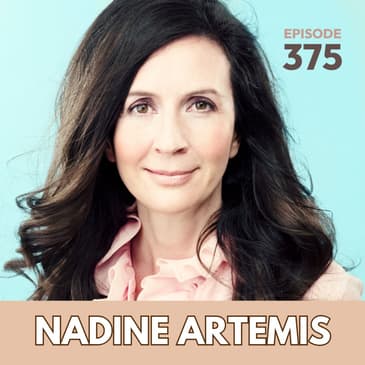
In this episode of the Optimal Body Podcast, hosts Doc Jen and Doctor Dom are joined by Nadine Artemis, an author, beauty philosopher, aroma ecologist, and creator of Living Libations. The discussion delves into skin health, the benefits of essential oils, and the importance of sun exposure. Nadine shares her expertise on using natural oils like coconut, olive, and jojoba as "sun harmonizers" and the role of vitamin C in skincare. She emphasizes a balanced approach to sun exposure, advocating for nutrient-rich diets and mindful sun practices. The episode offers practical tips for nurturing skin health naturally and holistically.
Get Nadine Artemis' books here:
In this book, Nadine Artemis presents "Renegade Beauty"—a minimalist approach harnessing nature's elements to revitalize body and soul. It offers solutions for those caught in endless beauty routines, highlighting the power of sun, air, water, earth, and plants. This book serves as a comprehensive resource for simplifying self-care, promoting natural health, and uncovering innate radiance.
Nadine Artemis also presents the 8 Steps to Successful Self-Dentistry and holistic oral care guidelines. Holistic Dental Care offers simple, at-home dental techniques for everyone. This illustrated guide provides strategies for various dental issues, from routine care to alignment and detox.
Learn More from Nadine Artemis:
- Nadine's Facebook
- Living Libations Facebook Page
- Living Libations Website
- Nadine Artemis' Book: Renegade Beauty
- Nadine Artemis' Book: Holistic Dental Care
We think you’ll love:
What You Will Learn in This Interview with Nadine Artemis:
02:00 - Introduction of Nadine Artemis
03:39 - Nadine's Background and Aroma Ecology
04:26 - Benefits of Essential Oils
06:28 - Choosing the Right Essential Oils
08:03 - Historical Knowledge and Modern Research
10:35 - Skepticism Towards Essential Oils
11:42 - Quality Concerns in Essential Oils
14:32 - Testing and Certification of Essential Oils
15:27 - Detoxing the Skin
16:38 - Understanding Skin Microbiome
17:31 - Ancient Cleansing Practices
18:36 - Benefits of Natural Oils
19:42 - Impact of Chemicals on Skin
21:06 - Skepticism Around Oils
22:05 - Marketing Myths of Skin Types
26:01 - Sun Exposure and Skin Health
27:39 - Historical Sun Therapy
29:48 - Chemicals in Sunscreens
32:16 - Building Solar Skin
33:19 - Essential Oils and Sun Exposure
34:16 - Zinc Oxide as a Sunblock
35:23 - Diet and Skin Health
36:25 - Understanding Sun Interaction
38:18 - Vitamin D and Sun Sessions
39:18 - Intuitive Sun Exposure
40:16 - Monitoring Skin Exposure
42:05 - Morning Sunlight Benefits
44:10 - Closing Thoughts on Health Practices
45:21 - Finding Nadine's Products
To learn more about this episode and view full show notes, please visit the full website here: https://jen.health/podcast/375
Thank you so much for checking out this episode of The Optimal Body Podcast. If you haven’t done so already, please take a minute to subscribe and leave a quick rating and review of the show!
Hosted by Simplecast, an AdsWizz company. See pcm.adswizz.com for information about our collection and use of personal data for advertising.
[00:00:05] Welcome to the Optimal Body podcast. I'm Dr. Jen. And I'm Dr. Dom, and we are Doctors of Physical Therapy, bringing you the body tips and physical therapy pearls of wisdom to help you begin to understand your body, relieve your pains and restrictions, and answer your questions.
[00:00:19] Along with expert guests, our goal of the Optimal Body podcast is really to help you discover what optimal means within your own body. Let's dive in!
[00:00:28] Before we hop into this interview, I just want to remind you, as we're starting to step into fall and chill your weather and maybe you're getting yourself in boots.
[00:00:37] Make sure that you still have room to move and feel your foot. This is crucial and this is why we recommend Vivo barefoot shoes because they have all different styles for lifestyle wear.
[00:00:49] So boots that you can wear, rain boots that you can wear to just everyday lifting, walking any kind of style that you can imagine. Vivo barefoot shoes has it and I highly recommend getting yourself some Vivo barefoot shoes because most boots are so stiff. They have a little bit too much of a heel lift, a lot of the times.
[00:01:09] They don't allow for that mobility of the foot. I have so many boots that I've had to throw out because after wearing Vivo barefoot shoes for years now, my toes just do not feel the room that they need to actually be able to function and I feel really squished in the toe area.
[00:01:26] So even if it says, why toe box make sure that you have shoes that are more barefoot so that your foot can actually move and function the way that it's supposed to because that is what builds strength over time.
[00:01:39] Not just sticking your foot and shoes that are really supportive, really restricted but actually putting your foot in an environment that allows it to build strength itself. I'm telling you in the long run you're going to think me. So if you haven't yet, go get yourself some Vivo barefoot shoes or if you're thinking of getting some new shoes for the fall and winter. I highly recommend use co-tob at checkout. You're going to get that 15% discount and we're going to have that linked up right in the show notes below.
[00:02:06] So again, use code T OB at checkout to get 15% off your Vivo barefoot shoes. Next on the podcast we have Nadine Artemis. Now she is the author of two books including Renegade Beauty and Holistic dental care.
[00:02:22] She is the creator of a living light-bassions, a luxury line of organic wildcrafted non-GMO serums, lectures and essential oils for those seeking the peerest of the peer botanical natural health wellness and beauty products on the planet.
[00:02:38] She is a beauty philosopher, a rumour colleges and botanical muse. Nadine believes in simplicity and a natural rhythmic natural approach. She is a disruptor in the main stream idea of wellness, beauty and beauty products.
[00:02:55] A frequent commenter on health and beauty for media outlets and her products have received a wave reviews in the New York Times, New York Magazine, Vogue, Insta and the Hollywood Reporter and so many more.
[00:03:08] Described by Lannis Morsez as a true, sent visionary we are excited to have her on the podcast today.
[00:03:15] I mean thank you so much for taking the time to be here. I can see you're in the woods, your beautiful background is so gorgeous but I really appreciate you taking the time and chatting with us today.
[00:03:29] We haven't had anyone on to really talk about the skin in this much detail and I'm excited just to learn from you.
[00:03:37] Right on why I'm so happy to be here.
[00:03:39] So the first question I want to ask is, you know, in reading through your bio and what you do, you refer to yourself as an aroma collegeist.
[00:03:48] And I don't know if I've ever gotten to interview an aroma collegeist before so can you explain to us what aroma collegeie is and how you really got into this field of study.
[00:03:58] Yeah well there are a few different aspects to Roma College and for my life what it is is botanical formulating with particularly raw materials of essential oils, which are aromatic.
[00:04:15] So for me, relating either for the body spaces essential oils can be used obviously on a mental emotional sort of spiritual level if you think of like meditation and breathing but also on a very physiological level even if you couldn't smell essential oils when applied through skin or even inhalation even if you cannot actually smell the rosemary and you're inhaling it.
[00:04:41] Those molecules are still going to enter the body and do their work and then they leave you know so if it's for skin care then the essential oils are able to you know drive in other things like the whole whole but or carry oils further into the skin.
[00:04:57] Then they're also I mean there's hundreds and we're generalizing but essential oils if you think of things like frankincense lavender rose rose auto particularly which is a steam distilled one.
[00:05:11] Then we've got properties that are so good for skin care where we can help things like acne or scars through the essential oils as they help to generate circulation.
[00:05:25] They're all to varying degrees anti-fungal anti-viral antibacterial.
[00:05:33] Yet they're able to harmonize with the beneficial bacteria so they're able to clean up pathogens but harmonize with beneficial bacteria which I think is really a substance that is needed at this time where we're able to clean up pathogens but still keep the beneficial bacteria around.
[00:05:52] So you know they can help lessen keyloids and help get the skin circulating in that area and getting the skin to bring its own cells.
[00:06:03] And they help with circulation, anti-inflammation so it's good for bruising, exhima, psoriasis you know so there's just it's just such a beautiful palette of possibilities that really work harmoniously with our skin.
[00:06:19] And are like these active ingredients that we can then use with the lush oils to pretty much address so many things that are going on with the body and the skin.
[00:06:28] Wow, I mean that's amazing but I want to understand is how do you understand and how do you know what to use for particular things that you're going through within your skin journey or your health in general.
[00:06:42] So how do you know what particular oils are going to help?
[00:06:45] Yeah, well just you know like on a level of like using them I think there's just it doesn't have like meaning to have to be an expert to like pull out a bottle of lavender or frankincense.
[00:06:55] And generally the books are correct but what was so great about these substances is they've been distilled for thousands of years and so we have historical information on like how and what they're good for.
[00:07:09] And then what we can layer on top of that is now our modern knowledge.
[00:07:15] And if you just go into PubMed's my god there's just like thousands of studies done with essential oils.
[00:07:21] But now we can know things and now we know more about the body too like we know there's a microbiome which we didn't even know existed really in the 90s.
[00:07:30] So we're learning more about the body and then we're also able to layer on top of the ancient knowledge of essential oils new information.
[00:07:37] And for example, we do make oral care products and I find the essential oils just so beneficial.
[00:07:46] And now we have you know modern testing and modern science that's able to say oh that's why people have been using things like frankincense clothes cinnamon tea tree.
[00:07:56] You know cardamom, memoil, 4,000s of years for oral care because now under the microscope we can see that these essences act like corem sensing inhibitors.
[00:08:13] And what that simply means is that the essential oils something like clove if used in oral care that it's able to prevent the pathogens from corem sensing which is basically their communication.
[00:08:28] So they can corem sense and then that helps with their the pathogens gene expression and the pathogens ability to group find the others and then create bio films.
[00:08:39] And so now what we know is that something like clove or cinnamon will corem sensing inhibit inhibit that communication inhibit that gene expression.
[00:08:49] And be able to bust through a bio film in a way that anybody out at can't well still being nice to the nice bacteria.
[00:08:58] So that's really a cool thing that now that we know that we can layer on top of like why they were using clove for tooth pain and like a thousand years ago yeah.
[00:09:09] And I love just where these first initial questions have gone because in two senses you've already brought up how a lot of these applications can help in anti bacterial anti fungal ways.
[00:09:22] And a way that a broad spectrum antibiotic can be so damaging to the good bacteria, the good you know things that we have in our microbiome.
[00:09:32] We're able to be a little more selective and same thing you kind of just said with oral care.
[00:09:37] You know we're able to use these in a way that can be that can attack the negative but harmonized with the positive bacteria in our mouth.
[00:09:46] And I also am really happy that you brought up just the historical almost ancestral knowledge and use of a lot of these things along with current research that it's being done in a more modern sense to support.
[00:10:01] The use of a lot of these essential oils and I kind of want to ask the question like why do you feel like so many people are still so skeptical about essential oil use because a lot of what you brought up like.
[00:10:15] I'm sold I used them I I feel the difference when I use certain essential oils whether I'm working and I'm just using it for a realm of therapy.
[00:10:23] So I have my own anecdotal experience, but you're also bringing up what seems to be a pretty robust you know knowledge base and research base that supports the use as well so why the skepticism.
[00:10:35] Well I think it's a few things so I think one of the things is everything I've just said.
[00:10:41] It like about clove it's not like I can actually put that on the clove page of our website like could but you know what I mean we can't get into.
[00:10:48] Into medical claims which I think is good to because then essential oils get to exist in a lighter world of like it's a little fluffier little like poppy and cause met you know what I mean so that's okay.
[00:11:04] Because they're really potent however so within that and within the realm of essential oils there is just so much quality especially like in the past 20 years.
[00:11:16] You know I've been playing with essential oils since the 80s so I've seen it really change.
[00:11:23] And yeah the amount like it's kind of like fine wine or you know all the olive oil like the ones that are extra virgin authentic olive oil is you know it's a lower percentage.
[00:11:35] So within the essential oil realm the good stuff is a little bit rare because there's a lot of adulteration and I mean and that's a general word but there's like a the oil could be not real it could be real but cut.
[00:11:49] It could be real but not that oil so cinnamon you would want cinnamon bark.
[00:11:56] But it could be cinnamon leaf which is very irritating I mean all the cinnamon are hot and they need to be diluted anyway or it could be casiah which is the same situation that goes on when you're buying the spice of cinnamon in a store right now even a health food store it could just be casiah bark.
[00:12:13] Which is not cinnamon and xylana com or whatever the Latin name is you know so then that's what you want because that's what.
[00:12:21] What's been studied and that's the application or there's blue oils like a beautiful German camel mile it could actually be a tannicy to madam like another plant so there's all this.
[00:12:30] You know games they're played and it isn't that realm of like oh it's a room of therapy a computer Glader freshener.
[00:12:38] Obviously that is not the clove oil with the quorum sensing inhibiting properties so that's why I think it's like what how is the you know lavender and the Glader freshener gonna like help my zid or you know what I mean so I think.
[00:12:50] Yeah, the lavender and that little thing on the wall that spray is not real lavender.
[00:12:58] And then even like what you think would be real lavender isn't real lavender you know and even if it's it could even say organic and it isn't necessarily real lavender.
[00:13:07] So when I do suggest like smelling essential oils so that you're really getting like your own scent memory and you kind of like no nasal library of like you know because you could just smell like a common peppermint a health food store.
[00:13:22] And if I tested our lab, I'm pretty sure I could find an issue with it like there would be like a maybe a mental added or something.
[00:13:31] But it would still if you open it up kind of smell like a classic.
[00:13:34] Candy cane aroma but then when you smell they're really good one and you know it's real you can just there's a whole other world in there.
[00:13:41] So you want to look for like does the company say what country it's from does it have a Latin name.
[00:13:47] The part of the plant that was just still how it was grown so that's a good indication if you can't smell it those are some other things you're going to want to look for.
[00:13:56] They should also all be, you know they're all kind of different colors it subtle.
[00:14:00] Some are kind of clear summer yellow summer thick brown summer blue summer like green and so there's a whole variety in color and texture viscosity.
[00:14:09] So they're all these beautiful creatures they're all different but really what's out there is real essential oils and a wrong with therapies probably just like maybe 10% of what you're sort of seeing would be the real deal.
[00:14:21] Are there certain third party testing platforms for.
[00:14:25] The central oils specifically that you trust like if someone's looking on a label for a specific third party tested you know certification or anything.
[00:14:33] Well yeah I would say I don't think there's like it's not like a eco well there is eco certain stuff but it's not like there's the one lab but I mean.
[00:14:40] If a lab and they do do that testing they will have the gas chromatography and everything so I've been working with our distillers.
[00:14:47] For over 30 years and we'll still test each batch that comes in from each distillation it also just gives us information on it and then what we do on our website is we also then post.
[00:14:59] Though that like you know the pages of the test on that so that people can see.
[00:15:03] So if people don't have all this stuff listed don't you know show that they're doing any third party testing have have some pause.
[00:15:10] And what I hear you saying is that a lot of that hesitancy or skepticism maybe because there's this broad spectrum of quality and you just want to do a little research to make sure you know what you're getting.
[00:15:21] Is that maybe you did buy that lavender and then it didn't do anything or gave you how it because it wasn't real.
[00:15:27] Yeah and that's a huge issue then because that's where of course that's kept because skepticism is going to come from from someone not using the correct product.
[00:15:36] Now when it comes to use of it as well I do want it because I know you talk about detoxing the skin and how this relates to our overall health or our immunity.
[00:15:47] But what does it actually mean to detox the skin and how can we use essential oils to really help in that process?
[00:15:55] Well I think I mean that detoxing is obviously a huge subject in different ways to go into it.
[00:16:02] Just through first I think of I have in renegade beauty I read about stop, seal and seed.
[00:16:10] So first you want to stop doing what might be toxic this skin like showering or washing your skin with chlorinated fluorinated tap water.
[00:16:22] So if that's the case you know shower filters are easy to get now and even very basic like.
[00:16:29] $30 once do a good job at like helping you know what I mean and obviously then there's once that vortex and do all kinds of things for more.
[00:16:38] But when I used to live in the city I mean we would just put one of those in and then we would do everything through the shower filter like wash the vegetables run the bath.
[00:16:46] Through the shower filter and all that kind of stuff.
[00:16:49] And then for your face you could just have like a bi-a-lovely bottle of glass spring water and that like one liter you could put into like a spray bottle or whatever and that would last a while too.
[00:16:59] That's what I do when I'm traveling and that is worth it if you especially if you've got some things going on with your skin.
[00:17:04] So you want to stop and then stop like whatever chemicals you've got going on this skin whatever you're applying every day that is messing with the skin's microbiome.
[00:17:14] Then you want to seal so sealing and healing the skin just like we can get a leaky gut.
[00:17:22] We can have like leaky teeth which is like receding gums or the skin can kind of be leaky because we've broken down the barrier.
[00:17:32] So that could be subtle where we've sort of pierced this stratum cronyum which is the top layer of the top layer of the skin and the lipid barrier through like.
[00:17:43] Again it may not it may be sealed on your skin but like chemically kind of broken through or stripped away the lipid barrier.
[00:17:51] So then we want to seal the skin and the simplest way so when I was thinking about you know 30 years ago my 20s like how am I going to watch my face.
[00:18:00] Then I was looking into what are the ancient practices what was going on before we had clenic face toner.
[00:18:08] And so you know throughout history and varying cultures they were using oil.
[00:18:14] You know whether it was the Turkish baths or and then they were using oiling up the skin and then using a streagle.
[00:18:20] Just kind of like a metal gwasher if you think of sort of like a back of a butter knife and your oiling the skin and then running it over with that tool which is lifting out the dirt and cleansing the skin.
[00:18:32] So oil is able to lift things out of the seabum and so you know the perber.
[00:18:38] Ancient perber women or Cleopatra with her crocodile lard.
[00:18:44] So oil was used to nourish and lift the skin so I created the best skin ever which again if you just use an organic cohoba or a true organic olive oil you can do this you don't necessarily you don't need to.
[00:19:00] By what I'm making and you can if you just like that bottle of olive oil or hohoba would last you know over a year and you that's how you wash your face so you just take like.
[00:19:09] A wet cloth like just a little corner of that cloth and a good Terry cloth classic face cloth is it's just that right amount that helps to exfoliate we don't need to use you know chemical peels or.
[00:19:22] You know plastic beans to exfoliars skin and often we're just over doing it.
[00:19:29] We don't want to clear the top layer of skin and it sells prematurely and then expose the younger cells underneath to prematurely because they're too young for that main job.
[00:19:42] So and also as gross as it sounds we do need sebum and things on our skin because the bacteria need to eat off of that which is sounds so gross but we actually want to allow the microbiome to flourish.
[00:19:55] And we want to allow the bacteria to help be our beautician and so you're going to take that cloth just put a patch of water on there and then just squirt on some oil.
[00:20:06] And then just you know run that over your face face cleanse of face.
[00:20:11] You can do one more splash of water and then simply one more squirt of that oil or the drop of olive oil put that over your face to neck and you're done man woman child here.
[00:20:22] That's all it really needs to be and it would turn your skin around if you've had cystic acne for over a decade you will watch it heal.
[00:20:32] You know over the coming days and weeks people once they use something like this feedback from best can ever or stop using their chemicals and just use olive oil.
[00:20:40] Our like shocked at like what happens within 24 hours 48 hours because now you're working with your skin you're working with materials that are compatible with your microbiome and then it's like you can kind of step back get out of the way a bit and then allow you know kind of how that partnership with the body where you're working together.
[00:20:59] And then you're working with the biological systems with the botanical beauty and better results.
[00:21:06] Wow, I mean and when you say chemicals like what are some specific chemicals is it just everything that people are using in product.
[00:21:13] Yeah, yeah, yeah, yeah, yeah.
[00:21:14] It's so it's so huge right like that I don't even know all the chemicals anymore but like sodium will also fade.
[00:21:22] And it all its forms it could be in the mild foaming cleanser or the very harsh like drugstore acne wash.
[00:21:31] So all that's got to go and I don't even I then obviously we want we need soap in our lives, you know and you can it's easy to find like we make clay soaps which are awesome but that I still you don't even know that's totally natural you don't really need to wash your face with soap at all.
[00:21:47] We need the soap for the pits and the bits scrubbing our nails washing our hands but we don't need it like on our face and we certainly don't need to like lather up our legs or like less 30 somehow.
[00:21:59] But I mean, let's do like mealing the garden, but like the whole body doesn't need soap at all interesting.
[00:22:05] Yeah, and I was wondering first of all big fan of the olive oil answer because I love to cook.
[00:22:11] I'm always in the kitchen, I have Italian background and heritage so olive oils always near and dear to our hearts.
[00:22:17] So I'm excited to have my bottle of olive oil next to my sink as well as next to my stove now.
[00:22:25] But I would I would wonder when it comes to the face thing and and.
[00:22:29] Understanding it's important to have oil on the face what would you say to somebody who says but I already have such an oily face.
[00:22:35] I already have such oily skin.
[00:22:37] I'm scared to put more oil.
[00:22:40] Oh yeah, and that it would be especially if you have cystic acne for decade you'd be like what but people in the adventure they do they try it and then they're like oh my god i've seen the results.
[00:22:50] So also the water helps so water opens the pores and then helps to absorb so anytime you're wanting to apply oil.
[00:22:58] Like olive oil to the body or if you're in your own the sun you want to just that's what the wet cloth helps to open up and then sink things in or if you can you want to oil the body right after the bathers shower we still a bit damp.
[00:23:09] So just know the oil helps to bring it in the body and absorb it.
[00:23:13] If you just put olive oil on dry skin I mean you'd be fine but that would be it would just be a little like you want to help it sink into the skin so what's happening those like also when people.
[00:23:24] The the whole skin type thing is also a bit of a marketing myth that was created by clinic in the 60s and you really just want your skin and balance you know so.
[00:23:34] The whole oily teeth like just you can let all that go and just bring the face micro biom into balance and then the other thing is.
[00:23:43] The chemicals in the soaps the soap is making the skin oiler because it's like it's like a bit of a catch 22 so we're using substances that are from that foaming mild face.
[00:23:54] So to like all kinds of chemicals and this really the whole spectrum of them are messing with the lipid barriers and throwing off your own oil production so then there's an overcompensation it's the same but different like a similar thing where.
[00:24:10] If we're using glycerin especially like for a K watt like a lubricant and there's a lot of skincare with glycerin I mean can be handy but we don't want to be like all over because then what happens is that the cells go oh there's like.
[00:24:26] It's tried something called a similarity and it tries to balance itself because it's reading the water on the outside of the cell so then the cell.
[00:24:33] Especially if it's a lubricant and then the cells in the vaginal lining will give up their water and so you may have a temporary lubrication for a long term drought.
[00:24:47] And so it's this overcompensating that is happening but it's in balance again we're not working in harmony with our biological systems at that stage and so that could be making the face more oily so to speak.
[00:25:01] And so this would apply to the entire body to though like putting the oil on or is it just for the face like what do we yeah depends like yeah I know that it's like it was yes.
[00:25:13] You can do that and I love running a cloth with oil over after I get out of the bath or the shower so you can and it's a great way to.
[00:25:21] Yeah tone I mean not tone but cleanse the skin but I yeah cleansing's a hard word but you kind of cleansing a layer off and then adding in that back that moisture and it doesn't just rub the balance in any way.
[00:25:34] Generally I'm but I don't even do my body that much more because like literally my you know my skin is really deeply balanced so it doesn't really need it so to speak like even when I'm in the sun I don't even.
[00:25:46] Use our sun oils anymore because there's just like a lot of skin balance going on so you'll find like you probably need less and less as things get more harmonized as well.
[00:25:57] Like a crazy winter in the heat on and all that kind of stuff but you know yeah you bring up being being in the sun and you know products that you use on your skin for sun and like where's the balance because.
[00:26:09] We hear people say okay it's important to get sun directly on your skin without any sort of skin protection and then on the flip side it's like oh don't get too much sun because it can be bad.
[00:26:20] But then popular marketing says we need to use all these sunscreens that are full of the chemicals and on the other hand people say okay that's that's really bad so what's the balance of like how much sun can I get on my unprotected skin.
[00:26:35] What kind of sun protection do you recommend.
[00:26:39] Yeah I love talking about the sun and skin because they were totally designed to engage with each other the skin.
[00:26:47] Was designed to be exposed to the sun and there's a whole bunch of beautiful chemical reactions that happen from that engagement that as you probably know you know being amply abundant in vitamin D.
[00:27:02] Is like essential to thousands of gene expression in our body needs the vitamin D.
[00:27:11] And there's a beautiful cholesterol like sulfate that's created and when we're engaging with the sun it's a water soluble sulfate and that's different than a vitamin D that we're ingesting which is a fat soluble.
[00:27:26] So we're thankful that the vitamin D exists as a supplement form but we need will we need the sun some I need both because we've got winter.
[00:27:37] And I've got three months a year with no sun and it plus it really fades so I'm happy for the supplement.
[00:27:42] But we have a whole other situation and we need that sun on our skin.
[00:27:46] We have thousands of vitamin D receptors in our body in our skin and those need to be exposed to the sun's rays to fill them up.
[00:27:56] If we're not filled to the bram and our vitamin D receptors with vitamin D then it's sort of like our immune system as you know also kind of gets compromised because if those vitamin D receptors aren't filled.
[00:28:11] Then these things called bacterial lings can come in and they kind of just switch off the immune system.
[00:28:18] So that's why like a hundred years ago around 1902 the Nobel Prize was given to Neil's Fineson.
[00:28:24] Our doctor Fineson for his work on heliotherapy so the Nobel Prize went to the Sun Light Therapy.
[00:28:31] And then in the 1920s Dr. Augusta Rolier in Lee's Ann Switzerland had a clinic where people would come from all over the world mainly Europe to heal.
[00:28:39] And it's really cool to look at the photos on Google just Google his clinic and you'll just see children coming in with like.
[00:28:48] Rickets and deformed spines and you can just see and then it's black and white but then they get these tans and they're just like the kids are so happy and healthy and the spine is straight and it's like this hospital setting but there's beds that roll out onto verandas and make lie in the sun all day.
[00:29:04] So it's really cool and they were healing things like tuberculosis and all the things and even in the 1930s.
[00:29:12] Madam Azal Kokoschanel the designers was like no outfit is complete without a tan then we get to 1940s with the really when we start a really getting into more chemical production.
[00:29:24] The advent of things like sunscreen and then a lot changed and then there's a lot of fear of the sun.
[00:29:32] But it's really important and I think it's actually very anti aging to be in the sun.
[00:29:38] I have a whole chapter on it and Renegade Beauty. None of the tests done on UV and the skin were done with sunlight.
[00:29:48] So there's that.
[00:29:50] There's also what in the 1990s they did study from the New England Medical, Cultural of melanoma finding that.
[00:30:01] The more exposure to sun, the more recreational use the closer you are to the equator, the less chance that you will get melanoma and that it seemed to be connected to fluorescent lighting.
[00:30:13] Artificial lighting is when melanoma became an issue then you've got even like a caucroen review which they'll take studies and then review them collectively or like as a unit and then.
[00:30:26] I write about in the book so I don't have all the stats right off the top of my head but generally speaking.
[00:30:32] Using sunscreen created more moles, more freckles and more skin cancer.
[00:30:38] And what we know on a chemical level, I mean first of all sunscreen ingredients in the US are being used that aren't allowed in Europe for example.
[00:30:47] So we've got really harsh chemicals. One of the main act of ingredients is oxybenzene and that is not cartogenic until exposed to light.
[00:31:00] So that's all it's interesting.
[00:31:04] Okay, so then the other besides all the chemicals in the sunscreen which you know are issues with fertility, liver and endocrine system blah blah blah.
[00:31:13] The main issue with sunscreen is that it divides the rays. So then the UVA and the UVA are split and we're just receiving UVA and without its ultraviolet partner UVB, it becomes skin damaging.
[00:31:31] So that's like let's say you're a truck driver driving westward every day it's on you know at five o'clock.
[00:31:38] That arm, it's always at that window.
[00:31:41] I probably have more freckles because it's getting that sun through the window and it's filtering out the UVB and the UVB is where a lot of the magic is because that's what's generating the vitamin D.
[00:31:53] So we need them together and then for how much time and when and all that it's like everybody is different.
[00:32:02] And you want to build up your solar skin and you know if your Mediterranean descent that's not going to take quite as long as an Irish person.
[00:32:14] For example, so you want to start slowly but surely and you want to start in the spring.
[00:32:22] And you know it could be ten minutes and then you know 20 minutes unfortunately it's not sunny every day so you can't get that like you know peer build somewhere maybe sunny every day.
[00:32:34] So you just keep building it up and then by summer, you've got that malin in that base and you can go longer so.
[00:32:43] We make an oil again, you can use that beautiful olive oil and SPF is a chemical term so it's only allowed for certain chemicals to say that you use it or whatever.
[00:32:57] We can find a kind of equivalent with some of the oils like olive oil, ho-ho-bak coconut.
[00:33:04] They're kind of like a six seven SPF but again it's sort of just metaphorically so it will extend your time in the sun.
[00:33:12] It will harmonize your sun, you know your skin with the sun's rays we have an oil called everybody loves the sunshine.
[00:33:19] It's with ho-ho-bak really pigment rich things like sea buck thorn so it will prepare your body but again coconut olive oil ho-ho-bak or the everybody loves the sunshine.
[00:33:29] That will bring you I call them sun harmonizer so it's not quote unquote protecting you it's not a sunscreen.
[00:33:37] But it will extend your time in the sun.
[00:33:41] So for that Irish person, you know, maybe it's just adding another 10 minutes for that Mediterranean person adding in that oil that could like give like be like what they can rock all day because like they may be able to be fine all day in the sun.
[00:33:56] And then if you've got.
[00:33:58] And then you can wear hat or clothing or get out but I always just have the time in the sun that I need and then seek shade or whatever.
[00:34:04] But if you're like surfing or you got kids running around one thing I talk about in my book is ever recipe with vitamin C you can make a spray at 10% and it's actually like a waterproof thing so it's really good for kids.
[00:34:18] But you could use a non-manorized non-coded zinc oxide.
[00:34:23] That classic kind of lifeguard you know with the white nose that works as a block it's not a sunscreen.
[00:34:33] But it's a block and what how it works is it reflects the sun's race so they bounce off of you.
[00:34:39] And then what we did was for us we took that zinc and then we combined it with everybody loves the sunshine.
[00:34:44] So same formula but then we just made one with the zinc so then that you can use as a block but we don't have anything in between.
[00:34:50] And that whole SPF thing is I mean it works but there's a lot of BS sort of behind it in the sense you know because you do need the sun.
[00:35:01] And you don't want to be baking in those chemicals it's kind of like the difference between cooking with Pam like spraying that into your pan with Pam.
[00:35:09] If that's still a thing I don't if it's still around or like cooking with all of oil or coconut oil and you just don't want to be baking in the in the sun with chemicals and then swimming in the chlorine pool.
[00:35:20] Drinking a can of Coca-Cola.
[00:35:23] That is not a recipe you know and you don't want your inside of your body filled with seed oils either.
[00:35:30] So you know healthy diet there's also research that shows that rich pigment foods act like an internal sunscreen.
[00:35:37] So there's like red algae there's the green algae drinking chlorophyll while you're in the sun is an awesome thing to do.
[00:35:44] So you know you're thinking about what are you bringing to that altar of the sunshine because it's like a it's a relationship that you're having with the sun's rays.
[00:35:54] You're inviting them into the body the body does want to receive them the the pores dilate to receive those rays and bring it into the body.
[00:36:02] So there's definitely a good union there between the sun and the skin but we just want to interact with it wisely so that we can get what we need out of it and not get burned.
[00:36:13] However, even getting burned your body can actually process that your DNA can deal with that easier than it can be with slathering yourself in sunscreen all days which is you know an estatizing.
[00:36:25] Also your warning system of your own natural like hey it's time to get out of the sun and then we're ending up staying in the sun longer because we got SPF 60 on filled with chemicals and just getting the UVA rays.
[00:36:39] It's not a good recipe.
[00:36:41] I mean it makes sense but it really is understanding that balance and that relationship and what you're and you touch on it just briefly but what you're putting on the inside of your body is going to matter on how we're receiving the sun as well.
[00:36:56] And that protection that you're kind of getting with that relationships so.
[00:37:00] I mean I think that's what's hard is for people it's like well I'm not going to eat perfect so I'm just going to put the sunscreen on or I'm not going to do this so I'm just going to.
[00:37:08] But still you're better off.
[00:37:09] I mean even if you're having that miso oil still get in the sun because it's still going to just help your you know your innate immune system on all levels will benefit from that and your skin is going to benefit there's special nourishing you know cholesterol antimicrobial peptides.
[00:37:29] Cathalicidins are activated so you just you want to find your way.
[00:37:33] To the sunshine and you do want to go out at noon you want to get that ray you want to go up a force solar new you want it I like to be done generally tanning by solar noon which is depending on the area could be one one thirty wherever you are if there's daylight savings time.
[00:37:48] And then what's fun at noon is you can get that concentrated things you don't have to stay out as long you know 20 minutes at noon is way better than 20 minutes at 10 a.m.
[00:37:56] And you do generally need like there's an app called de-minder and it's great because you can track your supplements and your time in the sun it takes in your geographical location.
[00:38:06] So it knows the strength of the sun is raised because your vitamin D it don't just take vitamin D and then you're done it's like a living.
[00:38:15] You know fluctuating situation in your body so you have to keep it.
[00:38:21] You can simply load it and then with the de-minder you know you're running sort of vitamin D score and you know oh I've gotten this much now I can get a sun that's what I'm looking at.
[00:38:32] When I'm in I'm looking at hopefully creating a 5,000, 10,000 IU and then it's just a great way to monitor it and know like exactly because we do have to kind of bring a bit of a science of typical approach to it I mean it feels good to sit in the sun.
[00:38:45] You know like but now if you really want to work at getting your de levels up you kind of have to like really look at it and look at your sun sessions and like.
[00:38:54] Keep that running score going yeah I'm super intrigued by the whole answer you just gave because.
[00:39:00] I mentioned that I have Italian heritage that's on my dad's side my dominant genes are from northern Europe in more of the Norwegian Polish German and so I now living in southern California.
[00:39:12] I'm in the season of building my sun.
[00:39:15] Sun skin or my sun barrier but it's interesting the more intuitive I've become with my health over the past years and the more that I've listened to what my body responds well too.
[00:39:26] I love when I hear someone like you giving answers that reflect the decisions I've made based on intuitively what feels right because right now our sun goes down for an app around 1145 or noon and I take our dog out and I get my shirt off and I either go for a half hour walk or bring her.
[00:39:42] Bring her to the park because it feels so good for me to get that 20 minutes to a half hour of sun right at about noon and get back inside and I'll be thinking now when I go to the beach.
[00:39:53] Okay I can spend the first 30 minutes to a half or two an hour you know out with my shirt off but then.
[00:40:00] It might just be better to put a light long sleeve shirt on than putting something on my skin you know or having.
[00:40:07] So or having some version of the zinc you know solution prepared versus spraying on that SPF 70 so I can stay out all day.
[00:40:16] If you think about it too like if you are out so maybe if it's more than half an hour.
[00:40:20] Well first you'll know your skin because it will it'll kind of get pink and if you're looking at your team.
[00:40:25] You know you just get a whole feel for it but you could also think like if you keep your shirt off.
[00:40:33] Okay maybe I need to put the zinc on my shoulders and maybe because like the sun.
[00:40:39] Your your your your your like your whole chest or like stomach part isn't if you're walking around it's not going to get that hit and that's what thinking about with kids.
[00:40:46] No generally no kid is like sun bathing like they're not on a lounger just like you know they're running around so you think about where do you have to hit like I don't I mean like hit the sunscreen you know like just isn't the nose is it a hat.
[00:41:01] Let them run around for 45 minutes first and then put the shirt on or you know what he means you got to figure figure out what to do there but.
[00:41:10] I would say yeah just like go for it because you want to have you want to expose as much skin as you can legally wherever you are.
[00:41:19] Yeah and bring it in I'm like I can't eat when I go away now I'm like oh like when after we're bathing suit I'm just like you know 10 lines and like what suits I'm like what is this because we we have like you know 200 acres here so it's like very freeing.
[00:41:35] To do what we want and get all of a sun that we need there is I can't remember the name of the site but there's tanning shirts so.
[00:41:46] And they've got the bathing suits are like they look like they're from the 90s but there is the the men shirts are they've crew the a venek and they have like white and like just normal colors so I the men shirts are really well designed there and I can't remember what's called but like tanning shirt dot com or something.
[00:42:05] So I would pick up pick up that and do your dog walking.
[00:42:10] And then in the morning what is so essential before the violet ray comes in is the red light so if you think of the rainbow that is the sun that's like you know the color spectrum.
[00:42:21] So the violet rays are what's producing the tan that comes a little bit later in the day so we've got the daily.
[00:42:29] So cycle of the sun and then the seasonal so by November here there's no more violet ray for three months right we don't get that far in the rainbow you have to be below the 33rd parallel so you guys can get sun all year round.
[00:42:44] And then on a daily level in the vitamin D apple tell you to like when does it come up so right now this sun is the violet rays are coming into our sun at about eight forty five.
[00:42:54] So that earlier part of the day is also good to take the dog out because you're getting the infrared.
[00:42:59] You're getting the red light which is why we have red light devices now because we're you know not out in the sun.
[00:43:07] And what's so amazing about the red light and getting out in the morning is that there is the daytime production of melatonin in the mitochondria.
[00:43:18] Which I didn't know about until few years ago because I just generally thought that the melatonin was produced in the pineal gland but that's only about five percent of the story so it's sent so melatonin production in the mitochondria is essential because it acts like a cooling fluid for this ATP production so that that is like to keep that anti-oxidant from the free radicals you know gaining.
[00:43:40] The upper hand in your body so to speak that's why we need that daytime production of melatonin in the mitochondria which is through our exposure to red light.
[00:43:51] So yeah you can have you know be outside or that's where the that's why red light.
[00:43:57] Is working like that's one of its sort of mysteries is like why is it so effective because there's that mitochondrial connection.
[00:44:05] This is so amazing I feel like we can keep talking to you forever because I also want to know what you do for your hair health because your hair is amazing.
[00:44:12] It's so beautiful so we might have to have you on again.
[00:44:15] I mean there's so much to learn and understand that we have no idea about when it comes to essential oils and really creating that balance within our body.
[00:44:25] Because there's so much marketing in products out there in the world that it's hard to understand what do I trust what do I know how do I come back to.
[00:44:36] Trusting and knowing my own body and I think what you do when coming back to the pierist you know type of products to really help your body flourish on its own should be the goal.
[00:44:48] You know should be the goal in helping to rebalance our body so I just I love what you do.
[00:44:54] Where can people find these products to get their hands on some and and your book your book I want to dive into as well.
[00:45:02] I love the name to renegade beauty and that it's yeah I mean it's just stuff that makes sense intuitively but is seen as the renegade type behavior.
[00:45:12] And I think that more people like you need to have a say in shifting that paradigm so yeah like Jensen where can people find all this stuff.
[00:45:21] So yeah we're our website is livinglibations.com and that's our whole little world there and obviously got articles on like sunlight and that kind of thing and then.
[00:45:30] My books are on the website but you can also get them at on you know like Amazon and stuff and there's also audible versions of renegade beauty and holistic dental care.
[00:45:39] Amazing I mean so excited to dive in myself with all your products and and more information so I hope that people go check that out.
[00:45:46] Thank you so much for taking the time and enlightening us on this chat today and I hope you have a wonderful day.
[00:45:53] Thank you, it's such a pleasure to talk with you both today.
[00:45:57] Thanks for sticking around for another interview with Nate Dean if you enjoyed that episode please consider passing it along to a friend or family member and leaving a rating and review on your favorite podcasting platform that just helps us podcast.
[00:46:09] Be seen by so so many more people and we really really appreciate anybody who's willing to do that.
[00:46:14] I remember we have a huge discount going on right now on our annual membership for Jen Health.
[00:46:18] It gets you 11 plans that focus on specific body parts and also have full plans that are more workout style plans.
[00:46:25] There's also a core plan, a full body mobility plan. There's something for everybody and if you go down to the link in the show notes and use code move 30 that'll get you an extra $30 off which brings the total discount on the annual membership to 50% off.
[00:46:39] So you want to get in on this that code is only going to be active for this week only so make sure you get in now.
[00:46:46] Links down in the show notes use code move 30 and come join our movement community today.
[00:46:51] We'll see you next time on the optimal body podcast.