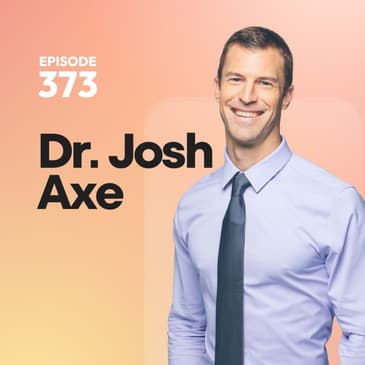
In this episode of the Optimal Body Podcast, hosts Doc Jen and Doctor Dom welcome back Doctor Josh Axe, a functional medicine expert and bestselling author, to discuss his new book, "Think This, Not That." Doctor Axe shares his personal journey of overcoming a severe back injury through various treatments, including stem cell therapy and hyperbaric oxygen therapy. He emphasizes the importance of mindset, gratitude, and holistic health practices in his recovery. The conversation highlights the power of belief in healing and offers practical advice on nutrition, movement, and mental resilience for optimal well-being.
LMNT Discount Code:
Fuel every system within the body and the brain with LMNT! Keep yourself hydrated on a cellular level by replenishing the sodium, potassium, and magnesium that our body needs for basic cellular processes like nerve signalling, smooth muscle contractions, unnecessary fatigue, aches and pain, brain fog, and recovery! Get a free gift with every purchase and try some new flavours as you stay hydrated! Get Your Free Gift HERE!
Get Dr. Josh Axe book here:
In his book Think This, Not That, Dr. Josh Axe is like your personal mind coach. He breaks down the top 12 mental roadblocks that might be tripping you up and shows you how to swap them for more empowering thoughts. It's like a mental makeover that helps you become the awesome person you're meant to be!
Learn More from Dr. Josh Axe:
- Dr. Josh' Instagram
- Dr. Josh' Facebook
- Dr. Josh Axe's Website
- Dr. Josh' YouTube
- Dr. Josh' Book: Think This, Not That
We think you’ll love:
What You Will Learn in This Interview with Dr. Josh Axe:
01:43 - Back Injury Experience
06:05 - Prognosis and Emotional Struggles
10:15 - Developing a Healing Plan
12:55 - Progress and Recovery Journey
13:43 - Cold Plunge and Sauna Benefits
14:35 - Stem Cell Therapy Experience
14:53 - Despair and Healing Journey
15:53 - Placebo Effect Discussion
16:53 - The Impact of Negative Prognosis
21:27 - Creating a Healing Plan
25:03 - Understanding Root Causes
26:48 - Finding the Right Practitioner
28:40 - Pain Perceptions
30:34 - Changing Limiting Beliefs
33:50 - The Challenge of Belief
35:01 - Listening to the Right Voices
37:12 - The Power of Personal Stories
38:26 - Functional Movement and Pain
40:09 - Holistic Treatment Approaches
41:53 - Mindset for Recovery
42:54 - Nutrition and Longevity
44:00 - Functional Movement Prioritization
46:31 - Mindset as Medicine
To learn more about this episode and view full show notes, please visit the full website here: https://jen.health/podcast/373
Thank you so much for checking out this episode of The Optimal Body Podcast. If you haven’t done so already, please take a minute to subscribe and leave a quick rating and review of the show!
Hosted by Simplecast, an AdsWizz company. See pcm.adswizz.com for information about our collection and use of personal data for advertising.
[00:00:05] [SPEAKER_01]: Welcome to The Optimal Body Podcast. I'm Dr. Jen.
[00:00:08] [SPEAKER_03]: And I'm Dr. Dom and we are doctors of physical therapy,
[00:00:11] [SPEAKER_03]: bringing you the body tips and physical therapy pearls of wisdom to help you begin to understand
[00:00:15] [SPEAKER_03]: your body, relieve your pains and restrictions, and answer your questions.
[00:00:19] [SPEAKER_01]: Along with expert guests, our goal of The Optimal Body Podcast is really to help you
[00:00:24] [SPEAKER_01]: discover what optimal means within your own body. Let's dive in.
[00:00:29] [SPEAKER_03]: Welcoming back to the show, Dr. Josh Axe, who is a doctor of functional medicine,
[00:00:33] [SPEAKER_03]: co-founder of Ancient Nutrition, New York Times bestselling author and graduate of
[00:00:38] [SPEAKER_04]: John Hopkins University. He's the host of the top 25 health podcast, The Dr. Josh Axe Show,
[00:00:43] [SPEAKER_04]: which covers the science of healing in body, mind, and spirit. Dr. Axe is an expert in natural
[00:00:49] [SPEAKER_04]: medicine, nutrition, mindset, spiritual healing, and longevity. We're excited to have him back on
[00:00:55] [SPEAKER_04]: the show. Really a lot of the episode we focus on a debilitating back injury and experience that he
[00:01:00] [SPEAKER_04]: had and is still healing from and how that was one of his inspirations for his new book,
[00:01:05] [SPEAKER_04]: Think This, Not That. Let's get into it. Dr. Josh Axe, so excited to have you back
[00:01:10] [SPEAKER_04]: on the podcast, one of our repeat guests. Thanks for giving us your time. I mean,
[00:01:15] [SPEAKER_04]: I know you just had a new book come out, Think This, Not That. Is that correct?
[00:01:19] [SPEAKER_00]: Yeah. Yeah.
[00:01:20] [SPEAKER_04]: So yeah, excited to talk a little bit about where the inspiration from that book came from
[00:01:25] [SPEAKER_04]: and some of the things you're really liking to educate into right now in the
[00:01:30] [SPEAKER_04]: world of functional medicine and longevity.
[00:01:33] [SPEAKER_00]: Well, thanks. Well, Dr. Jim, Dr. Dom, thanks for having me. Excited to talk all things,
[00:01:37] [SPEAKER_00]: how to get rid of chronic pain, how to heal naturally. So it's yeah, let's dive in.
[00:01:43] [SPEAKER_01]: Yeah. Well, I know you wrote the book during a very interesting time in your life. Can you kind
[00:01:49] [SPEAKER_01]: of talk about what you were going through and kind of what helped move this book forward a
[00:01:55] [SPEAKER_00]: little bit? Yeah. So it's not necessarily a lot of people know this. I've put out a lot of
[00:02:00] [SPEAKER_00]: nutrition content for quite a few years, teaching people how to use food as medicine. And a couple
[00:02:05] [SPEAKER_00]: of years, quite a few years ago, I injured my back lifting weights. I was doing... Again,
[00:02:09] [SPEAKER_00]: you guys are going to... This is the sort of thing you guys deal with frequently on your show,
[00:02:13] [SPEAKER_00]: doing CrossFit. I'm really not built for CrossFit. I'm built more for swimming and for
[00:02:17] [SPEAKER_00]: more probably endurance sports. But I injured my back a little bit then. And then I was doing
[00:02:23] [SPEAKER_00]: heavy rows a week later after my back was, I think, already compromised and ended up
[00:02:27] [SPEAKER_00]: hearing a pop in my back. And I herniated two discs. And I was in just terrible pain for a while.
[00:02:34] [SPEAKER_00]: And I tried a lot of things, a lot of physical therapy, a lot of functional movement,
[00:02:38] [SPEAKER_00]: chiropractic, nutrition. And it got better, but not all the way better. And I was kind of living
[00:02:43] [SPEAKER_00]: with this pain. And then I got turned on to stem cell therapy and PRP. I went and got stem cell
[00:02:48] [SPEAKER_00]: done. And it really helped tremendously. I noticed a really significant difference. They drew my bone
[00:02:53] [SPEAKER_00]: marrow, injected in the area, and it really helped. Well, several years had passed. And I had
[00:02:58] [SPEAKER_00]: probably got back to maybe 90%, 95%. But I still had this little nagging ache in my lower back if
[00:03:04] [SPEAKER_00]: I would sit very long at all, especially on soft surfaces. And if I would fly and I travel a lot for
[00:03:10] [SPEAKER_00]: And so I'd get this pain right in my QL area, probably around that tip of that L4 transverse
[00:03:14] [SPEAKER_00]: process. And so I thought, you know what? I'm going to go and get stem cell done one more time.
[00:03:18] [SPEAKER_00]: And I think it'd probably... I'd completely get rid of this pain. And I had a couple torn discs
[00:03:25] [SPEAKER_00]: on the MRI. So I went in to get this done again. This was about a year and nine months ago-ish,
[00:03:32] [SPEAKER_00]: year and 10 months ago. And so they went in, same thing, injected my own bone marrow,
[00:03:37] [SPEAKER_00]: stem cells into my disc. And then afterwards, I just didn't feel great. I kept feeling worse and
[00:03:42] [SPEAKER_00]: worse and worse. And I thought, well, gosh, maybe when I was doing something, I re-injured it.
[00:03:46] [SPEAKER_00]: And finally, three months later, it got so bad, I had to put a back brace on.
[00:03:50] [SPEAKER_00]: And then one morning I woke up and the pain was so bad, I couldn't get out of bed. I couldn't move.
[00:03:54] [SPEAKER_00]: And then the next day, it was so bad that I literally was like, I couldn't even roll over
[00:03:58] [SPEAKER_00]: on my side. And I thought, this isn't right. The fact that it's gotten worse for three months.
[00:04:03] [SPEAKER_04]: Taking a quick pause from the interview to talk about one of our favorite ways to stay hydrated,
[00:04:09] [SPEAKER_04]: something that is so important but not enough of us are paying attention to is staying hydrated,
[00:04:14] [SPEAKER_04]: not just by drinking water, but by making sure we're replenishing the electrolytes
[00:04:18] [SPEAKER_04]: that we lose on a daily basis. And that is why Jen and I use Element, that's L-M-N-T,
[00:04:24] [SPEAKER_04]: electrolyte mix to keep our body hydrated on a cellular level. The bonus is you can get a free
[00:04:30] [SPEAKER_04]: sample pack with any order by going down to the link in our show notes. It's just drinkelement,
[00:04:34] [SPEAKER_04]: L-M-N-T dot com backslash optimal. And the reason that we do this is because we are losing sodium,
[00:04:41] [SPEAKER_04]: potassium and magnesium every day, all day, just through our skin when we go to the bathroom.
[00:04:46] [SPEAKER_04]: So, we need to make sure we're putting that back into our body. It can help us with so many things
[00:04:51] [SPEAKER_04]: like brain fog and fatigue, our sleep quality, the quality of our bowel movements, and so much more.
[00:04:57] [SPEAKER_04]: So, if you want to try Element out and get that free sample pack,
[00:05:00] [SPEAKER_04]: go down to the link in the show notes today and get yours ordered. Let's get back into the interview.
[00:05:05] [SPEAKER_00]: So, I went in, got an MRI, and I was in Puerto Rico at the time. Chelsea and I live between
[00:05:10] [SPEAKER_00]: Puerto Rico and Nashville, Tennessee. And I get the report back and it says I have an infection
[00:05:15] [SPEAKER_00]: in my disc and it was in my L5 vertebrae and I had an abscess in now by the spinal cord,
[00:05:22] [SPEAKER_00]: the spinal canal with the infection. And so, I had to get on a flight immediately
[00:05:28] [SPEAKER_00]: to... I had to take a private medical flight from Puerto Rico to Florida.
[00:05:33] [SPEAKER_00]: I met with an infectious disease specialist and the entire time I have an ambulance picking me
[00:05:37] [SPEAKER_00]: up, I had to get on a cot, put on the plane, taken off. The pain was just so unbelievably bad.
[00:05:46] [SPEAKER_00]: And so, I sat down with him and here's what he told me. He said, Josh, listen,
[00:05:49] [SPEAKER_00]: this infection is really severe. He said, you have osteomyelitis and so it's really...
[00:05:55] [SPEAKER_00]: This infection is in the bone, in the spinal... Abscess in the spinal canal. And he said,
[00:06:00] [SPEAKER_00]: I just want to let you know your prognosis. He said, best case scenario is you're going to have
[00:06:04] [SPEAKER_00]: chronic pain the rest of your life. And he said, you'll also be the first person to know anytime
[00:06:08] [SPEAKER_00]: bad weather comes through. And he said, worst case scenario is this could kill you, but probably more
[00:06:13] [SPEAKER_00]: likely is this could leave you permanently disabled. Now, I'll just say, I don't think
[00:06:17] [SPEAKER_00]: he had the best bedside manner, but... Needless to say.
[00:06:22] [SPEAKER_00]: This guy was one of the world's experts in this, in Florida, in infectious disease and
[00:06:27] [SPEAKER_00]: infections like this. So, I had about 24 to 48 hours where I... Well, one, I went back and did
[00:06:34] [SPEAKER_00]: research myself. And I thought I would find a lot of cases where people said, hey, I recovered 100%,
[00:06:40] [SPEAKER_00]: I felt great. I didn't really find that. In fact, I just felt worse after going and
[00:06:46] [SPEAKER_00]: reading everything I did online. And so, I had about 48 hours where... I mean, I can say there
[00:06:51] [SPEAKER_00]: are emotions I'd never experienced before that I experienced. I'd never felt... And I'm a very
[00:06:57] [SPEAKER_00]: positive person. I'd never felt despair or hopelessness before. And I'd felt it because
[00:07:02] [SPEAKER_00]: you can imagine me, you are both so fit and active. Being in a state where a few months
[00:07:06] [SPEAKER_00]: before I'm throwing my two-year-old daughter five, 10 foot in the air in the pool. I'm swimming,
[00:07:11] [SPEAKER_00]: I'm biking, I'm squatting, I'm deadlifting, I'm doing all these things. And to think,
[00:07:15] [SPEAKER_00]: it's hard also not to go back in time and say, I wish I wouldn't have got that done or
[00:07:20] [SPEAKER_00]: blame somebody for making a mistake. And we don't know what happened. If somehow...
[00:07:24] [SPEAKER_00]: And this was one of the probably two largest and most prestigious stem cell clinics in the
[00:07:30] [SPEAKER_00]: United States. So, this wasn't like it was a hole in the wall and...
[00:07:35] [SPEAKER_00]: Bad family operation.
[00:07:37] [SPEAKER_02]: Yeah.
[00:07:38] [SPEAKER_00]: And so, again, we don't know what happened. And I know they cleaned me... Again, I was there.
[00:07:44] [SPEAKER_00]: They did what they were supposed to do. And I read online the chances, like one in half a million
[00:07:49] [SPEAKER_00]: chance that something like this could happen. When people go get surgeries where they get, let's call
[00:07:54] [SPEAKER_00]: a knee replacement or shoulder surgery. I mean, you can, it can happen. You can get a low-grade
[00:07:59] [SPEAKER_00]: infection. But just going in with that small of a needle, it is just very unlikely, but it happened.
[00:08:05] [SPEAKER_00]: And so, his recommendation to me was... Well, let me say this. And I just felt really hopeless.
[00:08:11] [SPEAKER_00]: And I'm a person of faith and I really just leaned into God. And I just said,
[00:08:14] [SPEAKER_00]: God, you know what? I believe you are bigger than this diagnosis.
[00:08:19] [SPEAKER_00]: And worrying about it, living in a state of hopelessness, that's not going to help me heal.
[00:08:23] [SPEAKER_00]: And so, I just sort of decided in my mind, I said, I'm going to focus on being the 1% of people.
[00:08:27] [SPEAKER_00]: We see those people online who... Or we've watched videos of them where they're told they'll never
[00:08:33] [SPEAKER_00]: walk again because of paralysis and spinal cord injuries. And they do. And I said, you know what?
[00:08:37] [SPEAKER_00]: I'm going to do everything I can in my capacity to heal. I'm going to believe that God's going
[00:08:41] [SPEAKER_00]: to plan with this and we'll use it for good. And so, I'm going to do everything I can to just
[00:08:46] [SPEAKER_00]: do my part in healing. And I read this interesting... It wasn't a study. It was a
[00:08:53] [SPEAKER_00]: paper though by a PhD. And he talked about amplifying the placebo effect. And many people
[00:08:59] [SPEAKER_00]: know some of the story with the placebo effect, but it's really interesting.
[00:09:04] [SPEAKER_00]: I think it was during World War I. There were a lot of fallen soldiers and they would give them
[00:09:09] [SPEAKER_00]: the drug morphine. And everybody knows that morphine is an incredibly powerful drug. Well,
[00:09:13] [SPEAKER_00]: the physician at that time, they ran out of morphine. And so, you have these soldiers that
[00:09:18] [SPEAKER_00]: were in excruciating pain. And so, he just decided, well, I have to give them something.
[00:09:23] [SPEAKER_00]: So, he just gave them sugar pills. And it's amazing when you look at the statistics of it.
[00:09:28] [SPEAKER_00]: In his notes, he put down that 30% to 40% of them had the same pain relief as if they were
[00:09:35] [SPEAKER_00]: taking morphine. And to me, that was so mind-blowing because when I was researching how to heal,
[00:09:40] [SPEAKER_00]: power of placebo effect, everything else, I was like, wow, the fact that your brain can create
[00:09:44] [SPEAKER_00]: those neurochemicals in order to numb an area that well or even heal an area, it's really important.
[00:09:52] [SPEAKER_00]: So, in this article I read, they really talked about how to amplify placebo. One way is you need
[00:09:59] [SPEAKER_00]: to be very certain about what it is you want. Be able to visualize it very clearly. So,
[00:10:03] [SPEAKER_00]: do you want to be able to run again? Do you want to be able to go out to eat? What do you want?
[00:10:07] [SPEAKER_00]: So, I pictured myself throwing my two-year-old daughter in the pool again. I wanted to be
[00:10:11] [SPEAKER_00]: able to do that. I wanted to be able to run. I wanted to be able to squat, do all those things.
[00:10:15] [SPEAKER_00]: So, I got really clear about that. The other thing he said was, ideally, you want to feel the same
[00:10:19] [SPEAKER_00]: emotions right now you're going to be feeling then. Make it almost like it's happening now.
[00:10:24] [SPEAKER_00]: Make that real. So, I would picture myself throwing Arwen in the air and smiling and laughing and
[00:10:30] [SPEAKER_00]: being excited about it. And the third thing he said in this article is he said, you also need
[00:10:35] [SPEAKER_00]: to make your nervous system believe it. Because he said, sometimes there's this level of, this isn't
[00:10:41] [SPEAKER_00]: exactly it, but this toxic positivity where you just say, everything's perfect, everything's
[00:10:44] [SPEAKER_00]: wonderful, and your body doesn't actually believe you. And so, he said, you want to write out a very
[00:10:50] [SPEAKER_00]: specific detailed plan of exactly how you're going to make this a reality. And so, I did that.
[00:10:55] [SPEAKER_00]: I wrote down what I'll do for therapy and what I was going to eat and all the things I was going to
[00:10:58] [SPEAKER_00]: do. And then I started on this treatment plan. Now, the infectious disease doctor told me,
[00:11:05] [SPEAKER_00]: ideally, you're going to be on antibiotic IV for... And this was so long. I didn't realize this
[00:11:12] [SPEAKER_00]: again, it was going to be this long. But he said, we typically do IV antibiotics for six weeks.
[00:11:18] [SPEAKER_00]: And then we do another six weeks of oral antibiotics. That's three months straight
[00:11:22] [SPEAKER_00]: of antibiotics. Now, listen, I'm not stupid. I'm very into natural medicine, but I also
[00:11:28] [SPEAKER_00]: knew that I needed to heal this infection in my spine. But I also did want to minimize the damage
[00:11:36] [SPEAKER_00]: to my gut and my cellular health because we all know antibiotics are very, very hard on those
[00:11:40] [SPEAKER_00]: areas. So, I found a study on how to lower your antibiotic the total time. And it was a study
[00:11:50] [SPEAKER_00]: done on patients who had spinal infections, the exact same thing I had. Now, there was only eight
[00:11:53] [SPEAKER_00]: people, eight to 10. So, it wasn't a large-scale study, but they were able to... And all of them
[00:11:58] [SPEAKER_00]: were able to kill the infection if they got in a hyperbaric chamber, pretty much a hard chamber
[00:12:03] [SPEAKER_00]: every day for four weeks. And so, I did that. I went and found a hard chamber. Again, by the way,
[00:12:08] [SPEAKER_00]: I couldn't walk this whole time. I had to take a medical van in. They had to put me on the roller,
[00:12:13] [SPEAKER_00]: bring me in. I'd roll over and get on a hyperbaric chamber. So, I did this about every day for
[00:12:17] [SPEAKER_00]: almost six weeks. And then I also did some IVs of things like silver and methylene blue and ozone.
[00:12:25] [SPEAKER_00]: I was doing everything possible. And I did the IV antibiotics for four weeks.
[00:12:29] [SPEAKER_00]: I got off the antibiotics after four weeks. And I'd say after two weeks,
[00:12:33] [SPEAKER_00]: the first two weeks, I felt nothing. And then I started feeling a little better, like 1% better.
[00:12:38] [SPEAKER_00]: And then I kept feeling 1% better after that. But it was 10 months before I could walk. And then I
[00:12:44] [SPEAKER_00]: was on a walker for two months. So, I didn't walk on my own for a year. In fact, this time last year,
[00:12:48] [SPEAKER_00]: I was on a walker. And I'm excited to say that I'm probably about 85% back. I mean, I'm lifting
[00:12:56] [SPEAKER_00]: weights. I can carry my daughter. I can't quite run yet, or I'm not really throwing her in the
[00:13:02] [SPEAKER_00]: air or doing anything very heavy. But I have seen really great progress. And I think I'll be back
[00:13:07] [SPEAKER_00]: to 100% by the end of the year. And I'm definitely way better than that infectious disease doctor
[00:13:12] [SPEAKER_00]: said I would be because he was essentially saying there wouldn't be a day I live without pain.
[00:13:17] [SPEAKER_00]: And I don't think I've had pain once today. So, all that being said, I learned so much through
[00:13:22] [SPEAKER_00]: that process. I mean, you guys understand this. When you have a family member or it's yourself
[00:13:26] [SPEAKER_00]: going through it, I spent thousands and thousands of hours reading every journal, talking to every
[00:13:32] [SPEAKER_00]: doctor who I could about how do I optimize my healing? And there was a lot of things I did. I
[00:13:39] [SPEAKER_00]: mean, I had everything from hyperbaric chamber to contrast. I actually found my back felt a lot
[00:13:43] [SPEAKER_00]: better. I tried cold plunge. I tried just sauna. I tried infrared heat. But when I would go back
[00:13:49] [SPEAKER_00]: and forth between cold plunge and hot tub, that contrast for circulation, I really felt a
[00:13:55] [SPEAKER_00]: noticeable difference. And now this might surprise some people. I actually went and got stem cell
[00:14:01] [SPEAKER_00]: again. Now, I went to a different place. I went and got umbilical cord cells from what I think
[00:14:07] [SPEAKER_00]: is the best place in the world. It's called Rehealth. It's in Cancun. And saw really great
[00:14:14] [SPEAKER_00]: results with that. I think that really helped. Some of the nutritional things I did. I couldn't
[00:14:19] [SPEAKER_00]: even sit because the pain was so bad, but I could crawl after the first two months. So,
[00:14:23] [SPEAKER_00]: I crawled and got in a pool. So, did a lot of movement in there and slowly worked my way up.
[00:14:29] [SPEAKER_00]: Anyways, I could keep talking here, but that was some of what transpired.
[00:14:35] [SPEAKER_04]: Well, and again, when it's something that's so personal to you and has put you for the first
[00:14:40] [SPEAKER_04]: time in your life in a place of that feeling of despair and just utter... It's unbelievable,
[00:14:47] [SPEAKER_04]: the situation that you're in when you, like you said just previously, were lifting,
[00:14:52] [SPEAKER_04]: were functional, were living your best life essentially. And now you're being told that,
[00:14:58] [SPEAKER_04]: hey, you might never go a day without pain again. And I think, just as you said,
[00:15:04] [SPEAKER_04]: you far surpassed that doctor's worst case scenario already. And I think, well, on your
[00:15:09] [SPEAKER_04]: way to getting back to being at your 100%. I just think that one thing that really stuck with me
[00:15:16] [SPEAKER_04]: that I actually wanted to ask you about was the placebo effect. And I feel like for the longest
[00:15:22] [SPEAKER_04]: time, so many people have kind of bastardized the placebo effect and said like, physicians are
[00:15:30] [SPEAKER_04]: taking advantage of people's placebo. And I feel like that's initially where I started because like,
[00:15:34] [SPEAKER_04]: oh, if the treatment they're doing isn't actually doing what they're claiming or whatever,
[00:15:39] [SPEAKER_04]: but it's making people feel better, that's wrong. But I'm starting to come around to say,
[00:15:44] [SPEAKER_04]: we should maximize the placebo effect. And then a lot of the podcasts that I do,
[00:15:50] [SPEAKER_04]: when we look at the research and say like, oh, whether the machine was on or off,
[00:15:55] [SPEAKER_04]: it didn't show much of a difference, but it showed a difference in 60% of people.
[00:16:00] [SPEAKER_04]: One of my takeaway points is if you're ever going to go have this done,
[00:16:04] [SPEAKER_04]: go in with the belief that it's going to change your life.
[00:16:07] [SPEAKER_04]: Oh, yeah. Yeah.
[00:16:08] [SPEAKER_04]: And I don't see what's wrong with that anymore.
[00:16:11] [SPEAKER_00]: Here's my take on this is I think it's very, and I think you guys are going to be in line with this.
[00:16:15] [SPEAKER_00]: I think it's very, one, we never want to lie, right? And so we always want to be very honest.
[00:16:21] [SPEAKER_00]: But I think that honesty is best when it's also going to best serve that individual. And so
[00:16:28] [SPEAKER_00]: there's a way to say things and frame things up for people that give them their best chance of
[00:16:34] [SPEAKER_00]: healing. I think one of the gravest sins in all of healthcare is how often doctors, whether it be
[00:16:42] [SPEAKER_00]: an MD, a DC, a PhD, a PT, a doctor of physical therapy, whatever it is, we constantly are
[00:16:51] [SPEAKER_00]: breaking the Hippocratic oath. When we say first do no harm and you tell somebody, and I experienced
[00:16:58] [SPEAKER_00]: this with my mom who had cancer. She went in and one of the first things the doctor told her was,
[00:17:03] [SPEAKER_00]: you have a 40% chance of living. When I think about if that's actually helpful or not,
[00:17:10] [SPEAKER_00]: it's not. My mom had so much more anxiety and fear through the process because of it, which does not,
[00:17:16] [SPEAKER_00]: we know medically, statistically, it does not improve her chances of survival. It's not a good
[00:17:24] [SPEAKER_00]: thing. And listen, some of this has to do with our personal belief systems. Again, I mentioned this
[00:17:30] [SPEAKER_00]: and I'm unashamed about it, but I am a person of faith and really believe that God has a plan for
[00:17:34] [SPEAKER_00]: our life, that he is for us, not against us, that he created our bodies to heal and wants to help us
[00:17:40] [SPEAKER_00]: heal. And so praying for guidance for that and prayer for healing is something that helps.
[00:17:45] [SPEAKER_00]: So I think because of that, my personal beliefs about who God is and about our bodies and the
[00:17:51] [SPEAKER_00]: nature of the divine, I think that maybe I have more of the mindset of believing in miracles.
[00:17:59] [SPEAKER_00]: There's a saying and it's, you can go through the world thinking everything's a miracle or nothing
[00:18:04] [SPEAKER_00]: is. I'm more of everything is. And so I think that maybe that keeps some physicians that are more
[00:18:11] [SPEAKER_00]: maybe atheists in nature or maybe are more pessimistic in nature, maybe believing that,
[00:18:19] [SPEAKER_00]: hey, if you give somebody the worst case scenario, I'm not liable or they're not going to
[00:18:24] [SPEAKER_00]: be disappointed. But the reality is, again, statistically, the best thing to do is what
[00:18:31] [SPEAKER_00]: gives the patient their best chance of getting back fully to health. And so there are plenty...
[00:18:36] [SPEAKER_00]: Listen, we're all in this situation constantly. I'm in this situation every day. I still do a lot
[00:18:40] [SPEAKER_00]: of consultations with people. I've never found somebody gets better if I'm really negative with
[00:18:45] [SPEAKER_00]: them and telling them their chance of healing is not good versus letting them know it.
[00:18:50] [SPEAKER_00]: And you know what surprises me? I think one of the things that surprised me the most is how often
[00:18:54] [SPEAKER_00]: people are, I think, almost surprised by how assertive I am in letting them know,
[00:19:02] [SPEAKER_00]: you're likely going to heal. You're going to get better. I'm very assertive in telling them that
[00:19:07] [SPEAKER_00]: if I'm sure of it. Let me give an example though. I had somebody yesterday with Meniere's disease,
[00:19:11] [SPEAKER_00]: and that's a harder one to deal with. And so I wasn't like, this is going to be cured. You're
[00:19:18] [SPEAKER_00]: going to get back to 100%. But I told them this. I said, listen, I've seen great improvements with
[00:19:23] [SPEAKER_00]: this condition. So again, I think we want to balance honesty with hope.
[00:19:29] [SPEAKER_01]: Yes. Exactly. And that's what I would love for clinicians to be able to lean into more.
[00:19:35] [SPEAKER_01]: I've had so many patients where it's like, oh, well, you're getting into your 30s and 40s. So
[00:19:41] [SPEAKER_01]: probably rounding over on a bike is just not going to be good for you anymore. And I'm like,
[00:19:44] [SPEAKER_01]: have you seen an older person on a bike? Have you seen an 80-year-old on a bike? Have you seen
[00:19:49] [SPEAKER_01]: other people? So do you think that could be possible for you? And you have to paint that
[00:19:55] [SPEAKER_01]: scenario for them though of showing what's possible, which is what you looked for. Okay,
[00:20:00] [SPEAKER_01]: if I could be the 1%, if I could be that 1%, why not? Why can't that be me? And I think that's
[00:20:06] [SPEAKER_01]: what's so limiting to people, not only what they're told from their clinician or from their
[00:20:12] [SPEAKER_01]: physician, but also what they believe about their body. It's like we focus so much on what's wrong
[00:20:17] [SPEAKER_01]: rather than what's possible. And how do people start to make those shifts, especially when you've
[00:20:23] [SPEAKER_01]: been dealing with chronic pain or you get that disease, that disorder and that diagnosis that
[00:20:30] [SPEAKER_01]: really terrifies you? So how do you make that shift? What do you recommend for people?
[00:20:35] [SPEAKER_00]: Yeah. And to your point, I mentioned, you mentioned, we both mentioned this 1% idea.
[00:20:42] [SPEAKER_00]: I think more people need to focus on the 1% and not the majority. It's like if you want to
[00:20:48] [SPEAKER_00]: increase your wealth, go do what Warren Buffett does and Ray Dalio and Cathie Wood and some of
[00:20:54] [SPEAKER_00]: the wealthiest people. Don't focus on what the average Joe is doing with their money. Focus on
[00:20:59] [SPEAKER_00]: following those principles. It's the same thing. It's like, if I'm following a PT,
[00:21:04] [SPEAKER_00]: I'm following you guys. In fact, Jen, I've done a lot of your videos over the years,
[00:21:07] [SPEAKER_00]: a lot of especially with back pain, just getting started out a bit. As I was sort of creeped,
[00:21:13] [SPEAKER_00]: just being able to do things, I was doing a lot of the cat camels and a lot of the pelvic tilts
[00:21:19] [SPEAKER_00]: back and forth, a lot of that stuff. But it's like, I'm not listening. No offense to PTs out
[00:21:24] [SPEAKER_00]: there or chiropractors or whatever, but I don't listen to most of them. I listen to the top 1%.
[00:21:29] [SPEAKER_00]: And that's a really important thing for people, I think, to just be aware of.
[00:21:33] [SPEAKER_00]: And so the first thing I would say is focus on the top 1% and then decide what it is you want.
[00:21:42] [SPEAKER_00]: What is that thing you want? And so for me, it was getting back physically to where I was.
[00:21:46] [SPEAKER_00]: Now also spiritually and mentally, I was praying to God. I said,
[00:21:48] [SPEAKER_00]: make me better than I was in those areas. But I wanted to get back to where I was. And so I
[00:21:53] [SPEAKER_00]: started there and then I really laid out a plan and I put together... And one thing you want to do
[00:21:57] [SPEAKER_00]: is look at, okay, what are the top 1%ers? Where do they overlap? What are all the things they're
[00:22:04] [SPEAKER_00]: saying that must be those principles that are everlasting that are going to be true for healing?
[00:22:10] [SPEAKER_00]: So I'll give you an example nutritionally. If I want to look at, okay, what are the top supplements
[00:22:16] [SPEAKER_00]: for reducing inflammation and chronic pain? Okay. When I am looking at both the research and the
[00:22:22] [SPEAKER_00]: top 1%, you're going to tend to find number one is going to be an omega fish oil, typically
[00:22:29] [SPEAKER_00]: a thousand to 2000 milligrams a day in the studies. You're going to tend to find a turmeric,
[00:22:34] [SPEAKER_00]: typically a curcumin with piperine. And so that's going to be the second one.
[00:22:38] [SPEAKER_00]: I think also you're going to find a lot of things like Boswellia extract, Boswellia serrata. That's
[00:22:42] [SPEAKER_00]: going to be high up on the list. Of course, there's rosemary, there's ginger. And then there's
[00:22:46] [SPEAKER_00]: going to be a diet that's more Mediterranean in nature that's anti-inflammatory. You're going
[00:22:49] [SPEAKER_00]: look at a lot of wild caught fish and some pastured meat, and then a lot of vegetables,
[00:22:54] [SPEAKER_00]: typically cooked and raw, and then a lot of fruit as well. And so it really,
[00:22:59] [SPEAKER_00]: and maybe some things like walnuts. I mean, there's a very specific diet for
[00:23:03] [SPEAKER_00]: reducing inflammation. You're going to see most of the experts out there, there's going to be a
[00:23:07] [SPEAKER_00]: lot of crossover on some of those important things. And so start to build a plan and you could
[00:23:13] [SPEAKER_00]: see a practitioner who's seen great results with this. But again, I think know where you want to go,
[00:23:21] [SPEAKER_00]: lay out a very specific plan, follow it, but also know that your body is very unique
[00:23:27] [SPEAKER_00]: and that sometimes you need to make small adjustments and improvements along the way.
[00:23:34] [SPEAKER_00]: Going back to this idea too, and I just want to give you an example.
[00:23:37] [SPEAKER_00]: I constantly, when I had my practice and even still today, I had patients, probably the most
[00:23:47] [SPEAKER_00]: common thing I heard from patients was after they saw their physicians was, I said, well,
[00:23:51] [SPEAKER_00]: what was your doctor's advice or what did they tell you? And I would tend to hear things like,
[00:23:56] [SPEAKER_00]: most doctors would say things like, you have to be on this drug the rest of your life.
[00:24:01] [SPEAKER_00]: And the other thing was your condition's irreversible. Now maybe there's different
[00:24:05] [SPEAKER_00]: words to that, but that was essentially the gist of it. And that wasn't my finding.
[00:24:11] [SPEAKER_00]: I'll give you an example. This happened a lot with my type two diabetic patients.
[00:24:15] [SPEAKER_00]: I mean, type two diabetes, I don't want to say it's easy to reverse,
[00:24:19] [SPEAKER_00]: but I really think there is a very specific type of protocol where 90 plus percent of the time
[00:24:25] [SPEAKER_00]: I saw type two diabetes reversed if people followed it. I mean, it really is just
[00:24:30] [SPEAKER_00]: balancing out blood sugar. And if you follow a diet that's mostly protein,
[00:24:35] [SPEAKER_00]: some fiber, quite a bit of fiber and some healthy fat, you kind of lower the carbon take
[00:24:39] [SPEAKER_00]: and eat just real food. That alone typically does it, increasing their movement, everything from
[00:24:45] [SPEAKER_00]: walking to weight training, and then taking specific nutrients. Chromium picolinate,
[00:24:49] [SPEAKER_00]: magnesium B12 are the biggest nutrients. And then berberine, which is found in Bayberry,
[00:24:54] [SPEAKER_00]: fenugreek and cinnamon are the biggest herbals. And so I would have them do that,
[00:24:58] [SPEAKER_00]: try and get better sleep, lower some stress. Today, and now they didn't have this when I was
[00:25:02] [SPEAKER_00]: in full-time practice, I'd have them wear probably a continuous blood glucose monitor.
[00:25:06] [SPEAKER_00]: But for the most part, boom. And part of the reason the way we did this is, and this is what
[00:25:13] [SPEAKER_00]: I love about what you two do, is I practice something called the five whys. This is something
[00:25:18] [SPEAKER_00]: Elon Musk does. It's really the Socratic method of getting to the root cause of an issue.
[00:25:22] [SPEAKER_00]: And you just keep asking why. So for instance, with type 2 diabetes,
[00:25:27] [SPEAKER_00]: why is your blood sugar high? Well, we've burned out the insulin receptor sites. Okay. Well,
[00:25:32] [SPEAKER_00]: why is there an insulin issue? Well, we've burned out the insulin receptor sites. Why
[00:25:34] [SPEAKER_00]: does that happen? There's too much sugar in the bloodstream. Why is there too much sugar in the
[00:25:37] [SPEAKER_00]: bloodstream? Well, the person's consuming too many carbohydrates. And maybe there's a secondary
[00:25:41] [SPEAKER_00]: thing like stress is too high, cortisol, which is also affecting insulin. Okay. Well, what's another?
[00:25:46] [SPEAKER_00]: But why is that person eating so much sugar? They're not educated. They just don't know.
[00:25:51] [SPEAKER_00]: They don't realize that there's sugar in their pasta sauce and their salad dressing and seed
[00:25:55] [SPEAKER_00]: oils and all this stuff that's also contributing. Okay. Well, what should we do? Okay. Well, here's
[00:26:00] [SPEAKER_00]: how to balance blood sugar. Some of the things I shared. And same thing. So there's a lot of people
[00:26:05] [SPEAKER_00]: that come in and see you guys who... Let me give you an example with myself. I'm still dealing with,
[00:26:11] [SPEAKER_00]: but it's a lot better. I was in bed with my knees up like this for a year. Well, when I've had a
[00:26:20] [SPEAKER_00]: time rehabbing, an equally hard time rehabbing with as long with my back is, my fascia is
[00:26:29] [SPEAKER_00]: unbelievably tight. My IT bands now are all shortened. And so my patella is tracking laterally.
[00:26:37] [SPEAKER_00]: I've got all these issues. And so let me tell you what I started doing and you guys are going to
[00:26:40] [SPEAKER_00]: laugh at this. I mean, I got on the foam roller constantly on that IT and I knew better because
[00:26:45] [SPEAKER_00]: I do know a lot of functional movement stuff and I just made me worse. And I'm like, okay.
[00:26:52] [SPEAKER_00]: So eventually after trying some stuff, I'm like, okay, TFL was a lot of stuff around my hip.
[00:26:58] [SPEAKER_00]: And then it started getting better. But my point is how many people are going to the gym now
[00:27:02] [SPEAKER_00]: and just crushing their IT bands or going down to their knee or say, I have a knee problem.
[00:27:09] [SPEAKER_00]: It's not going to get better when it's coming. So my point there is that there aren't a whole
[00:27:14] [SPEAKER_00]: lot of physicians getting to the root of the issue. But going back to this, this is why it's
[00:27:18] [SPEAKER_00]: so important if anybody listening to this, that you are seeing the right practitioner,
[00:27:22] [SPEAKER_00]: that you are following the 1%. Because honestly, it's only the 1% to 20%.
[00:27:27] [SPEAKER_00]: Typically the people in the middle of practitioners today, and I hate to say this, it's MDs, DOs,
[00:27:33] [SPEAKER_00]: it's everybody. They're not giving the best advice. They're still trial, typically treating
[00:27:39] [SPEAKER_00]: a symptom, not the root of what's causing the issue. Yeah. And I think I really like this idea
[00:27:45] [SPEAKER_04]: of it's kind of like the top 1% Venn diagram. Read a few things from each of those people and
[00:27:52] [SPEAKER_04]: what overlaps, write it all down on a list. And those are the things that you could be pretty
[00:27:58] [SPEAKER_04]: confident are going to help you out. And I do also agree with that middle two quartiles of practitioners.
[00:28:08] [SPEAKER_04]: I don't agree that they're all doing it because they have any sort of ill intent or because they
[00:28:12] [SPEAKER_04]: don't want to truly get to the root cause. I think a lot of it is systemic and that's where
[00:28:16] [SPEAKER_04]: my mind has kind of gone to. Those are the people who are just like, well, this is my job.
[00:28:20] [SPEAKER_04]: This is how the system operates and how I can just do my job, get my paycheck and go home
[00:28:25] [SPEAKER_04]: and not worry about it. Yes. I also have a lot of sadness in my heart that that is the way...
[00:28:30] [SPEAKER_04]: I know a lot of my classmates that went through PT school that now are practicing and aren't super
[00:28:35] [SPEAKER_04]: happy with the system that they're in. But well, it's what I went to school for and it's what I
[00:28:40] [SPEAKER_04]: need to do now. So yeah, but that's a soapbox for a different time. When we're talking about pain,
[00:28:48] [SPEAKER_04]: pain is something that you went through. We're talking about people who come into us and tell
[00:28:54] [SPEAKER_04]: us those things like, oh, the doctor said I have the worst back they've ever seen on an x-ray or my
[00:29:00] [SPEAKER_04]: knee is bone on bone and I'm never going to... I'm going to need a knee replacement or else this
[00:29:05] [SPEAKER_04]: pain is never going to go away. Jen and I have both worked with types of patients like that,
[00:29:10] [SPEAKER_04]: got them feeling significant better. Maybe not 100% resolution of the pain, but help with those
[00:29:16] [SPEAKER_04]: mindset shifts. Where can somebody who's in that kind of disparity start to work in the opposite
[00:29:22] [SPEAKER_04]: direction of, well, this is what my belief is. My knee is never going to get better without a
[00:29:26] [SPEAKER_04]: replacement or a back surgery. What do I do now? Well, one of the things I realized too,
[00:29:33] [SPEAKER_00]: and I think this is very helpful for people, you have to... If somebody wants to know what
[00:29:39] [SPEAKER_00]: should they believe, you should believe what's going to lead to the best case scenario for you
[00:29:45] [SPEAKER_00]: and everyone around you. I know that sounds interesting. And here's another, this is a
[00:29:49] [SPEAKER_00]: biblical saying, but by your fruit, you will recognize them. That's how you're going to know
[00:29:55] [SPEAKER_00]: who are the practitioners that are helping people and they're saying, I'm pain-free now.
[00:30:01] [SPEAKER_00]: I'm pay-free now. I'm functional now. I can do this. I couldn't run before. Now I can.
[00:30:06] [SPEAKER_00]: So by their fruit, you will recognize them by the results. So look out who are those people
[00:30:11] [SPEAKER_00]: that are getting results over and over and over again. And that's the person that you want to go
[00:30:17] [SPEAKER_00]: see. That's the person that you really want to seek out as your mentor, your doctor, your
[00:30:21] [SPEAKER_00]: practitioner that's going to help you recover and heal. And again, going back to this,
[00:30:29] [SPEAKER_00]: here's what I was in this situation. And this is connected to limiting beliefs.
[00:30:34] [SPEAKER_00]: There is a Yale professor, PhD. He created something called the ABCDE method for
[00:30:42] [SPEAKER_00]: changing your belief. And he said, A, the first thing you want to do is ask... Well,
[00:30:49] [SPEAKER_00]: does this belief holding you back in life for some reason? Or does the top 1% believe this?
[00:30:55] [SPEAKER_00]: If you believe money doesn't grow on trees and you got to hold it tightly,
[00:30:59] [SPEAKER_00]: and that keeps you from being generous, do the wealthiest people in the world act like that?
[00:31:05] [SPEAKER_00]: No, they tend to be very philanthropic, actually giving a lot of money away.
[00:31:09] [SPEAKER_00]: And so all that being said is you need to go and look again. We've talked about this quite a bit,
[00:31:14] [SPEAKER_00]: this 1% rule, but I do think that is a really important concept people don't want to leave
[00:31:19] [SPEAKER_00]: behind. And then once you recognize this belief probably isn't the ideal belief,
[00:31:23] [SPEAKER_00]: you want to go and follow A, activate it. What's the memory? When did it start? When was the first
[00:31:29] [SPEAKER_00]: time I felt like I was going to have to be on this drug the rest of my life or I couldn't heal,
[00:31:34] [SPEAKER_00]: or I would never be back to my old self again, whatever it is. So activate the memory when did
[00:31:40] [SPEAKER_00]: it start? So that's A. B is what is the exact belief? Identify it. I'm not smart, I'm not
[00:31:46] [SPEAKER_00]: worthy, I'm not beautiful, I can't heal. By the way, the biggest thing I struggled with
[00:31:53] [SPEAKER_00]: even after I believed I was going to heal, it was, well, I could heal but I can't get back to 100%.
[00:32:00] [SPEAKER_00]: That was a real... That was a thing. Will I ever play basketball again?
[00:32:05] [SPEAKER_00]: You know, those sorts of things. So anyways, but that was... I had to be like, that's the belief.
[00:32:17] [SPEAKER_00]: Okay. That's... I believe I can only get up to 70%. Okay. Well, the next thing is C. What are
[00:32:23] [SPEAKER_00]: the consequences if I decide that that is my future, if I decide to believe that?
[00:32:29] [SPEAKER_00]: Well, the reality is if I believe I can only get to 70%, I'm probably going to get there and stop.
[00:32:36] [SPEAKER_00]: There's a lot of other consequences though too. I mean, if you believe that you can't reverse your
[00:32:41] [SPEAKER_00]: condition, I would argue that you're impairing yourself neurologically in terms of some of those,
[00:32:47] [SPEAKER_00]: if people read up on neuroplasticity, like what's going to happen there and
[00:32:50] [SPEAKER_00]: it's just... It is going to limit you. So I don't... So anyways, but find the consequences.
[00:32:56] [SPEAKER_00]: And then D is dispute it. Why is that a lie? Why is that not true? What actually is the best thing
[00:33:01] [SPEAKER_00]: for me to believe? So dispute that belief and come up with something that's true and exchange it for
[00:33:06] [SPEAKER_00]: a new empowering belief that will lead you to the best situation. So for me, I decided, you know what?
[00:33:10] [SPEAKER_00]: It's not that I'm going to have to have this permanent disability and have... He had mentioned,
[00:33:15] [SPEAKER_00]: you might have to have rods put in your spine or be on a walker and a number of things. I thought
[00:33:20] [SPEAKER_00]: that's not my truth. The other thing that isn't going to be true for me is, or I'm hoping not,
[00:33:25] [SPEAKER_00]: is to be at 70%. I'm going to believe that I will get back to 100% and I'll do everything in my power
[00:33:30] [SPEAKER_00]: to get there. And so that's what I decided was going to be the best for my future, the best for
[00:33:35] [SPEAKER_00]: my family, the best in honoring God with my body is to believe for 100% healing. And so that's sort
[00:33:42] [SPEAKER_00]: of the method and the process that I kind of go through with people I went through with myself
[00:33:46] [SPEAKER_00]: in terms of addressing what the belief is and working to overcome it.
[00:33:50] [SPEAKER_01]: And that's... I would say that's the hardest part for people. It's not necessarily always
[00:33:56] [SPEAKER_01]: finding the right practitioner or finding all the correct exercises or the things that you're going
[00:34:00] [SPEAKER_01]: to eat. It's the belief in being able to get out of chronic pain or being able to
[00:34:08] [SPEAKER_01]: conquer this disease. That is what I find is the hardest, especially when people I've seen are like,
[00:34:16] [SPEAKER_01]: well, here's what my chiro said. Here's what my PT said. Here's what my doctor said. And they're
[00:34:19] [SPEAKER_01]: just gathering, gathering, gathering information, which could just inflate what they're believing
[00:34:27] [SPEAKER_01]: about it. Because now this clinician is seeing this problem. This clinician is seeing this
[00:34:31] [SPEAKER_01]: problem. And we all see things a little bit differently, right? But now if we're
[00:34:36] [SPEAKER_01]: exacerbating the problems that they're just looking at, it's really hard to then start to believe in
[00:34:42] [SPEAKER_01]: this power to overcome. So I guess how do you also work with someone who is falling down that,
[00:34:51] [SPEAKER_01]: like, I'm going for the 1%. I'm going for the best practitioner. And I'm going to all these
[00:34:55] [SPEAKER_01]: different practitioners to try to find that. How do we stop that barrier of that becoming too much?
[00:35:01] [SPEAKER_00]: Yeah. So two thoughts. I'm going to go back to this thing. And this is, I hope,
[00:35:05] [SPEAKER_00]: the biggest thing people take away or one of the biggest things they take away from this
[00:35:08] [SPEAKER_00]: whole podcast today. And that is there's a really short story here and is that
[00:35:13] [SPEAKER_00]: there were two homeless men sitting on a bench next to each other. And one looked at the other
[00:35:18] [SPEAKER_00]: and he said, hey, how did you end up here? And he said, I didn't listen to anybody.
[00:35:21] [SPEAKER_00]: And then the other one looked at the other one. He said, how did you end up here? He said,
[00:35:24] [SPEAKER_00]: I listened to everybody. The listening to everybody thing is as bad as listening to nobody
[00:35:30] [SPEAKER_00]: thing. They don't leave you in this sort of like twilight zone of just nothingness and averageness.
[00:35:36] [SPEAKER_00]: Go for and listen to the top 1%. Now, what I found with my patients was the most helpful.
[00:35:41] [SPEAKER_00]: And now that I've been through several injuries and health crises with myself and my family too,
[00:35:49] [SPEAKER_00]: I can say I've experienced this. The thing that was most helpful for me
[00:35:55] [SPEAKER_00]: was somebody who had the exact condition I had and had a positive outcome with it.
[00:36:01] [SPEAKER_00]: There was a couple of chiropractors, their daughter, when she was in college,
[00:36:06] [SPEAKER_00]: got the same spinal infection, almost same area. And they told me, they said, listen,
[00:36:13] [SPEAKER_00]: our daughter, this was really hard. She had to get on the bed, all those same things.
[00:36:17] [SPEAKER_00]: But three, and I said, listen, it took a long time to heal because the blood supply to the
[00:36:21] [SPEAKER_00]: disc, I already knew this. You guys know this. The blood supply of the disc is so low. But
[00:36:25] [SPEAKER_00]: about three years later, she felt like she was about back to normal, back to 100%.
[00:36:31] [SPEAKER_00]: And the crazy part is all the medical studies I read, which were hundreds about this, if not more,
[00:36:36] [SPEAKER_00]: all of the hours, everything I read for some reason, that for me was the single most encouraging
[00:36:42] [SPEAKER_00]: thing, that somebody had the exact problem that I had and now they had seen a great outcome.
[00:36:49] [SPEAKER_00]: And it's the power of story. So we really relate to that more than a study. And so I think for
[00:36:55] [SPEAKER_00]: people, the thing that I've found helps my patients the best. And so we did this in my
[00:36:59] [SPEAKER_00]: clinic. This was a long time ago. But we would have a binder in there with different conditions
[00:37:06] [SPEAKER_00]: and it was alphabetized. And I'd have people, if they saw a great result, write down the story of
[00:37:11] [SPEAKER_00]: type 2 diabetics. We had like 25 people, like, oh, I reversed my A1C. This happened. It took this
[00:37:16] [SPEAKER_00]: many months. This is what I ate. And so we had that. So when people in diabetes came in, we
[00:37:19] [SPEAKER_00]: would say, hey, read these because we just knew that was such a powerful exercise for them.
[00:37:27] [SPEAKER_04]: That is and the relatability and it makes it so personal to people when they can hear other
[00:37:32] [SPEAKER_04]: people's personal triumphs. And I think that's very powerful and very telling that
[00:37:39] [SPEAKER_04]: you, who I know reads, like you said, thousands of hours of research, but you find one story.
[00:37:44] [SPEAKER_04]: And it's like that grain of sand on the beach you've been looking for to just say,
[00:37:49] [SPEAKER_04]: that's all I needed. And I get chills when I say that because that's what everyone's looking for.
[00:37:53] [SPEAKER_04]: They're looking for that grain of hope that can overpower all of the everyone's that they
[00:37:58] [SPEAKER_04]: previously had been listening to, to give them that in. I'm sure in your clinic, you see a lot
[00:38:04] [SPEAKER_04]: patients that are dealing with some physical pain, whether it is a chronic pain condition,
[00:38:10] [SPEAKER_04]: whether it is localized acute pain. I'm not sure in the functional medicine space, if there are
[00:38:18] [SPEAKER_04]: specific things that you start to go to say somebody has been dealing with chronic physical
[00:38:23] [SPEAKER_00]: pain for a period of time. Yeah. So let me give you an example with low back pain. We could also
[00:38:28] [SPEAKER_00]: talk about knee pain. I think it's going to be overlapping. One is asking the question,
[00:38:33] [SPEAKER_00]: is it a structural issue? Is it a chemical issue? What's the primary? Now, by the way,
[00:38:39] [SPEAKER_00]: I do think you should treat it with the secondary things too. But if it is a...
[00:38:44] [SPEAKER_00]: Your functional movement is poor. Well, let's see somebody... There are groups I've worked with in
[00:38:53] [SPEAKER_00]: the past. I don't know if you know PRI, a man named Ron Hruska. I saw him in the past and was
[00:38:58] [SPEAKER_00]: really tremendous. There's a GOSCU, there's a lot of functional movement practitioners out there.
[00:39:04] [SPEAKER_00]: But I would say one, do that. Do the functional movement. That's one of the most important things
[00:39:10] [SPEAKER_00]: to do for chronic pain because if the pattern is wrong, you're just like... Again, the analogy,
[00:39:15] [SPEAKER_00]: you guys have probably talked about plenty, but it's like if your wheels are out of alignment,
[00:39:18] [SPEAKER_00]: you're just going to keep wearing them down even if you do go and do other things.
[00:39:21] [SPEAKER_00]: So that's the primary is let's take care of the right movement in the area getting, again,
[00:39:27] [SPEAKER_00]: strength, stability, mobility, all of those things that you guys teach in there. That's primary.
[00:39:33] [SPEAKER_00]: The next thing I would say is let's look at diet. Let's follow the anti-inflammatory diet I talked
[00:39:40] [SPEAKER_00]: about earlier with the turmeric and omegas and wild caught fish and lots of vegetables and
[00:39:44] [SPEAKER_00]: coconut and olive and avocado and fiber, berries, those sorts of foods predominantly. Let's do that.
[00:39:52] [SPEAKER_00]: The other thing I would say is there are some great holistic treatments.
[00:39:57] [SPEAKER_00]: I do think stem cell treatment and PRP can be really, really beneficial. I think if it's a
[00:40:03] [SPEAKER_00]: ligament instability issue, even getting something that's less expensive like a prolotherapy for some
[00:40:07] [SPEAKER_00]: people can be beneficial. You want to tighten the ligaments and strengthen the muscles surrounding
[00:40:12] [SPEAKER_00]: the tissue. So I do recommend those things. I think cold laser can be beneficial. I think PEMF
[00:40:19] [SPEAKER_00]: can be good. I think that, again, that contrast of hot, cold back and forth can help increase
[00:40:26] [SPEAKER_00]: circulation and be helpful. So there's a lot of those modalities that I think can be very helpful.
[00:40:33] [SPEAKER_00]: But my approach has always been this. It's been not a pill but a protocol.
[00:40:41] [SPEAKER_00]: Now maybe pills are part of it. Taking the omega-3s and the turmeric and those things,
[00:40:46] [SPEAKER_00]: which are food in supplement form, but I would do that. But I would do all of the things.
[00:40:54] [SPEAKER_00]: People always get the best results when they have a full-on protocol where they're addressing
[00:40:58] [SPEAKER_00]: all of the primary and then all the secondary causes that are contributing
[00:41:03] [SPEAKER_00]: to whatever the condition is. This is something I don't see. I wish it would happen more.
[00:41:11] [SPEAKER_00]: I think when doctors collaborate together, it tends to happen more. But some doctors maybe
[00:41:15] [SPEAKER_00]: are worried that, oh, if I refer them, maybe they're not going to continue to see me. There's
[00:41:20] [SPEAKER_00]: all kinds of reasons there. But my point is, I think when people follow a full-on protocol,
[00:41:24] [SPEAKER_00]: they tend to get by far the best results. Yeah. I agree because then we're not just
[00:41:28] [SPEAKER_01]: honing in and focusing on one thing because it's never just that one thing.
[00:41:33] [SPEAKER_01]: That's right. How can we take a step back and look at you as a whole human
[00:41:36] [SPEAKER_01]: and how you're functioning through life and what do we need to do to support that?
[00:41:41] [SPEAKER_01]: One last question I have for you too is just now that you feel like you're at that 85%,
[00:41:46] [SPEAKER_01]: what are you doing in your own mindset and in your own lifestyle to get you to that 100%?
[00:41:53] [SPEAKER_00]: Yeah. Well, one is I'm continuing to be prayerful and grateful. I go on a walk every morning. I do
[00:42:00] [SPEAKER_00]: spiritual triathlon where I thank God. I go on a walk and just say, thank you, God, for how far
[00:42:07] [SPEAKER_00]: I've come. And so I just get really grateful. I get grateful for other things, for my amazing wife,
[00:42:12] [SPEAKER_00]: for my two daughters, for having a roof over my head, for having a job I love and a career I love.
[00:42:18] [SPEAKER_00]: So that's one thing I am very conscious of is continuing to stay prayerful and grateful.
[00:42:25] [SPEAKER_00]: And one, because I truly am grateful to God and truly grateful to my family and the people
[00:42:30] [SPEAKER_00]: that supported me. And also it helps you heal. That's a reality. Having that mindset that we
[00:42:39] [SPEAKER_00]: discussed earlier. And then I have studied so much longevity medicine in the past two years.
[00:42:46] [SPEAKER_00]: It's about now that I am in my 40s and it's like, I want to be in my 90s and still riding a bike.
[00:42:54] [SPEAKER_00]: I want to still be very active. And so how do I set myself up to where I age as slow as I possibly
[00:43:00] [SPEAKER_00]: can? And so that's another thing I'm doing. Nutritionally, it's funny. When I make my
[00:43:07] [SPEAKER_00]: smoothie in the morning, I'm doing... There's probably 20 different things. It takes me 10
[00:43:11] [SPEAKER_00]: minutes to put the thing together because it's like I'm doing maki berry, I'm doing goji berry,
[00:43:16] [SPEAKER_00]: I'm doing beetroot powder, I'm doing bone broth protein, I'm doing plant protein,
[00:43:21] [SPEAKER_00]: I'm doing busway. I'm doing all kinds of stuff. So my point there is I'm very,
[00:43:25] [SPEAKER_00]: very conscious of my nutrition moving forward. I'm very conscious of my movement.
[00:43:33] [SPEAKER_00]: I realized that I need to strengthen my back and not injure my back.
[00:43:40] [SPEAKER_00]: And so, by the way, that's hard sometimes. I don't have a lot of meat on my... I need to put a lot
[00:43:48] [SPEAKER_00]: of more meat on my multifidus and erectors. And so I'm doing the best I can in order to do that.
[00:43:55] [SPEAKER_00]: If you have tips, maybe I'll text you later, guys, and send them all my way because I know
[00:44:00] [SPEAKER_00]: I should have reached out earlier. But again, I think that's the thing. I'm really trying to be...
[00:44:05] [SPEAKER_00]: I'm not lifting my weight for vanity now. I'm lifting weights because I want to be healthy
[00:44:11] [SPEAKER_00]: into my 90s. I want to be able to walk. Listen, that's more than anything. When I was down and
[00:44:16] [SPEAKER_00]: couldn't walk, I was like, man, I just want to go on a walk. And so that's the thing. I want to be
[00:44:22] [SPEAKER_00]: in my 90s and walking and biking and swimming, even if it's super slow. I want to be doing that
[00:44:29] [SPEAKER_00]: then. So I think having the mindset of long... Here's the thing. This would have been hard for
[00:44:36] [SPEAKER_00]: me to hear in my 20s and 30s. Somebody to say, Josh, don't be doing triathlons and CrossFit at
[00:44:43] [SPEAKER_00]: the same time and Olympic weightlifting. Don't do it. Now, that was so dumb. I wish I just would
[00:44:55] [SPEAKER_00]: have been doing functional movement exercise the whole time. So this is a little bit of a ramp,
[00:45:02] [SPEAKER_00]: but my point there is that I think that that was a lesson. And so now one of the things I'm doing,
[00:45:08] [SPEAKER_00]: along with being grateful and prayerful, eating healthy, is being very, very conscious of and
[00:45:14] [SPEAKER_00]: prioritizing functional movement and stability around those joints to protect them.
[00:45:19] [SPEAKER_04]: That's great. Yeah. I think that's a great point too,
[00:45:21] [SPEAKER_04]: that there's a difference between recreational activity for... I don't want to say vanity sake,
[00:45:28] [SPEAKER_04]: but I lifted very heavy weights and did Olympic lifting in college. And
[00:45:32] [SPEAKER_04]: I don't have any desire to do that because to me, it's like, I don't need to put 600 pounds on my
[00:45:38] [SPEAKER_04]: back. Doing a 200-pound squat very functionally with great range of motion is helping me be the
[00:45:45] [SPEAKER_04]: 80-year-old, the 90-year-old that I want to be still throwing my now grandkids or great grandkids 10
[00:45:51] [SPEAKER_04]: feet in the air, because I want to be the grandpa who can do that. And I just think it's great that
[00:45:57] [SPEAKER_04]: your answer about your own health situation reflects your recommendation for everyone else.
[00:46:02] [SPEAKER_04]: And you really are a practitioner who practiced what he preaches. When we were looking through
[00:46:07] [SPEAKER_04]: your stuff prior to hopping on this interview, I saw something that you had posted that for
[00:46:12] [SPEAKER_04]: the longest time you said food is medicine. Now you add to that mindset as medicine. And I think that
[00:46:20] [SPEAKER_04]: through your own experience and the experience of many others, and physiology backs it up,
[00:46:25] [SPEAKER_04]: that is definitely the case. I think we could add to that movement as medicine. And that is
[00:46:28] [SPEAKER_04]: kind of the three-pronged answer you just gave. Making sure we are being conscious and aware and
[00:46:34] [SPEAKER_04]: cognizant of what we're doing in all those different areas and finding the protocol
[00:46:38] [SPEAKER_04]: that fits best for us. Yeah.
[00:46:40] [SPEAKER_00]: Absolutely. 100%.
[00:46:42] [SPEAKER_04]: So Dr. Axe, thank you for being with us again, sharing your personal story.
[00:46:47] [SPEAKER_04]: It's amazing to hear, amazing to hear how far you've come already and we'll be excited to see you
[00:46:52] [SPEAKER_04]: pop out at your 100% and go beyond that. Yes.
[00:46:56] [SPEAKER_04]: Where can people go to learn more about you, get your book, and everything else?
[00:47:01] [SPEAKER_00]: Yeah. The book is on amazon.com and bookstores nationwide. I'm excited to say it hit the New
[00:47:05] [SPEAKER_00]: York Times Bestseller list. I think it's the best book I've read. And again, it's really into...
[00:47:10] [SPEAKER_00]: If you want to strengthen your mindset, find your purpose, your identity, really
[00:47:13] [SPEAKER_00]: grow. I think it's a great book. You can get it on Amazon. It's called Think This, Not That.
[00:47:18] [SPEAKER_00]: You can search Josh Axe Think This, Not That. And then I have a podcast. It's called The Dr.
[00:47:22] [SPEAKER_00]: Josh Axe Show. It's more nutrition-focused, so a lot of natural medicine. We also cover some growth
[00:47:29] [SPEAKER_00]: mindset medicine stuff, but that's it. Yeah. Dr. Josh Axe. It's on YouTube as well,
[00:47:34] [SPEAKER_00]: as well as the podcast. The podcast is found in the socials at Dr. Josh Axe.
[00:47:40] [SPEAKER_00]: But thanks so much for having me, Dr. Dom, Dr. Jim. This was awesome. By the way,
[00:47:43] [SPEAKER_00]: I love following you guys. Chelsea and I follow you both. And I was going to say,
[00:47:46] [SPEAKER_00]: throwing your kids up in the air, sometimes I see you twirling Jen, throwing her up in the air too.
[00:47:50] [SPEAKER_00]: So that's always fun to watch your movement challenges. So anyways, it was an honor. So
[00:47:57] [SPEAKER_00]: thanks so much for having me on. Thank you so much.
[00:48:03] [SPEAKER_01]: Such an incredible conversation and story that Josh Axe has lived. I hope that you enjoyed that.
[00:48:10] [SPEAKER_01]: And of course, check out his book. We're going to have it linked up in the show notes. And if
[00:48:14] [SPEAKER_01]: heard something that you feel like could support someone else, maybe going through something really
[00:48:18] [SPEAKER_01]: tough right now, please pass this episode along and we'll see you back on another episode of
[00:48:23] [SPEAKER_01]: the Optimal Body Podcast. Transcribed by https://otter.ai