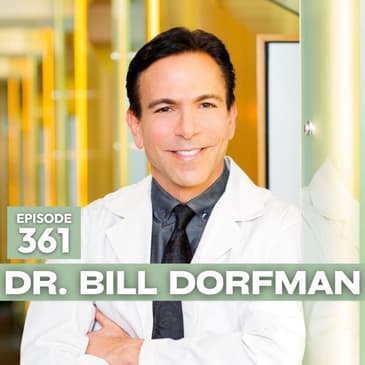
Join Dr. Bill in this insightful episode as he dives into the world of cosmetic dentistry and oral hygiene. He discusses his passion for cosmetic dentistry and emphasizes how oral hygiene is crucial for overall health, touching upon the importance of verniers in maintaining oral health. Dr. Bill explains what constitutes good oral hygiene and addresses common dental concerns, such as whether cavities can be reversed and factors contributing to rapid tooth decay. He also delves into the topic of teeth stains and the safety of whitening products, offering tips on managing sensitive teeth and effective brushing techniques. For those looking to maintain dental health through all stages of life, Dr. Bill shares strategies for staying vital into later years. To explore more insights from Dr. Bill, tune in!
FLASH SALE:
Jen Health was created so that you don’t have to think but just show up from 5-15 minutes a day to work on your deep core, and functional mobility, and to understand stability and control through movement as yes, all these factors are staples to target exercises for a specific pain point. Educating you – the what and the why covered! This week only, take advantage of our massive discount of $159. You get all our plans for a full year of 11 plans for different plans with multiple phases, monthly webinars to continue your education and have your answers to your questions, as well as community! Click here to get access to the discount!
VivoBarefoot Discount:
Your feet have the components they need to support themselves! That's why we love VivoBarefoot because the shoes themselves help us gain mobility and strength in our feet. Live that barefoot life in style, choose VivoBarefoot and use code OPTIMAL20 at checkout to get 20% off! Your foot and body will thank you!
**Code Change! The discount code is now OPTIMAL20 for 20% off.
**Vivo offers a 100-day trial period. If you are not completely satisfied, you can send the shoes back and get a refund.
Needed Discount:
Although the journey of pregnancy is so personal and individual, Jen's number one question goes back to what she did to help her conceive and maintain the pregnancy. While there were a myriad of factors that contributed, she reliably counted on Needed supplements that supported her journey! Men need support as well via sperm support and men multivitamins. while women are supported by egg quality supplementation, CoQ10, prenatal Omega 3, iron, and choline in tablet or powder form. Used by over 4000 health professionals, Needed is available to support pregnancy, fertility, and postpartum, as well as women's and men's health in general. Check out needed if you know there's a gap in your nutrition via code OPTIMAL for 20% off.
What You Will Learn in This Interview with Dr. Bill Dorfman:
03:19 - Why cosmetic dentistry?
06:50 - Oral hygiene is a health issue.
09:42 - Verniers and oral hygiene.
11:54 - What does good oral hygiene look like?
15:10 - Can you reverse cavities?
16:05 - What contributes to the quickest tooth decay?
19:11 - Developing stains on the teeth - are whitening products bad?
24:10 - How to work your way out of sensitive teeth.
27:00 - How to brush well.
29:52 - Remaining vital into later years.
40:30 - Learn more with Dr. Bill.
To learn more about this episode and view full show notes, please visit the full website here: https://jen.health/podcast/361
Thank you so much for checking out this episode of The Optimal Body Podcast. If you haven’t done so already, please take a minute to subscribe and leave a quick rating and review of the show!
Hosted by Simplecast, an AdsWizz company. See pcm.adswizz.com for information about our collection and use of personal data for advertising.
[00:00:06] Welcome to The Optimal Body Podcast. I'm Dr. Jen. And I'm Dr. Dom and we are doctors of physical therapy, bringing you the body tips and physical therapy pearls of wisdom to help you begin to understand your body, relieve your pains and restrictions, and answer your questions.
[00:00:19] Along with expert guests, our goal of The Optimal Body Podcast is really to help you discover what optimal means within your own body. Let's dive in. Before we hop into this interview on oral health, I want to talk about our feet and one of Jen and
[00:00:33] my absolute favorite companies, which is Vivo Barefoot. Our feet truly are our foundation. And if we have restrictions in our toes, our feet and our ankles, we can have compensations and restrictions elsewhere in our body
[00:00:46] because our feet aren't functioning optimally. That's why Jen and I have worn Vivo Barefoot shoes almost exclusively for the past five years. And we can't tell you the difference we have noticed in our own foot health and our own movement.
[00:01:00] Vivo has also come out with a brand new shoe, the Modus Flex. For those of you that love strength training, it gives you that barefoot feel while giving you a little more support and stability to be able to strength train and still
[00:01:12] move naturally in those shoes. Vivos are wide, thin, and flexible, so they allow you to feel that ground and allow our feet to naturally gain the mobility and strength that we need. We have an amazing 20% discount code if
[00:01:26] you go to the link in the show notes and use code TOB20 at checkout. You can get 20% off on any regularly priced shoe to get more of this barefoot style of living into your life.
[00:01:37] I promise you will start to notice a difference. And if you ever have any questions, you can reach out to Jen and me and ask, which shoes do you like for certain occasions? We have
[00:01:45] shoes for dress. We have shoes for movement. We have shoes for being at the beach or being at the lake. They have a barefoot style shoe for just about anything. So go down to the link in
[00:01:54] the show notes. Make sure you use code TOB20 at checkout to get our special 20% off. I'm excited for this next interview because it is the first ever cosmetic dentist that we have ever
[00:02:03] had on the Optimal Body Podcast. We have Dr. Bill Dorfman, who is not just a famous cosmetic and general dentist, but he has also been dubbed the Michael Jordan of dentistry. He is widely recognized as a leading dentist who is responsible for creating smiles for many of Hollywood's
[00:02:19] brightest stars, including Anthony Hopkins, Hugh Jackman, Usher, Jessica Simpson, Fergie, Ozzy Osbourne, Julianne Hough, Eva Longoria, Britney Spears, and Anne Hathaway, just to name a recent few. He is also a world-renowned lecturer and author of the bestselling cosmetic
[00:02:35] dentistry book, The Smile Guide, and the New York Times bestseller, Billion Dollar Smile. He has also been interviewed for countless popular TV shows and publications and has contributed much through his innovations and inventions to the world of dentistry. Dr. Dorfman is truly
[00:02:52] everything dentistry, and I'm so excited to glean a little bit of his knowledge on oral health. But let's get into it. Dr. Bill, thanks so much for being with us today. It's been a while since we've talked with someone on the podcast specifically about oral health, oral hygiene,
[00:03:05] and I believe you're the first in our first 350 episodes, first cosmetic dentist that we've had so far. So, really excited to talk with you a bit and dig into your expertise. Awesome. I'm ready. Well, as a dentist, what made you choose the path of cosmetic dentistry?
[00:03:23] You know, here's the thing. You go to dental school and they make you learn endo and perio and all this stuff. It's like the whole time I was in dental school, I never had a patient get
[00:03:35] excited about a root canal. I'll sit there with the instructor, looking at the x-ray going, oh my gosh, that was such a great root canal. But your patients don't care. But man, when a patient
[00:03:51] breaks their front tooth off and they come in and you make it look brand new like nothing happened, that gets them excited. And I just realized that if you change a tooth, that's one thing.
[00:04:06] If you change a lot of teeth, you change a life and that's a whole other thing. Cosmetic dentistry really was rewarding for me when I knew I could give people the ability to look and feel their best. So, I haven't done a root canal since dental school.
[00:04:28] Wow. Yeah. And I think that... I just kind of have a question because everyone out there, there's all this conversation about body positivity and be happy with how you are and how you look. But what do you think it is about our teeth specifically that
[00:04:43] having a good smile makes us feel so much better and actually can contribute to much better health in general? Interrupting your episode really quickly because have you heard me talk about Needed? Now, I have to just say that Needed offers radically better nutrition for women from conception to
[00:05:01] pregnancy to new motherhood and far beyond. So, if you haven't checked out any of their supplements, they have a ton. So, say that you are newly pregnant and you know that choline is something
[00:05:13] that's very important and it can be found high in eggs. However, you're like, eggs? That's the last thing I want to eat. Well, you can get the prenatal choline for that. If you know that you're
[00:05:22] not eating a lot of iron and you know that your body is needing it or craving it, they have the prenatal iron. They have so much for your body. And again, it's not just for pregnancy. However,
[00:05:33] I have felt so much comfort and I'm very methodical about what I'm putting in my body because after having a loss, there's not much you can control. I mean, you can't control anything
[00:05:45] for having a loss, right? You can't control just anything. You can't say, oh, I'm going to take this and I'm not going to potentially have a miscarriage. You don't know. But all I know is
[00:05:56] what I can control that I'm putting in my body and how I'm treating myself through my lifestyle. That's all I could do, right? And so, I knew that I wanted to find supplements during our fertility
[00:06:06] time when we were trying and into pregnancy that I felt truly supported and I can say without a doubt that is needed. And they have so much for just all across the board. So, if you have not
[00:06:19] yet, I would highly recommend head over to thisisneeded.com and use code optimal. You get 20% off of your first order. That's thisisneeded.com and use code optimal for 20% off your first order. And we're going to of course have that linked up. So, if you need to just head
[00:06:40] to the show notes and use code optimal. So, here's the thing. ABC did a show called Extreme Makeover and I was on every single episode of Extreme Makeover. I was the only doctor on every
[00:06:55] episode. And even though people may have been critical and say, oh, she didn't need to lose 50 pounds or she didn't need to have her nose done or her breasts done or this.
[00:07:09] Nobody ever said keep the bad teeth. Never, not once. Nobody ever said, oh gosh, don't fix their teeth. It's not just for aesthetics. I mean, this isn't about accepting a positive body image no
[00:07:27] matter what you look like. I mean, bad teeth are bad teeth. A lot of times it's unhealthy, it's uncomfortable, it leads to periodontal disease. I mean, there are a lot of other things.
[00:07:42] So, it isn't just about the aesthetics. I think that having a beautiful, healthy smile not only gives you confidence, but it also can contribute to having a much better life. I mean, if you have bad teeth, you have gum disease, you have periodontal disease, it's painful, it's
[00:08:05] uncomfortable. The quality of life is horrible. So, it's kind of all tied in together. And I think having a beautiful, healthy smile not only feels good and is healthier for you,
[00:08:18] but it also gives you the confidence to just walk in a room and smile and feel good about yourself. Absolutely. And correct me if I'm wrong, I believe we've had other people on the podcast that have
[00:08:31] mentioned stuff about this, but poor oral hygiene can either be associated with or increase your risk of other health issues in general like heart disease and hypertension. Absolutely. So, think about it like this. If you take a paper clip and you bend it once,
[00:08:51] nothing happens. You bend it twice, nothing. The third time you bend it, it breaks. So, if you have poor oral hygiene and you have periodontal disease, you have all this bacteria in your body and your body is constantly fighting this bacteria. And there has been a very serious
[00:09:16] negative link to heart disease and all kinds of things associated with periodontal disease. So, a lot of it's really a health issue as well. You don't want your body to continue having to fight this disease and these bacteria. So, having a clean, healthy mouth is critically important.
[00:09:41] So, if you were to get veneers, how would this play a role in helping to combat some of that bacteria? Because I assume you still have to brush your teeth, you still need a floss. So, how would that kind of change or impact things?
[00:09:56] Well, it's kind of unrelated. I mean, first of all, we're not going to do veneers on anybody who doesn't have good oral hygiene and isn't as healthy gums. If you try to place veneers on
[00:10:12] somebody who's got like gingivitis or other kinds of dental disease in their mouth, it's just going to exacerbate problems. And in a worst case scenario, let's say you did do that. Once you
[00:10:29] finally did get their gums healthy and everything back in shape, the gums tend to shrink up. And now your veneers are going to look horrible because you're going to see the margins or the edges of
[00:10:40] all the veneers. So, number one, before we even do any cosmetic dentistry, we would like to get your gums and everything else healthy. All right, what do you do with veneers? Well, veneers can be
[00:10:53] used for a lot of different things. Cosmetically, we can just change the way your teeth look if your teeth are too dark or too short, or you've got gaps or things that cosmetically bother you.
[00:11:06] We can fix those with veneers. We can also fix rotations and spacing. And I mean, there's a lot of things that we can do with veneers. It's also great for after an accident.
[00:11:18] A lot of times, if a kid falls or somebody breaks the tooth, you can repair it with either bonding or a veneer. Well, bonding is kind of a temporary thing. It usually lasts say three to five, maybe seven years. Whereas I actually have veneers on my front teeth
[00:11:39] because I fell when I was a little kid. And the veneers I have, I've had for 25 years now. And they still look as good as they did the day I put them in.
[00:11:49] Wow. Amazing. So, you know, you've talked a little bit about before you want to or even consider approaching cosmetic dentistry with someone, you want to make sure they have good oral hygiene. So,
[00:12:01] what does that look like? You know, I know a couple of the previous dentists that we had on gave us their optimal morning and nighttime oral hygiene routine. So, do you have kind of an
[00:12:11] optimal routine that you recommend to everyone? And are there any other tips like throughout the day that you can use to optimize oral hygiene maybe that you wouldn't think of? Well, first of all, I think you should see your dentist a minimum of every six months for cleaning.
[00:12:28] A lot of people, you know, say, oh, I don't need to go to the dentist, nothing hurts. By the time something hurts, it's kind of too late. I mean, that's, it's a big problem when
[00:12:38] it could have just been a little problem. So, number one, I think you should see your dentist at least every six months. Some people go, I get my teeth cleaned every three months. So, you know, your dentist and your hygienist would help you determine that. Number two,
[00:12:53] you should definitely brush and floss your teeth at least twice a day. I do it three times a day. Every time I eat, I brush and floss. And I was on The View and Joy said to me, Dr. Bill,
[00:13:11] I love brushing my teeth. I hate flossing. Do I really need to floss? And my response was, you know what, Joy, only floss the teeth you want to keep. So, yeah, you need to floss.
[00:13:26] Nothing replaces flossing. I know they've got these new fancy waterpik things and squirty things and these things. Nothing beats flossing. Think of it this way, your tooth has five surfaces, okay? Like if you look at a dice, okay, one surface you can't brush, that's the root, right?
[00:13:50] But there are five other surfaces. So, in a best case scenario, when you brush your teeth, you can brush three surfaces. You can brush the top, you can brush the front, and you can brush
[00:14:02] the back. Well, the two surfaces that you miss, the ones in between your teeth, are the ones where you get the most detrimental bacteria sitting. And that's the bacteria that, you know, lives there. It produces something called lactic acid. That lactic acid eats into your enamel and causes
[00:14:23] cavities. So, typically in adults, and I would say even teenagers, the first place we start to see decay is between the teeth because they're good about brushing. Most people brush their teeth,
[00:14:37] but a lot of people that don't floss will all of a sudden have all of these cavities in between their teeth. And that's because you can't get that bacteria out unless you floss. I mean, and that's huge. I think that's something very important to remember. And I,
[00:14:54] we even had friends who say, you know, oh, I just use the toothpick. So, it's interesting, or the water pick or whatever it is. So, it's interesting to, you know, be reminded it's not the same as flossing. Now, once you have cavities, can you reverse cavities by
[00:15:13] continuing with oral hygiene? Or is it something that you have to, you know, kind of get filled in? A hundred percent no on that. Once you have a cavity, you need to get it filled, period. There's
[00:15:28] no medication or contraption on the market today that will reverse that and fix it or remineralize your teeth. And anything you read or hear about that says otherwise is absolutely not true.
[00:15:48] The only way to remove decay is to remove it through, you know, a dentist and to have a filling done. So, it's best just not to get cavities. Yeah. That would be the goal.
[00:16:02] Definitely the optimal. And on that note, like what are some of the things that you would say cause or contribute, you know, to the most amount or the quickest tooth decay in people? I'll tell you the worst, probably the two worst things in the world you can do.
[00:16:22] Number one, never put a child to sleep with a bottle of milk. We actually have a dental term called milk bottle caries. Why? Because milk has sugar in it. And you have a kid laying in bed
[00:16:39] sucking on a bottle with sugar all night long, they get rapid decay. I mean, it's really, really dramatic. So, if you have a child, you want to put him to sleep with something to drink,
[00:16:53] water is the only thing. Number two, and this is something a lot of people aren't aware of, the longer you have sugar in contact with your teeth, the more detrimental. So, I had a patient, she had the most beautiful teeth ever. I mean, like Anne Hathaway teeth,
[00:17:14] right? Just this big, beautiful, bold smile. She got divorced and started working in real estate and she was absolutely paranoid that she might have bad breath. So, she bought breath mints and would literally suck on breath mints all day long, right? Well, the problem is the breath
[00:17:40] mints that she liked had sugar in them and she didn't get sugar-free breath mints. So, she's basically bathing her teeth in sugar all day long while she's working. Well, she was working like
[00:17:55] the maniac. And even though prior to this job, she was really good about coming in every six months, I didn't see her for two years, right? Because she had a toothache. She came in, she had rampant decay
[00:18:12] on like, I would say 10 teeth. She needed six root canals. She lost two teeth. I mean, it was, I've never seen anything like it. And the crazy thing is I sat there looking at her x-rays
[00:18:29] from just before she started working in real estate and then two years later, it didn't even look like the same mouth. And this is a really intelligent woman. She just, she didn't know.
[00:18:45] And so, if you're going to suck on mints and things like that, make sure that they're definitely sugar-free. But again, the best way to avoid major problems, see your dentist at least every six months. Yeah, I think that's key here. And an important reminder for everyone.
[00:19:06] And when it comes also to like having stains on your teeth or developing stains on your teeth, I know this can happen through different foods that we eat. And there's so many things on the
[00:19:18] market that you can use from strips and all these things. Do they hurt the teeth? Do they, like, is it bad to continue to do whitening products at home? Is it something you want to do
[00:19:30] in the office? Like how can we help to prevent stained teeth and what can we do about it? Okay. So, the biggest contributors to staining are things like smoking or excessive coffee and tea
[00:19:44] and things like that. Getting your teeth cleaned every six months will help. There are a lot of different whitening products on the market. The one thing you need to be aware of is that they
[00:19:59] have to have a neutral pH. You can't really hurt your teeth with any kind of whitening product as long as it's not acidic, you know? I mean, one of the worst things you could do for your teeth is
[00:20:12] just like suck lemons. Like there are people that like bite into lemons because they love it. It literally eats the enamel off your teeth. But if you're going to whiten your teeth,
[00:20:24] as long as it's got a neutral pH, you can't hurt it. I've developed a new whitening strip that will be on the market in about a month. That's phenomenal. It's called POOF. It's got
[00:20:36] three O's. P-O-O-O-F. POOF are whitening strips that literally melt on your teeth. So, you put the strip in, it tastes great, it feels good, it doesn't move around, it sticks to your teeth really well.
[00:20:54] And in 10 to 15 minutes, the strip disappears. It vanishes. So, the tagline is stains disappear, strips disappear, and POOF, your teeth are white. And it's kind of the coolest whitening product I've ever seen out there. About two years ago, we started developing it. And I just knew that there
[00:21:17] could be, you know, it's the old build a better mousetrap. I'm the dentist, I don't know if you know this, who invented Zoom tooth whitening. Zoom became the biggest in-office tooth whitening system in the world. And we sold that company to Philips back in 2010. And during the pandemic,
[00:21:38] my non-compete expired. I thought, you know, we need a better whitening system out there. I saw a lot of them on the markets and a lot of them are just, it's a hoax. Like, they don't even
[00:21:48] like whitening your teeth. Like people say, oh, you know, this system doesn't have hydrogen peroxide. Well, I have a newsflash for you. If it doesn't have hydrogen peroxide, I don't care what they
[00:22:01] put in it. It won't whiten your teeth. It just won't. It's absolutely impossible. In order to whiten teeth, you need a few things to happen. Number one, you need hydrogen peroxide. Now, it's kind of a tricky thing. The higher the concentration, the faster it whitens your
[00:22:20] teeth. But if it's too high, it also causes a lot of tooth sensitivity. Permanent? No. You'll never have permanent tooth sensitivity from whitening. It's always transitory, but it's still uncomfortable. The second thing you need in order to whiten teeth is exposure time. Right? So all of these things
[00:22:40] like whitening toothpaste, they don't whiten your teeth. There's no way. You know, these pens, they're you like, you know, take this pen and rub it on your tooth. They don't whiten your teeth.
[00:22:50] No way. Because the second saliva hits it, it just washes it away. So you need the hydrogen peroxide to be on the teeth for at least, I would say a minimum of like 10 minutes in order to actually
[00:23:08] whiten teeth. Now, you can be tricked by abrasive toothpaste. What I mean by that is, let's say, let's say you're a smoker and you have a lot of brown superficial stain on your teeth,
[00:23:22] and you use a very abrasive toothpaste. You can brush off that stain. And yes, the teeth look brighter. But did you actually whiten your teeth? No. The actual tooth structure stays the same color. The only way you can whiten teeth is with hydrogen peroxide, or something called carbamide
[00:23:43] peroxide, which basically breaks down into hydrogen peroxide. But any other whitening product that claims to whiten your teeth that doesn't have hydrogen peroxide or carbamide peroxide is absolutely a hoax and it just doesn't work.
[00:24:00] And so you've brought up a couple times, you know, tooth sensitivity. And you said in the case of using these whitening strips or products that make your teeth feel sensitive, it might be more transient. So people who complain of or deal with tooth sensitivity on a consistent basis,
[00:24:17] what tends to be happening there? And is there any way that people can kind of work their way out of having sensitive teeth? So here's the thing. Your teeth are kind of like a sponge.
[00:24:31] They're porous, right? Why do teeth stain? Well, over time, the stain builds up in these little microscopic pores in your teeth. So what does whitening do? So whitening basically turns these colored particles inside the tooth clear and then the tooth appears lighter.
[00:24:52] Okay. So, you know, that's basically what's happening, you know, in the whitening process. And, you know, what was the other part of the question you asked? What is how somebody can work their way out of having sensitive teeth?
[00:25:09] Oh, sensitivity. So what happens with sensitivity is that these tubules, that's what the microscopic pores in the tooth are called, these tubules are open. And so you basically have kind of
[00:25:27] a access to the nerve, to the pulp in the tooth. And these products can cause kind of like a hydrostatic pressure in there that causes tooth sensitivity. So the best way to eliminate tooth
[00:25:43] sensitivity is to plug the tubules. Well, how can you do that? Well, there are toothpaste with fluoride. There's a product called potassium nitrate, which is in a lot of the desensitizing toothpaste that helps plug these tubules. And that causes the sensitivity to go away. A lot of people
[00:26:05] like to use toothpaste called Sensodyne. I've actually found that Colgate-sensitive toothpaste is more effective than Sensodyne and some of the other ones. So I typically tell my patients to use that. And there has never been a single case reported of anybody who's had sensitivity as a
[00:26:30] result of whitening where it didn't dissipate, go away. It will never, ever, ever cause permanent tooth sensitivity. That's good to know. And there's also, it's also good to know, you know, there's things that you can do about it to really help to reduce some of that sensitivity.
[00:26:46] And one last thing I want to ask about for when it comes to dental hygiene and all of that is that one of the things I think we want to, we're trying to do is in keeping our mouth healthy
[00:27:00] is really brush well. But I know at the same time, if we're using a toothbrush that's too hard when the bristles, it can cause some gum recession. So what are things that we need to
[00:27:11] look out for when it comes to a toothbrush and how most effectively are we using that toothbrush so we're not, you know, causing gum recession? Because I believe you've said before there's
[00:27:21] nothing, like once the gums recede, they're not coming, it's not hair, it's not going to grow back. That's true. So the first thing is never, ever, ever, ever use a hard toothbrush. In fact,
[00:27:33] you should always use an extra soft toothbrush. The only reason that hard toothbrushes are on the market is because people buy them and they don't know any better. So you never want to
[00:27:44] use a hard toothbrush. My favorite toothbrush is the Oral-B toothbrush. I love that one. I actually helped launch that with Eva Longoria and Mario Lopez, and it has been a phenomenal toothbrush.
[00:28:00] I know emphatically that it works well because I tend to build up a lot of tartar, especially on the back of my lower front teeth. And ever since I've been using that toothbrush, I have
[00:28:14] zero tartar. The technical word is calculus. Zero calculus buildup. And that's never happened in my life. And I'm even a dentist and I mean, I have really good oral hygiene. I brush and floss at
[00:28:27] least three times a day. I just figured, oh, well, you know, there's nothing I could do about it. But once I started using this toothbrush that went away completely, I've had patients that have had perpetual, you know, kind of swollen gums like gingivitis. And the only thing that
[00:28:46] really keeps it in check and keeps it from getting out of hand is this toothbrush. It really is amazing. So, my recommendation is get an Oral-B I.O. toothbrush. But if not, you know, get an extra
[00:29:03] soft toothbrush. Make sure that you brush gently doing small circular motions. And believe it or not, you should brush for about two minutes every time you brush. Definitely. And sometimes, I mean, we have, you know, the electric toothbrushes that kind of time you and it's
[00:29:19] amazing how long that two minutes can feel sometimes. But it's like putting a deposit in the bank. It'll pay you back if you spend the proper time. So, one thing, you know, we've talked a lot about oral hygiene and especially how... And just oral health and how important
[00:29:34] that is to general health. And I think that one thing that I know is also important to you is just aging well and remaining vital, especially as we come into the later years of our life.
[00:29:44] And that's really what's important to a lot of people feeling vital and feeling functional late into life. Do you have any, you know, major pointers for people or focuses, especially when it comes to your own health that you feel like can contribute to
[00:30:00] remaining vital into our later years? Yeah, I'm gonna make it super simple. Use it or lose it. Yeah. I mean, that's really what it is. I mean, you know, I started my dental career. I was always
[00:30:14] an athlete. I was always working out. I was always fit. And, you know, I started dental school. And here I am in lab for hours and hours and hours. And for the first time in my life,
[00:30:26] I'm having like back pain, neck pain. I mean, I just felt like crap. And, you know, I started going to the gym more because I was going less. And I started feeling better and
[00:30:40] better and better. And then I got to a point where I realized, you know, the only way that I could do dentistry and physically feel good was to make sure that I was going to the gym.
[00:30:53] I was stretching. I was balancing my muscles. I was exercising. And so I became a fanatic. So I go to the gym every single day of my life. I don't care where I am, even if I'm on a trip
[00:31:07] or if I'm on a cruise and they don't even have a gym, I'll just spend an hour and do push ups and sit ups and, you know, jog and jumping jack. I mean, I will exercise for at least an hour
[00:31:22] every day of my life. And, you know, I'm 65 years old and I go to the gym with guys in their 20s and I'm in better shape than them. Like I inspire them. You know, they're like, OK,
[00:31:34] if this 65 year old dude can do this, you know, I will certainly continue to, you know, to work out until, you know, I get to a point where, you know, I feel good about myself and I can continue to
[00:31:52] just, you know, grow and be healthy. I graduated dental school 41 years ago and, you know, I went to my 40 year reunion. 80 percent of my class has retired not because they wanted to, but because physically they could not do dentistry anymore. And, you know, people don't
[00:32:19] realize how physically demanding dentistry is. I mean, on your back, on your neck, on your arms, on your eyes and all that stuff. And the only reason that I've been able to have
[00:32:29] a career for 41 years and still be able to work is, I think, because I do go to the gym and exercise regularly and take good care of myself. I have this policy where every year
[00:32:43] on my birthday, I get a physical, you know, and it's easy to kind of forget, you know, to go to the doctor. But every year I know on my birthday, I go and I get a full physical.
[00:32:58] For the last four years, I've done full body MRI. And I did that because it literally saved two of my friends' lives. One found he had pancreatic cancer at a very, very early stage,
[00:33:17] which they would never have detected. And they removed it laparoscopically, which was no big deal as opposed to having, you know, to wait longer and do that horrible Whipple procedure. Another had breast cancer that they determined that they were able to detect. So, you know,
[00:33:38] I do a full body MRI every year. They superimpose them on each other to see if there's any changes. And it makes me feel very comfortable knowing that there's nothing going on in there that I
[00:33:52] don't know about. Plus, I get a full blood panel and work up and all that. So, you know, I think it's really important to exercise and to see doctors and get physicals every year and eat well.
[00:34:08] You know, I just did the cover of Men's Health magazine, which will come out in the next few months. And I'm super excited about that. And every time I get interviewed by one of these
[00:34:19] magazines, they always say, you know, what's the secret? Okay, first of all, it's no secret. You know, it's three things. It's what you eat, what you do, and what you're made of. So,
[00:34:35] it's your diet, your exercise and your genetics. And you control two out of the three. I mean, genetics, look, either you're lucky or not. But as far as exercise and diet, you control those.
[00:34:56] I don't drink, never have. I'm not like a recovered alcoholic. I just never liked alcohol. I don't drink. I don't smoke. I've never done drugs. You know, I try to eat pretty healthy.
[00:35:08] You know, I avoid fatty foods. And I've weighed the exact same amount my entire adult life. I weigh 154. I mean, I'll get on a scale right now. It'll be 154. And I've weighed that since
[00:35:25] college. It's never really fluctuated at all. I don't know. I mean, I think I'm an anomaly. I don't know. But you can ask all my ex-wives, they'll tell you I'm not even human. But that's
[00:35:42] kind of the thing. So, I just say, you know, take care of yourself, exercise, you know. And even if it's as mundane as doing power walks, you know, in the evening or something, but you literally need to exercise your body or it will just stop functioning.
[00:36:04] Well, I think that's all so commendable. I mean, first of all, to be 65 and on the cover of Men's Health, congratulations. That's really amazing. And to be a dentist and be able to still do this
[00:36:17] because we do understand as physical therapists, the demanding work of the sustained posture that you're in throughout the days. So, be able to do that and stay and feel healthy within your body
[00:36:29] is so amazing. So, thank you for sharing those nuggets. I think having those reminders, you know, people are always looking for some complicated answer, but it's not. It's coming back to those basics and what are we doing on a day-to-day basis that's really going to impact that long-term
[00:36:45] health? And of course, someone hears you say, oh, I go to the gym for an hour every day. And then, you know, maybe that makes people think, oh, I can't go to the gym for an hour every day. Well,
[00:36:53] if you're not doing that or not doing much at all, going to the gym for an hour every day might be a recipe for burnout. But like you said at the end, starting with power walks. Yes. Something.
[00:37:03] As new parents with a young child, like, I make sure to get 50 push-ups, 25 pull-ups, and 50 ab exercises in a day. And I can do that while I'm watching my kid. You know, it's like, wherever
[00:37:14] you can find that time to put something in that gets your body moving, that treats it in a little bit different way can be huge in the long term. I'm going to blow you away. You know what my
[00:37:26] warm-up is? So, I have two exercises. One is two routines. One is upper body pretty much and the other is just core and cardio. When I do my upper body workout, my warm-up is 160 pull-ups. Oh my goodness. That's wild.
[00:37:47] I do 160 pull-ups. And I've actually had guys come up to me and say, dude, you're like an animal. How can you do that? Now wait, I don't do it all at once. I do it in sets of 20. But I do-
[00:37:59] If you did it all at once, I wouldn't believe that you were human. So, I want to clarify. But I do 160 pull-ups. That's crazy. That's my warm-up. There's one thing I'd like to leave you guys with before we go,
[00:38:13] because I know we're running out of time. I founded a program called LEAP. It's a non-profit. For the past 17 years, we've done this at UCLA. This year, it will be at USC. LEAP is a program for high school and college students, which is for young entrepreneurs,
[00:38:34] which teaches them leadership and motivation. And it's an amazing program. It will be July 21 to the 27th. And we get the greatest speakers in the world. In the past, we've had Richard Branson, Paula Abdul, Nisi Nash, Anthony Hopkins, Mark Wahlberg, Kathy Bates, Michael Strahan, Apollo
[00:38:55] Ono. I mean, it is a phenomenal, phenomenal program where we basically teach these young kids skills they need to be successful in life. And by the way, in addition to teaching them networking and money management and time management and all this stuff, I do a whole
[00:39:12] thing on health and fitness. Because I figure if you're 16 or 17 and you learn these good habits early on, you'll have a long, healthy life. So please, please, please encourage your followers to check us out at www.leapfoundation.com. It is a phenomenal program. We'll have about 450 kids
[00:39:34] in the program this year. I have Anthony Hopkins coming back again. I have Shay Mitchell coming from Pretty Little Liars, Taylor Zachar Perez from Royal Blue. I mean, we have a bunch of really
[00:39:48] great actors and business people and whatnot. And if you just go on our website, you can see the things that we've done. It's pretty phenomenal. Amazing. That is really cool. I'm glad
[00:40:00] that you let us know. And I hope anyone out there who needs that or knows someone who does can... Yeah, we'll have that linked up down in the show notes of the episode. We definitely will.
[00:40:11] And yeah, outside of that, Dr. Bill, it's been amazing having you on. Thanks for giving a little insight into your breadth of knowledge on oral hygiene and health in general. Where can people go to learn more about you or learn more from you?
[00:40:25] My website is great, Dr. Bill Dorfman. If you go on Instagram, I'm pretty active on there. I actually will answer all DMs myself. Even though I have over 2 million followers, I actually am the
[00:40:41] one that looks at that and answers. So if you want to contact me or reach me, you can certainly DM me on there. And if you have kids or no kids 15 to 25 that would benefit from LEAP,
[00:40:57] please check out our website again at www.leapfoundation.com. It will be an amazing summer program. And yeah, I thank you for having me as a guest. Yeah, thank you. Another great interview. I really appreciate you sticking around. And of course,
[00:41:14] if you heard something that you think can be beneficial, please pass the episode along. This is how we allow people to get this information within their brains and within their bodies. And of course, if you've missed it, today is the absolute last day of our flash sale for
[00:41:31] GenHealth. If you've heard about our membership, you know that one of the 11 plans from low back to core, full body mobility or anything in between can help your body. There are not only one single plan per body part, but there are progressions. There are phases to continue to
[00:41:48] progress into your body and really help you feel something different. All it takes is 8 to 15 minutes a day. I don't want to take much of your time, but I do want to help you for the long run.
[00:41:57] So if you haven't checked it out yet, you can try a free week and lock in this yearly discount at 47% off. That is 47% off the year. All you have to do is go to gen.health backslash free trial. We're
[00:42:13] also going to have that linked up in the show notes. So please go check that out if you haven't yet.