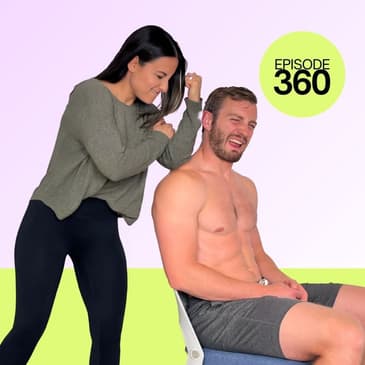
In this episode, DocJen and Dr. Dom delve into tight knots and what is happening within the body to cause the tension and pain. Differentiating trigger points and tight knots, they discuss the role of the nervous system and how biopsychosocial components may be related to the sensations your are experiencing. Finally, they touch base with the power of breath, touch, and posture through mobility, as tools to change your symptom experience! Let's dive in!
Vital Proteins Discount:
Do you love coffee? Why not add a scoop of collagen to compensate for the loss of efficient collagen production with age! We know that while our body's collagen production slows as we age, our need for it only grows as our bodies become less efficient. By providing nourishing collagen and promoting our production of collagen, Vital Proteins helps people feel better and live fuller lives through HIGH-QUALITY nutrition products. Use code ‘OPTIMAL15‘ at checkout. Build resilience from the inside because topical is so typical. This is the perfect addition to your topical skin care routine. Check out their new "Skin Complex." This product is not intended to serve as a replacement for sunscreen**
Needed Discount:
Although the journey of pregnancy is so personal and individual, Jen's number one question goes back to what she did to help her conceive and maintain the pregnancy. While there were a myriad of factors that contributed, she reliably counted on Needed supplements that supported her journey! Men need support as well via sperm support and men multivitamins. while women are supported by egg quality supplementation, CoQ10, prenatal Omega 3, iron, and choline in tablet or powder form. Used by over 4000 health professionals, Needed is available to support pregnancy, fertility, and postpartum, as well as women's and men's health in general. Check out needed if you know there's a gap in your nutrition via code OPTIMAL for 20% off.
What You Will Learn in this PT Pearl:
5:05 - Introduction
7:07 - What are knots and trigger points?
10:58 - Neurological muscle tension
14:25 - Global components to pain & trigger points.
16:14 - The power of the breath and touch.
22:40 - Changing your static positioning + posture.
To Watch the PT Pearl on YouTube, check out DocJenFit on Youtube here: https://www.youtube.com/watch
For the full show notes, visit the full website at: https://jen.health/podcast/360
Thank you so much for checking out this episode of The Optimal Body Podcast. If you haven’t done so already, please take a minute to subscribe and leave a quick rating and review of the show!
**These statements have not been evaluated by the Food and Drug Administration. This product is not intended to diagnose, treat, cure, or prevent any disease. ^Results may vary. Various studies have suggested benefits following daily consumption of collagen peptides for several months. Refer to product labels and vitalproteins.com for recommended serving sizes and for more information.
Hosted by Simplecast, an AdsWizz company. See pcm.adswizz.com for information about our collection and use of personal data for advertising.
[00:00:06] Welcome to The Optimal Body podcast. I'm Dr. Jen. And I'm Dr. Dom and we are doctors of physical therapy, bringing you the body tips and physical therapy pearls of wisdom to help you begin to understand your body, relieve your pains and restrictions and answer your questions.
[00:00:19] Along with expert guests, our goal of The Optimal Body podcast is really to help you discover what optimal means within your own body. Let's dive in. Vital Proteins actually came out with something new, you guys,
[00:00:32] Vital Protein Skin Complex. So this is the perfect addition to your skincare routine. Doesn't take away from, you know, wearing your sunscreen, but it helps to build your skin's resilience from the inside. Through a combination of high quality ingredients,
[00:00:47] Vital Protein Skin Complex helps support a healthy youthful appearance from within, making it unique from other skincare solutions because topical is so typical. Think of Vital Protein Skin Complex as the perfect addition to your topical skincare routine.
[00:01:02] The inclusion of 20 milligrams of Holomol offers a new way to support healthy skin after sun exposure. I highly recommend checking this out. I'm so excited. We just got it ourselves. So use code Optimal15, you get 15% off site wide and we'll have it linked
[00:01:18] up in our show notes, but Optimal15 at checkout and check out their new skin complex. All right. This is an episode I'm actually pretty excited for because I feel like everyone deals with
[00:01:30] this. Tight knots, trigger points, oh my upper traps are just so lumpy or I can't get things to release. So we want to talk through what exactly a knot is, what is causing these tight bands of
[00:01:45] muscle and what can we actually do long term to help with, you know, preventing our body from forming knots or if we know we have areas that consistently have these knots pop up, what can we
[00:01:59] do to, you know, reduce the frequency of that? And I can't believe we haven't done an episode on this yet because it is such a popular topic, you know, and I think we've touched on in other
[00:02:10] episodes what a knot is, what a trigger point is, and we've kind of gone over the research on popular tools that people use, whether it's massage guns or foam rollers or, you know, things that people
[00:02:22] typically use for a knot, but we haven't really identified exactly what is a knot and what should I be doing for it. Interrupting real quick to answer a question that I've been asked quite a bit
[00:02:34] and I understand that this journey is so personal and so individual for so many people, you know, people asked what were you taking that you feel like helped you to conceive? And second, do you
[00:02:44] feel like what you took really helped you to maintain your pregnancy? And you know what, I cannot say for sure. There's no guarantee in anything. However, I did want to look for supplements that
[00:02:55] would help to support this journey. And what I loved about going to Needed and seeing what they had available is that it wasn't just for me. Men need support as well, and this isn't talked about
[00:03:06] enough. And so knowing that they had the sperm support for men and they had the men multivitamin, so something that could supplement Dom's health and nutrition as well as mine. So not only was
[00:03:19] I taking the prenatal, but I was also taking their egg quality support and knowing that I was putting something that would help to support my body just like their CoQ10. I was also taking that one,
[00:03:31] and I still take that one during pregnancy. And knowing that they have so many others, so their prenatal omega-3, I take. I particularly don't like fish or anything to do with it,
[00:03:41] so I know I need support in that. For those who don't have a lot of iron within their diet, they have a prenatal iron, they have prenatal choline if you know you don't like eggs or
[00:03:50] it's been difficult to get it in. And they also have their prenatal supplements in powder form. So if you know that it is just too much to take too many pills, they have it in powder form as well.
[00:04:00] And I've found so much support in Needed. I know that they're trusted by so many people. I mean, to know that Needed is recommended and used by more than 4,000 women health experts from nutritionists to midwives, functional medicine doctors and OBGYNs. I just knew that this was
[00:04:16] going to be something that could support me in any area that I felt like I wasn't getting enough support. And that's hard in first trimester when you feel like you can't really eat a lot. So not
[00:04:26] only do they support pregnancy, but they support fertility, they support postpartum journey, they support women's and men's health in general. So if you know that there's some area of your body that you're not getting enough from nutrition, I would go check out Needed. Head over to
[00:04:46] thisisneeded.com and use code optimal. You actually get 20% off of your first order. So just go explore. That's t-h-i-s-i-s-n-e-e-d-e-d.com and use code optimal for 20% off your first order. Okay, let's get back in. Yeah. Cause what, I mean, some of the things
[00:05:07] you mentioned, like we've done the massage or the percussion therapy guns. We've done grass den type tools, scraping, we've talked about dry needling. We've talked about manipulations. We've talked about just like massage or other random manual therapies, which all might feel
[00:05:24] good. Yes. But go to those specific episodes because they're going to identify a little bit more. And we'll talk more in depth in those episodes and maybe a little bit today about why those things feel good. Because they give that local, you know, feeling of relaxation.
[00:05:40] They help work with some of the processes in the muscle that we're going to talk about today to get some of those tight bands to relax. But it's not something that's a lasting fix per se.
[00:05:50] It's not something that's going to help give you longevity of that relaxation, which is why people will find themselves going back into the massage therapist or the chiropractor or their physical therapist multiple times a week because, oh, it popped back up. Oh, that, you know, knot or that
[00:06:06] pain in my back came back up. And these are the things also that we start to attach in our minds to, oh, my back went back out of place because you're feeling the pain again. It's in the same
[00:06:16] place. Maybe there was a provider, a physical therapist, someone who told you like, oh, you know, you're slightly out of place or, you know, your spine is slightly misaligned in this area. That's why your muscle is taking over right here and causing a knot.
[00:06:29] Yeah, that's why your muscle is spasming. And again, like we start to attach in our mind these messages that we hear from providers, the pain is back. I must be out of place again. I must be
[00:06:40] broken again. And it gets us into this vicious cycle of reliance on a different tool or something being done to us to get rid of that knot. Exactly. So, we just want to help you identify
[00:06:51] exactly what that is first so that you have a little bit more awareness and clarity and some understanding within your body. Like, knowledge is so powerful and you've probably heard that before, right? So, we want to give you the knowledge back into your hands. So, basically,
[00:07:06] a knot, we're looking at, you know, a ball of tissue or a trigger point. You probably heard trigger point, right? We need to dig into this trigger point. You know, and what we have theorized
[00:07:18] right now is that it is a disorganized muscle spindle. Now, we have to identify what a muscle spindle is. Yeah. We're going to talk a little bit today about this muscle spindle and kind of its
[00:07:27] counterpart that it works with the Golgi tendon or the Golgi tendon organ, Golgi tendon apparatus. These are all, you know, terms that will be used. And essentially, what these two things do, the muscle spindle and the Golgi tendon, is they regulate the tension in the muscle
[00:07:42] to some degree. And a lot of it is based on how fast the muscle length is changing, how, you know, the amount of tension that is put through the muscle and these things work together.
[00:07:52] So, a muscle spindle, its specific purpose, this is found directly in the muscle belly or within the muscle fibers itself. The muscle spindle senses the change in length and the velocity and the change of length of that muscle. And so, if when a muscle spindle is operating correctly
[00:08:12] or properly, it will sense if our muscle is changing at way too fast of a rate. That the body is not used to. That the body is not used to. The brain is not used to. It's used to protect you.
[00:08:23] Yeah. Then the muscle spindle will say, hey, we need to put some more tension. We need to contract this muscle to protect from injury. Yes. So, it's actually a very like useful process if you're out running and you stop really quick
[00:08:35] and the muscle, you know, changes length really quickly. The muscle spindle might hold on to give you a little extra contraction to make sure that you don't strain, sprain, tear a muscle. And that really is the process, right? Protection. Protection against injury, reducing injury.
[00:08:51] However, this is where we could also see someone who hasn't really been bending forward or hasn't really been putting a lot of stress and tension into their hamstring and they go to reach forward
[00:09:02] and touch their toes and they're like, oh, I can't go anywhere because now the brain is sensing this change of length within the hamstring and saying, nope, we don't have, we don't go forward very
[00:09:14] much. We don't bend forward. We don't do this. So, I'm going to hold back tension to help protect you. Doesn't necessarily mean that is the length that your hamstring has available. It just means
[00:09:25] this is the length that my brain thinks is going to prevent from injury. But what's really cool, and I have this video on YouTube as well. If you just do a couple of like neurological trickery, You like these little neuro hacks.
[00:09:41] Yeah. To get the brain to be okay bending forward and sensing this feeling of going forward, all of a sudden, I mean, I swear this video has done so well on the YouTube because so many people
[00:09:56] try these hacks and they're like, oh my gosh, I can touch my toes. Did you say on the YouTube? Did I? Do I sound like a boomer? A boomer. Anyways. Doing so great on the YouTube.
[00:10:09] Anyways, it is really cool to see that when people use these quick neuro hacks, how much it can change in five minutes or less. And that's what we're saying. If this is a sensor, a receptor within my
[00:10:27] muscle that's causing protection, well then it's all coming from my brain. It's all neurologically driven. So, if there's disorganization of a muscle spindle, then there's something happening within my nervous system that is causing this tissue tension.
[00:10:45] Essentially, that muscle spindle is convinced that if we allow any amount of stretching or lengthening, it's going to be dangerous. And so, I need to hold this tight knot. And that's where we get into that dysregulated state. The muscle spindle is so overactive that it hardly allows for
[00:11:02] any degree of normal regular movement without saying, nope, nope, we can't move. And that's where you'll get those spasm feelings or that's where the knot really starts to get irritating. And like Jen said, this is a neurologic process that's been happening over time,
[00:11:16] which is why a lot of these tools, even what she mentioned in her YouTube video for touching your toes, those little neurologic tricks, they're just that. They're tricks that will allow you to access more length, but it doesn't completely reprogram that muscle spindle to allow you to
[00:11:36] feel like, oh, now I can go touch my toes any day. If you did those consistently over time and continue to have it as a part of your routine, that's what starts to reprogram the brain
[00:11:47] connection with that muscle spindle to say, oh, we are safe to allow the body to go into that range of motion. And then you can start doing those movements faster, but that's part of the process
[00:11:56] we're going to talk about. And really what a lot of, I mentioned this whole Golgi tendon apparatus and didn't really explain what that was. A lot of those neural tricks and a lot of what we're
[00:12:07] going to talk about impacts the Golgi tendon because when the Golgi tendon is placed in between the tendon and the muscle, so it's at what we call the musculotendinous junction. And what the Golgi tendon does is when it senses strength or tension, so if you're putting
[00:12:24] stretch through a muscle, the Golgi tendon is going to sense some sort of strength or tension or tension put into it. It's going to inhibit or tell that muscle to relax. And the Golgi tendon
[00:12:37] also inhibits the muscle spindle activity. But again, they work in concert. So if the muscle spindle is way too hot and you try to stretch, you're not going to quite activate that Golgi
[00:12:49] tendon in time before the muscle spindle tightens down and contracts the muscle. Right? So I hope that kind of makes sense where if we do slow, thoughtful, you know, even just a passive stretch, give our body time to activate that Golgi tendon and give that muscle some relaxation,
[00:13:10] inhibit that muscle spindle so that it allows us to feel safer going into a more lengthened position. And all of this to say if it's receptor-based, if it's neurologically driven, then just attacking that disorganized muscle spindle and trying to rub it out could potentially give you
[00:13:32] temporarily relief, but we're not getting to the root cause of why that is in a very tense state. Right? Yeah. We say that all those passive techniques and stuff, they're not long-term solutions. They can be a part of a long-term solution.
[00:13:49] And we'll talk about what that looks like. Just not by themselves. Like yes, if you can use something, like we're going to talk about different tools or balls that can help get that initial relaxation,
[00:14:00] that can be a good first step to give your body then the ability to actively move into those ranges a little bit more. But this is where we have to remember anything, if this is what's directly coming from my nervous
[00:14:12] system reporting into my nerves and causing this, then anything that's affecting my nervous system can have effect in what I'm feeling in this tissue tension and this knot. So, that means that all of the things that affect our nervous system, meaning sleep, how well we're sleeping, our nutrition,
[00:14:31] are we getting micronutrients? Are we fulfilling what our body needs? Hydration. Are we hydrating our bodies? Are we getting daily movement and not just maybe in like a 30-minute workout, but are we getting movement throughout the day? Are we more static throughout the day?
[00:14:47] Are we resting adequately and recovering on our body? And are we taking on more stress than our body can handle? All of these things, it's like, think about you adding, you're adding more, you're adding more, you're using your battery, you're using your battery and all of
[00:15:03] a sudden your battery on your phone gets to a very low state. And if you don't plug it in and you don't let it sleep, let it rest, do all these things that we need, it's going to act a little
[00:15:16] glitchy. Your phone sometimes does weird things. Well, that's the same thing within our body. All of a sudden we have these knots, these tensions, these pains, these aches that are coming up because we're not addressing those underlying things that are affecting our nervous
[00:15:30] system and having a response into those receptors causing that tissue tension. Yeah. Like Jen said, all of these things can add just to the overall noise of the nervous system. If we're breathing with a stressed pattern, we're going to be in more of that sympathetic
[00:15:45] heightened state. And that's going to globally like increase the amount of signaling we're putting out to all of our muscles. Same with the sleep. Think about a morning that you didn't get
[00:15:55] great sleep and you wake up and you feel those aches and pains a little bit more because your body didn't have the time to recover and you're already going into the day with that battery
[00:16:06] slightly depleted. So, those are amazing global things to focus on. And one of our favorites is the breath, especially when it comes to stretching or working directly on the muscle because it's an amazing tool that can help amplify the results that we get from doing
[00:16:25] local techniques on these different areas. Because if the whole point is like, okay, there's some sensitivity, there's some tension within our nervous system that's reporting into these muscles and causing a little bit more tension and tissue tightness. Well, if I add
[00:16:41] breath in with maybe I do want to add touch. Touch is so powerful. We're not saying that passive techniques shouldn't be used, that you shouldn't go to someone and have hand-on treatment.
[00:16:52] I think hands-on treatment is so valuable because think about it, like I bump my elbow and I grab it, I touch it right away. This touch allows my brain to reduce those pain signals automatically
[00:17:08] just from adding touch. So, if I'm going to someone and they're touching my body, I am helping to reduce those pain signals. So, I think touch is really beneficial. But like Dom said,
[00:17:20] when we add the breath component, we can switch the body from that stressed out sympathetic state into that parasympathetic down regulation state. So, if I now use a soft tool because I'm not
[00:17:35] trying to break up tissue, right? This, that breaking up and releasing and, you know, trying to dig out, that's not going to respond well to our brain. They're all just words that give us an unrealistic idea of what's actually happening. Yeah.
[00:17:52] And people use those words because they don't want to go through the jumble of explaining what a muscle spindle and Golgi tendon organ is. Either they don't know that's exactly what happens and they believe they're breaking things up or it's just a simple way to put it like,
[00:18:06] oh, we got to release that. Like, okay, there's not really a short-term like boom, it's released and now it's good. You might feel like things relax and quote-unquote release, but it's more so that you've gotten the body in that moment to relax. There really wasn't
[00:18:24] anything to release or if there is a bunch of dysregulated tissue, it's not going to suddenly just boom, release and be changed. Yeah. So, we're really looking for that tissue relaxation. And the way we get that relaxation
[00:18:37] isn't by digging it out because imagine like that can make something more angry, that can make your body try to protect you more and grab on more. So, going harder,
[00:18:48] going deeper isn't the answer here. It is how can I use my breath to calm my overall nervous system? Yeah. And we've had so many episodes on breath on what that really looks like.
[00:19:00] And then use a tool, a soft tool, like a tune-up fitness tool. And we'll have that linked up below. But those give a little bit more give into the body. So now, if I do want to touch the area that
[00:19:12] feels a little bit more sensitive, that's okay or touch around the area that feels a little more sensitive, but go gentle with it. So, maybe instead of being on the floor, I'm against a wall and I'm
[00:19:24] putting pressure to what I can tolerate while I really use a calm, slow breath. And that can be a first way of just starting to relax that tissue tension and temporarily cause that decrease in that knot.
[00:19:40] Yeah. I love where you're starting with this. And I mean, tune-up fitness by far one of our favorite tools that we use ourselves on the body. And another global technique that I think is great
[00:19:52] to add in because we talked about breath being a good global technique to just start working on is if you use the gorgeous ball from tune-up fitness. And this, regardless of what area you're working
[00:20:05] on in your body, let's go through an example of a knot in the upper trap or a knot between the shoulder blades because I feel like that's so common. A good place to start is take this gorgeous
[00:20:14] ball. A way you can simulate this is like roll up a towel, roll up a hand towel, use a folded small pillow, but you're essentially going to lay on the floor on your stomach and put that gorgeous ball,
[00:20:28] pillow, towel right in your gut and essentially lay there and take deep breaths. And what you're trying to do is breathe down into that ball. And then on the exhale, you kind of tighten up in your
[00:20:40] tummy just a little bit. It's pretty profound what people will notice the first time they do this because both the act of taking those long breaths and having the ball in your gut are going to drive
[00:20:51] that parasympathetic relaxation. And then right after that, going to what Jen mentioned, taking that ball, finding up against the wall, putting it right in that trigger point and leaning in and just pressing into the area and taking five breaths, like nice two to three second
[00:21:10] inhales in the nose and then long, long exhales out the nose or the mouth. It really doesn't matter, but if you try and focus on like six to eight to 10 seconds on the exhale and you do five to 10
[00:21:21] breaths there and then maybe readjust the ball, see if there's a different spot you can find. Do that again. Those two things right in a row, you'll feel such a profound difference once you're done with those two. Then what would you say the next step is after that?
[00:21:35] So, that is kind of touching into that temporary relief, right? So, if you want to just temporarily understand how to relieve that tension and the pressure, that's a good place to start.
[00:21:45] But again, we don't want you to have to always come back to this, right? We don't want you to always have to touch into the area and release the area. So, it's like why is that area taking
[00:21:54] on so much pressure in the first place? And that's where, you know, then I like to say, okay, let's look at the areas above and below. Let's look at how we're moving. Are we moving
[00:22:05] through our upper back? Are we moving through our rib cage well? Are we moving through our shoulder well? Our shoulder blade? You know, when we're specifically talking about the upper trap area. We have to gain better overall awareness, control, mobility around the area so that we're not
[00:22:24] feeling like we're compensating or all of a sudden our shoulders are in the hike or we're putting all of this tension into the body just in one space. But again, it's not just movement
[00:22:34] related and this is where I want to come back to the idea of like, am I getting the sleep? Am I getting the movement? Am I getting the nutrition? Like if I'm sitting at my desk, we've talked
[00:22:43] about this numerous times, can you every 30 to 60 minutes set an alarm to like how am I changing my position? How am I getting up? How am I moving? Can I do a quick stretch on the wall? Like how
[00:22:55] am I doing something that's going to break up my static positioning? This is so incredibly important. So as much as I want to like talking about mobility, control, awareness is so important, but we have to talk about these other factors when it comes to pain and tension.
[00:23:11] And I think especially if we continue using upper trap as the example, posturing and movement throughout the day is so important. And again, sitting at your desk and being hunched forward for 10 minutes isn't going to be the thing that like drives you straight into
[00:23:27] having these trigger points, but sitting at your desk consistently for eight to 10 hours with minimal movement over the course of a year, that can definitely start to, as we mentioned, program our brain's connection with those trigger points, with those muscle spindles saying,
[00:23:46] hey, we need to tighten up to protect because we're not getting enough movement. We're not feeling enough activation in these muscles. And so the muscle spindle is going to try doing it for
[00:23:54] you and contract. So like Jen said, if you notice these trigger points when you're sitting at your desk, okay, how can I set a reminder after 30 minutes, get this work done and then get to the
[00:24:08] wall and do a pec stretch, putting that joint, putting our shoulder blade in the opposite position. Even just taking our arms and reaching them back into kind of a goalpost and pulling our shoulder blades back, pushing them forward, going up against the wall and doing wall windmills to
[00:24:25] get some mobility through our upper back and our neck and our shoulder and chest again. You know, those three things could take you a minute, two minutes, but it's helping with that programming if done consistently to help and give those muscle spindles a different message.
[00:24:43] Exactly. And then I would say the last thing to focus on is improving your strength through the length of the muscle. So this means that I'm not just doing pushups in like a really shortened kind
[00:24:56] of like barely bending and straightening my arms, but I'm really trying to say, okay, can I press all the way away from the ground where my shoulder blades push away? And then can I come all the way
[00:25:07] toward my chest and all like, can I increase the range and control of which I do a strengthening type movement? I don't care if it's in yoga and you're working on really controlling your
[00:25:20] chaturanga or if it's in the gym and you're working on control of your bench press, like how can I work on better control and awareness and full length of the range that I have within my
[00:25:34] body when I'm doing exercises so that my muscle then understands, you know, oh, this is where it's strong in its full length. And this is how I can contract. And this is how I lengthen. And
[00:25:46] this is how I can relax. And this is like it starts to understand load a little bit better. So when you are in a relaxed state, hopefully you can stay in that relaxed state and you feel more
[00:25:55] balanced overall. So as much as, you know, people think of me as just mobility, I think strength is so incredibly important as well. Yeah. It's the final step to showing that muscle, showing that
[00:26:08] area that it can be strong and controlled and safe through the full range of motion. So, I mean, kind of recapping what we talked about one, you know, as Jen brought up,
[00:26:20] we need to focus on some of the global things that we can do to bring down our overall nervous system tension from sleep, hydration, nutrition, our breath patterning, our stress management, super important. Number two, we can use a ball and our breath to focus on that
[00:26:38] specific area to get the relaxation, to help those muscle spindles and Golgi tendons work together to relax and feel safe lengthening that muscle. Immediately after that, doing some mobility, not just of that specific area. If we're talking about the upper trap, yes, we want to move the
[00:26:55] shoulder blades, but can we find mobility in and through our upper back? Can we move and find mobility and stability in our neck region? Where are those restrictions coming from that might be
[00:27:07] contributing to that? Having a strategy for, okay, what are my triggers throughout the day? Is it when I'm sitting at the desk? Okay. How can I find ways to find more variability in my movement
[00:27:18] throughout the day? And then the last step is finding strength through that full range of motion. But last step, finding strength through that full range of motion to help the joint and the muscle feel strong and confident again. And again, this is a process. This isn't going to
[00:27:34] happen in a day, a couple of days or a week. We need to start reprogramming that nerve over time to have long-term relief. Thank you so much for tuning in. I hope you enjoyed that. And of course,
[00:27:46] if you heard something that you know could be beneficial to someone else, please pass this episode along. We need your support as well so that this information gets out to more people. And if you want support in improving your mobility, improving your strength and reducing these knots
[00:28:01] overall, because we have breath work as well. These plans in GenHealth can really help you. We have 11 different plans, multiple phases per plan, and we have a full body low impact plan that goes
[00:28:13] over mobility, stability, and strength. So it's a great place to get started. You can start a free week and explore it all. We'll have it linked up below. It's just gen.health backslash freetrial.