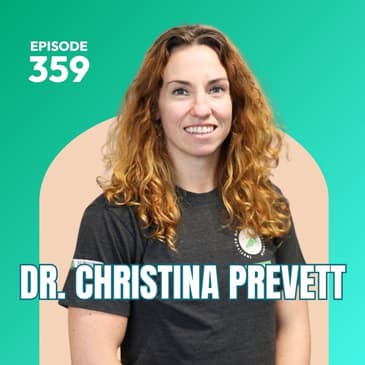
In this episode, Dr. Christina delves into the nuanced aspects of strength training across different stages of life from dispelling myths to navigating pregnancy and postpartum concerns. She uncovers the historical misconceptions surrounding heavy lifting for females, provides the latest recommendations and guidelines for safely resuming strength training after pregnancy, and empowers expecting mothers to embrace strength training safely and confidently. Delve into the truth about diastasis recti and learn which core exercises are safe during pregnancy and stay tuned as Dr. Christina unveils the myths behind pelvic health.
Barefoot Mini-Course - STARTS TODAY BUT YOU CAN STILL JOIN:
Experiencing aches, pains, and niggles in your feet and ankles. Join the Barefoot Mini-Course as it contains all the tools you need to assess what could be contributing to your aches and pains and what exercises are best for you to address those limitations! With educational videos, a workbook, and lifetime access, you will begin to feel something different and work towards your movement goals faster! Learn more about how to better take care of your feet, what type of shoes best support your outdoors, and how to reduce the pain you’re currently dealing with. JOIN US HERE! We start today but you can still join this week!
VivoBarefoot Discount:
Your feet have the components they need to support themselves! That's why we love VivoBarefoot because the shoes themselves help us gain mobility and strength in our feet. Live that barefoot life in style, choose VivoBarefoot and use code TOB at checkout to get 15% off! Your foot and body will thank you (affiliate link)!
**Vivo offers a 100-day trial period. If you are not completely satisfied, you can send the shoes back and get a refund.
LMNT Discount Code:
Fuel every system within the body and the brain with LMNT! Keep yourself hydrated on a cellular level by replenishing the sodium, potassium, and magnesium that our body needs for basic cellular processes like nerve signalling, smooth muscle contractions, unnecessary fatigue, aches and pain, brain fog, and recovery! Get a free gift with every purchase and try some new flavours as you stay hydrated! Get Your Free Gift HERE!
What You Will Learn in This Interview with Dr. Christina Prevett
05:55 - What made Dr. Christina interested in geriatric patients?
12:55 - Why strength training is important no matter how old you are.
17:45 - Dosing and progression for strength training with age.
22:15 - History of myths around heavy lifting for females.
27:45 - Current recommendations to return back to strength training after pregnancy.
38:40 - How to approach fear around strength training around pregnancy.
41:55 - Core safe exercises during pregnancy: the truth about diastasis recti.
45:45 - Does abdominal coning during post-partum matter?
50:18 - Learn more with Christina.
To learn more about this episode and view full show notes, please visit the full website here: https://jen.health/podcast/359
Thank you so much for checking out this episode of The Optimal Body Podcast. If you haven’t done so already, please take a minute to subscribe and leave a quick rating and review of the show!
Hosted by Simplecast, an AdsWizz company. See pcm.adswizz.com for information about our collection and use of personal data for advertising.
[00:00:06] Welcome to The Optimal Body podcast. I'm Dr. Jen.
[00:00:08] And I'm Dr. Dom. And we are doctors of physical therapy,
[00:00:11] bringing you the body tips and physical therapy pearls of wisdom to help you begin
[00:00:15] to understand your body, relieve your pains and restrictions, and answer your questions.
[00:00:19] Along with expert guests, our goal of The Optimal Body podcast is really to help you
[00:00:24] discover what optimal means within your own body. Let's dive in.
[00:00:28] Real quick, I just want to answer the number one question I get asked all the time.
[00:00:33] And that is what Vivo shoes should I get for XYZ? Whatever it may be, whether it's working out or I
[00:00:40] just want to go for a walk or I'm hiking or... Here's what I will say. If you go to the Vivo
[00:00:45] Barefoot site, which we have it linked up in our show notes, again, use code TOB20.
[00:00:51] And this is only good for the rest of this month. But TOB20 is going to get you 20% off of any shoes
[00:00:58] that are not already discounted. And here's what I'll say about Vivo Barefoot shoes. They are
[00:01:03] barefoot shoes in structure. So unlike other shoes that you go to the store and there's particular
[00:01:09] reasons, you're going to get these type of running shoes and these type of shoes. There's no structure
[00:01:14] to Vivo Barefoot shoes. That's the beauty of them though, is they allow your foot to do what it's
[00:01:20] meant to do. It allows your toes to actually have the space to find the mobility, to find the
[00:01:26] strength to be able to work like it should. When your toes can spread better, the muscles deep
[00:01:32] inside the foot can actually work. This is what helps to support and give your foot stability
[00:01:38] so that if you feel like you're always falling into pronation, now your foot has the ability to
[00:01:44] actually supinate as you go into that gait cycle. So we need pronation and we need supination.
[00:01:50] We need our foot to flatten and lift, but we want it to do it naturally. We don't
[00:01:55] need that arch support. So that's the great thing that you get with Vivo Barefoot shoes.
[00:02:00] Whether you want to go work out, hike or live life, any of the shoes can do well for any of
[00:02:06] those occasions. Now, when you look at the site, they will have different categories. For example,
[00:02:11] going out just walking around, my particular favorite shoes have been the Novus Women's.
[00:02:16] This is what I, they look like typical sneakers just with the foot structure that your foot's
[00:02:22] actually supposed to have. And so they're really cute. So I like to wear them with jeans. I like
[00:02:26] to wear them with leggings. I like to just wear them out and about. But my other favorite are
[00:02:30] the Primus Asana. And because of the structure of the shoe, like the material that's used,
[00:02:36] it's super like just easy to get your foot in. So oftentimes I don't even untie or tie. I could
[00:02:42] just slip my foot right in and head out the door, especially if I'm holding Dante or have a lot of
[00:02:46] things in my hand. That's really an easy shoe to use. But I use that one working out. I use that
[00:02:51] one for several occasions. If I am going and particularly going for a workout, the Modus
[00:02:58] Strength are really good strength shoes, but almost all of them, the Primus Lite Knit, those
[00:03:04] are some of my favorite ones to always come back to. But you can even wear the Primus Lite Trail
[00:03:10] just for working out. So any of them are going to be able to exchange into other areas of life.
[00:03:16] And that's the beauty of buying Vivo Barefoot shoes. You can have one pair. So say you get
[00:03:21] the Primus Lite Knit, you can have that for going out. You can have that for working out. You can
[00:03:26] have it just for walking around or for hiking. Like if it's not a super high terrain hike,
[00:03:32] I would say. But a lot of them interchange for what you want to do. So this is the beauty of
[00:03:39] getting shoes that allow your feet to do what they're meant to do. So if you haven't yet,
[00:03:43] use TOB20 at checkout and go check out some Vivo Barefoot shoes. I am so excited for this interview
[00:03:49] with Dr. Christina Prevett because she is going to help to tear down a lot of myths you might have
[00:03:55] heard about your body. And she's continuing to do it through research. She is one who is really
[00:04:00] full force going out there researching for our profession and getting the knowledge that's
[00:04:04] needed for you. Now, Christina Prevett is a pelvic floor physiotherapist and mom of two who
[00:04:09] has a passion for helping women in different life transitions, including postpartum care and menopause.
[00:04:15] Christina has been a practicing clinician for over 10 years. She completed her PhD at
[00:04:21] MacAster University in 2023 and is a postdoctoral researcher at the University of Alberta. Her
[00:04:29] postdoctoral research looks at high load resistance training in pregnancy and the impact of lifting
[00:04:35] on the pelvic floor. Christina co-created and hosted a group class called Strong Like Mom during her
[00:04:41] first entrepreneurial endeavor, Stave Off. She now does exercise programming remotely with pregnant
[00:04:47] and postpartum CrossFit powerlifting weightlifting programs through the Barbell Mamas, which she owns
[00:04:53] with her husband, Nick. Christina teaches six courses at the Institute of Clinical Excellence,
[00:04:58] including the Pelvic Health Curriculum, where she helps physiotherapists empower their pregnant and
[00:05:03] postpartum athletes. Christina was a national level weightlifter and has competed pregnant,
[00:05:08] postpartum, or both in CrossFit powerlifting and weightlifting. Again, I'm so excited about it,
[00:05:15] so let's dive in. Christina, thank you so much for taking time to be here and answer a lot of
[00:05:20] questions that I have for you today. You are just such a wealth of knowledge, and I know you spend
[00:05:25] so much time teaching and helping so many people from clinicians to everyone, you know, really help
[00:05:32] to understand not only pelvic health and how that changes throughout the years, but also,
[00:05:37] you know, working with geriatric population and everything. And I just appreciate your knowledge,
[00:05:42] your education, and your time. Yeah, thank you so much for having me. A lot of people think that
[00:05:47] when I say that my postdoc's in pregnancy and my PhD's in geriatrics, that they don't
[00:05:52] connect or there's no connection or relationship between the two of them, but that is very far from
[00:05:57] the truth in a lot of ways. Different part of the lifespan, but definitely some of the same
[00:06:02] issues that we're seeing in rehab for both those groups. So I'm excited to be able to
[00:06:06] talk a little bit about both. Definitely. And why don't we just start there? Because
[00:06:10] again, you got your specialty in pelvic health, PhD in geriatrics. Like what made you interested
[00:06:16] and kind of resulted in that arc of your own education? Yeah. So I started out in outpatient
[00:06:22] orthopedics working a lot with older adults and I just fell in love with that population. I just,
[00:06:29] we have such a huge role to play in rehab, but when we have an older adult who's really getting
[00:06:35] close to that line where they could lose their independence, you can legitimately change the arc
[00:06:41] of their life. Like the arc of their golden years, like you can change it. And it made me really fall
[00:06:47] in love with working with that population. Taking a quick pause from our interview to
[00:06:52] talk about an aspect of our health that all of us could afford to focus on a little bit more,
[00:06:57] and that is our hydration. It's something that we can easily just take into our own hands,
[00:07:02] but staying hydrated isn't just about drinking enough water. It's about getting the electrolytes
[00:07:07] back into our system that we are naturally losing throughout the day by going to the bathroom,
[00:07:12] sweating, and ways that we don't even realize we're losing the sodium, potassium, and magnesium
[00:07:17] that our body needs to function its most optimally. And that is why Jen and I drink
[00:07:22] Element Electrolyte Mix on a daily basis. It has the sodium, potassium, and magnesium that we need
[00:07:29] for those internal bodily processes. It can help you feel less brain fog, feel more mentally acute,
[00:07:35] have better bowel movements, sleep better, and so much more. If you go down to the link in the
[00:07:40] show notes, it's just drinkelement.com backslash optimal. That's Element spelt out like L-M-N-T.
[00:07:47] You can get a free sample pack with any drink mix order so that you get all the flavors.
[00:07:53] You can try them all and inevitably when you come back, you know which flavor is your favorite
[00:07:57] to get more. Element has also just come out with their new sparkling version. So for those of you
[00:08:02] that like a little bubbly in your life, you can get Element Sparkling and have the same amazing
[00:08:07] benefit of getting those electrolytes back into your body. Again, that link is drinkelement.com
[00:08:13] backslash optimal. You can check it out in the show notes as well. Let's get back into the interview.
[00:08:19] But I was starting to get frequent flyers on my courses of care where individuals would come to
[00:08:25] rehab. We would strengthen their body because it was a resiliency issue or their body wasn't
[00:08:30] strong enough to handle what they were asking it to do. Got them stronger, discharged them,
[00:08:35] and then a couple of months later, they came back for either a very similar complaint or an
[00:08:40] exacerbation of that condition. It made me start thinking about our rehab models. A lot of our
[00:08:47] exercise programs were extremely underdosed. I had done a strength and conditioning internship.
[00:08:52] I'd done a lot of work in getting my exercise prescription knowledge up to where I wanted it
[00:08:58] to be. It just felt like something was wanting. I'd always been kind of a research nerd.
[00:09:04] I started becoming really excited about trying to really load older adults heavy and what that
[00:09:12] meant. I went back and I started my PhD for fun. Dustin and I from the Institute of Clinical
[00:09:18] Excellence, we started chatting on his podcast. It really just started to change
[00:09:24] the way that I perceived everything. When we started talking about this in geriatrics,
[00:09:28] about loading older adults heavy and how we're really doing them a disservice by
[00:09:33] underdosing their exercise, we would get people at conferences put feedback for me of,
[00:09:39] she has no idea what she's talking about. You've never seen my caseload before. There is no way my
[00:09:45] older adults could do this. It was just really fascinating to see how much pushback we were
[00:09:51] starting to get. That has changed a ton. I was doing a PhD for fun and I am in my late 20s.
[00:09:59] I got married and then all of a sudden the baby fever hit me so hard. I was in my PhD part-time,
[00:10:07] but I got pregnant with my daughter. I have been a barbell athlete for years and years.
[00:10:13] I'm probably on 12 or 13 years where barbells are my love language and they will never get out of my
[00:10:20] hands when I die, basically. It was funny because one of my PhD supervisors or one of the supervisors
[00:10:28] on my committee, he said to me, and I don't even think he realizes the influence that he had.
[00:10:33] He's like, if you think that our older adults are underdosed, oh my goodness, pregnancy.
[00:10:40] I was pregnant at that time. We were in a committee meeting. Of course, I go into the literature and
[00:10:46] I was like, oh man, yikes. The loading of this was so brutal. I'm lifting. I was a national level
[00:10:55] weightlifter before I got pregnant with my daughter. I'm still weightlifting during my
[00:10:58] pregnancy and that was where the trolls are coming out saying your baby's going to die
[00:11:03] and all this kind of stuff. I started looking at this literature and I was like, oh my gosh,
[00:11:08] we are dosing our 90-year-olds with multimorbidity and frailty heavier than our individuals in
[00:11:16] pregnancy where the protocols are one by 10 with a red Ther-band. What? It was crazy.
[00:11:24] I started a side project on my PhD that was not related to my PhD rather with Dr. Margie Davenport,
[00:11:31] who's now my postdoctoral supervisor. I said, we don't have anything, but I treat these
[00:11:37] individuals all the time. At that point, the pelvic division had started with ice.
[00:11:42] That was where our cross-sectional study had come from talking about heavy lifting during pregnancy.
[00:11:48] There's a lot that goes into the way that that research has built. If we got a lot of
[00:11:53] nerds listening to this, then we can really go into it. It was the first study that even
[00:11:57] explored individuals who self-selected to lift heavy during their pregnancy.
[00:12:04] We saw a lot of really positive things, but it's cross-sectional and we have a lot more work to do
[00:12:09] before we can give really clear guidance on heavy lifting during pregnancy. It turned into
[00:12:16] what my love of geriatrics, of high load resistance training,
[00:12:20] it went into my postdoctoral work during pregnancy. Now my goal is really to look at the interaction
[00:12:26] of estrogen status, so pregnancy, estrogen high, menopause, estrogen low,
[00:12:31] high load resistance training and pelvic floor dysfunction. Really trying to... My postdoc's
[00:12:36] working in pregnancy, but my big hairy audacious lifetime goal is to really look across the lifespan.
[00:12:42] That is amazing. I feel like you probably hit on some things that people are going to be like,
[00:12:47] well, that scares me for a lot of things. Talking about lifting heavy for geriatric patients,
[00:12:54] so what age are we saying for geriatrics? It's a constantly moving target. In research,
[00:13:00] it's always over 65. We now in research, it makes me so mad that they say it like this,
[00:13:06] but they call it the oldest old, which is over 80 because we have so many individuals who are
[00:13:10] living longer. I know it just makes me cringe, but technically it's over 65. We have some evidence
[00:13:18] around individuals in their 80s and 90s. We have more evidence going into individuals in their
[00:13:22] hundreds plus because we're just seeing an expansion of the lifespan. We're getting a lot
[00:13:28] more evidence in our older old categories. But yeah, over 65 is generally in that older adult
[00:13:35] category. I just want to say before we get too far away from it, how you were early on talking about
[00:13:41] loading up the older individuals heavy. People heard that. I heard that. I wasn't the one who
[00:13:47] heard you and said, you're crazy. I was the one who was in my acute and skilled nursing
[00:13:52] clinicals doing Olympic style movements modified with the people and seeing the results.
[00:13:59] And I'm like, I can't argue with how well this person's progressing over my few weeks of working
[00:14:04] with them. And so, yeah, it's anecdotal at that point. And yeah, we need more research, but
[00:14:10] it's hard to argue when you see the change in people.
[00:14:12] But that's the scary thing because so many people are going to doctors and you're being told,
[00:14:16] load less, don't put as much onto your body, do low impact as you start to age.
[00:14:22] And there's so much fear because people are coming in with aches and pains and like,
[00:14:26] oh, look at this MRI and what you're seeing. And so, don't do this. Don't put any load on your back.
[00:14:31] And why is it important? Why is it important to lift heavy and continue loading even as we're
[00:14:39] getting older or old? What is it? The oldest of the old. And how does that
[00:14:47] impact or improve your body even if you are seeing these changes on MRIs?
[00:14:52] Yeah. So, if I could give anybody at any age a piece of advice, it would be to start strength
[00:14:59] training, build as much muscle as you can and hold onto it for the rest of your life.
[00:15:04] Because muscles around joints help to protect those joints. And so, yeah, this is a lifespan
[00:15:12] approach, but we can never work in reverse the aging process, but we can slow that process down.
[00:15:21] When we think about our muscles, we are going to lose strength with age. But if we are physically
[00:15:29] inactive, if we have a lot of time sitting like I do when I'm doing research, if we have extra fat
[00:15:35] around our bodies that is pro-inflammatory or we have chronic diseases that we're being diagnosed
[00:15:40] with, that can accelerate some of those losses. And really what we're talking about is reserve
[00:15:48] around the body. How much strength do you have that you can tap into for your activities of
[00:15:53] daily living? And so, the best way for me to kind of give you an example of this is if I have a
[00:16:00] person who has a 300-pound deadlift, them picking up their 30-pound little dog is not a ton of strain
[00:16:08] on their body. But if they have a 25-pound deadlift, they can't pick up that dog anymore.
[00:16:14] And so, they self-select to not do that anymore. And that's what happens over and over and over
[00:16:20] again as people get older, right? The amount of weight that they can move or the amount of load
[00:16:26] that their body can handle before it becomes too much or the strain is too high starts to decrease.
[00:16:32] And we then are met with these decisions as we age of maybe I shouldn't do that anymore.
[00:16:41] This is starting to hurt when I do this. My doctor now says, well, if it hurts, don't do it.
[00:16:48] But that means that I can't take care of my house anymore or I can't access the second
[00:16:54] story of my house where my bedroom was. And now, I'm going to sleep in the recliner on my first
[00:16:59] floor, right? My family is starting to tell me that maybe I shouldn't be living at my house anymore
[00:17:05] and I need to go to a retirement home. The impact, the downstream impact of those decisions are
[00:17:12] gradually people are taking decisions away from you and you gradually start to lose independence.
[00:17:17] And so I think of myself, I'm in my mid-30s. I think about I want to be the best,
[00:17:22] kick-it-est great-grandma, Gigi, at 90 years old being able to get onto and off the floor.
[00:17:28] What do I do today to allow that to happen? And I'm not perfect, let's be real. But
[00:17:35] that strength training piece is such an important part because as we get older,
[00:17:40] we start to lose some of our strength in our muscles and we start losing some of our strength
[00:17:45] in our bones. And even now in my mid-30s, I see my little kid, I have a four-year-old who's almost
[00:17:50] five. She jumps up high things all the time. She just loves it. She's like, I'm going to try and
[00:17:56] jump from this really high ledge. And I think about the impact on my joints when I do that in
[00:18:02] my mid-30s. I was like, ooh, my body is not used to this impact anymore because I don't do those
[00:18:07] high impact, those jumps anymore. And I think about that and then I think if that's compounded
[00:18:14] by 30 years where I haven't jumped off a curb in 30 years, then of course my body's not used to it.
[00:18:21] And then we say, well, this hurts me or I shouldn't do this anymore or this is dangerous.
[00:18:26] And so we kind of get comfy in our little bubbles. And when we are trying to get individuals who are
[00:18:35] completely sedentary, who are not moving their bodies at all and get them into a really active
[00:18:41] technique, Jeff Moore, who's the CEO of the company that I work for for ice, he said,
[00:18:45] you're never going to move from sickness to fitness without bumping into aches and pains.
[00:18:50] And I thought that was so brilliant. I have been an athlete for 10 plus years. I'm not in a
[00:18:55] competitive season right now, but I haven't gone through that entire career completely pain-free.
[00:19:01] But pain isn't something that scares me because sore is safe. I just have to make modifications
[00:19:06] and adjustments based on what my body is ready for right now and what it isn't.
[00:19:11] So I think there's a lot of reframes. That's a very long answer for saying we have a lot
[00:19:16] of reframes that we need to think about. And as healthcare providers, we need to be really
[00:19:21] important that our messaging isn't contributing to deconditioning as we get older.
[00:19:27] That's huge.
[00:19:28] And it's just such a stark contrast to the message that
[00:19:32] is preached at people by most providers. And that's the difficult thing is you might be
[00:19:37] the first person that someone runs into that says, no, pain isn't bad. Sore isn't bad. It's a message.
[00:19:44] And we get to listen to it and we get to learn how to work with that to start to incorporate
[00:19:48] some of these things. And so, no, I think that, yeah, like you said, long answer, but that's
[00:19:54] sometimes the education and the conversation you need to have with people to help them understand.
[00:19:59] Same with Jen and I. There are periods I go through where I'm not doing as much strength
[00:20:02] training. I played football in college and was doing tons of the Olympic lifting.
[00:20:06] And just recently, we had a challenge with Jen's community and it was heavier strength training.
[00:20:12] And the first day, I'm like, ooh, I've had problems with both my knees throughout athletics.
[00:20:16] And I said, ooh, my left knee is really giving me some... It's talking to me a lot.
[00:20:21] By the end of the 30 days, I was telling Jen just the other day, and then I've continued it since
[00:20:26] because no more knee issues. My body talks to me the same way in my early 30s as I'm sure it will
[00:20:34] the rest of my life. And I just get to adapt and listen to it and change the dosage. And
[00:20:39] the challenge is, for many people, they weren't trained in that understanding of the dosing and
[00:20:44] the progression. And you go too hard two days in a row and you're laid up for five or six days.
[00:20:50] So, what's the best way for someone to understand? How do I start to work this in?
[00:20:56] Yeah. Yeah. So, I think you touched on something really beautiful. Aging is hard. Aging deconditioned
[00:21:02] is harder. And just like pregnancy, pregnancy is hard. Pregnancy deconditioned is harder.
[00:21:07] And so, we have to though take that into account of body readiness. Just like you said,
[00:21:15] I don't run right now. I'm a barbell athlete through and through. I'm not going to sign up
[00:21:20] for a marathon next week. I'm not ready for that. I would do better on a couch to 5K. That's like,
[00:21:26] gradual progressions for where my body is right now. And I think that mismatch is where us as
[00:21:34] coaches come in and say, okay, let's try and figure out what your body is ready for
[00:21:39] and make little tiny progressions and celebrate those successes and changes along the way
[00:21:45] and allow our body to increase what it's capable of doing. So that your day becomes easier.
[00:21:53] Just like you said, your knees were bugging you on your squats. But once you started to build the
[00:21:58] support around your knees, no more knee pain. So as we do these strength training, but it's all
[00:22:04] incremental and it's allowing yourself to have time in between to get a little bit of recovery
[00:22:12] so that you can get stronger. Our breakdown of our muscles happens when we're lifting. The recovery
[00:22:17] is what makes our muscles stronger. And then know that it's never going to be a straight line
[00:22:22] because life's not like that. It's just so heartbreaking to when I still hear that a friend
[00:22:30] went to an OB and they said, don't lift over 20 pounds now that you're pregnant.
[00:22:34] And I'm thinking...
[00:22:35] You said red TheraBand earlier, get that person a yellow TheraBand. Red is way too tense.
[00:22:42] It breaks my heart that we're still in this mentality, even though now we are coming out
[00:22:47] with research to at least start to prove that it doesn't lead to miscarriages and all this other
[00:22:54] stuff. So what are some of the most common pregnancy myths? And where can someone start
[00:23:01] in becoming more confident to be more active during pregnancy?
[00:23:05] So let's give a little bit of history to some of these myths because I think it's important when we
[00:23:11] understand where some of these things are coming from. CrossFit and heavy lifting for female
[00:23:17] athletes is relatively new, right? We haven't had a lot of strength and conditioning coaches who are
[00:23:24] pushing our women to be lifting really heavy weights outside of the last decade. Like there
[00:23:29] were probably a little bit, but one of the things that CrossFit has done incredibly well is encouraged
[00:23:35] females to be strong, right? And then you take a subset of these individuals who started lifting
[00:23:41] and now they get pregnant and they want to keep lifting, but it started as a small group of
[00:23:46] individuals and it grew and it's continuing to grow. And so now we're getting more and more
[00:23:51] individuals who are saying, no, I do not agree with this. Like I have a 200 pound deadlift.
[00:23:56] 20 pounds is now 10%. That's very different from somebody who doesn't lift, right? That
[00:24:01] relative reserve is different and are starting to push back against that. But we don't have
[00:24:07] anything around heavy lifting. So what individuals were doing where they were looking at our
[00:24:14] occupational heavy lifting literature. So heavy lifting in the occupational setting is individuals
[00:24:20] who have to continuously or with higher exposures lift more than 10 kilos or 22 pounds for their job.
[00:24:28] That was considered heavy lifting and it has been linked to early labor and some other adverse
[00:24:36] events. But doing 30 to 45 minutes of resistance training is not the same as 40 hours a week.
[00:24:44] And I can skip my workout if I'm feeling like trash, I can't always call out of work, right?
[00:24:50] So there's these parallels aren't appropriate, but that's even like trickled into where our
[00:24:58] research is. So I'm working on a systematic review right now and this is where I'm getting all mad,
[00:25:02] getting all huffy looking at the stuff coming out because there is a person who's saying that
[00:25:08] this is moderate intensity resistance training and the max that the person was able to lift
[00:25:12] was five pounds. And it was never progressed, it was never changed and it was done over 16 weeks.
[00:25:20] What we know about musculoskeletal adaptation shows that we need to be making things harder.
[00:25:27] And I would argue that the purse that the person carried into that exercise session and the baby
[00:25:34] that's about to come out of that vagina or out of that belly is more weight than what they are
[00:25:38] putting in these exercise programs. So it's trickled into our research where now they're
[00:25:44] saying, well, our research can't have that heavy lifting either. And now we have this body of
[00:25:49] literature that's all underneath that threshold and we don't have anybody pushing into it.
[00:25:56] So now we have this group of women who is like, no, I love this. This is something that
[00:26:02] really brings me joy. My community is here and they're starting to push. And because of that,
[00:26:08] people like me greedily have this group of individuals that now I can say, hey,
[00:26:13] these are individuals who are doing this anyway. Let's start building our evidence around this.
[00:26:18] But because all of our evidence is here and I'm like, no, I want them to lift 200 plus pounds
[00:26:24] during their pregnancy, you have to kind of take the right steps. So we have our cross-sectional
[00:26:30] paper where we asked individuals who are now postpartum about lifting heavy during their
[00:26:36] pregnancy. And we asked like, when did you start modifying these things? How did your labor and
[00:26:40] delivery go? How did your baby do? All these types of things to try and basically show that the
[00:26:46] people who are ignoring their OB's advice and are lifting heavy are doing okay. And we did see that
[00:26:53] our rates of high blood pressure or blood sugar issues like diabetes, rates of C-section,
[00:26:59] rates of mood disorders were well below our national averages. So hinting at it's not only
[00:27:05] not bad, but it might be healthy to lift heavy weights during your pregnancy was our first step.
[00:27:12] And then we have to start, I can't say our body of research is saying use five pounds and I'm
[00:27:17] going to do a randomized control trial that's at 200. So we are now doing our retrospective and
[00:27:23] prospective study that we're currently recruiting for, if anyone's listening and pregnant, shameless
[00:27:30] plug, to try and just build and say, okay, now we're going to take these individuals who were
[00:27:35] just pregnant and look at their pregnancy logs and say, this is how they modified, this is how
[00:27:40] they modified their volume. And we're going to take individuals, we're going to follow them forward
[00:27:45] and see. Because the other thing is maybe there are some muscles or joint things that we need to
[00:27:50] pay attention to, I want to know that information too. I want to show that just like in my clinical
[00:27:56] practice it's okay, but also if there is things that we need to be mindful of, I want to know that
[00:28:02] information too because as a physiotherapist, I want to be able to counsel on that. So
[00:28:08] I'm giving you guys such long-winded answers. But like heavy lifting during pregnancy is probably
[00:28:13] where my soundbox is the most. Well, I think it's fascinating to also understand
[00:28:19] where that came from and in the research and why that's still being said. I think that's an
[00:28:25] important thing to understand because to me it just sounds ridiculous. But then when we start
[00:28:31] to understand it a little bit more, okay, I can have a little bit more understanding,
[00:28:34] but it still doesn't help if someone had a toddler and has to lift their toddler during
[00:28:39] pregnancy but is told that they can't lift over 20 pounds. Well, what if they're a single mom?
[00:28:44] There's just so many factors where that's not able to be the case. So how can we empower moms
[00:28:49] to feel strong so that they can take care of their everyday life as well?
[00:28:53] You bring up a super important paradigm that I don't think I've ever thought of
[00:28:56] either that we have the research that is referenced, that's what's there and that's
[00:29:02] what's accepted. And like you said, it's hard to suddenly get research approved where you're
[00:29:07] telling someone to lift 40 times the weight that is in the current research. And I can't imagine
[00:29:12] trying to work that through the review boards and say, well, here's what we want to do.
[00:29:16] They're like, no. And that's the unfortunate thing about how research is approved and created
[00:29:23] for safety reasons. But because it was built in this way, it's hard to start
[00:29:29] moving in that direction. Let's try to pick a slightly different topic and talk maybe
[00:29:34] after pregnancy, post pregnancy. What are some current things that you will consult people in or
[00:29:40] recommend when they're trying to return back to getting with their beloved barbell?
[00:29:46] Yeah, absolutely. So I guess the first thing for me is that I am adamantly opposed to the
[00:29:51] six weeks do nothing. I am very, very against don't return for six weeks. The reason why
[00:29:59] is because if you are in the United States listening to this, you don't have the opportunity
[00:30:04] to take time off. I'm in Canada. There's 12 to 18 months of maternity leave.
[00:30:09] There's time for a reconditioning window that does not exist in the United States.
[00:30:15] What part of rehab would we say, don't do anything for six weeks and then go back to
[00:30:19] full work duties? But that's what we tell individuals who are postpartum. And in all
[00:30:25] of our other, like if I have a person who's had a hip replacement or a lumbar fusion, or they have
[00:30:30] a zipper across their chest because they just had a major cardiovascular surgery, we are getting them
[00:30:34] up and moving around the next day, if not same day. Because we know that it leads to better outcomes
[00:30:40] because we don't want to decondition individuals. But again, we're telling individuals after a baby
[00:30:46] that they shouldn't do anything for six weeks. They're made to feel bad for picking up their
[00:30:50] little ones. And I don't know about you, but like I was two days postpartum and I picked up
[00:30:56] my daughter. And I was three weeks postpartum and I was baby wearing my son. And I was at the park
[00:31:01] with my daughter who's 35 pounds. And she started screaming as the toddlers do because she didn't
[00:31:05] want to leave the park. And so I was farmers carrying her with my son on me with 50 pounds
[00:31:11] and walking home because that's what I had to do. And if we are to say like, oh, everything's going
[00:31:18] to be ruined because you did that, like it's just creating so many problems. And so the first thing
[00:31:24] is that I just I don't agree with the six weeks, I think we have to do a graded approach back to
[00:31:30] exercise that can start super early postpartum. And I'm not saying like go lift 200 plus pounds,
[00:31:37] though some people are at eight days postpartum. I'm saying like you can start with bodyweight
[00:31:43] movements and a little bit of movement of your body and you are not making anything worse. Like
[00:31:51] you're not putting yourself in danger. You're gradually bringing yourself back to fitness after
[00:31:57] an injury or a surgery, which is like bachelor birth or any type of tearing or a belly birth,
[00:32:04] like a C-section. So the first thing is like we're not going to... If you don't want to wait
[00:32:09] six weeks, don't wait six weeks, which is probably controversial. Yeah. Let it ride.
[00:32:16] So right now I'm involved in one small section of some postpartum return to exercise guidelines
[00:32:24] where we're trying to clearly say like what is an absolute and relative contraindication? And
[00:32:30] it's been so fascinating because I think that's where we have to go, right? If we are thinking
[00:32:34] about postpartum, what is truly a reason why you should not be exercising after having a baby?
[00:32:41] And then that's not to say like go back to full work duties or go back to full barbell stuff,
[00:32:46] but like what is a reason for you to not be able to move your body after baby?
[00:32:51] Because that's what we need. And then graded exposure is going to be where we start to
[00:32:58] get more clear ideas. So I'm excited that we have those things on the horizon because I think
[00:33:04] they're so needed. When it comes to returning to barbell activities, I always ask people,
[00:33:10] what's your day-to-day required? Like if you have a toddler at home, you're lifting up an
[00:33:15] empty barbell every single day. That's where I don't get very concerned. I'm going to give people
[00:33:23] guideposts and say, if you're feeling like you're peeing, like you're having big clots,
[00:33:29] if you're still bleeding, if your incision site is feeling really painful or it's starting to throb,
[00:33:35] again, you are safe, but your body is telling you that like you've hit a fatigue point or a
[00:33:41] tired point for where you are in your postpartum journey. So I think that the phrasing needs to be
[00:33:47] a little bit different where instead of saying these are absolutes other than obviously
[00:33:52] contraindications of don't do anything for six weeks, let's give you the buoys and say,
[00:33:57] hey, like these are the signs of what your body is ready for and what it isn't.
[00:34:02] And then let's gradually get you back to doing the things that you want to do. And I'm not just
[00:34:06] talking like athletes. I'm talking individuals who have four kids at home who their partner has
[00:34:12] to go back to work the next day. Like they're going to be doing a lot of activity. And if we
[00:34:18] make people feel like them having to do the things that are necessary for life and motherhood,
[00:34:25] that they are setting themselves up for a long-term failure and dysfunction. I just
[00:34:29] think that the messaging is so poor on that, that I just try and change it.
[00:34:34] Yeah. I think that's so important and understanding. I think what's other,
[00:34:38] the hard part on the flip side is having the support to understand what to do,
[00:34:43] what gradual exposure really means and how do I know what I can start with? Because
[00:34:49] I did have a cesarean and it was tough in the beginning in the sense that I needed to be,
[00:34:57] I had to be aware. We had friends come over like a couple weeks after, I think,
[00:35:02] and I was going up and down the stairs and I was like, oh, can't do that. I'm really sore.
[00:35:06] And so understanding how to really listen into my body of what was okay, what was not, but then
[00:35:12] take me four weeks after or three to four weeks and I was able, I remember putting him down to
[00:35:18] sleep by doing squats and lunges because I wanted to get some movement in my body. And so I was
[00:35:25] holding him and having fun doing squats, lunges, he went to bed and it was great.
[00:35:29] And so, but that's me understanding what that means and how to listen to my body where I've
[00:35:36] heard of other people who have ruptured their cesarean scar because now they've overdone it
[00:35:42] within their body and they haven't had that understanding of what that gradual kind of
[00:35:47] exposure really means. And so it's just, I guess, how does someone go about learning or reaching
[00:35:56] out for the proper resources and understanding? And I like that you kind of gave some things to
[00:36:03] look out for in terms of peeing or soreness or things like that, but where can we kind of turn
[00:36:09] to to understand what we should be doing? Yeah, that's a great question. So obviously
[00:36:15] your medical provider, your birth provider is somebody who's going to be able to help.
[00:36:20] I think as physical therapists, sometimes we can feel like there's a turf war between us
[00:36:25] and obstetrical providers and really we need to be locking shields, not having shields against each
[00:36:31] other, right? We need to be on the same team. Having a pelvic floor physical therapist who's
[00:36:37] in your corner is wonderful, but I also recognize that that is a privilege that some people do not
[00:36:43] have. And so I think it's important for if you have access to pelvic PT, like I'm a big proponent and
[00:36:52] my team is in the pelvic division of the two week checkup. Like I'll get individuals at their last
[00:36:57] pregnancy visit and we'll check in at two weeks because there's a lot of questions, right? Like
[00:37:03] that happens for new moms. Like is this normal? This is what I'm feeling. Is this what I should
[00:37:08] be feeling? Like, is it okay that I have having these sensations and waiting six weeks can feel
[00:37:14] like a lifetime, right? And so having a provider that can be your kind of help and guide can be
[00:37:23] unbelievably beneficial. But if you don't then have other resources that can be helpful. So I run
[00:37:30] a podcast called the Barbell Mamas and my goal with every single episode is what do I wish I knew
[00:37:38] when I was early postpartum or during my pregnancy? Or if I'm seeing somebody in the clinic, their
[00:37:43] homework, the first time I see them sometimes is to just go through a couple of these episodes
[00:37:47] so that they can get these deep dives and true appreciation for like the nuance and the gray
[00:37:54] that can sometimes be hard to digest when you're in a clinic or your baby is screaming or like,
[00:37:59] you know, you're being distracted or all those things that come with the messiness. That's
[00:38:03] the beautiful part of motherhood, but also the really hard part. And so having those resources,
[00:38:10] and I'm sure your podcast, you have a couple of episodes that you've done the same thing where
[00:38:13] you try and create some clarity around here's your sign that maybe you're pushing it a little
[00:38:20] bit too far. And here's the sign where it isn't right. Like the early postpartum healing after
[00:38:27] a cesarean, like that time before that scab has healed, that's a really sensitive time because
[00:38:34] it's a new scar, right? Like, so we're going to be a little bit more cautious. But you said that
[00:38:39] you're already doing squats and lunges at three to four weeks post surgery. That's not the normal,
[00:38:45] right? Well, it's the normal with a lot of people that I'm seeing because I'm saying,
[00:38:48] it's okay. Like you can do those things once you're at this point. But, you know, having
[00:38:55] some of those like that was the reason why my podcast started because I just wanted to help
[00:39:01] with the clarity of messaging because it's just, it's so hard to get. Like, you know,
[00:39:09] like I even influencers try and online and be so helpful by saying here's core safe programs during
[00:39:15] pregnancy. I was like, yeah, but now you've made everybody think that everything outside of this
[00:39:19] list is unsafe and that's not true. Right? Like even like your attempt of being helpful of saying,
[00:39:25] you know, these are safe. What you're insinuating is that the other stuff isn't safe and that's
[00:39:30] not true. Like, you know, and it's, yeah, it's tough. Like, yeah, it's hard to find those
[00:39:38] resources. It's hard to understand what to do. Yeah. Yeah.
[00:39:40] And educating well is difficult because in the world of social media, when you have someone's
[00:39:45] attention for 12 seconds to maybe click in and see this program of safe core exercises, like
[00:39:52] you're playing the time battle with someone where as a physical therapist, you're blessed to
[00:39:56] have a more extended time, hopefully 45 minutes or an hour with somebody to maybe more fully educate
[00:40:03] and get specific to them. And that's where I appreciate you bringing up, you know, like you
[00:40:07] said, the privilege of getting with a pelvic health therapist if possible, or a physical therapist
[00:40:13] and the plea to providers to like quit the turf wars. Like it's just a bunch of BS that
[00:40:19] even if you disagree with someone, there is still some common ground in that you're seeing
[00:40:23] the same patient and you're trying to do them the best you can. And if you can just like connect on
[00:40:30] that factor, like here's what they want to do. I know that we disagree on something, but what can
[00:40:35] we do to help them the best we can? Like, that's really where we as providers should be.
[00:40:40] And I encourage that for my patients as well, right? Like if I come to you as a physical
[00:40:44] therapist, like you're dumb, I think you're wrong. The first thing that happens is that
[00:40:49] people get really defensive and I would get defensive too, right? So when people get that
[00:40:54] recommendation, don't lift more than 20 pounds. My counseling to my patient is like, why don't we just
[00:41:00] need to ask more questions? Like be really curious and say, I have a 200 pound deadlift. Does that
[00:41:05] still apply to me? Like 20 pounds? Is it really heavy? I have a toddler at home. She's 30 pounds.
[00:41:10] Is it dangerous for me to pick this toddler up? Like ask those questions and then you're going to
[00:41:16] see that the answer is more of an ish and it's going to, they're going to talk a little bit more
[00:41:21] about the nuance and it's going to make a lot of one really fruitful conversations with you and your
[00:41:29] provider because you can be on the same page. And then also it allows individuals to also feel safe,
[00:41:36] right? Because individuals who have had miscarriages or those who have had to spend a lot
[00:41:41] of money by having IVF or IUI to get pregnant, like the thought of going against their provider
[00:41:47] because they just, they've wanted to get pregnant for so long. That can create even more heightened
[00:41:54] senses around being fearful. And if they're saying don't lift more than 20 pounds and they're like,
[00:41:58] if something goes wrong, this is something I've wanted. Like I don't want to do anything that my
[00:42:02] doctor doesn't say is okay. Then it gets to be really, it can be really difficult. And so
[00:42:09] having those conversations where you continue to ask questions can just really change the sense
[00:42:15] of safety that the person who is pregnant feels and then give them more freedom to have
[00:42:23] conversations about exercise that they love and exercise they enjoy. Yeah. I think asking questions
[00:42:29] is huge and like one of the best ways to open that door with the provider rather than being
[00:42:33] defensive with them. And I want to go back, you touched on like core safe exercises during
[00:42:39] pregnancy and I love, you know, let's get into some myths and some truths behind especially
[00:42:46] diastasis recti because there's so much around that of like, well, if you do this or you see
[00:42:53] this, that's going to cause diastasis. What do we know is the truth with diastasis recti and what is
[00:42:59] false? Yeah. So you guys are your PTs, but if you have shoulder pain and you're a person who's
[00:43:09] a painter, so you use your shoulders a lot, we would never say, okay, you have shoulder pain.
[00:43:15] I never want you to strengthen your shoulder again because it's under a lot of strain and
[00:43:21] I don't want to make it worse because what we know is that it's going to do the opposite, right? It's
[00:43:26] going to make your shoulder weaker and that is going to make your pain probably get a little bit
[00:43:32] worse because you need strength around your shoulder because you're using your shoulder a lot.
[00:43:37] That doesn't change when we're pregnant, right? Like our core gets under more strain,
[00:43:41] our pelvic floor and our hips go under more strain and our messaging is, well, don't use your core
[00:43:49] because your core is under so much strain. But what happens is we weaken our core wall, which just
[00:43:55] makes a lot of things worse. And so when we are pregnant, our six pack muscle lengthens,
[00:44:02] right? That six pack line lengthens, our six pack muscles move a little bit further apart.
[00:44:07] And it's this beautiful mechanism that our body has created in order to give space for baby to
[00:44:13] grow. It is wonderful and it is necessary. Where we have gone wrong as PTs, and I'm going to take
[00:44:20] ownership because our profession has made this worse, is we have said, don't strengthen your core
[00:44:26] because you're already under so much strain. And what we know about having more separation,
[00:44:33] and I hate the word separation, I always call it lengthening, but people think about it as splitting
[00:44:38] or their abs are separated. That's not true. There's a stretch in that tissue in the six pack
[00:44:43] line. What we know about that is that those who have a persistent stretching in the, what, after
[00:44:50] babies here, they're weaker than those that don't. So their sit-up test is less, their obliques or
[00:44:55] their rotation muscles are weaker than those who do not have those issues. And so over the last
[00:45:02] three or four years, I have been hammering core strengthening with all of my pregnant mamas to be,
[00:45:09] and I have seen a lot better outcomes. So I'll get people doing band assisted or sit-up variations
[00:45:16] right up until they deliver to keep their rectus strong. I will have individuals working on side
[00:45:20] bend and rotation, and I have seen individuals feel a lot stronger early postpartum because
[00:45:28] they've been able to keep their core strong and then their postpartum core strength is better,
[00:45:34] but also the amount of time it's taking for some, this is clinical, but the time that we're seeing
[00:45:42] in the clinic for individuals feeling that support around their bellies has improved.
[00:45:49] And our research now is starting to say the same thing. So what people don't see sometimes with our
[00:45:56] research is that a lot of times we report on the things that are positively associated. So this is
[00:46:02] a risk factor for this, but we don't report on the things that have shown to not be associated.
[00:46:07] And so we have risk factor data now that has shown that ab exercises is not a risk factor
[00:46:15] for diastasis postpartum. And so that's really interesting. And I used to be that provider,
[00:46:21] like Christina of 2020 would say, well, don't cone during pregnancy. And Christina of 2024 is
[00:46:27] like, well, your rectus muscles are kind of far apart because that baby's there.
[00:46:31] You're going to have some coning and I'm not really freaked out about it. Like
[00:46:35] the messaging that you need to turn to the side when you're getting up from a chair,
[00:46:40] I'm like, come on, really? Like we're not going there. Are we like, so there's that messaging
[00:46:46] is very ingrained. And so we're, again, we're seeing a shift there. I'm not ready to say that
[00:46:51] coning doesn't matter, but I'm definitely not nearly as freaked out about it. Like if you cone,
[00:46:56] I'm not, you're, I don't, I'm not worried about it in pregnancy. I'm not worried about it postpartum
[00:47:00] to be honest. I'm more of like, where is your current strength? And you know, are you having
[00:47:04] belly button pain with core strengthening during pregnancy, then we're going to modify around that.
[00:47:08] And you know, your baby makes a bowling ball. So it kind of locks up your, like, you feel like you
[00:47:14] kind of just can't move around as much. So we're going to make modifications for your range of
[00:47:18] motion and how comfortable you feel in different positions. But yeah, I'm, I'm more on the,
[00:47:25] we're going to keep your core strong. Then we're going to let your core get weaker because it
[00:47:29] just, it feels harder postpartum. Yeah. And you mentioned you're not as concerned
[00:47:35] anymore about coning during postpartum. So what's the line there if somebody's noticing
[00:47:40] big separation, they're doing ab exercises and seeing a lot of that coning or poofing
[00:47:45] in the diastasis area? Like, what's the line? You know, are there ab exercises that it's like,
[00:47:50] okay, that's a bit too much. Like we might want to scale down or is it like,
[00:47:55] hey, let's get it strong. So, Margie Davenport is my postdoctoral supervisor. We were having
[00:48:02] this conversation and we don't really know the line. Like there are people really confident
[00:48:07] online about what the line is. But we don't know. Like, it could be there is no line and it's a
[00:48:14] strength problem, right? Like we don't, we have made this into a pathology. So here's an example.
[00:48:22] So we had a study that came out two years ago that took individuals who came into a urologist's
[00:48:27] office and they, so they were coming for pelvic floor issues, but they looked at the gap between
[00:48:34] the two rectus muscles, like how much distance there is. And we always say two finger breadth
[00:48:39] or about an inch is considered to be DRA. But 57% of these individuals had a larger than two
[00:48:47] centimeter gap. And so then I started questioning, I said, well, if 57% of people have two centimeters,
[00:48:54] then isn't that just normal? Like, isn't that just normal variation in a person's anatomy?
[00:48:59] Like, you know, I see it in individuals, like babies have that gap, they cone because they're
[00:49:04] just not strong enough to sit up, right? Like they kind of grunt and they, we see it. My older
[00:49:10] men with central adiposity, they call it their party trick, but we freak out about it in pregnancy
[00:49:15] and postpartum. And then I was like, this is really funny to think that like so much of our
[00:49:20] evidence around diastasis recti is based on a normal value. Like we haven't, we didn't even
[00:49:25] think about what was truly pathological with respect to when individuals have enough of a
[00:49:31] stretch between those two rectus muscles to have impairments in their function,
[00:49:36] like that it's hard for them to get around because of this.
[00:49:41] And so it kind of makes me laugh, but it's also kind of like unsettling to say, well,
[00:49:46] if 57% of people have this amount of a gap, then why are we using that as the threshold
[00:49:52] for what's considered pathological? I don't have the answer. So it's hard because I can't
[00:49:59] really give you guys a good response of like, well, when is it worrisome? But it gives me
[00:50:04] freedom to be like, I'm really not freaking out about it. You know, like I'm going to try and make
[00:50:09] your core as strong as possible. I'm going to try and make sure you're bracing right, that you're,
[00:50:15] you're not pushing out against your belly as you're doing strength. So I think I've gone less
[00:50:20] over the, even the last 18 months around the amount of coning you have to being a coach and
[00:50:28] saying like, does your movement look good? Yeah.
[00:50:31] And if it looks good, let's keep doing it. But if you're starting to do some of these faulty
[00:50:36] movements where you're really pushing out against your belly or you physically can't do it anymore,
[00:50:42] or you're starting to show some ways that you're kind of compensating,
[00:50:47] then I'm going to start changing it. And like you've kind of mentioned the
[00:50:51] association with like, is there a significant amount of pain in the belly button or, you know,
[00:50:56] if you're getting a lot of pain in the pelvic region, if you're leaking a lot during some of
[00:50:59] these, like those are probably the signs that something needs to change. Those are the buoys.
[00:51:05] Yeah. Or a hernia. Like, you know, if we're looking, we're worried about
[00:51:10] like a true perforation, like the actual splitting is you have a hernia, right? Like a diastasis is a
[00:51:17] stretching of that six pack muscle, but the hernia is when you get the perforation.
[00:51:21] Yeah. I mean, gosh, there's so much more that I had written down that we can get into.
[00:51:28] I hate that we're running right up to the end already.
[00:51:30] But I love, you know what? Go listen to Barbell Mamas. There's some... And follow her. There's
[00:51:35] so much more information that you guys can learn from Christina. And I just appreciate, you know,
[00:51:40] my hope in people listening as well is that it helps to reduce the fear, right? There's so much
[00:51:46] fear around what I can and cannot do and what I should and should not do. And we know we talk
[00:51:52] about this all the time when it comes to pain and MRIs and all this other stuff. Well, now we have
[00:51:56] so much more research to back up, you know, during pregnancy and postpartum. So I love that
[00:52:02] we're continuing to move in that direction and hopefully reduce some of those fears and stress
[00:52:06] on women. But tell people where they can find you and continue to learn more.
[00:52:10] Yeah. So if you are looking for like a lot more nerdy research stuff, you can follow me
[00:52:16] personally. So doctor.christina.underscoreprevet sharing a lot more like research focused stuff
[00:52:23] geared a lot towards the clinicians that I teach. If you are looking for exercise modifications and
[00:52:30] things like that, the Barbell Mamas is where I give a lot of that information that is aimed at
[00:52:37] the person doing the exercise. And then if you're looking for some of the research, my postdoctoral
[00:52:43] supervisor in pregnancy research, her name is Dr. Margie Davenport. I've mentioned her a couple of
[00:52:49] times. Her Instagram is exercise and pregnancy. And so any new study that's coming out of our lab
[00:52:57] is coming through there. Can I talk about my two studies really quick?
[00:52:59] Yes. Go for it.
[00:53:01] Yeah. Okay. So we are currently recruiting for two research studies. If you were like,
[00:53:05] yes, I want to lift heavy during my pregnancy or yes, I lifted heavy during my pregnancy.
[00:53:09] We are trying to gain more research evidence around this. So we have two studies that are
[00:53:14] currently recruiting. If you have given birth in the last year and you tracked all your exercise
[00:53:20] during pregnancy. So you kind of wrote down what you were doing for strength training.
[00:53:24] We are asking you to take part. It's one time. It's about 30 minutes where we'll ask you a couple
[00:53:29] of questions about the ways you modified your exercise, where you got some of your information
[00:53:34] from how you're feeling during your labor and delivery. And then we will ask you to upload
[00:53:39] your training logs to try and look at your, how you changed your dosage across your pregnancy.
[00:53:46] And then if you are less than 20 weeks pregnant right now, we have a prospective study where
[00:53:51] we're going to take from you from the very beginnings of your pregnancy all the way to
[00:53:55] 18 months postpartum where every trimester and then three, six, 12 and 18 months postpartum,
[00:54:02] we're going to ask you about your pelvic health, baby's health, how you did during your pregnancy,
[00:54:07] any complications, things that you want us to know. And then we're going to ask for
[00:54:11] your training logs. So we're really trying to get an idea around the way individuals are
[00:54:16] modifying exercise, where they're getting information to modify exercise, why they're
[00:54:20] modifying and then any complications that might be coming up to get good information so that we can
[00:54:28] really start to change some of the exercise guidelines. Because the more research we get,
[00:54:31] the more we can say that you can choose to go low, moderate or high intensity from a resistance
[00:54:38] training or strength training perspective. I'm going to support you in all of that. And you can
[00:54:43] now have a lot more freedom to choose the exercise that you love to do because the exercise you do
[00:54:48] is the one that's important, especially in our motherhood journey.
[00:54:53] That's amazing. And I would just give a plea out there to anybody listening or who hears this and
[00:54:57] thinks you fall into either of those groups, please, please, please consider reaching out.
[00:55:01] We'll put all this information down in our show notes because we need to build that evidence and
[00:55:06] we need to learn more. And as throughout the podcast, you heard that when there's a lack of
[00:55:12] evidence, even the provider sometimes... We don't know exactly where the line is. And we're trying
[00:55:16] to figure out where the line is so we can give the best guide lines and buoys to people going through
[00:55:23] pregnancy and postpartum as possible. So, Christina, thank you for coming in and sharing
[00:55:28] just a little sliver of your wealth of knowledge. Again, Jen said we have so much more we
[00:55:34] would love to talk about across the lifespan. We still have to have you back. I was like,
[00:55:38] you guys are like my third friend. I feel like this is going to go longer.
[00:55:41] I know. We definitely will have to have you back. And just, yeah, changing the conversation,
[00:55:44] giving people the authority and the confidence to ask more questions and get more curious.
[00:55:49] I really appreciate what you're doing and thanks for coming on.
[00:55:52] Yeah, you're so welcome. Thank you for having me. It was so fun.
[00:55:57] Thanks so much for sticking around for our interview with Dr. Christina Previtt.
[00:56:00] If you think you would be a good participant for any of the studies that she mentioned,
[00:56:04] please go down, check out the links in the show notes so that we can continue
[00:56:08] to advance research in this area. Or if you want to go continue to learn from her or her colleagues,
[00:56:13] check out the links down in the show notes to find more of her information.
[00:56:16] And remember, we are having our Barefoot Summer Challenge that just started today.
[00:56:20] We're having a huge group of people go through our Barefoot mini course to assess and address
[00:56:26] all of the restrictions that they may have in their ankle, foot, and toes. Remember,
[00:56:30] if you use code optimal 20, optimal 20 will get you what was our early bird discount. It'll get
[00:56:36] you an extra $20 off. So go down to the link in the show notes. That's just
[00:56:40] Jen.health backslash barefoot and make sure you use code optimal 20 at checkout. And of course,
[00:56:46] we'll see you next time on the optimal body podcast.