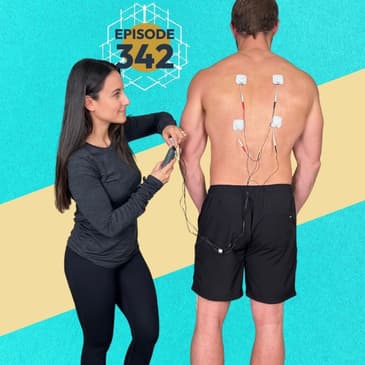
Have you tried TENs? DocJen and Dr. Dom dive into Transcutaneous electrical nerve stimulation. They dive into how it affects the body to reduce pain in the short-term, potential contraindications, and critically analyze the research that has been done on TENs. Finally, they discuss its use during labour and how it can facilitate pain management temporarily. Let's dive into all things TENs!
VivoBarefoot Discount:
Something that can surprisingly affect the health of our hamstrings is what we wear on our feet. It challenges the whole back-side chain to work through its full range of motion.
Your feet have the components they need to support themselves! That's why we love VivoBarefoot because the shoes themselves help us gain mobility and strength in our feet. Live that barefoot life in style, choose VivoBarefoot and use code TOB at checkout to get 15% off! Your foot and body will thank you (affiliate link)!
**Vivo offers a 100-day trial period. If you are not completely satisfied, you can send the shoes back and get a refund.
What You Will Learn In This PT Pearl:
02:00 - What are TENS and how does it affect our body/work?
5:20 - Contradictions
6:08 - How do TENs affect lower back pain?
8:36 - A 2017 Study
10:35 - A 2022 Study with back exercises
11:11 - A 2010 Review
14:15 - Limitations of the study
16:11 - TENS & Labour?
To Watch the PT Pearl on YouTube, click here: https://youtube.com/watch/
Hosted by Simplecast, an AdsWizz company. See pcm.adswizz.com for information about our collection and use of personal data for advertising.
[00:00:00] Welcome to the Optimal Body Podcast. I'm Dr. Dom and we are Doctors of Physical Therapy,
[00:00:11] bringing you the body tips and physical therapy pearls of wisdom to help you begin to understand
[00:00:16] your body, relieve your pains and restrictions, and answer your questions.
[00:00:19] Along with expert guests, our goal of the Optimal Body Podcast is really to help you discover
[00:00:24] what optimal means within your own body. Let's dive in!
[00:00:29] Before we hop into today's PT Pearl, I want to give one recommendation that I think can
[00:00:34] improve everyone's overall movement health, and that is going barefoot more often. Jen
[00:00:40] and I have worn Vivo Barefoot shoes for close to, if not over four years now, and really
[00:00:46] the changes are astounding that we feel in our feet, in the mobility, in our toes, and
[00:00:51] really our ability to do functional movements like squats, lunges, going up and down the
[00:00:56] stairs. Wearing barefoot shoes like Vivo Barefoots provide the environment for our feet that
[00:01:01] they really need to grow strength and mobility naturally throughout our days.
[00:01:07] And the thing I love most about Vivo is they have shoes for every type of occasion. Even
[00:01:11] during cold months like this, they have a warmer boot option, especially if you live
[00:01:15] somewhere like I grew up in Minnesota, you need the ability to keep that foot warm, but
[00:01:19] still have the thin bottom of the shoe, the wide toe area, the flexibility in the sole
[00:01:25] that give you all of those benefits. So for our podcast guests only, we're offering 15%
[00:01:30] off your Vivo Barefoot order by using code T-O-B at checkout. They have a 100 day risk
[00:01:36] free trial where you can send them back after 100 days if you're not completely satisfied
[00:01:40] just having to pay shipping. So go check out Vivo Barefoot shoes with the link down in
[00:01:44] the show notes. Make sure you use code T-O-B at checkout and start your barefoot journey
[00:01:49] today. Alright, let's hop into the Pearl.
[00:01:52] Alright, so we're hopping into a Pearl on 10's units. This is something we've been asked
[00:01:56] about quite a bit. And I'm surprised we haven't done an episode on it specifically yet, but
[00:02:01] this is transcutaneous electric nerve stimulation. And they're those little devices you can have
[00:02:06] devices that you use in home, or you might have them used in an office, whether that's
[00:02:11] with an athletic trainer, a physical therapist, a chiropractor, I've seen them use acupuncture,
[00:02:16] I've seen them used all over the place. What exactly are they doing? When might they be
[00:02:22] effective? Let's get into it.
[00:02:25] Yeah, I mean, they're essentially using electrodes that are placed on the skin, or again, in
[00:02:30] an acupuncture setting, they're placed on the needle. And they're sending electrical currents
[00:02:36] into our bodies and into our nerves to help to essentially decrease pain. That's what
[00:02:41] we're trying to do with 10's units. Yeah, and they're both sensory and motor applications.
[00:02:47] So like in the sensory application, we tend to be trying to access pain, or they can be
[00:02:53] used when people have neurologic issues and they might not feel
[00:02:57] grouse it in the middle as well in a certain area. You can use tens to kind of try and reinvigorate the sensory nerves in those areas. There are also applications where they try lining them up with the motor point of the muscle to actually stimulate muscle contraction. Those are always fun units in the physical therapy labs. Did you guys do that? Were you specifically trying to target the motor unit where the muscles most active and then you crank it up and you get your bicep?
[00:03:27] Which are more used, like I say, you've had any surgery or something you want to understand. You want to feel how to use that quad again. That's most commonly used in physical therapy settings, I would say, for the more of the note motor.
[00:03:42] Or again, with people who have had spinal cord injuries trying to get different muscles activating and coming back to life, essentially. But most people know of these things being used in the setting of pain.
[00:03:55] And essentially how these things work is through this gating of pain. There's this gating effect where when we send the electrical stimulation into that area that someone's feeling pain, our nerves, they're called our afferent nerves that go back up to our brain, they sense the electrical stimulation, send the signal up to the brain and say, "Hey, we're feeling this little tingle down in that area." And those nerves transmit faster than the nerves that transmit.
[00:04:24] Our pain signals. So essentially our brain receives this message first, then the pain signal shows up at the brain and the brain's like, "No, I already know what I'm feeling in that area. Get lost."
[00:04:36] And so we get this almost immediate analgesic effect because the signals from the electrical stimulation override or surpass the pain signals. At least that's the theory behind it.
[00:04:48] Exactly. And so that's why it can be so effective in that short term, especially when you're just feeling that pain or you want that pain to kind of reduce so that you can go into a little bit more movement-based therapy.
[00:05:03] But we want to look at also, what does the research say around 10s unit? How effective it is? Yeah. Exactly. How effective is it really, especially when we're comparing it to other therapies?
[00:05:16] Actually, and I do just want to say that there are some contrary indications as to when you should use this. Really, pacemaker, epilepsy, and pregnancy is kind of like a catch-all. Just be careful when you're using these units.
[00:05:27] However, I will talk about how it can be effective during labor. And I think in many settings, I would recommend doing this first with a professional in general, especially if you're trying to do it surrounding some sort of specific diagnosis that you have, especially if that diagnosis is nerve-related.
[00:05:44] Or if it's been injury due to major trauma. Even with chronic type pains, there's varying research on how effective it can be based on what type of chronic a procedure is.
[00:05:55] My first study on Dr. Dom Fraboni andamp; I always like to recommend doing it with a professional
[00:06:00] first so that they can then guide you on how to use it effectively in your home. So one
[00:06:04] of the first studies that we kind of looked through was this 2018 study I think was done
[00:06:08] with people who had chronic or persistent low back pain symptoms and it was kind of
[00:06:13] funny to me because they framed this study as being tens versus physiotherapy. Yeah,
[00:06:18] that's an issue for me right there. I know which so when we looked into the methods a
[00:06:22] little more we realized that the physiotherapy group was just receiving infrared and ultrasound
[00:06:29] therapy which is why we're like okay why would you call it physiotherapy then because
[00:06:35] many physiotherapists also use tens, physiotherapists also use exercise and manual therapies and
[00:06:41] all sorts of other different things so we're like why call it physiotherapy when you're
[00:06:45] just doing infrared and ultrasound this should actually be tens versus infrared and ultrasound.
[00:06:52] If you're going to physiotherapy who's only doing ultrasound and infrared we got an issue.
[00:06:57] Go to a different physical therapist and basically the results showed that the people
[00:07:02] who got tens had greater pain reduction scores than the people who got the infrared light
[00:07:08] therapy and ultrasound therapy and they did follow-ups after 12 weeks and one year at
[00:07:14] 12 months and the results were still better in the tens group. Which is interesting to
[00:07:20] look at right but at the same time we don't know what was done within that full year where
[00:07:27] they were zooming exercise after they felt better after 12 weeks and maybe that's why
[00:07:31] after the 12 month follow-up they still continue to feel a little bit better and calling it
[00:07:37] tens versus physiotherapy is such an issue because that's just not physiotherapy so
[00:07:45] a lot of issues that we had just looking into that study. It's so tough to isolate variables
[00:07:51] like you said if the group that got tens had a reduction in pain what did they then go
[00:07:57] and do? Did they feel more comfortable getting back into more exercise and movement and that
[00:08:01] could be a variable that contributes to why their 12 month scores are lower. Did they continue
[00:08:06] to seek out different tens therapies or other therapies because they noticed a pain reduction
[00:08:11] and so very hard to control all these variables and it's not always outlined exactly what
[00:08:17] they tried to control or didn't control in the research study itself so.
[00:08:22] Yeah so it just gives us an interesting insight to see how it performed better than ultrasound
[00:08:29] and infrared but that's it. Then we looked at it in 2017 study and this one is really
[00:08:37] comparing three different groups using tens so there was a tens and exercise group there
[00:08:42] was just a tens group and there was just an exercise group. Limitation for us as we don't
[00:08:47] exactly know exactly what exercises they were doing so there's that.
[00:08:52] Other than just the exercise however what we ultimately saw from the results is that the tens and exercise group had better results in decreasing pain than just the tens and just the exercise however bigger than just the exercise the tens actually alone decreased pain a little bit more than just the exercise but again we're looking at short term so usually when we're talking about exercise and this is something we've talked about a lot you need to continue to do, it's all about consistency to really see
[00:09:22] these long-term changes and how you ultimately are going to feel so there's that limitation right and we don't know exactly what exercises they were doing so yes tens and exercise together always going to be better we said this before passive treatments combined with exercise can go really good hand in hand and just knowing what tens does based on getting that short term reduction in pain being able to then do a little bit more exercise we can see how that ultimately can help.
[00:09:52] You kind of outlined it that tens is designed or the way it works the mechanism it acts on is designed to help bring down that pain signal in the short term so no surprise to me versus the exercise we don't know if the exercises they were doing did that irritate the pain in some people did that if we were doing no passive treatment or no pain reduction techniques with those people who are just doing the exercise there's a lot of variables as to why that exercise was so important to me.
[00:10:21] The exercise protocol or treatment may not have been as effective you could have a whole different exercise type protocol that would have performed better than tens again the limitations of research exactly there is another 2022 study that we took a look at that compared
[00:10:39] to back exercises again exactly what the back exercises are is a little unclear but this one showed that tends did perform better at pain reduction in the short term this paper specifically outlined that
[00:10:55] tends performed better in the short term then the back exercise protocol but was not shown to be as effective for long term reduction in pain symptoms.
[00:11:06] And then last one that we just want to go over 2010 review this one was actually pretty interesting because it actually showed that if you use the 10s unit versus a sham unit which is basically just putting pads on somebody and turning on the device and saying that okay it's doing the same thing.
[00:11:24] There's no stimulation now it may no difference yeah no difference in the reduction of pain and we've seen this for a lot of other types of treatments like ultrasound there are studies that show sham ultrasound with ultrasound on versus just rubbing the area with the gel and saying yep you're getting the ultrasound treatment.
[00:11:46] these studies will show that there's not a significant difference between the two.
[00:11:50] which points out a very powerful phenomenon that is the placebo phenomenon, where doing any treatment and going in and telling somebody that, yes, this is going to help you, can have a pretty significant impact for a large number of people, even if there's no research or anything backing it, or I call it my peanut butter experiment, where if you just rub peanut butter on someone's knee or shoulder and tell them, "Yeah, this is going to help your knee or your shoulder feel better."
[00:12:19] It might help 33 to 66 percent of people feel better.
[00:12:24] I mean, belief, education, and confidence in your provider goes a long way in how you're ultimately going to fail, and that's why it's hard with research alone to point out anything, because what we believe is going to help is ultimately what usually is going to help the treatment.
[00:12:42] But what they found in this review, too, was a high level of bias, because even if you're looking at, okay, tens with active treatment, and there's little difference between using just a tens unit or using active exercise.
[00:12:58] Yeah, because basically what a review article is, is they're looking at a lot of different research articles that look at tens, and some of the results they found was exactly what we were saying, where they compared tens to exercise.
[00:13:10] Remember, we talked about a previous article that said, "Tens alone was better than exercise. In this review article, they said they reviewed other research studies that said there was no significant difference between tens and exercise," just like we said, depending on what exercise you're doing or what exercise protocol, it might be drastically different compared to the tens.
[00:13:34] Yeah, and so we have to look at, well, who's studying this and what is the result that they're trying to get as well? And a lot of times, I remember even watching this episode, I think it was like on Dr. Oz, and they were going through physical therapy treatments, and they were talking about ultrasound, they were talking about tens, they were talking about all these things, and so it's like, this is what we've believed to be physical therapy and physiotherapy, which is unfortunate, and so a lot of times you want to believe that these are the treatments that are going to help me, and that's what I've been told from so many people as well.
[00:14:02] I remember when I first went off to kind of step away from the clinic and start to do my own thing, I'd get people, "Well, do you do those electrical stimulation thingies?" And do you have like, they were asking me for some of these devices because that's what we believe is really going to be the thing that's going to help me, and though again, we can see that it can create some short-term change, long-term, what is that going to do within your body?
[00:14:24] We have to create long-term change actively, not just passively, and that's ultimately like what we really believe here on the Optimal Body podcast.
[00:14:32] Yeah, because we can make passive change, or we can make that short-term change, but if we change nothing else, what is going to prevent us from sliding back into those same patterns?
[00:14:41] And so again, after all the research that we kind of outlined right there, there's contradicting results.
[00:14:48] is a lack of very clear defined methods. There's potential research bias in a lot of them use
[00:14:55] what we call convenience samples. So they're just taking a convenient sample of people that all have
[00:15:02] similar diagnoses or similar symptoms and relatively small sample sizes. So it's not like we can take
[00:15:10] results from one of these studies and apply it to everyone or anything. Any type of diagnoses people
[00:15:15] are going through and most of them were focused on the back rather than focusing on other types of
[00:15:20] pain disorders, knee pain, shoulder pain, things like that. So again, fairly limited
[00:15:26] research in the area and not a lot of research that compared tends to what would be considered
[00:15:34] the gold standard for a lot of especially chronic or persistent pain disorders, which is like
[00:15:39] behavioral therapy combined with movement. Anytime we're talking about pain, especially chronic
[00:15:44] or persistent pain, we want to have a much more comprehensive plan. So again, we look into the
[00:15:50] research to see what it says and often you come out saying, yes, there's a lot more research that
[00:15:55] would need to be done for us to actually determine what tends by itself can do for you. But our
[00:16:02] recommendation is that you really shouldn't just use tends by itself and rely on that to fix anything.
[00:16:08] Exactly. And this is why I do believe that for some women, I hear that it is very effective
[00:16:15] in labor because we're looking at that short term experience right now today as I'm in labor,
[00:16:22] I need to decrease what I'm feeling. For some, it doesn't make a big difference. But for others,
[00:16:27] they say that they really like the way it feels. So if you want to reduce some of those symptoms
[00:16:31] that you're feeling when you're in that intense stage of labor, you can buy a tends unit and
[00:16:37] stick those electrodes on your low back and see if it helps during labor. But again, that is a
[00:16:43] short term outcome that we're really looking at to be able to help. So I do believe that this
[00:16:49] can be helpful and this can be effective, especially if it gets you over that hump to at least start
[00:16:54] the exercise or you've been feeling like you can't even get there. This can be an effective tool
[00:17:01] to be able to use, but know that it's a tool and it's not the fix. I think that's what's important.
[00:17:05] Thanks so much for sticking around. I hope you learned something a little bit about this
[00:17:11] episode. And if you feel like it could be supportive, maybe someone really relies on this or they've
[00:17:15] been interested in understanding a little bit more about this past this episode along. This is how
[00:17:20] we get this information out to hopefully be a little bit more effective for people. And of course,
[00:17:26] if you do love and listen to our podcast, we would so appreciate if you can leave a rating and review.
[00:17:32] It just helps so much to get this podcast so that more people can start to understand and
[00:17:37] feel empowered within their bodies. We hope to see you back on the next episode of the Optimal Body
[00:17:41] Podcast.