
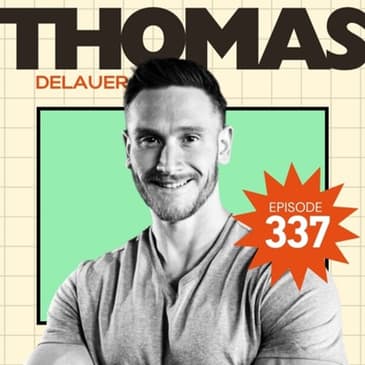
337 | Optimizing Food Choices for Better Energy, Focus, and Fat Loss with Thomas DeLauer
The Optimal BodyJanuary 01, 2024
337
00:52:0447.67 MB

337 | Optimizing Food Choices for Better Energy, Focus, and Fat Loss with Thomas DeLauer

Here’s a full debrief on the science behind metabolism, weight loss, and conflictive function from the perspective of food and nutrient consumption. In this episode, Thomas DeLauer breaks down the science behind how to eat for optimal cognitive function and between stressed and relaxed states. Then, DeLauer explains the science behind fast and slow metabolism, the principle of energy flux and how metabolism changes with chronic movement compared to being sedentary. Furthermore, he discusses the role of fasting, ketones and carbohydrates, and calorie consumption to lose weight. Let's dive in!


Low Back Challenge:

Let's help your Lower Back Pain! 80-90% of individuals experience low back pain at some point. Join us as we start, provide motivation and accountability to feel something and try something new it's an on-platform challenge to prevent or damage your lower back pain with the low back plan. It's 10-15 minutes of mobility, muscle activations, and strength exercises from the hips through the trunk muscles to address underlying differences and feel something different in your lower back. Move with us on Jan 1st for 30 days and use the code ‘⁠OPTIMAL10⁠’ to get this plan for only $15. Click ⁠here⁠ to JOIN US!


What You Will Learn in This Interview with ⁠Thomas DeLauer:

3:06 - What set Thomas on the path of healthcare and nutrition?

5:53 - What is Cognitive Nutrition?

8:00 - Principles on how to eat to support your cognition.

10:30 - Foods to optimize cognitive nutrition.

14:50 - Preparing for a big event: Fasting and Metabolic Flexibility.

21:22 - Fast vs Slow Metabolism: What does it mean to "Speed Up" your metabolism?

28:08 - How to lose weight appropriately by optimizing your metabolic flux: Metabolic Flux and Burning Fat.

33:35 - How to measure caloric demands without counting calories?

41:22 - Psychology of Lifestyle Changes: Willpower, All-or-nothing Mentality.

50:45 - Learn more with Thomas!


To learn more about Thomas DeLauer⁠⁠⁠⁠⁠⁠⁠⁠⁠⁠⁠⁠ and view full show notes, please visit the full website here:⁠⁠⁠⁠⁠⁠⁠⁠⁠⁠⁠⁠⁠⁠⁠⁠⁠⁠ ⁠⁠⁠⁠⁠⁠⁠⁠⁠⁠https://www.docjenfit.com/podcast/episode337


Thank you so much for checking out this episode of The Optimal Body Podcast. If you haven’t done so already, please take a minute to⁠⁠⁠⁠⁠⁠⁠⁠⁠⁠⁠⁠⁠⁠⁠⁠⁠⁠⁠⁠ subscribe⁠⁠⁠⁠⁠⁠⁠⁠⁠⁠⁠⁠⁠⁠⁠⁠⁠⁠⁠⁠ and leave a quick rating and review of the show!


Hosted by Simplecast, an AdsWizz company. See pcm.adswizz.com for information about our collection and use of personal data for advertising.

[00:00.000 --> 00:11.680] Welcome to the Optimal Body Podcast. I'm Dr. Dom, and we are Doctors of Physical Therapy, [00:11.680 --> 00:16.080] bringing you the body tips and physical therapy pearls of wisdom to help you begin to understand [00:16.080 --> 00:19.840] your body, relieve your pains and restrictions, and answer your questions. [00:19.840 --> 00:24.840] Along with expert guests, our goal of the Optimal Body Podcast is really to help you discover [00:24.840 --> 00:29.360] what optimal means within your own body. Let's dive in! [00:29.360 --> 00:33.400] The low back challenge on Jen Health has officially started today, and I'm so excited [00:33.400 --> 00:39.080] to move just really quickly, every day throughout the next 30 days, with a huge community of [00:39.080 --> 00:40.560] people holding me accountable. [00:40.560 --> 00:45.000] Yeah, we have a massive community that's starting this low back challenge together now, and for [00:45.000 --> 00:50.600] our podcast audience only, you can get this whole month of movement for just 15 bucks by [00:50.600 --> 00:56.240] using code Optimal10. So we've never given a month on the platform away for this little, [00:56.240 --> 01:01.080] and it's going to give you 30 full days of moving through this low back plan together, [01:01.080 --> 01:04.920] addressing some of those underlying restrictions, and it's great as a compliment to whatever [01:04.920 --> 01:07.400] other movement you might be doing to start the new year. [01:07.400 --> 01:11.440] And what's so exciting, we have a lot of new videos on Jen Health, and this is all [01:11.440 --> 01:16.080] going to be plopped right into this plan so that you get to experience and feel something [01:16.080 --> 01:17.080] different. [01:17.080 --> 01:21.120] All right, this might be hands down one of my favorite episodes, especially when it [01:21.120 --> 01:25.320] comes to food and nutrition, because Thomas DeLaure breaks it down in a way that is going [01:25.320 --> 01:30.640] to make it actually easier to understand and empowering to implement. [01:30.640 --> 01:36.160] Now Thomas DeLaure is a nutritionist, an expert in diet, cognitive nutrition, and performance. [01:36.160 --> 01:41.920] He is motivated by a guiding ethos of integrated optimization. If you perform better, so does [01:41.920 --> 01:42.920] the world. [01:42.920 --> 01:47.640] Thomas reaches more than 15 million viewers monthly on average to his YouTube channel, [01:47.640 --> 01:52.200] where he translates experience and learning from his own health transformation, as well [01:52.200 --> 01:56.800] as experience working with special operations, as well as professional athletes to his dedicated [01:56.800 --> 02:01.800] community of 3.5 million subscribers, no small feat. [02:01.800 --> 02:03.800] He is incredible at what he does. [02:03.800 --> 02:08.040] So let's dive into this interview, make sure to take notes, and share it with others because [02:08.040 --> 02:10.680] this is going to be such a powerful episode. [02:10.680 --> 02:14.000] Thomas, thank you so much for taking the time to be here with us, knowing you through [02:14.000 --> 02:19.120] the years and the type of content, the type of research that you put out, the way that [02:19.120 --> 02:22.480] you make it understandable and digestible. [02:22.480 --> 02:27.680] You are someone that I know that if I'm questioning something, if someone has said something, [02:27.680 --> 02:30.680] I go to your page and I'm like, okay, but what does Thomas say? [02:30.680 --> 02:31.680] What does the research say? [02:31.680 --> 02:33.800] Like how can I actually distill this down? [02:33.800 --> 02:37.560] Because in social media, there's just so much noise out there. [02:37.560 --> 02:41.920] So I really appreciate just the work that you're doing within the wellness and fitness [02:41.920 --> 02:42.920] community. [02:42.920 --> 02:43.920] Well, thank you. [02:43.920 --> 02:47.600] And you're always been someone that I trust in the world of biomechanics and getting my [02:47.600 --> 02:48.600] body right. [02:48.600 --> 02:49.600] So I guess the feeling is mutual. [02:49.600 --> 02:50.600] Thank you. [02:50.600 --> 02:51.600] Yeah. [02:51.600 --> 02:53.960] I mean, really tough to know who to trust out there. [02:53.960 --> 02:58.040] So we love having a great community of people like yourself that we can call upon. [02:58.040 --> 03:04.200] In your bio, you talk about how you're a nutritionist, an expert in diet, cognitive nutrition and [03:04.200 --> 03:05.200] performance. [03:05.200 --> 03:09.440] I just want to get an idea of what set you on this path and gave you passion about [03:09.440 --> 03:15.560] this field and also what exactly is cognitive nutrition, because I don't know if I've ever [03:15.560 --> 03:17.080] specifically heard that phrase. [03:17.160 --> 03:18.160] Yeah, for sure. [03:18.160 --> 03:22.360] I mean, what got me going on the path was more a reflex, getting out of the world that [03:22.360 --> 03:23.360] I was in. [03:23.360 --> 03:29.400] I was in a corporate health care world, I was kind of on the private equity side of like [03:29.400 --> 03:30.840] insular lab services. [03:30.840 --> 03:36.640] So without getting into the weeds too much, we basically provided a lot of biotech and [03:36.640 --> 03:40.160] kind of some bio engineering stuff for various physicians practices. [03:40.160 --> 03:45.240] And that's how I really learned that I was good at articulating biochemistry in the [03:45.240 --> 03:48.800] subject matter, because I was essentially selling it all day long anyway. [03:48.800 --> 03:54.280] And I was pretty good at explaining it, but I got really tired of like the traditional [03:54.280 --> 03:58.280] reimbursement system and just kind of that entire. [03:58.280 --> 03:59.960] I was frustrated with the continuum of care. [03:59.960 --> 04:01.960] I just didn't like it felt off to me. [04:01.960 --> 04:05.560] And I wasn't like a health care major, I wasn't a health care admin major. [04:05.560 --> 04:07.640] I was a psychology background. [04:07.640 --> 04:13.680] I just felt like it wasn't jiving with me and my moral compass, what I was doing. [04:13.680 --> 04:19.440] So I got out of that world, I took a sabbatical for a little while to figure out what I really [04:19.440 --> 04:20.440] wanted to do. [04:20.440 --> 04:26.480] And kind of during that period of trying to figure out what I wanted to do, I wrote like [04:26.480 --> 04:28.480] a silly little e-book, like it was nothing. [04:28.480 --> 04:32.320] It was like a little e-book that was just chronically some of my own weight loss journey [04:32.320 --> 04:36.440] because I lost a hundred pounds during some that time, I was like, I'm just going to write [04:36.440 --> 04:37.440] this down. [04:37.440 --> 04:40.000] And I'm going to like sling it on the internet and kind of see what happens. [04:40.000 --> 04:43.360] And people really liked it and they really liked it and I was like, what? [04:43.360 --> 04:44.360] This is interesting. [04:44.360 --> 04:48.640] This is a stupid little PDF and it just kind of took off. [04:48.640 --> 04:52.400] And then so I kind of created some videos explaining it and people online were like, [04:52.400 --> 04:54.640] you're really good at explaining stuff in videos. [04:54.640 --> 04:58.840] I'm like, you know what, maybe I should just double down on this for a little bit. [04:58.840 --> 05:04.600] So it kind of happened by, as Bob Ross would say, a happy little accident, but in the rest [05:04.600 --> 05:05.600] kind of way from there. [05:05.600 --> 05:11.920] And then as far as the cognitive nutrition piece, I really noticed that when I got my health [05:11.920 --> 05:17.720] in check, like the first thing that I noticed above all else was my mood, my mental clarity [05:17.720 --> 05:18.720] and whatnot. [05:18.720 --> 05:20.440] So I knew that there was a connection there. [05:20.440 --> 05:25.120] So I really became very interested in that connection, like which came first, the chicken [05:25.120 --> 05:27.080] or the egg was at the nutrition. [05:27.080 --> 05:29.720] That was directly impacting the brain and then my brain was feeling better. [05:29.720 --> 05:34.080] So I want to move more or was it my body feeling better, so then my brain felt better. [05:34.080 --> 05:39.160] Yeah, yeah, I still don't have an answer for that one, but it gave, it got me really interested. [05:39.160 --> 05:43.560] So along in the short of it, nowadays I have Department of Defense contracts. [05:43.560 --> 05:51.640] I work with predominantly the US Army Special Operations on what they call performance optimization. [05:51.640 --> 05:55.880] But for my part specifically, it's much more cognitive focused. [05:55.880 --> 06:01.400] Mainly working with like Marksman and whatnot, helping them optimize nutrition so that they [06:01.400 --> 06:05.480] feel clear, so that they're more steady, so that they're able to make shots better. [06:05.480 --> 06:10.800] But also when you're looking at high stress environments, how can you manage your emotions [06:10.800 --> 06:16.560] better outside of ways that are just the traditional kind of mindset optimization pieces? [06:16.560 --> 06:21.840] How do you influence neurotransmissions so that you can be more calm in a stressful situation? [06:21.840 --> 06:22.840] It kind of goes on and on. [06:22.840 --> 06:25.200] And then of course, there's the athlete side of that. [06:25.200 --> 06:30.240] Like if you've ever been pushing it, lactate threshold and then were to try to go straight [06:30.280 --> 06:37.560] from high intensity movement or high intensity exercise into, let's say, a reaction time [06:37.560 --> 06:38.560] test. [06:38.560 --> 06:42.880] Like you see MLB athletes all the time doing the little light tests, you know, where they [06:42.880 --> 06:46.880] have the lights and the walls and their kind of time in a reaction time, those lights. [06:46.880 --> 06:51.160] Such a strong difference between doing that when you're physically rested versus physically [06:51.160 --> 06:52.160] exhausted. [06:52.160 --> 06:53.160] Yeah. [06:53.160 --> 06:57.720] And optimizing that, optimizing kind of the energy pathways that allow that. [06:57.720 --> 07:00.400] That's really what cognitive nutrition is in a nutshell. [07:00.400 --> 07:02.000] I mean, that's powerful. [07:02.000 --> 07:07.840] I think that like anyone listening, you know, obviously most people are not probably as [07:07.840 --> 07:10.920] doing the intense work that you're really helping with. [07:10.920 --> 07:16.200] But on a day to day basis, people are wanting to understand how to optimize their energy [07:16.200 --> 07:21.480] because say you have a stressful job, no matter what that is, and then you're coming home [07:21.480 --> 07:26.960] to just a stressful environment, taking care of kids or taking care of someone else. [07:26.960 --> 07:32.400] Like it's just, we can run across these energy barriers throughout our day where then [07:32.400 --> 07:36.440] we don't want to work out or we don't, we're just running into the fast food drive-through [07:36.440 --> 07:40.320] because there's no time I have to stress out to cook or whatever it may be. [07:40.320 --> 07:50.160] So understanding how to gain our energy back through nutrition and gain our brain power [07:50.160 --> 07:53.600] back through nutrition, I think it'd be really, really supportive. [07:53.600 --> 07:59.440] So I'd love to dive into, you know, just speaking at like a baseline level, what are [07:59.440 --> 08:03.920] some of the foods that are most supportive throughout the day that we could be thinking [08:03.920 --> 08:07.920] of getting in or we should start prioritizing within our life? [08:07.920 --> 08:08.920] Yeah. [08:08.920 --> 08:11.920] I mean, when you look at it, a lot of it is a timing thing. [08:11.920 --> 08:18.040] A lot of it is when to eat versus when not to eat, when to eat light versus when to eat [08:18.040 --> 08:19.280] heavy. [08:19.280 --> 08:24.400] There are certain situations where having a large meal can help you cognitively, but most [08:24.400 --> 08:28.320] of the time it's, you know, a smaller meal that's going to help you cognitively, right? [08:28.320 --> 08:34.800] So it's typically you find like in a setting where people, well, here's the caveat to that. [08:34.800 --> 08:37.520] When you're talking about willpower, it's a little bit different, right? [08:37.520 --> 08:42.440] So if you're going from eating a small breakfast where you just grab like a yogurt and run out [08:42.440 --> 08:49.240] the door, then you're going to end up hungry later on in the day when you're already, you [08:49.240 --> 08:54.000] emotionally exhausted and drained from the day, that's the worst time to be hungry and [08:54.000 --> 08:58.280] the worst time to be having to make a decision is when you're emotionally drained. [08:58.280 --> 09:02.760] So I caveat with that because most of the time I recommend having like most of your calories [09:02.760 --> 09:07.240] towards the morning and then kind of tapering them as the day goes on because you're less [09:07.240 --> 09:11.200] hungry and you're less likely to make cruddy decisions as the day goes on. [09:11.200 --> 09:16.840] But if you're trying to aim for like a specific cognitive performance, usually it's eating [09:16.840 --> 09:23.480] something light or candidly not even eating at all right before sort of a morning event [09:23.480 --> 09:30.160] or something, like if I'm speaking, very seldom will I eat a breakfast before I'm speaking. [09:30.160 --> 09:34.040] You have sort of a, but there's different ways that you have to look at it because by not [09:34.040 --> 09:36.640] eating, that can be pretty aggressive. [09:36.640 --> 09:39.960] But the reason that that potentially works for people that need a little more mental [09:39.960 --> 09:44.480] acuity and you have to test this off yourself is not everyone reacts that way. [09:44.480 --> 09:46.280] It sort of triggers a fight or flight response. [09:46.280 --> 09:50.120] You get an epinephrine effect if you're a little bit hungry. [09:50.120 --> 09:55.100] So I'm going to give a context with the like special operations guys. [09:55.100 --> 09:59.400] These kinds of people they want to be in that fight or flight mode, but they want to [09:59.400 --> 10:01.880] be able to maintain control when they're in it. [10:01.880 --> 10:05.480] It's a difference between saying, I'm stressed out. [10:05.480 --> 10:10.480] So I'm going to shut down and curl up in a ball or I'm stressed out. [10:10.560 --> 10:16.360] I know how to use this energy from this stress to direct it in a specific way, right? [10:16.360 --> 10:22.160] So very, very different for someone that says, okay, I need to go and public speak or I need [10:22.160 --> 10:27.960] to give a lecture or whatever compared to someone that is just a regular person trying [10:27.960 --> 10:29.600] to feel better throughout the day. [10:29.600 --> 10:32.800] So a couple of quickly foods that people can eat just throughout the day that have a lot [10:32.800 --> 10:37.120] of science behind them, good old blueberries, any darkberry. [10:37.120 --> 10:41.280] So blueberries, blackberries, mulberries are tremendous. [10:41.280 --> 10:43.240] There's a berry that you can get a powder for it. [10:43.240 --> 10:47.080] It's called a hascat berry that's grown out of Nova Scotia, the highest concentration of [10:47.080 --> 10:48.760] what are called anthocyanins. [10:48.760 --> 10:54.000] These are specific polyphenols that are in any kind of dark berry or any kind of dark [10:54.000 --> 10:56.800] fruit really, as a matter of fact, even eggplant. [10:56.800 --> 11:01.760] So you think eggplant like the skin of it, that dark purplish that's super rich in anthocyanins. [11:01.760 --> 11:06.880] So this is a polyphenol that unlike other polyphenols can cross through the blood brain barrier. [11:06.880 --> 11:10.360] So when it crosses through the blood brain barrier, it acts as an antioxidant in the [11:10.360 --> 11:16.360] brain and sort of eliminates or reduces some of the oxidative stress that's having sort [11:16.360 --> 11:18.640] of a heyday in your brain. [11:18.640 --> 11:24.280] With that potential reductions in neuroinflammation, so transmission is faster, your brain is able [11:24.280 --> 11:28.520] to send signals, new neuron to neuron is much faster. [11:28.520 --> 11:31.280] That's kind of one of the most powerful ones. [11:31.280 --> 11:34.200] Another one, people see MCT oil all the time. [11:34.200 --> 11:40.000] They think, OK, MCT oil, this is only for people that are doing ketogenic diet, what [11:40.000 --> 11:41.680] is MCT oil? [11:41.680 --> 11:44.800] MCT oil is a component of coconut oil. [11:44.800 --> 11:48.160] So it's just one chunk of the coconut oil. [11:48.160 --> 11:51.280] It's medium chain triglycerides, what it stands for. [11:51.280 --> 11:56.640] And when you look at coconut oil, you've got predominantly these longer chain fats, but [11:56.640 --> 11:58.920] then you have a little bit of MCT oil. [11:58.920 --> 12:01.040] MCT oil is extracted from that. [12:01.040 --> 12:08.920] So you can get any kind of MCT oil from coconut oil, or you can buy specifically MCT oil. [12:08.920 --> 12:14.760] This is one of the only fats that has been demonstrated in the literature to do what is [12:14.760 --> 12:17.080] called improved network stability. [12:17.080 --> 12:21.960] So network stability in the brain is where you have these different regions of the brain [12:21.960 --> 12:25.160] and they are consistently communicating with one another. [12:25.160 --> 12:28.880] But when it's loud and chaotic, they can't communicate very well. [12:28.880 --> 12:34.600] Think of a really loud room, and that loud room is, I have to scream at you to get my [12:34.600 --> 12:35.600] point across. [12:35.600 --> 12:39.280] And when I'm screaming at you, I'm not exactly articulating well. [12:39.280 --> 12:44.760] Well when the brain is loud and chaotic, it's screaming, and it's not exactly getting the [12:44.760 --> 12:46.000] point across. [12:46.000 --> 12:51.840] But when the brain is quiet, transmission is much better, and that's called network stability. [12:51.840 --> 12:55.840] And what MCT oil does is it literally improves network stability, and there's a multitude [12:55.840 --> 12:58.120] of research on this over the last like four or five years. [12:58.120 --> 12:59.440] So the brain just operates better. [12:59.440 --> 13:05.040] You feel like you can connect the dots faster, you can articulate faster, and again this happens [13:05.040 --> 13:10.000] whether or not you're in a ketogenic diet, because again MCT oil is often combined with [13:10.000 --> 13:11.320] a ketogenic diet. [13:11.320 --> 13:16.480] So you could have say a breakfast of maybe a smoothie with some blackberries, some blue [13:16.480 --> 13:23.400] berries, maybe some ice and some raspberries, maybe a little bit of avocado, a little splash [13:23.400 --> 13:28.880] of MCT oil, maybe a tablespoon or two, and then some kind of protein that's going to [13:28.880 --> 13:31.920] be a little bit more slower digesting. [13:31.920 --> 13:35.800] So you might want to avoid something like the whey protein, you might want to have something [13:35.800 --> 13:40.400] like eggs that are a little slower digesting, so you're not getting a big insulin spike. [13:40.400 --> 13:44.480] Because believe it or not whey protein you can spike insulin through an interesting pathway [13:44.480 --> 13:47.320] with the lucine, the protein itself. [13:47.320 --> 13:51.640] And then eggs of course have a bunch of choline, and choline is very interesting because choline [13:51.640 --> 13:55.880] is a precursor to another very important neurotransmitter called acetylcholine, which [13:55.880 --> 13:57.760] is huge for brain function. [13:57.760 --> 14:02.960] So the brain is all back to earth, it's all about neurotransmission and antioxidants. [14:02.960 --> 14:07.320] So like my go-to sort of breakfast is like a little bit of cottage cheese, slow digesting [14:07.320 --> 14:13.300] protein, usually three eggs or so, a massive handful of blueberries and blackberries, or [14:13.300 --> 14:18.000] I'll put them into a smoothie with some avocado, and a little bit of MCT oil in my usually [14:18.000 --> 14:21.320] in my green tea, I'm not a big coffee person, I'm much more of a green tea person. [14:21.320 --> 14:26.280] And that is like lights my brain up, it's not super, super caloric, but it's enough to [14:26.280 --> 14:28.360] feel satiated and enough to fire my brain up. [14:28.360 --> 14:31.040] I think the way you explain that was fantastic. [14:31.040 --> 14:32.040] That's so good. [14:32.040 --> 14:35.800] I mean your ideal breakfast specifically, I love it because it gives you that energy, [14:35.800 --> 14:39.520] it gives you a lot of those polytheanols you're talking about with the berries, and then has [14:39.520 --> 14:44.280] those slower digesting, the slower digesting energy really that is going to prevent you [14:44.280 --> 14:49.440] from hitting that massive hunger a couple hours later. [14:49.440 --> 14:56.040] I had a quick question when you were talking about if you're going into some big event in [14:56.040 --> 15:01.360] your day, whether it's speaking, giving a lecture in some of the people that you train [15:01.360 --> 15:06.240] and work with, if they have a shooting task or something that they need to do, is there [15:06.240 --> 15:13.760] a degree of being in that relatively fasted state where their brain is getting fed a lot [15:13.760 --> 15:18.920] of high quality energy, whether it's through ketones or something, that can also help you [15:18.920 --> 15:21.040] with that mental acuity in that state. [15:21.040 --> 15:25.920] I want to use this question to tip into a discussion about metabolism because I know you talk a [15:25.920 --> 15:31.280] lot about metabolic flexibility, metabolic health, what exactly that is. [15:31.280 --> 15:32.280] Totally. [15:32.280 --> 15:37.400] To produce ketones when you're in a fasted state, you have to typically be fasted for usually [15:37.400 --> 15:40.160] a little bit longer. [15:40.160 --> 15:45.680] Ketones just for people that are listening are not this toxic thing. [15:45.680 --> 15:53.040] Ketones are essentially an additional fuel that is created as a result of being deprived [15:53.040 --> 15:55.760] of glucose or deprived of fuel in general. [15:55.760 --> 16:01.480] So if you're fasted, eventually the body says, okay, well, let's convert fats into this new [16:01.480 --> 16:05.760] kind of fuel that we can use, they're going to say new, but the body dips into this all [16:05.760 --> 16:06.760] the time. [16:06.760 --> 16:08.840] It dips into ketones when we're exercising. [16:08.840 --> 16:11.480] Anytime we're in an energy deficit, right? [16:11.480 --> 16:15.520] So like that energy deficit could be caloric restriction. [16:15.520 --> 16:18.480] That energy deficit definitely could be during exercise. [16:18.480 --> 16:22.720] People that are going for a run for an hour plus are almost certainly producing ketones, [16:22.720 --> 16:25.320] if they're not fueling during that run. [16:25.320 --> 16:28.680] So long and long duration exercise, absolutely you're producing ketones. [16:28.680 --> 16:30.840] So this is nothing new or nothing scary. [16:30.840 --> 16:35.200] The body's very good at it, but when you fast, when you abstain from food for a longer [16:35.200 --> 16:37.320] period of time, you do start to produce them. [16:37.320 --> 16:41.640] But a lot of times, if you're looking for like a quicker boost in the morning and you [16:41.640 --> 16:46.960] want to remain quote unquote fasted, you're not necessarily going for the ketones at that [16:46.960 --> 16:47.960] rate. [16:47.960 --> 16:52.800] You're more so going for lower levels of insulin and more stable glucose levels is what's happening [16:52.800 --> 16:53.800] there. [16:53.800 --> 16:59.360] The moment that some food comes into your system, you have this sort of always a compensatory [16:59.360 --> 17:00.360] effect. [17:00.360 --> 17:05.060] Always trying to find homeostasis and think of it as a bouncy ball. [17:05.060 --> 17:09.040] If you have some carbohydrates, nothing wrong with carbohydrates, but you have them, your [17:09.040 --> 17:10.640] glucose is going to spike. [17:10.640 --> 17:14.000] And then in a healthy individual, it's going to come back down in a metabolically unhealthy [17:14.000 --> 17:18.080] person, it could stay up, which definitely causes mental issues for a lot of people. [17:18.080 --> 17:21.960] Like if someone's type two diabetic, they have carbohydrates and all of a sudden, they're [17:21.960 --> 17:23.760] just like, I don't feel as great. [17:23.760 --> 17:26.760] I don't feel as close because they're having a hard time coming down. [17:27.240 --> 17:30.480] A normal, a normal healthy person, glucose comes up and then it comes back down. [17:30.480 --> 17:34.880] And then sometimes it can kind of dip a little bit lower and then it will come back up again [17:34.880 --> 17:39.000] and do a secondary spike and dip again and then sometimes even a third spike come back [17:39.000 --> 17:40.000] down. [17:40.000 --> 17:41.000] So it's like a bouncy ball. [17:41.000 --> 17:42.000] It's like you spike up. [17:42.000 --> 17:46.360] You kind of crash, you spike up, you kind of crash and it's this balancing effect that the [17:46.360 --> 17:50.720] brain is sort of saying, okay, I got to find equilibrium here. [17:50.720 --> 17:53.560] Not only is that a little bit exhausting for the brain, but that's also just something [17:53.560 --> 17:59.200] where again, you're in these like sort of intermediary spaces where the brain isn't [17:59.200 --> 18:02.000] able to like really be focused. [18:02.000 --> 18:05.640] It's not to say that you can't do your job or can't function efficiently. [18:05.640 --> 18:07.200] You absolutely can. [18:07.200 --> 18:11.480] It's just much more about saying, how do we get the optimal performance here? [18:11.480 --> 18:16.920] And that's where being fasted, you're just a little bit more stable. [18:16.920 --> 18:21.760] But there's another thing that happens is if you do start running on fatty over fatty [18:21.760 --> 18:28.200] acids, turning into ketones in this case, if you've been fasted for say, 14, 16 hours, [18:28.200 --> 18:31.800] then you do start to typically produce some ketones. [18:31.800 --> 18:36.320] And although ketones are a tremendous fuel for the brain, one of the major benefits is [18:36.320 --> 18:38.280] you're sparing glucose. [18:38.280 --> 18:44.680] So to put this in a really simple term, your body's using another fuel. [18:44.680 --> 18:50.000] So that means that carbohydrates or glucose are being spared and not having to be burned because [18:50.000 --> 18:54.240] your body always has glucose floating through it, even if you're not eating carbs. [18:54.240 --> 18:57.160] So that glucose says, okay, well, I'm free. [18:57.160 --> 18:58.200] I've got nothing to do. [18:58.200 --> 19:00.000] I've got some free time. [19:00.000 --> 19:05.400] So the glucose actually activates these different sort of pathways in the brain that aid with [19:05.400 --> 19:08.800] the glymphatic system and aid and all these things that actually help flush the brain and [19:08.800 --> 19:10.160] clear the brain. [19:10.160 --> 19:14.040] So think of it as you just, you know, we're both parents here. [19:14.040 --> 19:16.760] So it's like, I can talk in this context. [19:16.760 --> 19:17.760] You're busy. [19:17.760 --> 19:18.880] You're taking care of the kids. [19:18.880 --> 19:20.320] You got so much to do. [19:20.320 --> 19:21.320] You don't know what to do. [19:21.320 --> 19:24.760] But then all of a sudden, parents come to the house. [19:24.760 --> 19:27.160] They take over watching the kids and you're like, okay, cool. [19:27.160 --> 19:28.160] I've got energy. [19:28.160 --> 19:29.160] I've got free time now. [19:29.160 --> 19:30.160] I can go clean the house. [19:30.160 --> 19:31.640] I can go do the things I need to do. [19:31.640 --> 19:33.680] That's sort of how it works with the brain. [19:33.680 --> 19:39.240] When glucose is spared, then that glucose can go around and do other things. [19:39.240 --> 19:42.880] So that's typically why I say, okay, if you don't want to eat the blueberries, you don't [19:42.880 --> 19:44.440] want to do that thing. [19:44.440 --> 19:48.440] If you stay fasted, that can be hugely beneficial for cognitive performance. [19:48.440 --> 19:52.400] But if you don't want to stay fasted, there's a way around it by just eating protein and [19:52.400 --> 19:53.400] fat in the morning. [19:53.400 --> 19:55.120] And it doesn't have to be this big full up. [19:55.120 --> 19:56.800] She was meat and cheese type meal. [19:56.800 --> 20:00.680] Like it can just be like, okay, I'm going to have an avocado and a couple of eggs. [20:00.680 --> 20:02.680] And there's practically no carbs in that meal. [20:02.680 --> 20:04.840] So you're not giving your body the glucose. [20:04.840 --> 20:08.440] So that means that the glucose is being spared in the brain. [20:08.440 --> 20:13.280] So you keep stable blood sugar and you have that glucose sparing effect, which it's a [20:13.280 --> 20:18.400] long winded answer to really give you there, but it's not an easy thing to explain. [20:18.400 --> 20:21.120] If you get down to the kind of the biochemistry of it. [20:21.120 --> 20:24.000] No, I mean, you're explaining this so well. [20:24.000 --> 20:28.800] I feel like you're able to comprehend it a little bit more, which helps to feel empowered [20:28.800 --> 20:34.720] of making better decisions of what's going to benefit my body best because I understand [20:34.720 --> 20:36.840] the process that that happens now. [20:36.840 --> 20:38.920] And this is something I feel drastically. [20:38.920 --> 20:41.720] I usually have two to three eggs in the morning. [20:41.720 --> 20:47.440] And this also was really enforced during pregnancy when I understood how important Colleen was [20:47.440 --> 20:49.600] just for baby development. [20:49.600 --> 20:51.640] And so I would have eggs every morning. [20:51.640 --> 20:57.840] And when I make sure that I'm really focusing on how much protein I'm getting in the morning, [20:57.840 --> 21:04.600] so eggs and maybe chicken or eggs and meat or something else alongside of that, you don't [21:04.600 --> 21:05.760] get that crash later on. [21:05.760 --> 21:09.880] I'm able to eat most of my calories in the morning and then taper off during the day. [21:09.880 --> 21:11.680] And it just is a natural process. [21:11.680 --> 21:15.440] And so understanding where that's really coming from and how that's benefiting my body [21:15.440 --> 21:17.560] is just, it's so impactful. [21:17.560 --> 21:20.600] So I really appreciate the way that you break things down. [21:20.600 --> 21:26.480] And I do want to touch on, you know, this metabolism idea because I think what we've [21:26.480 --> 21:31.320] been told and fed for so long is like, Oh, your metabolism is just slow. [21:31.320 --> 21:34.440] That's why you're not losing weight or you need to speed up your metabolism. [21:34.440 --> 21:38.800] And there's all these quick fixes and things out there of what we're sold that we need to [21:38.800 --> 21:39.800] do. [21:39.800 --> 21:44.280] So can you break down just understanding metabolism a little bit better, what that means and what [21:44.280 --> 21:47.680] people are really meaning when they say, Oh, it's too slow or we need to speed it up. [21:47.680 --> 21:49.440] Yeah, it's a really good question. [21:49.440 --> 21:52.320] It sounds like a very simple thing, but it's complicated. [21:52.320 --> 21:53.680] And I will make it simple. [21:53.680 --> 21:57.800] And I think people, especially online, they tend to make it seem like it's really simple. [21:57.800 --> 22:01.640] And I want to start by sort of debunking this one major thing like your metabolism is [22:01.640 --> 22:02.640] not a furnace. [22:02.640 --> 22:06.520] It's not one of these things where you like you got to keep your metabolism hot. [22:06.520 --> 22:11.280] If you want to like be lean and burn fat, it's not quite how it works. [22:11.280 --> 22:16.320] In fact, in a lot of ways, I mean, it is, but it's definitely if you have that logic, [22:16.320 --> 22:19.560] it could send you down the complete wrong direction. [22:19.560 --> 22:24.160] And it's, I understand the point of trying to like paint to picture and illustrate it [22:24.160 --> 22:25.680] in such a way. [22:25.680 --> 22:31.360] But the metabolism is really just how your body utilizes fuel, plain and simple. [22:31.360 --> 22:35.720] It's not like this internal furnace that's regulating when you burn fat or when you store [22:35.720 --> 22:36.720] fat. [22:37.200 --> 22:41.400] The simple metabolomics of how does your body utilize glucose? [22:41.400 --> 22:43.080] How does your body utilize fats? [22:43.080 --> 22:45.560] How efficient is it at utilizing such fats? [22:45.560 --> 22:51.080] How does it take glucose and how efficiently does it turn it into energy so that you can [22:51.080 --> 22:53.880] move and do the things you love? [22:53.880 --> 23:00.800] When someone has a slow metabolism, it just means that the overall ability to use that [23:00.800 --> 23:06.160] fuel is a little bit less or it's happening at a slower rate. [23:06.720 --> 23:12.720] The metabolism is so interesting because we don't know everything there is to know about [23:12.720 --> 23:15.560] a fast metabolism or a slow metabolism. [23:15.560 --> 23:21.000] But the best way that you can kind of illustrate it is, okay, when you're exercising, you're [23:21.000 --> 23:22.520] up-regulating everything. [23:22.520 --> 23:27.160] Everything's moving fast and you're demanding a lot and your fuel exchange, your electronics [23:27.160 --> 23:30.120] exchange is so much more. [23:30.120 --> 23:32.040] That's a fast metabolism. [23:32.040 --> 23:34.640] A slow metabolism is when you're sleeping. [23:34.640 --> 23:36.080] Everything slows down. [23:36.160 --> 23:40.040] Everything's going at a snail's pace because there's no demand, right? [23:40.040 --> 23:44.280] So a good portion of the metabolism is demand driven anyway. [23:44.280 --> 23:50.880] It's just the metabolism cranks up as a result of us moving and there being demand. [23:50.880 --> 23:56.400] Where you start to run into problems is usually for people that have gone years and years and [23:56.400 --> 24:01.920] years with being sedentary, where their demand has just gone to a snail's pace and it's [24:01.920 --> 24:07.040] really hard to get it going again because there's been no reason for the body to increase [24:07.040 --> 24:09.600] the metabolism because there's been very little activity. [24:09.600 --> 24:12.840] It's the exact reason, as simple as it sounds, why if you take someone that's been sedentary [24:12.840 --> 24:16.760] for two or three years and you put them on a treadmill for 10 minutes, they'll be winded [24:16.760 --> 24:20.520] because their metabolism is like, whoa, what are you doing to me? [24:20.520 --> 24:22.960] It's very big shock to the system. [24:22.960 --> 24:27.440] And the same thing can happen when you don't eat very much food. [24:27.440 --> 24:31.760] So like with people that diet for a really long time, their body says, well, you're [24:31.760 --> 24:34.040] not giving me a whole lot of fuel. [24:34.040 --> 24:39.000] So in an effort to not waste away, let's just slow everything down because the body really [24:39.000 --> 24:40.480] doesn't want to waste away. [24:40.480 --> 24:42.240] Like it doesn't want to burn up your muscle. [24:42.240 --> 24:47.680] It really doesn't even want to burn the fat to a certain degree because biologically and [24:47.680 --> 24:54.240] even from whatever perspective you see it as, when you gain body fat up to at least a healthy [24:54.240 --> 24:59.280] level, the body kind of sees it as a little bit of a good thing because it's saying, cool, [24:59.280 --> 25:03.920] I have extra fuel that I can save when I really need it. [25:03.920 --> 25:07.280] So if you flip that on its head and you've got someone that's just restricting calories [25:07.280 --> 25:13.680] so much, their body is saying, well, we're going to turn down the speed of our processes [25:13.680 --> 25:17.520] here because why do we want to burn up our precious fuel? [25:17.520 --> 25:19.880] We only want to tap into that if we really need it. [25:19.880 --> 25:25.960] So you've got people that chronically diet or aggressively diet for long periods of time. [25:25.960 --> 25:31.000] And then when they do eat normally, it's not like their body's just going to magically [25:31.000 --> 25:33.080] turn up the speed again. [25:33.080 --> 25:34.080] It's not used to that. [25:34.080 --> 25:38.280] So you've got someone that's been eating 1,000 calories a day for three months or six months [25:38.280 --> 25:40.480] or for a year or longer. [25:40.480 --> 25:42.960] And then all of a sudden they're like, okay, I'm at my goal weight. [25:42.960 --> 25:47.640] Let's go crank it right back up to 3,000 calories because I'm at my goal weight. [25:47.640 --> 25:51.400] They're going to gain weight faster than they did before because now their metabolic rate [25:51.400 --> 25:53.920] has adjusted to those low calories. [25:53.920 --> 26:00.240] And that's a big mistake that people really fall into is by over dieting so much that I [26:00.240 --> 26:03.200] think it's a stretch to say they permanently mess up their metabolism because it can definitely [26:03.200 --> 26:04.680] come back. [26:04.680 --> 26:12.120] But it makes it a very difficult road and we can get into the particulars of how to sort [26:12.120 --> 26:13.680] of lose weight effectively with that. [26:13.680 --> 26:22.840] But I think just having an understanding that when you eat food, that's only like 2 to 5% [26:22.840 --> 26:27.320] of your entire metabolic rate is associated with digesting food. [26:27.320 --> 26:32.240] I know people make it sound like it's a ton, but if you sit down and you eat a big breakfast, [26:32.240 --> 26:37.280] yeah, you might you do get a thermic effect, but it's not that much. [26:37.280 --> 26:42.800] And when people say you have to eat consistently to like stoke your metabolism, I mean, there's [26:42.800 --> 26:47.960] merit to it as long as your calories are in check, but it's not like you can eat 3,000 [26:47.960 --> 26:48.960] calories. [26:48.960 --> 26:52.660] And just because you ate 3,000 or 4,000 calories, it's going to crank up your metabolism [26:52.660 --> 26:54.040] significantly more. [26:54.040 --> 27:00.340] It's like the amount of calories you've consumed are greatly going to supersede the benefit that [27:00.340 --> 27:03.740] you got from a little bit of an increased metabolism from that food. [27:03.740 --> 27:09.740] For every 1,000 calories that you eat, you might burn an extra 30 to 50, let's put it [27:09.740 --> 27:10.740] that way. [27:10.740 --> 27:11.740] Yeah. [27:11.740 --> 27:15.900] And what you're saying right now reminds me of I feel like you often or sometimes hear [27:15.900 --> 27:21.260] people say you actually need to start eating more to lose weight more effectively. [27:21.260 --> 27:26.440] And it's kind of illustrated by that point of if you've been under dieting or I guess [27:26.440 --> 27:32.300] over dieting for too long a period, your metabolic rate has just adjusted to the point where you [27:32.300 --> 27:37.900] actually need to start eating a larger amount of calories for a specific amount of time. [27:37.900 --> 27:39.900] So your body has more fuel. [27:39.900 --> 27:45.900] And then I'm sure there are other things that you you would recommend people do maybe move [27:45.900 --> 27:50.620] a little bit more, which you also, you know, we'll have more energy. [27:51.620 --> 27:54.860] You were kind of talking about people who've been sedentary for a long time. [27:54.860 --> 28:00.100] It seems like any machine, if any machine has been sitting there for, you know, six months [28:00.100 --> 28:05.260] or a year or multiple years, you're going to have to grease the wheels a little bit before [28:05.260 --> 28:06.780] things start to get moving a little bit. [28:06.780 --> 28:13.940] So what are some of the main things you would recommend to the average person to work [28:13.940 --> 28:18.380] on their metabolic health, I guess, broad scope? [28:18.380 --> 28:23.540] First and foremost is the concept of what is called Gflux or energy flux, which is sort [28:23.540 --> 28:24.540] of a lost art. [28:24.540 --> 28:26.540] It shouldn't even say an art. [28:26.540 --> 28:33.100] I mean, it's a fundamental and that's the fact that moving more and eating more is better [28:33.100 --> 28:36.020] than moving less and eating less, right? [28:36.020 --> 28:40.620] Like motion is the lotion for just about everything, including your metabolism. [28:40.620 --> 28:45.500] And the more that you move, the more that you can eat, and I know that sounds really, really [28:45.500 --> 28:49.060] simple, but I'll give a better context. [28:49.060 --> 28:57.900] If you took someone that consumed 2,000 calories and burned 2,000 calories and you compared [28:57.900 --> 29:04.180] them to someone that ate 5,000 calories and burned 5,000 calories, you'd say, well, [29:04.180 --> 29:05.660] they're both at net zero. [29:05.660 --> 29:08.580] They both balanced out the energy balance balanced out. [29:08.580 --> 29:10.220] That's actually not the case. [29:10.220 --> 29:16.580] The person that moved 5,000 calories and ate 5,000 calories actually burned more fat. [29:16.580 --> 29:23.460] And the reason behind that is there's an energy cost associated with mobilization and energy [29:23.460 --> 29:24.460] creation anyway. [29:24.460 --> 29:26.940] It costs energy to make energy. [29:26.940 --> 29:30.660] So energy isn't just magically created from the calories we consume. [29:30.660 --> 29:34.140] There's an energy cost that's associated with creating ATP. [29:34.140 --> 29:40.460] So the more energy that you expend, the more you can eat. [29:40.460 --> 29:43.820] So in essence, the best way, if you're, let's just take an example. [29:43.820 --> 29:49.180] If you are someone that has kind of crashed your metabolism down to 1,000 calories a day, [29:49.180 --> 29:53.940] the best thing that you could probably do is say, okay, I'm going to go ahead and I'm [29:53.940 --> 30:00.060] going to eat 1,500 calories now, but I'm going to move an extra 300 or 400 calories [30:00.060 --> 30:01.380] throughout the day. [30:01.380 --> 30:05.660] So when you quote unquote reverse diet, which is say increasing your calories to get your [30:05.660 --> 30:10.860] metabolic rate back up, the most important thing that you can do is move more and eat [30:10.860 --> 30:14.960] more and then progressively do that more and more and more until you're at like a stable [30:14.960 --> 30:16.540] place you want to be. [30:16.540 --> 30:20.820] It's like you look at an NFL athlete or something that's eating 7,000 calories per day and [30:20.820 --> 30:22.820] burning a ton. [30:22.820 --> 30:27.320] They are quote unquote flexing it like a completely different capacity than as morbid [30:27.320 --> 30:30.760] other thought as this is like someone that, you know, is laying in bed in hospice like [30:30.760 --> 30:36.800] there's just a different energy that is there like the movement, the energy cost, the energetics [30:36.800 --> 30:41.200] that are there, there's a lot going on that is a massive machine versus something that's [30:41.200 --> 30:44.520] been completely down regulated just for survival. [30:44.520 --> 30:49.320] And I know it's an extreme example, but it does paint the picture. [30:49.320 --> 30:53.720] You want to work your way up to being this person that can move a lot and eat a lot. [30:53.720 --> 30:57.280] That's like, that's the best, you know, but that's also could be detrimental too. [30:57.280 --> 31:01.400] Because then you run into these issues where, again, like the quintessential X football [31:01.400 --> 31:05.360] player that stops playing football, but still eats like he's playing football, right? [31:05.360 --> 31:06.560] And then gains a bunch of weight. [31:06.560 --> 31:08.360] So there's still that cost associated with it. [31:08.360 --> 31:10.920] That's like half the guy that I played football with in college right there. [31:10.920 --> 31:12.520] I mean, same with gymnastics too. [31:12.520 --> 31:17.840] The minute I stopped and asked to expect kept eating the same is very different picture. [31:17.840 --> 31:18.840] It's definitely. [31:18.840 --> 31:19.840] I mean, it's a huge thing. [31:19.840 --> 31:23.840] And it's so it needs to be like a sort of step ladder approach, like, okay, I'm going to [31:23.840 --> 31:27.800] increase my calories by 100, but I'm going to increase my activity by 100. [31:27.800 --> 31:32.280] And then I'm going to increase my calories, another 100 and increase my activity, another [31:32.280 --> 31:33.280] 100. [31:33.280 --> 31:34.280] And then another 100. [31:34.280 --> 31:37.920] And it's like the step ladder fashion like week over week over week. [31:37.920 --> 31:41.560] And that's a true way to sort of get a reverse diet. [31:41.560 --> 31:46.640] And then if you need to kind of reel it back in again, the best way to really lose weight [31:46.640 --> 31:52.280] and not kind of crash your metabolism is to do it in relatively short spurts and then take [31:52.280 --> 31:53.280] a break. [31:53.280 --> 31:58.160] And usually say like four to eight weeks spurts of dieting and then come back up to maintenance [31:58.160 --> 31:59.720] for a few weeks. [31:59.720 --> 32:06.000] And like the literature is pretty clear that aggressive, like quick dieting as scary as [32:06.000 --> 32:11.360] it sounds, it is just as safe and just as effective as long term dieting. [32:11.360 --> 32:15.280] But the benefit with kind of saying I'm going to put the blinders on and go fairly aggressive [32:15.280 --> 32:16.280] for a couple of weeks. [32:16.280 --> 32:20.280] And I don't mean like don't eat for two weeks, I just mean like get really regimented and [32:20.280 --> 32:21.280] log. [32:21.280 --> 32:26.040] And if you want to have a pretty severe restriction or severe caloric restriction, that's fine, [32:26.040 --> 32:27.440] but put a time limit on it. [32:27.440 --> 32:31.800] Do it for two, three, four weeks and then come back up to a healthy level, maybe not to what [32:31.800 --> 32:36.040] you were eating before, but to a decent level where you're restoring metabolic rate. [32:36.040 --> 32:40.220] Because most of the literature, I know actually, you know, Lane Norton has done some stuff [32:40.220 --> 32:44.560] on this too, which is actually really good that he did on pretty good breakdowns like basically [32:44.560 --> 32:49.800] you have the metabolic rate sort of resets and what seems to be like every seven to eight [32:49.800 --> 32:50.800] weeks. [32:50.800 --> 32:54.880] So it's like the longest you want to go in a severe caloric deficit or even a caloric deficit [32:54.880 --> 33:00.120] at all is like eight weeks before you say, okay, I'm going to come back up, bring my calories [33:00.120 --> 33:02.920] back up for a few weeks and then do another eight week round. [33:02.920 --> 33:06.840] It's very, very important so that you don't get in this rut of crashing your metabolism. [33:06.840 --> 33:07.840] Wow. [33:07.840 --> 33:13.200] It's so great to have it broken down, but for someone who is like, okay, calorie counting [33:13.200 --> 33:14.880] is just not what I'm doing. [33:15.240 --> 33:21.960] So how do I start to kind of measure how can I increase what I'm eating, but how do I kind [33:21.960 --> 33:23.440] of measure how much I should be moving? [33:23.440 --> 33:25.960] Does that mean I need to get up in the morning and go for a walk? [33:25.960 --> 33:32.760] Does that mean just taking a 30 minute walk is enough to, you know, balance out increasing [33:32.760 --> 33:37.480] a little bit more of what I'm eating or how can I start to measure, you know, movement [33:37.480 --> 33:41.760] based on food if I'm not directly counting calories or measuring calories? [33:42.200 --> 33:47.680] Yeah, there was a really cool nature study published in nature that was really interesting. [33:47.680 --> 33:54.000] It looked at, it wasn't monkeys full disclaimer, but like when you look at metabolic studies, [33:54.000 --> 33:58.080] the rodent model research is really difficult to look at. [33:58.080 --> 34:01.880] The human model research is practically impossible because like you can't put humans in a metabolic [34:01.880 --> 34:08.000] ward for, you know, weeks or years on ends, kind of unethical to lock someone up for 20 [34:08.000 --> 34:09.000] years. [34:09.720 --> 34:11.840] Like monkeys are the closest that we can do. [34:11.840 --> 34:16.480] So before people are like, oh, monkey study, it's actually pretty legit. [34:16.480 --> 34:22.320] They looked at monkeys that were fed like a kind of a low quality diet, and then they [34:22.320 --> 34:27.080] restricted their calories and they had an extension in lifespan and improvement in metabolic [34:27.080 --> 34:28.080] benefits. [34:28.080 --> 34:33.760] Okay, then they took monkeys that were eating a really wholesome diet, a bioidentical diet [34:33.760 --> 34:36.720] to what they would eat really out in the, out in the wild. [34:36.720 --> 34:40.320] So it was really healthy, lots of antioxidants, really good diet. [34:40.320 --> 34:45.520] They found that restricting calories didn't have much impact on their longevity at all. [34:45.520 --> 34:50.400] They lived long regardless of how much they were eating, which is very interesting. [34:50.400 --> 34:55.520] And it's one of the hallmark studies that starts to show that yes, obviously calories are important, [34:55.520 --> 35:00.280] but we need to be looking at nutrient quality because what was happening, it wasn't this [35:00.280 --> 35:06.200] magical thing where the monkeys were eating wholesome foods, they could eat unlimited amounts. [35:06.200 --> 35:10.520] What was happening was that they were able to self-govern and self-regulate much better [35:10.520 --> 35:12.640] than when they were eating the processed food. [35:12.640 --> 35:18.360] So it was, they were eating, they were allowed to eat at a limit as much as they wanted to, [35:18.360 --> 35:21.200] but they just stopped, they just, they ate enough and they stopped. [35:21.200 --> 35:27.120] So the reason I say that is like, it's so difficult for humans to be put and tell them how much [35:27.120 --> 35:32.240] to eat or eat on feel or eat on how they intuitively feel because with the amount of [35:32.240 --> 35:37.040] just additives in our food and like just the processing, it can be really, really hard. [35:37.040 --> 35:41.800] And I don't have a problem with processed food, but processing is a perfectly normal [35:41.800 --> 35:45.240] thing when you put tomatoes in a food processor, you're processing them. [35:45.240 --> 35:51.160] I have problems with the things that are added to basically entice our brain to want [35:51.160 --> 35:52.160] to eat more. [35:52.160 --> 35:57.680] But the reason I say that is the more that people can go to a whole food just as close [35:57.760 --> 36:02.720] to the earth diet, the more they find that they can actually just trust what their gut [36:02.720 --> 36:05.640] says because that's what most people have an issue with. [36:05.640 --> 36:08.600] It's not the fact that they have to count calories, it's the fact that their brain is [36:08.600 --> 36:12.360] sending completely warped signals and they feel like they still feel like they need to [36:12.360 --> 36:13.360] eat. [36:13.360 --> 36:17.640] Like if you ask someone that's really obese, they're not, most of them are not going to say [36:17.640 --> 36:21.520] I'm a total glutton and I just eat and you know, most of them are going to say I don't [36:21.520 --> 36:22.520] understand what's going on. [36:22.520 --> 36:26.560] Like I eat when I'm hungry, I feel like I'm in control. [36:26.560 --> 36:31.280] And it's sort of this situation where the connection, of course, there's all these different [36:31.280 --> 36:36.080] hormones left in grail and all these different things, there's just a disconnect. [36:36.080 --> 36:42.760] And sometimes the best thing to do is say, okay, commit to a couple weeks of eating eggs, [36:42.760 --> 36:47.080] fruit, whole grains, you know, if you don't even have to do the grains, but if you, you [36:47.080 --> 36:51.320] know, just try to keep it as wholesome and unrefined as possible. [36:51.320 --> 36:56.240] And it allows you a chance to start listening to your body more because otherwise you are [36:56.240 --> 36:59.680] always going to be playing this transactional calculation game. [36:59.680 --> 37:03.680] And it's amazing how that just resets the body in just a couple of weeks. [37:03.680 --> 37:09.280] Our biological desire to just eat whole foods that are in sort of an un-ultra processed [37:09.280 --> 37:13.840] form, it just keeps you in check because that should always sort of be your foundation. [37:13.840 --> 37:20.120] But if doing that is really difficult, I still think that slowly incrementally increasing [37:20.120 --> 37:24.240] your calories by increasing your protein intake is your safest bet. [37:24.240 --> 37:27.920] So if someone says, well, I want to start moving more and I want to start eating a little [37:27.920 --> 37:33.080] bit more, the first thing that you increase your intake of is protein. [37:33.080 --> 37:37.040] And I don't care if it's plant-based or meat or whatever. [37:37.040 --> 37:42.760] By increasing the protein intake, you're increasing the satiety, you're increasing the thermic [37:42.760 --> 37:50.880] effect because protein has for every 100 calories worth of protein that you eat, you only absorb [37:50.880 --> 37:53.720] about 65 to 70 of them. [37:53.720 --> 38:00.760] The rest are used up in simply metabolizing protein because protein is so hard to eat up. [38:00.760 --> 38:06.360] It's just bio-energetically, it's hard to use and it has to be assimilated and there's [38:06.360 --> 38:09.040] a high thermic effect, it creates a lot of heat. [38:09.040 --> 38:12.840] So you get a lot more quote unquote bang for the buck with protein. [38:12.840 --> 38:18.280] So it's the safest bet to increase your calories with, but also excess protein calories have [38:18.280 --> 38:23.040] a much higher likelihood of going into protein synthesis than they do into going to fat. [38:23.520 --> 38:28.680] In fact, most of the literature is hard to see if protein even converts to fat. [38:28.680 --> 38:32.960] It sounds like complete nonsense when you say you could eat as much protein as you want [38:32.960 --> 38:35.040] and it won't turn to fat. [38:35.040 --> 38:38.200] It will, but the protein itself isn't turning to fat. [38:38.200 --> 38:42.600] The protein itself is being prioritized for other things and that means other fuels that [38:42.600 --> 38:44.480] are in the body might get turned into fat. [38:44.480 --> 38:50.080] So let's say you ate 500 grams of protein and 500 grams of carbs. [38:50.080 --> 38:54.320] The 500 grams of protein more than likely, not a iota of it's going to get turned into [38:54.320 --> 38:55.320] fat. [38:55.320 --> 38:58.840] But what it is going to do is it is going to make it so that those sugars might get turned [38:58.840 --> 38:59.840] into fat. [38:59.840 --> 39:04.420] So protein just is a very hard conversion because it has to go, protein has to get [39:04.420 --> 39:09.560] de-aminated and it has to turn into glucose and it has to go through gluconeogenesis. [39:09.560 --> 39:12.460] And then after that, then the gluconeogenesis has to go through what's called de novo [39:12.460 --> 39:17.440] lipogenesis or it's like a monumental process that just makes no sense for the body [39:17.440 --> 39:19.000] to do. [39:19.000 --> 39:23.440] I know I'm going off on a tangent, but the point is is that with that, most people can [39:23.440 --> 39:28.440] increase their calories by adding protein and see very little movement on the scale in [39:28.440 --> 39:29.680] a negative way. [39:29.680 --> 39:32.000] So that's like my first step. [39:32.000 --> 39:37.400] Then additionally with that, as cheesy as it is, it's just adding fiber in, there's [39:37.400 --> 39:40.960] huge effects on the microbiome but also just from a satiety aspect. [39:40.960 --> 39:45.800] So for every calorie that you consume from fiber, there's a very minimal impact as far [39:45.800 --> 39:47.760] as thermodynamics are concerned. [39:47.760 --> 39:51.600] So then what you're doing is you're getting the metabolism going a little bit more by adding [39:51.600 --> 39:56.320] more calories but you're adding these calories that aren't necessarily going to translate [39:56.320 --> 39:58.320] into body fat accumulation. [39:58.320 --> 40:00.080] I hope that makes sense. [40:00.080 --> 40:01.480] That was very long-winded. [40:01.480 --> 40:02.480] That was amazing. [40:02.480 --> 40:03.480] That makes perfect sense. [40:03.480 --> 40:08.440] And I feel like I learned a lot and I would consider myself somebody who knows a little [40:08.440 --> 40:11.640] bit more about this kind of stuff than the average person. [40:11.640 --> 40:16.600] And I mean, even when I think about myself, like you mentioned coming out of being an [40:16.600 --> 40:20.560] athlete, I played football in college, I ate a ton. [40:20.560 --> 40:26.560] I also moved a ton and burned a ton and when I started getting into my own podcast health [40:26.560 --> 40:32.400] kick and figuring out what my life was going to be like post-athletics, I did almost exactly [40:32.400 --> 40:33.400] what you're talking about. [40:33.400 --> 40:38.720] I started focusing on prioritizing, eating whole normal foods and I think this is a little bit [40:38.720 --> 40:44.320] of where this cognitive nutrition term could be pulled on because I started to understand [40:44.320 --> 40:50.400] more about how different foods made me feel and when I would eat a very heavily processed [40:50.400 --> 40:55.560] diet on a specific day, I started to be able to associate that more with how I felt the [40:55.560 --> 40:56.560] next day. [40:56.560 --> 41:01.320] And I think that's where people really start to feel that empowerment when they do add in [41:01.320 --> 41:07.400] more of these whole food-based proteins and fibers or not even specifically protein and [41:07.400 --> 41:14.560] fiber, but things that really help you feel more satiated and do have a lot more of these [41:14.560 --> 41:16.360] micro-nutrients. [41:16.360 --> 41:23.160] I think one place that I kind of want to wrap up a little bit with though is willpower. [41:23.160 --> 41:28.440] You said you have a background in psychology and a lot of these changes are just really [41:28.440 --> 41:35.240] difficult to make and I know some people struggle with the all-or-nothing mentality of like, okay, [41:35.240 --> 41:40.680] I'm going to commit to this, I'm going to do this, I'm just going to eat whole food-based [41:40.680 --> 41:46.320] diet and then they have one fast food meal and they're like, well, I ruined it so all bets [41:46.320 --> 41:48.360] are off now. [41:48.360 --> 41:55.240] How do you consult with or direct people in how to get started, especially knowing the climate [41:55.240 --> 41:58.280] and how difficult it can be to make some of these lifestyle changes? [41:58.280 --> 42:02.800] Dude, it's crazy that you even asked that because I filmed a video last week and I'm [42:02.800 --> 42:06.920] going to pull up the notes that I had from it because I literally have like a playbook [42:06.920 --> 42:15.680] on how to maintain willpower, because I have this thought that, and it's a very valid thought, [42:15.680 --> 42:20.200] but we have a willpower reserve, we only have so much. [42:20.200 --> 42:23.800] I consider myself, and you know, you guys are probably the same way, I consider myself [42:23.800 --> 42:28.600] a pretty disciplined person that can pre-frontal cortex my way through a lot of stuff. [42:28.600 --> 42:34.560] I can willpower my way through quite a bit, but once kids came into the picture, I got [42:34.560 --> 42:41.200] two small kids, got four dogs, I'm like running a business, it's like a certain point, there's [42:41.200 --> 42:45.520] only so much willpower, like there's only something has to give, there's not infinite [42:45.520 --> 42:46.520] energy. [42:46.520 --> 42:52.320] So I look at it in this way and I sort of came up with this thought process that we have [42:52.320 --> 42:58.400] to do whatever we can to restore or at least not deplete willpower, which is a little bit [42:58.400 --> 43:05.360] of survival of the fittest as far as like what you want to do with your day, and death [43:05.360 --> 43:08.040] by a thousand cuts a lot of times, you know, like you're just like, okay, well I have to [43:08.040 --> 43:12.080] make this decision, okay, well then finally someone just asks you one question that pushes [43:12.080 --> 43:15.440] you over the edge and you have no more willpower left and then you go raid the pantry, and we've [43:15.440 --> 43:20.120] all been in the situation where you get home at the end of like a long day, and it's like [43:20.120 --> 43:23.200] invasion of the body snatchers, you just like walk over to the fridge or pantry and you just [43:23.200 --> 43:26.240] start eating food, you don't even know what you're doing. [43:26.640 --> 43:29.600] That is a perfect example of having very little willpower left. [43:29.600 --> 43:35.200] So an example that I give is like bread at the table, right, like when you go out to eat, [43:35.200 --> 43:38.520] if your intent is to not eat bread, like if your intent is to eat bread and you want to [43:38.520 --> 43:40.480] go have bread, have bread, I'm not that kind of guy. [43:40.480 --> 43:44.440] But if you if your intent is, I don't want to eat bread or I'm just going to have a couple [43:44.440 --> 43:47.920] bites of bread, you're so much better off just not having the bread at the table. [43:47.920 --> 43:52.600] Like every moment you're looking at that bread and you're abstaining, you are slowly depleting [43:52.600 --> 43:53.600] willpower. [43:53.600 --> 43:56.840] And then by the time your meal comes, or by the time it's time to order, you're going [43:56.840 --> 43:58.760] to make a crappy decision. [43:58.760 --> 44:02.440] And it's really important to recognize that in other areas of your life. [44:02.440 --> 44:07.920] Another example is walking through Costco when you're hungry, right, you're your willpower [44:07.920 --> 44:11.480] because you're hungry, like every biological sense of your body is saying, give me food, [44:11.480 --> 44:15.600] give me food, and you're walking through Costco, next thing you know, like you ate once, you're [44:15.600 --> 44:20.680] satisfied and you say, what the heck did I buy, why did I even bring this into the house? [44:20.680 --> 44:26.200] So little things to think about every little thing that you have to waste energy on, that's [44:26.200 --> 44:27.800] going to deplete you and exhaust you. [44:27.800 --> 44:32.080] So I want people to start being protective of their energy, which sounds kind of woo [44:32.080 --> 44:33.080] woo-wee. [44:33.080 --> 44:38.200] But I've become very protective of where I spend my energy is something going to deplete [44:38.200 --> 44:41.400] willpower that's just sort of unnecessary. [44:41.400 --> 44:44.560] So for me, the bread is a perfect example. [44:44.560 --> 44:49.000] It's now, and you guys can definitely relate to this, workouts that are fun. [44:49.000 --> 44:54.600] Like my workout, and they can still be hard, but like if I'm dreading my workout and I [44:54.600 --> 44:58.720] hate it, like at my core, that is depleting willpower. [44:58.720 --> 45:02.160] And that's one of the reasons why when people go to like maybe a spin class and they beat [45:02.160 --> 45:07.720] them out self up so much and they hate it, that then they just go and overeat afterwards. [45:07.720 --> 45:12.520] But if you can find ways to make it fun, it's going to be significantly more sustainable, [45:12.520 --> 45:17.800] but it's also going to manifest in much more positive outcomes with your how you choose food. [45:17.800 --> 45:23.080] It's like if I go and I'm with my family and I'm working out and I'm hiking and I say [45:23.080 --> 45:26.920] I'm going to throw a rucksack on to make my hike a little bit tougher, but I'm not sitting [45:26.920 --> 45:31.960] there miserable, I can control my diet so much easier the rest of the day. [45:31.960 --> 45:34.920] It's like not even hard for me to make really good choices. [45:34.920 --> 45:37.920] In fact, it feels good. [45:37.920 --> 45:41.680] Another example is all these little barriers to entry. [45:41.680 --> 45:47.000] So if there's a barrier to entry for you to eat healthy, that's going to be really hard. [45:47.000 --> 45:52.580] And the sort of translatable example is putting your clothes out by the door or your shoes [45:52.580 --> 45:55.280] out by the door if you plan to work out in the morning. [45:55.280 --> 45:59.360] If you get up early, you're like, oh, I have to go get my clothes out of the dresser, but [45:59.360 --> 46:03.120] my wife's still asleep and I got to go get my shoes. [46:03.120 --> 46:06.560] But if you have it all by the door, you've eliminated these barriers to entry. [46:06.560 --> 46:11.520] That's one more little thing, although small, that you have not depleted willpower with. [46:11.520 --> 46:13.720] So by the end of the day, you kind of stack these things. [46:13.720 --> 46:18.480] So everyone needs to almost make a list of things that deplete willpower and how you could [46:18.480 --> 46:19.480] change them. [46:19.480 --> 46:23.720] And I'm going to pull up that little list that I had, give me one second, because I think [46:23.720 --> 46:31.200] that it's really valuable for people and it's something that, yeah, another one is constant [46:31.200 --> 46:32.640] exposure to temptation. [46:32.640 --> 46:35.360] Like how often are you exposed to temptation? [46:35.360 --> 46:40.360] So like, okay, maybe you have a little jar of candies, maybe you have a little, some bread [46:40.360 --> 46:41.360] on the table. [46:41.360 --> 46:44.160] You have a jar of peanut butter on the counter. [46:44.160 --> 46:46.960] These micro things are affecting you. [46:46.960 --> 46:47.960] Just put them away. [46:47.960 --> 46:49.880] Just get them out of sight, out of sight, out of mind. [46:49.880 --> 46:54.400] And you're not going to be having to constantly deplete willpower, even if you don't realize [46:54.400 --> 46:55.400] it. [46:55.400 --> 46:57.560] Checking your phone constantly was another one. [46:57.560 --> 46:59.080] That's a big one for me. [46:59.080 --> 47:06.120] Because if you open up Instagram, we are being asked at such a high level to have so much [47:06.120 --> 47:09.120] empathy in different situations, you know, you open up and you're like, what's going [47:09.120 --> 47:10.120] on overseas? [47:10.120 --> 47:12.480] Gosh, this is like so heavy, it's draining, right? [47:12.480 --> 47:16.240] And then also this like constant highs and lows that we're getting. [47:16.240 --> 47:17.880] It's emotionally draining. [47:17.880 --> 47:20.680] And that is also quite a bit depleting willpower. [47:20.680 --> 47:26.760] Another one that's really important is staying away from forcing yourself to stay away from [47:26.760 --> 47:27.760] good food. [47:27.760 --> 47:31.520] So not occasionally giving in to temptation in a strategic way. [47:31.520 --> 47:35.480] And you mentioned something specifically, it was like you go really hard for a week [47:35.480 --> 47:36.480] or two. [47:36.480 --> 47:41.120] And then you just get the taste of it and you just go ham. [47:41.120 --> 47:47.040] I found it's so much better to just allow myself those little pleasures throughout the [47:47.040 --> 47:48.040] day. [47:48.040 --> 47:53.480] Like I'm known as a pretty regimented discipline person, but I still have like half a bar of [47:53.480 --> 47:54.480] chocolate a day. [47:54.480 --> 47:57.920] Like it's just, and people like, oh, wow, you eat chocolate? [47:57.920 --> 47:58.920] Well, you know what? [47:58.920 --> 47:59.920] I'm in control of it. [47:59.920 --> 48:00.920] Like chocolate is my thing. [48:00.920 --> 48:01.920] I love chocolate. [48:01.920 --> 48:05.960] And I just will have a half a bar of chocolate and that's just, I account for it. [48:05.960 --> 48:08.240] I don't count the calories, but it's there. [48:08.240 --> 48:09.240] And you know what? [48:09.240 --> 48:14.640] It stops me from on a Saturday eating 10,000 calories worth of chocolate and ice cream [48:14.640 --> 48:18.000] because I feel like I deserved it, you know, or I feel like I need it. [48:18.000 --> 48:21.720] It's amazing what just giving yourself those little bits, but you have to be very careful [48:21.720 --> 48:23.160] not to just do that all day. [48:23.160 --> 48:26.520] You know, it's, and don't create a weird system with it where you're obsessed about it. [48:26.520 --> 48:27.520] It's just part of my life. [48:27.520 --> 48:29.320] Like I'm just like, okay, here's my allotment of chocolate. [48:29.320 --> 48:30.320] Sweet. [48:30.320 --> 48:31.320] This is awesome. [48:31.320 --> 48:32.320] I feel good. [48:32.320 --> 48:33.320] Okay. [48:33.320 --> 48:34.320] Cool. [48:34.320 --> 48:35.320] Back to it. [48:35.320 --> 48:36.640] There's a lot more that I think is really important. [48:36.640 --> 48:39.760] And again, Jen, you can definitely attest to this. [48:39.760 --> 48:44.720] When you are, when you are in pain all the time or you are super sore or you are immobile [48:44.720 --> 48:48.280] and you just don't, that is another thing that is hugely draining. [48:48.280 --> 48:49.280] And there's literature to back that up. [48:49.280 --> 48:54.800] Like when you're in pain, it absolutely affects your brain and affects your decision making. [48:54.800 --> 49:00.920] And so if you're beating yourself up so bad that you're in pain and not able to really [49:00.920 --> 49:04.560] move well, that is constantly draining you. [49:04.560 --> 49:09.440] But that's the worst time to have depleted willpower because for every little bit that [49:09.440 --> 49:13.040] you overeat, you're probably also not as active. [49:13.040 --> 49:15.000] So it kind of ties in with the workouts being fun. [49:15.000 --> 49:16.880] Like my theories have changed completely. [49:16.880 --> 49:19.360] I no longer want to obliterate myself. [49:19.360 --> 49:24.160] I want to get the minimum effective dose, maybe get a tiny bit sore, get the movement, [49:24.160 --> 49:27.520] but I don't want to blast myself and not be able to walk for two days. [49:27.520 --> 49:32.200] So people need to kind of change how they maybe look at their workouts to be a little more consistent, [49:32.200 --> 49:37.240] a little more fluid and always varying, but just keep that consistency rather than like [49:37.240 --> 49:40.760] blast and then be miserable for two days. [49:40.760 --> 49:46.320] I mean, and that's really what it boils down to is like, how can I create more consistent [49:46.320 --> 49:49.400] life patterns through food and exercise? [49:49.400 --> 49:53.800] There's never just one magical fix or one thing, you know, learning how to listen to your [49:53.800 --> 50:00.080] body, learning how to add more whole foods and learning when you can create the little habits [50:00.120 --> 50:03.640] that are going to help so that you get out the door and first thing in the morning or [50:03.640 --> 50:08.400] you get a little movement in like how can all of these things that you're bringing up are [50:08.400 --> 50:11.360] so incredibly valuable. [50:11.360 --> 50:16.360] And I got to tell you, we have like so many more questions that we could have asked you. [50:16.360 --> 50:21.320] You were just like a wealth of knowledge and in a way that really breaks it down so you [50:21.320 --> 50:26.520] understand you feel like, I mean, I feel like I understand the science and the physiology [50:26.520 --> 50:29.920] a lot better to some of these concepts that I've heard before. [50:29.920 --> 50:36.000] So I just, I really appreciate your approach, your understanding and the way that you're [50:36.000 --> 50:37.960] explaining and helping people. [50:37.960 --> 50:43.480] And I know you have a plethora of information on YouTube and social media and everywhere. [50:43.480 --> 50:47.720] So where is the best place that people can continue to learn from you? [50:47.720 --> 50:52.560] Yeah, I'd say YouTube, obviously, just go to YouTube and type in my name. [50:52.560 --> 50:56.560] I usually tell people, you know, feel free to subscribe, but I also, I put out a ton of [50:56.560 --> 50:57.560] information. [50:57.560 --> 51:01.240] So sometimes it's overwhelming for people that, you know, if you ever have a topic that [51:01.240 --> 51:05.240] you're interested in, just type in Thomas DeLauer and then the topic, you know, okay, [51:05.240 --> 51:11.960] Thomas DeLauer, you know, foods for post work out or Thomas DeLauer, you know, foods for [51:11.960 --> 51:16.720] longevity, whatever, just how typically I've covered so much of it that you can type in [51:16.720 --> 51:18.800] my name and then your search term and have good success. [51:18.800 --> 51:24.800] And then Instagram, I'm just Thomas DeLauer, which is easy enough, Thomas DeLauer.com. [51:24.800 --> 51:25.800] So pretty simple. [51:25.800 --> 51:26.800] Otherwise. [51:26.800 --> 51:27.800] Awesome. [51:27.800 --> 51:29.360] Again, thanks so much for coming on. [51:29.360 --> 51:30.360] I learned a ton. [51:30.360 --> 51:33.520] I hope that the people listening learned a ton as well. [51:33.520 --> 51:37.040] It was great having you on, man, thanks a bunch. [51:37.040 --> 51:40.080] Thanks so much for stopping in for another interview and happy New Year's out there to [51:40.080 --> 51:41.080] everyone listening. [51:41.080 --> 51:45.000] If you want to learn more from Thomas, check out his links down in the show notes. [51:45.000 --> 51:48.760] And if you want to find other ways to support us on this podcast, please consider passing [51:48.760 --> 51:53.720] this episode along or leaving of rating and review on your favorite podcasting platform [51:53.720 --> 51:55.760] that helps us so, so much. [51:55.760 --> 51:58.480] And of course, we will see you next time on the Optum Wadi podcast. Transcription results written to '/home/forge/transcribe2.sonicengage.com/releases/20240207164437' directory