
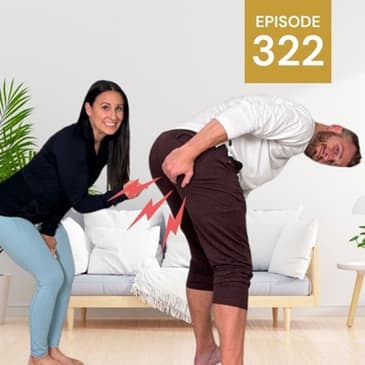
Are you struggling with pain under the butt? DocJen and Dr. Dom dive into this overuse injury that often affects hypermobile individuals or anyone who encounters a lot of deceleration, such as athletes. As they describe the anatomy involved in high hamstring strains or proximal hamstring tendinopathy, they dive into contributing factors and dive into the four stages of rehabilitation based on clinical case studies and their clinical experience as doctors of physical therapy. Tune in to learn more!
VivoBarefoot Discount:
Something that can surprisingly affect the health of our hamstrings is what we wear on our feet. It challenges the whole back-side chain to work through its full range of motion.
Your feet have the components they need to support themselves! That's why we love VivoBarefoot because the shoes themselves help us gain mobility and strength in our feet. Live that barefoot life in style, choose VivoBarefoot and use code TOB at checkout to get 15% off! Your foot and body will thank you (affiliate link)!
**Vivo offers a 100-day trial period. If you are not completely satisfied, you can send the shoes back and get a refund.
LMNT Discount Code:
Our absolute favourite electrolyte drink that Jen and I drink on a daily basis? Fuel every system within the body and the brain with LMNT! Keep yourself hydrated on a cellular level by replenishing the sodium, potassium, and magnesium that our body needs for basic cellular processes like nerve signalling, smooth muscle contractions, unnecessary fatigue, aches and pain, brain fog, and recovery! Get a free gift with every purchase and try some new flavours as you stay hydrated! Get Your Free Gift Here!
What You Will Learn In This PT Pearl:
1:36 - What is high hamstring strain?
2:40 - How does it come about?
5:44 - Who is at risk?
7:44 - Phases of rehabilitation
9:00 - First phase for Rehab
11:04 - Second phase of rehab
14:21 - Third Phase of rehab
16:01 - Fourth Phase of rehab
19:00 - Pain tolerance during rehab
21:50 - What does the research say about weak links associated with high hamstring strain?
To Watch the PT Pearl on YouTube, click here: https://youtube.com/watch/
For research and full show notes, visit the full website at: https://www.docjenfit.com/podcast/episode322/
Hosted by Simplecast, an AdsWizz company. See pcm.adswizz.com for information about our collection and use of personal data for advertising.
[00:00:00] Welcome to the Optimal Body Podcast. I'm Dr. Jen and I'm Dr. Dom and we are doctors
[00:00:10] of physical therapy bringing you the body tips and physical therapy pearls of
[00:00:14] wisdom to help you begin to understand your body, relieve your pains and
[00:00:17] restrictions and answer your questions. Along with expert guests our goal of
[00:00:21] the Optimal Body Podcast is really to help you discover what optimal means
[00:00:25] within your own body. Let's dive in! Before diving into the episode on high
[00:00:31] hamstring strains I want to talk about something that can really impact our
[00:00:35] hamstring health and function which is what we wear on our feet. If you're wearing
[00:00:40] shoes that don't allow your feet and ankles to work properly it can really
[00:00:44] impact you all the way up the chain and that's why Jen and I use Vivo
[00:00:49] Barefoot Shoes. It has zero heel drop so it's really going to challenge that
[00:00:52] posterior chain in your body to work throughout its full range. Our feet are so
[00:00:59] important to our health and our movement and that is why Jen and I use Vivo Barefoot
[00:01:03] Shoes. We literally use them for everything. There are slippers you can wear
[00:01:06] in home, there are shoes you can wear for casual wear, there are workout shoes,
[00:01:10] there are even dress shoes, hiking shoes, water shoes, they have them for every
[00:01:14] occasion. If you haven't tried Vivo Barefoot Shoes yet we really really recommend
[00:01:18] to try them out. You will feel the difference in your body and if you go down to
[00:01:22] the link in the show notes we have a code that is special for our podcast guests
[00:01:26] only it's 15% off using code T-O-B at checkout. So go to the link in the show
[00:01:31] notes, make sure you use code T-O-B at checkout and get yourself in some
[00:01:35] Barefoot Shoes. Okay so today's pearl is on high hamstring strange which is
[00:01:40] also known as proximal hamstring tendon apathy and that word tendon apathy
[00:01:46] basically just means dysregulated tendon or abnormal tendon and this tends
[00:01:52] to be more of an overuse injury and it can feel really like a pain in the
[00:01:56] butt because that's exactly where it is. It's right at the top of those hamstrings
[00:02:00] kind of where you feel that knobby sit bone that you sit on called our
[00:02:04] Ischial Tube Arosity which is where our common hamstring tendon attaches into
[00:02:08] and because it's a tendon apathy something that's overused and you know tends
[00:02:13] to develop over time, it takes time to get rid of these as well and to overcome
[00:02:19] this pain and symptoms that you're having and I know you know for we wouldn't have
[00:02:24] a very close friend where she's complained about this for a long time and I'm like
[00:02:28] this is the structure of what you have to follow and it's gonna take time just
[00:02:32] like it took time to come on. Yeah and again being an overuse injury it tends
[00:02:36] to have to do with activities that you do on a consistent basis. It's something
[00:02:41] that is highly re-eritable so you see a high rate of re-injury when people have
[00:02:49] this they seem to get better from it and then it happens again often because the
[00:02:53] rehab that they may have done you know didn't actually heal the issue the
[00:02:57] symptoms just went away but the underlying issue still remained. It can also
[00:03:02] be seen as a deceleration injury which what that means is like if you're
[00:03:07] somebody who runs a lot especially if you sprint a lot it's actually when
[00:03:10] you're slowing yourself down because that hamstring the proximal portion of it or
[00:03:15] the portion that attaches right up into your butt is lengthening as you're
[00:03:20] slowing your body down. Just want to take a quick pause from the
[00:03:24] episode here to talk about one of our podcast sponsors element which is our
[00:03:28] absolute favorite electrolyte drink that Jen and I use every single day with its
[00:03:35] special combination of sodium, potassium and magnesium. It's gonna make sure to
[00:03:40] keep you hydrated on that cellular level. Literally Jen and I can't even drink
[00:03:45] regular water anymore and feel as hydrated as we do when we have element it also
[00:03:51] tastes so good and the reason it's so important to replenish these
[00:03:55] electrolytes is because sodium, magnesium and potassium are so important for
[00:04:01] many cellular processes within the body it can help with things like brain fog
[00:04:05] and it can help with being regular in the bathroom getting regular sleep and
[00:04:09] so much more like muscle cramps and consistent muscle contractions we would
[00:04:14] recommend everyone give it a try and with every single order you get a free sample
[00:04:19] pack that allows you to try all of elements different incredible flavors so
[00:04:23] that you know which one you like best for when you are convinced to go back
[00:04:28] and buy more because you realize the difference that it makes in your body.
[00:04:32] So go down to the link in the show notes it's just drink element dot com that's L M N T
[00:04:37] drink element dot com backslash optimal let's get back into the podcast
[00:04:44] and when we get that eccentric lengthening where we're loading it as that muscle is stretching
[00:04:49] really quickly that is a very vulnerable place for a muscle or a tendon to be which is why
[00:04:55] we often see these types of injuries and sprinters people who you know perform sprint type activities
[00:05:01] are athletics like basketball tennis where you're changing direction and sprinting and slowing down
[00:05:06] rapidly accelerating and decelerating your body. Now when we look at recovery especially in
[00:05:11] the research we can say anywhere from 23 days to 50 weeks and there's a high recurrence rate
[00:05:17] in between so this is why we really are going to go through the four phases of you know recovery
[00:05:24] from a high hamstring strain because honoring each phase is really important to reduce that risk
[00:05:31] of having it happen again you know and so I think that's what's really important is understanding
[00:05:37] how to move along these phases and what you're really looking for in each one. Yeah it's interesting
[00:05:41] because when we start talking about this and talking about the people who are at risk you know
[00:05:46] well as people with hypermobility but again those sprint type athletes people who have poor warm-ups
[00:05:52] are cool downs people don't have great core hip coordination and I actually dealt with some high
[00:05:59] hamstring issues when I was in like middle school track because I was a sprinter and I remember
[00:06:08] I'm gonna be honest I kind of peaked athletically in middle school seventh and eighth grade
[00:06:12] because I was an early mature so I was hitting some of my like peak times in seventh and eighth grade
[00:06:18] while everyone else was still like pre puberty and then everyone else grew up and I remember it was
[00:06:24] the most devastating thing because I had this high hamstring pain when it was like the conference
[00:06:30] finals for track in eighth grade and I had basically swept all of my events when I was in seventh grade
[00:06:36] conference finals and I finished like third fourth fifth in most of my events because I had this injury
[00:06:42] but I was too stubborn to sit out so I kept doing it but thinking about eighth grade Dominic
[00:06:48] I definitely had poor core hip coordination I was a sprint athlete who probably wasn't warming up
[00:06:54] and cooling down well um and then I got an injury. Well and I think beyond just like the warm-up
[00:07:02] and the cool down you know I know especially from your history that that that core coordination
[00:07:09] you know has been something that you've kind of worked through and and really come to own I would
[00:07:15] say yeah I was gonna say still struggle with I think you have I mean a lot better grasp and awareness of
[00:07:24] it but having that maybe when you were developing as well and not having that awareness definitely
[00:07:30] as we wouldn't in middle school and junior high definitely not but that could obviously play a role
[00:07:37] and so understanding and gaining awareness of our body is so crucial and something we do
[00:07:42] in all our general health plans. Okay so now we want to spend the bulk of this episode on like
[00:07:47] the phases kind of the rehab phases that you should be going through and of course these will be
[00:07:52] slightly different depending on the severity of injury you know if it's excruciating pain or
[00:07:57] you know to the point where you have a second third degree tear versus a strain gonna be very
[00:08:03] different rehab protocols so this is more so a strain with no major tendon or muscle damage
[00:08:09] phase one as is the phase for most injuries is calm it down how do we calm that thing down
[00:08:15] this is the phase where we might need to do some sort of activity modification.
[00:08:20] Find a way to be putting less pressure less stretch and strain on those hamstring tendons
[00:08:26] paying attention to how we're sitting or standing throughout the day even
[00:08:31] and then just focusing on some of that basic mobility so some of the things that you could start
[00:08:36] to do are just laying on your back hamstring kicks feeling how that hamstring feels throughout the
[00:08:42] the range even sitting with your heels up on a wall kind of doing a wall hamstring stretch that can
[00:08:48] be very relaxing for the legs but also just start to get that hamstring to lengthen a little bit
[00:08:54] and let go. Well and we know that the first load of tension we put into a tendon is a stretch
[00:09:01] yeah it's right and making sure that we're not going aggressive this is not where we're trying
[00:09:05] to like gain the most flexibility or anything it's just starting to put a little load and tension
[00:09:11] into that hamstring and then I would say just like you said like legs up a wall but using that
[00:09:17] breath to really calm things down and send different signals into the muscle you know is so crucial
[00:09:25] and if you're doing that well if you're doing that stretch while doing that breathing you're
[00:09:29] activating the core so you're already starting to lay some of the groundwork for that core
[00:09:34] hip or that core hamstring coordination where okay I'm letting my hamstring lengthen but I'm also
[00:09:40] engaging and activating throughout my core same with hamstring kicks you don't want to be kicking
[00:09:44] your leg and holding your breath and bearing down when we're kicking and breathing feeling our ribs
[00:09:50] expand feeling our core contract all that kind of stuff because you're gonna again start lay
[00:09:54] the groundwork for phase two three and four right and I would say you know touching a little bit more
[00:10:00] on the compressive nature of things so if we have a very sedentary job how can we create things
[00:10:07] like standing more than sitting because that's putting that pressure I mean ideally we're sitting
[00:10:13] more so on our sit bones which that's right where that attachment is so how can we reduce some of
[00:10:19] that tension just from those compressive overloads of sitting so much out the day and sitting is
[00:10:26] one of the things that is a risk factor as well for leading into high hamstring strains or the
[00:10:31] recurrence of high hamstring strain so just really paying attention to like how often am I sitting
[00:10:37] what kind if I have to sit at a desk can I ask my boss hey can I bring in a ball right now
[00:10:42] so I'm sitting on something a little squishier can I can I sit on a gorgeous ball where it can
[00:10:48] take a little load off of my ischial tubes you know so how can we set up our space to look a
[00:10:54] little different during this phase one time to give your body a chance to then mold into phase two
[00:11:00] which is getting into progressive loading and now this is where we're really starting to do what
[00:11:06] are called isometric exercises so that is that is not moving but starting to create load
[00:11:13] and tension and so this can look you know as simple as your feet on a wall and starting to just
[00:11:20] barely lift your hips so you're in like a 90 90 position and you're doing a wall bridge but you
[00:11:26] don't have to go all the way up you're just starting to press your whole foot into the wall
[00:11:30] and get used to driving those heels down and feeling what that pressure is it would if you hold
[00:11:35] and take some deep breaths with your tailbone kind of barely coming off the floor there yeah and any
[00:11:40] other way that we can really get those that isometric activation in would be great to explore
[00:11:45] because again now we're starting to put a little more load do those hamstrings and how can we do
[00:11:49] it at slightly different angles like we mentioned kind of the wall hamstring stretch like can you put
[00:11:57] one of your legs up maybe the affected side on the wall and just push down into it so we're at
[00:12:02] a little more of that stretch and now we're trying to push into it or just put your leg up on a chair
[00:12:07] and then push down into it and you're going to be activating that hamstring at different angles
[00:12:12] which I also think is important that we start to train and strengthen and put load through that
[00:12:17] hamstring at different angles and going along with all of that too rather than just using you know
[00:12:23] something external we can even lay on our stomach and start to get better hip extension so
[00:12:28] get bringing those legs up and holding at a range not only are we gonna start to work that
[00:12:34] hamstring and hold still doing those isometrics but then we're gonna start to build in that
[00:12:39] intra abdominal pressure as well because rather than just getting into my low back I want to kind of
[00:12:44] stabilize it through my trunk a little bit better when I lift my legs and hold I'm getting glutes
[00:12:51] I'm getting outer core I'm getting inner core and I'm breathing and holding with that so it's a
[00:12:56] great way to start to kind of repattern this abdominal and core control for our pelvis as we're
[00:13:02] gonna go through movement which we can also use by just slowing down basic body weight movements
[00:13:09] right getting into a hip hinge in a load in an area or range of motion that feels tolerable for
[00:13:15] you right now but starting to slow it down maybe holding in different lanes and saying can I breathe
[00:13:21] from my ribcage and make sure that my ribcage and pelvis is kind of moving together as I do these
[00:13:28] certain movement patterns and starting to retrain and rebuild how you're moving. Yeah and again in
[00:13:35] this phase two when we're just starting to load and starting to go through movement being able
[00:13:41] to be more aware of that core yeah and how it's coordinated with the hips is so important because
[00:13:45] as soon as we start to load things up as soon as we start to go through movements a little bit faster
[00:13:50] that's where we might start reverting to our old patterns but taking your time during this phase two
[00:13:55] to really go through coordinate the core with the hip movement as we're in this still kind of early
[00:14:02] healing phase before we go into phase three which would be more isotonic loading or loading through
[00:14:08] movement and this is where we're gonna start to progressively increase weights doing more basic
[00:14:15] lower body exercises like squats and dead lifts and things like that. And this is where it becomes
[00:14:21] really crucial to pay attention to your range motion especially if you're a hyper-mobile person
[00:14:25] not just going right into it but slowing things down this is so huge so starting to work on that
[00:14:32] strain through that length is really important and this can look as basic as starting with
[00:14:37] you know doing some banded kicks to your bottom so whether you're standing or whether you're
[00:14:43] laying on your stomach you have yeah you have a band around your your heel and you're bringing
[00:14:48] it into your bottom and then slowly letting it release. And working on that long e-centric control
[00:14:56] but really when we're talking about that high hamstring strain again let's good for the hamstring
[00:15:01] muscles but we need to be working on that hip hinge to start to get used to that tendon reloading
[00:15:08] in that flexion to extension pattern at that hip so that's where working on dead lifts whether
[00:15:14] it's banded dead lifts you know you kind of have a band around your and you're going down into
[00:15:18] your your length your range of motion that feels comfortable in nice and slow and then standing back
[00:15:24] up you know so starting to load even with resistance bands can be a great place to start.
[00:15:29] Yeah and as you start to load and get more comfortable you're gonna progress in the weight
[00:15:33] but then you can also progress in doing single leg type activities where it might look like a
[00:15:37] reverse lunge because rather than doing a forward lunge where people tend to be a little more
[00:15:42] quad dominant in a forward lunge you can do a reverse lunge and then be pulling through that
[00:15:47] hamstring as you stand back up. You can do this a single leg deadlift or more of the
[00:15:53] Romanian deadlift where it's straight leg single leg deadlift and as again you get comfortable
[00:15:58] with the movements how can we start to increase the explosiveness right so like Jen said generally
[00:16:05] going nice and slow on the e-centric or the lengthening days of the exercise that's great but then
[00:16:11] can we explode through the concentric phase or when we are contracting through those hamstrings
[00:16:16] because that's going to start to simulate those activities like sprinting where we explode through
[00:16:20] the step the step and then want to control the deceleration when we're lengthening in that e-centric
[00:16:27] phase. Yeah and starting to build the endurance of our glutes to help assist with the hamstring so
[00:16:33] it's not always the hamstring that's doing the work and this might you know mean that we're going
[00:16:39] to have to re kind of gain that awareness and that coordination of how we feel those glutes
[00:16:45] working and that's where I really come back to this inner core concept and understanding our
[00:16:50] intra abdominal pressure because when we can start to you know get this inner core working better
[00:16:55] we get the outer core our obliques our glutes kind of working in combination so that the legs can do
[00:17:02] what they're supposed to do so getting that trunk support is so huge and so key in this rehab
[00:17:08] process and starting to gain that awareness under load under functional exercises that you might not
[00:17:14] think are core based but when we have better awareness and attention to them they really are and
[00:17:19] that's what again you know I talk about this plan a lot the full body low impact plan because for
[00:17:24] those who want to be doing strength work and those who want to be doing exercise and understand
[00:17:29] this within their body that's where I talk through these things so big I think the full body low
[00:17:35] impact plan would be like the perfect encapsulation of phase three yeah how do we start to integrate
[00:17:41] that core hip coordination start to progressively strengthen and load through the hips and then phase four
[00:17:48] I would almost say shift yourself over to the the full body high impact yeah or high intensity plan
[00:17:54] on gen health because that's where it uses more of the hit style workout where you're going to start
[00:17:59] going into plyometrics because phase four is okay plyometrics how do we start training everything
[00:18:04] we've worked on in phase one through three into more of that sport or activity specific exercise
[00:18:11] that we want to get back to whether that's running whether that's jumping playing basketball tennis
[00:18:16] whatever it may be and this generally looks like some sort of plyometric training where we're starting
[00:18:24] with two foot you know jumping and landing type exercises and then starting to integrate
[00:18:29] different planes of motion so can we do lateral jumps can we do rotational jumps again it's depends
[00:18:38] on what your goal is what are you looking to get back to and can we train that in a more controlled
[00:18:43] environment so that once we get back into the exercise or on the street running or on the court
[00:18:49] our body's more prepared and it really is like we are going to continue to talk about the these
[00:18:55] phases of treatment for almost every kind of injury they kind of play a role in in trying to
[00:19:02] focus on the same things where we're improving our flexibility or range of motion but also our control
[00:19:08] of mobility within that range of motion especially for hyper mobile people we're building our strength
[00:19:14] both in a controlled manner and building that mind body connection through isometrics and then
[00:19:20] through you know more explosive loaded type movements and then going into those plyometrics and
[00:19:26] multi-planar directions like this we always kind of follow the same pattern when we're thinking about
[00:19:32] this and this is why we say we want to honor that entire progression so that you help to reduce
[00:19:38] you know the reoccurrence of it all and when we're talking about like pain tolerances because
[00:19:43] it's not necessarily that you're not going to have pain as you're redoing and kind of learning
[00:19:48] these movement patterns again but we want to look at okay can I am I experiencing a level that's
[00:19:54] about three out of ten as I'm moving through this and it doesn't increase directly after an exercise
[00:20:01] and it doesn't increase 24 hours after an exercise right you might feel soreness but hopefully
[00:20:07] we start to understand the difference between muscle soreness and actually having that pain
[00:20:13] high into that hamstring into that glute area so having the difference between those two and making
[00:20:20] sure that we're staying at a very low level of pain tolerance you know it can help us guide
[00:20:28] okay I can tolerate a little bit more I can lift a little bit more or maybe I need a back off a
[00:20:33] little bit yeah I think that's a super important point to follow especially in tendonopathies
[00:20:39] we really haven't like damaged the muscle to a significant extent it's just the reorganization
[00:20:45] and the tendon needs to reorganize in order to ultimately kind of solve the underlying issue or
[00:20:51] the root cause of why that tendon was disorganized in the first place and we need to load that
[00:20:57] sometimes it might be minimally uncomfortable but we should be experiencing more soreness especially
[00:21:02] as we get in the later phases and I love how you pointed that out like the phases for healing or
[00:21:08] rehab of any injury in my shorthand are calm it down get it mobile get it strong coordinate it
[00:21:17] and then sport or activity specific right and if you follow those depending on how you tolerate
[00:21:24] each stage you might be in one stage longer than the other or you might progress to the later stages
[00:21:29] a little more quickly you're going to find a successful plan on how to solve the underlying
[00:21:35] issues solve the root causes so that you don't become somebody who has these reoccurring
[00:21:41] high hamstring strains and when we look at some of like the research examples of what we should
[00:21:46] be doing or what we can follow and kind of look at you know um in a study from white at all in 2011
[00:21:54] they looked at high hamstring tendon opathies and three female long distance runners
[00:22:00] and what we're really considering treatment for hypermobile but not directly um transferable to
[00:22:07] possibly everyone right but what they they saw was that all of the female runners that they
[00:22:16] looked at kind of displayed weakness in their hip abidactors which are your glutes their pelvic joint
[00:22:22] dysfunction hamstring tightness and initial tuberosity tenderness so listen looking at like the bone
[00:22:29] that was high in your sit bone kind of having some tenderness to the touch there and they really
[00:22:35] focus on active exercises like hamstring stretching and strengthening gluteal strengthening
[00:22:42] proprioceptive training so where your body is in space in gaining that awareness plus they use
[00:22:48] some assisted soft tissue mobilization um lumbopalvic manipulation which we've had a podcast that
[00:22:54] kind of highlights and indicates what you know that manipulation or adjustment really are doing
[00:23:00] within the body electrical stimulation with ultrasound which we can we should do it
[00:23:06] podcast on this I think with what ultrasound is really doing in electrical stimulation to really
[00:23:11] help to understand this but when they looked at these three runners and did and kind of follow this
[00:23:17] protocol they found that there is a resolution in the hamstring pain and an average of 13 treatments
[00:23:23] and they were able to continue to compete without restriction so you know really focusing on the whole
[00:23:30] complexity of a rehab process yeah and I would say the strengthening and the stretching probably more
[00:23:38] beneficial than some of the the work but what we know from manual work or having other things is
[00:23:44] that it helps to calm symptoms down so that you can keep working on sure and I think I like this
[00:23:51] study because it points out that not everybody is going to spend a lot of time or anytime doing
[00:23:56] a strict phase one calm it down yeah because it sounds like they they spent much time really offloading
[00:24:03] instead they just altered what they were doing it was more of the activity modification
[00:24:08] and these are runners who yeah maybe they had pain but as soon as they started doing some of the
[00:24:12] things you know maybe the soft tissue mobilization manipulation some of the electrical stimulation
[00:24:18] helped calm things down enough to the point that they could do all of these strengthening exercises
[00:24:23] the proprioceptive training that's going to really help with the coordination aspect that we were
[00:24:27] talking about so it kind of outlines a different way that somebody worked through those four phases
[00:24:33] of rehab in 13 sessions and ultimately got back to doing their activity without any restriction
[00:24:40] and we briefly mentioned gen health the platform and how the full body low impact plan full body
[00:24:47] high intensity plan could be great pieces of this type of rehab also during phases one and two
[00:24:53] you've got the hit plan or even the full body mobility plan that can really help you during that
[00:24:59] calm it down and gain mobility phase in your rehab so you could use gen health to assist and supplement
[00:25:06] through your entire rehab phase you know while you're working on hamstring strains and for a podcast
[00:25:11] guest if you haven't ever checked out the free week trial please go do that and also if you use
[00:25:17] code optimal when you sign up y'all you'll get a discount off your first month so we'll have a
[00:25:21] link down in the show notes if you are interested in diving in and checking that out.
[00:25:27] Thanks so much for joining us on another episode I hope you learned a ton to share this with anyone
[00:25:32] who you know is going through having that high hamstring strain or they continue to have it
[00:25:38] reoccurring and they're working through it send this over to them so they can understand the
[00:25:43] phases to work through and of course dive into gen health that hit plan is going to be huge
[00:25:49] so beneficial same with the full body low impact and full body high intensity as you continue
[00:25:54] to work through those phases