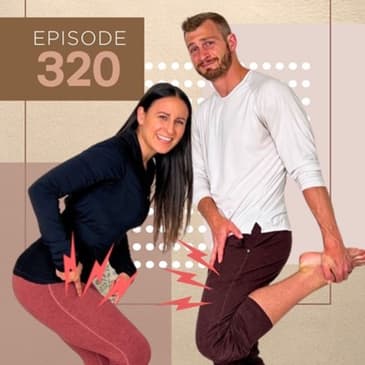
Are you struggling with tight quads? Perhaps you feel everything in your quads? DocJen and Dr. Dom speak into tight and overactive quadriceps, explaining its possible root cause, it’s relevance to coordination during exercise, and how you can begin to address it! Let’s dive in!
JEN HEALTH SALE: ANNUAL MEMBERSHIP @ 50% OFF
11 different plans. Pure Education. Day by day calendar. It’s time to address and assess your restrictions, aches, and pains that might causing your neck/ upper back, shoulder, wrist, low back, hips, knees, and ankles/feet, pain! Join our incredible community through 5-15 minutes of education and movement everyday for quick and actionable symptom relief and a different feeling! Check it out here!
Vital Proteins Discount:
We know that while our bodies collagen production slows as we age, our need for it only grows as our bodies become less efficient. By providing nourishing collagen and promoting our production of collagen, Vital Proteins helps people feel better and live fuller lives through HIGH-QUALITY nutrition products. Use code 'OPTIMAL15' at checkout and get your very own Lemon Collagen peptide supplement at a discounted price by clicking here!**
What You Will Learn In This PT Pearl:
3:21 - Why you’re getting tight or overactive quadriceps
7:44 - How do we address it?
9:30 - Working with the Squat
12:09 - Progressing from mobility to strength
13:23 - Tightness might not mean Strength & using external feedback
16:17 - Hinge vs Squat
17:28 - Single leg drills
To Watch the PT Pearl on YouTube, click here: https://youtube.com/watch/
For research and full show notes, visit the full website at: https://www.docjenfit.com/podcast/episode320/
Vital Proteins: **These statements have not been evaluated by the Food and Drug Administration. This product is not intended to diagnose, treat, cure, or prevent any disease. Results may vary. Various studies have suggested benefits following daily consumption of collagen peptides for several months. Refer to product labels and vitalproteins.com for recommended serving sizes and for more information**
Hosted by Simplecast, an AdsWizz company. See pcm.adswizz.com for information about our collection and use of personal data for advertising.
[00:00:06] Welcome to the Optimal Body Podcast. I'm Dr. Jen. And I'm Dr. Dom and we are Doctors of Physical Therapy bringing you the body tips and physical therapy pearls of wisdom to help you begin to understand your body, relieve your pains and restrictions, and answer your questions.
[00:00:19] Along with expert guests, our goal of the Optimal Body Podcast is really to help you discover what optimal means within your own body. Let's dive in. We get a common question with people coming to us and saying, you know,
[00:00:32] what is it that you add into your diet that you feel like you can't go without right now? And honestly, it's been our collagen. We even brought our Vital Proteins Unflavored Collagen Peptides with us when we were gone for the month in
[00:00:43] Minnesota. And we love it because it's unflavored and it easily dissolves in cold or hot liquid. So I like to even throw it in my oatmeal, a protein shake, or even just mix it with water.
[00:00:51] And we've had so many people come on the podcast who talk about diet and nutrition, who talk about the importance of collagen because it's found in all of our connective tissues, our tendons, ligaments, and bones, with the purpose being to provide these structures
[00:01:05] with their elasticity, their structure, and their strength. And especially as we get older, our body becomes less efficient at producing collagen, which is why we recommend introducing ingestible collagen into your diet. And we especially like it from Vital
[00:01:19] Proteins because we know it's sourced from the hides of grass-fed pasture-raised bovine to ensure high quality and a sustainable source of this powerful ingredient. On top of that, Vital Proteins Unflavored Collagen Peptides is made from one simple ingredient.
[00:01:34] It's Whole30 approved, paleo-friendly, and made without gluten and dairy. So if you want to start introducing this Unflavored Collagen Peptides or collagen into your diet, go down to the link in the show notes and make sure you use code OPTIMAL15 for 15% off site-wide on your first purchase and
[00:01:51] start introducing collagen into your diet today. Overactive quadriceps. This is such a common request, I think, in my DMs and why this happens and how do I shut off my quads from feeling everything, you know? And even when I work out with people and I remember, you know,
[00:02:11] we're doing sidesteps or we're doing something that's supposed to be very glute dominant and they're like, my quads are burning. And I'm like, oh, okay. Yeah. And I think kind of like you said on the flip side of that, what people will try doing is
[00:02:24] like, oh, activate the glutes because my glutes are asleep. My glutes aren't working. My quads are overpowering my glutes and my hamstrings. How do I turn those on? And so, we're here to kind of
[00:02:34] dispel some little myths that, you know, that go on with this as far as the glutes being sleeping or it being, you know, the hamstrings just aren't strong enough and tell you how to start to
[00:02:47] re-coordinate. I think that's one thing that we're going to keep touching on as a recurring theme. Like, it's more about the coordination of how our quads are working with the rest of the muscles
[00:02:57] around the hips. Exactly. And just because you have tight quads doesn't mean that stretching or foam rolling them is the only thing that's going to kind of reduce that overarching tension. It also doesn't mean the quads are strong. Right.
[00:03:12] Necessarily. All right, quick pause from the conversation about overactive quads to talk about a huge sale that we're running on our GenHealth annual membership. We don't do this often, but it is 50% off when you join the annual membership right now. And this membership is so,
[00:03:30] so, so valuable because you get 11 different plans. And whether you're somebody who deals with restrictions in your feet and ankles, your hips, your knees, your low back, your shoulders, there's plans for it all. And it is so educational. It gives you a day-by-day calendar to work through
[00:03:47] and start to address and assess those different restrictions in your body, start getting rid of those aches and pains. We have an incredible community on this GenHealth platform, and people love the way these plans just set it up for you. Most plans are from
[00:04:00] five to 10 minutes a day. So it's simple, it's quick, and it helps you feel better in your body. We have this 50% discount for a limited time only. It's only this week. So go down to the link
[00:04:11] in the show notes. There's no code. You just have to get the annual membership and you will get 50% off. Because they feel tight, people always think like, oh, my quads are overpowering this. Or are they just overworking because of some of the other things we mentioned like coordination,
[00:04:28] like a lack of strength throughout the range of motion of the quads that there's so much that we could dive into here, especially because the quad is a muscle that crosses two joints. It crosses our knee and it crosses our hip.
[00:04:41] Understanding why the quads feel so overactive and over dominant in this pattern, especially if we are having a lot of tightness that we haven't addressed it because we're constantly sitting all day long or we're hanging forward into our body. This forward dominance in this posture where
[00:05:02] you're hanging on what we call our Y ligaments. So right into our hips, we hang forward. Maybe we're standing into our toes. We notice a little more toe pressure when we're standing. That could
[00:05:13] drive that kind of quad dominance into our mind of what our mind and body kind of feels a little bit more. And when something is a little bit tighter or we're always in this position,
[00:05:26] that's a little bit more forward, then our brain tends to activate that first. Or that's the first thing that we feel. Doesn't mean that's the only thing working. But it's the first thing that we tend to feel, especially when we have that tightness there.
[00:05:40] And when you're in that pattern, that means that you're kind of biasing in that direction throughout most of your movements throughout the day. So when you squat, when you go up and down
[00:05:49] stairs, just getting up and down from a chair, you might be biasing into a slightly more quad dominant movement. And that's again where we kind of return to that coordination bit. Like how do we
[00:06:00] start to get ourselves trained out of that coordination? Because a lot of people might say like, oh, the quads are overpowering. We need to stretch the quads. We need to strengthen the
[00:06:10] hamstrings and glutes. That might be a part of it. It might be good to find some more length in our quadriceps. It might be good to be able to find some more strength and activation in our
[00:06:20] hamstrings and glutes. But again, how do we start to bring that to our everyday life and use our glutes and hamstrings and coordinate more of a hinge pattern or get our body moving a little
[00:06:32] bit differently throughout the day so we're not continuing to just go back and perpetuate those patterns that our body has learned so well? Exactly. And especially when he's talking about, you know, more of a quad dominant movement pattern, we can think of this of like your chest
[00:06:46] is more upright. So maybe you've been told to do squats or lunges with your chest very upright. But now when I'm going upstairs or I'm bending down to pick something up, my knee is always
[00:06:56] what's kind of going forward. My chest is staying up. So that creates a more knee dominant pattern. So your quads are more likely to be working a little bit more in this pattern, which isn't bad.
[00:07:08] Like this is what we do. This is how we move. However, if we're only moving in this way time and time again, then we lose that access. And just doing side clams or something to address
[00:07:22] your lateral glute is not what's going to help re-coordinate and repattern this movement. So we have to talk about, okay, well then what do we start to do? Yeah, I mean side clams might make
[00:07:33] you feel that lateral glute but how do we then again translate it into those other movements? You're going to be feeling the side of your glute when you're laying down on the ground doing those
[00:07:42] side clams but then if you just go run upstairs, you're going to go right back to that same pattern. So let's start at the beginning. How do we start to address this quad over dominance? And we've
[00:07:51] talked a little bit about mobility restrictions. Mobility restrictions in joints either at the knee or the hip or around the knee and the hip can really start to bias how we move. If we have
[00:08:03] restrictions in our ankles, if we have limited dorsiflexion, then we're going to be getting that mobility elsewhere maybe by allowing the knees to translate forward a little bit more. Or just
[00:08:13] coming up onto your toes when you squat. Yep, coming up onto your toes which is going to then bias a little more of that quad dominance. If we're restricted at the hips, if we don't have
[00:08:22] great hip mobility into hip extension, hip rotation, again that could be impacting why we're biasing more of quad dominant movement. If we have pain elsewhere like pain in our low back
[00:08:34] or pain up the chain, we could be compensating with our movement in a way that might put more pressure on those quads. So some of the things that you can do to start addressing say ankle
[00:08:45] mobility, try and do some dorsiflexion stretches whether you're doing a straight leg kind of calf stretch into the wall, also doing a bent leg calf stretch into the wall, focusing on our foot
[00:08:58] mobility. Can we allow our feet to pronate which is flatten into the ground? Can our feet then supinate where we can kind of create that arch ourselves? Big toe mobility, our big toe extension
[00:09:09] is so important. So can you sit on your toes which might be a bit intense or even just cross your leg and pull your big toe back? How much big toe mobility do you have? Yeah, and dorsiflexion
[00:09:20] just for those listening, you know that's where your toes are coming toward your shin. So think of like a deep squat. We need that good ankle dorsiflexion, that toe, those toes to come toward
[00:09:30] your shin in order to get deeper into that squat, right? And so starting to work on that range of motion in the squat is going to help up the chain and it can provide a little bit more access into
[00:09:43] getting lower into that squat. So now we can use more of those hips with those knees as we're squatting because ideally when we're squatting, you know, everyone's squat is going to look a little different. We've talked about this before on podcasts and you know your anatomical hip
[00:09:59] structure determines a lot. Your length of your top of your leg determines a lot to your torso length, you know? So a lot of these things kind of determine differences in what it might look like
[00:10:12] when you squat. However, if we can improve this hip mobility in general, improve the ability to move that hip into internal and external rotation, a really quick one we talk about all the time
[00:10:23] is a hip 90-90. So doing something like that, hanging in the bottom of a squat, so hanging onto something and getting down low in a squat, it's going to help to create more of that hip
[00:10:36] movement with that knee movement when you're going into a squat because what I see a lot again, if someone is super upright and not bending from the hips a lot, then we're only utilizing
[00:10:47] a lot of those quads in a squat rather than getting both the hip and the knee to work together. Yeah, and then just really assessing around the hip how is my mobility in all the other major
[00:10:57] muscle groups. So yes, the quad, doing a quad stretch whether that's laying supine and pulling that heel to your butt or supine meaning not supine laying prone. So on your stomach.
[00:11:08] So laying on your stomach and pulling that heel to your butt or doing it in kneeling where it kind of looks like a hip flexor stretch but you're trying to pull that heel up to your butt to focus
[00:11:17] on stretching that quad hip flexor stretch. It's also great to assess, okay, how do I do with hip extension doing some adductor rocks. So with your leg kind of out to the side and assessing am I
[00:11:28] tight on the inside of my leg all these things would be great to test out to say, oh wow, I feel really tight in this area. That could be a good area to address when you're doing warm-ups when
[00:11:38] you're doing cool downs to again start to feel something different. Right, and so we're starting to open up all around the hips and the ankles so that we can then create a different movement pattern when we go into the squat. That's ultimately what we're
[00:11:52] trying to do and trying to create so that you can like Dom said feel something different. It's really about recoordinating that movement and the first step is opening up that mobility. So then when we
[00:12:04] start to, you know, go into this new range of motion how do we slow it down, create better strength patterns and get to know this new squat pattern. So maybe that is hanging on to something
[00:12:17] at first or using some like bands or TRX in front of you so that you can get a little bit more length but slow down the movement, you know, get a little bit more depth within that squat and hold
[00:12:29] the squat at various ranges of motion. Can I feel my feet into my heels? Can I feel my big toes? Can I feel my full foot maybe kicking off the shoes when you're doing that so that you start to see,
[00:12:40] okay, where is my core and my breath in this? Where are my glutes in this? My quads are still going to be working because I'm still doing a squat pattern but how can I start to feel
[00:12:50] different areas of my body just through doing holds or slowing down the movement. That's a great way to start to recoordinate and reconnect that mind-body connection. Anytime you slow down a movement I feel like it points out where your restrictions are and it can help you understand,
[00:13:06] oh wow, if I try to slow down this squat I feel it a lot in my ankles or if I try slowing down the squat I feel like I'm going to fall backwards, right? So, I think like you said holding on to
[00:13:15] something going through slow squats could be great. Also just like we mentioned at the beginning just because your quads feel tight doesn't mean they're strong throughout its entire length. Same with the hamstrings, you know, once we've worked on the mobility and gained maybe a little
[00:13:31] bit of extra range of motion, how can we build strength through length? So, strength through the entire range of that muscle and two exercises that work great are reverse nordic curls and
[00:13:42] nordic curls where you're just, you know, if you're watching YouTube or if you can get on YouTube later we have examples of a lot of these exercises that I'll be showing but this is one where you're kind
[00:13:53] of kneeling and you have somebody either holding onto your heels or you have some big dumbbells that you stick your toes under and you slowly allow yourself to go forward to the ground and you'll feel your hamstrings just absolutely turning on and activating. Great one to start to
[00:14:11] train strength through the length of the hamstrings and then you kind of reverse that to do the quads so you're kneeling and you slowly start to lean back and you'll feel that tension build up in
[00:14:20] those quads. You can also do this by holding onto something like TRX, like an exercise band to just give yourself a little assistance so you can go further and then go back up. Yes, and then, you
[00:14:34] know, starting to do something different within your squats or your hinges and deadlifts, you know, so maybe you can use a little external assistance to kind of feel different areas within your body. So, say, you know, with side steps going back for example someone who always feels
[00:14:53] your quads start to burn as you're doing banded side steps and you should really be filling your glutes. So, one thing that I like to say sometimes is stand about a foot away from the wall
[00:15:03] and then sit back so that your booty is just grazing the wall and your knees kind of stay over your ankles and as you open the band and kind of move to side to side you should then feel a lot
[00:15:17] more of your glutes because we're more in this hinge pattern. The knees are barely bending, they're staying over the ankles, so we don't get as much into the quad. So, starting to use this external
[00:15:27] feedback maybe in a deadlift, you know, rather than your knees coming forward all the time, you have like two yoga blocks stacked behind your calf and your calf has to stay connected to those
[00:15:39] yoga blocks as you do a deadlift motion. Now, all of a sudden, again, my knees are going to stay a little bit more aligned, they're not going to be able to shift forward, so I'm going to have to
[00:15:49] hinge more into my hips. So, or for squats if you know you have super limited mobility right now, you're stacking a little books or plates underneath your heels so that you can get a
[00:16:01] little bit more range of motion in your hips and your knees. And I think, again, what these exercises are going to help you do is distinguish between that hinge pattern where you're more of a
[00:16:12] hip dominant pattern and the squat pattern because Jen just named off a couple of each of those. Like when you stack something under your heels and do a squat or if you're doing a goblet squat holding
[00:16:23] a weight in front of you, your knees are going to translate forward. You're going to be in more of a knee dominant or quad dominant pattern. But again, as you're doing this, try to be aware, okay,
[00:16:33] how can I try to feel like I'm driving through my heels, driving through my glutes, feeling my glutes activate throughout the squat even when I'm in more of a hip or a knee dominant pattern?
[00:16:44] One that I love to do is if you feel like it's tough to get your hips translating backwards during a deadlift, if you can kind of hook a band up to whether it's a weight rack if you're in the
[00:16:56] gym or a couch or the leg of a sturdy table and then put that around your waist, then you can kind of feel how that pulls your hips back. It'll help you keep those shins vertical and get into
[00:17:07] more of that straight leg deadlift type pattern. Yeah. So, so many external cues are so good to be able to use in order to start feel this. And then another way that we recommend coordinating
[00:17:18] and starting to get used to this movement pattern is by doing single leg work as well. So, that can, that doesn't mean you have to be just doing single leg deadlifts, but even just doing
[00:17:29] a reverse lunge. So rather than doing a forward lunge and putting a lot of my weight forward, especially if I know I already hang out for it, what if I reverse that lunge and I use my hips
[00:17:39] to kind of guide me backwards and then press through my entire foot to stand, I might feel a little bit more hips rather than so many quads, so much quad. So, you know, you can, you can do it
[00:17:49] that way. You can do a single leg deadlift even using support. So having something beside you, so you're not working on balance, but you're really working on driving those hips back behind you as
[00:18:00] you do that single leg deadlift and then come back up again. Can I feel the entire foot? Can I press through my entire foot? Can I push the ground down away from me rather than lifting the weight up?
[00:18:12] But you know, these are different cues that we're saying really help to understand how you're better activating through this movement, which we show a ton through the full body low impact plan, especially as you're getting into exercises and strength workouts. I really break down the
[00:18:30] movement so much to help you re-coordinate what you're feeling so that those tendencies you tend to feel can start to open up and you can get broader acquainted with your range of motion in all these different exercises. Yeah, and I think, I mean, really that outlines it right
[00:18:47] there is it's starting to address some of those underlying mobility deficits, building strength through that mobility once you start to open things up, then train the awareness of the hip hinge pattern versus the quad pattern, you know, more of a hip dominant hinge versus a
[00:19:05] quad or a knee dominant squat. And then how do you start to bring that into those functional activities like lunging, like squatting, like going up and down stairs? And like Jen said, I mean,
[00:19:16] this could be outlined perfectly if you went through the knee or the hip plan in Jen Health, it would address a lot of those underlying mobility issues and then went into the full body
[00:19:25] low impact plan. You're going to go through so many different strength workouts where Jen coaches you through how to do these things in a way that will help you learn your own restrictions, train
[00:19:38] out of them, become more aware of how to integrate them. And if anybody wants to, your first week is always free if you haven't tried Jen Health before. So get into the free trial, make sure
[00:19:47] you use code optimal, that'll get you $5 off your first month if you stay for a month after that. And you can start to integrate this into your life. It's so easy, it lines up what you should do
[00:19:57] day in and day out. And I think that about covers it. Thanks for tuning in for another PT Pearl. Hopefully that helps you understand why that quad dominance might be happening. If you know of anybody out there who's dealing with something like this, please pass that episode along.
[00:20:14] We also would love and appreciate a rating and review on your favorite podcasting platform because that just helps so much for this podcast to be better seen by more people out there. If you want
[00:20:24] to try out Jen Health and get that free week trial, make sure you use code optimal at checkout to also get a $5 discount on your first month and of course, we'll see you next time.