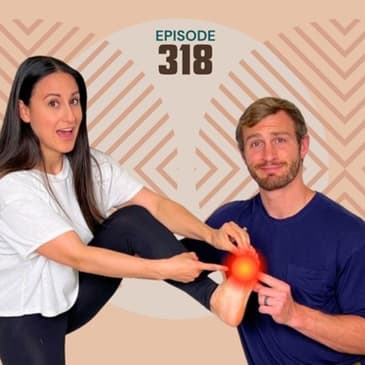
By popular request, DocJen and Dr. Dom dive into Turf Toe and what is happening within the body during this diagnosis. They explore who is most affected and what types of activities exacerbate the risk of turf toe. Then, they dive into how turf toe is diagnosed based on three grades and how this affects rehabilitation, describing exercises and tips you can try. Let us dive in!
WE START TODAY: Pelvic Floor Foundations Course
You can still join the pelvic floor foundations course. For being a part of our podcast family, use code 'OPTIMAL' to get an extra discount at checkout. It's a 15-day educational course that will take you 8-15 minutes a day, educating you on what the pelvic floor is and how to use the pelvic floor functionality throughout life. You'll receive access to educational resources, a workbook, an automated calendar, daily accountability, support, and a private call with a specialized pelvic floor physical therapist. And, you automatically get entered into a prize draw when you sign up! BONUS: lifetime access to this course. Join us!
VivoBarefoot Discount:
Your preventative tool to getting Turf Toe!
Your feet have the components they need to support themselves! That's why we love VivoBarefoot because the shoes themselves help us gain mobility and strength in our feet. Live that barefoot life in style, choose VivoBarefoot and use code TOB at checkout to get 15% off! Your foot and body will thank you (affiliate link)!
**Vivo offers a 100-Day trial period. If you are not completely satisfied, you can send the shoes back and get a refund.
What You Will Learn In This PT Pearl:
02:13 - What is happening with turf toe?
05:12 - Who is affected the most ?
06:49 - Grades of turf toe & the use of ice
12:11 - Grade 1 and Grade 2 Injuries - Phases of rehabilitation
17:42 - How to explore what YOU need
To Watch the PT Pearl on YouTube, click here: https://youtube.com/watch/
For research and full show notes, visit the full website at: https://www.docjenfit.com/podcast/episode318/
Hosted by Simplecast, an AdsWizz company. See pcm.adswizz.com for information about our collection and use of personal data for advertising.
[00:00:06] Welcome to the Optimal Body Podcast. I'm Dr. Jen. And I'm Dr. Dom. And we are doctors of physical therapy, bringing you the body tips and physical therapy pearls of wisdom to help you begin to understand your body, relieve your pains
[00:00:17] and restrictions, and answer your questions. Along with expert guests, our goal of the Optimal Body Podcast is really to help you discover what optimal means within your own body. Let's dive in. We are officially into day one of the Pelvic Floor Foundations course. If you have
[00:00:34] not gone in, there is still a discount available only for our podcast listeners. So use code optimal at checkout. Now again, you have lifetime access to continue to learn within this Pelvic Floor Foundations course. And it's really a place where you're going to be educated on your own
[00:00:51] body. So yes, I'm going to provide educational resources, but you're going to have a workbook to really assess what's going on within your body every day as we move through, where are the restrictions? What mobility should you be doing? Where are you weaker?
[00:01:06] Where are you not coordinated? What's not working well when you're going through movements? We are going to learn so much about how the pelvic floor integrates with your movement and where you could be missing. What's the missing link that's contributing to maybe hip popping,
[00:01:22] low back pain, leaking issues. There's so much more that we have to understand of how the pelvic floor works within the entire body. And I'm so excited for people to be able to dive in today,
[00:01:33] get access, get into it and start learning. And just for signing up, you have the opportunity to win prizes, working through the community with a whole community all moving together. You have another opportunity to win prizes. So there's so much available to learn, to win,
[00:01:50] and to gain within your body. So I really hope you take this opportunity to finally understand what this pelvic floor is and dive into the program. So we're talking about turf toe. This is something
[00:02:00] that has been recommended. And of course, we want to hear from you. What injuries do you have? What do you want to know and understand within your body, especially what does the research thing,
[00:02:08] what can you kind of do for this type of injury? And so this is really looking at the big toe, and it's a hyperextension injury of the big toe joint. Yeah. So hyperextension toe coming back
[00:02:23] towards the shin. And what happens essentially is the soft tissue structures or the structures that support that joint, it's our MTP or metatarsophalangeal joint. Good job. Whatever that means to you. The metatarsals are the long bones in our foot.
[00:02:42] The phalanges are the bones of the toes. So MTP joint. And there are a bunch of structures that stabilize that joint, especially at the big toe. The most important being the plantar plate. And the plantar plate is just this thick bunch of capsular and ligamentous structures that
[00:03:03] essentially is reinforcing that big toe joint because the big toe joint is so important. Every time we walk, every time we run, go upstairs, we're pressing our full body weight through that big toe joint. So I want to take a quick pause from our discussion about turf toe
[00:03:21] to actually talk about something that can be preventative against developing turf toe, and that is wearing Vivo Barefoot shoes. If you don't have an existing turf toe injury, and you wear Vivo Barefoot shoes for the majority of your day for six months or greater,
[00:03:35] there's actually research that will show your foot strength will increase 60 to 70%. And one of the specific muscles that they measure is that big toe flexor, which is going to help to support and stabilize that joint. Jen and I have been wearing Vivo Barefoot shoes for years now.
[00:03:52] And the changes we have both seen in our feet is absolutely astronomical. When it's initially a little bit weird wearing that barefoot style shoe, it's where we absolutely feel at home right now. And especially being in summer, we love all the different styles that they have. They have
[00:04:07] shoes that you can go in the water with, they have shoes for hiking, they have great outdoor and casual shoes for every single occasion. If you want to try your first pair of Vivo Barefoot
[00:04:17] shoes or add to your collection, go down to the link in the show notes and make sure you use code TOB at checkout. That's going to get you 15% off your entire order. And the great thing about Vivo
[00:04:28] Barefoot is they have 100 day risk free trial. So if you order your shoes and aren't super satisfied, you can send them right back to try a different size or different style and keep on keeping on
[00:04:38] with your barefoot journey. So go down to the link in that show notes, make sure you use code TOB at checkout and get in those barefoot shoes. So think of like your plantar plate coming from
[00:04:49] like your heel all the way up into those joints there. You know, like that's our plantar fascia, that's our fascia that's pulling right in there and we can have injuries, we can have strains to
[00:04:59] the plantar plate. And so realizing like that hyperextension injury in that pool that we're going to have on all those ligaments, you know, it can really cause a lot of pain. Totally. And we tend to see this type of injury particularly in athletes. That's where it got
[00:05:17] its name turf toe when they started introducing turf in football actually. It's a harder surface than natural grass or soil surfaces to play on. And a lot of athletes were noticing they were
[00:05:31] getting this pain in that MTP joint of the big toe because of pushing off on the harder surface. A lot of people were spraining this area. So where we'll see it is people who do a lot of
[00:05:44] impact activities, especially impact activities where you might not be wearing footwear that supports that MTP joint. Intergymnastics. Right. Gymnastics is one that I was thinking of where you're barefoot, but you're doing a lot of
[00:05:57] explosive stuff, jumping, putting a lot of pressure through your toes. And people who are in non-athletic events, even runners, even people who are doing more of those impact exercise type activities or can happen in trauma, car accident type situations, falling from a height and landing on your feet,
[00:06:18] things like that. Yeah. So we just want to go through the different grades of injury and then we'll go through different overall treatment protocols. However, it is best I would say to get guidance from a physical therapist in person as you're going through such an intense injury. So
[00:06:38] that is going to be our number one recommendation, especially if you are in grade one or two. Yeah. So grade two, and this is kind of the same as a sprain of any other joint. It's going to be
[00:06:52] graded all the way from minimally sprained with minimal disruption of any tissues to full tear or rupture of tissues and tendons. So grade one is just a minimal strain of the capsule and the ligaments around that MTP joint. There might be minimal tenderness,
[00:07:13] swelling, no visible bruise or anything though. And we don't see that because there was no actual tear or disruption of tissues and your toe would likely still have full range of motion. It would just have that slight pain and tenderness. So ice, right?
[00:07:30] Well, ice can always be something to help modulate the immediate pain response. Yes. But we don't always want to live in that space. We want to be able to do active things to make sure we maintain our range of motion, start introducing some strength or resistance
[00:07:47] to that big toe. So we did an episode on is icing effective? And the acronym is Peace and Love Now, which spells something out. Rather than rice. Rice is thrown out of the table.
[00:07:58] Rather than rice, which was rest, ice, compress, elevate. It's all passive things where we need to have a little more active treatment even in these lower grade sprains where you're doing
[00:08:11] active range of motion. You're starting to stand on your feet a little bit, lean into that toe and see how it feels. And all of it is going to be based on your own symptoms. But yes, might take
[00:08:22] a little bit of initial modification of your activity, resting for a day just to see how the pain responds and then starting in with some active mobility and loading up that toy joint. Toy joint.
[00:08:36] Toy joint. Then we go into grade two. So now we have more of a partial tear around that plantar plate. So with like a complex strain around like that ligaments area, but without articular injury. So we're not getting- Any injury to the bone.
[00:08:53] Right. We're kind of just staying right around where those ligaments kind of connect around that plantar plate. And so we are going to see some swelling. Now we're going to start to see some bruising and sometimes some reduced range of motion, difficulty weight bearing. And we really
[00:09:09] want to start to go into some stabilization type exercises when we're going from that peace and love to then start to load it just a little bit more. Yeah. And we're going to go through kind of the treatment protocols after this. But grade three,
[00:09:27] then we're moving into a complete tear of that plantar plate that we were talking about. Also rupture of the capsule ligaments. And then we might even see some sesamoid- sesamoid? Sesamoid. Sesamoid. Sesamoid. Then we might even see some sesamoid bone fracture. The sesamoid bones are on the
[00:09:48] bottom of that big toe area. It's kind of the knobby ball type things you'll feel. You also have them in different areas of your body. Your kneecap is actually a sesamoid bone and some maybe
[00:10:00] subchondral bone bruising. And again, this is a spectrum. So, these seem like very definite categories, but you can always land somewhere in between them. But in grade three, we're definitely looking at an operative.
[00:10:15] Grade three might be more of the operative path because lots of structures there involved and we might need to have surgical operation to stabilize that joint. Yeah. So, then we come back to a little bit more of the treatment protocol of what we
[00:10:32] kind of look into the research and saying what we should be looking at and kind of focusing on. Again, this is going to be more pertinent when you're working with someone in person because
[00:10:41] we get to really see where you are along your journey, where you fall along that spectrum from grade one to grade two, and what you specifically need at that moment and how you're progressing.
[00:10:54] So, I think that's really important to note. It's good to hear it maybe and have an overview questions you can ask when you go see a provider, but knowing that it's super beneficial to work with someone in person. Yeah. So, phase one and we kind of-
[00:11:09] Said it a little bit. Yeah. We kind of said some of these things a little bit. And this phase one through three, this is more applying to like you said, grade one and two strains, right? So, if it's a very mild grade one strain,
[00:11:22] you might work from phase one into phase two relatively quickly. You know, you might be getting to phase three after 10 to 14 days and then looking at return to sport versus a grade two injury, you might take quite a bit longer in phase one, which is the calming down
[00:11:40] phase. So, we're avoiding putting a lot of excessive stress on that toe in extension, which again, that was the mechanism of injury. So, especially early on, we're not wanting to do a lot
[00:11:51] of aggressive loaded toe extension. We want to limit the stretch to that area, maybe even taking smaller steps. I know with some more severe grade two injuries, you might even look at having a
[00:12:03] walking boot or something that limits that toes ability to even go into extension and flex. Yeah. There are some cases where having crutches might be appropriate for the first amount of time until we're calmed down.
[00:12:19] This is like the first time you're going to hear us say, don't go into Vivo barefoot shoes. Right. Vivo's Don't go into your barefoot shoes. Yes. Vivo's definitely promote extension because they're so flexible. Yes. And then there are some exercises
[00:12:33] that we can do a part of that. So, we're really looking at, you know, reversing, like he said, we're not going into extension, right? So, what are we going to do to help to
[00:12:43] go the other way, which is plantar flexion, going down to the floor and creating more of that stability through that plantar plate. And that's looking at more like toe curls. So, maybe we're
[00:12:52] doing where we're putting our foot down and we're kind of dragging a towel in toward us, you know? We were working on things like short arc, which is actually really hard, but pressing the toes
[00:13:03] down into the floor again, creating that stability and then trying to pull the ball of the foot toward the heel and trying to create that contraction right at the base of the foot by pushing the toes down into the ground. And then gradually and passively, probably at first,
[00:13:21] we're going to be working into our big toe mobility, but really doing that super gently making sure we're not going aggressive and going into pain. Yeah. And big toe mobility, yes, there's extension, but we can also start working
[00:13:34] general toe mobility like toe spreads, toe abduction and adduction because again, that's just going to be strengthening those stabilizing muscles around the MTP joint without further irritating the plantar plate. Then we move into phase two, which is putting stress back on
[00:13:51] that injured toe, moving more into that extension. So, big toe extension repetition, again, generally good to start passively and unloaded. So, even just sitting and using your hand to bring your
[00:14:05] toe into extension. How does that feel? Does it feel okay? Great. Let's put our feet flat on the ground and try to actively go into extension. How does that feel? Great. Then you can move on to
[00:14:18] other things like calf raises. You can even do that seated. So, you're not putting your full weight through that foot and do a seated calf raise, which is going to cause your toe to go
[00:14:29] into a little extension. Then we progress to maybe standing calf raises, single legs with support, even just doing like a standing lunge where you kind of lunge forward. Your back foot is going to
[00:14:43] go into that toe extension, but we're really not doing anything explosive that's going to put kind of the maximal amount of pressure through that joint. And we want to make sure, you know, like
[00:14:54] as much as we're working back into that extension, we also want to work on the control down into the flexion because that's what really helps to stabilize, you know, right around that plantar
[00:15:03] plate as well and the muscles that kind of connect into the area. So, working on that full extension, but then also like do we have a finger there by the big toe as we're pressing it down? Or do we
[00:15:14] have a resistance band that we're kind of working as we go into extension and then back into flexion? You know, getting that full range within the control and the active portion so that we can go
[00:15:27] back into more functional exercises than going into increasing more load when we go into phase three because that's where we're really going to start to get into more load. So, now we're getting
[00:15:37] into plyometrics. We're starting to add bouncing to the area to the toe and do more of that loaded type of extension. Yeah, which this could look like a lot like what we did in phase two with
[00:15:52] calf raises, lunges, different loaded activities that cause you to go into some big toe extension, but do it with weight. Yeah, or just don't do it supported anymore. Like don't hang on to something
[00:16:04] like it's hard. Doing a Bulgarian split squat with your toe flipped under and these of course are going to be a lot more aggressive into that toe extension, but especially depending on if
[00:16:15] we're working back to sport or activities that require a lot of impact, this is what we're going to want to do to be able to build the resiliency up in that toe and then plyometrics. You know,
[00:16:25] there's tons of different plyometric type of jumps we can do with lateral bounds even just like you said starting with hopping two feet, starting with two foot straight up and down hopping, hopping back and forth. Agility ladders. Yes, agility ladders. Those are all things that would
[00:16:42] work into the mix again with what's your end goal function wise. Are you somebody who's wanting to get back to running? Somebody who's wanting to get back to pickleball? Man, turf toe would be rough for pickleball and I've been wearing vivos playing pickleball lately. So, your feet are
[00:16:58] really taking it on. Yeah, hopefully in a way that will strengthen them. This is the stage that you would want to put your vivo barefoots back on phase three so that you can have that flexibility especially if doing these exercises barefoot you wasn't comfortable. Yeah. You know,
[00:17:15] doing some of them in vivos. There you go. You can still get the mobility, have a little something on your feet but again always keeping that end game in mind what are the activities you want
[00:17:25] to get back to and how can you start to simulate that in a more controlled environment to be able to build the strength, stability back up in that toe so that you feel confident to get back into
[00:17:37] your activities of choice. Now, of course if you want to prevent something like turf toe and or maybe you're starting to feel a little achiness at the bottom of your feet, you know,
[00:17:46] this is where we have the foot ankle plan on GenHealth. It only takes 8 to 15 minutes a day to kind of start to work through some of these plans and you're going to go through different
[00:17:55] phases that are going to start to progress you into more loaded type exercises and starting to load different structures around your big toe and all the way up and through your ankle. And so,
[00:18:06] really we use GenHealth preventatively as well. So, even if you don't have turf toe starting to take note of what is my big toe mobility, do I have strength in my foot, can I even do that
[00:18:16] short arc or spread my toes or bend at my ankles, you know, we start to lose this ability for not actively going into it. And so, if you want to check out the foot ankle plan, you can start a
[00:18:26] free week on GenHealth. We'll have that linked up below. It's just gen.health.v trial but we can also you can use code optimal and it's going to give you $5 off the first month. And so,
[00:18:38] if you were consistent the first month of GenHealth, you can get through two phases of the foot ankle plan and really start to see how this progresses you and you have so much more
[00:18:50] available on GenHealth as well if you want to go beyond the foot and ankle too. Thanks again for tuning in for another episode all about turf toe. If you're interested in that foot and ankle plan,
[00:19:01] go check out the link in the show notes. Also, remember we are about to start and launch our pelvic floor course and you can get a 15% discount on that as well using code optimal15. The link
[00:19:14] for that will be down in the show notes. That course is going to launch next week so get in now before the price goes up and of course, we will see you next time on the Optimal Body Podcast.