
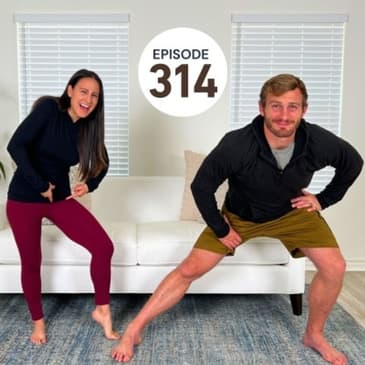
Want to know how you can possibly decrease your groin pain or inner thigh strain today? Tune in as Dr. Jen and Dr. Dom explore different inner thigh injuries, what populations tend to obtain these injuries, and exercises you can start today to decrease your pain. If you are an athlete of any kind, you have probably experienced one of these injuries and this podcast has the potential of increasing your performance while simultaneously decreasing your pain. If athletics is not your thing, this podcast will empower you with exploration techniques you can use on your hips to avoid or reduce the risk of injury, as well as increase mobility and functionality.
Vital Proteins Discount:
We know that while our bodies collagen production slows as we age, our need for it only grows as our bodies become less efficient. By providing nourishing collagen and promoting our production of collagen, Vital Proteins helps people feel better and live fuller lives through HIGH-QUALITY nutrition products. Use code 'OPTIMAL15' at checkout and get your very own Lemon Collagen peptide supplement at a discounted price by clicking here!**
What You Will Learn In This PT Pearl:
01:08 – What is the groin?
03:43 – What the research says: different types of therapy techniques
10:08 – How long do you need to do physical therapy exercises?
11:38 – Mobility for the groin
16:44 – Exploring the Copenhagen Plank for the Groin
20:08 – Core and Standing functional exercises
To Watch the PT Pearl on YouTube, click here: https://youtube.com/watch/
For research and full show notes, visit the full website at: https://www.docjenfit.com/podcast/episode314/
Thank you so much for checking out this episode of The Optimal Body Podcast. If you haven’t done so already, please take a minute to subscribe and leave a quick rating and review of the show!
Vital Proteins: **These statements have not been evaluated by the Food and Drug Administration. This product is not intended to diagnose, treat, cure, or prevent any disease. Results may vary. Various studies have suggested benefits following daily consumption of collagen peptides for several months. Refer to product labels and vitalproteins.com for recommended serving sizes and for more information**
Hosted by Simplecast, an AdsWizz company. See pcm.adswizz.com for information about our collection and use of personal data for advertising.
[00:00:06] Welcome to the Optimal Body Podcast. I'm Dr. Jen. And I'm Dr. Dom and we are Doctors of Physical Therapy bringing you the body tips and physical therapy pearls of wisdom to help you begin to understand your body, relieve your pains
[00:00:17] and restrictions, and answer your questions. Along with expert guests, our goal of the Optimal Body Podcast is really to help you discover what optimal means within your own body. Let's dive in. For anyone out there who is following my Instagram stories,
[00:00:32] you know that I am adding in things into my life that are super easy, convenient, and I know are going to fuel my body. Because especially when I just don't have the mental capacity or physical capacity due to being a busy mom, trying to work and trying to
[00:00:45] get in a little sleep when I can, I need to add things into my body that I know are going to fuel and support me throughout the day. So something I have been committed to,
[00:00:56] is my Vital Proteins Unflavored Collagen Peptides. This is so easy to be able to just add into either my cold drink or my hot drinks and it dissolves super quickly. And something that I love about
[00:01:09] them is that I know because as we get older, our body becomes less efficient at producing collagen. So it's really recommended that we start introducing this ingestible collagen into our
[00:01:20] diet. So I know I'm putting something in my body that is going to help support me not only for my day, like today, but also for life as I continue to age, as I continue to get older and I still
[00:01:33] want to work out, move, and feel good within my body. So I highly recommend trying out Vital Proteins Unflavored Collagen Peptides. So easy to add in. I literally don't pull out any of my
[00:01:45] blenders or make full smoothies anymore. I just don't have the capacity. So something that is so easy and that I could just add with water is something that is definitely a part of my everyday
[00:01:55] life. So if you want to try it, go to our link in our show notes and use code OPTIMAL15. You're going to get 15% off site-wide on your first purchase. So go click that link and check it out
[00:02:07] for yourself. Okay. So today we're diving into groin pain, which groin inside of the leg. Most people understand what we're talking about when we say groin. I feel like most people will feel
[00:02:20] this pain high up into the groin, kind of close to where your pubic bone is, which makes sense. That's near where a lot of our adductor muscles attach, which are the adductor muscles essentially
[00:02:34] are the groin. Yeah. So adductor, these are the muscles that bring your legs close to together. They add the legs together. Yes. But these muscles don't just connect up high into the groin. They
[00:02:48] also go all the way down and attach into the knee, like right below the knee. So I think it's important to remember that we can have pain anywhere along this leg, but we also need to
[00:03:01] assess and be aware of the muscles going all the way below our knee, all the way into our groin. And we even have some of our hamstrings that pull our leg back, but also help to pull our leg in. So
[00:03:16] it's kind of looking at this whole picture and then how our fascia connects from those adductors, even up into our abs. So really looking at a whole picture. That's what we'd like to do here on the
[00:03:27] Optimal Body Podcast rather than just the little individual muscles, but being aware that it's a much bigger picture than where you might just be feeling it. Yeah. And there are people who will
[00:03:37] say they pulled their groin or they feel their main pain way up near their pubic bone, but they have swelling on the inside of their knee or they have bruising and swelling all the way down the inside
[00:03:50] of their thigh to their knee. And that makes sense. Again, that's where the adductors run. And just because you're feeling it primarily in one area doesn't mean that the muscle or tissues aren't affected along the way. And so, when we looked into the research, some of the
[00:04:07] things that they said about people who will be presenting with groin pain and a lot of the research that we have in front of us was done on athletes, which I think is one limitation of the
[00:04:19] studies we're going to be looking at. But what are human beings other than athletes of life? There you go. So, we are all athletes in our own regard just trying to move through life successfully
[00:04:33] in a way that we feel fulfilled. So, finding out how we can apply this to the general person, I think there's a lot of things that can carry over. Some of the patient reported things for
[00:04:45] people who are having groin pain was the presence of pain on the adductor squeeze test. So, kind of having something between your knees, whether it's a pillow or just your fists, squeezing those knees
[00:04:56] together, that caused pain. Reduced strength score on an adductor squeeze test. So, feeling like the strength was reduced one side versus the other. Reduced range of motion in hip internal and external rotation. And also altered trunk muscle function, which makes sense. Anytime we're feeling
[00:05:17] pain in the hips, we might be altering how our core and our hips are coordinated with each other because we're guarding against certain movements. And then the presence of the... Yeah, pubic bone edema on MRI. So, having some edema or swelling around the pubic bone area.
[00:05:36] And what do you know, when we look into the research, something that is very effective treatment is strengthening. I feel like we are repeating the same thing on a lot of podcasts, but movement, we are physical therapists and we're going to promote movement here, right? But if
[00:05:53] we look at the research, we are seeing that available evidence suggests that exercise, particularly strengthening exercise of the hip and abdominal musculature, could be an effective intervention for athletes with groin pain. Human athletes. Human athletes with groin pain.
[00:06:09] And again, they go on to say that it may need to be in the form of progressive exercise from static to functional to be more effective, which makes a lot of sense. If you are right in the pits of
[00:06:22] the acute pain of the injury, you're not going to go out and start doing side shuffles or running. You're going to start with something a little lower level or a little more comfortable
[00:06:34] during that acute phase. And this is kind of the, you know, if it ever sounds like we're repeating ourselves with many injuries, especially soft tissue injuries, it has kind of the same framework of healing and progressive rehab.
[00:06:49] You know, step one is calm it down, which during the calm it down phase, we're doing comfortable range of motion, comfortable active movement of the joint as we're able to. Isometric holds. Different isometric holds. And as that kind of creeps into phase two, where we start to do
[00:07:05] more strengthening, whether it's the isometric holds or strengthening through the range of motion, often we'll use what we call more open chain exercises where you're not doing it against your body weight, but you're doing it more through leg lifts or active. Like you're not standing.
[00:07:23] Yeah, you're not standing doing like a lateral lunge as much as you're, you know, laying on your side, doing exercises against resistance bands or just against gravity. And then step three, we start to move in to more of the functional things like
[00:07:37] the side lunges, the Copenhagen planks, which we're going to talk about later on. And then if you're looking to get back to sport or something more explosive, then we work into the plyometric stuff. So there's always that kind of similar progression.
[00:07:48] And when we look at all of this, I think it's important to note, you know, there's just less evidence to really support the use of passive treatment. So think of passive meaning you're not moving your body. Someone is doing something to you
[00:08:00] and medication as co-interventions with exercise program for groin pain. So it's just, you know, you could do it if it helps you to feel better, if it helps you to relax your muscles before you go
[00:08:11] into movement, that's fine. But there's less evidence to really support its need. And I think that's what's important to note here, you know, as much as we want the feel good treatments,
[00:08:22] which I think have a place, especially dependent on the person and the level of stress you might be going on in life and all those different things for the human athlete that we have to juggle with
[00:08:34] all the things, you know. So if you need that touch, but know that that's not the fix. And I think that's what's important. Yeah. And that's what the evidence showed is that it was, you know, slightly effective at, especially in some of these athlete studies at getting the
[00:08:49] person back to sport, but it didn't have as great a long-term impact as doing exercise. And the specific interventions they used were TENS or this transcutaneous electrical nerve stimulation and wave therapy, which TENS is essentially when you get the pads on you and feel the little shockies.
[00:09:09] And I would, even though we don't have a research study sitting in front of us that says this word for word, but I would bet most of my life savings to say that if you did just massage
[00:09:22] or massage and exercise, that massage and exercise would be more effective. Or you did just dry needling or dry needling and exercise, dry needling and exercise would be more effective. Like fill in the intervention. If you did just joint mobilizations or just hip pelvic adjustments versus those along
[00:09:41] with a guided exercise program, I would bet most of what I have in my life that the one that includes a guided exercise program is going to be more effective long-term because then you're changing what you're doing actively and you're changing how your muscles and tissues are going
[00:09:55] to respond. And I think a lot of current, you know, clinical settings do, you know, whether you see a chiropractor and they do some more manual work and then you go and you see a physical
[00:10:05] therapist who does a little bit more of the exercise protocol. Like I think we see or the acupuncturist and the physical therapist, you know, you see different clinicians kind of working
[00:10:15] together or you might just see one who kind of does it all. You know, and we're not opposed to either way, but we're just saying that don't just rely on someone who's going to say that they're
[00:10:27] going to take all the pain away based on doing, you know, some treatment on you. There also has to be, and even if that were to take the pain away, well then why did the pain come in the first place?
[00:10:38] You know, what were we avoiding? What were we neglecting? Were we maybe weaker in a certain area or don't have the range of motion and active mobility in a certain area that caused that pain
[00:10:50] in the first place? So if we're just relying on passive treatments and not doing active treatments, well then we might fall into the same pattern and needing the same treatment again and again
[00:11:01] and again. Absolutely. And so talking about what exercises do we do then or what are ways that we can start to load this adductor region? And there was one research study that specifically talked about the Copenhagen plank or Copenhagen adductor exercises, and we love Copenhagen's.
[00:11:22] We think it's an amazing way to be able to load the adductor and there's so many different progressions. If you want to see, you can check those out on YouTube and we'll try to show them
[00:11:30] as we talk about them. But in a 12 or 8 week study where participants did these Copenhagen exercises, this type of training resulted in a significant increase in adductor longest muscle thickness and hip abduction movement. ABduction is the leg moving away from the body, which if
[00:11:52] you're having groin pain and you move the leg away from the body, you're stretching those adductors and that may cause pain too after 8 weeks of the training. And point B is that these changes were reversed after 4 weeks of detraining, right? So that's always the unfortunate thing about exercise.
[00:12:11] You can feel good and get great changes in your body after just 8 weeks or 12 weeks of training, but then our body detrains fairly quickly. Yeah. So going back to that point that I just said
[00:12:23] of you having to do the thing over and over again, well it's either going to see someone and hoping that your pain goes away from passive treatments over and over again or you do the
[00:12:34] exercise and you really do have to do that over and over again for the rest of your life. And I think that's where some people get, you know... It's not always at the same amount for the rest
[00:12:44] of your life though. It's not the same amount. It changes. It's going to ebb and flow. But you know, people say, well how long do I do these physical therapy exercises? And it's like, well how long do you want to feel good for? You know?
[00:12:55] How long do you want this back pain or this groin pain or whatever to be lower for? And there are a ton of research studies in detraining and it's like once you reach a certain functional level,
[00:13:07] the amount of work that you have to do to maintain that functional level is like 25-30% of what you were doing to get there. So if you're training 3 days a week to get to a certain
[00:13:19] functional level, even if you get to a point that you're very happy, you have very minimal pain, you're doing the activities that you want to do and then you just do it once a week after that,
[00:13:29] you can keep yourself at that functional level because your muscles already have the patterning, the neuromotor patterns into the muscles and through your nervous system. So just doing them once a week keeps that fresh.
[00:13:42] And hopefully, if you've been programming it in that long, you've come to a point where you have a movement routine, you're going to do something regularly and you kind of already have this programmed into your life. And I think that's the hardest part, right? It's like
[00:13:56] getting started and then maintaining and finding the motivation sometimes when you just are having a long hard day and you just don't want to get to it, you know? So what can we do to kind of
[00:14:10] start to make this kind of a habit in our life and remembering that movement is so powerful for so many reasons, but especially when we're talking about pain and injury. Yeah. So favorite exercises. What are some of your favorite adductor exercises? And we'll start with
[00:14:27] the ones that are more mobility-based. So these would be ones that you're going to do a little earlier on in an acute groin pain. So mobility-wise, I always go into adductor rocks. I think that's such an easy one to kind of hit. And you can gauge your
[00:14:48] range of motion based on how you're feeling. So what people get wrong with the adductor rock is when you're on all fours and you have your leg out to the side, so if you're listening, you can
[00:14:57] kind of like picture this. And what people do wrong is that they kind of round their back and sit toward their heel. And not again that that's wrong. It's a different way to do it. You're going to get
[00:15:06] a little more hamstring with that. But if you keep the back straight and we're really just trying to increase that pool of pressure from the groin all the way down to the knee, then you really want to
[00:15:18] think of almost keeping that tailbone almost pointed up toward the ceiling as you start to lean back because that keeps more of that back flat and you get more of that pressure into that
[00:15:29] high groin area. And that's where you're going to feel where your range of motion really is and how much range of motion you want to start to work in toward. Yeah and there's great progressions of
[00:15:40] the adductor rock when you want to start maybe putting more tension through it, like being able to press your foot down into the ground because then you're in more of an active, hey I'm lengthening,
[00:15:51] but I'm also putting kind of an isometric pressure through that muscle as well. At the beginning we talked about how people will have limited internal external rotation range of motion. This is where
[00:16:02] something like the 90-90, the hip 90-90 can be great where from that 90-90 position you can stretch both external rotation by leaning towards your front leg and internal rotation by kind of sitting
[00:16:14] into that back hip. 90-90 can be tough for a lot of people. One of the first things I recommend is tucking the legs in so your knees aren't exactly at a 90 and you'll still often be able to feel
[00:16:27] the stretch, especially if sitting in the 90-90 itself is very uncomfortable or elevating the hips by putting a little pillow under your back hip. Yeah I love doing that like adding stacking pillows
[00:16:38] or blankets or something underneath your butt to help to reduce that range of motion is huge and I always it's a quick kind of thing that you can do on someone or you could do on yourself if you roll
[00:16:51] or do something to kind of relax the tissue tension of your inner thigh. Or well first you want to test how much internal range of motion you have. So lay on your back,
[00:17:02] grab your leg and kick your ankle out to the side. If it barely moves, try to massage the inside of your leg. Do it again. You most likely are going to see an increase in that range of motion. So that
[00:17:15] hip internal rotation is really restricted based on the tightness that we might have in that hip inner thigh. So you know those are again that's a quick thing, that's a quick neurological thing
[00:17:29] that we did. That's not necessarily a change in the muscle. So it's something that you have to keep going to improving that mobility, improving that overall range of motion in the hip. It's
[00:17:39] going to help with that groin strain. And then you know we talked about the three different levels of our Copenhagens. I love starting just on the ground where you're in a side plank but your
[00:17:51] bottom leg is out in front of you and your top leg you just have your knee on the ground. So you both knees are bent, bottom leg out in front of you, top knee is going to be on the ground. Usually
[00:18:02] I put a pillow there and then you lift into a hold. And if you can you lift your bottom leg off the ground. It's honestly super hard so your leg might stay on the ground as you lift up. Yeah that's
[00:18:15] one of the I honestly think that's a tougher progression and it might just be because of my like mobility issues or restrictions. No, it is really hard. It is really hard. But super tough
[00:18:23] and for those of you who might just be listening and aren't familiar with what a Copenhagen is like a full Copenhagen plank is when it's almost like you're in a side plank but your top leg
[00:18:32] is sitting up on some sort of bench or chair or something. So you're essentially using the inside of that thigh to hold yourself in a straight plank. Where we go from what Jen just outlined
[00:18:45] where your knees on the ground and you're doing it from the ground is can you then put your foot on the ground and lift yourself into that plank. So hard. Raise the bottom leg. If you're able to do
[00:18:56] that then can you elevate the foot but even before you do it on the foot. Yeah I would do it on the knee. Do it closer to the knee where you have your knee on a chair or a bench or something and can
[00:19:06] you lift yourself into that plank and then you can always move it down to the foot. And there's also some other fancy variations that you can do. I mean you can even go from like the knee to
[00:19:18] below the knee to mid shin to the ankle. Like you can work your way progressively just down the leg because the more we go from the from your knee being on a surface to your foot being on
[00:19:30] the knee. And we increase that lever arm and that pressure that the muscle has to undergo. Yeah. And some of the takeaways from that Copenhagen study talked about how just the act of lifting yourself into the plank is and lowering yourself out of it introduces specifically that
[00:19:50] lowering is an eccentric motion. Meaning that when we're lowering the adductors are lengthening but they're still under tension. And that eccentric portion can be one of the most important parts of strength building and building resilience in different muscle groups.
[00:20:07] We talk about it in all sorts of tendon issues like Achilles tendonitis, tennis elbow. You know you always want to have some sort of eccentric component so that you're really building the resilience because that's often when we'll injure something when we're jumping to the side or when
[00:20:24] we're running and we get a quick stretch of that muscle but it's not ready to take on that type of strain. So, the research study pointed out how because Copenhagen's include that slow eccentric
[00:20:37] lowering it can potentially be protective against future groin injury. And that is one of the exercises you could do. You don't have to just hold it. You know you can lift up and lower and
[00:20:48] then lift and then lower. Totally. Don't come at us after when your groin is super sore after that. It's going to help to improve your strength. And then the other things that we want to look at too
[00:21:01] is we talked about that connection up into the rectus abdominis so up into your core, right? And so if we do just exercises core-based exercises squeezing a ball so you can think of
[00:21:13] so many different things right from laying on your back and doing more dead bug type exercises squeezing a ball. You can do planks squeezing a ball you know a lot of things where you're creating that tension from the adductors from squeezing something together but then also including the
[00:21:33] pelvic floor and that inner core to kind of work together with you. That's going to help to build that connection across that pubic symphysis. And then kind of working down that rehab protocol we had talked about to more standing functional type exercises where you're doing more just lateral
[00:21:51] lunges from side to side really pulling through that adductor doing adductor pulls. What do you call them? Side lunge pulls where you kind of pull the weight. Oh yeah, lateral lunge weight drag.
[00:22:03] I don't know. Yeah there's like ones where I always see Jen doing them and they're really tough. Or doing an adductor slide where you have your foot on like a towel and you slide your foot out
[00:22:15] into kind of a side lunge and then slide back in. Super tough. Very tough. We love to I love to do it. You did it once when was that when my dad and his husband were here? Oh we did it on the
[00:22:26] rower. On the row machine. Thank you to Dr. Ayanya Proctor for that one. Yeah and my dad and his husband could hardly walk down the stairs in the morning when they woke up because tough. It's not
[00:22:40] something that you know even when you're doing you're like man this is hard but when you wake up the next day. I gotta say that my 70 year old mom rocked that like it was nothing. Yeah she's
[00:22:51] kind of a machine though. Kind of a machine. It's unreal. But hopefully that helps to give you an idea of some of the exercises that you can start incorporating because even if you don't have
[00:23:02] pain right now you don't want to have pain right? So strengthen your groin. Strengthen your adductors. And it can have a lot of huge implications on pubic pain. Pubic symphysis pain. You know something we always talk about when we talk about pubic symphysis dysfunction is adductors. Are you
[00:23:18] strengthening the adductors? How is your mobility in your adductors in AB and ADduction? And of course after those that we just outlined if you're someone looking to get back to sport or some higher level activity then having more sport or activity related. Yeah power. You know power moves
[00:23:35] like lateral jumps and lateral movements jumping side to side different plyometrics type exercises would be great to incorporate after that. And if you want to be guided in some of this because I
[00:23:44] know again saying all these things are great maybe trying to add it into your life is helpful but if you need a little bit more guidance we do include these in our HIIT plan on GenHealth and so it's
[00:23:57] 8 to 15 minutes you'll get mobility stability some core and you really start to highlight a lot of these areas. You're not we're not going to overdo it because it's not just a groin pan but it's a
[00:24:08] whole HIIT plan so you we're going to work every aspect of that hip and if you want to go into GenHealth and just explore you get a week free to start then we have a special code just for you
[00:24:19] so code optimal will get you five dollars off of the HIIT plan well any of the plans really. There's 11 plans so. There are 11 plans currently each with different phases so you're getting a
[00:24:29] lot of content on here and we're continuing to work and bring you more but essentially that's 20 bucks so if you want to just explore what the 30-day plan is for the HIIT because it's a 30-day
[00:24:41] plan you'll get guided day to day it keeps track of your progress you can always double up if you miss a day or you just miss a day and you just continue on you know it really is a helpful tool
[00:24:52] to be able to follow you hear my cuing throughout you see me doing it so you're really guided and that's my goal is to have me in your ear so even if you leave GenHealth you go on to other
[00:25:04] exercise protocols you hear my cueing so that you remember how to move most effectively and optimally for your body. Thanks again for joining us on another podcast we just appreciate you guys
[00:25:16] coming back and being here with us and of course if you know someone who's had groin pain or they're complaining of you know pain really high up into their groin pass this episode along because we
[00:25:26] really want to just get this information out and what also helps us is leaving a little rating and review so if you haven't yet we'd really appreciate going wherever you like to listen to us and leaving
[00:25:38] a little rate and review it just helps so that more people get access to this information this education and this help within their body. We'll see you next time!