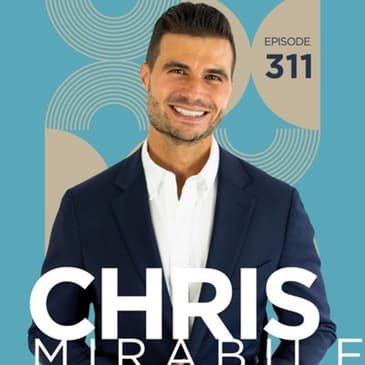
Can you reverse ageing? We have Chris Mirabile on to share his brain tumour survival journey and what influences his passion for his work around ageing. As he predicts the potential causes of his brain tumour, he speaks about epigenetics, the environmental influences on gene expression, and how we can live longer and healthier lives by addressing nutrient deficiencies, meal timings and other behaviours. Then, he distinguishes between biological and chemical age, identifying the differences in measuring the different age types and why biological age is important to consider, in reference to genetic clocks. Finally, he discusses the relationship between biological age and reproductive health. Let's dive into how we can manipulate our environment to reverse your biological age!
Fuel every system within the body and the brain with LMNT! Keep yourself hydrated on a cellular level by replenishing the sodium, potassium and magnesium that our body needs for basic cellular processes like nerve signalling, smooth muscle contractions, unnecessary fatigue, aches and pain, brain fog, and recovery! Get a free gift with every purchase and try some new flavours as you stay hydrated! Get Your Free Gift!
Adapting High Intensity for Every Body. DocJen, a doctor of physical therapy, and Jill Miller, a Myofascial expert, come together to bridge the gap between post-rehabilitation and highly functional fitness. Your PT isn’t gonna teach this to you once you finish your rehab and your coach may not have the kinesiological tools to regress speed/intensity/intervals to a level that’s beneficial for your longevity. Who better than Jen and Jill to share with you the Science of Rolling & HIIT and best practices tailored for YOU! This program combines decades of clinical and industry expertise in the worlds of Physical Therapy, mobility, fascia science, HIIT (high-intensity interval training) and regeneration in a mash-up that helps bodies at any age and stage of injury or fitness to prepare their bodies for a successful high-intensity fitness program.
- You’ll be pampered and prepared with evidence-backed self-myofascial release strategies and learn to integrate your joints, muscles and soft tissues so that intensity will help you rather than harm.
- You’ll ignite your body and brain’s tactile communication system known as proprioception so that you can better inhabit the shapes of acceleration and decelartion that HIIT targets.
- You’ll reap the benefits of heart-pounding movement while keeping your joints safe and supple. You’ll also learn breath control and soft tissue recovery tactics that hasten deep sleep and bring you through robust adaptation cycles that gift you a better tomorrow.
What You Will Learn In This Interview with Chris Mirabile
02:22 - What drove Chris's passion
06:38 - Potential causes of Chris's brain tumour
08:36 - Antagonistic pleiteopy
11:45 - What we can do to live a longer and healthier life: deficiencies, meal timing,
24:27 - The importance of micronutrients and longevity
25:54 - How biological age is measured and how it differs from chronological age
31:09 - How can we make biological age important to individuals?
37:05 - Epigenome patterns with ageing
38:54 - Biological age and reproductive health/fertility
41:55 - Learn more from Novus Labs
To learn more about Chris Mirabile and view full show notes, please visit the full website here: https://www.docjenfit.com/podcast/episode311
Thank you so much for checking out this episode of The Optimal Body Podcast. If you haven’t done so already, please take a minute to subscribe and leave a quick rating and review of the show!
Hosted by Simplecast, an AdsWizz company. See pcm.adswizz.com for information about our collection and use of personal data for advertising.
[00:00:06] Welcome to The Optimal Body Podcast. I'm Dr. Jen. And I'm Dr. Dom. And we are doctors of physical therapy, bringing you the body tips and physical therapy pearls of wisdom to help you begin to understand your body, relieve your pains
[00:00:17] and restrictions, and answer your questions. Along with expert guests, our goal of The Optimal Body Podcast is really to help you discover what optimal means within your own body. Let's dive in. We have a fascinating episode with Chris Mirabile, who is a serial entrepreneur,
[00:00:33] brain tumor survivor and the youngest winner of NYU Stern's business plan competition. He's really known for beating the odds. And though he's co-founded multiple lucrative startups, we are really interested in his lifelong passion of health and wellness with an emphasis on avoiding
[00:00:49] disease, extending his healthy lifespan and maximizing performance and wellness. And as a self-proclaimed citizen scientist, which I would agree with, Chris dug into the scientific research on longevity and experimented with supplements, diet, exercise, and lifestyle hacks
[00:01:06] to really find the secret to living a long and healthy life. And after more than a decade, Chris founded a company called Novos, which targets the 12 biological causes of aging to increase longevity. Novos includes a scientific advisory board of six of the world's top biologists
[00:01:27] and geneticists to study aging from Harvard, MIT, the Stock Institute, and more. With Novos, Chris created much more than a supplement company. He built the first of its kind consumer biotech platform that leverages the latest science to help people take control of their health spans
[00:01:43] and lifespans. This is going to be a fascinating episode, so get ready. Chris, thank you so much for taking the time to sit down and chat with us today. I think this is a really interesting conversation talking about reversing aging and what it really means
[00:01:58] to have longevity within the lifespan. So I think this is really interesting, something we haven't quite dove into in this capacity before. So I just appreciate you taking the time and coming to chat
[00:02:11] with us. Of course. Well, thank you for having me. It's great to be able to speak to you and your audience. So I think where I want to start, and it's always good to dig into people's
[00:02:21] passions and what initially brought you into this space of being so passionate about health and longevity and your story. And I know that early on in your life, you battled a lot of
[00:02:35] adversity health-wise. And just wondering if you could talk to us about your story and how that ended up getting you so interested in health and longevity. Sure, happy to. So it didn't begin
[00:02:47] with adversity. It actually began with a lot of motivation. So when I was 12 years old, I was in a bookstore and I saw an issue of Men's Health magazine, and I was inspired by it. And the guys in that magazine, and of course, at that time,
[00:03:06] beginning to get interested in girls and wanted to be attractive and so on. And so between that and playing sports in school, I decided that I wanted to start exercising and working out.
[00:03:18] And I installed a pull-up bar in the rafters of my home's basements. And every day after school, I'd come home and do my pushups and my pull-ups. And eventually that evolved into running track
[00:03:31] and so on. And then it was when I was 16 years old, that I was on a school trip in New York City at the Federal Reserve Bank, where I was listening to a speech and I suddenly felt dizzy and nauseous.
[00:03:47] And I told myself I would count to 10. And if I wasn't feeling good, I would get up and get help. So I counted to seven, and I started to feel a little bit better, but I never made it to eight.
[00:03:59] Next thing I knew, I woke up and I had blood all over my shirt. And it turned out I had had a seizure and I had severed my tongue. And that's where the blood came from. And they called for an ambulance.
[00:04:13] And next thing I knew, my parents had to come. I was a minor before they could do any testing, but they did a CAT scan. And they found that I had, as they described it, a large mass by my left
[00:04:27] temporal lobe. So essentially above my left ear. And it was a golf ball-sized tumor that had to be removed as soon as possible because of the size and the risk. And that started me on a long, long journey into health.
[00:04:47] Interrupting really quickly, because I think it's going to be fascinating what you're going to hear about what Chris says about adding electrolytes in after his workouts has done really within his
[00:04:56] body and his energy levels. And this is why we talk about elements so much. And if you haven't gotten your element packets yet to just try and add into your water, even if it's just starting
[00:05:06] with half of a packet a day and seeing what it feels like, especially adding that after a workout and replenishing your body. Getting your electrolytes back into your body is going to make
[00:05:18] a difference in how you feel. And I can tell you as someone who is a new mom, not drinking caffeine anymore, but adding in my electrolytes has really made a difference in the energy levels that I feel,
[00:05:29] especially because I'm being active during this whole postpartum period in order to really have the energy levels to sustain me on a day-to-day basis. Now, element is going to have your sodium, magnesium and potassium. So it's not just all about sodium. It's not all about salt, but it's
[00:05:46] really adding in all the electrolytes to help replenish what our body really needs to fuel itself on a day-to-day basis. So if you haven't yet go check the link down in our show notes, it's drink element. That's lmnt.com slash optimal. And this is where you're going to
[00:06:03] get with every purchase, whatever you decide to get and try, you get a free sample pack so that you can try a variety of flavors that they have. And I'm telling you, they're so good. They have
[00:06:13] some really incredible flavors. So I just recommend going down to our show notes and trying some element yourself. Okay, let's get back in. Wow. That is quite the journey, especially just at 16 and thinking that you're healthy, right?
[00:06:29] Because you saw something you were inspired by at such a young age and you're doing athletics and you're keeping healthy within your body. What do you think kind of led to, or do you think
[00:06:44] there was anything in your life that kind of led to having this brain tumor that you could have possibly prevented? You know, that's a great question. It's a question that I asked myself
[00:06:54] a lot at the time when it happened. And one thing I didn't mention was not only was I exercising, but I was also eating healthy or at least what was considered healthy at the time,
[00:07:03] like a low fat diet, high protein, high fiber. And so it was all the more mysterious to me that I would, of all of my classmates, be the one who was diagnosed with a brain tumor.
[00:07:20] The neurologist had told me that the chances of it recurring would be the same as it occurring for anyone in the first place. In other words, that there was no propensity for me to have gotten
[00:07:32] it in the first place. But I wasn't satisfied with that. So eventually when I was able to get my gene sequence, or at least a portion of my gene sequence with 23 and me, I then put it
[00:07:45] into different genetic analysis tools like Prometheus and was able to dig into specific genes. And I found that I had a couple that increased the likelihood of a brain tumor, though it wasn't by a very significant margin, like maybe an increase by 20%.
[00:08:02] So instead of maybe one in a thousand, it was one in 800. So it still didn't fully explain things, but it was enough for me to feel like, okay, at least I have a partial answer.
[00:08:12] And then I started to move on to other curiosities, which was how do I avoid this from happening again or any other life threatening or chronic illness for that matter? What can I do to prevent this
[00:08:24] and be as healthy as I can today, as well as tomorrow and for the long term? So going from there and kind of knowing that you have this in your background, where did you then become so interested in studying longevity and really teaching people
[00:08:44] how to reverse aging or slow down the aging processes in the body, which I know we're going to dive into more as well? Yeah. So it's actually a long journey. So in a couple of weeks, I'll be celebrating my 39th birthday. So it's been 23 years since
[00:09:02] that experience with the brain tumor. Going through that experience, though, I was very reflective. It changed my life and my course in many ways. I went from playing on the high school football team to writing poetry at night and reflecting on mortality and morbidity and
[00:09:21] how could I avoid this? But admittedly, going into my 20s, I was very much like many 20 year olds experimenting with alcohol and meanwhile still exercising a lot and eating healthy, but not living the most ideal, healthiest life that I could have.
[00:09:41] And then going into my later 20s, I started to experiment with biohacking, as it's called, with different supplements and different diets, different sleep routines and ways to improve the quality of my sleep. I was playing with all of these different things. And at first,
[00:10:00] they were short term goals of maybe better concentration and performance at work, maybe better physical performance at the gym with different health goals I had. But as I was doing it, I started to ask myself the question,
[00:10:16] is what I'm doing good for me not only in the short term, but in the long term as well? And as I asked that question, the answer was not always yes, surprisingly. And I've written about
[00:10:29] this on a personal blog of mine, the idea between or the difference between short term health, maximizing performance and longevity. And if you think of it as like a Venn diagram, each of those
[00:10:42] is an intersecting circle. And what I ultimately at the time, I couldn't articulate it like I can now. But what I wanted was something that would maximize my short term health, my long term health and my performance without being detrimental to any of those, especially longevity.
[00:11:00] And there's actually a concept in biology known as antagonistic pleiotropy, which is more genetic based, but oversimplifying it, getting the essence of it, it essentially means that what is good for you today can in some cases come back to harm you tomorrow. And there's a
[00:11:21] genetic reason for it, because essentially evolution wants us to procreate and be very healthy in the earlier years of our lives, like in our teens and 20s, and maybe into the early 30s.
[00:11:33] But then after that, evolution doesn't really care that much for us to survive. And we're now living into our 70s, 80s, even beyond 100 years. So we really need to rethink things. So that's when I started to get interested in longevity, but I still didn't fully grasp it
[00:11:51] until I came across a scientific paper in a journal called Cell. And it was called the Hallmarks of Aging. And this paper was a meta analysis of hundreds of other scientific studies that looked into the aging process or geroscience. And they were able to then categorize
[00:12:10] the different biological processes that led to animals, including humans, to age. And they identified nine categories. And some of them are relatively familiar to people, like mitochondrial dysfunction, you know, the power plants of our cells, everything from our
[00:12:28] brain to our heart and our muscles rely on mitochondria to convert the food we eat into the energy that powers us. And you have fewer of them, and they are less functional as we age.
[00:12:41] But then there are some hallmarks of aging or mechanisms of aging that are less familiar to people like cellular senescence. This is when a cell takes on a zombie like state, and the body should remove it, but it doesn't. And this, this cell then secretes inflammatory molecules that
[00:13:00] turn neighboring cells senescent as well. And as you can imagine, this grows over time and becomes exponential. Another is epigenetic alterations. So your epigenome being a layer that sits above your genes, it's determining which genes are turned on and which genes are turned off.
[00:13:20] And this is where that nature versus nurture discussion comes in. So nature being our genes, the question oftentimes asked is to what degree is your lifestyle or nurture impacting your health. And scientists have actually uncovered that it's about 90% lifestyle, only 10% genetic.
[00:13:41] And that is largely based on the impact that your lifestyle has on your epigenome, the epigenome or in other words, which genes are turned on and which genes are turned off. There's a total of 12 of these different hallmarks of aging. And once I learned about these,
[00:14:00] that changed everything for me, because then I started looking at my health through this, this perspective of these hallmarks of aging, and how could I either improve them or cause the minimal damage or harm to them as I age. And with that lens on,
[00:14:19] so to speak, when I was looking at different approaches to my health, I was able to do things that benefited me for not only my short term goals, but I knew would also benefit me
[00:14:29] in the long term for my long term goals as well. I mean, I think what you kind of pointed out before is like, what can I do that would help prevent me from getting something like this
[00:14:41] brain tumor again or anything else? And I think that's the question everyone has. I mean, I feel like either we've had cancer or we know someone very close to us who's had cancer. And it's just
[00:14:54] something that almost seems like it's becoming more common. These risks and these diseases are widespread. And so, that is the question. And you see someone who had cancer and you say, but I thought they were living a healthy life. I thought, just like you had been pointed out,
[00:15:13] eating healthy and working out, and they look great. So, it's so interesting to look, to dive in even deeper into these 12 factors that you've kind of pointed out and be able to say,
[00:15:26] well, there's something else that we can be looking at that really helps to determine and drive this long term effect of reducing disease. I think that's the goal. So, how do we start to, are there,
[00:15:42] this is such a huge question now, but what can we start to do to identify these little things that we can start to do that impact our short term that we know are going to be beneficial for the
[00:15:54] long term, kind of like you said? Yes, there definitely are. And to your earlier point, when you said it seems like more people are getting cancer, it's because more people are getting cancer and for that matter, more chronic illnesses of aging. So, that includes not only
[00:16:10] cancer but type 2 diabetes, cardiovascular disease, neurodegenerative diseases like Alzheimer's and dementia, Parkinson's disease and so on. So, all of these things are happening earlier in people's lives and at a higher frequency. And so, oftentimes people put up their
[00:16:32] hands and say, well, we don't know what causes this and so I'm just going to live my life the way that I want and if it happens, it happens. And that hopeless mindset I think is ill-informed.
[00:16:45] I think we know a lot about what leads to these different diseases of aging and there's a lot we can do to minimize their likelihood. It's all about playing the odds. There's no guarantee in
[00:16:56] life, especially in biology, but there are things we can do to significantly increase the chances that we live a longer, healthier life. So, specifically to your question, one thing is ensuring that you don't have any nutrient deficiencies. So, I think this is underappreciated
[00:17:18] and it's one thing for us to eat a healthy diet and that's of course tremendously important and of those healthy diets, the Mediterranean diet is found to be the healthiest of all diets when it comes to longevity and avoiding chronic illnesses. And then Novos, my company, we've
[00:17:37] kind of upgraded the Mediterranean diet with additional modifications. We call it the Novos longevity diet, which you can find that Novoslabs.com slash diet. But assume you follow one of these diets like the Mediterranean diet or the Novos longevity diet, you still need to make sure
[00:17:54] that you're getting all of the critical vitamins and minerals that you need just for you to function in a healthy way. And that means vitamin A, E, D, K, all of the B vitamins, choline, which is oftentimes called the forgotten B vitamin, the minerals like iodine and selenium
[00:18:14] and potassium. Most Americans and people in the world for that matter are deficient in multiple vitamins and minerals. Not to mention that even just one deficiency can cause a negative health outcome over years and decades. So how do you address this in a practical way? Well,
[00:18:35] the simplest way is to first of all get a very high quality multivitamin, not one of these cheap things that you can find at the drugstore for $10 a month or something, but get a higher end
[00:18:47] one. There's a number of brands out there that you can look up and make sure that it's providing you with the natural biological forms of these vitamins as opposed to synthetic forms that our body might need to convert into the biologically active forms. So that's one thing.
[00:19:10] And consume it with your food because a lot of these vitamins are lipid soluble, so you need to have it with fats. And that's a way to make sure you're covering all bases. And there is
[00:19:22] practically no chance of overdosing on these unless you go crazy with fat soluble vitamins like A, E, D. If you stay within a moderate range, you're not going to overdose. And then the water
[00:19:35] soluble vitamins you'll just pee out anyway if you have too much of them. And that can go a long way for a lot of people. And then for the minerals, potassium for example, I believe it's only three
[00:19:46] or 4% of Americans get an adequate dosage of potassium. And that includes if you're eating a lot of vegetables, it's still hard to get enough. So a little hack or trick that I use is I get sodium potassium salt. So rather than using traditional salt which is 100% sodium
[00:20:05] or even Himalayan salt which is predominantly sodium, I get a salt called light salt which is potassium 50% sodium. And that is a good way, it's a shortcut to significantly increase your potassium intake at a very, very low cost, only a few cents a month. And then of course,
[00:20:29] the other minerals as well. So that's one whole category is diet and nutrients, make sure that you're not deficient. Then as it pertains to diet is the timing of when you eat and the timing
[00:20:40] for when you don't eat. And there's a lot of popularity now around the ideas of intermittent fasting, time-restricted feeding, prolonged fasts. And the reason for this is that scientists have begun to understand that in modern society, we are in a chronically fed state. When we're
[00:21:00] constantly eating and we have no periods of famine, if you think historically we have feast and we have famine, now we only have feast. Our bodies are in this growth overdrive, we're constantly fueling our bodies and new cells are being created, fat is accumulating and so on.
[00:21:22] But the healthiest way for humans and other animals, it's shown in study after study, is to have periods in which we don't have food, we don't have calories coming in and our body then
[00:21:33] needs to rely on our body fat stores and partially our muscle stores to fuel itself. And by doing so, the body is very intelligent and it targets the older cells, the cells that are breaking down,
[00:21:49] that are not as efficient and so on. And it removes those, it basically eats those and recycles its parts to provide the energy and to provide the materials to build new cells and so on.
[00:22:03] And so, there's a lot of different health benefits that you see from the different animal and human studies from fasting and going longer periods without food, where it ranges from improvements in blood glucose control to autophagy, which is when,
[00:22:21] as I mentioned, the body essentially eats its own cells, even potential reductions in the risks for cancers and so on. So, that's another literally free way that people can improve their health.
[00:22:36] In fact, you save money because you're eating less. So, those are a couple of things. And then, of course, I could talk about other topics as it relates to physical activity and sleep and
[00:22:47] longevity substances. But I would say starting with some of the most important things being diet and nutrients, those I would say are some of the more important ways that you can address aging
[00:22:59] and healthspan. No, I think that those are, I mean, a huge topic again that so many people talk about. We've had a lot of people come on the podcast and talk about vitamin, mineral deficiencies and how when recommended daily allowances were created for a lot of these vitamins
[00:23:19] and minerals, it was back in the day where all we were trying to do was prevent rickets or prevent jaundice or something like that, where when you really were deficient in a vitamin,
[00:23:32] it was showing in the symptoms where there are even people today who will go get blood work and their blood work will come back saying, oh, yep, you're normal. You're within the recommended
[00:23:45] brackets that you should have for these amounts. But even then, you're probably barely on the low end of that value that they might be looking for at the lab or whatever. And you're still not quite
[00:23:58] getting enough to live optimally. Or like you said, you might be in a place where if you live at that level of potassium or vitamin D for decades, it might increase your risk of developing
[00:24:11] some sort of chronic disorder. And so, I think it's super important that like you said, if you have a very high quality multivitamin, it'll just help top off and supplement an otherwise healthy
[00:24:24] diet that you might also be eating. But I think- What I would add to that, so your point is definitely true that the government RDAs are on the lowest end to avoid short term health issues, but they
[00:24:38] don't contemplate long term health outcomes and diseases of aging like cancer and heart disease and so on. But on top of that, it's also important to note that one, as you age, it's harder to
[00:24:50] absorb these nutrients. Our microbiomes are not as capable of absorbing the nutrients in the first place. So, you need, and it's shown in studies, you need higher dosages to absorb the same amount as
[00:25:00] you would have when you were younger. The other thing is that we have much more inflammatory lifestyles today than we did historically. If you think about air pollution and the types of foods that we're eating now and alcohol consumption, don't forget most of evolution,
[00:25:19] humans didn't have alcohol. It's a more modern invention over the past, don't quote me on this, but maybe over the past four or five, 6,000 years. So, we didn't have most of this stuff.
[00:25:32] And now we have a lot more inflammation in our lives. So, we need that much more nutrients for our body to be able to cope with that inflammation. And there are other reasons as well, but those
[00:25:43] are some of the top reasons why getting a higher dosage than what the government recommends and doing so through supplements, I think is definitely a wise approach for longevity sake. And I know that you, I mean, with doing all this research, with doing all this work,
[00:25:59] to be able to say that you have achieved a biological age that's 13.6 years younger than your chronological age is kind of crazy. And how would did you say like you've really achieved this? Or how do you measure that, I guess would be my question. How are we measuring
[00:26:20] biological age versus chronological age? Yeah, that's an excellent question. So, let's start there with how to measure it. So, you're going to hear more and more people talking about their biological age. And there are multiple different tests out there. Now,
[00:26:37] the figure that you cited is based on the combination of many different tests and averaging it out, which I think is probably the most fair way to look at it. But we can also look at
[00:26:48] individual tests and see what those outcomes are. So, what are the individual tests? Well, the most popular way to measure biological age and the most accurate that science currently has is through looking at the epigenome. As I mentioned before, this is what determines which
[00:27:07] genes are turned on and which genes are turned off. And as we age, there are different patterns to specific genes that turn on and turn off. And they correlate with at first in the first generation epigenetic clocks, they were built to correlate with your chronological age.
[00:27:29] But then second generation clocks came out and researchers realized it was better to try to determine what is now known as biological age, which is essentially mortality and morbidity risk and predict that rather than to try to predict chronological age because we all know how old
[00:27:46] we are. So, what value does that really hold? What we really want to know is how old are we effectively biologically speaking. And that was second generation tests. Now, third generation tests have come out specifically one called Dunedin PACE, which was created by Columbia and
[00:28:02] Duke University researchers. It's the most powerful, accurate biological age test out there currently as of today. Doesn't matter what other companies are trying to sell you. That is the most accurate one. We spent 18 months investigating this and we got a license to be able to sell it.
[00:28:21] And that will tell you your pace of biological aging. So, for every one chronological year, how many years are you aging biologically? For that my result is 0.69. So, basically 31% slower.
[00:28:34] So, and I'm happy to go into the detail as to why this is the most accurate. There are objective measurements that I can point to for it. But essentially, looking at these different epigenetic
[00:28:48] tests, it is as I alluded to earlier, they can give you predicted likelihoods of morbidity or essentially your risk of getting a chronic illness and mortality. So, every seven to eight years that you age, your risk of mortality doubles. And this is what you see life insurers basing
[00:29:15] their rates on, right? Like these tables that they're looking at your chronological age. Well, this is in a sense even more accurate than that to figure out how old you are biologically essentially. And so, long story short, my biological age is more than 13 years younger
[00:29:37] than my chronological age, which was essentially a 37% reduction in my pace of aging. And then as I mentioned before, measuring the actual pace of aging is 31% reduction. And then I also did a
[00:29:53] number of other measurements on my own, looking at like pulse wave velocity, which is a cardiovascular test that you can do at home with a smart scale. My VO2 max for my oxygen capacity for exercise,
[00:30:09] my maximum heart rate, my resting heart rate, my visceral fat levels, and so on. And looked at all of those and what biological age I was correlated with for those. And this was how I could then
[00:30:24] kind of cross test my epigenetic biological age to my actual physiological health markers. And they were all in the same neighborhood of ranging between minus 25% and minus about 40%. So, averaging it out to that neighborhood of about between 32% and 37% reduction in aging,
[00:30:47] I think is a pretty fair measure for where I find myself now. Wow. Yeah, I think that's pretty amazing just to hear those numbers and to know that these are things that we can test and that we can measure. And I guess the question for me,
[00:31:02] because you mentioned that more people are likely going to be talking about this biological age thing. And my question is, how can we make this important to the average person? Because again, our reward systems in our bodies don't really operate very well on the motivation of something
[00:31:21] that is happening 50 years from now as much as something that's happening today. And so, even if we have these tests and make them affordable to the general person so that they
[00:31:32] can test this, how can we use that data and that information to make aging and to make health important to the person? Because you alluded to it earlier, someone's motivation to take control of their health and to make the lifestyle changes is the toughest hurdle to
[00:31:51] overcome. And so, how can we start to use this longevity data and information to make health more important to the average consumer? Sure. So, I have a couple of ways to answer that question.
[00:32:04] So, the first is that it's incorrect to think of longevity as only being for the long term. When you address the causes of aging and you address longevity, you're essentially making yourself healthier today in addition to healthier in the long term. So, these different biological
[00:32:24] causes of aging like mitochondrial dysfunction and cellular senescence and others that I hadn't mentioned like genomic instability or DNA damage and loss of proteostasis and stem cell exhaustion, all of these things manifest in how you are today. Your physical capacities, how you look in the
[00:32:45] mirror, your reproductive health, all of these things combined come together in how healthy you are today and how healthy you are in the long term. So, if you can optimize these, you're going to feel better, perform better today. So, that's one thing that's important
[00:33:07] for people to understand. The second thing is that when it comes specifically to the biological age tests, and I wouldn't treat them all the same, like you have to be very discerning and decide
[00:33:18] which one is the best biological age test. And as I shared, we believe that what we're selling is the very best and we've written a lot of content and have objective data to show. But ultimately, the listener needs to decide for themselves what's best.
[00:33:35] When they make that decision, then they're going to want to stick with that clock for a while and see how the numbers change. And of course, make sure that whatever clock you use is highly accurate
[00:33:47] and precise, because if it varies a lot from test to test, then you're not really going to be getting what you're paying for. But what I would say about these tests that is not commonly
[00:34:00] known is that you can look at the output of this test as being like a single marker of your overall health. So, what do I mean by that? When you go to the doctor and they prescribe blood labs for you,
[00:34:14] you get two dozen different measurements, your HbA1c, your triglycerides, your HDL and LDL cholesterol levels. Maybe you get your C-reactive protein and your intralucans and so on. What does that really mean? Most doctors don't even know. They just check to see if it's like
[00:34:34] above or below reference ranges. And if it's within the reference range, they check off the box and they say you're fine. What these biological age clocks, at least the most sophisticated ones like the third generation do need in pace clock do is they basically,
[00:34:51] they're like a summation of your overall health. And if you've got, for example, a really bad inflammatory issue or metabolic disorder where your HbA1c and glucose levels are super high or your triglycerides and LDL are very high, that's going to be reflected
[00:35:09] in your pace of aging. And now while your pace of aging, your epigenetic test is not going to give you the answer of what's wrong. It is indicative if you have a high score, for example,
[00:35:22] 1.2 instead of 1.0 or less, it now gives you the signal to dig in and try to figure out more. So if you want to have like just a high level general understanding of your overall health
[00:35:35] right now, I would say that these tests are good. Now, don't mistake what I'm saying. This isn't medical advice. If your doctor wants you to do blood labs, you 100% should be doing them.
[00:35:47] But for the health enthusiast who's really trying to get control over their health on their own, what value do these tests have? It's not simply your biological age and the novel number. It actually does imply a lot in terms of how healthy your lifestyle is right now.
[00:36:04] Well, and I'm curious too, now that you have dove in so much on this and working on it within your own body and within your own health and have the results to kind of show,
[00:36:15] do you notice a difference in terms of when you're doing exercise and movement or just as you age? Do you notice a difference in terms of pain that you feel, soreness, joint health? Like how does that all feel within your body? I'll be honest with you. I haven't
[00:36:31] really felt any symptoms of aging, so to speak. Maybe if there's anything, there is maybe slightly with like nighttime vision, very slightly. But then again, I do have 20-20 vision by the stigmatism. And so once I put my eyeglasses on to correct the stigmatism, everything's fine.
[00:36:53] So other than that, I have not felt any symptoms of aging. And like I said, I'm almost 40 years old. So I'm not sure how much I should be feeling right now. But I feel arguably, I feel better than
[00:37:06] I did in my early 20s. And that's probably largely because I just I'm more mindful now. I take better care of my sleep. I supplement to make sure I don't have any nutrient deficiencies. I discovered
[00:37:20] that I have the MTHFR homozygous polymorphism, which requires more methyl groups and more B vitamins like folate and so on. And so I've supplemented for that. And that made a huge difference for me. I make sure I get adequate electrolytes after my workout routines, whereas I
[00:37:37] used to feel tired after my workouts because I was, I didn't realize it, I had lost all of my electrolytes, or a lot of them that is. And, and I also did an elimination diet at one point where
[00:37:49] I came to learn that I have a sensitivity to nuts. And within a few hours of eating those nuts, I feel very tired, exhausted, I need to take a nap. And I wake up feeling very groggy from that nap.
[00:38:02] And since I got rid of nuts, and replace it only with seeds like pumpkin and sunflower seeds, I've never felt that way again. So learning all of this stuff about my health in my 30s
[00:38:14] makes me feel you know, three, four times better in my in my late 30s than I even felt in my early 20s. That's amazing. And being able to do all those movements and not have pain. I mean, I think
[00:38:25] especially for what we do and talking as physical therapists, so many people are experiencing just that, that heaviness within their body or that constant chronic, consistent kind of pain that keeps coming back and being able to address all these things in your health really makes an impact
[00:38:46] on the today that you're feeling as you continue to move. And, and one thing that I want to bring up to just as a woman and, and being in, you know, the space that I am with having kids now,
[00:38:57] the moment you hit the chronological age of 35, you're automatically put into a geriatric pregnancy category and a high risk category. And being able to see that no, well, we can control our biological age. And if we start to work on this, you know, just like you pointed out,
[00:39:14] our reproductive health can have a result based on these things. And have you seen that with the, you know, Novo's lab and the work that you do with people? Have you seen kind of helping with fertility, especially, I mean, men and women as we continue to age?
[00:39:35] Well, I can't say that we've done any scientific studies on it because we haven't. But what I can say is that, first of all, specific ingredients that we have in our formulations, one in particular, for example, nicotinamide mononucleotide or NMN is being studied specifically for female fertility.
[00:39:57] And I believe that there is a company that is creating an NMN offshoot molecule specifically for horse fertility, for female horses, because of the high value of that. But then also,
[00:40:13] presumably with them want to try to bring it to humans as well. So NMN is available over the counter. We sell it in a product called Novo's Boost. So that's one area that I would encourage
[00:40:24] your listeners to research and figure out for themselves if it's appropriate for them as it relates to fertility. We've also published some blog articles. So Novo's Labs dot com slash blog. You'll see that we've got more than 120 articles written by PhDs and MDs scientifically referenced.
[00:40:43] And within there, I believe we have a couple of posts related to sexual reproductive health, hormones and so on. And there are other ingredients within Novo's Core, which is our flagship foundational product with 12 ingredients and about seven grams of active longevity ingredients.
[00:41:02] It's patent pending. We've done multiple studies with human in vitro and human case studies. And now we have in vivo human clinical trials ongoing. There are ingredients in that formulation as well that relate to fertility as well. So you can find
[00:41:23] a lot of that information on our website. Amazing. No, I think that's fascinating. And just, I mean, really fascinating in this whole conversation to understand a little bit more that our chronological age does not need to determine
[00:41:37] the rate at which our body ages and that we may have a lot more control and say over that than we think through the behaviors that we choose day in and day out. Chris, I appreciate you coming on
[00:41:51] so much to share all your knowledge about longevity and aging. If our listeners are interested in learning more from you or checking out Novo's labs, where should they go? Sure. So I mentioned before I have a personal blog and that's where if people are curious
[00:42:05] about my own results for biological aging and other relevant physiological markers, they can go to slowmyage.com. They can also follow me on Twitter or Instagram at SlowMyAge. And then Novo's, which is what I spend all of my waking and even sleeping moments focused on
[00:42:28] is Novo'sLabs.com. And then we're on all of the social platforms as Novo's Labs. Amazing. This has been really informative, really insightful to be able to learn just so much more
[00:42:41] out there in terms of what we can be taking control of for our health and what we really should, the biological markers to really continue to look at. So thank you, Chris, for the work that you're doing and how you're continuing to help people. I appreciate it.
[00:42:54] Of course. Thank you guys for having me. Just a super informative interview with Chris from Novo's Labs about how we can start taking more control over our aging and our longevity and making it important to us now, present day. If
[00:43:10] you like this episode or if you think there's anyone out there that you know that would benefit from the information, please pass it along. Also, please consider leaving a rating and review on your favorite podcasting platform. And remember we have the Roll Into Hit program that Jen
[00:43:25] collaborated with Jill Miller on from TuneUp Fitness. It's all about how you can safely work into higher intensity workouts on a progressive basis. And Jill brings amazing rollouts for precovery and recovery after those workouts, along with a whole bunch of other educational
[00:43:43] content that you get. If you're interested in checking that out, you can go down to the link in the show notes and get signed up for that. Otherwise we will see you next time on the Optimal Body Podcast.