
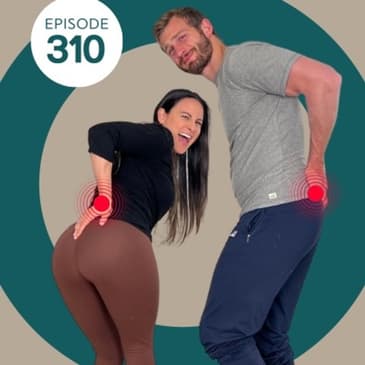
Tailbone pain? DocJen and Dr. Dim dive into the diagnosis for tailbone pain and all the potential causes. Diving into the current research comparing surgical and conservative treatments, they speak into how you can mobilize and treat your tailbone pain at home! Let’s dive in!
Adapting High Intensity for Every Body. DocJen, a doctor of physical therapy, and Jill Miller, a Myofascial expert, come together to bridge the gap between post-rehabilitation and highly functional fitness. Your PT isn’t gonna teach this to you once you finish your rehab and your coach may not have the kinesiological tools to regress speed/intensity/intervals to a level that’s beneficial for your longevity. Who better than Jen and Jill to share with you the Science of Rolling & HIIT and best practices tailored for YOU! This program combines decades of clinical and industry expertise in the worlds of Physical Therapy, mobility, fascia science, HIIT (high-intensity interval training) and regeneration in a mash-up that helps bodies at any age and stage of injury or fitness to prepare their bodies for a successful high-intensity fitness program.
- You’ll be pampered and prepared with evidence-backed self-myofascial release strategies and learn to integrate your joints, muscles and soft tissues so that intensity will help you rather than harm.
- You’ll ignite your body and brain’s tactile communication system known as proprioception so that you can better inhabit the shapes of acceleration and decelartion that HIIT targets.
- You’ll reap the benefits of heart-pounding movement while keeping your joints safe and supple. You’ll also learn breath control and soft tissue recovery tactics that hasten deep sleep and bring you through robust adaptation cycles that gift you a better tomorrow.
Flat, thin, wide and flexible. VivoBarefoot Shoes are made to optimize the natural function of our feed, enhancing strength and mobility with a barefoot profile shoe. For every occasion from casual wear, slippers, exercise, hiking, and beach days to dress wear, you can get a 15% off using our code 'TOB' only available to our podcast listeners with 100 days risk-free trial period! What's there to lose? Try your pair of VivoBarefoot shoes this summer, here! (affiliate link)
**Vivo offers a 100-Day trial period. If you are not completely satisfied, you can send the shoes back and get a refund.
What You Will Learn In This PT Pearl:
08:02 – Anatomy of the tailbone
09:31– Why do people get it
12:31– What the research says
13:19 – Mobilizations and stretching for the coccyx bone
17:31 – Why pelvic tilts matter
20:02 – Why sitting matters - problem with sustained posture
22:16 – Pelvic floor relaxation
24:16 – Just move more!
To Watch the PT Pearl on YouTube, click here: https://youtube.com/watch/
Thank you so much for checking out this episode of The Optimal Body Podcast. If you haven’t done so already, please take a minute to subscribe and leave a quick rating and review of the show!
Hosted by Simplecast, an AdsWizz company. See pcm.adswizz.com for information about our collection and use of personal data for advertising.
[00:00:05] [SPEAKER_00]: Welcome to the Optimal Body Podcast. I'm Dr. Jen.
[00:00:08] [SPEAKER_01]: And I'm Dr. Dom, and we are Doctors of Physical Therapy bringing you the body tips and physical
[00:00:13] [SPEAKER_01]: therapy pearls of wisdom to help you begin to understand your body, relieve your pains
[00:00:17] [SPEAKER_00]: and restrictions, and answer your questions. Along with expert guests, our goal of the
[00:00:21] [SPEAKER_00]: Optimal Body Podcast is really to help you discover what optimal means within your
[00:00:26] [SPEAKER_00]: own body. Let's dive in!
[00:00:29] [SPEAKER_00]: Alright, before we go in, I just have to say, oh my goodness, it has been so
[00:00:32] [SPEAKER_00]: much fun to go through this role into hit program again after already shooting it,
[00:00:37] [SPEAKER_00]: but now actually going through it in real time with people and getting the
[00:00:40] [SPEAKER_00]: feedback that we're getting. It's so much fun.
[00:00:44] [SPEAKER_01]: It's amazing to hear from the people who previously may have been scared of doing
[00:00:48] [SPEAKER_01]: things that they thought were high-intensity workouts or have gotten
[00:00:52] [SPEAKER_01]: pain going upstairs or pain just sitting and standing and the feedback they're
[00:00:56] [SPEAKER_01]: getting already from this program because of the way Jill and Jen educate
[00:01:01] [SPEAKER_01]: through rolling out the body, preparing the tissues and then doing higher
[00:01:05] [SPEAKER_01]: intensity movements and strength movements in a way that are protective to
[00:01:09] [SPEAKER_01]: the joints and are going to help strengthen your body to be able to do
[00:01:13] [SPEAKER_01]: these movements more pain-free.
[00:01:15] [SPEAKER_00]: Exactly. It's not about like most programs that you get, especially in
[00:01:19] [SPEAKER_00]: terms of hit, the modifications are going to be a little limited.
[00:01:22] [SPEAKER_00]: You're probably going to be only seeing the high intense version and then
[00:01:25] [SPEAKER_00]: trying to find a modification on top of that, right? Where we are literally
[00:01:29] [SPEAKER_00]: walking you through everything and you're seeing all different levels working
[00:01:34] [SPEAKER_00]: through it at the same time. So, you know, and based on the assessments that
[00:01:37] [SPEAKER_00]: we have coming into it, you know exactly who you're going to follow.
[00:01:40] [SPEAKER_00]: You know exactly what breathwork like you're ready to kind of dive into
[00:01:45] [SPEAKER_00]: at what intensity for that day.
[00:01:47] [SPEAKER_00]: And it's not about doing it every day.
[00:01:49] [SPEAKER_00]: It's about sprinkling this into your already existing movement so
[00:01:53] [SPEAKER_00]: that it only adds into what you're feeling and how you're moving.
[00:01:57] [SPEAKER_00]: You're going to learn so much from this program.
[00:02:00] [SPEAKER_00]: I'm just, I'm so thrilled that Jill and I really came together and made this.
[00:02:03] [SPEAKER_01]: And we've done podcasts.
[00:02:04] [SPEAKER_01]: I mean, we did one recently with Jill.
[00:02:05] [SPEAKER_01]: We've done podcasts with other people like Dr.
[00:02:08] [SPEAKER_01]: Stacy Sims who just preach and live by all of the benefits that doing
[00:02:12] [SPEAKER_01]: high intensity work as a regular part of your routine can impact and
[00:02:16] [SPEAKER_01]: improve nearly every system of the body.
[00:02:19] [SPEAKER_01]: Exactly. And when you pair that with the tissue work that Jill does,
[00:02:22] [SPEAKER_01]: it just sets you up for success.
[00:02:23] [SPEAKER_01]: It sets you up to move better, to feel better.
[00:02:26] [SPEAKER_01]: And to just have overall a better sense of well being in your body.
[00:02:30] [SPEAKER_01]: So check out the link done in the show notes.
[00:02:32] [SPEAKER_01]: Get into that program and start inserting some more high intensity work
[00:02:37] [SPEAKER_01]: into your daily routine.
[00:02:39] [SPEAKER_00]: Tailbone pain also known as coccyx pain or coxidinia.
[00:02:45] [SPEAKER_01]: Coxidinia.
[00:02:46] [SPEAKER_01]: I read it somewhere.
[00:02:48] [SPEAKER_01]: Dom's making up words.
[00:02:49] [SPEAKER_01]: I read it.
[00:02:49] [SPEAKER_01]: It was in a research study.
[00:02:52] [SPEAKER_01]: Okay.
[00:02:54] [SPEAKER_00]: And anyways,
[00:02:56] [SPEAKER_01]: Some smart scientists wrote that in that journal.
[00:02:59] [SPEAKER_00]: This is fairly common, especially if you sit pro long periods of time.
[00:03:04] [SPEAKER_00]: So we want to definitely address it.
[00:03:07] [SPEAKER_00]: This has actually been requested as well.
[00:03:09] [SPEAKER_01]: Yeah.
[00:03:09] [SPEAKER_01]: I mean, it's a topic that I don't feel like is the first thing
[00:03:12] [SPEAKER_01]: that pops into people's mind.
[00:03:13] [SPEAKER_01]: But if you are ever somebody who has tailbone pain or has sensitivity
[00:03:17] [SPEAKER_01]: in your tailbone area when you're sitting, do you notice it?
[00:03:21] [SPEAKER_01]: And you notice just how much we sit and how we sit every day.
[00:03:25] [SPEAKER_01]: I've never had tailbone pain specifically, but I've had what's called a
[00:03:30] [SPEAKER_01]: pylodenocyst, which is a cyst like right in the tailbone area.
[00:03:34] [SPEAKER_01]: And that caused a lot of pressure and a lot of discomfort.
[00:03:37] [SPEAKER_01]: And I really struggled sitting comfortably for a while until I got that taken care of.
[00:03:43] [SPEAKER_00]: Well, you got it taken care of.
[00:03:45] [SPEAKER_00]: And then we went on a big road trip.
[00:03:46] [SPEAKER_01]: Yeah, I actually got it taken.
[00:03:48] [SPEAKER_01]: I got it removed.
[00:03:49] [SPEAKER_01]: But two days before we drove across the country and spent a few days.
[00:03:54] [SPEAKER_01]: Perfect timing.
[00:03:55] [SPEAKER_01]: Spent a few days in Colorado and yeah.
[00:03:58] [SPEAKER_00]: Yeah, everywhere.
[00:03:59] [SPEAKER_00]: I know.
[00:04:02] [SPEAKER_01]: So I just need to pause quick to talk about one of our podcast sponsors.
[00:04:05] [SPEAKER_01]: And that is Element, which is Jen and my absolute favorite
[00:04:08] [SPEAKER_01]: electrolyte drink mix that helps keep us hydrated throughout the day.
[00:04:11] [SPEAKER_01]: One, by drinking a lot more water because the element is just so darn delicious.
[00:04:15] [SPEAKER_01]: But two, by replenishing the electrolytes that we're losing throughout the day,
[00:04:20] [SPEAKER_01]: like sodium, potassium and magnesium.
[00:04:23] [SPEAKER_01]: And you're going to want to go check them out right now because for a limited time,
[00:04:25] [SPEAKER_01]: they have their summer grapefruit flavor available for purchase.
[00:04:30] [SPEAKER_01]: Everyone loves this grapefruit flavor.
[00:04:32] [SPEAKER_01]: Every time we talk about it, people are like, oh, I got to go get my element.
[00:04:36] [SPEAKER_01]: But all their flavors are so incredible.
[00:04:37] [SPEAKER_01]: Jen's favorite is the raspberry.
[00:04:39] [SPEAKER_01]: I kind of waffle between the watermelon and the citrus.
[00:04:43] [SPEAKER_01]: But these electrolytes are so much more important than we think.
[00:04:47] [SPEAKER_01]: They help us.
[00:04:48] [SPEAKER_01]: So many vital processes within the body like production of energy,
[00:04:52] [SPEAKER_01]: contraction of our muscles.
[00:04:54] [SPEAKER_01]: They can help with brain fog and fatigue.
[00:04:56] [SPEAKER_01]: They can help us with our sleep, with our digestion.
[00:04:59] [SPEAKER_01]: So you really want to make sure that you're replenishing these
[00:05:03] [SPEAKER_01]: electrolytes because we lose them in ways that we don't even think
[00:05:06] [SPEAKER_01]: through our urine, through sweat.
[00:05:08] [SPEAKER_01]: Every time we sleep, we're losing electrolytes.
[00:05:11] [SPEAKER_01]: So that's why Jen and I have incorporated this on a daily basis
[00:05:14] [SPEAKER_01]: to make sure we're getting in enough water, but also replenishing
[00:05:17] [SPEAKER_01]: those little electrolytes.
[00:05:18] [SPEAKER_01]: So if you want to go try the grapefruit flavor or make sure you get element
[00:05:21] [SPEAKER_01]: into your daily routine, go down to the link in the show notes.
[00:05:24] [SPEAKER_01]: It's just drinkelement.com backslashoptimal.
[00:05:27] [SPEAKER_01]: That's drinkelementlikelmnt.com backslashoptimal.
[00:05:32] [SPEAKER_01]: And with every single order, you get a free sample pack
[00:05:35] [SPEAKER_01]: so you can try out all their flavors and know which one you want
[00:05:38] [SPEAKER_01]: to try next.
[00:05:39] [SPEAKER_01]: Go get some element and keep yourself hydrated.
[00:05:43] [SPEAKER_00]: And you had something that we're going to talk about.
[00:05:46] [SPEAKER_00]: You were sitting on something to help relieve your pressure.
[00:05:51] [SPEAKER_00]: I was.
[00:05:51] [SPEAKER_01]: What are you talking like that?
[00:05:54] [SPEAKER_01]: Sitting on something to help relieve your pressure.
[00:05:58] [SPEAKER_01]: I was using a cordous ball, which is one of our favorite
[00:06:02] [SPEAKER_01]: like all purpose tools for tissue,
[00:06:06] [SPEAKER_01]: myofascial type release for breath work.
[00:06:09] [SPEAKER_01]: And now I guess we can add relieving tailbone pain or tailbone pressure
[00:06:13] [SPEAKER_01]: to that list.
[00:06:14] [SPEAKER_01]: But it just when I was sitting in the car specifically,
[00:06:16] [SPEAKER_01]: it helped lift my bottom and it helped me putting my pressure
[00:06:20] [SPEAKER_01]: through both my sit bones and just in generally like my upper thighs
[00:06:25] [SPEAKER_01]: and lower buttock and then keep my tailbone off of the seat
[00:06:30] [SPEAKER_01]: where I was having a lot of discomfort,
[00:06:32] [SPEAKER_00]: which is one of the things they say to help with.
[00:06:35] [SPEAKER_00]: So grab yourself a cordous ball because what's also great
[00:06:38] [SPEAKER_00]: about the cordous ball, you can deflate it to what you need it to.
[00:06:42] [SPEAKER_00]: And so you have that ability to make it a little bit smaller.
[00:06:47] [SPEAKER_00]: So it's not so like firm and big.
[00:06:49] [SPEAKER_00]: Yeah.
[00:06:49] [SPEAKER_00]: And so you could have that bigger surface area
[00:06:52] [SPEAKER_00]: across the sit bones, your ischial tubes to be able to sit on.
[00:06:56] [SPEAKER_00]: So that again, it takes that pressure off the tailbone area,
[00:06:58] [SPEAKER_00]: which where's the tailbone, the coccyx?
[00:07:01] [SPEAKER_01]: The coccyx, which means cuckoo birds beak.
[00:07:05] [SPEAKER_00]: Well, it's the Greek word for beak of the cuckoo bird because
[00:07:12] [SPEAKER_00]: of the cuckoo bird, I guess that's what if you're looking at from it
[00:07:16] [SPEAKER_00]: at it from the side, the beak apparently.
[00:07:19] [SPEAKER_00]: That's what the coccyx looks like, which is hilarious.
[00:07:23] [SPEAKER_00]: But anyways, bottom of the start to the episode.
[00:07:26] [SPEAKER_01]: I know this is crazy.
[00:07:27] [SPEAKER_00]: Sorry guys.
[00:07:28] [SPEAKER_00]: This is what it looks like is parents with no sleep
[00:07:30] [SPEAKER_00]: after the third episode in a row.
[00:07:32] [SPEAKER_01]: Yeah, third one we're recording today.
[00:07:34] [SPEAKER_01]: So lucky you.
[00:07:36] [SPEAKER_00]: So if we're looking at the sacrum, which is the bottom portion of our spine.
[00:07:43] [SPEAKER_00]: Yeah, that's the thing.
[00:07:43] [SPEAKER_00]: We're going into our pelvis or your pelvis.
[00:07:46] [SPEAKER_00]: Yeah.
[00:07:46] [SPEAKER_00]: So it's connecting our pelvic bones together and it's
[00:07:49] [SPEAKER_00]: it's this triangle shape in the back with kind of like those,
[00:07:54] [SPEAKER_00]: you know, low back bones now fused together.
[00:07:57] [SPEAKER_00]: And then if we go to the very bottom, we see this little,
[00:08:01] [SPEAKER_00]: this tiny little triangle at the bottom, but it's not necessarily connected.
[00:08:06] [SPEAKER_00]: So it can move forward and backward.
[00:08:07] [SPEAKER_00]: It has that freedom of movement.
[00:08:09] [SPEAKER_00]: It has ligaments that are in and muscles that are connected into it.
[00:08:12] [SPEAKER_00]: And that's called your coccyx.
[00:08:13] [SPEAKER_00]: And so that's why especially sitting for prolonged periods
[00:08:17] [SPEAKER_00]: when you're slumped, you're putting a lot of pressure right into that area.
[00:08:21] [SPEAKER_01]: It is the caboose of the spine brings up the rear.
[00:08:27] [SPEAKER_01]: And yeah, like you said, why do people get coccyx pain or coccidinia?
[00:08:33] [SPEAKER_01]: Direct trauma, like a lot of times gymnasts I know,
[00:08:37] [SPEAKER_01]: or people ice skating or roller-plating.
[00:08:40] [SPEAKER_01]: If you've ever just had your feet go out from under you, land on your buttock.
[00:08:45] [SPEAKER_01]: That's two times using buttock in this episode so early on.
[00:08:49] [SPEAKER_01]: This happened in Minnesota often when people would just first ice over of the winter.
[00:08:55] [SPEAKER_01]: People walk outside and feet go out, land on your butt right on that tailbone.
[00:09:00] [SPEAKER_01]: That can be like a direct acute trauma.
[00:09:02] [SPEAKER_01]: Otherwise direct pressure, like you said, just from sitting,
[00:09:05] [SPEAKER_01]: especially if you sit kind of in slumped back with your pelvis tucked under
[00:09:09] [SPEAKER_01]: and more of a posterior pelvic tilt, you're putting a lot of direct pressure
[00:09:12] [SPEAKER_01]: on your tailbone, which is not where we should really put pressure while we're sitting.
[00:09:16] [SPEAKER_01]: And then there are different internal factors.
[00:09:19] [SPEAKER_00]: I mean, those who have a lot of hypermobility can be prone to getting a lot
[00:09:24] [SPEAKER_00]: of increased pressure back into the tailbone area.
[00:09:27] [SPEAKER_00]: If you have any childbirth trauma when you went through birthing,
[00:09:32] [SPEAKER_00]: that can cause some trauma to the area.
[00:09:34] [SPEAKER_00]: And then there's different like, I know women or females are five times more
[00:09:39] [SPEAKER_00]: likely to have this tailbone pain than men, which I think is interesting.
[00:09:44] [SPEAKER_01]: That's interesting and I wonder if that has to do with pelvic shape
[00:09:47] [SPEAKER_01]: or has something to do with female anatomy.
[00:09:51] [SPEAKER_01]: Childbirth, I'm sure plays into that or just like menstrual cycles
[00:09:55] [SPEAKER_01]: or I wonder if there's anything that really.
[00:09:59] [SPEAKER_00]: But I also look at like a lot of the exercises that women tend to do
[00:10:03] [SPEAKER_00]: a little bit more than men and a lot of it has to do with sitting.
[00:10:07] [SPEAKER_00]: Like I remember even when I was teaching Pilates and a lot of women
[00:10:10] [SPEAKER_00]: might complain about sitting or doing any reclined positioned exercise.
[00:10:17] [SPEAKER_00]: And then there's a lot of exercises where you're kind of putting
[00:10:18] [SPEAKER_00]: a little bit more pressure into that coccyx area during Pilates.
[00:10:23] [SPEAKER_00]: So yoga, Pilates, things that are sitting or maybe putting a little bit
[00:10:27] [SPEAKER_00]: more pressure that could happen.
[00:10:29] [SPEAKER_00]: And then if you have like a suddenly rapid reduced weight loss,
[00:10:34] [SPEAKER_00]: well, you just rapidly lost some ad post tissue within your buttocks as well.
[00:10:39] [SPEAKER_00]: And so now when you're sitting doing exercise, you might be putting
[00:10:44] [SPEAKER_00]: a little more pressure than you're used to in that area.
[00:10:47] [SPEAKER_01]: Yeah.
[00:10:48] [SPEAKER_01]: So I mean, all this to be said, any rapid change in any of these things
[00:10:52] [SPEAKER_01]: that we just mentioned, the amount that you're sitting, the amount
[00:10:55] [SPEAKER_01]: that you're standing in extreme range of emotion, like you said,
[00:10:58] [SPEAKER_01]: with people with hypermobility, that happens because sometimes
[00:11:01] [SPEAKER_01]: and this is a generalization, those people will like stand
[00:11:05] [SPEAKER_01]: in extreme positions, whether it's extreme anterior pelvic tilt
[00:11:08] [SPEAKER_01]: with their hips kind of locked forward or something.
[00:11:11] [SPEAKER_01]: And that causes the tendons to be pulling at that coccyx
[00:11:16] [SPEAKER_01]: that come from the low back and come from the hips and the pelvic floor.
[00:11:21] [SPEAKER_01]: So because of that, you know, you'll have a lot of different pressure
[00:11:25] [SPEAKER_01]: on the pelvic or on the on the tailbone on that coccyx.
[00:11:28] [SPEAKER_01]: The good news is it's 90 percent of people who have tailbone pain
[00:11:33] [SPEAKER_01]: respond really well to conservative treatment
[00:11:36] [SPEAKER_01]: and don't need anything beyond that like injections or,
[00:11:39] [SPEAKER_01]: you know, there are surgeries even for tailbone pain, which
[00:11:43] [SPEAKER_01]: I shouldn't be surprised, but I was kind of surprised.
[00:11:46] [SPEAKER_01]: Like really a coccyctomy.
[00:11:47] [SPEAKER_00]: Hey, depending on the direct trauma that you might have,
[00:11:50] [SPEAKER_00]: I suppose it landed really hard and I spoke.
[00:11:54] [SPEAKER_01]: Yeah, I guess I was just thinking about sitting.
[00:11:56] [SPEAKER_01]: Yeah.
[00:11:56] [SPEAKER_01]: How would a surgery help to then go back to sitting?
[00:11:59] [SPEAKER_01]: Right.
[00:12:00] [SPEAKER_00]: Yeah.
[00:12:00] [SPEAKER_00]: So if you have it not because of, you know, you fell suddenly
[00:12:04] [SPEAKER_00]: or recently, you know, then we want to be looking at the other things
[00:12:08] [SPEAKER_00]: that can help. And this is where pelvic floor physical therapy
[00:12:11] [SPEAKER_00]: actually becomes really powerful as a tool to be able to help
[00:12:16] [SPEAKER_00]: because there are actually mobilizations that you can do to the coccyx
[00:12:21] [SPEAKER_00]: bone and it is a little bit more intimate with your therapist,
[00:12:25] [SPEAKER_00]: but can really help in relieving that immediate pressure
[00:12:30] [SPEAKER_00]: as we're working toward improving mobility around the area
[00:12:34] [SPEAKER_00]: and movement, changing your posture, all that kind of stuff.
[00:12:36] [SPEAKER_01]: Yeah. And it was interesting when we looked at research,
[00:12:38] [SPEAKER_01]: because a lot of the research that surrounded tailbone pain
[00:12:42] [SPEAKER_01]: had to do with these manual therapies because that's one of the providers
[00:12:46] [SPEAKER_01]: main tools to help somebody feel a more immediate change in that pain
[00:12:51] [SPEAKER_01]: is doing either a levator, an eye massage,
[00:12:55] [SPEAKER_01]: which is levator and is one of the muscles in our pelvic floor
[00:12:58] [SPEAKER_01]: doing a coccygeal like manual therapy or manipulation or mobilization,
[00:13:03] [SPEAKER_01]: you know, and it would be kind of comparing these different manual techniques,
[00:13:07] [SPEAKER_01]: which like, OK, that's great.
[00:13:09] [SPEAKER_01]: Again, if somebody rubs your tailbone a little bit and it's in pain,
[00:13:13] [SPEAKER_01]: like we might feel a change and there might be like some minor differences
[00:13:16] [SPEAKER_01]: between those different manual therapies.
[00:13:18] [SPEAKER_01]: But there was also a really cool study that looked at what we were talking about
[00:13:22] [SPEAKER_01]: the pressures that come from the tendons and the muscles that are attached
[00:13:26] [SPEAKER_01]: to the coccyx and if doing mobility or other therapies
[00:13:31] [SPEAKER_01]: like stretches to those areas could help with the tailbone pain.
[00:13:35] [SPEAKER_00]: Yeah. I mean, and going back to that first study, I mean, yes,
[00:13:38] [SPEAKER_00]: it's like it's kind of weak for us, right?
[00:13:40] [SPEAKER_00]: Just looking at massage and mobilization
[00:13:43] [SPEAKER_00]: because it doesn't really include as much movement.
[00:13:46] [SPEAKER_00]: But I think what was cool with that, at least, is that we can see
[00:13:49] [SPEAKER_00]: if we are combining both levator and eye,
[00:13:53] [SPEAKER_00]: which is one of the pelvic floor muscles that connect around into our
[00:13:56] [SPEAKER_00]: coccyx bone, so more of that posterior pelvic floor
[00:14:00] [SPEAKER_00]: in the back.
[00:14:01] [SPEAKER_00]: And if we are doing massage and stretching to that area
[00:14:06] [SPEAKER_00]: that had a greater effect than joint mobilization, which joint mobilization
[00:14:10] [SPEAKER_00]: you have to use a provider massage and stretching, you don't have to use a provider.
[00:14:15] [SPEAKER_00]: You could you can do that on your own.
[00:14:17] [SPEAKER_00]: And we have we usually show this with different tools that we have.
[00:14:21] [SPEAKER_00]: You can use a pelvic wand as well.
[00:14:24] [SPEAKER_00]: You can use one of the therapy balls from Tune Up Fitness,
[00:14:27] [SPEAKER_00]: you know, to kind of get that into that pressure.
[00:14:29] [SPEAKER_00]: And then you could do some specific stretches that will kind of show a little
[00:14:33] [SPEAKER_00]: bit on YouTube as well.
[00:14:34] [SPEAKER_00]: So if you're watching, you can see some of these things.
[00:14:37] [SPEAKER_00]: But those can really help to to take off that pressure from that
[00:14:43] [SPEAKER_00]: tailbone area. And that was actually shown to be a greater effect than joint mobilization.
[00:14:48] [SPEAKER_00]: So I mean, I think that's pretty cool.
[00:14:50] [SPEAKER_01]: Yeah, that's actually a great point that the one that you can do on yourself
[00:14:55] [SPEAKER_01]: had had a better effect than the one that requires a provider.
[00:14:58] [SPEAKER_01]: And that's what we're all about, especially in this podcast,
[00:15:00] [SPEAKER_01]: we want to give you the tools that you can go and have actionable takeaways
[00:15:05] [SPEAKER_01]: for yourself. The other study that talked about doing stretches
[00:15:08] [SPEAKER_01]: and they specifically looked at hip flexor stretches and also thoracic
[00:15:14] [SPEAKER_01]: opening and piriformis stretches, which I think is pretty cool
[00:15:18] [SPEAKER_01]: because piriformis kind of attaches right in on the sacrum
[00:15:21] [SPEAKER_01]: down to the lower part of the sacrum, which is right above that coccyx.
[00:15:25] [SPEAKER_01]: Hip flexor, the thought was that if the hip flexors are,
[00:15:28] [SPEAKER_01]: you know, contributing to more standing and anterior pelvic tilt,
[00:15:33] [SPEAKER_01]: same with the thoracic opening, they thought if we aren't
[00:15:37] [SPEAKER_01]: standing with good posture, is that causing us to put more pressure
[00:15:40] [SPEAKER_01]: in the tailbone area? And they actually found that doing
[00:15:44] [SPEAKER_01]: stretches and exercises for these areas resulted in better posturing
[00:15:49] [SPEAKER_01]: and sitting in standing position, so they weren't putting as much pressure
[00:15:53] [SPEAKER_00]: on the tailbone area. Yeah, some more pain-free sitting.
[00:15:56] [SPEAKER_00]: I mean, that's the goal, right?
[00:15:58] [SPEAKER_00]: It ultimately is what someone wants to feel.
[00:16:00] [SPEAKER_00]: So and I think that just cool study in terms of like, let's not look
[00:16:04] [SPEAKER_00]: directly at the area, but let's look at what if we make changes around
[00:16:08] [SPEAKER_00]: the area and how that can actually cause an effect.
[00:16:12] [SPEAKER_00]: And again, especially if we're looking at static stretches,
[00:16:15] [SPEAKER_00]: they did this for two minutes on each side.
[00:16:19] [SPEAKER_00]: So think of a hip flexor stretch, two minutes on each side,
[00:16:21] [SPEAKER_00]: and they did that five times a week.
[00:16:23] [SPEAKER_00]: So it has to be something long-term.
[00:16:26] [SPEAKER_00]: It has to be sustained for a long period of time.
[00:16:29] [SPEAKER_00]: They have to do it repetitively over and over again
[00:16:32] [SPEAKER_00]: in order to start to see any kind of benefited result.
[00:16:36] [SPEAKER_00]: But in doing that, they did see a result.
[00:16:38] [SPEAKER_00]: So I think that's really cool to just keep in mind.
[00:16:40] [SPEAKER_00]: And this comes back to our own recommendations of, you know,
[00:16:43] [SPEAKER_00]: kind of assessing our posture.
[00:16:46] [SPEAKER_00]: We have to look at the upper back and the thoracic spine, the rib cage,
[00:16:50] [SPEAKER_00]: because how my rib cage is resting really is going to dictate
[00:16:55] [SPEAKER_00]: where my pelvis is underneath it.
[00:16:58] [SPEAKER_00]: Then, you know, it kind of just like plays off of one another.
[00:17:01] [SPEAKER_01]: I love the post that was it Katie?
[00:17:03] [SPEAKER_01]: Yeah, Katie's and Katie had one where she had a rib cage
[00:17:05] [SPEAKER_01]: and a pelvis and like put glasses on them and was doing
[00:17:08] [SPEAKER_01]: like this little skit where everyone blames the pelvis.
[00:17:10] [SPEAKER_01]: Oh, air-tiered pelvic tilt.
[00:17:11] [SPEAKER_01]: Oh, posterior pelvic tilt.
[00:17:13] [SPEAKER_01]: Pelvis is fault.
[00:17:13] [SPEAKER_01]: Why are you doing everything wrong, pelvis?
[00:17:15] [SPEAKER_01]: And the rib cage is hanging out over here like
[00:17:18] [SPEAKER_01]: people aren't blaming me.
[00:17:20] [SPEAKER_01]: But like you said, if we're not paying attention to our rib cage,
[00:17:22] [SPEAKER_01]: it's hard to complete that equation
[00:17:24] [SPEAKER_01]: because they work so much in tandem with each other.
[00:17:27] [SPEAKER_00]: Exactly.
[00:17:28] [SPEAKER_00]: So a lot of times when people do find themselves
[00:17:31] [SPEAKER_00]: standing in a little bit more anterior pelvic tilt,
[00:17:34] [SPEAKER_00]: well, let's look again at the rib cage.
[00:17:36] [SPEAKER_00]: Typically sometimes it's then flared and it's forward.
[00:17:40] [SPEAKER_00]: And when we're trying to correct our posture
[00:17:43] [SPEAKER_00]: and pull our shoulder blades back,
[00:17:44] [SPEAKER_00]: but we're actually flaring that rib cage.
[00:17:46] [SPEAKER_00]: So when we flare that rib cage,
[00:17:47] [SPEAKER_00]: then the pelvis is gonna respond by tipping forward as well.
[00:17:51] [SPEAKER_00]: So, you know, we have to then say,
[00:17:54] [SPEAKER_00]: okay, how can I get that better rib cage mobility
[00:17:56] [SPEAKER_00]: out to the sides, which we talk about a lot?
[00:17:59] [SPEAKER_00]: Grabbing the sides of your rib cage,
[00:18:01] [SPEAKER_00]: doing some intentional breaths to kind of open it up
[00:18:04] [SPEAKER_00]: and allow it.
[00:18:05] [SPEAKER_00]: And when you do those intentional breaths
[00:18:07] [SPEAKER_00]: into the side of your rib cage,
[00:18:08] [SPEAKER_00]: you naturally start to stack over your pelvis.
[00:18:11] [SPEAKER_00]: Like your pelvis, you're going to do this in standing,
[00:18:14] [SPEAKER_00]: do it in standing right now.
[00:18:15] [SPEAKER_00]: I don't care where you are, I'm just kidding.
[00:18:17] [SPEAKER_00]: When you get a chance,
[00:18:19] [SPEAKER_00]: stand, grab your hands around your rib cage,
[00:18:22] [SPEAKER_00]: do some really big breaths into the size of your hands
[00:18:25] [SPEAKER_00]: and you're gonna feel what happens on your pelvis.
[00:18:27] [SPEAKER_00]: It's gonna naturally stack underneath your rib cage.
[00:18:30] [SPEAKER_01]: Yeah, it's hard to avoid that.
[00:18:31] [SPEAKER_01]: And when I think about that study
[00:18:32] [SPEAKER_01]: where they talked about doing the stretches
[00:18:34] [SPEAKER_01]: and doing the thoracic opening
[00:18:35] [SPEAKER_01]: and doing the piriformis stretch,
[00:18:37] [SPEAKER_01]: especially if those people were aware
[00:18:39] [SPEAKER_01]: that this was because of tailbone pain
[00:18:42] [SPEAKER_01]: or positioning and stuff,
[00:18:44] [SPEAKER_01]: it's hard for them not to also be thinking about,
[00:18:46] [SPEAKER_01]: okay, this is position related.
[00:18:48] [SPEAKER_01]: So then when they're going to sit or going to stand,
[00:18:51] [SPEAKER_01]: that's also in their mind like,
[00:18:52] [SPEAKER_01]: okay, I've been doing these stretches
[00:18:53] [SPEAKER_01]: for two minutes a day, five days a week.
[00:18:56] [SPEAKER_01]: I have to be a little more aware.
[00:18:58] [SPEAKER_01]: And this is what we're talking about right now.
[00:19:00] [SPEAKER_01]: If you're somebody who sits for long periods
[00:19:02] [SPEAKER_01]: or stands for long periods, especially for work,
[00:19:05] [SPEAKER_01]: you really wanna start tuning into that.
[00:19:08] [SPEAKER_01]: If you have pain in your tailbone or pain anywhere else,
[00:19:11] [SPEAKER_01]: you know, our body's not built to stand
[00:19:13] [SPEAKER_01]: or sit in one sustained position
[00:19:16] [SPEAKER_01]: for a long period of time.
[00:19:18] [SPEAKER_01]: So the rib cage breath is incredible
[00:19:20] [SPEAKER_01]: because even if you come back to that once or twice an hour
[00:19:24] [SPEAKER_01]: if you're working and you can't move a ton
[00:19:26] [SPEAKER_01]: and you come back to that rib cage breath
[00:19:28] [SPEAKER_01]: and you do some pelvic tilts,
[00:19:30] [SPEAKER_01]: the next thing I was gonna say is like
[00:19:31] [SPEAKER_01]: the classic cat cow,
[00:19:33] [SPEAKER_01]: like get down on your hands and knees, do a cat cow.
[00:19:37] [SPEAKER_01]: Get seated in your work chair,
[00:19:38] [SPEAKER_01]: do a seated kind of cat cow or pelvic tilt.
[00:19:42] [SPEAKER_01]: Stand if you stand at a standing desk,
[00:19:44] [SPEAKER_01]: do some pelvic tilts.
[00:19:46] [SPEAKER_01]: And it just helps bring that awareness to,
[00:19:48] [SPEAKER_01]: okay, how am I positioning myself?
[00:19:50] [SPEAKER_01]: Find that pelvic neutral-ish.
[00:19:53] [SPEAKER_01]: It's not super important
[00:19:54] [SPEAKER_01]: that you stand in a perfectly stacked position
[00:19:57] [SPEAKER_01]: but if you bring that awareness,
[00:19:59] [SPEAKER_01]: take one of the rib cage breaths
[00:20:01] [SPEAKER_01]: and then get back to work.
[00:20:02] [SPEAKER_01]: You're gonna be doing your brain
[00:20:04] [SPEAKER_01]: and your pelvis and tailbone a massive help.
[00:20:07] [SPEAKER_00]: Yeah, exactly.
[00:20:08] [SPEAKER_00]: I think that's so incredibly important.
[00:20:10] [SPEAKER_00]: And when we just start to improve our thoracics
[00:20:15] [SPEAKER_00]: or our upper spine mobility in general,
[00:20:17] [SPEAKER_00]: it's gonna help us to not be so slumped,
[00:20:19] [SPEAKER_00]: put so much pressure.
[00:20:21] [SPEAKER_00]: It's gonna take pressure off of our pelvis as well
[00:20:25] [SPEAKER_00]: because we're gonna automatically
[00:20:26] [SPEAKER_00]: be standing up a little bit straighter.
[00:20:27] [SPEAKER_00]: When we improve our hip mobility,
[00:20:29] [SPEAKER_00]: it's gonna take different pressure.
[00:20:31] [SPEAKER_00]: So not only hip flexor,
[00:20:32] [SPEAKER_00]: but in general your entire hip mobility,
[00:20:35] [SPEAKER_00]: you're from your glutes to your pelvic floor
[00:20:37] [SPEAKER_00]: to your rotation of the hips, your joints.
[00:20:40] [SPEAKER_00]: Like all of that, if we help to improve the way
[00:20:44] [SPEAKER_00]: that that moves,
[00:20:45] [SPEAKER_00]: it's just gonna be resting in a state
[00:20:47] [SPEAKER_00]: that feels a little bit more relaxed for your body
[00:20:50] [SPEAKER_00]: and isn't putting as much strain and tension
[00:20:52] [SPEAKER_00]: in different areas like your tailbone.
[00:20:54] [SPEAKER_00]: So I think like all those are so important.
[00:20:56] [SPEAKER_01]: Yeah, and we kind of mentioned already
[00:20:58] [SPEAKER_01]: the pelvic floor, how vital this is to the component.
[00:21:01] [SPEAKER_01]: I realize we've been talking about this
[00:21:03] [SPEAKER_01]: and I'm just sitting here like a slob
[00:21:05] [SPEAKER_01]: resting into my tailbone.
[00:21:08] [SPEAKER_01]: That would be it.
[00:21:09] [SPEAKER_01]: And I'm not.
[00:21:09] [SPEAKER_01]: Okay, there's a gymnast sitting there with like
[00:21:14] [SPEAKER_01]: a robot final setup.
[00:21:16] [SPEAKER_01]: The pelvic floor is so vital
[00:21:17] [SPEAKER_01]: because the levator aint night
[00:21:19] [SPEAKER_01]: and other muscles attach right into that tailbone.
[00:21:24] [SPEAKER_01]: So if we're not breathing effectively,
[00:21:25] [SPEAKER_01]: if we're always holding tension in that pelvic floor,
[00:21:28] [SPEAKER_01]: if we're not allowing it to just relax
[00:21:30] [SPEAKER_01]: and then tighten with our breath throughout the day,
[00:21:33] [SPEAKER_01]: again, we might be putting some unbalanced pressure there.
[00:21:36] [SPEAKER_01]: So like you mentioned,
[00:21:37] [SPEAKER_01]: doing some of the pelvic floor reset slash releases
[00:21:41] [SPEAKER_01]: or awareness exercises
[00:21:42] [SPEAKER_01]: with like the tune up fitness balls
[00:21:45] [SPEAKER_01]: are an amazing place to start
[00:21:46] [SPEAKER_01]: because it brings that awareness.
[00:21:48] [SPEAKER_01]: And then while you're doing some of these other exercises
[00:21:51] [SPEAKER_01]: doing one of those rib cage breaths,
[00:21:53] [SPEAKER_01]: I bet you your pelvic floor will start to kick in
[00:21:56] [SPEAKER_01]: and work for you a little bit more as well.
[00:21:58] [SPEAKER_00]: So important to address the pelvic floor too
[00:22:00] [SPEAKER_00]: because things that people don't like to mention
[00:22:03] [SPEAKER_00]: or talk about is pain with sex and pain with pooping.
[00:22:09] [SPEAKER_00]: These are all very important.
[00:22:11] [SPEAKER_00]: And if you are having any difficulties
[00:22:14] [SPEAKER_00]: with any of that or constipation,
[00:22:17] [SPEAKER_00]: we can't just be looking at the foods we're eating.
[00:22:19] [SPEAKER_00]: We also have to be looking at the pelvic floor tension
[00:22:22] [SPEAKER_00]: and tightness.
[00:22:23] [SPEAKER_00]: And this is where I will say
[00:22:24] [SPEAKER_00]: that going to see a pelvic floor therapist
[00:22:26] [SPEAKER_00]: and just starting to understand what muscles
[00:22:29] [SPEAKER_00]: and where on your pelvic floor you're having a lot of tension
[00:22:32] [SPEAKER_00]: because this is an area that we can't easily touch ourselves
[00:22:36] [SPEAKER_00]: and we're not as familiar.
[00:22:38] [SPEAKER_00]: So getting that feedback from a professional to say,
[00:22:40] [SPEAKER_00]: oh, do you feel that?
[00:22:42] [SPEAKER_00]: Oh yeah, that's super tense.
[00:22:43] [SPEAKER_00]: Here's what you can do for that area, right?
[00:22:45] [SPEAKER_00]: And then you start to have the tools
[00:22:48] [SPEAKER_00]: to implement to cause those better relaxation.
[00:22:51] [SPEAKER_00]: Again, if we're talking on the outer pelvic floor
[00:22:54] [SPEAKER_00]: to touch, that's where we can use our fingers
[00:22:57] [SPEAKER_00]: or we can use the therapy balls from Tune Up Fitness.
[00:23:01] [SPEAKER_00]: And I love doing that to just put that feedback into there.
[00:23:05] [SPEAKER_00]: We could use the pelvic wands depending on again,
[00:23:08] [SPEAKER_00]: how deep you need to go based on what you find
[00:23:11] [SPEAKER_00]: from the pelvic floor therapist
[00:23:13] [SPEAKER_00]: and tensions in the area.
[00:23:14] [SPEAKER_00]: It's just so important.
[00:23:16] [SPEAKER_00]: And then we can work on specific stretches
[00:23:18] [SPEAKER_00]: but you don't have to be in pain in these areas.
[00:23:22] [SPEAKER_00]: You don't always have to be constipated
[00:23:24] [SPEAKER_00]: and dealing with this.
[00:23:25] [SPEAKER_00]: If those are things that you're always dealing with,
[00:23:28] [SPEAKER_00]: I would say go see a pelvic floor therapist.
[00:23:31] [SPEAKER_01]: Yeah, and then really the last thing on our list
[00:23:34] [SPEAKER_01]: is just move more.
[00:23:36] [SPEAKER_01]: You know, generally I'd say for a large number of people,
[00:23:41] [SPEAKER_01]: the tailbone pain is coming from sitting consistently
[00:23:45] [SPEAKER_01]: in one position throughout the day too much
[00:23:47] [SPEAKER_01]: or for too long periods or standing in one position
[00:23:51] [SPEAKER_01]: or just again, those muscles pulling at that tailbone
[00:23:54] [SPEAKER_01]: in a way that is unbalanced
[00:23:57] [SPEAKER_01]: or puts too much pressure in the tailbone area.
[00:24:00] [SPEAKER_01]: So moving more, having more variation
[00:24:02] [SPEAKER_01]: in our movement throughout the day.
[00:24:03] [SPEAKER_01]: If we do work in a standing or sitting position
[00:24:06] [SPEAKER_01]: for long stretches, force yourself to come back
[00:24:09] [SPEAKER_01]: to some of those exercises that we talked about,
[00:24:11] [SPEAKER_01]: whether it's the breath, whether it's pelvic tilts,
[00:24:15] [SPEAKER_01]: doing a chest opener on the wall,
[00:24:17] [SPEAKER_01]: anything to just have a little more variation
[00:24:20] [SPEAKER_01]: in that movement for 30 seconds
[00:24:22] [SPEAKER_01]: and then getting back to work.
[00:24:25] [SPEAKER_01]: Well, there we go, kind of our review
[00:24:27] [SPEAKER_01]: on tailbone pain or coxidinia.
[00:24:30] [SPEAKER_01]: If you enjoyed that, please consider sharing with a friend
[00:24:32] [SPEAKER_01]: or leaving us a rating and review
[00:24:34] [SPEAKER_01]: on your favorite podcasting platform.
[00:24:36] [SPEAKER_01]: And remember we have the role into hip program
[00:24:38] [SPEAKER_01]: that Jen collaborated on with Jill Miller
[00:24:41] [SPEAKER_01]: who is actually one of the co-founders
[00:24:42] [SPEAKER_01]: of Tune Up Fitness, which in this episode
[00:24:45] [SPEAKER_01]: we talked a lot about their balls and tools
[00:24:47] [SPEAKER_01]: which are our favorites to use on our body.
[00:24:49] [SPEAKER_01]: And those tools are gonna be used a lot
[00:24:51] [SPEAKER_01]: in the role into hip program.
[00:24:53] [SPEAKER_01]: So go check out the link in the show notes
[00:24:55] [SPEAKER_01]: to get signed up for the role into hip program.
[00:24:57] [SPEAKER_01]: And of course we'll see you next time
[00:24:58] [SPEAKER_01]: on the Optimal Body Podcast.