
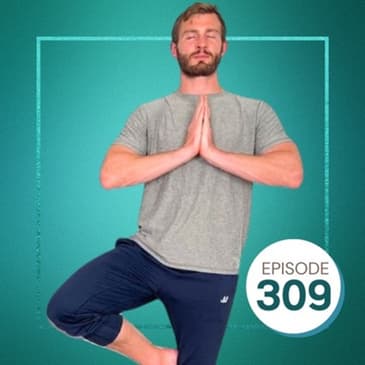
Feeling certain muscles and not others? DocJen and Dr. Dom dive into mind-body muscle connection and how to coordinate the the awareness around your muscles. With 5 ways to improve mind-body muscle connection, they describe the roll of touch, vision, doing something different, going barefoot, and just moving in improving mind-body muscle connection.
Adapting High Intensity for Every Body. DocJen, a doctor of physical therapy, and Jill Miller, a Myofascial expert, come together to bridge the gap between post-rehabilitation and highly functional fitness. Your PT isn’t gonna teach this to you once you finish your rehab and your coach may not have the kinesiological tools to regress speed/intensity/intervals to a level that’s beneficial for your longevity. Who better than Jen and Jill to share with you the Science of Rolling & HIIT and best practices tailored for YOU! This program combines decades of clinical and industry expertise in the worlds of Physical Therapy, mobility, fascia science, HIIT (high-intensity interval training) and regeneration in a mash-up that helps bodies at any age and stage of injury or fitness to prepare their bodies for a successful high-intensity fitness program.
- You’ll be pampered and prepared with evidence-backed self-myofascial release strategies and learn to integrate your joints, muscles and soft tissues so that intensity will help you rather than harm.
- You’ll ignite your body and brain’s tactile communication system known as proprioception so that you can better inhabit the shapes of acceleration and decelartion that HIIT targets.
- You’ll reap the benefits of heart-pounding movement while keeping your joints safe and supple. You’ll also learn breath control and soft tissue recovery tactics that hasten deep sleep and bring you through robust adaptation cycles that gift you a better tomorrow.
Flat, thin, wide and flexible. VivoBarefoot Shoes are made to optimize the natural function of our feed, enhancing strength and mobility with a barefoot profile shoe. For every occasion from casual wear, slippers, exercise, hiking, and beach days to dress wear, you can get a 15% off using our code 'TOB' only available to our podcast listeners with 100 days risk-free trial period! What's there to lose? Try your pair of VivoBarefoot shoes this summer, here! (affiliate link)
**Vivo offers a 100-Day trial period. If you are not completely satisfied, you can send the shoes back and get a refund.
What You Will Learn In This PT Pearl:
02:36 – Where mind body connection is used?
03:30– Mechanical feedback
08:05– Using visual feedback
10:57 – What it means to do something different!
14:46 – Go Barefoot
19:10 – Just move - what components to think about!
21:57 – A program to improve your mind body connection
To Watch the PT Pearl on YouTube, click here: https://youtube.com/watch/
Thank you so much for checking out this episode of The Optimal Body Podcast. If you haven’t done so already, please take a minute to subscribe and leave a quick rating and review of the show!
Hosted by Simplecast, an AdsWizz company. See pcm.adswizz.com for information about our collection and use of personal data for advertising.
[00:00:05] [SPEAKER_03]: Welcome to The Optimal Body Podcast. I'm Dr. Jen.
[00:00:08] [SPEAKER_00]: And I'm Dr. Dom, and we are Doctors of Physical Therapy, bringing you the body tips and physical therapy pearls of wisdom to help you begin to understand your body, relieve your pains and restrictions, and answer your questions.
[00:00:19] [SPEAKER_03]: Along with expert guests, our goal of The Optimal Body Podcast is really to help you discover what optimal means within your own body. Let's dive in!
[00:00:29] [SPEAKER_01]: Okay, so before we hop into Chatwood Jill and this I think is her third time as an interviewie on the podcast which is awesome.
[00:00:36] [SPEAKER_01]: She's someone that we both respect as an authority figure in the health space.
[00:00:40] [SPEAKER_01]: I want to talk about vivo barefoot shoes because I know Jill wears them. She has her kids wear them and she believes in the concepts that we believe when it comes to barefoot living.
[00:00:49] [SPEAKER_01]: Vivo's are flat and thin, they are wide and they're flexible. They allow our feet to do what they're built and what they're meant to do and they will naturally gain strength and mobility just by wearing a barefoot profile shoe like vivo barefoot shoes.
[00:01:07] [SPEAKER_01]: And if you haven't gotten your hands on a pariette, they have them for everything, whether you just want them for casual wear. They have slippers for around the house.
[00:01:14] [SPEAKER_01]: They've got great options to work out in. They have options for hiking or even days at the beach, they have water shoe options.
[00:01:22] [SPEAKER_01]: And one of my favorites is their dress pairs which I wear to every single wedding and I'm the envy of the dance floor because everyone knows that I don't have my feet crammed in uncomfortable tight dress shoes that are going to give me blister.
[00:01:35] [SPEAKER_01]: So if you want to grab a pair of vivo's for any occasion, go down to the link in the show notes. Make sure you use our code T OB. You get a special 15% off that is only available to our podcast listeners and vivo even has 100 day risk free try.
[00:01:51] [SPEAKER_01]: So if you feel like you got the wrong size or if you want a different pair, you can always send them back with no issues and get a different size or a different pair. Make sure you go to the link in the show notes use code T OB to get your 15% off and get your feet in some barefoot shoes. Alright, let's get to the interview.
[00:02:08] [SPEAKER_01]: So I'm kind of excited for this episode because this is more one that we're just going to chat through and where we bring up a topic and you and I write down the five things that come to our mind first about how to best build back or grow your mind body muscle movement connection.
[00:02:26] [SPEAKER_03]: Yeah, I love this topic in particular because one of my biggest pet peeves when I was working in the clinic would be people who come in and say, I don't have glutes like they don't or they're asleep. They're not awake. I've been told they're inactive and that's that's not a thing you're walking your upright you're moving your glute are working we just need to improve how you're feeling those glutes during movement.
[00:02:51] [SPEAKER_01]: Yeah, and I think whenever I hear mind body or mind body movement connection like mind mind initially dressed to things like yoga or tai chi or even Pilates to an extent that actually have a lot of components of some of the things that we're going to be talking about.
[00:03:08] [SPEAKER_01]: But where you're just really honed in focused on the movement focused on the positioning so or like even just on one muscle grip.
[00:03:16] [SPEAKER_01]: Yeah, I'm a muscle group which again coming to the glutes like can be very beneficial in some ways but our five. So we're going to run through these and talk about each topic a little bit.
[00:03:27] [SPEAKER_01]: The first one is touch or mechanical stimulation mechanical feedback.
[00:03:34] [SPEAKER_03]: This helps you to tell your brain where this muscle is and then how it is moving through space it's actually going to help your purpose.
[00:03:43] [SPEAKER_03]: When we bring some feedback to that area so touches so beneficial and this is why as physical therapist we use touch within practice when we when we're seeing a client one on one.
[00:03:58] [SPEAKER_03]: Because we're helping to build in that mind body connection prior to starting to move with the patient.
[00:04:03] [SPEAKER_01]: Yeah, the mechanical stimulation does so many different things that like you said activates the proprioceptors and we're going to say proprioception or proprioceptors a few times throughout this podcast but those are really the nerves that are in our muscle tendons and like it's that tell us where that joint is in space.
[00:04:22] [SPEAKER_01]: Right which means when I have my eyes closed I can lift my hand up I can touch my nose because I know where my hand I know where my nose are even when my eyes are closed that's proprioception.
[00:04:32] [SPEAKER_01]: Right and when we like I always think about knee wraps right the reason knee wraps feel so good or people like to like I've had a knee surgery on my right.
[00:04:43] [SPEAKER_01]: I've had a knee injury on my left I like to actually work out with leggings or play basketball or pickle ball with leggings on because that compression around my knee helps me understand a little bit more what that knees doing in space.
[00:04:57] [SPEAKER_03]: I mean this is even why taping is so beneficial as well which we have an episode that we did on taping on cannesio tape or like the stretchy k-tapy people use.
[00:05:07] [SPEAKER_03]: Yeah and like the main thing is that it's going to include you're going to have that touch stimulation going into that area so you're going to help to increase that mind body connection.
[00:05:17] [SPEAKER_03]: Yeah so that say it's taped on the shoulder in a certain way and you're going to play a sport or volleyball.
[00:05:23] [SPEAKER_03]: It's going to help you to know where that shoulder is in space so that the whole shoulder complex and the shoulder girdle can work better together.
[00:05:31] [SPEAKER_01]: Yeah, give you great feedback and another way to use touch that a lot of people probably use without knowing it is using different tools like foam rollers or like our favorite tuna fitness balls or the cordous ball because again when you put pressure into that muscle.
[00:05:46] [SPEAKER_01]: You're activating so many of those things we just lifted list it off the camera receptors the proprioceptors helps you feel that muscle a little bit more to kind of prep or primate for movement or activation.
[00:05:59] [SPEAKER_03]: And this is what we're doing with rolling to hit which I'm so excited Jill Miller is actually taking us through how to use her tools within, you know they're rolling kits.
[00:06:10] [SPEAKER_03]: So there's different types of balls, different sizes and stuff and we use them within the tissue to help to prep the tissue for better elastic feedback when we're going into those power moves in that high intensity work.
[00:06:24] [SPEAKER_03]: And it studies have shown that this type of rolling work when you're working controlled into a muscle group or into a tendon really helps to provide that that prep work for the body to then go work out better than stretching.
[00:06:42] [SPEAKER_03]: So especially passive stretching prior to work out prior to movement and so being able to use these directed roll roll out that she's going to take us through which only like 10 5 to 10 minutes it's not very long.
[00:06:57] [SPEAKER_03]: Is just going to help to prep the body that much more so that you reduce that risk of injury.
[00:07:02] [SPEAKER_01]: Yeah and when we use tools and we've talked about this on previous tool podcasts of our own like you increase that range of motion for a brief period of time.
[00:07:11] [SPEAKER_01]: And what I love about this role into hit program is use the tool so you're going to relax and open up that muscle but also prep and primate for some more elastic or dynamic movement.
[00:07:21] [SPEAKER_01]: And then you jump into the hit workout with Jen where you're going to use that range of motion to your benefit to go through the movements to activate the muscles throughout that whole range of motion.
[00:07:33] [SPEAKER_01]: So again, you're probably increasing range of motion. You're increasing the the joint sense the sense of the muscle all around just an incredible program and incredible concept to use tools.
[00:07:44] [SPEAKER_01]: So there's a link down in the show notes and actually for the next week it's still an early bird where you get a bonus of like 200 to 100 plus extra dollars worth of content if you buy in the next week.
[00:07:57] [SPEAKER_03]: Yeah so highly highly recommend getting in right now.
[00:08:00] [SPEAKER_03]: And then the next area that we think is really important to help improve that my body muscle connection is using your visual sense in order to help improve it and this can easily be done by using a mirror.
[00:08:16] [SPEAKER_03]: Just looking at yourself in the mirror as you're doing a movement is going to tell you oh I'm actually getting leaning to the side there or sticking my booty out a lot or I'm doing something else funky.
[00:08:28] [SPEAKER_01]: Yeah, this is where I think you recommend a lot like record yourself doing a movement like if you've ever been in any agendas challenges or programs before just like record yourself doing this record yourself doing this self assessment.
[00:08:41] [SPEAKER_01]: You might notice things that you never knew you did before.
[00:08:45] [SPEAKER_01]: Like you said oh my knees lightly goes this way only on my right but not on my left or my hip kind of waggles to one side when I do this squat or something.
[00:08:53] [SPEAKER_01]: But that visual feedback can be so beneficial.
[00:08:57] [SPEAKER_03]: Exactly, I mean that's even like one of the benefits of posting on Instagram is that I'm recording so much that I then watch it back and I'm like oh that looked a little interesting.
[00:09:06] [SPEAKER_01]: I would say I have looked more at my videos than like man that looks ugly.
[00:09:11] [SPEAKER_01]: How could I how could I redo this?
[00:09:14] [SPEAKER_01]: And also when we talk about vision it's a whole nother system of balance for us.
[00:09:21] [SPEAKER_01]: We know we have three system of balance systems of balance. We talked about proprioception vision all together helps us balance it helps you be able to see something.
[00:09:30] [SPEAKER_01]: Know which ways up so usually important that we train this visual system when we're talking about body sense or mind body connection.
[00:09:38] [SPEAKER_03]: Yeah, and another way is to look at your body actually doing the movement.
[00:09:42] [SPEAKER_03]: So if you are doing bicep curls and a lot of the times I think you naturally see this happening in the gym.
[00:09:48] [SPEAKER_03]: If you look at people who are working out they're doing curls or something where you can visually see it in front. They're looking at it as it's mostly just at their at their guns.
[00:09:58] [SPEAKER_03]: How they're doing it is a way of improving that mind body connection.
[00:10:03] [SPEAKER_03]: So now I'm working this muscle.
[00:10:05] [SPEAKER_03]: I'm looking at it literally contract and lengthen as it's going through its full range of motion. You are going to help improve what's happening within that muscle.
[00:10:15] [SPEAKER_01]: There's a whole neuro dynamic or neurologic concept called P&F or proprioceptive Nermuscular feedback facilitation or feedback that requires you watching the arm or the hand or whatever well as doing the movement.
[00:10:31] [SPEAKER_01]: We use this a lot when we work with patients who've had nerve injuries or strokes and they're trying to regain motion or regain the sense of that joint, the ability to control that joint.
[00:10:42] [SPEAKER_01]: So again, there's no reason healthy individuals or people who haven't had an injury can't take advantage of that principle.
[00:10:49] [SPEAKER_03]: Exactly. I think it's such a great one. Next one we're really talking about number three.
[00:10:56] [SPEAKER_03]: Switching up how you're doing that movement. So do something different.
[00:11:01] [SPEAKER_01]: Yeah. If you're looking for a different result and do something different. If you're looking to be able to move differently in a squat, make a change.
[00:11:09] [SPEAKER_01]: And it could help you focus on a slightly different aspect of that squat.
[00:11:13] [SPEAKER_03]: So let's give an example. I think one of the ways like if someone is saying, you know, you need to turn on your core. You need to brace more within a squat.
[00:11:22] [SPEAKER_03]: I think one of the easiest ways to start to do that, you can rather than doing a back squat, you can automatically do a goblet squat or a front squat, bring the weight in front of you.
[00:11:32] [SPEAKER_03]: You're going to be having to use the front of your aspect in that front of the core a little bit more or we can even just turn that squat all the way horizontally.
[00:11:42] [SPEAKER_03]: So now I'm on all fours and then I lift my knees and I squat back one order to prevent my pelvis for moving or my spine for moving.
[00:11:52] [SPEAKER_03]: I'm going to use that entire core from my shoulders all the way down to my hips in order to start to stabilize. And that's going to teach me, okay, here's what it feels like in this horizontal position.
[00:12:04] [SPEAKER_03]: Now let me translate that into vertical position while I'm squatting.
[00:12:07] [SPEAKER_01]: Yeah. And if you're just listening to this and wondering what these things exactly look like, we'll try showing examples on YouTube if you want to like pop over and check that out there.
[00:12:16] [SPEAKER_01]: Similar with talking about the squat, you know we talk about hip dominance versus knee dominance or you know being able to use the quads more versus the hips more.
[00:12:25] [SPEAKER_01]: So one way you can play with this is elevate the heels slightly that's going to cause your knees to go a little further forward. You keeping your trunk a little more upright.
[00:12:36] [SPEAKER_01]: You're going to have to activate the quads, but again then pushing through the heels. You're going to be able to feel those glutes as you use them with the quads to raise up versus if you put something under your toes.
[00:12:47] [SPEAKER_01]: You're going to notice that you need to use more of a hinge pattern where the hips are going to go back. You're going to be primarily doing more of the movement with hip flexion rather than knee flexion.
[00:12:58] [SPEAKER_01]: So you're going to have a slightly straight or leg during it and it's going to look more like a deadlift.
[00:13:03] [SPEAKER_03]: So you might feel a little bit more in your back and your glutes, you know. So just changing how we're positioning our body.
[00:13:12] [SPEAKER_03]: Again doing something different. If I feel like I'm only feeling quads, what can I do that can make us feel a little different.
[00:13:20] [SPEAKER_03]: And we actually have a podcast I believe to on all these different squat patterns and if you're having back injury.
[00:13:29] [SPEAKER_01]: We have them primarily.
[00:13:30] [SPEAKER_03]: Yeah, if you're having a little bit more back pain or knee pain, like here's the tip for squat that you should be doing.
[00:13:36] [SPEAKER_03]: So we do have a podcast where we talk about that. But I mean this is for push up. If a push up isn't feeling good.
[00:13:42] [SPEAKER_03]: How can we do something different? We can elevate the surface.
[00:13:45] [SPEAKER_03]: And if I elevate the surface, well, then I can help to turn on muscles without having to really control my core as much. Maybe maybe my core is limited or my shoulders are limited.
[00:13:56] [SPEAKER_03]: So now I can actually feel my arms and my chest working because I'm not I'm taking out a component that adds a lot more force.
[00:14:03] [SPEAKER_01]: That actually brings up a great point where do something different doesn't necessarily just mean change the movement. It might mean like do a slightly easier progression of it.
[00:14:13] [SPEAKER_01]: So that you're not forcing yourself to try and do a movement that you're not prepared for and then compensating push up was a great example. Maybe doing an overhead press with dumbbells or a straight bar is difficult because of shoulder or a per back mobility.
[00:14:28] [SPEAKER_01]: So we should try something different where we're doing like a landmine press where you don't have to go into as full of, you know, shoulder flexion tons of examples there that we could use but do something different.
[00:14:40] [SPEAKER_01]: That's number three moving into number four one of our favorite things is go barefoot.
[00:14:48] [SPEAKER_03]: This is just going to help to bring that sense of what's happening from the ground up, you know, and give you so much more feedback because you're feeling the ground underneath you typically when we have shoes especially like running shoes and we're trying to squat in them.
[00:15:04] [SPEAKER_03]: We're actually more so utilizing our balance system because we're trying not to, there's shoes have so much squish and usually it's a higher, you know, lift into the heel. So that's pushing forward onto your toes but you're trying not to just use into your toes. So you're like trying to balance and support your body without and then all of a sudden I feel more quads or I don't feel this I don't feel my glutes, you know, well take off your shoes.
[00:15:30] [SPEAKER_01]: Yeah, taking our shoes can do our shoe our feet are one of the most densely places that have like dense sensory neurons.
[00:15:38] [SPEAKER_01]: That helps us balance if we talk about proprioception if we can actually feel the ground beneath us makes a huge difference in how we can balance and then therefore how we can move.
[00:15:48] [SPEAKER_01]: For example, try doing a squat barefoot and then put two pillows under your feet and then try doing a squat and it's going to feel significantly difference and that's not exactly the same as putting a pair of shoes on.
[00:16:00] [SPEAKER_01]: But if you have a thick bottom, if the toes are restricted at all, if there's arch support that your foot normally doesn't have when your barefoot.
[00:16:09] [SPEAKER_01]: Again, going barefoot is going to help you feel the ground take advantage of your sensory nervous system and for some people this might feel fairly difficult if you haven't gone barefoot or done movement or exercise barefoot in a long time in decades.
[00:16:25] [SPEAKER_01]: If you've always been in shoes, if you wear slippers inside being barefoot might actually feel weird because in a sense we've been training our feet out of needing to use those sensory neurons those muscles that you know our feet are built with to move for themselves as much.
[00:16:42] [SPEAKER_03]: I hardly wear shoes when I work out and I even see people say you're like, oh well, I go to a gym so I can't do that. Well, I see people who take off their shoes and just wear socks if you feel comfortable with that.
[00:16:52] [SPEAKER_03]: If you feel comfortable just wearing socks especially with grounded movement, you know you're not going to be throwing around weights a lot or you're not going to be doing something that you might trip or hurt yourself on.
[00:17:03] [SPEAKER_03]: If you can kick off your shoes and feel comfortable moving in socks it's such a great way to start to ground you and feel different parts of your body you might actually that fill your glutes and your core and things activate that you didn't realize were suffering before.
[00:17:16] [SPEAKER_01]: Or if you don't feel comfortable in socks or you had a gym that just doesn't allow that get a pair of barefoot shoes.
[00:17:22] [SPEAKER_01]: Yep, that is one of the best ways. It's all we've worn for as long as we started wearing Vivo barefoot shoes.
[00:17:30] [SPEAKER_01]: Is everything? You know we work out in them, walk in them, hike in them, we wear water, vivos. We have dress vivos and I really wouldn't want to put my feet in anything else because it has the space that you need it allows your foot to move for itself.
[00:17:46] [SPEAKER_01]: Wearing Vivo barefoot shoes for six months alone for the majority of the time increases your foot strength up to 60% which is incredible.
[00:17:55] [SPEAKER_01]: You know so just to see that type of change in six months alone, especially for hesitant about starting it's like okay and just six months you can feel that big of a difference in your foot strength and it will make that big of a difference in your movement and how you feel walking barefoot.
[00:18:11] [SPEAKER_03]: I know I was going to say I mean especially anytime you're moving. When are you not moving and choose like that's all you do right? I mean in my mind I was thinking more of exercise but literally we walk, we move. We do it we're standing like we're always moving.
[00:18:28] [SPEAKER_01]: It's barefoot slippers. We wear Vivo's slippers.
[00:18:29] [SPEAKER_03]: That is what I, that's true. So it's just something to start to bring that connection back into your body when you are feeling the ground a little bit more and separate those toes so that you can actually move your foot.
[00:18:43] [SPEAKER_01]: If you do want to get a pair of Vivo's we have a special podcast code that we give to our listeners only it's code T OB like the out to all body and you get 15% off your entire order. So check them out. They have 100 day risk free trial. You can always send them back if you don't feel like you got the right size or the right pair but you won't be disappointed just putting that out there.
[00:19:06] [SPEAKER_03]: And the last point that we think is really important when it comes to improving your my body connection is really to just start to move stop on over analyzing stop restricting yourself and just move.
[00:19:19] [SPEAKER_01]: Yeah, I mean, movements everything and we talk about gaining passive range of motion or being able to increase our range of motion kind of in the first one when we talked about tools but.
[00:19:32] [SPEAKER_01]: Then I also mentioned with roll into hit that you need to be able to actively control throughout that range of motion. So we talked to we have a few different podcasts where we talk about hyper mobility a lot of people who are hyper mobile don't feel like they have good body sense or don't feel like they can control their joints there needs might always lock out or they're always kind of resting into their hips and they'll get hit pain.
[00:19:55] [SPEAKER_01]: And one of the things that we've heard from those people and from the research is that strength training is going to be something that really helps you feel confident through that full range of motion.
[00:20:06] [SPEAKER_03]: So ditch those little two or three pound weights.
[00:20:08] [SPEAKER_03]: And actually add some load to your body when we load the body we're changing the way that we're using that movement as well.
[00:20:18] [SPEAKER_03]: A lot of people, you know, will do some presses overhead or some punches and then all of a sudden you get a bigger weight to them and it's going to change your movement of how you're moving that weight now because now you're like, oh my body feels something different.
[00:20:34] [SPEAKER_03]: I have to control my core. I have to press in a little bit more slowly or I have to do things with a little bit more control.
[00:20:42] [SPEAKER_03]: So when we start to load the body, we're going to really have to take a look at the control and what our body is doing.
[00:20:51] [SPEAKER_03]: And so it kind of forces you to have a little bit more that mind body connection when we actually put more load more external load onto the system.
[00:21:01] [SPEAKER_01]: And then it helps prepare us for those functional activities that we might encounter every day where like you said, if you just have a two or three pound weight and you're punching in there, you can do that in any direction.
[00:21:12] [SPEAKER_01]: But then all the sudden you go to pick up a 10 pound pale or 10 pound bag of groceries, you can't quite move at the same you can that two pound weight.
[00:21:21] [SPEAKER_01]: And if you haven't trained that, you might put that shoulder or that arm at risk of injury because you're used to just throwing those weights around everywhere where if you train with 10 15 20 pound weights, your body's going to know the efficient movement pattern to be able to like you said control through all the segments from the core to the shoulder blade up through the shoulder.
[00:21:42] [SPEAKER_01]: To do that effectively and safely, they'm with picking up something from the ground. If I was saying you go to help someone move a couch or move a table.
[00:21:50] [SPEAKER_01]: Your body's going to be more prepared to be able to take that whatever it is 20 30 40 pound load.
[00:21:56] [SPEAKER_03]: And I will say when we go into like the role into hit again, we're thinking high intensity just fast exercise right but it's not necessarily about that.
[00:22:04] [SPEAKER_03]: If I can slow down the movement but do it more effectively and efficiently, I actually make my body work a lot.
[00:22:12] [SPEAKER_03]: And so a lot of the times, especially when I program my hit workouts, I'm always doing some kind of cardio type movement and again there's different levels for that cardio type movement looks like for every different person.
[00:22:26] [SPEAKER_03]: And then I always want to do, pair it with kind of a strength more focused slow down movement as well that is still stressing the body just in a different type of way.
[00:22:37] [SPEAKER_03]: And so we kind of alternate between those kinds of movements as we go through the entire hit workout and so again, if you want that expert queuing to draw in that mind body connection to watch someone else doing it and start to model it within your body.
[00:22:54] [SPEAKER_03]: You're going to have people of all different types of movement happening in order to follow, okay this is what I need within my body and you're going to start to draw in those connections, whether it's from a higher impact kind of movement to a lower impact type movement as well.
[00:23:12] [SPEAKER_01]: Yeah, so I mean really that's the just a bit five easy steps to start trying to implement into your life that we think and help with the mind body muscle connection like I said there are some components that you know are included in activities like yoga or tai chi with the slow movement the breaking down the movement or Pilates doing movement under a little more load.
[00:23:33] [SPEAKER_01]: But the five were touch using touch or mechanical feedback to was visual using a mirror or actually watching your movement to some degree.
[00:23:44] [SPEAKER_01]: Number three was breaking down the movement or doing doing the movement differently do something differently to feel something different for is going barefoot and then five is move and move under load or do strength training.
[00:23:57] [SPEAKER_03]: Hopefully those were helpful in terms of understanding how you can start to make that connection ultimately keep moving it gets better I promise.
[00:24:08] [SPEAKER_03]: Thanks so much for sticking around for another episode, I hope that was helpful and please share this out with anyone that you think can benefit from it.
[00:24:15] [SPEAKER_03]: Of course we have those links for both roll into hit and bevo barefoot shoes if you haven't tried those yet or you can wear them while you do the roll into hit workout.
[00:24:24] [SPEAKER_03]: But they're all linked up in the show notes so hopefully you come in grab it continue to learn continue to move within your body and we'll see you back on another episode.