
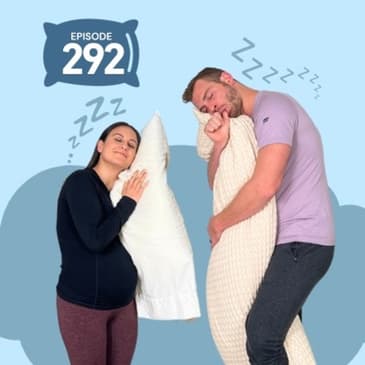
Waking up feeling achy, stiff, and sore? Thinking it may be your bed, mattress, pillows, or sleeping position? Dr. Jen & Dr. Dom dive what it means to find your most optimal sleeping position. They describe the characteristics of their most optimal mattress and how sleeping position preferences change throughout life. Then, they identify the common pain points that arise with different sleeping positions and adjustments you can make to your sleeping environment to ease those symptoms. Tune in!
LMNT Electrolyte Discount:
Fuel every system within the body and the brain with LMNT! Get a free gift with every purchase and try some new flavours as you stay hydrated!
Brentwood Homes Discount:
We can't go back! With environmentally friendly, soft yet firm mattresses and a pillow that can be adjusted the way described in the episode, we've never loved a mattress and pillow more! Get your Brentwood Homes mattress and pillow now!
What You Will Learn In This PT Pearl:
03:11 – Is there a "normal" sleeping position?
06:16 – Your mattress and pillow aren't all there is to blame
08:16 – What to look for when looking for a mattress
13:29 – How sleeping position preferences change through life
15:11 – Sleeping positions and common pain points
17:04 – Pillow position depending on sleep positions
20:28 – Is sleeping on your stomach adviseable
23:13 – Contraindications related to sleeping positions
24:19 – Tools to manage snoring and promote nasal breathing
To Watch the PT Pearl on YouTube, click here: https://youtube.com/watch/
For research and full show notes, visit the full website at: https://www.docjenfit.com/podcast/episode292/
Thank you so much for checking out this episode of The Optimal Body Podcast. If you haven’t done so already, please take a minute to subscribe and leave a quick rating and review of the show!
Hosted by Simplecast, an AdsWizz company. See pcm.adswizz.com for information about our collection and use of personal data for advertising.
[00:00:05] Welcome to the Optimal Body Podcast. I'm Dr. Jen and I'm Dr. Dom and we are doctors of physical therapy bringing you the body tips and physical therapy pearls of wisdom to help you begin to understand your body, relieve your pains and restrictions and answer your questions. Along with expert guests, our goal of the Optimal Body Podcast is really to help you discover what optimal means within your own body. Let's dive in.
[00:00:29] So today doing a quick dive into what mattress and pillow is best or how to find the best mattress or pillow and also sleeping positions. Like I like to sleep on my front or I like to sleep on my side, but my doctor says not to do that or whatever it might be. Like, how does somebody sort that all out in their own life? What's best for them? Pillow, mattress and sleeping position.
[00:00:55] Now we did do a podcast episode actually, episode 17, where we just talk about sleep positions. And we actually, when we were doing the podcast episode, we have like a pillow and the bed, you know, kind of like going through the position. So that is a video that we actually have up on Dr. Jen Fit YouTube. And then we also, if you would go back to episode 17, you can kind of hear specifics. We're kind of, we'll go through a little bit of that, but we'll go more on a broader overview, understanding what
[00:01:25] why these might matter, why these might matter, how they might help, as well as talking about mattresses and pillows, because this all goes together. Like these are all the questions that we get, I think so common.
[00:01:36] All right, taking a quick break from the talk about sleep to another, what I think is very easy health topic that we can all focus on more, which is our hydration. Jen and I have been using Element, which is our absolute favorite electrolyte mix. Hands down, it has sodium, potassium and magnesium, all three things that we are losing through our skin when we go to the bathroom throughout the day. And we don't even know it. And when we just drink water, we're not replacing it.
[00:02:05] We're just finishing those electrolytes that help hydrate us on a cellular level and help us so many different processes to nerve conduction, smooth muscle contraction, making sure we don't get brain fog. They help us feel a little more energized. It can help us feel relaxed at the end of the day. If we're trying to relax and wind down to go to sleep, so many ways in which making sure our electrolytes are balanced can benefit our health.
[00:02:29] We had interviewed the founder, Rob Wolf, and he had so many incredible tidbits on how keeping our electrolytes balanced and making sure we have enough of them can help our overall health. The one bonus is if you go down to the link in the show notes, you can get a free sample pack with your order. So the link is drink element. That's L-M-N-T dot com backslash optimal. And with every single order, not just your first order, you can get a free sample pack to try new flavors.
[00:02:58] And find the one that is going to keep you staying hydrated, both with water and with electrolytes. So check that link out and get your sample pack. All right, let's head back into the PT Pearl.
[00:03:10] Yeah. And I think the one thing is like, as in everything, you know, everyone asks and they think just like, oh, there's one pillow, there's one mattress out there that's best. And that's like the challenge is that that's not actually the case. Like, yes, there's probably one pillow and mattress out there that would be best for you and would give you the best, most comfortable sleep.
[00:03:32] But that's not going to be the same for everybody. And it's really dependent on what works the best with your body. Like if you need something that is slightly more soft, more firm pillows, it depends a lot on what position you tend to like to sleep in and how that pillow is going to best support you in that position.
[00:04:50] The reality is you're probably going to move throughout the night and don't freak out about that. Like you're not supposed to just stay in one sustained posture for eight hours the entire night. If you do, then hopefully your body's super relaxed, you feel good there. But if you end up changing, that's okay. I mean, the main thing with pillow, mattress, sleeping position in general is having your body feel comfortable, safe and able to relax. Yes.
[00:05:18] And I think that we can figure out that, hey, maybe the pillow, mattress or sleeping position I'm in isn't the most supportive or we could make a change to allow, you know, help my body feel a little bit safer if we're waking up with pain. You know, that's going to be the first thing that is going to, you know, trigger this thought of, well, do I need to get a new mattress or pillow or how am I sleeping? So if we're waking up with pain, that's going to tend to make us want to look at any of these one individual things.
[00:05:47] Yes. And I think that, you know, there's always ways that we could best support. Okay. How can we support what we currently have? Because mattresses are expensive and trying to go from like mattress to mattress is tough or even trying to go to these more ergonomic pillows or things that are more structured. They can be expensive. Yes. They can be expensive itself. You know, so let's try to work with what we have.
[00:06:11] And that's where I will say first, before we even go into this pillow, mattress and sleeping position talk, I think first, what are we doing throughout the day? Because if we're neglecting our mobility on a day-to-day regular basis, if we're neglecting our strengthening and moving our body throughout the day,
[00:06:34] if we're not able to have stress relief and find ways to downregulate our body, expecting to go to sleep and completely downregulate and completely relax might not be the reality for you. So you might be falling asleep, stiffer, a little less mobile. And then you put yourself in positions where your body's like, well, I can't sustain this position for so long. And you wake up feeling achy or painful.
[00:07:03] So I think going to these three areas first would be my best recommendation from a physical therapy standpoint, rather than just what does the bed look like? We're going to talk about that. But what are you doing throughout the day? Can you honestly say, I'm working on my mobility, I'm doing my strength and I'm doing my stress regulation?
[00:07:21] Yeah, I mean, I think that's huge because we also know like if you don't downregulate or get away from that, you know, stress of the day, whether it's, you know, watching TV right before you go to bed, which I'm guilty of, or looking at work or, you know, getting into the stress of the day, regardless of what it is, like, you will have less restful sleep. You will probably get into that deep sleep or those deep sleep cycles, you know, a little bit less or less consistently.
[00:07:51] And we know people you brought up before we got on this podcast who their partner has says, man, I look at them when they're sleeping and they just look like their shoulders are in their ears. They're holding all of this tension. I can't even move their legs because they're so stiff. Their body is so stiff. And like, so there's some degree of needing to just downregulate and relax right before you go to bed. Yes. So like now looking at the mattress, what would you say people should look for when it comes to a mattress? Softer, more firm? Yeah. What's better?
[00:08:22] You know, in, again, better is what's best for you. But in general, what I typically tend to recommend is a more firm or medium firm mattress, firm to medium firm. And I think because that has more structure to kind of support the body, you can still have a soft topper on, you know, on the top. I'm not saying you need something super stiff. However, if we sometimes when we have such a soft mattress, we end up sinking into it.
[00:08:51] And that's where, you know, we can have the body rest into such extreme spinal positions or just positions in the body that your body can't, isn't used to sustaining or doesn't have the mobility or the relaxation ability to get into that deep of a mattress. So sometimes you might wake up with pain. However, there I know there are people out there who like softer type mattresses.
[00:09:17] So I can say that, you know, that could be my recommendation, but it's not going to be the same for everyone. Yeah. I mean, my major recommendation would be find the mattress companies that give you like 100 days free in the mattress or give you like a little trial, three month trial. And even though sometimes there are fees, like if you decide to send the mattress back, it still gives you 100 days or however long to try that mattress out. Maybe after a month, you're like, man, this is great. Like, I'm going to stick with this one.
[00:09:45] Or maybe after a month, you're like, I'm not feeling this. I think I need something softer. I want to try something more firm. It gives you a chance to kind of try a couple mattresses and then say like, okay, actually, that first one was the best. And then you can go back to that one or, hey, I'm getting my best sleep in this one. And it's the third one I've tried. Amazing. Which sounds kind of crappy because it might be three, six, you know, nine month process.
[00:10:10] But still, if we do that work and find a mattress or a mattress density that works well for me, and it takes me six months, and then I can use that information that I've gathered for the next 50 years. Like, amazing. Like, so I would say take the time to find the mattress that works best for you. And I will say that, you know, we use one particular company that we have liked for a really long time. Now we use it both in our Minnesota home and our California home.
[00:10:40] And we, so it's Brentwood Home, and we'll have the link to Brentwood Home down below. And we look beyond just the density of the mattress and how it feels. And we want to know the materials. We want to know that the company is using good organic, you know, things that I'm going to be breathing all night long that I feel comfortable breathing on and using for years to come. So, we actually use Brentwood Home and their Crystal Cove mattress, which is the one that we'll link to below.
[00:11:09] All our guests are just like obsessed with it every time they stay on it. And it actually has two sides. It has a more firm side and then it has a softer side. So, you actually get to have that ability to say, oh, I don't like the softer side or I don't like the firmer side. And you can flip the mattress around. So, we trust the company. We trust the quality. And they have that a little bit flexibility within the mattress. So, if you are just like in overwhelm of not knowing where to go to, that's one that we recommend.
[00:11:38] Yeah, which brings us to the pillows too. And the thing that I love about one of the pillows that you can get from, it's also the Crystal Cove pillow. Yeah, the Crystal Cove pillow. From Brentwood Home is the main thing you want to look for with a pillow is, again, that thickness. And that's going to depend on, that might change depending on whether you lay on your back or your side. Because really what we want to do is to have a thickness that is enough so it will support our head in the position that we'd like to sleep in.
[00:12:07] But again, sleeping on your back, you're not going to want a pillow that's really, really thick. Right? Because then it's going to push your head forward and that doesn't make as much sense. But sleeping on your side, you have more of a gap that might be between your shoulder and your ear. So, then we'd want something that's a little bit thicker so our head isn't kind of crooked down to the pillow all night.
[00:12:29] So, this Crystal Cove pillow from Brentwood actually allows you to kind of unzip it and take some of the filling out depending on how thick of a pillow you feel like you might need. So, it's not just a one-size-fits-all, which most pillows tend to be, but you can adjust based on taking, filling in and out. And that's where I like the individuality of a pillow because Dom wants something a little bit with a little bit more thickness than I like.
[00:12:54] I like it to be pretty thin actually for my pillow because especially, and we'll talk about this when I sleep on my side, I want to offload my shoulder. So, I sleep on my shoulder blade. So, that distance between my shoulder blade and my ear is a lot smaller and this is my frustration with going to hotels and sleeping on a huge pillow. And it's just not what I'm used to, right? So, I don't feel as comfortable sleeping on a huge pillow because of the way that I preference at least falling asleep. We know that sometimes I wake up on my back, so not always the case.
[00:13:24] Yeah, no, and that kind of brings us to sleeping position. And again, sleeping position is kind of an interesting thing because when we were looking at, you know, there was some research on sleeping positions and how people sleep throughout life. It's interesting when you look at children, they tend to actually like sleep equally between the three positions on back, on side and on their stomach.
[00:13:45] And as people get older, you know, we tend to see more people choosing to like sleep on their side or, you know, having the preference of sleeping on their side with less people sleeping on their back and then actually the least amount of people sleeping on their stomach. And yeah, I just thought that was an interesting progression and that, you know, kids, you see almost an equal split between the three. Yeah, exactly. Like they have moldable enough bodies that they feel comfortable kind of going anyway.
[00:14:11] And I've heard my friends who are parents kind of say this as well, like their kid can fall asleep on a hardwood floor and be just fine, you know, like they can kind of sleep anywhere. And so that's where, you know, sleeping position really becomes dependent on what feels best for your individual body. Again, this is like our whole message here, but also making sure that your body can find that relaxation.
[00:14:36] And just kind of like what I had touched on before, do you have the mobility to be sleeping in that position for a sustained period of time? Does your body fully relax in that position? Are you able to downregulate in that position? Because if not, then that's where we can, you know, suggest some tools to kind of help to support your body a little bit better. So hopefully you can find that relaxation at least to start you off to sleep, you know?
[00:15:03] Yeah. And, you know, when you look at the different sleeping positions, going back to like what we were reading, and this kind of makes sense to me, like the largest amount of people who, you know, select stomach sleeping, you know, report neck symptoms, you know, and less of them report low back symptoms.
[00:15:26] Where if you look at people who select sleep or preference to sleep on their back, you know, you'll see that group of people report more lower back symptoms versus, you know, neck symptoms. And then people who select sleeping on the side, you know, have slightly lower amounts of those in general. So it's interesting when we look at that, and it kind of makes sense to me, like if you think about people sleeping on their stomach, you know, you'll tend to need to turn your head in a different position.
[00:15:53] Or people who sleep on their back, like that's where you'll tend to hear people say like, oh, I just feel like my hips are so tight or my low back is, you know, way too tense when I sleep on my back. But again, that's where if you are waking up with pain, I think that's the important thing to say, okay, what can we do to support the body now to maybe put your body in a slightly different position so that it does feel safe, it does feel relaxed throughout the night.
[00:16:18] And then how can we either before we, you know, go to sleep or in the morning when we wake up, do some of those mobility things, do some of those strength or down regulation things to get our body prepared to actually relax and be comfortable while we're sleeping.
[00:16:33] So incredibly huge. So let's talk about some of the different positions and how we think that if you are, if you do preference one, like great, at least for falling asleep, then we can say how, you know, you can set yourself up to feel a little bit more supportive to make be, maybe it helps to reduce some of those aches and pains when you're waking. Or, you know, just in general, improving that relaxation response within your body based on how you set up your sleep.
[00:17:01] So, you know, in general for the back, we already mentioned you don't want a huge pillow just at your neck because then that's going to kind of crank your head forward all throughout the night. So I actually like to kind of have the pillow just slightly underneath the shoulders. And that kind of helps to align where the head, the neck and the rib cage and your diaphragm are kind of coming into alignment.
[00:17:27] So rather than just cranking at the neck, we kind of have this more of a C position so that there's a little bit better airflow because the reality is we need to be able to breathe really easily as we're sleeping and then actually taking a pillow underneath or a few pillows or a wedge underneath your knees can help. And that's what can support the low back so that it's not in that tilted position.
[00:17:51] Yeah. And then again, if you're having those low back symptoms, doing some sort of deep breath work into your rib cage, into your core, you know, doing some breath work as you work into some hip mobility before you go to sleep might be the thing that just helps your body relax a little bit more so you don't have so much back tension and might be able to start removing those, you know, wedges under your legs and just sleep comfortably on your back.
[00:18:17] And then when it comes to side and front sleeping, I like kind of what you alluded to earlier, how you're not sleeping directly on your shoulder. And I think I do that to a degree now, which is interesting when I think about it because I almost like to modified front sleep in a way, the way that I lay because we're almost looking at both of these positions as more of a diagonal versus laying directly on your shoulder or laying directly on your stomach and face.
[00:18:47] Right. So if we're side sleeping, maybe having a pillow or something just slightly behind your back so that you're almost leaning into that. And like you said, allowing your shoulder blade to slide out. And so we're actually resting onto our shoulder blade. You can also have a pillow between your legs because then it kind of helps gap those legs a little bit.
[00:19:09] Some people like to sleep with a pillow underneath their arm too. So really using those pillows or bolsters in any way that you feel can be a little bit more supportive.
[00:19:18] Yeah. And then even one more that some people might like to use, whether if it's a rolled up like towel or blanket or just like one of those small lumbar pillows and kind of sticking that underneath the side where your hip is so that if you feel like you're on your side, but your back kind of dips or your hip starts to feel like a lot of pressure throughout the night. Yeah.
[00:20:11] Yeah. Still going into like, you know, feel your hand on your low rib cage and take five slow, deep breaths as you're falling asleep. Like that's going to melt you into more of a relaxed position more than anything will.
[00:20:26] Yeah. And similar sleeping on your front or sleeping prone. You don't want to, I don't like just sleeping directly on, on your stomach. Like one, when we looked at the research, it said a lot of people start moving away from this because it just makes breathing so much more work.
[00:20:44] Because when you think about it, your, your body is actually then resting down on your rib cage. And in order to breathe well into our low rib cage, we have to breathe against our entire body weight almost.
[00:20:57] And our rib, allow our rib cage to press forward and expand down into the bed against our body weight and gravity. So if we instead, you know, have kind of a full length or a longer body pillow, I don't have a full length one, but the one that I use is like one of the king size decorative pillows almost.
[00:21:16] So, and I almost will lay that underneath my arm and my leg. So it kind of props me up and I'm not laying quite on my stomach, but almost up at an angle a little bit. And that also then helps with my head. So I don't have to have my head cranked and turned all the way to the side. But it's just more slightly rotated to rest on the pillow. And actually really, that's one of the most comfortable positions for me to lay in.
[00:21:40] Yeah. And so again, finding that comfort for you, but, and think it's so important to also talk about that airway. And like you kind of mentioned, because even if we crank the neck all the way to the side, you know, we kind of can cause some blocking of the, of the airway. And especially for those who lay on their back and might have their chin kind of jutted up to the sky. If you are laying into like a lower pillow or your neck doesn't have quite have that mobility, which causes the mouth usually to fly open.
[00:22:08] And then that's where you might have a partner that snores all night long, or you might feel like I need to roll them to their side because that usually if you roll someone to their side, they have a better aligned airway with their neck. They close their mouth and they tend to nasal breathe. I mean, nasal breathing, if we can get into that, I think that's the best sleeping position. No matter where you are, if you can nasal breathe, that's so incredibly huge.
[00:22:34] Just for our, you know, our entire oxygen throughout our body, we're getting more nitric oxide. We're relaxing our system. We're getting more, we're feeling more alert when we wake up because of that. So being able to nasal breathe at night is so huge.
[00:22:50] It's more of a telltale sign that you're in that relaxed parasympathetic nervous system versus if you are breathing through your mouth, then it's, you know, more of a sign that we're probably breathing into the chest, needing to use our accessory muscles, which again can contribute to the tension around our neck and shoulders and upper back when we wake up.
[00:23:09] And actually, you know, now that you bring that up, it's interesting how, you know, being able to breathe was one of the largest, you know, factors in people's preference, especially as they age into adulthood, especially people who might be overweight or obese, because laying on your back actually then becomes a lot more work because then you need to breathe against that weight, you know, that might be on your chest or might be around your diaphragm.
[00:23:37] So that tends to push people a little more towards side sleeping because then you don't have to work as hard to breathe. Or they might prop themselves up completely and sleep more like on a reclined position, right? Yeah, because then you're not working against gravity as much. Same with people who might have heart issues or, you know, congestive heart failure. They said they might sleep on their side just because of one, the weight that might be resting on their heart or feeling your heart beat against the chest wall.
[00:24:06] You know, people will tend to lay on the right side so that just gravity kind of pulls that heart, you know, a little bit away from that chest wall. So they're not feeling a beat against that chest wall as much throughout the night. Yeah. So I think finding that position for you and really working toward nasal breathing. And that's where some people will get just like a small piece of tape and tape it vertically across the mouth and use that as a feedback reminder. It's not something to tape the mouth shut. So we're not using duct tape or anything. We're not going fully over the mouth.
[00:24:35] You know, you have the ability to still separate the lips if you needed to throughout the night. But it's a good check because if you wake up and the tape is off or, you know, your lips have come apart, then for some reason throughout the night, your body felt the need to open that mouth or get that tape off. Or even using like a breathe right strip, like even through pregnancy, symptoms have changed. And I've realized, you know, sometimes I would get super stuffy at night.
[00:25:03] And a lot of women have realized, oh, using breathe right strips at night as I'm going later into my pregnancy can help so that when I lay back, I can still breathe through my nose and I'm not getting that intense congestion. So hopefully that helped to kind of tie it together for you. And yeah, I mean, the main message again is what works best for you. Do some experimenting. Buy a few extra pillows that may be less expensive to start.
[00:25:31] I mean, you can go to a department store and get, you know, four or five extra pillows. Especially their filler pillows. You know, for the filler pillows that you're just using to kind of support and try out a more pillow supported, you know, back sleeping or side sleeping or, you know, anything. To that degree. And again, when it comes to the mattress or the pillow, do some experimenting there as well. Try to take and give yourself three, six, nine months to find that mattress that works best for you. Especially if you're going to be, you know, making that investment, take the time to find one that works.
[00:26:01] But ultimately coming back into some of these practices that might help you calm down and relax the system and find more comfort and relaxation in your body to get a restful night's sleep. That's going to help you long term more than anything. Hopefully that helps to wrap it up for you to understand what is going to work best in your own body. And of course, we'll have the Brentwood Home links down below in the show notes. If you want to check out their mattress or their pillow or any of the other stuff they have. We love a lot of what they have.
[00:26:31] We really trust this brand and company. So we'll link it down below in the show notes for you. And please pass this episode along to anyone else who you think can really help to understand what sleeping position is best. What mattress, what pillow? And because these questions are so incredibly common and we'll see you back on another podcast.