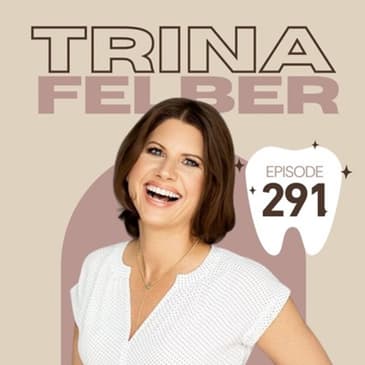
Struggling with bad breath? Could your toothpaste and mouthwash be causing more harm than good? Trina Felber, founder of Primal Life Organics dives into the science behind remineralization and how we may be able to heal cavities on our own. Then, she proposes toothpowder as a successful alternative to toothpaste, suggesting how you can begin to create the most optimal environment for your teeth. Trina highlights the truth behind dental care products in the market and how they may be more similar to antibiotics rather than beneficial for oral health. Using an analogy to leaky gut, she emphasizes the importance of conserving the good bacteria in the mouth. She shines light on more informed ways to whiten the teeth rather than using peroxide, how red and blue LED lights can be leveraged to promote oral health, the optimal routine for oral hygiene, and tools you can use to combat bad breath and a dry mouth. Let's dive in!
Pregnant and struggling with heel and ball-of-foot pain? DocJen attributes the integrity of her foot health during pregnancy to post-partum to the internal strength and activation that was optimized using VivoBarefoot shoes, even though her body was going through significant changes. Going barefoot supports the foot from the inside out, builds internal strength, and provides space for the toes to move, all of which create a non-threatening pain-free environment within the feet. Use code "TOB" to get a special discount!
What You Will Learn In This Interview with Trina Felber
4:03 - What drew Trina to oral care?
6:27 - Remineralisation: Can we heal cavities on our own?
9:18 - What to avoid and to look for in toothpaste?
16:35 - Tooth powder vs Tooth Paste
20:35 - Should your mouthwash kill 99% of germs?
25:06 - Is Glycerin bad for oral hygiene?
26:59 - Safe & healthful way to whiten your teeth - the truth on peroxide
31:41 - The role of red and blue LED lights
34:49 - Frequency of brushing, flossing, light therapy and other tools to optimise oral hygiene
38:30 - What causes bad breath and dry mouth?
41:56 - Where can you learn more with Trina and about Primal Life Organics?
To learn more about Trina Felber and view full show notes, please visit the full website here: https://www.docjenfit.com/podcast/episode291/
Thank you so much for checking out this episode of The Optimal Body Podcast. If you haven’t done so already, please take a minute to subscribe and leave a quick rating and review of the show!
Hosted by Simplecast, an AdsWizz company. See pcm.adswizz.com for information about our collection and use of personal data for advertising.
[00:00:05] Welcome to the Optimal Body Podcast. I'm Dr. Jen. And I'm Dr. Dom. And we are doctors of physical therapy, bringing you the body tips and physical therapy pearls of wisdom to help you begin to understand your body, relieve your pains and restrictions, and answer your questions. Along with expert guests, our goal of the Optimal Body Podcast is really to help you discover what optimal means within your own body. Let's dive in.
[00:00:28] Before we hop into this episode, I just have to note that I'm so grateful for Vivo Barefoot Shoes. And the reason being is that I didn't see a big shift change within my feet when I was going from pregnancy and into this postpartum phase that I'm in now.
[00:00:44] And I really, really believe that's because of the health of my feet and wearing shoes that help support my feet so that they continue to build their internal strength, even as my body was going through significant changes. And I've had so many people reach out and DM when they're getting later in pregnancy or into postpartum and having these feet changes, dealing with heel pain now, dealing with ball of the foot pain, you know, different things going on within the feet.
[00:01:11] And when we support our foot from the inside out, really building the strength, giving the toes the space to move, we help to prevent these pains that are so common that happen within the body. So if you haven't gotten yourself some Vivo Barefoot Shoes, remember that you have a hundred days to really trial these shoes and decide, is this the shoe for me? Do I need a better fit? Do I need something else? Now, I really love any of the knit or the Primus Asanas.
[00:01:39] Those are like my go-to if you're looking for something to start with. The Geo Racer Knit, one of my favorites. The Primus Light, such a good just everyday shoe, whether you're working out or just going for a walk. So if you haven't yet, grab yourself some Vivo Barefoot Shoes, treat yourself, treat your feet and your entire body, and use code TOB so that you can get 15% off. Get your pen and paper ready for this next interview. We dive into so much education with Trina Felber.
[00:02:09] So excited for this one. She is the founder and CEO of Primal Life Organics. And as a registered nurse with a master's degree in anesthesia, Trina disrupted the beauty industry and exposed her hyper-toxic personal care products poisoning us by Big Cosmo. She started her natural dentistry and skincare company in 2008 and puts her nurse's care into every product she makes. Trina is a multi-million dollar entrepreneur and the best-selling author of Beauty's Dirty Secret.
[00:02:36] She has made the Inc. 5000 list five years in a row and has been featured in Dr. Oz, Paleo Magazine, ABC, CBS, NBC, Fox affiliates, and on hundreds of podcasts worldwide. And we just go into a ton of education again on this podcast. So get ready. Trina, thank you so, so much for taking the time. I know you're incredibly busy and you have an incredible company that you have built. And I'm just so excited to have you on the podcast.
[00:03:06] I know we did a live like years ago now on Instagram. So to be able to have you back here somewhere that it will live actually and people can come back and listen to, I'm just so excited because you're full of information that I don't think gets out to the public a lot. And stuff that we need to know because we go shopping for dental products or health products all the time, not really understanding what we need. So just that was long, but thank you for being here. Oh, thank you so much for having me back on.
[00:03:35] I can't wait to mouth off with both of you guys. And it's so much fun. You're right. Most people don't think that dental care is sexy. Yeah. But honestly, if you're not taking care of your mouth, you're not really taking care of your body. So I'm super excited to chat with both of you guys. No, I think that's a great way to kind of set the platform for why oral health and oral hygiene is so important to our overall health.
[00:04:01] But where I want to start is your formal training isn't in dentistry or oral care. And I would just love to hear a bit more about what got you so passionate and interested in making a career and a whole business out of this. Well, believe it or not, it had to do with my daughter. It always comes back. The story always goes back to like something that happened in your personal life, which is amazing because that's how change happens.
[00:04:28] So when my daughter was two years old, she had a molar come in and the molar had what looked like a cavity in it. We were brushing her teeth one night. My husband saw it and he's like, oh, my gosh, what's that? So he called me over. I looked at it and I said, I don't know. It looks like a cavity, but that's a brand new tooth. So we took her to the dentist and the dentist took one look at the tooth and said, yes, that's a natural cavity. It happened in utero as baby was being as she was being developed and that tooth was being developed.
[00:04:58] Probably something happened, you know, in my life, whether it was stress or a viral overload or something that caused that tooth to have a defect in it. He said that the defect was pretty significant, that he would put a temporary filling in it since she was two. Didn't want to put her through the trauma of a regular filling. Put a temporary filling in it, but chances were that tooth was going to have to be pulled within a year.
[00:05:22] So he said every two to three months, that temporary filling is going to fall out and we'll just reevaluate is now the time to pull the tooth or should we put another temporary filling in it? So we were getting ready to leave the dentist office. He knew I was upset because I know as a registered nurse, I know that every tooth is connected to an organ and vice versa, the organs connected to the tooth. So I was really a little upset and he said, don't worry, mom. We put a temporary filling in it. Now we just hope for the best.
[00:05:50] And I thought, oh my gosh, I am not going to hope for the best. So I went home and I started doing my research and that's when I found Dr. Weston A. Price and I looked up all of his research and his findings and I developed a dental program based off of his research on how to remineralize the teeth. And yeah, so that's basically how it happened for my dental program. That's incredible.
[00:06:20] And I think even just being saying that remineralizing the teeth, like people are like, what? What does that mean? Like, does that mean we can actually heal a cavity on our own? Yes. I love that question. The answer goes two ways. The answer is both yes and no. If you're using standard products off of the shelf or even some natural products, just because the way natural is not defined by ingredients,
[00:06:49] you will not be able to heal a cavity. Because when you look at the environment inside the mouth, there are two ways that it can go. It can be alkaline or it can be acidic. Acid, I'll talk a little bit about the acids in the mouth first. Most dental products on the market create more acid in the mouth. Our food is typically more acidic, like coffee and red wine and meat. And most processed foods are all acidic by nature.
[00:07:17] The acid, whenever there's acid inside the mouth, it causes minerals to leave the teeth. So your enamel will actually wear down whenever there's acids in the mouth. The mouth is supposed to remineralize. The saliva in the mouth is supposed to remineralize the teeth.
[00:07:33] But because our dental products that we're being sold to are sold, and most of our foods are acidic by nature, there's too much acid in the mouth for your saliva to actually work to keep your mouth clean, keep the bacteria healthy, and remineralize the teeth. So what typically happens is you get an overgrowth. The other problem is you can get an overgrowth of the wrong bacteria inside your mouth.
[00:07:58] That bacteria that causes cavities and causes gum disease is also creating acid. So all of those things work against you. But if you can change the environment inside your mouth to be alkaline or more alkaline, then yes, you can reverse or heal cavities. And that happens by creating, getting rid of some of the bad stuff. So you want to limit sugars in the diet. You want to change your dental products to products that are going to help keep your mouth more alkaline.
[00:08:28] That, in turn, is going to kill the bacteria that is causing more acid. So if you get rid of the bad bacteria, support the good bacteria. Good bacteria loves the alkaline environment. It's going to create more of an alkaline environment. And then when you get your mouth turned around, your saliva can then function the way it's supposed to to protect your teeth and your gums and remineralize your teeth. The remineralization will happen when you create that more alkaline environment inside your mouth. I think that's so important to understand.
[00:08:57] And you already started alluding to the products. And I think you brought up a really important thing when it says natural on a product. Yeah. That's not a term that's really well-defined or even tells you what is going to be in the product or if it's good or bad. Or if there's some ingredients in there that we could do without.
[00:09:17] So what should people be looking for in, say, a toothpaste if they're looking for one that can help support a more alkaline environment in the mouth, but also is avoiding some of the ingredients that we might not want in the toothpaste we're using? Yeah, that's a great question. Let me start by saying the things that you don't necessarily want in a product. And then I can go into what to look for because it makes more sense, I think, when people can recognize some words that they might have seen.
[00:09:47] And first off, you want to make sure that, you know, when the word natural, like you said, a company doesn't necessarily have to go through any kind of standards or certifications. The FDA is not, you know, watching over products, especially dental products. So the word natural or organic can become really cloudy in meaning.
[00:10:13] You want to look out for ingredients that are going to hurt your good, healthy bacteria. And so those would be things like triclosin, which is similar to an antibiotic. I always say it's like the antibiotic of dental care. Triclosin has been, it is in quite a few dental products and dental mouthwashes. And triclosin has actually been there.
[00:10:37] There was actually a study that was done that showed that the amount, even the small amount of triclosin that you can swallow, because you will swallow some of whatever you're using, has been, will cause gut dysbiosis or disrupt the bacteria in your gut. So it can cause like SIBO and other types of small intestinal bacteria overgrowth and some other bacterial and problems in your gut. But that's the same thing happens inside your mouth.
[00:11:06] So triclosin, you want to avoid sodium lauryl sulfate is the same way. It's going to kill both good and bad. Peroxide is another ingredient to stay away from, as well as alcohol, like alcohol-based mouthwashes. Alcohol is going to pretty much sterilize your mouth. It's not going to support good bacteria.
[00:11:27] And what happens then is when you wipe out everything, you're going to be more exposed to harmful bacteria, which will then grow and multiply quicker. And then that creates that acidic environment inside your mouth. So you could be using mouthwash morning and night, and you're pretty much destroying your first line of defense inside your mouth, which is your good bacteria inside your mouth. Fluoride is another little can of worms.
[00:11:52] I'm not going to go into fluoride too deeply, but when we talk about natural, fluoride is not naturally found in the body. In fact, babies shouldn't be born with fluoride in them. They're only born with fluoride if mom has fluoride in her body. So, and fluoride can cause a lot of detrimental health problems, even with low concentrations in the body.
[00:12:17] So those are some of the things that I, you know, they're, they're things that are common. Obviously, other ingredients would be anything artificial, like artificial sweeteners, artificial color, artificial flavor. Those types of things are not healthy for, for the mouth either. When I was going through and researching Dr. Weston A. Price, I came up with like his three main points about the mouth.
[00:12:41] And dental products, in order to be helpful and support good, healthy microbiome and a good alkaline mouth need to be alkaline. And, you know, it's hard for people to know what, you know, whether their toothpaste that they're using is alkaline. But what I usually tell them is the best ingredient to look for is baking soda.
[00:13:06] The baking soda will alkalize the paste or powder and will create that alkaline environment. Plus, it's a food ingredient. So that you want, you want something that's going to be more of a food ingredient. You don't want to be putting chemicals inside your mouth. So alkalinity is really important. Baking soda is the staple ingredient. And then you also want minerals. If you don't have minerals and the powder or paste isn't alkaline, the minerals will not go back into your teeth.
[00:13:34] This is where that remineralization happens. People that have sensitive teeth, if you have a sensitivity to hot and cold, that means you've lost too many minerals and you're on your way to a cavity. So the best way to reverse that is to use something that has minerals, is alkaline, because then when it's alkaline, those minerals go back in. When I was talking earlier about when during acidic environment, the minerals leave. It's during the alkaline environment that minerals will actually go back into your teeth.
[00:14:03] But it has to be alkaline and you have to have the minerals present at that moment. Saliva is your body's natural way to remineralize your teeth. But saliva's pH is more neutral. So that's why for most people, they aren't getting the remineralization from their own saliva because there's too much acid. There's too much bad bacteria inside the mouth. So they're just spitting out or swallowing the minerals from their saliva.
[00:14:32] The other key point is your mouth is super dirty. The toxins or the tissues of your mouth, the gum tissue, the tongue, the oral tissues are exposed to pollutants. They're exposed to heavy metals from foods as well as from water. And those pollutants or chemicals or toxins can sit in your gum tissue and then or your other tissues and then enter your bloodstream.
[00:15:01] So you want something that's going to get rid of that and deep cleanse your tissues of your mouth. And clay is a really good medium for that. Clay is going to help pull toxins out. Going back really quick to minerals, the newest mineral, we're saying it's like the replacement for fluoride, but the natural ingredient is hydroxyapatite. Have you guys heard of hydroxyapatite? We actually just heard about it. Just recently. Yay!
[00:15:30] Hydroxyapatite is calcium Fos. And actually, your enamel is actually referred to, one of the layers of the enamel is referred to as the hydroxyapatite. So hydroxyapatite is calcium and Fos. That's the primary minerals in your teeth. So brushing with hydroxyapatite with something that's alkaline like baking soda is going to help put those minerals back in to your enamel. The clay is beneficial as well because it also has minerals in it.
[00:15:56] It has calcium, it has phosphat, but it also has some other minerals that are in your teeth, including like manganese and silica and things like that. And when you lose a mineral from your teeth, it's a lock and key. You have to replace it with the exact same mineral or it's not going to work. So the reason I like the blend of hydroxyapatite and clay is that you're going to be exposing your teeth to all of the minerals that are present so that if you lose a silica or a manganese,
[00:16:23] you have that present to replace it, not just the calcium and the Fos. Does that make sense? Wow. It's so fascinating. And I know that you have more of like a tooth powder. So how, you know, that might feel foreign to most people who go for the toothpaste and they want that bubbly feel in their mouth and they want that toothpaste to just like spread beautifully. So how do we start to wrap our minds around? Like it's not supposed to look a certain way. It's about what it's really doing for our body.
[00:16:53] That's a great question. I do make a toothpaste as well. So I do have a toothpaste, but it's not going to foam. The foaming is actually not necessarily the healthiest thing, especially primarily because the foaming agents that they're using in toothpaste is going to wipe out your good bacteria. Yeah. There are natural ways to make foam, but most of the dental products on the market are not using the natural ingredients. But the tooth powder is my favorite.
[00:17:20] I always start people out on the tooth powder, primarily because when you think about powder versus paste, the powder is basically the paste without the liquid, whatever that liquid is. And most dental products, it's tap water. Tap water is loaded with heavy metals. It's loaded with birth control pills, loaded with antidepressants, loaded with, and your gum tissue is very absorbent, especially if your gums are bleeding or inflamed.
[00:17:49] You are more likely to absorb these types of toxins from your dental products through your gum tissue. As a nurse, one of the fastest and easiest ways to give medication quickly is by putting it sublingual or into in the gum tissue because it's very vascular, absorbs very quickly. So you want to like when we're using dental products that contain tap water, you got to think of all the other stuff that's in there.
[00:18:20] But powder is really paste without the water, which means it's really concentrated. It's going to have all the minerals. And as long as it's formulated correctly, the way that I formulate mine, it's formulated with the baking soda. So it's going to be alkaline. It's got a blend of three clays. You're going to have all those great minerals. The clays are going to help to pull toxins from your gum tissue, which is going to make your gums heal much quicker. They're going to be way less leaky.
[00:18:48] And when I say leaky, I mean, we've heard of leaky gut syndrome. That's been talked about quite a bit, but that really starts inside your mouth with leaky gum syndrome. And it's the same principle that when your gums are inflamed and they're red and they're leaky, that means that those toxins or pollutants that typically would not have been absorbed
[00:19:14] because your gums are healthy, can absorb very, very quickly, including bacteria and virus. They can also, you know, if your gums are that bad, could also absorb, you know, bacteria, virus and other types of toxins that you don't want inside your mouth. So paste or the powder is actually super easy to get used to because once you put it on your brush and you start brushing with it, it turns into its own paste. Because as soon as it blends with a little bit of water and your saliva, it creates its own paste.
[00:19:44] It's just not going to foam, which most people end up loving once they get used to it. Yeah. I mean, I will say that, you know, got used to it super quickly and it was great. Yeah. So I've had customers that would tell me that they'd go on vacation and they would forget their tooth powder. So they'd go to the local, you know, place and buy some toothpaste and they would brush with it the first time and all this foam. They'd be like, oh my gosh, I can't go back to it.
[00:20:12] Like, I can't believe I ever could brush with that much foam in my mouth. So they would go back to the powder like almost instantly. They're like, I can never forget my powder again. Exactly. Definitely. It almost like reverses your thinking of when you go back to something like that, you can almost feel how it has all these different synthetic materials in it that aren't as, quote, natural. One other question I had, you've mentioned a couple of times, you know, mouthwashes or mouth rinses.
[00:20:41] And I feel like so many mouthwashes almost like use it as a marketing angle or wear it as a badge of honor that it kills 99.9% of germs. And you've kind of mentioned how that can be very detrimental and also alluded to how the mouth is similar to our gut in the way that we can develop more leaky membranes. And it's really important that we start seeing our mouth as the start of our digestive track.
[00:21:07] And by design, it was, you know, built to have all this amazing bacteria and very permeable membranes. So can you help people understand why a mouthwash that kills 99.9% of the bacteria can actually be very detrimental to our overall health? This is an easy one. I always like to compare. First of all, the gut starts inside your mouth, like you were talking about, like from tongue to tail.
[00:21:33] I always tell people that whole tube, if you think about it, it's the most amazing thing is like a tunnel going through your body. It's completely outside your body. If you think about everything in your mouth, everything you swallow all the way through your digestive system until it comes out is outside of your body. The membranes of that entire tube that start from your mouth all the way down are meant to
[00:22:01] be tight junctures to only allow in certain nutrients and certain types of things. And everything else is supposed to stay outside of your body and be removed. We understand the gut. We've heard so much about leaky gut syndrome, but that starts inside your mouth. And if you've ever taken an antibiotic, this is like how I like to parallel it.
[00:22:31] If you've ever taken an antibiotic, you know, one or two weeks and you end up with diarrhea or you end up with even constipation or a stomach ache, that is typically because you've disrupted the bacteria levels inside your gut. And how long? It takes probably two, three, sometimes four weeks. You have to take probiotics, you know, sometimes eating some yogurt or something that has the good bacteria back in it to refeed or reseed your gut. But the same thing happens inside your mouth.
[00:23:00] If you're brushing with something that has triclosin, sodium laurosulfate, or even mouthwashes that have alcohol in them, you are brushing or rinsing your mouth out twice a day with an antibiotic. It's wiping out the bacteria inside your mouth. And then you are opening yourself up to the wrong bacteria, that gut bacteria feeling inside your mouth.
[00:23:29] The alcohol in mouthwashes, yeah, it kills everything, wipes it out, sterilizes it. And that opens you up to the fact that not only does it destroy your good bacteria, but it wipes out or can be harmful to your gum tissue, causing more of that leaky gum syndrome. Mouthwashes, most of them on the market, I would say probably about 95 of the mouthwashes on the
[00:23:57] market are going to do more harm than good. You should never wipe out all of your bacteria like you were alluding to. We are a species, I always say we are like a vehicle for bacteria. We pretty much carry bacteria from one place to the next, from point A to point B to point C. If we didn't carry this good bacteria, it has to be good bacteria.
[00:24:24] Sometimes the harmful bacteria takes over a little in spots. But if we don't carry this good bacteria, that's our immune system. That's our body's way to be healthy. If we wipe out the good bacteria, we are going to become inflamed. There's going to be a lot of inflammation and there's going to then be a lot of disease that is created because of that inflammatory process that happens.
[00:24:52] I mean, this is so important to continue remembering like everything that we put, you know, starting in our mouth just has such an effect on our entire body and how we function. And I know there's just one more ingredient I wanted to ask about because I've heard you talk about it before and it's in a lot of natural toothpastes that I see and that's glycerin. Oh, yeah. Can you talk about why this might not be supportive when we're brushing with it?
[00:25:22] Yes, glycerin. I forgot about that one. Thank you. Glycerin is in a lot of toothpaste. It's in a lot of natural toothpastes, as you said, as well. And it's the one ingredient that most people look at and say, what's wrong with glycerin? So glycerin is not going to hurt you from a health standard as far as being toxic to your body because glycerin is not toxic to your body.
[00:25:47] The problem is it's like a slippery substance and it puts, I like to say it puts like a saran wrap or a band-aid coating on your teeth so that it can make it so your teeth feel good, they feel slippery, they feel nice, they're not so sensitive. But the problem is it will not allow minerals to get back into your teeth. So if you're brushing with something that has glycerin in it and it also has minerals in it,
[00:26:16] you're not getting the benefits from the minerals. And it takes a little while for that glycerin coating to be removed. So anything that you eat that might have minerals in it, because a lot of the good foods, your vegetables and fruits and even meat has minerals in them, you won't be absorbing those into your teeth as well. So it's going to do more harm on the surface of your teeth, preventing them from being remineralized. But thank you for asking about that. Yeah.
[00:26:44] So it essentially is putting a temporary little shield around your teeth, but a shield to everything, even the good things that we might want to go back into our teeth, like the minerals and in that remineralization process. What about teeth whitening? You hear so many people talk about, oh, teeth whitening is bad, or if you whiten your teeth too much, it'll get very sensitive and it breaks down some of the enamel coating on your teeth.
[00:27:12] Is there a safe and healthful way that people can go about trying to whiten their teeth? Absolutely. There's always a better way. That's why I created the products that I did, created my company, because I couldn't take the fact that we didn't have choices. We didn't have options. We're only being sold things that we're being told is the only answer or the only solution to the problem.
[00:27:37] And I needed to come up with a way to actually get to the root cause of these problems and figure out how do I reverse that? So that's what I did when I created my dental products, as well as my teeth whitening system. Peroxide is the number one ingredient that even dentists use it. When you go to the dental office for a peroxide or for a whitening treatment, they're using peroxide. They're using a higher concentration of peroxide. Peroxide is damaging to the gum tissue.
[00:28:04] It's damaging to the bacteria, the good bacteria inside your mouth, but it's also damaging to the actual structure of the tooth because peroxide, in order to whiten your teeth, let me give you a little bit of a lesson on how your tooth is structured and how peroxide works before we figure out how do we reverse that naturally. So your tooth, the enamel is the outer part. It's the harder thick part of your enamel. It's the whitest part of your enamel.
[00:28:33] So if your teeth are starting to get super stained from coffee, wine, red sauce, whatever, or you start to see like the enamel is almost transparent and you see like a bluish or a grayish tinge to your tooth, that's a sign that your enamel is getting thin. So the thinner the enamel, the less white the teeth are going to look because the layer beneath the enamel is your dentin and the dentin is off color.
[00:29:02] It's bluish or grayish tinged for most people. The dentin is actually the way that peroxide works. Peroxide will pull moisture. So your dentin is your shock absorber. It's filled with fluid, although it's not 100% fluid. So it still has some proteins in it. It has some, they're antimicrobial, antibacterial. It's protective by nature because underneath your dentin, your dentin is protecting your pulp,
[00:29:31] which contains your blood vessels and your nerves. So the dentin also has some minerals in it. So some calcium, FOS, that gives it more of a structure. Every time you bite, if your dentin isn't healthy, you might feel some pain because of that. But because it's discolored, peroxide pulls the moisture out of the dentin. I say it dehydrates your dentin to make it look more opaque.
[00:29:59] If peroxide pulls that moisture out, your moisture, your inside of your dentin, your dentin looks more opaque, your teeth are going to look whiter very quickly. Well, unfortunately, by pulling out the moisture inside your dentin, you've also now just created a defect or less, the structure of your tooth is less stable. So you can have tooth fractures. You can have more prone to cavities and things like that.
[00:30:26] So when I was looking at that and I discovered that, I'm like, why would we even want to do that? But we do want white teeth. We do want a white smile. So what can I do? So the most, for me, the biggest, the easiest way to whiten the teeth is to make the enamel thicker. That's the part that if you have thick enamel, you're not going to have cavities and you're going to have a really white smile.
[00:30:51] And the best way to do that is to create a healthy bacteria inside the gum or inside the mouth, create healthy gums, but also put the minerals back into your teeth. Just like the toothpaste and the tooth powder that I was talking about needing those three things, the minerals being alkaline and detoxing. Same thing with the whitening of the teeth, but in a little bit different concentration and being applied to the teeth for a longer period of time.
[00:31:17] So when I created my whitening system, I did it with the same three components to be able to put the minerals back in your teeth, remove the surface stains, remineralize the teeth, build back the enamel, make it thicker. And then you'll end up with a whiter smile long-term as well as better dental checkups in the long run. And then combining it with both red and blue LED lights.
[00:31:46] And I think you guys have the teeth whitening, the mouthpiece that has the red and blue lights, correct? Yes. So red and blue LED lights are really key components to keeping your teeth and your gums healthy. Blue light therapy inside the mouth. Harvard did a study and found that the bacteria that causes cavities and gum disease is acidic by nature.
[00:32:13] That bacteria has this little portion to it that when exposed to blue light, this piece explodes. And when that piece explodes, it basically kills the bacteria. So when I saw that, I thought how amazing. If you put blue light inside the mouth, light therapy, as we know, penetrates the tissue. So you're not just doing the surface, just like a treatment will just do the surface if you're putting something on it.
[00:32:42] Light therapy will actually penetrate. So it can penetrate into the pockets. It could also penetrate between the teeth. So you're actually going to be getting more benefit with light therapy. So using blue light therapy inside the mouth can help get that bacteria that's causing cavities and gum disease, kill it, it explodes. And then it will also whiten the teeth because that bacteria has this yellowish tinge to it. And while it's on your teeth, it's going to make your teeth look yellow.
[00:33:12] So blue light therapy, I also use red light therapy on the mouthpiece. Red light therapy is for the gum tissue. Red light therapy does the same thing for your gums that it does for wound care or for the skin. It increases blood flow, reduces inflammation, and also stimulates collagen production. All three of those are extremely important for gum tissue health. So same situation, red light therapy is going to penetrate.
[00:33:37] It's going to increase the blood flow, going to help heal the gum tissue, create the gum tissue that's less leaky, and reduce the inflammation. I've had dentists that have had their clients using the red light therapy, clients that have had really bad gum disease, thinking that they would need possible gum grafts and things like that, be able to completely reverse it in about, not completely reverse it in three months, but come back for a three-month checkup, and their gum tissue is so much healthier on its way to healing.
[00:34:07] So red light therapy is a key component for healthy gums. Wow, that's so fascinating. And I think we hear about light therapy a lot, but don't always know how that really works, and especially when we're talking about how it's working in our oral care and our teeth whitening. That's really, really incredible. And I've used it before, and it's awesome.
[00:34:29] I'm just going to be imagining the blue light exploding little bad guy bacterias in my mouth like a selective laser beam now. So thank you for that. I know, right? It gets a little war going inside your mouth. You're like, get him, get him, get him. Right. Now, when it comes to, you know, so we've talked about all these things. So what are the main principles we need when it comes to our oral hygiene? Like, what is the process? How often should we be flossing? How often should we be brushing?
[00:34:57] How often should we be using, you know, light therapy even when it comes to our teeth? And are there other tools that you recommend also using to maintain this healthy oral hygiene? Totally. And keep in mind, you know, when I develop my whole program, you're not really adding anything to your day. We're just kind of swapping out products, which is the biggest factor.
[00:35:22] So you're not really, other than the LED doing that, the actual process in your morning and nighttime routine. So brushing twice a day is extremely important. You want to get rid of the bacteria. It takes, like the bacteria is constantly inside your mouth. You're never really going to get rid of the bad bacteria. So you want to make sure that you're brushing and flossing to get rid of the hidden bacteria. Keep it at bay, especially when you're using something healthy. The bacteria is, you know, every couple hours is multiplying.
[00:35:51] So that's the key reason why twice a day is so important for brushing. Flossing as well. It doesn't take that long to floss. So we just need to get over it and just floss. I mean, that, you know, honestly, you can get so much benefit from flossing. Water picks, people ask me about water picks. I like water picks. I don't have anything against them, but they do not replace flossing. So if you're going to pick one over the other, I would say you pick your floss over the water pick.
[00:36:20] The water pick is just something a little bit extra. And I love water picks. I don't have anything against them, but it does not replace flossing. And then scraping your tongue. You have to scrape your tongue. If you haven't scraped your tongue, you're in for, you know, a whole nother world. The coating on your tongue, that white coating is bacteria. And that bacteria, the longer it sits on your tongue, all it's doing is creating acid. And it's causing bad breath.
[00:36:48] And it's just making the situation worse. So scrape, it takes less than 10 seconds. So scraping your tongue every morning. If I can get people to scrape their tongue once a day, I'm happy. But twice a day is better. So morning and night, just scrape your tongue. 10 seconds, you're done, I promise. And for the most part, it doesn't make you gag unless you try to go too far back. So just play with it.
[00:37:13] But scraping your tongue is the other key component to dental health. And then the light therapy. Light therapy, with our program, you do five days a week. It's 15 minutes a treatment. Five days a week for four weeks. That's what the kit that it comes with, comes with the full month package. And then after that, if you're happy with where you are, then you can go down to one or two treatments a week.
[00:37:43] You can always add a treatment if you have a week where you feel off, you were sick. When I get sick, if I get a cold or something like that, I would always do especially blue light treatments. Because the blue light is going to help zap some of the bacteria. And it helps prevent anything from getting into your system through your mouth. So I would always do an extra one or two light therapy.
[00:38:12] But after you're happy with the results, then it's one to two times a week unless you want to increase it periodically. Exactly. Great. So in that answer, you kind of mentioned the bacteria on our tongue and how that can result in some bad breath. And that's one thing that I wanted to touch on, like bad breath or even dry mouth. Like is bad breath primarily just an overgrowth of this bad bacteria in the mouth? And then what would you say causes dry mouth in people? Bad breath.
[00:38:42] So we've been conditioned to believe that bad breath is normal. And bad breath is a sign. It's a symptom. And it's a sign that there's an imbalance of bacteria inside your mouth. People go crazy when I say you shouldn't have bad breath. I don't have bad breath. My customers don't have bad breath. You can read the reviews. People will say, oh my gosh, I don't have bad breath anymore. If you have bad breath, it's because you have an overgrowth. It's an imbalance in the bacteria. It's too much bad bacteria, not enough good bacteria. Easy to solve.
[00:39:11] Switch the products that you're using. You know, flossing, you know, making sure you're flossing twice a day. And, you know, I didn't mention either. Instead of mouthwash, I created a gum serum. And it functions like a mouthwash is supposed to function. It's super concentrated. It's in a little dropper bottle. You just put two or three drops on your finger and you rub them on your gums. It's olive oil based and then 11 essential oils. It works like mouthwash.
[00:39:41] It's going to freshen your breath, but it also is going to re-nourish your gum tissue. It's going to help increase blood flow, reduce inflammation, keep the bad bacteria at bay, kill the good bacteria. It's very beneficial and helpful for the gums. So bad breath is just a sign that there's an imbalance. And if you do the right protocol, you won't have that imbalance.
[00:40:09] The long-term benefits of a healthy mouth are so incredible. The oral health is linked to every inflammatory disease, which is basically every disease in the human body, including heart disease, Alzheimer's, even infertility, thyroid disease, diabetes, preterm labor,
[00:40:35] directly related to oral health of mom. In fact, I had a friend of mine who told me about a friend of hers who had gone into preterm labor around week 24. Baby's not viable. They, you know, put her on magnesium, put her in what we call Trendelenburg, which is when your head is down and your legs are up in the air.
[00:41:03] Keep having gravity, keep baby in the uterus. And they had her on magnesium to try and stop contractions. She was like this for a couple of weeks before someone actually looked inside her mouth and saw that there was a problem. She had some sort of abscess or a decay. I don't know exactly what it was. They called the dentist in. The dentist took care of the problem and her preterm labor stopped. She was able to go back home and deliver a full-term baby. Wow.
[00:41:33] So that's how powerful your mouth is. It impacts every aspect of your health. Wow. That's so incredible. I mean, I feel like this is just so eye-opening, especially to really understand how to take care of our oral health, why it's important, and how it affects so many aspects of our body. So, Trina, I just always appreciate talking to you. You're a wealth of knowledge. You continue to learn and create, you know, the products that really best support people.
[00:42:02] So we're going to have those linked down below, the dental detox kit and the teeth whitener. I really highly recommend checking them out. And then where else can people continue to learn about different things or send blog articles to their friends or family members who don't believe them after they listen to this? How can people learn more? PrimalLifeOrganics.com is the website. Of course, we're on Instagram, Primal Life Org, and then on Facebook and all the other platforms, Pinterest.
[00:42:30] I do want to really quick finish my story. I always forget to tell the end of my daughter's story. Yeah, the tooth that was supposed to be pulled within a year fell out naturally at the age of 12. And that original filling that was supposed to fall out within two to three months was still in place. We never had one single issue with her, that tooth. And in fact, my kids, she's now 14 and I have twin boys that are 12.
[00:42:57] And other than that tooth that came in with a natural cavity in it, we have zero cavities between all three of my kids. Zero. Not one single cavity. So it really makes a big difference. And if anyone is interested, just make sure that they click through your links because they're going to get a huge discount, 60% off through your links. Yeah. That is so generous. And I'm glad you closed that story loop because I was kind of wondering that at the beginning, but totally forgot to ask.
[00:43:26] So Trina, thanks so much for coming on. Thanks for all the knowledge you spilled. For everybody, we'll have everything linked up below. And hopefully we get to chat with you soon again. Another great interview with Trina all about oral health, just reinforcing how important our oral health is to our overall health and well-being. If you learned something, please consider passing this episode along to somebody else, subscribing and leaving a rating and review on your favorite podcasting platform.
[00:43:52] If you want to dive more into your own oral health, check out those links down in the show notes to learn more from Trina or get yourself some great oral products that are going to be so supportive to your health and well-being. And of course, we will see you next time on the Optimal Body Podcast.