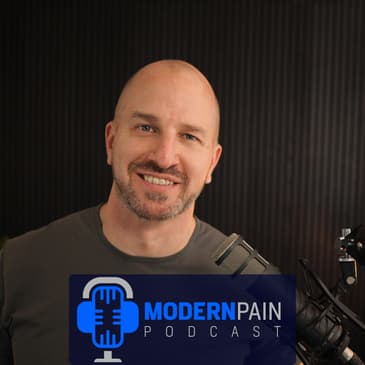
In this episode of the Modern Pain Podcast, host Dr. Mark Kargela interviews physical therapist Chris Hughen. Chris shares his journey from aspiring strength coach to established physical therapist, highlighting the importance of mentorship, the pitfalls of chasing certifications, and the value of embracing uncertainty in clinical practice. Chris also discusses how his background in coaching influences his patient interactions and the necessity of maintaining good professional relationships. Tune in for valuable lessons on pain management and building a successful career in physical therapy.
Chris' Instagram
Chris' Podcast
E3 Rehab
*********************************************************************
📸 - Follow us on Instagram - https://www.instagram.com/modernpaincare/
🐦 - Follow us on Twitter - https://www.twitter.com/modernpaincare/
🎙️ - Listen to our Podcast - https://www.modernpaincare.com
____________________________________
Modern Pain Care is a company dedicated to spreading evidence-based and person-centered information about pain, prevention, and overall fitness and wellness
I think part of it is this sense of I need to rack up as many different certifications or tools in my toolbox that look and feel shiny, uh, as quickly as possible. And this almost neuroticism with, I need to get my, you know, dry needling certification. I need to get my residency training. I need to get whatever it is. And then they end up, you know, two or three years later, they have like 20
Mark Kargela:different things that That is Chris Hughen, a physical therapist three years into his career. Chris is based out of New Mexico and serves as a remote coach, podcast host, and content contributor for E3 Rehab. I had Chris on this week to share his story as he is someone I think most young clinicians and students can learn a lot from. He has modeled a way to develop relationships and has actively seeked opportunities for growth early in his career. We spoke to Chris about his transition from thinking he was going to work with collegiate athletes as a strength coach to becoming a physical therapist.
Chris Hughen:That initial passion of, I want to be an SNC coach. It kind of morphed when I had an internship in Colorado and one of my mentors, just one day, he just randomly popped up the idea of, well, why don't you go into physical therapy? You love interacting with humans one on one. You seem really interested in some of the pain side. And I don't know why I never considered it prior, but it was just kind of a swift.
Mark Kargela:Chris provided some honest reflections of his time in PT schools when what he was seeing taught did not align well with what mentors and research were saying
Chris Hughen:of being a student and asking a professor an honest question, but not trying to make it so
Mark Kargela:Graduate and higher education in general still function in a context of certainty where there is one right answer you can enter into an examination question. Chris and I spoke to the necessity of preparing yourself for the uncertainty that faces you in the clinic.
Chris Hughen:I think if the professors or their, the students, clinical instructors aren't acknowledging the uncertainty or embracing some of the, uh, complexity of there's probably not always going to be an answer or there's going to be a variety
Mark Kargela:of options. I have a list of certifications and theories I bought heavily into along my journey. I'm betting you do too. I think there are a lot of systems and theories that offer clinicians a sense of safety and certainty that can be an attractive option, especially when we face the chaos and uncertainty each day in the clinic. Chris and I spoke to his journey with PRI and how his rigid beliefs and it changed As he was questioned to self reflect and analyze the approach. I
Chris Hughen:just became more and more disillusioned and part of it was when I was interacting with Derek Miles at Stain for Children's and him just asking questions of me trying to explain my rationale or my thoughts on why I thought certain PRI beliefs were accurate. It just came like quickly tumbling down.
Mark Kargela:We spoke to this and more on this week's episode. Be sure to check out the show notes for information on Chris, his podcast and some of his writings. While you're at it, make sure you subscribe to the podcast so we can help spread the word and help more clinicians. Now on to the episode.
Announcer:This is the Modern Pain Podcast with Mark Kargela.
Mark Kargela:Chris is a good example of somebody, you know, I peek at what's going on in the in the landscape of physical therapy and I've, Chris, I've probably seen your stuff for the couple years now. I know as you were coming up as a student, you were quite active with clinical athletes. You can see your passion, you can read your passion when I, When I read a lot of your stuff, but that one of the things I'd love if we could share, because we do get some students and some younger clinicians who are trying to chart their path. It can be a messy, gray, muddy world of like your early professional career of what do you want to do? How do I develop relationships and all that stuff? But you have a great. Journey, I think that you can share with some folks. I wonder if you can kind of unpack a little bit of how you kind of got to where you were or where you are. I should say.
Chris Hughen:Yeah, totally. I appreciate you saying all that. I'll, I'll start from undergrad because I think that is the best place to start. I going into my freshman year was kinesiology major. I had this strong passion and assumption that I was going to go collegiate strength conditioning. I was going to work with a top tier university. I was going to work with athletes and I was going to be in the college sector as an S& C coach throughout the four years of undergrad. Every summer, I just stacked on S& C internships. They were all in the private sector, so it wasn't really even in the collegiate setting, but it was just out of kind of convenience and the ease of getting some of those private sector internships was much easier than the collegiate setting. But I fell in love or I continued to like have this strong passion for working with athletes and understanding these private sectors. Coaching and training principles, but the more I communicated with some of these coaches, and then the more I networked, the more I realized there was some limitations to what that potential long term career would look like. And I kind of dabbled a little bit and just some shadowing of the collegiate setting. And I quickly realized just with my personality that that would have been really tough. It's a pretty extroverted environment. You have to be on all the time. You have to work with all the, all these athletes. And that felt. Just didn't kind of align with my personality and then looking in the private sector, there was also these constraints of long hours. If you own the facility, you have the demands of all these other requirements outside of just being a coach. And then if you're not a coach, you have these kind of pay limitations and these things just kept popping up and. That initial passion of I want to be a S& C coach, it kind of morphed when I had an internship in Colorado and one of my mentors just one day, he just randomly popped up the idea of why don't you go into physical therapy like you love interacting with humans one on one, you seem really interested in some of the pain side and I don't know why I never considered it prior but It was just kind of a switch. So that summer I was, it was the summer going from my junior year of undergrad to my senior year. I quickly looked at what are the requirements to apply to PT school. And I started the process of when I was in Denver, I started a shadowing experience in a hospital system. I started working on PT casts, writing essays, and I realized I just have a lot of, um, The requirements to get in. So I apply that summer going into my senior year. I think it was that first semester where you start hearing back or during towards winter time. I wasn't getting any interviews. I wasn't hearing anything. And it was kind of brutal. But in some aspect, I kind of Knew that that was going to be the reality just because it was a quick turnaround of trying to apply to PT school. So turns out, didn't get any interviews, realized I was going to have to take kind of an off year between graduating from undergrad and reapplying and hopefully getting in for the second round. So, uh, Again, I applied for another internship and this one, it wasn't really in the private sector. It was with a company called Exos and I'm sure multiple people or a lot of people listening have heard of Exos and what they've done with athletes and combine training and they're based out of Arizona and they've spread over the past few decades. But now a lot of their time and money and effort is in corporate wellness. So I applied to an internship at Exos at Google in the Bay area where they're I, um, a kind of a corporate wellness contract for Google employees and for Google as a whole. So I thought, okay, well, I have this year off. I'm not going to PT school. I know that's what I want to do, but I want more experience. Um, this seems like a cool position. The unique aspect of it was my prior internships. I was in this, these private performance facilities where you're training athletes or maybe general population, you know, four to six people at a time. Pretty semi private, pretty intimate. Still, this corporate wellness internship was going to be with these big group classes where you have to kind of Be on almost similar to what I was going to expect in the collegiate setting, but with, you know, Googlers where a lot of them haven't trained before, but I thought it would be a really good experience and way to put myself out of my comfort zone and, and have to be almost this kind of like not a bootcamp instructor, but just be a little bit more of this class instructor. And, um, It was a phenomenal experience was that summer after I graduated from undergrad. I had some great, um, intern coordinators and mentors. And during that summer, I'm reapplying. I'm going through P. T. Cass again. I'm, I'm writing my essays. And at the same time, I had learned about, uh, clinical athlete and the forum. And for people who were on the forum, the O. G. forum know how special it was. But I, uh, Actually, I guess it was a little bit before then, because I remember reaching out to this individual before I moved to California, but I had seen this individual Derek Miles post on the forum all the time, and I saw that he was in Mountain View, California, which is right where I was, and so when I started this internship, I thought, well, let's get some more physical therapy Experience or some mentoring and some shadowing with Derek, and he was at Stanford Children's Health at the time. And so I'm going through this Google internship, um, working with all these, um, Googlers and, and teaching the classes. And then when I'm not Makes Doing this internship, I'm going on the evenings and watching Derek worth work with some of his pediatric patients at Stanford Children's. And that was a phenomenal experience. So I do that during the summer. I still have to wait the whole year. So I finished the internship and I kind of transitioned from a group class instructor within Google to just a personal trainer and same kind of responsibilities of the individuals I work with. But now it's one on one. And so that whole year. Um, between getting into PT school and senior year, I was just bopping around different campuses of Google within the Bay Area training individuals. And when I wasn't working, I would go hang out with Derek and learn and have this mentorship from a physical therapist and it was amazing. So that experience was a phenomenal, free, um, kind of introduction to what PT was. I was looking for within PT school or hoping and, and if anyone knows Derek Miles, he's, I would say cynical is One way to put him but skeptical he's a strong personality and strong opinions of the field and I would say he some of that bled or kind of grew on to me as a young adult going into PT school and he started introducing me to people like Eric Meda and some of these more science based physical therapists or researchers and going into PT school. Oh, I. Just through that relationship and learning about these other individuals, I kind of already had a chip on my shoulder or some skepticism of what I was to expect. And I would say that was good and bad. So I get into PT school, I apply the second time, I get in, I move back down to Texas, um, I went to UT Health San Antonio. And I remember the first week, One of our professors was just teaching a class on posture and was showing this graph and it was a very typical, I would say, introduction to, unfortunately, what a lot of students experience on posture. And I kind of called out this professor and said, you know, my understanding is that there's a range of different positions and postures and none of these are inherently ideal. And there's a lot of, um, you know, Options and I may have said it a little bit more directly or aggressively than that. And it was this kind of palpable, uncomfortable feeling with other classmates because, you know, I had these past multiple years in undergrad doing these internships. I fortunately had a lot of Intern mentors that really like kind of called me out or questioned me and I was so used to this model of like you just ask questions and you are used to being uncomfortable and if anyone again knows Derek Miles, he's just going to kind of call you out and I went into PT school just kind of it. Thinking this is what I was going to have these interactions with with professors in a doctorate level program of I could question or we could have a back and forth and that quickly in my specific program became apparent that that wasn't really the case that it was still this very traditional top down hierarchical model of I'm the professor I'm going to teach at you or to you and we just need to get through this class material. So I would say throughout those three years of PT school, there was multiple. Conflicts that looking back at it, I there were multiple situations where I definitely could have framed the questioning or not ask the question or had a better perspective on how to go about this situation of being a student and asking a professor an honest question, but not trying to make it so combative in a sense. But. I go through that process. Fortunately, in PT school, I early on knew that I wanted really good clinical experience and mentors and I asked our kind of clinical director or the individual setting up the internships or the rotations. Hey, I know the XYZ places aren't already on our free Internship list. Can I get these started? So when I'm a third year student, I can have these opportunities and we kind of got that ball rolling. So I had some phenomenal rotations, one up in Boston at Boston PT and wellness with some great clinicians. Um, Zack, a bore, my Kamado, Steph Allen. They were all there. Um, And those names may sound familiar if people are familiar with clinical athlete or level up and and then did one in Nevada and FPT with John Hodges and just really tried to set myself up for the best learning experiences during PT school in a period of time where I was really frustrated with some of the classes and some of the constraints of that teaching model. But having mentors in clinical rotations to set me up in the best way possible As a newer clinician,
Mark Kargela:there are some students who just want the PowerPoint, the lecture. Tell me what I need to memorize. Tell me what I need to put on my ABC or D on the scantron. Did you find attention like that with some of your classmates of like, Chris, just shut up so we can learn and get these ABCDs yet you had obviously a passion to go deeper and to be kind of more, I guess, up to date, you know, not having to, you know, the struggle against that history lesson that is PT school and health professional education is a universal one, especially for somebody who's very. Did you find that kind of tension with you and your classmates?
Chris Hughen:Yeah, it was obvious that a lot of people were frustrated by Either the way I asked the question or just asking the question itself, because it's slowed down the entire class. And like you said, there's a lot of students that a lot of them kind of come straight from undergrad and they're used to that model of I just need to absorb the material where being thrown a ton of stuff at us in PT school. Let's just get through it and let's memorize it and keep going and It, yeah, it was very obvious that people were not really happy with how I went about our curriculum, but it was obvious that others were extremely appreciative. And I think it was my first semester. Um, it was before COVID, um, COVID occurred when I was a first year, but it was, that was during second semester. I sent the whole class an email saying, Hey, I would love to start a journal club and have some More in depth discussions on topics that maybe we're talking about in class, but share other papers and there was a group within our cohorts that were very interested in that. So every week I would pull a paper or a few papers and we would sit during lunch and just chat about a variety of things, whether it was, you know, um, A lot of them were kind of easy commentaries to start with just to like have a discussion and easier to dive into as a student like sticks and stones or, you know, different commentaries about like beliefs and placebo and nocebo and these contextual factors and just to like, Have these discussions about what are these other things impacting and influencing people's experience of their bodies and experience in health care. And they were phenomenal conversations. So there was a group of people that were excited and interested to have these discussions, but maybe weren't as, um, outspoken about it in clinic or in the, uh, in the classes I was and other people that just didn't want anything to do with it. But to that point, there were some individuals that I thought, um, I couldn't really get a read on it. And then during clinical rotations, I would receive a few texts where there was a few students that said, you know, I'm really appreciative that you were the one calling out professors are asking these questions because it gave me the confidence or the ability to do so in clinic with some of my clinical instructors where there was maybe some frustration or things that they thought were Weren't ideal. So I think it was a lot of what I did was worth it. Just knowing that it showed students that they could ask questions and to this person that you see is like the professor or the, you know, you, you can't, they always have to be right. That's not the case. And these should be fluid interactions. And Yeah, I, I, I think maturity wise, I would probably have done it differently, but I think it was still worth it. And, um, I'm happy I did.
Mark Kargela:How do you find that that translates like your thought of being critically appraising of topics and being able to have some of these questionings of traditional things? How does that serve? Have you seen it serve you in clinic? Cause I do think the ABC or D just let me memorize and regurgitate. It doesn't translate well to the reality of what you face day to day with patients, right? Where there is, there is a A to Z of things that could be sometimes and it's gray and it's muddy. It's not certain where, you know, we, we get trained and we teach students with this certainty model where it's, it's, it's ABC or D and you're going to shade it in and you're going to get graded, which. I get it. You know, it's, I mean, we could argue with educational models and if that's the best way to help people prepare themselves for professional lives, but do you see some challenges with students and with that transition from DPT school to the clinic when, when it's still that lecture based certainty, like you said, authority dispersing the knowledge upon a student to memorize and regurgitate?
Chris Hughen:Yeah, totally. I, I think if the professors or their. The students, clinical instructors aren't acknowledging the uncertainty or embracing some of the complexity of there's probably not always going to be an answer, or there's going to be a variety of options, or this may help for someone, but. That same thing may not help for another person. If that's not in place, I think it's going to be very, um, eye opening as a new clinician to realize that the black and white that potentially they assumed was going to be the case is probably not going to be the case in most situations and that was one of the best things that I learned through my mentors, whether it's Derek or in my rotations in Boston or Nevada, where they did such these clinicians did such a good job When I'm watching them interact with patients where a lot of times if they don't have the answer, it's this kind of like humble, you know, shrug of the shoulders. I'm not sure. And it wasn't this like lack of confidence. Um, scared, you know, stumbling over their words. I don't know. It's this like genuine. I'm not sure or we're not sure. And they kind of elaborate on that of whether, you know, the research Just doesn't have answers or there's so many factors that may influence why these things are presenting this way. And you know, you don't leave it with that uncertainty, but you can provide clarity and context. But it provided me the opportunity to realize, Oh, I can do this as a new clinician. And that's just going to be the case because I'm not going to know a lot of things because I'm young. And new and in general, we don't know a lot of these things. So it gave me the freedom and the comfortability to do that as a new clinician. And over the past few years, still, it's kind of a new grad 2. 5 years out that it provides just some comfort. But I can understand if someone's not used to that or hasn't seen it with other clinicians or with professors that can feel like it. You're coming across as you don't know what you're talking about, or you want to have this expertise. Um, you know, aura to you as a clinician, but I think patients really, as long as they trust you and you have this rapport in this relationship, you're I think they're okay with some of these uncertainties and you giving options or ways to move forward in the face of uncertainty.
Mark Kargela:Yeah, I think there's this belief that just like if you say, I don't know, you're going to be some inferior. It's that whole imposter syndrome of like, I don't know. And the, I think there's a t shirt that goes around about it. Depends like the number one answer to most questions in, in like clinical practices, it depends because a lot of the certainty, and there's a lot of clinicians still operating on a lot of false certainty that this is the only way this is the way to do it. This, this, my letters are the letters to, to, to ascribe your clinical life by. And, and I've practiced within that certainty to, you know, thinking that there was this one way to do it, that worked for everybody. And there's so many factors that go into play with that, but I think it serves. Well, to have one an inquisitive minds and maybe you're not going to be the one that's outspoken in class, which I think it's helpful to have that for students to see that there is, you know, differing opinions and things like that. And there's a constructive way to express them and to as both professor and student, right? Because I think I've seen professors or heard stories of professors, not maybe handling that situation maybe as well. And again, I'm not speaking to your professors whatsoever, but, um, What, what would you recommend, I guess, to with students who want to go somewhere professionally, they want to reach these goals, they want to be, have this expertise, like, how do you, how do they seek out that path instead of just, it's not going to come to them without, you know, them taking action. What are the actions you think people can take to, to kind of make that more of a reality for them?
Chris Hughen:Yeah. A part of it I think was just my genuine. Curiosity. And if people are genuinely curious and interested, it's probably going to feel easier because they're going to be probably seeking these things out on their own. But starting in undergrad was just looking at internships or trying to reach out to coaches. It was literally just emailing people or sending messages. And I didn't really have this fear of like, what if they don't respond? Or what are they going to say that I don't think that ever crossed my mind. And I don't know why it didn't, but that momentum kind of built. And grew going into grad school where I started this journal club and it initially was in person with my classmates and then COVID hit and it was remote. And I was like, well, now we're doing these zoom journal clubs. Why don't I reach out to other professors or other researchers? And we, I would just reach out to random people throughout the U S like Mike Raymond at Duke or, um, Chad Cook or, you know, Paul Salaam. And it was the same thing of like, I'm just genuinely curious and talking or are having conversations with these individuals. And a lot of times those people it's flattering to them. And there's some of that, like you're a student, you're young, like I, they're, they're interested in that mentorship aspect. And I never felt uncomfortable asking the question because the worst thing they would do is either not respond or say no. And that's not the worst thing in the world. So part of it is just knowing that there's really not many downsides to reaching out to humans. And there's a lot of potential upsides of creating relationships, having conversations, learning from them and then learning who can I reach out to next. And it really Will kind of bop you around your career or your life or what, where you think you're going to go similar to if I didn't have some of these conversations in undergrad, I may not have gone down the physical therapy route or when I was in PT school and I didn't meet these mentors or have these conversations. I wouldn't have the opportunities that I do now. And yeah, I think it's, it's like this compounding effect where the more you have the conversations with more people, it just grows exponentially. Um, and it's it's been a huge help in my career and I know that people my age or other newer clinicians that have done that it's similar for them where they just have these these wave of opportunities that other people don't because they kind of isolated themselves in PT school or just constrain themselves to their cohort or to their professors and that limits locally their options, which isn't potentially bad, but I think it really can serve you long in your career, and it has for me as a young new grad.
Mark Kargela:Yeah, I can echo that. I mean, I just the amazing opportunities we have with the digital age and being able to like message people and reach out an email and I never thought I'd be, you know, chatting with researchers from Australia, New Zealand and the UK and having, you know, some of the relationships that I was able to, we've been lucky to To be able to build. And it sounds like it's been a similar journey for yourself. One thing you've spoke of that I think is a great quality, not for just a student, but for a clinician is that genuine curiosity, right? There's this curiosity that you need to really one, you know, be able to, you know, get into topics at a depth that allows you to, to hopefully master them to, to the need you do obviously in school, but also. The information that the patient provides you, the, the, you've probably heard we, the patient is the number one expert in their unique pain experience and a genuine curiosity is a requisite. If you're going to start to get into that and really give it its true place in an encounter where you're really prioritizing their part of the journey and their expertise in it. I'm wondering how you see those two kind of parallel with each other that curiosity is a learner, not just in didactic school, you know, DPT school knowledge, but how it serves you well in the clinic. Okay.
Chris Hughen:Yeah, it's asking questions to patients is one of the most powerful things we can do because it opens doors and, um, opportunities for diving into things that we wouldn't if we didn't ask the questions or we didn't have the curiosity. So, Yeah, a lot of times it's framing an interaction with the patient during initial evaluation or throughout our plan of care of hearing their perspectives on what they've been told, what they think is going on. Um, What they've tried to do to navigate in before our interaction, and it is just like layering in questions and curiosity and not having this approach of I need to expedite this, uh, interaction to start the treatment or to to give them a diagnosis because Transcribed by https: otter. ai There are certain times where we do may need to, you know, transition them out of, uh, PT because they're not appropriate for care and they need to do X, Y, Z, because that's the more important thing. But a lot of times it is, we don't need to rush this initial process. And the more I have curiosity and the more I know about you as a human, And what you think is going on or what you believe about your body or your injury or your persistent symptoms, the more it helps me develop a starting plan or a guide for us and explaining to them that this is very fluid and the more we have these interactions, the better it allows us to have steps. In place moving forward as opposed to not knowing about them or their beliefs or their prior experiences or what they want to get back to because I think that sets both people both parties out for you. Failure more often than not
Mark Kargela:having a good mutual understanding of what each expertise is in the room and how they can kind of Guide each other really I think often there's that been that Paternalistic model of like I am the expert kind of like the classroom model we spoke to Which we know doesn't serve students as well as possible and definitely sometimes does not serve our patients Well, there's times where we need to you know Share our expertise, of course, and we have unique knowledge that patients don't possess that we can share ideally in a very you know, accepted, you know, permission based manner, not just, you know, imposing it upon a patient. When you talk about that genuine curiosity, it's led you to see people that are very wide on the spectrum over your career. You've seen everything from the professional athlete to the You know, the desk, uh, you know, computer athlete with your folks at Google. And I'm sure you've even seen folks that are in more of the, maybe, you know, struggling with, with persistent pain. Let's, let's talk a little bit about athletes. I think there's this misconception too, that like pain science is something that's just a, You know, if you're, it's either you got to be a chronic pain patient for pain science to apply, uh, and I've pain is pain, right? It's, it's, it's universal experience that we're all going to have, including athletes, different contexts around it. Of course, I'm wondering if you could speak to a little bit about how you see, you know, some of the similar pain science things that, you know, we traditionally may have thought. Well, that's just for your chronic pain patients that some of our folks that are even higher performers still are dealing with some of these psychosocial issues and other issues related to pain that, again, we traditionally have left for, for maybe that chronic pain patient.
Chris Hughen:Yeah, it, the principles or the understanding doesn't change. It's just adapting the conversation to the person and their experience. So if there's, if it's a, you know, collegiate or professional athlete They have a variety of experiences and contexts that may be the person that hasn't gone through that pathway as an athlete and an elite athlete has, and it's still understanding and breaking down some of their current beliefs about it. their what treatment they believe is necessary or what's quote unquote wrong with their body or why they keep getting injured. And yeah, I still think it's the similar conversation of like understanding and unpacking what they think needs to be done or needs to be changed and how I can help play somewhat of a role. And it's still similar with the person on the other end of the spectrum that my goal isn't to. Always rattle the cage and try to shift their narratives or their beliefs about their body or their views of pain science or talk at them. It's just try to find steps that are productive and meaningful moving forward and give them options and reframe most of the time the conversation around like you're resilient, you're a freak athlete like this is going to get better more likely. These are the things we can do that are valuable. Other things or other strategies that you're currently doing sure it can be helpful and you can continue to do it and they're all feel good, but it doesn't have to be the priority of treatment and it's just layering in some of this like, um, you know, positive self talk and, you know, Framing of resilience and robustness that you can throughout the spectrum of individuals, whether or not they're a freak athlete or just, you know, a general population individual. That's really never consistently exercised. It's it's the same thing of, um, trying to manage this interaction of they're coming in with a lot of. Unique beliefs and some of them may be helpful and some of them may be Not the most beneficial And deciding where can I kind of like make these little steps to have? Somewhat of a helpful interaction as we go through this care, but yeah, just because they're an athlete doesn't change some of My conversations and some of the big rocks that they may not be prioritizing like these individuals that aren't consistently exercising where they may not be getting enough sleep or they have all these other stressors in their life, or they're not talking with a psychologist, or they're not seeing someone about the things that they're presenting or discussing with me. And yeah, it's checking all those boxes of like, Acknowledging and telling them that all these things play a role, providing them options of individuals that they may be helpful to talk to, or these are the big buckets that it sounds like you're currently not able to do, or that are limiting, um, and this is where we can start, and it's just finding entry points for each individual along that spectrum of human athlete or general population.
Mark Kargela:You know, it sounds a lot like coaching, right? And I think that's been something in your past with, you know, some of your athletes and, and things where you're doing more strength coach based things with, with athletes. And have you seen that be a pretty seamless transition for you? Cause I think there's been a, maybe a traditional way that clinicians get trained in school where it's more the traditional expert novice relationship where I have all the knowledge that I'm going to dispel upon you versus a coach where it's, Hey, I'm gonna come alongside you. We're going to find out what your resources are, just like our OT friends do very well. And let's come up with a game plan for you. Let's uniquely coach you based on these resources and your unique things that you're bringing to the table. Have you found that something that's been a little bit more of an easier transition into your clinical relationships with patients? And with that, have you seen it maybe be a struggle for folks that have been more in that traditional model of care?
Chris Hughen:Yeah, I think for a variety of reasons, it's been helpful of one. Working and having interactions with coaches where they understand just these compounding stressors outside of just training and bringing that into physical therapy where it's the same thing of understanding that we have these stressors that we can impose from a, um, a stimulus perspective, but then there's all these other environmental and life things. Impacts and we we need to take those into account, but then as a coach understanding the realities of someone's day or their week or their month and trying to realistically fit in the interventions or the things that may be beneficial from a rehab perspective and looking at kind of their Schedule and their calendar and I think that was super helpful as a new grad, um, with a background in coaching because it's not like, well, I'm going to give you these 20 exercises as a PT and you're going to do it twice a day because one that's not realistic to that may not be necessary and three, it may not be enough of a, um, a stimulus to drive the things we want moving forward. So, yeah, it gave me just a clear idea of how do I set in place a day or a week or a month of a plan. How do I know what the end goal is and how do I move back from that from kind of a, um, what adaptations do I need to get, um, if it is this kind of like there are these structural changes or, um, physiological changes that we want to, uh, improve upon moving forward. Um, so I think those were all very helpful things and then just the day to day interaction of like teaching individuals new movements and being a little bit more maybe hands off. I think the physical therapist that I've seen that I've just had a background more in working with humans from a coaching perspective or just are very comfortable. It's not this neurotic. I need to teach you how to perfect XYZ. It's I'm gonna Provide some kind of guide rails or constraints and we're going to explore this over the next few sessions or weeks or months and way less like dictatorial of this has to be done this way or I'm going to cue you or adjust this thing for every single rapids providing a lot more freedom and how people kind of move and feel and Again, going back to the curiosity of like, how was that? What are your thoughts? Do you think you want to increase weight? Do you want to stay here? And it's it is much more exploratory because I had that confidence of well, these are the things that I'm trying to get with this movement. And as long as we're accomplishing XYZ, whatever that may be that I'm okay with the these kind of bandwidth of how it looks or how it feels for this individual. So yeah, being a coach and having the comfortability with Programming and looking at movement and then understanding that there's a lot of variability of how we can move and how that can evolve over time. Just as someone practices it that just gave comfortability of not having to be so, um. On top of someone with every single exercise or encounter.
Mark Kargela:Yeah. You mentioned like being overly prescriptive and dictatorial with your care. Do you find that really unlocks? To me, that's the fun stuff of being in clinic. That's the stuff that like, cause you get to be creative, right? You get to like say, okay, this is your unique situation. Let's put up some guardrails so you're not way off and way off the rails and doing some things that are counterproductive, but let's, let's play, let's experiment. Let's see what works for you. And like, Hey, if we, if that didn't work, yeah, You know, reflect on it. Yep. Didn't seem to work for you. Let's do something else. Do you find that a little bit more rewarding clinically, that kind of approach where you have a little freedom, you can kind of tailor to the individual, you can have some freedom to kind of experiment and, and kind of play with things to see. Cause I think a lot of us, we, we like to tinker, right. And, and in a fun way that helps. And I think And from my experience, patients kind of appreciate it too, where they're really seeing you thinking and reasoning and not just this is my program that we're going to take you through. You're on step one of my five step program and here's the exact regimen we're going to get to where the thing's a little bit more flexible and, you know, tailored to the individual. Have you found that a little bit more rewarding for you clinically than kind of maybe that traditional dictatorial style?
Chris Hughen:Yeah, totally. One, I think that's what the evidence suggests for a lot of these conditions where there's not one ideal exercise or prescription a lot of the time and reading the evidence and knowing that that's the case for a lot of these conditions, whether it's, you know, patellofemoral pain, lateral hip pain, um, persistent low back pain or acute low back pain, neck pain, there's so many options and this is how I describe it to patients of In general, we want in this kind of acute flare up, if you're having one, we want to minimize the things that are really aggravating your symptoms. But outside of that, our biggest priority is to continue to provide you with movement. And we have so many ways to explore that. And it's understanding what they really want to do or value or have access to or realistically can start or continue. And that flexibility is so fun and creative because it allows us to troubleshoot you. These are the limitations, or these are the things that we may need to modify. But outside of that, let's see what we can add in, or let's see what we need to adjust. And yeah, it's so freeing with the clinician and with the patient, because it's not this rigid plan, and it doesn't need to be rigid. And some individuals I think that stresses them out either as a clinician because it is potentially more cognitively demanding of having these conversations and developing a very flexible and unique and tailored plan for each individual as opposed to this is what every single patient with persistent or acute low back pain gets. But I think it's One, what the evidence would suggest is it should be tailored and, and, um, unique to what the person values and can do and wants to do. And, um, as a clinician, I think it just helps with avoiding boredom and not feeling like you're just this kind of robot. Providing the same routine.
Mark Kargela:Yeah, for me, it was like a survival instinct. Like there's no way I was going to last 20 years in the profession. If I was doing the same thing over and over after 20 years, I would have been insane by this point. But I'd like to switch it a little bit. Um, just to kind of talk about some things. Cause again, we get a lot of earlier, uh, career clinicians, even, uh, DPT students who are, who are. tuning in. What is one of the things, because I'm always interested and fascinated, we've all had these things, right? These things that when we came out, we'd like, man, this is the way it is. And then something comes along and gives us this big, like one 80. Maybe it's a mentor that like, let's pump the brakes. Chris, you need to be thinking about X, Y, Z. Is there anything that really sticks out to you of like things that you went into? Your DP, whether it be your clinical rotations or your early career where you have like pretty much made a significant one 80 in your approach to, I think a lot, I've, I think we all, I all can probably name a few, but what are, what's kind of one of the thing that sticks out to you of something you came into the profession thinking that you've really taken a above face on?
Chris Hughen:Yeah. Uh, more things may pop up as I start talking, but something that occurred prior PT school was this heavy passion or feeling of, Reliance on this PRI model and the, the, the camp that is the postural restoration Institute. And some of the coaches that I followed were really big down this rabbit hole five, 10 years ago. And I thought it was so valuable and physical therapists are teaching this. And I'm going to be doing this when I'm in PT school. And when I'm out. And I became obsessed with the models that they had and the narratives and how complex it was and how if it's this intricate, it must be, uh, accurate, or there was a variety of things. And then over multiple years, I just became more and more disillusioned. And part of it was when I was interacting with Derek Miles at Stainford Children's and him just asking questions of me trying to explain my rationale or my thoughts on why I thought Certain beliefs were accurate. It just came like quickly tumbling down and knowing that if I can't provide more of a simplistic explanation for why this may be beneficial or I can't help provide it. Significant supporting evidence to back these claims, then how much should I hold this as an extremely valuable thing? And I spent years taking these like PRI home studies and, and interning and shadowing physical therapists or strength coaches that like use these models. And I just, it made me jaded to a lot of different really strict. Models or acronyms or courses that taught that this is the way that things have to be done. And I think that was extremely helpful to go through that process. And I don't regret going down years of that path of like being an undergrad, going to the library and watching this like PRI video or this course on. Respiration and myokinematics and like not having any clue what they're saying and then trying to study for like my biology class. It's just that level of being in the weeds allowed me now a little bit older to realize that I probably shouldn't go down this far into these rabbit holes or if I do, I need to have some kind of base level questions of like, what am I trying to get out of this? What is this groups or this ideology or this camps kind of? Underlying narratives. And yeah, I think for a lot of people, it is actually helpful to kind of go down these things and then pull yourself like out of it eventually, and maybe take some of the things that are, you think are valuable, but realize this doesn't have to be the case and people are getting better without this. And is it more limiting or does it put people in a certain kind of fragilistic mentality or box than it should? So that was a huge one of just thinking that that was. How I was going to treat as a clinician or view someone and then realize that I really don't utilize any of it at this point at all. And part of that is, um, great. And part of it is like, uh, I kind of, I don't want to say empower, but I'm okay with people like going down those things that that may not be the most helpful and I may not say a ton unless they ask my thoughts because I think people should start to just figure it out for themselves and and stumble their way through it or navigate the the um, the world now that there is so many options for students and new grads to pursue. Learn from whether it's social media or these different courses and ultimately you're going to look or hopefully look at your practice in a year or five years or 10 years and realize like no matter what it was or what I said, I'm probably going to do things differently or cringe at some of these things and that's just the state of like being a human and and growing and trying to reflect. So hopefully you're not as stuck in your ways or you thought, okay, what I did last year or 10 years ago. Is still the best way. And I'm glad I'm still doing this. Is that kind of like where you were going or was that your, your question?
Mark Kargela:Yeah. Yeah. I think, you know, a lot of those systems, and I definitely have my share of those systems where it gives you this false sense of certainty. Right. I think the journey, a lot of us take, you know, David Butler had his professional roller coaster blog that, well, I'll see if I can link it in the show notes, but basically talked about, you know, we find a new system. It boosts our confidence because there's never a shortage in these systems of clinicians who will, you know, it's confirmation by essential, right? This is the way we're all doing it the right way. And, and again, I'm not saying there can be some value to some of the parts of those systems. I think obviously a lot of the theory. around PRI and other things, uh, you know, that we could probably name about a few others, uh, more than a few others, you should say that, you know, I think are well intentioned, but I think struggle, like, and especially when the confirmation bias runs deep. And then we, we get a lot of these systems that then have their yearly conference where it's just like, they, they dig themselves deeper into, you know, Plato's cave, you know, the allegory of the cave where they're just seeing the world through their one, biased viewpoint and it becomes hard for folks to navigate out of that cave. It just becomes, and I definitely have been deep in the manual therapy cave where I thought, you know, it was all about these specific joint mechanics that were going to be the things that needed to be corrected. So we, we often in our community, it seems like a support group. Half the times of us all just talking about some of the past things we've, we've done. We've done and spent money on it and committed our brains to it. And again, I think I would agree with you. I think there's a bit of like, we need to go through our journey, right? We need to kind of figure it out for ourselves to some extent. Uh, you know, that's one of the things I probably would change differently about my early career is getting the zest to have to. To have letters in the certification and there's more valuable ones than others. I'm not saying they're all not worthwhile, but With that said i'm wondering if you and we'll probably finish with this question because I want to respect your time What would you think if based on your viewpoint and seeing folks coming out of school? What do you think of the kind of biggest mistake folks often make, you know is coming out of school Um early in their career
Chris Hughen:Yeah, I think part of it is this sense of I need to rack up as many different certifications or tools in my toolbox that look and feel shiny as quickly as possible. And this almost neuroticism with I need to get my You know, dry needling certification. I need to get my residency training. I need to get whatever it is. And then they end up, you know, two or three years later, they have like 20 different things that they may utilize or they may not. And it just, it kind of distracts. Someone or could distract someone from the goal of being really reflective with these new interactions that you're having as a young clinician and they're looking for like the thing or trying to stack on all the things because they think that's what's necessary as opposed to simplifying and finding a handful of Of trusted mentors to help guide you through this process as a young clinician and maybe provide a little bit more of a BS meter of is it worth it to invest this time and money into X, Y, Z thing, or maybe you take it and now we have a conversation and reflect on what was the value of taking that course or how is that going to change your practice or will that change the prognosis of this individual? So, yeah, I think a big. Maybe misconception or mistake is just this feeling of needing to just rush out and take all these courses or get all these certifications that may not be that beneficial and may distract you from just being kind of in on the ground, like working with patients and reflecting on these situations and being really good at trying to develop The most valuable basics and principles of care, which is like getting better and better communicating with patients, getting more comfortable listening and understanding what are these routes of maybe behavior change or motivational interviewing or ways to just have more productive, useful interactions. I think that's like the big thing and then being comfortable with uncertainty and knowing that you're not going to have all the answers and all these courses aren't going to provide the answers. They're just going to provide maybe some quick fixes that you think Or the answer and then just feeling comfortable with starting to dive into some of the research and learn more about, well, what are the average timelines and prognosis and outcomes? And how does this help me go back to the communication aspect and know that I'm seeing someone with adhesive capsulitis? That quick fix course that I learned that dry needling is not going to change their frozen shoulder in two sessions and feeling comfortable with an understanding of how long certain conditions take or what are some things that may move, um, the needle forward, pun intended that like I should rely on or should have. Kind of as a strong rooting that I think those are the priorities, but I it's just it's too easy or it seems like a quick option for someone to just take the weekend course or to follow X, Y, Z person, um, and go down these paths that may be again, distracting them from, I think the things that really matter, which is just communication, feeling comfortable with knowing that, you know, There's uncertainty and then feeling comfortable with diving into research that can kind of help guide you through this process There's probably more but I think those are really good starting points.
Mark Kargela:Yeah. No, those are great points for sure I think one thing that I just put a post about this reason is one of the things that early my career I really think I missed the ball and I was just finding some clinicians that established themselves that as like really high level Critical thinkers and clinical reasons because they're the thing I used to look at. What's the flash? What's the new shiny tool if you're not doing that then you're probably not as good of a clinician So but I understood the folks that weren't really so rushing to get those were probably the people I needed to start paying attention To who are really thinking at a high level. So you'd like yourself you you you found Derek and you really You know, pushed you to think and to kind of question some things where I was just looking for affirmation and, you know, new tools and things. And if, if somebody was going to talk about my tool in a derogatory way that I just would block them or ignore them, it just was something I wasn't ready to, to face. But yeah, I think being able to find comfort in discomfort and uncertainty, I think that's the rule of the clinical. There is occasionally, you know, in our what, eight, you know, 10 percent maybe of back pains got a specific diagnosis. So, you know, one out of 10, you might get a, a, a nice, Clear, certain answer, but in the vast majority of cases, it isn't there and having a process. And a lot of times that comes through mentorship and it comes from really being purposely curious and trying to put yourself in situations. Well, how do I navigate a conversation? And, and, and in a very respectful, validating manner say, Hey, we don't know, but here's what some things I think we can work together with that can move you in a positive direction. Things that I skills I so greatly underappreciated. I think, uh, you know, we, we need to focus on, what are your thoughts?
Chris Hughen:Yeah, I agree. And as you were talking, it made me think of something else that I did change, I would say, and it was very cognizant about going into my first job, where in PT school, it was a little bit more outspoken or blunt or butting of heads. I went into my first job at a sports medicine facility that had a variety of different providers. It had chiropractors, athletic trainers, physical therapy department, orthopedic surgeon. And within this company, there was a spectrum and range of narratives and treatment styles and beliefs from department to department. And as a new grad, And as a coworker, I knew or I wanted to impress upon like my colleagues that I value you as a colleague and I want to be close or I want to express interest and I want to develop like a friendship and comfortability and trust, even if I don't really agree with some of the things you're saying, or some things you're doing may not be the same things I do. So I think That would also be something that I would reflect on and recommend for a new grad if maybe you do have some of these, you know, great mentors or you're skeptical of certain things that are really flashy and a lot of new grads really lean towards, but you're in a clinic, I still think one of the most valuable things is to just like be a likable Clinician and coworker and not have to, uh, you know, butt heads with your colleagues all the time or disagree with them. And there, yeah, there's been situations where maybe, yeah, I don't think our treatment aligns or some of the things they're saying to patients that we're co treating isn't ideal. But me getting really mad at that individual or that clinician or Um, you know, telling the patient that I disagree like that only destroys a therapeutic alliance and it destroys co workers. So, yeah, I think another thing is just liking someone and trying to be a good human and a good co worker. And once that is built, I think there's a lot more openness to curiosity from the other parties or from yourself and potentially more meeting in the middle, um, and having these conversations as opposed to just coming in hot with it, which. I'm glad I didn't do, um, and I think it's just extremely valuable because you're not going to always agree with people and you're not always going to be right. So who are you to just always be the one kind of being the kind of antagonist
Mark Kargela:definitely can relate to that. I've been in some situations where we need to be doing it this way and just came in with a very much of a pushy and, and probably hampered some cultural. Your workplace culture situations by by being a little bit too forward with like this is how we should all be practicing. And I agree like just being a good person purposely curious about other person's practice, you know, having that kind of culture of curiosity and mutual respect. Then, like you said, can open up some doors for maybe. Somebody to ask you questions about what your thought process or what you're doing or you're doing something a little different than I do Highly recommend that approach for sure Chris. I want to podcast It's always good to talk to a fellow bald podcaster. Of course, uh, where can folks find you online?
Chris Hughen:Sure Uh, thanks mark chris hewan my instagram Um, i'm pretty active on there if you want to email me chris at e3 rehab. com You Our podcast, uh, you three rehab, you can listen to my voice if, uh, if you want and that's it. But I'm, yeah, I'm more than happy to talk with students or new grads about these topics or questions that they may have about navigating the, the realities of it being pretty tough as a new clinician or as a student. And maybe I can provide some, some help or just ask some questions. To, uh, to give some input. Yeah.
Mark Kargela:Yeah. Thank you again for your time and for what you're doing for the profession. Definitely helping a lot of early clinicians kind of figure out their journey. And I think you got a lot they can learn from as far as just listening to the podcast today in your journey and definitely reach out to Chris or listen to the podcast so you can kind of keep up with some of the good stuff he's up to. Uh, if you're listening to this podcast, we'd love if you could subscribe, even drop a review, that would help us. And if you're watching on YouTube, if you could subscribe. And maybe you can share the episode, maybe you know some younger clinicians who are trying to figure out their way. We'd love if you could share it, but we will leave it there this week. We'll talk to you all next week.
Announcer:This has been another episode of the Modern Pain Podcast with Dr. Mark Kargela. Join us next time as we continue our journey to help change the story around pain. For more information on the show, visit modernpaincare. com. This podcast is for educational and informational purposes only. It is not a substitute for medical advice or treatment. Please consult a licensed professional for your specific medical needs. Changing the story around pain. This is the Modern Pain Podcast.