
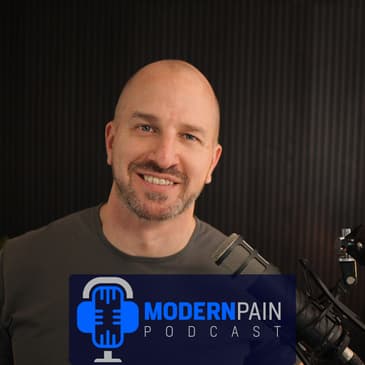
In this episode of The Modern Pain Podcast, host Mark Kargela interviews Trevor Barker, a remarkable individual who transitioned from battling chronic pain with a medicalized approach to living well despite the pain. Trevor shares his compelling journey from relying on heavy medications and invasive treatments to embracing a holistic and human-centric approach that significantly improved his quality of life. He details his involvement with Pain Revolution and how community support and shared experiences have played a pivotal role in his ongoing journey. Clinicians and patients alike will find valuable insights into the power of social and psychological factors in managing chronic pain. This episode underscores the importance of empathy, patient voices, and the impactful role of supportive relationships in the healing process.
Chronic Pain Champions Facebook Group
Pain Revolution
*********************************************************************
📸 - Follow us on Instagram - https://www.instagram.com/modernpaincare/
🐦 - Follow us on Twitter - https://www.twitter.com/modernpaincare/
🎙️ - Listen to our Podcast - https://www.modernpaincare.com
____________________________________
Modern Pain Care is a company dedicated to spreading evidence-based and person-centered information about pain, prevention, and overall fitness and wellness
[00:00:00] [SPEAKER_02]: Hello friends and welcome back to another episode of the Modern Pain Podcast. I'm fired
[00:00:04] [SPEAKER_02]: up to be bringing you one of my favorite episode formats which is interviewing lived
[00:00:08] [SPEAKER_02]: experiencers of pain. If you've listened to this podcast, you know it drives me absolutely
[00:00:13] [SPEAKER_02]: crazy when we continuously sit in circles of clinicians, academics and researchers
[00:00:18] [SPEAKER_02]: and make decisions on what people in pain should be doing. All of this without the
[00:00:24] [SPEAKER_02]: one voice that should be present more than any, which is the voice of the person in
[00:00:28] [SPEAKER_02]: As I've had the privilege of getting to talk to people who have went from suffering and
[00:00:32] [SPEAKER_02]: fighting their pain to living well with pain, it has struck me on how little it often
[00:00:36] [SPEAKER_02]: had to do with the hyper-technical interventional methods we are taught in school or on weekend
[00:00:40] [SPEAKER_02]: courses and more to just being a kind, supportive, present and caring human.
[00:00:45] [SPEAKER_02]: This week's guest, Trevor Barker is another great example of someone living well with
[00:00:49] [SPEAKER_02]: pain and giving back to help others struggling with pain to living well with pain themselves.
[00:00:53] [SPEAKER_02]: Trevor spoke to his transition from the medical model trying to fix and rid himself
[00:00:57] [SPEAKER_00]: of pain to taking a different approach and learning to live well with pain.
[00:01:22] [SPEAKER_02]: We spoke to medications for pain and how it impacted Trevor and the challenges he
[00:01:25] [SPEAKER_02]: faced when he tried to move away from them.
[00:01:27] [SPEAKER_00]: It just keeps going up.
[00:01:30] [SPEAKER_00]: The intervention that doctors offer is to explore issues with tissues, as Dave Butler
[00:01:36] [SPEAKER_00]: would say, put you into scans, pathology testing, pills, different pills, bigger pills.
[00:01:44] [SPEAKER_00]: You give that a go and I gave it a go for a very long time and I realised at
[00:01:49] [SPEAKER_00]: some point that I was a zombie.
[00:01:52] [SPEAKER_00]: I was using heavy amounts of opiates.
[00:01:56] [SPEAKER_00]: I was sleeping a lot.
[00:01:58] [SPEAKER_00]: I was numbed out.
[00:01:59] [SPEAKER_00]: My brain was in a fog.
[00:02:01] [SPEAKER_02]: Trevor shared his decision to pursue doing things in life that he valued despite his
[00:02:05] [SPEAKER_02]: pain not being completely gone.
[00:02:07] [SPEAKER_00]: And it was about time that I gave what I was learning in the program,
[00:02:13] [SPEAKER_00]: his best effort, to see how that would work out.
[00:02:16] [SPEAKER_00]: With the thought that I might have a life and I might still be in pain,
[00:02:21] [SPEAKER_00]: at least I'll be doing a lot more than just lying around doing nothing and still being in pain.
[00:02:28] [SPEAKER_02]: If you have patients who are struggling with pain, this is a great episode to share with them.
[00:02:32] [SPEAKER_02]: If you're listening, I would love if you could subscribe wherever you're
[00:02:34] [SPEAKER_02]: listening to the podcast, if you're watching on YouTube.
[00:02:36] [SPEAKER_02]: If you could subscribe and even throw a like on this video,
[00:02:39] [SPEAKER_02]: it'll help us spread it to more people.
[00:02:41] [SPEAKER_02]: I hope you enjoy the episode.
[00:02:42] [SPEAKER_01]: This is the Modern Pain Podcast with Mark Cardula.
[00:02:47] [SPEAKER_02]: Trevor, welcome to the podcast.
[00:02:48] [SPEAKER_02]: Oh, it's just great to be with you this morning, Mark.
[00:02:53] [SPEAKER_02]: I asked Trevor on these are my favorite episodes to record because I think it's
[00:02:57] [SPEAKER_02]: the most underrepresented voice that is in healthcare and that's the voice of
[00:03:01] [SPEAKER_02]: somebody who's walked the shoes of a person in pain and continues to
[00:03:04] [SPEAKER_02]: walk the shoes of a person in pain and living well with pain.
[00:03:08] [SPEAKER_02]: And I got to know Trevor's story a bit through Tom Bone.
[00:03:12] [SPEAKER_02]: He's been on the podcast.
[00:03:13] [SPEAKER_02]: He runs a Facebook group, Chronic Pain Champions, I believe it's called.
[00:03:18] [SPEAKER_02]: And I just saw Trevor really reaching out and helping some of these people who
[00:03:22] [SPEAKER_02]: come into Tom's group who are struggling.
[00:03:24] [SPEAKER_02]: I find it fascinating to just lurk in Tom's group just to see how
[00:03:28] [SPEAKER_02]: patients are helping each other.
[00:03:29] [SPEAKER_02]: And I think it's such a powerful medium, people in pain helping other
[00:03:32] [SPEAKER_02]: people who are struggling to find their way when they're having a
[00:03:35] [SPEAKER_02]: life changing experience where pain starting to really limit their
[00:03:39] [SPEAKER_02]: ability to live to the values they want to live towards.
[00:03:42] [SPEAKER_02]: Before we get into some of the details of that, Trevor, I'd love,
[00:03:44] [SPEAKER_02]: maybe you can share a little bit of where you're at, what you're up to,
[00:03:48] [SPEAKER_02]: and maybe the story of where your pain journey started.
[00:03:52] [SPEAKER_00]: Where I'm at the moment is a bit of limbo land in between jobs.
[00:03:57] [SPEAKER_00]: I've been working for the last three or four years in prisons,
[00:04:01] [SPEAKER_00]: supporting Aboriginal men particularly to transition out of prison and
[00:04:06] [SPEAKER_00]: back to community.
[00:04:08] [SPEAKER_00]: And a lot of those people have trauma stories and a lot of them
[00:04:13] [SPEAKER_00]: have chronic pain.
[00:04:14] [SPEAKER_00]: And so it's been a special time for me just to be able to journey with them,
[00:04:19] [SPEAKER_00]: to share a little bit of my story and help them to make good plans for
[00:04:23] [SPEAKER_00]: getting support when they come home.
[00:04:26] [SPEAKER_00]: I'm also involved in Pain Revolution.
[00:04:28] [SPEAKER_00]: That's a group led by Professor Laura Mamosly.
[00:04:32] [SPEAKER_00]: And each year they do a tour around a regional area of Australia.
[00:04:39] [SPEAKER_00]: One of the fascinating things for me is that Laura has understood that in
[00:04:46] [SPEAKER_00]: regional and rural areas, access to the latest pain science and support
[00:04:52] [SPEAKER_00]: from people to live well with their pain is very limited.
[00:04:59] [SPEAKER_00]: And in one sense, that's a good thing because then they don't get access
[00:05:04] [SPEAKER_00]: to the medicalized system of health that can really do a lot of harm.
[00:05:10] [SPEAKER_00]: And I'll touch on that when I share a bit more of a story.
[00:05:13] [SPEAKER_00]: But it's also not a good thing because there needs to be a big step up
[00:05:19] [SPEAKER_00]: in terms of knowledge, but also an encouragement to people that are
[00:05:23] [SPEAKER_00]: living with pain that there is a different road to take.
[00:05:26] [SPEAKER_00]: And that road can make a big difference in how they live life.
[00:05:30] [SPEAKER_00]: That's where I'm at the moment.
[00:05:32] [SPEAKER_02]: The Pain Revolution, when is exactly that?
[00:05:34] [SPEAKER_02]: Does that come around?
[00:05:35] [SPEAKER_02]: What time of year?
[00:05:36] [SPEAKER_00]: It's coming up in about four weeks' time.
[00:05:39] [SPEAKER_00]: It starts in Mount Gambier in South Australia and heads towards the
[00:05:45] [SPEAKER_00]: Grampians and finishes up in Horsham.
[00:05:48] [SPEAKER_00]: And for anyone that's in Australia that's interested, they can just go
[00:05:53] [SPEAKER_00]: to Pain Revolution and see the different dates.
[00:05:55] [SPEAKER_00]: But it's mid-September.
[00:05:58] [SPEAKER_00]: It's not far away and I'll be speaking at a couple of the venues
[00:06:01] [SPEAKER_02]: and looking forward to catching up with the time.
[00:06:04] [SPEAKER_02]: It's an amazing event.
[00:06:05] [SPEAKER_02]: I've just seen it from afar here in the States and seen some of
[00:06:07] [SPEAKER_02]: the social media highlights and things.
[00:06:09] [SPEAKER_02]: I've heard Lorimer talk about it in various kind of settings when
[00:06:13] [SPEAKER_02]: he's been interviewed about it.
[00:06:14] [SPEAKER_02]: And it sounds like an amazing event.
[00:06:16] [SPEAKER_02]: For those of you who are listening in Australia, we do definitely
[00:06:18] [SPEAKER_02]: have some folks in Australia who listen.
[00:06:20] [SPEAKER_02]: Make sure you check it out.
[00:06:21] [SPEAKER_02]: We'll link it in the show notes so you can all take a look at
[00:06:23] [SPEAKER_02]: when the dates are and maybe help your community or help some
[00:06:26] [SPEAKER_02]: folks that are really to get connected with some better information
[00:06:28] [SPEAKER_02]: about pain and that can hopefully change their journey.
[00:06:32] [SPEAKER_02]: With your journey, Trevor, I'm wondering if you can recount a little bit.
[00:06:35] [SPEAKER_02]: I know a bit from just seeing it and hearing you discuss it as
[00:06:38] [SPEAKER_02]: you share some of your story with people that are struggling
[00:06:41] [SPEAKER_02]: in some of the support groups I've seen you interact in.
[00:06:43] [SPEAKER_02]: But I'm wondering for the audience, if you can maybe touch
[00:06:45] [SPEAKER_02]: upon your journey as far as pain is concerned.
[00:06:49] [SPEAKER_00]: I'll go right back to probably not having 77 when I injured my back at work.
[00:06:56] [SPEAKER_00]: And I was carrying an extension ladder and it hit a beam in the roof.
[00:07:02] [SPEAKER_00]: And I had to bend backwards to get it under the beam and then
[00:07:06] [SPEAKER_00]: use my back to lift it back up.
[00:07:09] [SPEAKER_00]: And about three days later, I was in a world of fairly move.
[00:07:13] [SPEAKER_00]: And I went off to the doctor.
[00:07:15] [SPEAKER_00]: The doctor prescribed some pills and sent me to a physiotherapist
[00:07:20] [SPEAKER_00]: who started working on a call street.
[00:07:23] [SPEAKER_00]: And back then it was all about working with call strength.
[00:07:28] [SPEAKER_00]: I recovered and went back to work a couple of weeks after that,
[00:07:33] [SPEAKER_00]: but had niggly back pain for many years.
[00:07:36] [SPEAKER_00]: And then it progressively got worse.
[00:07:40] [SPEAKER_00]: I coincided with a period of time in my life where I was under
[00:07:44] [SPEAKER_00]: quite a lot of stress personally.
[00:07:47] [SPEAKER_00]: So I was starting to have to deal with early childhood abuse and trauma.
[00:07:53] [SPEAKER_00]: And work that I was getting on my back, all focused on a medicalized approach to
[00:08:01] [SPEAKER_00]: trying to investigate the cause of my pain.
[00:08:06] [SPEAKER_00]: And in my mind, once they knew exactly what was going on,
[00:08:10] [SPEAKER_00]: they'd be able to fix it with a pill or something.
[00:08:13] [SPEAKER_00]: Now I tried every sort of therapy.
[00:08:15] [SPEAKER_00]: If they had therapy in the nameplate, I'd been there and visited.
[00:08:18] [SPEAKER_00]: I got massage therapy, myotherapy, osteotherapy, physio, the whole lot.
[00:08:24] [SPEAKER_00]: And even ended up having steroid injections in my spine.
[00:08:30] [SPEAKER_00]: And that gave me a relief for about three or four months.
[00:08:34] [SPEAKER_00]: And I had three of those.
[00:08:36] [SPEAKER_00]: But the third one, I had a serious adverse outcome.
[00:08:40] [SPEAKER_00]: My right leg felt like it was a big pot of Play-Doh
[00:08:45] [SPEAKER_00]: and it went all rubbery on me.
[00:08:47] [SPEAKER_00]: And I got off the trip and table and fell.
[00:08:51] [SPEAKER_00]: And they immediately put me back on the trip and table
[00:08:53] [SPEAKER_00]: and said, you better stay there for an hour.
[00:08:56] [SPEAKER_00]: I did that and then I had a support person with me to take me home.
[00:09:00] [SPEAKER_00]: I had to walk to the car and I fell walking upstairs on the way up.
[00:09:05] [SPEAKER_00]: And I functioned.
[00:09:07] [SPEAKER_00]: And after that, I said, I'm never going to get one of those again.
[00:09:10] [SPEAKER_00]: And in fact, they said to me, the gap in your distance is too small
[00:09:14] [SPEAKER_00]: to do this again.
[00:09:15] [SPEAKER_00]: And all the while that I was getting this treatment,
[00:09:20] [SPEAKER_00]: my pain went from one spot through my back, into my neck,
[00:09:25] [SPEAKER_00]: into my legs, into my feet.
[00:09:29] [SPEAKER_00]: And I coined a bit of a joke with my massage therapist
[00:09:32] [SPEAKER_00]: that I was seeing weekly for quite a few years.
[00:09:36] [SPEAKER_00]: She'd asked me how it was and I'd say the nose is okay today.
[00:09:39] [SPEAKER_00]: I had a bit of a mindset that everything was a problem.
[00:09:43] [SPEAKER_00]: In fact, I even coined an acronym for a new condition.
[00:09:48] [SPEAKER_00]: Because I thought to myself, if it's well enough for surgeons
[00:09:51] [SPEAKER_00]: to come up with their own syndrome,
[00:09:54] [SPEAKER_00]: I might as well come up with one of mine.
[00:09:56] [SPEAKER_00]: And I came up with two.
[00:09:59] [SPEAKER_00]: And the surgeons have failed low back surgery syndrome
[00:10:03] [SPEAKER_00]: and mine was TRMS, which was therapy resistant muscle syndrome
[00:10:09] [SPEAKER_00]: because I'd get a relief for a little while
[00:10:11] [SPEAKER_00]: and then twang the muscles would go back
[00:10:13] [SPEAKER_00]: and that's in my imagination.
[00:10:15] [SPEAKER_00]: And I was in a lot of pain again.
[00:10:18] [SPEAKER_00]: And the second syndrome that I came up with was PMS.
[00:10:23] [SPEAKER_00]: And I was absolutely the expert at PMS,
[00:10:26] [SPEAKER_00]: which is pull-me syndrome.
[00:10:28] [SPEAKER_00]: Everything was a problem.
[00:10:31] [SPEAKER_00]: And look, I've since learned that the way that we see
[00:10:34] [SPEAKER_00]: and feel contributes to the intensity of our pain.
[00:10:39] [SPEAKER_00]: So the more stressed we are, the more intense our pain is.
[00:10:44] [SPEAKER_00]: So I got to the point where I was in serious pain.
[00:10:49] [SPEAKER_00]: I was protecting myself.
[00:10:51] [SPEAKER_00]: I was lying down with two or three hot water bottles
[00:10:54] [SPEAKER_00]: on my back for hours a day, not moving in the thought
[00:11:00] [SPEAKER_00]: that if I moved, I'd be making my pain worse.
[00:11:04] [SPEAKER_00]: And I did that for many years.
[00:11:06] [SPEAKER_00]: And I got to a point where I had a conversation with a friend
[00:11:10] [SPEAKER_00]: who was on large doses of opiate medication
[00:11:16] [SPEAKER_00]: and extreme pain and dysfunction.
[00:11:19] [SPEAKER_00]: And he told me about a pain management clinic.
[00:11:22] [SPEAKER_00]: So I went off and enrolled in that course.
[00:11:27] [SPEAKER_00]: It's a three-week living course.
[00:11:30] [SPEAKER_00]: And it's time to go and visit them.
[00:11:34] [SPEAKER_00]: You have a four-hour assessment.
[00:11:36] [SPEAKER_00]: And they go through everything.
[00:11:38] [SPEAKER_00]: How you move, you have interviews with psychologists,
[00:11:43] [SPEAKER_00]: occupational therapists, physiotherapists, doctors.
[00:11:47] [SPEAKER_00]: And they establish what your baseline is.
[00:11:51] [SPEAKER_00]: They even film me walking and talking about my situation.
[00:11:55] [SPEAKER_00]: And I was getting down on myself at this time
[00:11:58] [SPEAKER_00]: because I can't completely touch my knees when I bend over.
[00:12:04] [SPEAKER_00]: And at that time, I could only walk 100 meters
[00:12:08] [SPEAKER_00]: without my calves just locking up on me.
[00:12:10] [SPEAKER_00]: And I was really unable to move the remote.
[00:12:14] [SPEAKER_00]: And in the middle of doing this assessment,
[00:12:16] [SPEAKER_00]: the occupational therapist said to me,
[00:12:18] [SPEAKER_00]: I want you to put your arms up and hold them up
[00:12:22] [SPEAKER_00]: at shoulder height for as long as you can.
[00:12:25] [SPEAKER_00]: And I had a bit of a smirk develop on my face.
[00:12:28] [SPEAKER_00]: And I thought, you beauty, I'll show you.
[00:12:29] [SPEAKER_00]: And so up they went.
[00:12:32] [SPEAKER_00]: And 10 minutes later, he was looking at his stopwatch.
[00:12:34] [SPEAKER_00]: He said, oh, listen, you've broken every land speed record
[00:12:37] [SPEAKER_00]: we've got.
[00:12:39] [SPEAKER_00]: You're not even breaking out in a sweat.
[00:12:42] [SPEAKER_00]: And so we'll just fill up stumps and go on with the next thing.
[00:12:47] [SPEAKER_00]: But what was going on in my head at the time
[00:12:49] [SPEAKER_00]: was a bit of a reality check, really,
[00:12:53] [SPEAKER_00]: that I could experience the fact that I could do something
[00:12:58] [SPEAKER_00]: because I used my body in that particular way.
[00:13:01] [SPEAKER_00]: And the reason I was able to do that is I've played the flute
[00:13:04] [SPEAKER_00]: for 40 years at that stage.
[00:13:06] [SPEAKER_00]: And so holding my arms up for a long time
[00:13:09] [SPEAKER_00]: was just normal for me.
[00:13:12] [SPEAKER_00]: And the message that sort of got into my head
[00:13:15] [SPEAKER_00]: at that stage was, if you use your body, it can work.
[00:13:19] [SPEAKER_00]: Started this three-week live-in program
[00:13:22] [SPEAKER_00]: where they taught us all about pain science.
[00:13:26] [SPEAKER_00]: But they also, instead of just talking about it, you did it.
[00:13:29] [SPEAKER_00]: So we started to change the way that we did life
[00:13:32] [SPEAKER_00]: over that time.
[00:13:34] [SPEAKER_00]: I got off my pain medication.
[00:13:37] [SPEAKER_00]: And it took me 12 months to get off
[00:13:39] [SPEAKER_00]: all of the medication.
[00:13:42] [SPEAKER_00]: In fact, the last pill that I was taking
[00:13:44] [SPEAKER_00]: was an antidepressant that was used for nerve pain
[00:13:48] [SPEAKER_00]: in low doses.
[00:13:49] [SPEAKER_00]: And it was working really well.
[00:13:51] [SPEAKER_00]: I wasn't experiencing any nerve pain.
[00:13:54] [SPEAKER_00]: I thought to myself at the end of the day,
[00:13:56] [SPEAKER_00]: why am I taking this pill?
[00:13:57] [SPEAKER_00]: Let's see if this stuff that I'd learned
[00:14:01] [SPEAKER_00]: would deal with my nerve.
[00:14:04] [SPEAKER_00]: So I rang up the pain clinic and said,
[00:14:07] [SPEAKER_00]: how do I come off these pills?
[00:14:09] [SPEAKER_00]: What dose do I need to reduce?
[00:14:11] [SPEAKER_00]: And do it slowly over a period of time.
[00:14:14] [SPEAKER_00]: They gave me that information, and I did it.
[00:14:17] [SPEAKER_00]: And lo and behold, no nerve pain.
[00:14:20] [SPEAKER_00]: And I was pretty pleased about that.
[00:14:24] [SPEAKER_00]: So I said at that stage, when I started the program,
[00:14:30] [SPEAKER_00]: I've given everything that the doctors had asked me to do
[00:14:34] [SPEAKER_00]: a best effort.
[00:14:36] [SPEAKER_00]: I've given them 20 years of my life,
[00:14:38] [SPEAKER_00]: and I haven't got a life.
[00:14:39] [SPEAKER_00]: I might as well give this stuff a good red hot dough
[00:14:43] [SPEAKER_00]: and see what it does.
[00:14:46] [SPEAKER_00]: And I might as well have a life with pain
[00:14:50] [SPEAKER_00]: than be on the lantern and floor with hot water bottles
[00:14:54] [SPEAKER_00]: doing nothing and still being in pain.
[00:14:57] [SPEAKER_00]: And in fact, pain going from one point
[00:14:59] [SPEAKER_00]: to all over my body.
[00:15:02] [SPEAKER_00]: And being very sensitive to any exacerbation,
[00:15:07] [SPEAKER_00]: any movement, any change would just trigger me off.
[00:15:10] [SPEAKER_00]: So that's a bit about my story with pain.
[00:15:16] [SPEAKER_00]: And after doing that program,
[00:15:21] [SPEAKER_00]: one of the first things that I did was to go over to Perth,
[00:15:25] [SPEAKER_00]: which is the other side of Australia,
[00:15:27] [SPEAKER_00]: because my daughter lives there.
[00:15:30] [SPEAKER_00]: And she had her, I had a granddaughter over there,
[00:15:33] [SPEAKER_00]: and she had a family.
[00:15:35] [SPEAKER_00]: So I went over, and at this stage,
[00:15:40] [SPEAKER_00]: I'd gone from walking 100 meters
[00:15:42] [SPEAKER_00]: to being able to walk 10 kilometers.
[00:15:44] [SPEAKER_00]: So that was a massive difference.
[00:15:47] [SPEAKER_00]: So I was over there for about two weeks
[00:15:49] [SPEAKER_00]: and I was walking every day
[00:15:51] [SPEAKER_00]: and she was starting to notice the big difference.
[00:15:55] [SPEAKER_00]: She went from protecting me,
[00:15:57] [SPEAKER_00]: I said, no dad, it's all right.
[00:15:59] [SPEAKER_00]: I'll pick that up or I'll do that.
[00:16:01] [SPEAKER_00]: And being quite vigilant about making sure
[00:16:03] [SPEAKER_00]: that I didn't hurt myself.
[00:16:05] [SPEAKER_00]: And I still have friends today
[00:16:07] [SPEAKER_00]: that have known me from a long time ago
[00:16:10] [SPEAKER_00]: that are still protective in their way
[00:16:13] [SPEAKER_00]: that they approach me
[00:16:14] [SPEAKER_00]: and making sure that I don't do too much.
[00:16:19] [SPEAKER_00]: And we're in this room is a indoor rainforest.
[00:16:22] [SPEAKER_00]: I built it during COVID.
[00:16:25] [SPEAKER_00]: In Victoria, the whole state was locked down
[00:16:28] [SPEAKER_00]: for about nine months
[00:16:29] [SPEAKER_00]: and nobody could leave on them.
[00:16:30] [SPEAKER_00]: And so we built a room
[00:16:35] [SPEAKER_00]: that has floor to ceiling plan.
[00:16:39] [SPEAKER_00]: We've got a couple of ponds,
[00:16:40] [SPEAKER_00]: we've got fish in here and frogs.
[00:16:43] [SPEAKER_00]: And it's a very calm place for us to come and sit
[00:16:47] [SPEAKER_00]: and just be with each other,
[00:16:49] [SPEAKER_00]: have our friends around and be calm.
[00:16:52] [SPEAKER_00]: And yeah, so that's life has changed a lot.
[00:16:57] Yeah.
[00:16:57] [SPEAKER_02]: Really appreciate you sharing that.
[00:16:59] [SPEAKER_02]: It's an interesting story
[00:17:01] [SPEAKER_02]: of definitely a major transformation you had for you.
[00:17:04] [SPEAKER_02]: Some of the things that you mentioned,
[00:17:07] [SPEAKER_02]: I'm curious with was there a particular aha moment
[00:17:11] [SPEAKER_02]: that you experienced or was there something that
[00:17:13] [SPEAKER_02]: as you made this kind of journey
[00:17:16] [SPEAKER_02]: to really get your life back
[00:17:17] [SPEAKER_02]: and like you said might as well start living
[00:17:19] [SPEAKER_02]: with pain versus laying around doing nothing with pain.
[00:17:23] [SPEAKER_02]: Were there any particular moments
[00:17:24] [SPEAKER_02]: or people you encountered that really
[00:17:26] [SPEAKER_02]: helped you make that shift
[00:17:28] [SPEAKER_02]: that you feel were instrumental in it?
[00:17:31] [SPEAKER_00]: I think for me coming to the realization
[00:17:33] [SPEAKER_00]: that I'd given the medicalized approach its best effort
[00:17:39] [SPEAKER_00]: and it got me nowhere.
[00:17:40] [SPEAKER_00]: In fact, it took me back in a really bad place.
[00:17:44] [SPEAKER_00]: So for me,
[00:17:46] [SPEAKER_00]: the aha moment was holding my arms up
[00:17:48] [SPEAKER_00]: and just realizing that
[00:17:50] [SPEAKER_00]: I've neglected every part of my body not move,
[00:17:54] [SPEAKER_00]: but I'd still laid the flute.
[00:17:57] [SPEAKER_00]: And it was about time that I gave
[00:18:00] [SPEAKER_00]: what I was learning in the program its best effort
[00:18:04] [SPEAKER_00]: to see how that would work out
[00:18:06] [SPEAKER_00]: with the thought that I might have a life
[00:18:09] [SPEAKER_00]: and I might still be in pain,
[00:18:12] [SPEAKER_00]: at least I'll be doing a lot more
[00:18:15] [SPEAKER_00]: than just lying around doing nothing
[00:18:17] [SPEAKER_00]: and still being in pain.
[00:18:19] [SPEAKER_00]: And what I discovered was that by getting a lot
[00:18:22] [SPEAKER_00]: and getting active and doing things
[00:18:24] [SPEAKER_00]: and doing many things,
[00:18:27] [SPEAKER_00]: I was able to do that without pain.
[00:18:31] [SPEAKER_00]: I've got a shed just behind me
[00:18:33] [SPEAKER_00]: that's a great woodworking space
[00:18:35] [SPEAKER_00]: and I started going and doing some woodworking
[00:18:38] [SPEAKER_00]: and I realized that I could be out in the shed
[00:18:41] [SPEAKER_00]: for two or three hours doing real woodworking
[00:18:44] [SPEAKER_00]: and I'd have to whack myself
[00:18:45] [SPEAKER_00]: because I hadn't felt any pain during that time.
[00:18:48] [SPEAKER_00]: And that was an aha moment really
[00:18:50] [SPEAKER_00]: that it was unheard of for me to go two minutes
[00:18:53] [SPEAKER_00]: without pain, only until three hours.
[00:18:55] [SPEAKER_00]: And so things started to change for me.
[00:19:00] [SPEAKER_00]: So I did the pain program in 2016 in September
[00:19:05] [SPEAKER_00]: and the pain revolution was coming to Albury.
[00:19:10] [SPEAKER_00]: I didn't know anything about them at that stage
[00:19:13] [SPEAKER_00]: but when I did a little bit of reading
[00:19:15] [SPEAKER_00]: I discovered that this was a big thing.
[00:19:18] [SPEAKER_00]: Professor Laura Moseley and David Butler
[00:19:21] [SPEAKER_00]: and Tessa Stanton and a whole lot of really good people
[00:19:26] [SPEAKER_00]: were coming to Albury of all places
[00:19:27] [SPEAKER_00]: which is a smallish rural city.
[00:19:32] [SPEAKER_00]: And that was my backyard.
[00:19:34] [SPEAKER_00]: So I made contact with them and said,
[00:19:37] [SPEAKER_00]: look, I don't mind reaching out to service providers
[00:19:40] [SPEAKER_00]: in the community to engage them
[00:19:43] [SPEAKER_00]: in coming along to this event.
[00:19:46] [SPEAKER_00]: And they said, yeah, that'd be great.
[00:19:47] [SPEAKER_00]: And I did my thing.
[00:19:49] [SPEAKER_00]: So networking for me is like putting socks on.
[00:19:52] [SPEAKER_00]: I'm really good at it.
[00:19:53] [SPEAKER_00]: And so I started doing some networking
[00:19:56] [SPEAKER_00]: and I got about 160 people to two events
[00:20:01] [SPEAKER_00]: which was much more than any event
[00:20:03] [SPEAKER_00]: that they had right through the tour.
[00:20:06] [SPEAKER_00]: And I did such a good job of engaging the community
[00:20:10] [SPEAKER_00]: that I was asked to come and work for them
[00:20:12] [SPEAKER_00]: the following year.
[00:20:13] [SPEAKER_00]: So I ended up touring Tasmania
[00:20:15] [SPEAKER_00]: and doing a lot of speaking
[00:20:16] [SPEAKER_00]: and getting involved.
[00:20:18] [SPEAKER_00]: Something happened in Albury.
[00:20:20] [SPEAKER_00]: Dave Butler got up and started to talk
[00:20:22] [SPEAKER_00]: about DIMSIM therapy.
[00:20:24] [SPEAKER_00]: And at that stage, DIMSIM therapy
[00:20:27] [SPEAKER_00]: hadn't been incorporated into the Albury-Wodonga
[00:20:32] [SPEAKER_00]: consisting pain clinic that I'd done.
[00:20:34] [SPEAKER_00]: So I'd done the program prior to them
[00:20:36] [SPEAKER_00]: using DIMSIM therapy.
[00:20:38] [SPEAKER_00]: And that fascinated me that the idea
[00:20:42] [SPEAKER_00]: that we can look at danger in me
[00:20:45] [SPEAKER_00]: and perhaps ditch danger in me
[00:20:48] [SPEAKER_00]: or change the narrative to be safety in me.
[00:20:53] [SPEAKER_00]: So an example of that would be my set
[00:20:57] [SPEAKER_00]: that kept me protecting my back
[00:20:59] [SPEAKER_00]: and lying down with hot water bottles on it
[00:21:03] [SPEAKER_00]: and not moving.
[00:21:04] [SPEAKER_00]: I did that for 20 years.
[00:21:06] [SPEAKER_00]: That was a danger in me.
[00:21:08] [SPEAKER_00]: Not moving was.
[00:21:09] [SPEAKER_00]: And I was making my pain just go
[00:21:12] [SPEAKER_00]: from one spot to all over.
[00:21:14] [SPEAKER_00]: So I changed that thought from move
[00:21:16] [SPEAKER_00]: and you'll be in pain
[00:21:17] [SPEAKER_00]: to moving is a good thing.
[00:21:19] [SPEAKER_00]: And that became a SIM.
[00:21:21] [SPEAKER_00]: So I started to move.
[00:21:23] [SPEAKER_00]: Did a lot of hydrotherapy getting in the water.
[00:21:26] [SPEAKER_00]: That was very helpful
[00:21:27] [SPEAKER_00]: to be able to experience moving
[00:21:30] [SPEAKER_00]: and the warm and support
[00:21:33] [SPEAKER_00]: that the water offered was a big thing.
[00:21:35] [SPEAKER_00]: So did that for a while.
[00:21:37] [SPEAKER_00]: And then I started adopting DIMSIM therapy
[00:21:41] [SPEAKER_00]: into my whole life.
[00:21:42] [SPEAKER_00]: Simple stuff.
[00:21:44] [SPEAKER_00]: Because I was protective of my back
[00:21:46] [SPEAKER_00]: everything in my house was on that beach level
[00:21:49] [SPEAKER_00]: and quickly ran out of beach space.
[00:21:52] [SPEAKER_00]: I wouldn't put stuff high or low
[00:21:53] [SPEAKER_00]: but then I started to change it up
[00:21:56] [SPEAKER_00]: to put stuff down low and up high.
[00:21:58] [SPEAKER_00]: Me that moving and to get stuff out
[00:22:01] [SPEAKER_00]: of the cup at the bottom became normal.
[00:22:06] [SPEAKER_00]: So almost changing the built environment
[00:22:09] [SPEAKER_00]: to support safe movement
[00:22:13] [SPEAKER_00]: and seeing that movement was a good thing.
[00:22:16] [SPEAKER_00]: Not a danger.
[00:22:17] [SPEAKER_00]: That made it made a big difference.
[00:22:20] [SPEAKER_02]: There's David Butler and Lorimer's group
[00:22:23] [SPEAKER_02]: Noi Group have a protectameter book
[00:22:25] [SPEAKER_02]: which the DIMSIM therapy
[00:22:26] [SPEAKER_02]: is a really big hallmark of that book
[00:22:27] [SPEAKER_02]: where patients can work through it
[00:22:29] [SPEAKER_02]: and clinicians can work through with patients.
[00:22:31] [SPEAKER_02]: I believe that book's still out there.
[00:22:33] [SPEAKER_02]: They made it.
[00:22:33] [SPEAKER_02]: I believe it's still in print
[00:22:34] [SPEAKER_02]: I'm wondering if we could circle back
[00:22:36] [SPEAKER_02]: to a little bit because
[00:22:37] [SPEAKER_02]: we have a lot of clinicians watching
[00:22:39] [SPEAKER_02]: and probably some patients that tune in
[00:22:41] [SPEAKER_02]: from time to time.
[00:22:43] [SPEAKER_02]: The medication challenge
[00:22:44] [SPEAKER_02]: because you were able to look at that
[00:22:46] [SPEAKER_02]: and say, hey it's time for me
[00:22:48] [SPEAKER_02]: but I'm wondering
[00:22:49] [SPEAKER_02]: were there hesitations to get off meds
[00:22:51] [SPEAKER_02]: because I see patients where
[00:22:53] [SPEAKER_02]: that's almost just like
[00:22:53] [SPEAKER_02]: a very dangerous security blanket
[00:22:55] [SPEAKER_02]: to let go of
[00:22:56] [SPEAKER_02]: that they're just very fearful
[00:22:58] [SPEAKER_02]: of the uncertainty of what might happen
[00:22:59] [SPEAKER_02]: if they go off of these medications.
[00:23:02] [SPEAKER_02]: Obviously you
[00:23:02] [SPEAKER_02]: and I've had a lot of other people
[00:23:05] [SPEAKER_02]: have gotten off them say, yeah
[00:23:07] [SPEAKER_02]: I was shocked to see how well it went.
[00:23:10] [SPEAKER_02]: What were the challenges you faced
[00:23:11] [SPEAKER_02]: and what kind of helped you
[00:23:12] [SPEAKER_02]: navigate your way off of the medications?
[00:23:15] [SPEAKER_00]: Oh that's a very good question Mark.
[00:23:17] [SPEAKER_00]: See I when you go to the doctor in pain
[00:23:20] [SPEAKER_00]: they give you a pill
[00:23:21] [SPEAKER_00]: and they say come back in two weeks
[00:23:23] [SPEAKER_00]: if you're still in pain.
[00:23:25] [SPEAKER_00]: You come back in two weeks time
[00:23:26] [SPEAKER_00]: they give you a bigger pill
[00:23:27] [SPEAKER_00]: and it just keeps going up
[00:23:30] [SPEAKER_00]: and the intervention the doctors offer
[00:23:32] [SPEAKER_00]: is to explore issues with tissues
[00:23:37] [SPEAKER_00]: as no one would say
[00:23:38] [SPEAKER_00]: put you into scans
[00:23:40] [SPEAKER_00]: pathology testing
[00:23:42] [SPEAKER_00]: pills, different pills, bigger pills
[00:23:45] [SPEAKER_00]: and you give that a go
[00:23:47] [SPEAKER_00]: and I gave it a go for a very long time
[00:23:49] [SPEAKER_00]: and you realize
[00:23:51] [SPEAKER_00]: that I realized at some point
[00:23:53] [SPEAKER_00]: that I was a zombie.
[00:23:55] [SPEAKER_00]: I was using heavy amounts of opiates
[00:23:59] [SPEAKER_00]: I was sleeping a lot
[00:24:01] [SPEAKER_00]: I was numbed out
[00:24:03] [SPEAKER_00]: my brain was in a fog
[00:24:04] [SPEAKER_00]: and the other side effect was that
[00:24:07] [SPEAKER_00]: opiates do is they make constipated
[00:24:10] [SPEAKER_00]: and you get hemorrhoids
[00:24:11] [SPEAKER_00]: and so I needed an operation
[00:24:13] [SPEAKER_00]: there with that
[00:24:16] [SPEAKER_00]: and I got to a point
[00:24:18] [SPEAKER_00]: where those bigger pills
[00:24:20] [SPEAKER_00]: just were killing me almost.
[00:24:22] [SPEAKER_00]: Now it's not to the extreme levels
[00:24:24] [SPEAKER_00]: that I've seen
[00:24:25] [SPEAKER_00]: I worked as a pain coach for a while
[00:24:27] [SPEAKER_00]: and I had two people
[00:24:29] [SPEAKER_00]: stick in my mind
[00:24:31] [SPEAKER_00]: one that was in palliative care
[00:24:33] [SPEAKER_00]: because of kidney failure
[00:24:35] [SPEAKER_00]: due to the adverse effects
[00:24:37] [SPEAKER_00]: of the medication that he was on
[00:24:39] [SPEAKER_00]: and another one
[00:24:40] [SPEAKER_00]: who was applying for
[00:24:42] [SPEAKER_00]: the disability support pension
[00:24:43] [SPEAKER_00]: because he was going blind
[00:24:45] [SPEAKER_00]: from the effects of long-term steroid use.
[00:24:49] [SPEAKER_00]: Doctors don't necessarily
[00:24:51] [SPEAKER_00]: explain the side effects
[00:24:52] [SPEAKER_00]: but we live with them
[00:24:54] [SPEAKER_00]: we experience them
[00:24:56] [SPEAKER_00]: but it's a slow burn
[00:24:57] [SPEAKER_00]: it's a bit like putting a frog
[00:24:59] [SPEAKER_00]: a cold glass
[00:25:01] [SPEAKER_00]: and slowly heading up the water
[00:25:03] [SPEAKER_00]: and they stay there.
[00:25:05] [SPEAKER_00]: So as the medication slowly increase
[00:25:08] [SPEAKER_00]: the adverse effects start to kick in
[00:25:11] [SPEAKER_00]: and it takes a long time
[00:25:13] [SPEAKER_00]: for people to realize that
[00:25:15] [SPEAKER_00]: hey this medication road is not good
[00:25:18] [SPEAKER_00]: and I think having some curiosity
[00:25:21] [SPEAKER_00]: about that saying what else is there
[00:25:23] [SPEAKER_00]: how can I deal with this
[00:25:25] [SPEAKER_00]: because fallacy that doctors tend to
[00:25:32] [SPEAKER_00]: make a lot of money out of
[00:25:33] [SPEAKER_00]: is that hey they are going to
[00:25:36] [SPEAKER_00]: find the root cause of my pain
[00:25:38] [SPEAKER_00]: and they are going to fix it.
[00:25:39] [SPEAKER_00]: Now we have so many procedures out there
[00:25:42] [SPEAKER_00]: cutting out nerve for example
[00:25:44] [SPEAKER_00]: spinal stems
[00:25:46] [SPEAKER_00]: spinal fusing surgery
[00:25:48] [SPEAKER_00]: all of this intervention
[00:25:51] [SPEAKER_00]: designed to wipe out pain
[00:25:54] [SPEAKER_00]: and where you have at the back of all of that
[00:25:57] [SPEAKER_00]: failed low back surgery syndrome
[00:25:59] [SPEAKER_00]: because the failure is hasn't fixed pain
[00:26:04] [SPEAKER_00]: so pain is far more complex
[00:26:06] [SPEAKER_00]: than just issues with tissue
[00:26:08] [SPEAKER_00]: and what I got to learn
[00:26:11] [SPEAKER_00]: and start putting into practice
[00:26:14] [SPEAKER_00]: was there's not a whole
[00:26:16] [SPEAKER_00]: I don't need to see conversation with
[00:26:18] [SPEAKER_00]: tape but I'll come back to that
[00:26:20] [SPEAKER_00]: it's not a whole lot we can do
[00:26:23] [SPEAKER_00]: our tissues
[00:26:24] [SPEAKER_00]: that's what I would say
[00:26:26] [SPEAKER_00]: but I know I can do something
[00:26:29] [SPEAKER_00]: about the psychological
[00:26:30] [SPEAKER_00]: and the social drivers of
[00:26:33] [SPEAKER_00]: assisting pain
[00:26:34] [SPEAKER_00]: and they looked at being said hey
[00:26:36] [SPEAKER_00]: you deal with the psychological
[00:26:38] [SPEAKER_00]: and social
[00:26:39] [SPEAKER_00]: and your body responds differently
[00:26:43] [SPEAKER_00]: it starts to heal
[00:26:45] [SPEAKER_00]: and your tissue start to perform differently
[00:26:48] [SPEAKER_00]: now that's why simple language
[00:26:50] [SPEAKER_00]: he had more scientific language
[00:26:52] [SPEAKER_00]: all that but the basic thing is
[00:26:55] [SPEAKER_00]: hey there's actually a side effect
[00:26:57] [SPEAKER_00]: to having a good social
[00:27:00] [SPEAKER_00]: and psychological well-being
[00:27:02] [SPEAKER_00]: that is that the whole body
[00:27:03] [SPEAKER_00]: metaphor takes time
[00:27:06] [SPEAKER_00]: but it's a different road
[00:27:08] [SPEAKER_00]: but it's a liberating road
[00:27:10] [SPEAKER_00]: because you can start to reclaim your life
[00:27:13] [SPEAKER_00]: and that's what I discovered
[00:27:16] [SPEAKER_02]: pretty impressive story
[00:27:18] [SPEAKER_02]: and David Butler one of the
[00:27:20] [SPEAKER_02]: giants in our field
[00:27:21] [SPEAKER_02]: as far as pain science
[00:27:22] [SPEAKER_02]: really had made massive contributions
[00:27:24] [SPEAKER_02]: along with him and Lorimer
[00:27:25] [SPEAKER_02]: Tasha and all the groups over there
[00:27:27] [SPEAKER_02]: doing some amazing work
[00:27:29] [SPEAKER_02]: you speak to the social components
[00:27:32] [SPEAKER_02]: which I think are greatly
[00:27:34] [SPEAKER_02]: underestimated as far as that
[00:27:35] [SPEAKER_02]: but the psychosocial components
[00:27:37] [SPEAKER_02]: have significant the context
[00:27:39] [SPEAKER_02]: that we inhabit
[00:27:40] [SPEAKER_02]: and the influences of our context
[00:27:42] [SPEAKER_02]: of people and supportive relationships
[00:27:44] [SPEAKER_02]: or stressful things
[00:27:45] [SPEAKER_02]: that can really impact our biology
[00:27:47] [SPEAKER_02]: like David had mentioned
[00:27:49] [SPEAKER_02]: you spoke to how
[00:27:50] [SPEAKER_02]: when you visited your daughter
[00:27:53] [SPEAKER_02]: there was this kind of initial
[00:27:54] [SPEAKER_02]: maybe prior to you getting
[00:27:56] [SPEAKER_02]: making these big jumps
[00:27:58] [SPEAKER_02]: and improving things that
[00:28:00] [SPEAKER_02]: family and even friends
[00:28:01] [SPEAKER_02]: it sounds like were very protective of you
[00:28:03] [SPEAKER_02]: is almost like a dim through them
[00:28:05] [SPEAKER_02]: I'm wondering if you can discuss that
[00:28:07] [SPEAKER_02]: that function of social contact for you
[00:28:10] [SPEAKER_02]: and how maybe it maybe transition
[00:28:12] [SPEAKER_02]: from dim to sim
[00:28:13] [SPEAKER_02]: or how you could view it
[00:28:14] [SPEAKER_02]: in that dim to sim framework
[00:28:15] [SPEAKER_02]: when you have maybe
[00:28:17] [SPEAKER_02]: well-meaning loving family
[00:28:18] [SPEAKER_02]: and friends of course
[00:28:19] [SPEAKER_02]: they care for us
[00:28:21] [SPEAKER_02]: they want us to be safe in things
[00:28:22] [SPEAKER_02]: but sometimes that can go to our detriment
[00:28:25] [SPEAKER_02]: sometimes when maybe
[00:28:26] [SPEAKER_02]: we're trying to navigate things
[00:28:27] [SPEAKER_02]: into a more living well with pain
[00:28:29] [SPEAKER_02]: and starting to become more
[00:28:31] [SPEAKER_02]: supported self-management on my own
[00:28:32] [SPEAKER_02]: versus people protecting me
[00:28:34] [SPEAKER_02]: I'm wondering if you could speak to that
[00:28:35] [SPEAKER_00]: I think we're not meant to be alone
[00:28:38] [SPEAKER_00]: we're meant to be social
[00:28:40] [SPEAKER_00]: and if you think about
[00:28:43] [SPEAKER_00]: the intensity of pain
[00:28:44] [SPEAKER_00]: that in your face pain
[00:28:47] [SPEAKER_00]: a significant part of that
[00:28:49] [SPEAKER_00]: is stress
[00:28:50] [SPEAKER_00]: the more stressed we are
[00:28:52] [SPEAKER_00]: the more intense we are
[00:28:53] [SPEAKER_00]: and I mentioned that we
[00:28:55] [SPEAKER_00]: I had a few things going on in my life
[00:28:57] [SPEAKER_00]: and my wife's quite a mullet environment
[00:28:59] [SPEAKER_00]: and in the last
[00:29:02] [SPEAKER_00]: about a week and a half ago
[00:29:03] [SPEAKER_00]: for the first time in eight years
[00:29:05] [SPEAKER_00]: my back pain came back
[00:29:07] [SPEAKER_00]: and I was starting to get rather
[00:29:10] [SPEAKER_00]: crippled by it
[00:29:12] [SPEAKER_00]: and I selected myself
[00:29:14] [SPEAKER_00]: instead of
[00:29:15] [SPEAKER_00]: what I do now is
[00:29:17] [SPEAKER_00]: instead of saying
[00:29:18] [SPEAKER_00]: what have you done to your back
[00:29:19] [SPEAKER_00]: what have you lifted
[00:29:20] [SPEAKER_00]: what have you done
[00:29:21] [SPEAKER_00]: first question is
[00:29:22] [SPEAKER_00]: what are you stressing about
[00:29:24] [SPEAKER_00]: and I took some anti-inflammatories
[00:29:26] [SPEAKER_00]: for a couple of days
[00:29:28] [SPEAKER_00]: just to calm that down a little bit
[00:29:30] [SPEAKER_00]: started to move
[00:29:31] [SPEAKER_00]: got back into the pool
[00:29:32] [SPEAKER_00]: talked to my wife
[00:29:33] [SPEAKER_00]: calmed down a little bit
[00:29:35] [SPEAKER_00]: and lo and behold
[00:29:37] [SPEAKER_00]: no more pain
[00:29:38] [SPEAKER_00]: no more back pain
[00:29:39] [SPEAKER_00]: the social stuff
[00:29:40] [SPEAKER_00]: when we become isolated
[00:29:43] [SPEAKER_00]: we're left in our own thoughts
[00:29:45] [SPEAKER_00]: and we're left in that
[00:29:47] [SPEAKER_00]: PMS world
[00:29:48] [SPEAKER_00]: of everything's a problem
[00:29:50] [SPEAKER_00]: whereas when we connect with
[00:29:52] [SPEAKER_00]: other people
[00:29:53] [SPEAKER_00]: and we get out
[00:29:54] [SPEAKER_00]: and we have fun
[00:29:55] [SPEAKER_00]: and we laugh
[00:29:56] [SPEAKER_00]: the endorphins get flowing
[00:29:58] [SPEAKER_00]: and we are in a far better place
[00:30:01] [SPEAKER_00]: within our whole body and mind
[00:30:03] [SPEAKER_00]: I think that's the point of social
[00:30:06] [SPEAKER_00]: is being safe
[00:30:08] [SPEAKER_00]: in our relationship
[00:30:09] [SPEAKER_00]: so I've got a bit of a story
[00:30:12] [SPEAKER_00]: if you don't mind
[00:30:13] [SPEAKER_00]: tell about Dave Butler
[00:30:14] [SPEAKER_00]: we're on tour around Tasmania
[00:30:17] [SPEAKER_00]: and we get down to Hobart
[00:30:19] [SPEAKER_00]: to one of the venues
[00:30:21] [SPEAKER_00]: and Dave and Diane Wilson
[00:30:24] [SPEAKER_00]: were talking at this event
[00:30:25] [SPEAKER_00]: and it was at an aged care centre
[00:30:27] [SPEAKER_00]: so if you can imagine
[00:30:29] [SPEAKER_00]: being upstairs
[00:30:30] [SPEAKER_00]: from an aged care home
[00:30:31] [SPEAKER_00]: and there's this big training room
[00:30:34] [SPEAKER_00]: and they filled it up
[00:30:35] [SPEAKER_00]: with old people
[00:30:36] [SPEAKER_00]: and one of the beautiful things
[00:30:38] [SPEAKER_00]: about Dave is
[00:30:39] [SPEAKER_00]: he'll walk into a room
[00:30:41] [SPEAKER_00]: and he'll just sit with it
[00:30:44] [SPEAKER_00]: you can see his brain ticking over
[00:30:46] [SPEAKER_00]: and he's discerning
[00:30:48] [SPEAKER_00]: and he's picking up on the mood
[00:30:50] [SPEAKER_00]: in the room with him
[00:30:51] [SPEAKER_00]: and then he gets very nervous
[00:30:53] [SPEAKER_00]: and he's a bit jumpy
[00:30:55] [SPEAKER_00]: and he's starting to prepare
[00:30:57] [SPEAKER_00]: what he's going to say
[00:30:59] [SPEAKER_00]: and my context at that point
[00:31:01] [SPEAKER_00]: was that I'd been married
[00:31:02] [SPEAKER_00]: for 30 years
[00:31:03] [SPEAKER_00]: and ended up divorcing
[00:31:05] [SPEAKER_00]: and that was a sad long story of pain
[00:31:08] [SPEAKER_00]: and I'd walked away
[00:31:09] [SPEAKER_00]: from that marriage
[00:31:11] [SPEAKER_00]: thinking to myself
[00:31:12] [SPEAKER_00]: that's it
[00:31:13] [SPEAKER_00]: I'm never going back into relationships
[00:31:15] [SPEAKER_00]: I'm done
[00:31:17] [SPEAKER_00]: it was just too painful
[00:31:20] [SPEAKER_00]: so Dave gets up
[00:31:21] [SPEAKER_00]: and he starts to talk to this audience
[00:31:25] [SPEAKER_00]: which is 80% over 80
[00:31:29] [SPEAKER_00]: and he says to them
[00:31:31] [SPEAKER_00]: I want to talk to you
[00:31:33] [SPEAKER_00]: about the pharmacy in our head
[00:31:35] [SPEAKER_00]: what pills are in our head
[00:31:39] [SPEAKER_00]: that we release
[00:31:40] [SPEAKER_00]: how do we do it?
[00:31:42] [SPEAKER_00]: and so he asked that question
[00:31:43] [SPEAKER_00]: and he got to talk about endorphins
[00:31:46] [SPEAKER_00]: and all sorts of good stuff
[00:31:48] [SPEAKER_00]: going around our bodies
[00:31:49] [SPEAKER_00]: and how our brain can release them
[00:31:51] [SPEAKER_00]: and he said something
[00:31:52] [SPEAKER_00]: he said what do you think
[00:31:55] [SPEAKER_00]: gets these happy juices going the best
[00:31:58] [SPEAKER_00]: and there's a bit of a pause
[00:31:59] [SPEAKER_00]: and he yelled out
[00:32:00] [SPEAKER_00]: what about sex
[00:32:02] [SPEAKER_00]: and all of these old people started
[00:32:06] [SPEAKER_00]: nodding their heads
[00:32:08] [SPEAKER_00]: but I'm sitting there
[00:32:09] [SPEAKER_00]: trying to keep a straight face
[00:32:11] [SPEAKER_00]: because of my own story
[00:32:13] [SPEAKER_00]: of childhood abuse and stuff
[00:32:14] [SPEAKER_00]: and being confronted with that thought
[00:32:17] [SPEAKER_00]: just smacking your face
[00:32:18] [SPEAKER_00]: well the other thing
[00:32:20] [SPEAKER_00]: that was going around in my head
[00:32:21] [SPEAKER_00]: was Mephiston happening
[00:32:24] [SPEAKER_00]: and it changed my thoughts
[00:32:26] [SPEAKER_00]: on the spot
[00:32:27] [SPEAKER_00]: that maybe I need to
[00:32:29] [SPEAKER_00]: think about getting back into the relationship
[00:32:32] [SPEAKER_00]: and the short story is
[00:32:34] [SPEAKER_00]: that I did find
[00:32:35] [SPEAKER_00]: you know a most amazing woman
[00:32:37] [SPEAKER_00]: and we came together
[00:32:38] [SPEAKER_00]: and we got married
[00:32:39] [SPEAKER_00]: in fact that's what happened in March
[00:32:42] [SPEAKER_00]: late March
[00:32:43] [SPEAKER_00]: where when that story happened
[00:32:45] [SPEAKER_00]: we were married in October
[00:32:46] [SPEAKER_00]: so it happened very quickly
[00:32:50] [SPEAKER_00]: and we we said to ourselves
[00:32:53] [SPEAKER_00]: K-R-O-E
[00:32:54] [SPEAKER_00]: we're going to have a kind, calm, loving life
[00:32:58] [SPEAKER_00]: and that's as simple as a gift
[00:33:01] [SPEAKER_00]: we're in this yarning room
[00:33:03] [SPEAKER_00]: where we could sit and have a coffee
[00:33:04] [SPEAKER_00]: and listen to the frogs
[00:33:06] [SPEAKER_00]: and have a little light
[00:33:08] [SPEAKER_00]: and have a bit of a retreat
[00:33:10] [SPEAKER_00]: and some quiet time
[00:33:11] [SPEAKER_00]: but everything we do
[00:33:13] [SPEAKER_00]: is centered around that
[00:33:16] [SPEAKER_00]: and we do a lot of things
[00:33:17] [SPEAKER_00]: in the community with each other
[00:33:19] [SPEAKER_00]: we have a meaningful life
[00:33:20] [SPEAKER_00]: and that's really important part of our story
[00:33:24] [SPEAKER_00]: of calming our nervous system
[00:33:28] [SPEAKER_00]: creating positive change in our lives
[00:33:30] [SPEAKER_00]: and the way that we do life
[00:33:33] [SPEAKER_00]: really does matter
[00:33:34] [SPEAKER_00]: so we can greatly influence our pain state
[00:33:39] [SPEAKER_00]: or how we do life
[00:33:41] [SPEAKER_00]: but people aren't
[00:33:42] [SPEAKER_02]: a great example of the social components of pain
[00:33:45] [SPEAKER_02]: and leave it to David Butler
[00:33:46] [SPEAKER_02]: I've just seen some of his stuff
[00:33:48] [SPEAKER_02]: I've never met David personally
[00:33:49] [SPEAKER_02]: hopefully I can get him one day
[00:33:51] [SPEAKER_02]: to come on the podcast
[00:33:51] [SPEAKER_02]: but he's an amazing guy
[00:33:53] [SPEAKER_02]: and definitely somebody I heard
[00:33:55] [SPEAKER_02]: that has quite the sense of humor
[00:33:56] [SPEAKER_02]: amazing story there
[00:33:59] [SPEAKER_02]: you've since again
[00:34:00] [SPEAKER_02]: as I've gotten to know you
[00:34:01] [SPEAKER_02]: a little bit online
[00:34:02] [SPEAKER_02]: just watching and lurking
[00:34:04] [SPEAKER_02]: in the background in Tom's group
[00:34:05] [SPEAKER_02]: the chronic pain champions group
[00:34:06] [SPEAKER_02]: I see you in there
[00:34:08] [SPEAKER_02]: reaching and trying to help some people
[00:34:10] [SPEAKER_02]: a lot of times it's fascinating
[00:34:11] [SPEAKER_02]: just to see some of those people
[00:34:12] [SPEAKER_02]: really going through some difficult times
[00:34:15] [SPEAKER_02]: and struggling
[00:34:15] [SPEAKER_02]: and I'm sure you're seeing
[00:34:17] [SPEAKER_02]: maybe some of your past struggles
[00:34:18] [SPEAKER_02]: in a lot of what you see
[00:34:19] [SPEAKER_02]: I'm wondering what are some of the common
[00:34:21] [SPEAKER_02]: things maybe you see
[00:34:22] [SPEAKER_02]: with some of the people
[00:34:24] [SPEAKER_02]: that are really struggling
[00:34:26] [SPEAKER_02]: or maybe earlier on in their journey
[00:34:28] [SPEAKER_02]: where maybe you were
[00:34:29] [SPEAKER_02]: prior to having the pain program
[00:34:31] [SPEAKER_02]: and getting all this amazing support
[00:34:33] [SPEAKER_02]: from some great folks
[00:34:34] [SPEAKER_02]: I wonder what is some of the big common things
[00:34:36] [SPEAKER_02]: that folks are struggling with
[00:34:38] [SPEAKER_02]: when it comes to
[00:34:40] [SPEAKER_02]: better able to get their lives back
[00:34:42] [SPEAKER_02]: when it comes to some of these
[00:34:43] [SPEAKER_02]: persistent pain issues
[00:34:44] [SPEAKER_00]: before I touch on that
[00:34:45] [SPEAKER_00]: I think one of the important things
[00:34:47] [SPEAKER_00]: is that
[00:34:48] [SPEAKER_00]: as a person with a lived experience
[00:34:51] [SPEAKER_00]: when I speak
[00:34:53] [SPEAKER_00]: people pay attention
[00:34:55] [SPEAKER_00]: because they somehow
[00:34:57] [SPEAKER_00]: understand at a heart level
[00:34:59] [SPEAKER_00]: that this person has been through
[00:35:01] [SPEAKER_00]: some of what I've been through
[00:35:02] [SPEAKER_00]: I need to be respectful of that
[00:35:05] [SPEAKER_00]: but also understand that
[00:35:07] [SPEAKER_00]: none of us really knows
[00:35:08] [SPEAKER_00]: what's going on with another person
[00:35:09] [SPEAKER_00]: we can journey with them
[00:35:11] [SPEAKER_00]: we can listen to them
[00:35:12] [SPEAKER_00]: we can accept them
[00:35:14] [SPEAKER_00]: and the most important thing
[00:35:16] [SPEAKER_00]: we can do is model
[00:35:17] [SPEAKER_00]: to other people
[00:35:19] [SPEAKER_00]: how we do life
[00:35:20] [SPEAKER_00]: and that's the challenge of
[00:35:22] [SPEAKER_00]: perhaps we could talk about a little later
[00:35:24] [SPEAKER_00]: about as clinicians
[00:35:25] [SPEAKER_00]: how do we model life
[00:35:27] [SPEAKER_00]: and how do we bring along for the ride
[00:35:31] [SPEAKER_00]: our patients
[00:35:32] [SPEAKER_00]: and encourage them
[00:35:35] [SPEAKER_00]: to model what we do
[00:35:37] [SPEAKER_00]: and when I went over to
[00:35:39] [SPEAKER_00]: I've got a photo
[00:35:40] [SPEAKER_00]: I'll send it to you
[00:35:42] [SPEAKER_00]: but my granddaughter
[00:35:44] [SPEAKER_00]: he was probably 12 months old
[00:35:47] [SPEAKER_00]: 18 months old at the most
[00:35:49] [SPEAKER_00]: I've got my leg up on a block of concrete
[00:35:53] [SPEAKER_00]: stretching my calves
[00:35:54] [SPEAKER_00]: before going for a walk
[00:35:56] [SPEAKER_00]: and I'm doing that
[00:35:57] [SPEAKER_00]: changing the other leg
[00:35:59] [SPEAKER_00]: My own daughter picked up the camera
[00:36:02] [SPEAKER_00]: and took a photo of her daughter
[00:36:04] [SPEAKER_00]: doing exactly the same thing at that age
[00:36:07] [SPEAKER_00]: she was stretching her calves
[00:36:09] [SPEAKER_00]: put it leg up like grandad
[00:36:11] [SPEAKER_00]: now that's how we do life
[00:36:14] [SPEAKER_00]: models to other people
[00:36:16] [SPEAKER_00]: how to do it
[00:36:17] [SPEAKER_00]: and one of the things that common
[00:36:19] [SPEAKER_00]: the common thing
[00:36:20] [SPEAKER_00]: for a lot of people in Tom's group
[00:36:23] [SPEAKER_00]: is just reflective of what I've been talking about
[00:36:27] [SPEAKER_00]: the fact that we have a natural
[00:36:29] [SPEAKER_00]: plan to go back to
[00:36:31] [SPEAKER_00]: the one question
[00:36:33] [SPEAKER_00]: what's going on in my body
[00:36:35] [SPEAKER_00]: what are the issues with my tissues
[00:36:37] [SPEAKER_00]: and then centering everything that we do
[00:36:41] [SPEAKER_00]: around answering that question
[00:36:43] [SPEAKER_00]: which in my mind
[00:36:45] [SPEAKER_00]: doesn't free us from pain
[00:36:48] [SPEAKER_00]: because we then go down the road of medication
[00:36:51] [SPEAKER_00]: there's lots of times people post
[00:36:53] [SPEAKER_00]: I've heard about this treatment
[00:36:55] [SPEAKER_00]: who's had an experience with that treatment
[00:36:57] [SPEAKER_00]: trying to find out whether a particular treatment
[00:37:01] [SPEAKER_00]: is going to work for their condition
[00:37:02] [SPEAKER_00]: and so my response to that was to say
[00:37:06] [SPEAKER_00]: hey we're asking the wrong questions
[00:37:09] [SPEAKER_00]: and because if you're looking for an answer
[00:37:12] [SPEAKER_00]: to your ongoing persisting pain
[00:37:15] [SPEAKER_00]: then you're not going to find it
[00:37:17] [SPEAKER_00]: in that one nerve
[00:37:19] [SPEAKER_00]: that's not working well
[00:37:22] [SPEAKER_00]: because the whole body gets nervous
[00:37:25] [SPEAKER_00]: we have to calm our whole self down
[00:37:28] [SPEAKER_00]: not just go to that one thing and rip it out
[00:37:31] [SPEAKER_00]: but some surgeons do they burn off nerve
[00:37:34] [SPEAKER_00]: and or they'll do a surgery
[00:37:37] [SPEAKER_00]: and lo and behold the pain is still present
[00:37:40] [SPEAKER_00]: that's probably one of the biggest challenges
[00:37:42] [SPEAKER_00]: within a group of people with a lived experience
[00:37:45] [SPEAKER_00]: is their natural link for an agent
[00:37:47] [SPEAKER_00]: to latch on to what treatment is going to work for me
[00:37:51] [SPEAKER_02]: Yeah you've spoke to some of the things about living
[00:37:55] [SPEAKER_02]: being that example as a clinician
[00:37:57] [SPEAKER_02]: of living the ways that we're trying
[00:37:59] [SPEAKER_02]: to help patients to live
[00:38:01] [SPEAKER_02]: I'm wondering besides that
[00:38:02] [SPEAKER_02]: what are some of the if you could change
[00:38:04] [SPEAKER_02]: one clinician behavior
[00:38:05] [SPEAKER_02]: I know there's many that need to be changed
[00:38:07] [SPEAKER_02]: I'm wondering what is the one thing
[00:38:09] [SPEAKER_02]: that if you could make clinicians really
[00:38:12] [SPEAKER_02]: listen to understand
[00:38:13] [SPEAKER_02]: and maybe help change their practice
[00:38:14] [SPEAKER_02]: what would that be?
[00:38:16] [SPEAKER_00]: Well up behind me is indigenous planting
[00:38:19] [SPEAKER_00]: and at the top of it is a word Ngarana
[00:38:22] [SPEAKER_00]: Ngarana is an aboriginal word
[00:38:24] [SPEAKER_00]: which means to listen, to hear and to understand
[00:38:27] [SPEAKER_00]: and the understanding is
[00:38:30] [SPEAKER_00]: once I've listened and heard
[00:38:32] [SPEAKER_00]: or showed that I understand by what I do next
[00:38:36] [SPEAKER_00]: so talking about it is low grade stuff
[00:38:39] [SPEAKER_00]: doing it is what showing that you understand
[00:38:43] [SPEAKER_00]: by what you do matters most
[00:38:46] [SPEAKER_00]: And so for anyone working with people
[00:38:49] [SPEAKER_00]: with a system pain we need to listen
[00:38:52] [SPEAKER_00]: we need to sit with
[00:38:54] [SPEAKER_00]: we no need to say I'm going to fix you
[00:38:57] [SPEAKER_00]: I've had people tell me six weeks you'll be fixed
[00:39:00] [SPEAKER_00]: so we need that deep listening to not only hear
[00:39:05] [SPEAKER_00]: what someone thinks about themselves
[00:39:09] [SPEAKER_00]: and their situation
[00:39:10] [SPEAKER_00]: but what's behind that?
[00:39:12] [SPEAKER_00]: What is their context?
[00:39:13] [SPEAKER_00]: A context is such an important thing
[00:39:16] [SPEAKER_00]: there's a story that I'll tell you Mark about context
[00:39:19] [SPEAKER_00]: I've got a friend who's a pediatrician
[00:39:21] [SPEAKER_00]: working at the best children's hospital in the world
[00:39:25] [SPEAKER_00]: the Royal Children's Hospital in Melbourne
[00:39:27] [SPEAKER_00]: and 30 years ago she was in emergency
[00:39:30] [SPEAKER_00]: and this kid came hobbling into emergency
[00:39:34] [SPEAKER_00]: and severely
[00:39:36] [SPEAKER_00]: and so they started to triage this kid
[00:39:39] [SPEAKER_00]: or go through all of their assessments
[00:39:41] [SPEAKER_00]: and they ended up running a whole lot of tests
[00:39:45] [SPEAKER_00]: blood tests, scans, MRI scans the whole lot
[00:39:49] [SPEAKER_00]: like everything was thrown at this kid
[00:39:52] [SPEAKER_00]: to try to understand what was the problem with his wobble
[00:39:56] [SPEAKER_00]: At the end of the day when they drilled out
[00:39:59] [SPEAKER_00]: every sodic disease known to man
[00:40:01] [SPEAKER_00]: they were starting to think
[00:40:02] [SPEAKER_00]: what else is going on for this kid
[00:40:04] [SPEAKER_00]: they called down the head pediatrician
[00:40:07] [SPEAKER_00]: who came down looked at the results
[00:40:08] [SPEAKER_00]: looked at the kid and asked one question
[00:40:12] [SPEAKER_00]: that question was, son why are you limping?
[00:40:17] [SPEAKER_00]: And the answer because grandpa does
[00:40:19] [SPEAKER_00]: how's that?
[00:40:22] [SPEAKER_00]: It's very easy to make assumptions
[00:40:24] [SPEAKER_00]: about what somebody is going through
[00:40:26] [SPEAKER_00]: I can do it in my work
[00:40:28] [SPEAKER_00]: because I see a cohort of people
[00:40:31] [SPEAKER_00]: Aboriginal people in prison
[00:40:33] [SPEAKER_00]: and I could very easily write a script
[00:40:37] [SPEAKER_00]: about what's going on in their life
[00:40:38] [SPEAKER_00]: and what's their story
[00:40:40] [SPEAKER_00]: and I never go there
[00:40:43] [SPEAKER_00]: I say hey what's going on?
[00:40:46] [SPEAKER_00]: Tell me about it
[00:40:47] [SPEAKER_02]: and what a great example of how health care
[00:40:50] [SPEAKER_02]: loses the humanity of the situation
[00:40:51] [SPEAKER_02]: that's one of the things we've railed against
[00:40:54] [SPEAKER_02]: time and time again as we get these folks
[00:40:56] [SPEAKER_02]: that get so involved into this diagnostic process
[00:40:59] [SPEAKER_02]: where the person is a diagnosis
[00:41:00] [SPEAKER_02]: they don't say well what about the person
[00:41:03] [SPEAKER_02]: who's experiencing these symptoms
[00:41:04] [SPEAKER_02]: just questions like that one seems like
[00:41:06] [SPEAKER_02]: would be so commonsensical
[00:41:08] [SPEAKER_02]: why are you limping?
[00:41:09] [SPEAKER_02]: And yet they didn't honor that
[00:41:12] [SPEAKER_02]: and maybe opinions of the matter
[00:41:13] [SPEAKER_02]: and then next you know that this
[00:41:16] [SPEAKER_02]: could have been easily dealt with
[00:41:18] [SPEAKER_02]: with a simple question right on the front end
[00:41:19] [SPEAKER_02]: and probably saved a lot of frustration
[00:41:21] [SPEAKER_02]: on all ends of that
[00:41:22] [SPEAKER_02]: the equation patient health care person as well
[00:41:25] [SPEAKER_02]: Trevor I could talk to you for
[00:41:27] [SPEAKER_02]: I want to respect your time
[00:41:28] [SPEAKER_02]: really we'll make sure we link
[00:41:30] [SPEAKER_02]: some of the stuff you spoke to today
[00:41:32] [SPEAKER_02]: social profiles or anything
[00:41:33] [SPEAKER_02]: if people want to touch base with you
[00:41:35] [SPEAKER_02]: where can they find you?
[00:41:36] [SPEAKER_02]: Any social medias or things that people
[00:41:38] [SPEAKER_02]: if they want to reach out that are
[00:41:39] [SPEAKER_02]: that maybe want to talk or contact you?
[00:41:43] [SPEAKER_00]: Look I'm on Facebook
[00:41:43] [SPEAKER_00]: I think through Tom's group
[00:41:46] [SPEAKER_00]: you'll see my comments
[00:41:48] [SPEAKER_00]: people happy to message me
[00:41:51] [SPEAKER_00]: if we've got a few minutes
[00:41:53] [SPEAKER_00]: I'd love to talk about which is
[00:41:57] [SPEAKER_00]: what kind of modeling
[00:41:59] [SPEAKER_00]: could be done to a clinic
[00:42:01] [SPEAKER_00]: when my pain cleared up
[00:42:03] [SPEAKER_00]: you know
[00:42:05] [SPEAKER_00]: timing
[00:42:07] [SPEAKER_00]: I just had to go
[00:42:08] [SPEAKER_00]: I said to me what are you of course
[00:42:10] [SPEAKER_00]: paying for me
[00:42:10] [SPEAKER_00]: and I was working on four weeks
[00:42:14] [SPEAKER_00]: I went to this clinic
[00:42:16] [SPEAKER_00]: and I walked in
[00:42:17] [SPEAKER_00]: looked up and said
[00:42:18] [SPEAKER_00]: Trevor welcome
[00:42:20] [SPEAKER_00]: didn't even know that I was Trevor
[00:42:22] [SPEAKER_00]: but I was booked in for that time
[00:42:24] [SPEAKER_00]: I walked by a welcome
[00:42:25] [SPEAKER_00]: I got a full range of
[00:42:28] [SPEAKER_00]: sit down have a cup of tea
[00:42:30] [SPEAKER_00]: sitting down looking
[00:42:32] [SPEAKER_00]: a whole pile of information
[00:42:34] [SPEAKER_00]: about local groups
[00:42:35] [SPEAKER_00]: chess groups
[00:42:37] [SPEAKER_00]: walking groups
[00:42:38] [SPEAKER_00]: cooking groups
[00:42:39] [SPEAKER_00]: all of the social connectors
[00:42:42] [SPEAKER_00]: for that community were up there
[00:42:44] [SPEAKER_00]: the way that I was treated
[00:42:46] [SPEAKER_00]: welcome and this model
[00:42:49] [SPEAKER_00]: away from the medical
[00:42:51] [SPEAKER_00]: what's wrong with the body
[00:42:53] [SPEAKER_00]: to ward
[00:42:55] [SPEAKER_00]: safe relationship
[00:42:57] [SPEAKER_00]: medical activity
[00:42:59] [SPEAKER_00]: you know we
[00:43:01] [SPEAKER_00]: you know physiotherapy clinic
[00:43:03] [SPEAKER_00]: at lunch time
[00:43:06] [SPEAKER_00]: for a walk
[00:43:07] [SPEAKER_00]: to a cafe
[00:43:09] [SPEAKER_00]: and sit down and have a coffee
[00:43:10] [SPEAKER_00]: nesting people to people
[00:43:13] [SPEAKER_00]: just safe movement
[00:43:15] [SPEAKER_00]: to start enjoyable activities
[00:43:18] [SPEAKER_00]: there's things that we can do
[00:43:19] [SPEAKER_00]: in a clinic
[00:43:20] [SPEAKER_00]: that model
[00:43:21] [SPEAKER_00]: can enjoy each other
[00:43:23] [SPEAKER_00]: there's also a million things about
[00:43:26] [SPEAKER_00]: our training
[00:43:27] [SPEAKER_00]: which says you know
[00:43:28] [SPEAKER_00]: don't be fooled
[00:43:28] [SPEAKER_00]: be clinic
[00:43:29] [SPEAKER_00]: and you know
[00:43:30] [SPEAKER_00]: when I was pain coaching
[00:43:31] [SPEAKER_00]: talking to people around the world
[00:43:34] [SPEAKER_00]: but you know they saw this
[00:43:37] [SPEAKER_00]: and all of a sudden
[00:43:39] [SPEAKER_00]: the missions were
[00:43:40] [SPEAKER_00]: moving away from the desk
[00:43:42] [SPEAKER_00]: and putting plants behind them
[00:43:44] [SPEAKER_00]: and pulling down their
[00:43:47] [SPEAKER_00]: you know sits in their
[00:43:48] [SPEAKER_00]: university degrees
[00:43:49] [SPEAKER_00]: and starting to lighten up
[00:43:51] [SPEAKER_00]: and be warm and engaged
[00:43:56] [SPEAKER_00]: that's what we do
[00:43:57] [SPEAKER_00]: we can relationship building
[00:43:59] [SPEAKER_00]: but we do relationship with our staff
[00:44:02] [SPEAKER_00]: and the way that we do relationship
[00:44:04] [SPEAKER_00]: with our patients needs to be consistent
[00:44:08] [SPEAKER_00]: so that's my encouragement
[00:44:11] [SPEAKER_02]: yeah no equal expertise right
[00:44:13] [SPEAKER_02]: and it's understanding
[00:44:14] [SPEAKER_02]: you're sitting across this
[00:44:16] [SPEAKER_02]: the table or chair from an expert
[00:44:18] [SPEAKER_02]: who's the patient
[00:44:19] [SPEAKER_02]: who knows their life
[00:44:20] [SPEAKER_02]: but also
[00:44:20] [SPEAKER_02]: when somebody can see an empathetic
[00:44:23] [SPEAKER_02]: listening caring
[00:44:24] [SPEAKER_02]: present individual
[00:44:25] [SPEAKER_02]: in front of them
[00:44:26] [SPEAKER_02]: versus the paternalistic
[00:44:28] [SPEAKER_02]: talking down upon somebody
[00:44:30] [SPEAKER_02]: healthcare
[00:44:31] [SPEAKER_02]: and you definitely see that
[00:44:32] [SPEAKER_02]: in the folks that are working
[00:44:33] [SPEAKER_02]: in persistent pain
[00:44:34] [SPEAKER_02]: and really folks
[00:44:35] [SPEAKER_02]: with persistent pain
[00:44:36] [SPEAKER_02]: is that whole validation empathy
[00:44:38] [SPEAKER_02]: trying to establish
[00:44:39] [SPEAKER_02]: that good relationship
[00:44:41] [SPEAKER_02]: to give you the source
[00:44:42] [SPEAKER_02]: maybe a social relationship
[00:44:44] [SPEAKER_02]: provide some safety
[00:44:45] [SPEAKER_02]: and empathy
[00:44:45] [SPEAKER_02]: and validation
[00:44:46] [SPEAKER_02]: can be a powerful thing
[00:44:47] [SPEAKER_02]: people
[00:44:48] [SPEAKER_02]: Trevor again
[00:44:49] [SPEAKER_02]: I want to thank you so
[00:44:50] [SPEAKER_02]: much for your time today
[00:44:51] [SPEAKER_02]: and thank you for joining me
[00:44:51] [SPEAKER_02]: on the morning here
[00:44:52] [SPEAKER_02]: in Australia
[00:44:54] [SPEAKER_02]: I also want to
[00:44:54] [SPEAKER_02]: thank you for what you're doing
[00:44:55] [SPEAKER_02]: I think we need more
[00:44:56] [SPEAKER_02]: Trevers
[00:44:57] [SPEAKER_02]: And more
[00:44:57] [SPEAKER_02]: Tom's
[00:44:58] [SPEAKER_02]: And more
[00:44:58] [SPEAKER_02]: and Joletta's and Tina's and a lot of the folks we spoke to on the podcast
[00:45:02] [SPEAKER_02]: who are lived experiencers who are sharing their experience.
[00:45:05] [SPEAKER_02]: And I firmly believe that there's ways to do online communities and then also
[00:45:09] [SPEAKER_02]: obviously in-person community.
[00:45:11] [SPEAKER_02]: I think that's one thing we need in our clinics, like you said, is to get
[00:45:14] [SPEAKER_02]: a community aspect to, to get people out into social worlds that can help
[00:45:19] [SPEAKER_02]: support them and give them some of the things they can lean on to
[00:45:22] [SPEAKER_02]: hopefully navigate some of the rough waters that sometimes their pain puts
[00:45:25] [SPEAKER_02]: them in.
[00:45:25] [SPEAKER_02]: So again, thank you so much, Trevor.
[00:45:26] [SPEAKER_01]: Thank you.
[00:45:28] [SPEAKER_01]: This has been another episode of the Modern Pain Podcast with Dr.
[00:45:33] [SPEAKER_01]: Mark Karjula.
[00:45:33] [SPEAKER_01]: Join us next time as we continue our journey to help change the story around
[00:45:37] [SPEAKER_01]: pain.
[00:45:38] [SPEAKER_01]: For more information on the show, visit modernpaincare.com.
[00:45:41] [SPEAKER_01]: This podcast is for educational and informational purposes only.
[00:45:44] [SPEAKER_01]: It is not a substitute for medical advice or treatment.
[00:45:47] [SPEAKER_01]: Please consult a licensed professional for your specific medical needs.
[00:45:50] [SPEAKER_01]: Changing the story around pain.
[00:45:52] [SPEAKER_01]: This is the Modern Pain Podcast.