In this conversation, Derek discusses his journey in pain rehabilitation and the challenges faced in providing comprehensive care. He emphasizes the need for prevention and early intervention in pain management, as well as the importance of addressing the biopsychosocial factors that contribute to pain. Derek also shares strategies for introducing new narratives to patients and overcoming barriers to implementing a multidisciplinary approach. The conversation concludes with a discussion on the frontier of pain care and the potential impact of understanding the neuroimmune system on patient care. In this conversation, Derek Griffin discusses the complexity of pain and the challenges of understanding its underlying mechanisms. He emphasizes the importance of bringing complex topics to the patient's context and using relatable examples, such as allergies and the flu, to explain the body's protective responses. Derek also highlights the limitations of pain neuroscience education and the need for a more comprehensive approach to treatment. He discusses the skill set required for psychologically informed care, including active listening, dealing with uncertainty, and acknowledging the patient's expertise. Derek concludes by emphasizing the importance of continuous learning and collaboration in improving patient care.
Derek's X Profile - https://twitter.com/DerekGriffin86
*********************************************************************
📸 - Follow us on Instagram - https://www.instagram.com/modernpaincare/
🐦 - Follow us on Twitter - https://www.twitter.com/modernpaincare/
🎙️ - Listen to our Podcast - https://www.modernpaincare.com
____________________________________
Modern Pain Care is a company dedicated to spreading evidence-based and person-centered information about pain, prevention, and overall fitness and wellness
[00:00:00] People are complex and they have complex needs and we ultimately need to be addressing these needs much earlier in their care. Rather than waiting for all these other interventions have failed, addressing the complexity is one thing, but at least if we can acknowledge it
[00:00:13] and understand that these people have more complex needs then we can maybe prevent this cycle of just trying to make the patient fish whatever skill set that we have.
[00:00:23] It's important particularly for younger clinicians that might be listening is that none of us, regardless of how anybody might come across particularly in social media, helps everybody. My problem with the terminologies we use is psychologically informed therapy. Is it ever just psychologically informed?
[00:00:40] We talk about mind body dualism but yes when it comes to how we conceptualize our treatments we kind of instill that belief. If someone goes for a walk for the purpose of they might say I go for a walk to clear my head. Is that psychologically informed therapy?
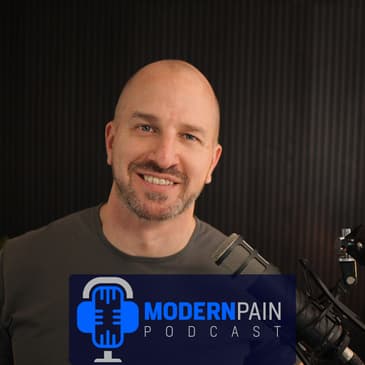
[00:00:55] If you've been active at all on X in the physical therapy space, you've likely come across Derek Griffin. Derek is an Irish physiotherapist who shares a ton of valuable content around best practice and pain care.
[00:01:05] While some have accused Derek of being a nihilist, you will see in this episode that he is a well-reasoned and person-centered approach to his pain care.
[00:01:12] I was able to sit down with Derek and have a great conversation on his practice and how he applies person-centered care in real time.
[00:01:19] In this episode you're going to learn Derek's journey to persistent pain care, how you can handle the transition from university training to the complexity of pain you see in clinic, how to introduce the complexity of pain to patients, the necessity of good pain care early,
[00:01:33] the use of story to help patients understand complex topics around pain, the power of experiential learning versus pain lectures in your practice, and finally what skill sets do you need to develop to succeed in pain care?
[00:01:45] The episode is chock full of value and I hope you enjoy it. On to the episode. This is the Modern Pain Podcast with Mark Karjula. Welcome to the podcast, Derek. Thanks very much for having me, Mark. Much appreciated.
[00:02:00] I'd love to hear a little bit about your journey, Derek. I know seeing your bios and things, you're obviously well established yourself in the pain rehab sphere, but can you share your journey for folks in the audience? I suppose my journey began like everybody with an undergraduate degree,
[00:02:18] which I started in 2004 in the University of Limerick. I'm from County Kerry in Ireland, which is not that far from Limerick, about an hour and a half in a car. I spent four years with my undergraduate program.
[00:02:33] That's where I really started to like the whole idea of pain rehabilitation. Particularly, I suppose my initial interest is I'm a big advocate and I've a lot of interest in the basic science work around pain
[00:02:50] and the physiology of pain was something that I took a liking to very early on in my training. I suppose I've changed in more recent times as I've become a bit more clinical, but I suppose that's what kickstarted the journey.
[00:03:03] After my undergraduate degree, I was fortunate enough to get a scholarship, which funded the PhD program from 2008 until 2013. During that time, I was able to work clinically part-time as well while I was doing the PhD.
[00:03:18] The PhD was very much on looking at physical activity behaviors in people with persistent back pain. This was a group of people that were highly disabled, attending secondary care. As part of that process, during my data collection, I was on site in one of the
[00:03:38] rooms in the hospital that I was recruiting from. One of my supervisors was or is a consultant in anesthesia and pain medicine. During that time, I was very fortunate to be able to sit
[00:03:50] in on those clinics where I was recruiting. I suppose that really gave me an insight into the importance of listening to people's stories because as I was a PhD student, I wasn't the clinician dealing with those patients, but I had the opportunity to sit in
[00:04:02] the corner and just listen to people tell their story. It gave me my first insight into multidisciplinary care because there were some really great nursing staff that were part of that pain clinic. Just to see how people interacted with people with pain, the importance of
[00:04:17] listening to them, and the diversity of the stories that people had to tell. I suppose I was exposed very early on to the complexity of pain and the problems that it poses for people
[00:04:28] with pain and the importance of the multidisciplinary team. Then that led into a period of time after my PhD where I did some academic work, some lecturing at the university, and then I returned back to Kerry where I'm from full-time to take up a post
[00:04:47] as a clinical specialist physio, primarily in the areas of pain but not solely in the area of pain rehabilitation. I have been there for approximately seven years now. I've had a nice
[00:05:00] journey. I've had a bit of academia. I've had a bit of research, but I think I'm a clinician at heart. That's the vibe I get from you online too is that definitely you're well versed in
[00:05:10] the research. I see you kind of dissecting it and having your commentary on it, but obviously also in the reality of the clinic. I think that's a unique place to be where you can be really in the front lines of translating research, and especially with the good research
[00:05:24] IQ and acumen where you can draw upon really interpreting it well because we'll maybe get into some of the challenges of interpretation of research and some of the dangers of one study, trying to really make drastic changes in your practice with a poorly designed one study.
[00:05:42] You also speak to a bit of that transition of your thought process. It sounds like you went into your observations in these pain clinics with the standard physio mindset of you're just going to question out the biomedical algorithmic pathway of this patient's pain, and then you're going to
[00:05:58] come up with an intervention that's going to be very, again, more linear in nature, but then you saw as you were in your pain clinic observations that it was much more complex. There was a lot more of storytelling and narrative-based approaches. I'm just curious
[00:06:12] if you can unpack that a little bit more as far as how you saw that transition, the transition you needed to make in your practice to better handle some of the complexities
[00:06:21] of pain that you saw? I was lucky in that that process happened very, very early in my career. Almost immediately after I had finished my undergraduate degree, really before I had got into the whole clinical practice side of things, but I suppose you're still left with
[00:06:38] the dilemma, well, what can I do about that? As a sole practitioner, it's very difficult. I suppose you can listen to the story and you can understand the complexity, but sometimes the resources just aren't available to deal with that complexity.
[00:06:55] And I suppose that's still one of my frustrations when it comes to helping people with pain. I am a true believer in transdisciplinary and multidisciplinary care, but it's all well and good talking about it. It's a very different thing to see it happen
[00:07:10] in practice, particularly outside of standard pain management programs where these are usually multidisciplinary based, but I'm talking about more in the local community before people ultimately guess to a pain management program. I'm not sure what it's like in other
[00:07:30] countries, but in Ireland, I think pain management programs are seen as the type of program that you will go on when other interventions haven't worked. And I suppose my problem with that is
[00:07:42] that we know that people are complex and they have complex needs and we ultimately need to be addressing these needs much earlier in their care rather than waiting for all these other interventions
[00:07:55] have failed. So that kind of idea doesn't sit very well with me. I think we need much more access to these various people with various skill sets much earlier in the course of people's journeys. And unfortunately, that always isn't available. So that is one of my biggest
[00:08:13] frustrations. And I think it's one of the barriers to ultimately helping people with their pain. No, I would highly agree. I think your basic community physiotherapy clinic may not have the resources as you speak to to kind of provide that multiple the discriminatory approach, but
[00:08:32] also maybe operating under some maybe more dated traditional ways of looking at pain. And I would argue that the US is very similar like pain rehab programs. One they're very rare in the US
[00:08:41] just because US is so revenue driven in their approach to healthcare and it's a hard I guess business to run as a healthcare, which I hate even to kind of consider but it's the
[00:08:54] reality what we face here in the US. But what would you like to see like if you were able to kind of help more on the front likes I agree if we could get better pain care early on
[00:09:06] when these acute things are happening versus waiting and a lot of times and I don't know how it is over there in Ireland, but you all the folks have gone through like list after list of pain physicians and surgical procedures and different things that they've been through
[00:09:19] before they've gotten into kind of a more different approach to pain. How would you you know, an ideal world like to see more of that kind of frontline community based physio look? Yeah, I suppose that's a really interesting question mark. I suppose one of the things that
[00:09:34] I think we probably need to do more of now it's a very difficult thing to tackle and I totally get that is we're as clinicians I suppose we tend to wait to see people until they have the problem. You know, prevention or at least looking at
[00:09:50] ways that we might prevent people from getting into this kind of cycle in the first place. What it's very challenging to do I think it's definitely a worthwhile journey and perhaps clinicians need to engage more with the local communities, you know, schools,
[00:10:05] workplaces, community events, public education sessions. The problem is is once people start the journey you have no control over what type of treatment that they have before they get to see
[00:10:19] you. A lot of the people that I would tend to see have very well established pain conditions prior to them getting to see me not always but the vast majority and it is always more difficult to reverse that than to see these people much earlier in their journey.
[00:10:38] How do we get clinicians across various disciplines singing from the same hymn sheet, so to speak and that has to start with public health but also how individuals are trained. Whether we're talking physiotherapy, medicine, you know, the various other healthcare
[00:10:59] programs at university level, you know, how we better equip clinicians to address the complexity or at least acknowledge the complexity. Addressing the complexity is one thing but at least if we can acknowledge it and understand that these people have more complex needs then we can
[00:11:19] maybe prevent this cycle of just trying to make the patient fish whatever skill set that we have and that's always a particular danger. So I would like to see a little bit more prevention
[00:11:34] work, a little bit more work around education, you know, whether that's on the role of lifestyle but just some of the basic concepts that we now know about pain that pain is influenced by
[00:11:47] much many more factors than tissue injury and damage and that it's not always a good measure of injury or damage or it's not always a sign of danger or treason and that there's various other things like their lifestyle, their general health, their sleep patterns,
[00:12:05] etc. that can really have a bearing and shape someone's trajectory. You might be familiar with that really nice paper that was published last year in Nature where they looked at,
[00:12:18] I think it was the Biobank data from the UK so they had a very high sample size and they followed these people up over, I think it was maybe a close to nine years, I can't be sure on the exact
[00:12:30] and the exact figure but you know the factors that predicted pain were things like you know sleep problems, anxiety, all of these things but when you look at clinical practice for pain how much of these factors are taken into account and addressed. You know we hear a lot
[00:12:47] about the pendulum has swung too far towards the psychosocial but I just don't see that Mark, I don't see that happening in clinical practice. We have more MRIs than ever, we have more interventions than ever, you know it's just not the reality, it might be on social media
[00:13:05] but it's not what people with pain are experiencing and definitely not what I see in my practice. You bring up a good point, you know this kind of utopian world that sometimes exists on social
[00:13:18] media where a few people feel like just because there's a lot of discussions around psychosocial and the biopsychosocial model and that we should be doing all these things that somehow it's that means we've arrived with it yet you look at the reality of what we see especially
[00:13:31] when you're working with patients in persistent pain and you see the laundry list of imaging studies and interventional things they've had done and all the things that you know maybe go against our best practice when we consider biopsychosocial practice. I'm wondering where you
[00:13:46] think the barrier is to some clinicians making that transition? I admitted on this podcast, I was very entrenched in the manual therapy world and it kind of became more of a threatening almost to my identity and it becomes unstable when you're like so identified with this
[00:14:02] kind of I guess peripheralist biomedical approach that is your way of making sense of this complexity that you make even though it's obviously grounded in not the best theory and a little bit significantly reductionist but what do you see as the barriers to clinicians kind of really
[00:14:17] truly embracing this biopsychosocial model and maybe did you see any that you faced yourself as you kind of you were fortunate as you said you came out right away and saw the necessity of it
[00:14:27] but sometimes even from like uni to seeing it where like uni gives us that very algorithmic biomedical view of things and then but I'm wondering what your thoughts are on that kind of challenges to make that transition for folks. Yeah and I you know I do totally acknowledge
[00:14:43] that and still for me till this day I think it's important particularly for younger clinicians that might be listening is that none of us regardless of how anybody might come across particularly in social media helps everybody. There are patients unfortunately that you know
[00:15:02] that don't do so well in addition to the ones that do very well and you know the ones that do very well are usually make the case studies you know but the ones that don't do so well
[00:15:12] we often don't hear about so that's the first thing I would say is that we absolutely don't have all the answers so you know the biopsychosocial model is a framework which will guide my practice but you know there are people that don't respond and that may be
[00:15:27] because the intervention that we're offering them isn't what they need or I mean lots of reasons but you know we don't have these solutions for people with pain just yet but I suppose one of the biggest barriers is that people feel that often these factors are outside they're
[00:15:42] either the scope of practice or what they've been trained to deliver you know so when we talk about things like you know people's mood or people's sleep or you know various things like that clinicians may not feel that they're equipped or have the knowledge to address those so
[00:15:59] what inevitably happens is we default back to the skill set that we have the problem with that is that we can often make the patients fit whatever model of care we can provide rather than trying to provide the model of care that the patient absolutely needs
[00:16:15] you know so we're all biased it's you know it's human nature to do that and that's where at university level going back to my point earlier is that we have to be teaching these skills you know we hear a lot now about psychologically informed practice
[00:16:31] it's not a new phenomenon you know when we go back to pain researchers like Michael Sullivan from McGill University and all his work on catastrophizing and all of that and he's been delivering courses for a long time you know
[00:16:46] equipping physios and other healthcare professionals with skill sets around these concepts you know so you know it is important that we upskill on many of these concepts and factors and utilize them on a day-to-day basis because the information is out there now you know it's no
[00:17:05] different than you know I think clinicians are very happy to go on a course where they learn the latest rehabilitation for a hamstring injury or these you know because exercise is something
[00:17:16] that we think that you know this is this is our skill set but we really need to be upskilling on what used to be called these soft skills but I don't see them as soft
[00:17:26] skills they can often be some of the hardest things to develop so you know building rapport with patients dealing with distressed patients you know and I suppose how we talk to patients and that
[00:17:41] how we challenge some of the beliefs that they might have in a professional way but in a way that changes their mindset around pain so trying to shift them away from I'm broken there's a you know there's something wrong inside my body that's causing this pain
[00:17:59] you know changing them from that model to yes the tissue matters but there's all of these other factors like sleep, diet, exercise levels of stress management whatever and while all of these are not always modifiable we know that they are modifiable you know and the challenge is how
[00:18:18] do we how do we best do that and we often don't do that alone and that brings me to one of the other barriers is that just lack of resources you know so in my practice I would see people that have
[00:18:32] a diagnosis of you know clinical depression they might have history of post-traumatic stress disorder you know anxiety and often markets just not managed well and nobody has decided to refer
[00:18:49] them or to put them in touch with people that are the experts in helping them to manage this and you know the evidence is very clear if you take somebody with pain that has uncontrolled or
[00:18:59] unmanaged depression their outcomes are going to be poorer from the start you know so sometimes it's important for clinicians to put their hands up and say yes I can help you we can
[00:19:08] we can look at getting you more active we can do all of these things but we need the expertise around these other things and that's having that discussion with the patient about whether that's referring back through their GP or referring to you know community services
[00:19:24] that can address these problems so as clinicians we need to be we need to put our hands up and say look you know I can't address all the factors that are relevant to your condition
[00:19:37] you know I can address maybe some of them and I can help you address some of them but you know we have to have that professionalism where it's okay to ask for help you know I don't
[00:19:48] have to get you better all this is not a game this is not a competition you know I know a clinician or I know somebody that has the skill set that can help you with your particular issues
[00:20:00] that will allow me to get further with you with what I can offer and you know we know that's from the literature and often that doesn't happen so I think the main barriers are as I've
[00:20:12] said that we just don't feel that we have this skill set to address these problems that are outside the scope of practice are just lack of resources to send these people in a timely manner
[00:20:25] to help them with whatever these problems are and then by default we just revert back to the old model because clinicians you know we're all human we do feel we need to offer something
[00:20:37] and maybe this is where the short people get hooked on these short term treatment effects you know because you feel better with whatever intervention is offered you feel like the clinician has done something the clinician feels a bit better because they've helped you but you know
[00:20:53] follow these people up 12 months later and they're usually not any better and often still reliant on these short term change so yeah it is a challenge but I think it's a challenge we're taking on and that there are there are ways and means to
[00:21:07] at least overcome some of those hurdles. The lack of resources definitely an issue and I think that exists across the world in some areas obviously worse than others. I'm wondering if we could go further into the thoughts of these new narratives because sometimes
[00:21:21] we have patients who come in and I know you know working with university students and even just early career clinicians the struggle to start introducing I may be a new narrative around pain
[00:21:32] because they often come into clinic with this very like you have this wrong it's a short leg it's a disc it's a you know there's often something they're anchoring on from that traditional
[00:21:42] biomedical and it's not to their detriment or nothing I think we all are going to look for something to make sense of what we're experiencing as a human being and oftentimes what's positioned
[00:21:52] to those folks is this MRI finding or this you know so-and-so. I'm wondering if you could maybe help some of those younger clinicians I mean there's not a one size fits all approach we know because people are complex but what have you found helpful to start introducing
[00:22:06] some new narratives to patients who might be you kind of stuck in that more traditional mode of looking at pain very unilaterally as one specific tissue finding? Yeah I suppose what I would say there Mark that all starts with firstly listening to the
[00:22:20] patient and gaining an understanding of how they understand their pain you know and again you know the so-called new narratives around pain even though they're not that new now none of this is saying that tissue factor is very relevant and you know this this debate still goes
[00:22:38] on you know that's not what any of this so-called new science says or has ever said really and I know it may have come across as that in various interpretations of what people and people have
[00:22:50] said but ultimately we know that pain is influenced by many factors including what's happening in the tissues you know so you can have you can have all of these findings on an MRI
[00:23:02] scan that may be not related to your pain and of course there are times when the tissue is very relevant you know you have a fracture you have a trauma and even in persistent pain states
[00:23:16] you know we'd be naive to think that the tissue is playing no no it has no relevance you know even from a deconditioning perspective you know we're going to get some local tissue
[00:23:25] changes but when the things that I have found helpful in explaining to patients how these other factors might be relevant is you know when you give patients a chance to tell their story they'll often highlight through their own story situations where all of these factors have played
[00:23:45] a role you know they they they will say things like my pain is worse when I'm tired or you know my pain is worse if I've had a busy day or you know when actually when I was away on
[00:23:58] holidays for two weeks my pain felt really good and then you know they might attribute things like oh the warm weather the temperature you know the climate was much better and you know even
[00:24:07] if that's true these are all scenarios where their tissue didn't change the you know the MRI if we had looked at their MRI in these situations it probably wouldn't look any different to when
[00:24:18] they are in pain so I think it's listening to their own story finding bits of the story that illustrates how these other factors play a role and I use that term they play a role they're
[00:24:30] not the cause of pain you know we we get into too many debates of what's causing your pain and is it a cause or is it a consequence to be to be honest when there's a patient in front of me
[00:24:40] it's irrelevant if if it's a factor that's involved in their pain experience and I can change it or I can help them change it you know we'll soon find out it's relevance and you know most of these
[00:24:53] factors aren't separate so things like sleep and mood and physical activity they're all intertwined in the same in the same cycle so if you're not sleeping very well your mood is going to be
[00:25:04] potentially lower your anxiety may be a bit higher and your pain increases as a result so so we don't have to look at it and try to change everything separately you know sometimes
[00:25:14] getting somebody to sleep a little bit better will have a knock on effect on all of those other factors so I think we we sometimes go in all guns blazing and point out all the problems you
[00:25:25] know you're not exercising you're not sleeping you know you're not eating well you're over waste and we send them home with this problem list without a solution you know uh so so my strategy
[00:25:39] would be yeah listen to their story find the points that illustrate their the how these other factors are relevant to pain and then use our motivational interviewing skills use our reflective listening to get patients to think about their own story and to kind of self reflect back on
[00:25:58] their story and they'll often they'll often have that eureka moment where they say yeah that that actually does make sense when I when I think about it but but often they're so cut
[00:26:06] up in their pain that you know these are these these scenarios are just not making any and any sense to them and then when it comes about how do we try to address this we can change everything
[00:26:18] overnight nor should we try to do that so as was one of the biggest changes I've made in my practice is to really look at how do we prioritize what needs to change and what what can I change
[00:26:29] reasonably quickly with limited resources that's likely to give me some return on the investment and that might be you know just looking at some behavioral work around sleep or it might be looking at a way of increasing their daily step count or you know whatever it
[00:26:47] might be mark it's not always the same um but but I suppose yeah that that's the approach that I would take I'm not somebody that would give them a sheet with how pain works or you know and I think that's sometimes where we've we've we have gone wrong
[00:27:01] we've given them this lecture on you know pain is not a measure of damage and and that can come across as very dismissive to somebody that has had pain for a long time and just I
[00:27:12] suppose there's a quick anecdote to that there was a few years ago I can't remember how long ago exactly we did um you might remember it there was a piece in one of the national newspapers
[00:27:23] 10 things to know about pain or something something like that and and you know it was very like 10 points but I suppose out of it made perfect sense to us as clinicians but some of the feedback from the public wasn't all that um wasn't all that positive and
[00:27:44] you know that that taught us something as well out of context these what were accurate messages around pain may have come across as being quite dismissive and if that happens in a scenario like that it also surely happens at a one to one level
[00:28:04] in a clinic you know so the next time we did something like that we we phrased it much and more like a story and and I think that we got somebody with pain to look at it and to review
[00:28:18] it and to kind of give us some feedback on the language we use and used and how we you know how we try to promote that message and second time around the feedback was much more positive so
[00:28:29] often the problem is in the delivery not in them and not in the message you know don't be dismissive of somebody's pain and you know sometimes maybe we do come across as like that and I'm sure it
[00:28:39] happens to everybody people leave the clinic thinking he's just told me my pain is in my head you know um but I think that's where if you reflect back on their story
[00:28:49] it's their story they're not going to argue with their own experience and that that that can really show how um how how pain is complex on a final note there you might have often heard me saying things
[00:29:00] like we need to we need to biologize the psychosocial uh and I suppose what I mean by that is when we talk about things like stress and anxiety and sleep and how that all influences pain
[00:29:11] you know there's a complex chemistry or a biochemistry that underpins pain mark and pain mark and you know when we're stressed things are happening inside our bodies in our immune
[00:29:22] systems and our nervous system and you know I suppose I try to get that across to patients this isn't this isn't from your you know from your neck up this you know stress is a systems problem
[00:29:34] anxiety is a systems problem there's there's changes and things like inflammation there's changes you know at the level of the muscle there's changes in immune function and the consequence of this is that we get this heightened response or what they might call a heightened
[00:29:51] pain sensitivity or sensitization or whatever the phenomenon is so I think when people can actually link things like anxiety and stress and sleep to physiology they're more willing to take it on board rather than thinking well you know you're just feeling more pain or you're perceiving
[00:30:10] more pain or whatever they you know we need to be very careful with our language that it comes across as being a lot more dismissive than than we've meant it to be. You bring up a common issue
[00:30:20] that I think I definitely have fallen victim to as well is like you we want to create these patient facing materials that are going to have this positive impact yet often when we
[00:30:29] create them the person that isn't there as we create them is the patient you know obviously there's experience we have with the patient and different things but I think and we're doing better because we see patients being involved in more research we're seeing patients involved in
[00:30:41] more task force we're seeing patients being present at conferences which I think is a huge step forward for us to just not just sit on these around these tables without them presence and just assuming
[00:30:51] this is what they need and this is what they want I think your experience there with the you know the piece that you put in the out there where 10 different things and with patient input lo and behold there was a significant better impact and better reception
[00:31:04] so I think that's something we all can probably learn from that I want to I want to go into a bit about this bio biologize the psychosocial because I completely agree you know and there's these
[00:31:14] frontiers we had some folks on in the immunology arena talking about this and where do you see kind of the frontier of where we need to start looking to you know their psycho neuro immunology there's all these ways where we're trying to like take
[00:31:32] what's happened psychologically and and bring it down to that systems perspective I think there's a lack of definite understanding from the general patient populace of this connection I think we're still very much of you know my body separate entity out there in healthcare I'm wondering where
[00:31:49] you see the kind of the frontiers going and where hopefully that might impact patient care yeah and look I suppose you know I think you've heard people like Matt crutchinson on your podcast and all of these experts in immunology and every time I listen to
[00:32:05] these people I'm you know it's such a fascinating area you know I read some of those papers and often don't have a clue what's going on it's really really complicated and I look you know
[00:32:16] we're not going to be an immunologist we don't need to be an immunologist and some of that stuff really does go over my head once we start talking about ion channels and various glial cells and all
[00:32:28] of that and you know I suppose I tried to find try to find how we make it a bit more clinical you know and you know when we look at systems like the neuro immune system I suppose the thing
[00:32:44] that they have in common at a very basic level is there you know they protect us you know from from potential threats or dangers you know and you know when you sprain your ankle marker you
[00:32:56] you know you fracture something you know you know pain at a fundamental level is is a protective mechanism it's a sensation that we feel that that encourages us to change to change our behavior you know unfortunately sometimes that mechanism or mechanisms that
[00:33:17] govern pain you know go into a state where we're potentially overprotected or we're feeling pain in response to things that aren't aren't potentially harmful and you know again at a clinical level you know I talk to people about things like
[00:33:38] you know things like allergies hay fever you know you get this big immune response to something that's just not dangerous but nobody would tell you that's in your head you know there's a clear physiological response and we don't understand why that
[00:33:53] always happens you know is it is it genetic is it environmental exposures and and pain behaves in in in a similar way so at a clinical level I don't get down to discussions around you know
[00:34:07] immune cells and you know I'll be very superficial and if the immune I'll just turn me talk and it probably pull me up on some of my inaccuracies of the things I say and I'm okay with
[00:34:16] that and I think we can be we can sacrifice a little bit of the full accuracy to get the meaning or that message across to people that you have these systems that are there to help us
[00:34:28] but in some situations they do too good of a job and they're not damaged they're not broken their set point has been increased due to various things whether things that we're doing
[00:34:40] you know and then we have this big body research that shows us things that happen early in our life you know life events stressful life events particularly you know traumas that can that
[00:34:50] can change the set point particularly if it happens in a very early age you know so so someone's someone's journey through pain is that probably shaped or at least modified by what's happened before they develop pain or before they've had that incidence that triggered
[00:35:03] their pain so it's a kind of a very lifelong perspective so you know I wouldn't get bogged down about the real complex physiology of the immune system for example or even the you know the neuro immune system as we're now hearing about because it's just you know
[00:35:20] it is extremely complex mark and unless that's something of a burning desire to understand a bit more and there are clinicians including physios that have a really deep knowledge of that and that's fascinating you might be familiar with some of the recent
[00:35:33] work on fibromyalgia it looks like that at least for a group a subgroup of people with fibromyalgia that that there may be an autoimmune etiology and this is you know this is fascinating
[00:35:45] and I think as clinicians you know we need to champion the basic science work as well you know we're not basic scientists you know again I read these papers at a very superficial level
[00:35:57] and kind of have a have a superficial knowledge of what they're what they're referring to and you know perhaps perhaps in a number of years we will have better pharmacological management of many of these conditions and you know if we do and we can be more targeted
[00:36:12] and more specific in addition to these other strategies that we've already spoken about psychologically informed practice you know exercise whatever else you know this this has to be a good thing so I think we have too many debates around well you know exercise
[00:36:29] is great because it's not medication or you know but but but we have to acknowledge that our interventions are limited you know and you know the effect sizes aren't great they're okay and we're starting you know we're starting to see some recent papers which are showing more
[00:36:46] promised you know the restore trial on CFT some of the work out of you know the other work out of us the Australian group that did the graded motor imagery or the sent the sensory motor retraining I can't the Lancet paper I can't remember the
[00:37:02] the exact name of the intervention and these other types of treatments that that are showing more more promise but you know there's no doubt about it that we need better treatments for people with pain and if that can and if if if this new emerging evidence
[00:37:16] around the neuro immunology or the psychoneuro immunology you know we know all of this is cut up in the same in the same context then that has to be a good thing you know we're probably
[00:37:26] a few years away from seeing how this will translate the clinical practice but we at least have to have the hope that this will ultimately improve patient care which is which is fascinating. Psycho immunology and these these fields I would agree when I read the papers
[00:37:43] my I sometimes get a headache just from the complexity of those things and I'm with you on when we start getting into glial cells and you know different you know complex immunology topics
[00:37:54] but it sounds like you and it's similar to how I approach it too is well how do I bring that to a story that makes sense for a person in front of me and I think allergies and hay fever being a good
[00:38:03] one I'll often talk about the flu is when your immune system is kicked up and how everything hurts and is sensitive when you do that. Is that kind of your approach generally in clinic
[00:38:12] is to try to take these complex topics and kind of bring a story that makes sense with the patient's context in mind? Absolutely and I think you know the flu is an example about where a lot of people
[00:38:23] can relate to you know it's a it's a classic example of where you can have this widespread motha lake but people can understand that this isn't damaged but my system because I have
[00:38:37] you know there's a virus there's a there's a the protective devices or mechanisms or whatever you want to call them kick in and a side effect of that reaction is pain you know and if people can
[00:38:51] understand that yeah that like that pain is clearly really you know it's it's you know we all know how it feels it feels terrible and you know these are really good examples because
[00:39:01] you know what else do we feel when we have the flu we feel tired you know we feel under the weather our mood decreases and you know we can start to then talk about well you know how
[00:39:12] your immune system governs mood and it governs sleep and it governs pain to a certain extent so you know isn't this not a coincidence that we have all of these factors in your presentation you know and they can and I think that's where the motivational interviewing is really
[00:39:29] important you know getting people to reflect mark on their own stories people people are experts in their own problem and I tell most of my patients that you know you're the expert in your pain
[00:39:41] problem my my role here is to you know discuss your story with you and kind of highlight bits of that story that can help us going forward like what can we learn from your experience as to what
[00:39:55] factors are influencing your pain while there's a lot of commonalities across people's stories everyone is really an individual and if you truly listen and reflect back in a in a way that's you know truly reflective that gives them a sense that you've listened to them that you've understood
[00:40:10] them that you you understand their needs and goals and desires and frustrations and get them to truly reflect on their own story they'll often come to the realization yeah like I understand that these other things going on in my life have a bearing on my on
[00:40:25] my pain and you know you haven't said to them anything about how pain is an output of the brain or you know any of this stuff you don't you don't need to do that well that's my perspective
[00:40:36] on it my my focus is just to shift them away from thinking this tissue needs to be fixed and I have pain because this tissue hasn't been fixed you know and I think if we can do that in a in a more
[00:40:49] meaningful way I don't think we need to get really into the neurophysiology or the you know the neuro immunology of what governs our sensations and feelings because I don't I don't fully understand
[00:41:01] that either and if I don't fully understand that it kind of makes a little sense that I'm expecting a patient to fully understand that I think the basic science work is fascinating it can
[00:41:11] you know we need to make sense of it clinically in a kind of a story type way as you as you mentioned and I can see this potentially leading to better interventions you would assume from
[00:41:20] a pharmacological perspective and you know we're now seeing work where even from you would love to look at say people that have gone through a cognitive function therapy type intervention and you know how that changes the immunology and all of these other things and perhaps you know
[00:41:39] in the research will go that way where we can have kind of lab based measures in addition to clinical based measures and get a bit better understanding of the mechanisms that play but
[00:41:48] you know at a clinical level I don't think we need to delve too much into the into the physiology side of things You bring up some good points about and I think this is probably due to the big push with pain neuroscience education which obviously has been a
[00:42:05] overall good thing we've recognized its limitations obviously it's not a standalone intervention or should we expect anything to be a standalone intervention with something so complex but it seems to me and I'd love to hear your thoughts on it as it kind of got us in this
[00:42:19] mode of operation in the clinic of where we were telling the story to the patient without their input into it you know it was like yes but your your nervous system is an alarm system it's oversensitive and and all these things where we had these kind of canned
[00:42:32] neurophysiological explanations I mean again good thought process and the motivation behind them being you know solid but to me it still was missing the mark of really like you said are you truly listening understanding and taking that neurophysiology knowledge that basic science
[00:42:48] knowledge and then reflecting it back in a way that makes sense for the unique story in front of you is that kind of how you saw pain science and pain neuroscience education kind of maybe fall
[00:42:58] flat yeah I think you know look when it when it I'll give you a different example mark when it comes to exercise so if a clinician is talking about you know and we do this all the time we tell
[00:43:09] people about the benefits of exercise we tell people about the general benefits of exercise or you know when where someone has an Achilles tendinopathy we tell them the importance of you know loading the calf or strengthening the calf we don't get down to the point where
[00:43:23] we're telling them you know that this is doing something to the tino sites or this is having an effect and the you know we don't get into that nitty gritty of why it's having an effect
[00:43:34] we tell them that things like that you know that this strength work will make the tendons differ it'll make it more elastic it will help your your single leg hop when it comes to pain
[00:43:44] I'm not sure why we do the reverse you know we we we get right into the into the physiology of of it um you know we have these cat rays as like you said you know pain is an output
[00:43:57] of the brain or you know the the system is very sensitized but again it as you as you said it's just well you know what what does that mean and you know you say to somebody your system is too
[00:44:07] sensitized they you know how many people interpret that is telling them they're just emotionally a bit fragile you know you're just a bit sensitive you just need to toughen up and that you can understand that because I think if we didn't have the knowledge that we have
[00:44:21] and somebody said that to me I'd probably think the same thing so I think we get that so yeah I just don't think we need to be you know seeing pain education as this kind of standalone
[00:44:34] intervention I think for what people forget is that from a research perspective we have to we have to kind of conceptualize it in a more formal way we have to standardize it in order
[00:44:46] to test it in a trial and this might be one of the drawbacks of um of your standard kind of randomized control trial you know and even if you look at something like cognitive functional
[00:44:56] therapy cognitive functional therapy is is a is one way of applying a bio-psycho-social model of care you know it includes you could argue that it includes education around pain it has borrowed on some of the information that we've had from the exposure therapy literature around anxiety
[00:45:16] and phobias and fear avoidance and you know all of this kind of stuff but has borrowed on the exercise literature around pain and it's just kind of conceptualized it in a particular way and we call that cognitive functional therapy you know so is cognitive functional therapy pain education
[00:45:34] you know I would argue it is but it's much more through a behavioral approach you know it's through an exposure based intervention you know what what better way to learn that something isn't harmful than getting somebody to do something that they thought was harmful
[00:45:47] and they realized actually you know that wasn't as bad as they thought you know I didn't have to tell them that their system has been over protective or over you know so I I'm a big
[00:45:57] believer in that we can learn by doing and you know you might have heard me talk about exposure based interventions um in the past mark and I'm not for one minute saying that this is the cure
[00:46:07] for pain but you know as humans we learn by doing we learn we learn better from our own actions and the reactions to those things and you know as part of that you know at times people flare
[00:46:20] up and we prepare them for that but at times they think yeah I didn't think I could do that I didn't think I could squat that much or I didn't think I could pick that box up off the floor
[00:46:30] or I didn't think I could sit in the chair and relax and I haven't said anything to them I've changed what they're doing and I've changed how they're doing it and I've let their own
[00:46:41] experience drive their learning you know so I think we need to go down the route of learning by doing and then follow up with learning by saying so if somebody suddenly
[00:46:57] realizes that actually that wasn't half as bad as I thought it would be then I can go in and say well okay well why do you think that was and then the narrative comes in then we can talk
[00:47:06] around some of the the stuff we know about pain but I still wouldn't get into the real physiology of it but you know I can talk about how the system can be a little bit
[00:47:15] over protective of something and you know when you when you relaxed you kind of calm down those protective layers and it wasn't you know you didn't get that reaction we can kind of at a
[00:47:23] very superficial level you know apply some of this knowledge from physiology but translate it into a message that that patients can can actually understand so yeah I do like that kind of behavioral approach that that's some of these kind of more recent treatments like CFT employee
[00:47:41] experiential learning is so powerful like and I think we're positioned initially entering the clinic to be not maybe that as far as this more lecture-based paternalistic kind of mode of operation
[00:47:53] and it's not through fault of the physios that are starting and trying to you know gain comfort and stability in the clinic but it's kind of how we're positioned as we get educated in physios and
[00:48:03] to kind of I guess I don't want to say surrender the expertise but gain an understanding of the real expertise in the room and the as you already mentioned the patient is the best
[00:48:13] expert in their unique experience and to draw that out and then to be an expert from our aspect to see if we can connect the dots but I agree if we can let patients experience things on the front end
[00:48:23] where then it opens up doors to have conversations versus just like shoveling this information at people is that kind of how you see things going when it comes to best best practice yeah and I
[00:48:33] suppose using exercises your typical example people will say things like oh I didn't you know I didn't feel I didn't think that the exercise would benefit me so much or I didn't think I
[00:48:42] enjoyed as much as I did or you know for the hour after I go for my walk whatever I feel much better and then we can start to talk about well why do you feel much better like what what happens
[00:48:51] for that hour when you're walking and then we can talk about the endorphins or the endogenous opioids and how your brain stimulates the release of these substances that similarly to morphine and wind your pain down and you know because pain is influenced by how wound up the
[00:49:06] nervous system is it's not just about the damage that hasn't probably changed in that hour that you've you've went for a walk so again it's their story it's they won't argue with their own story
[00:49:17] and we can we can put the put the science on top of that that gives them an understanding of why that is um and I think as professionals we probably do need to do that we get them on board
[00:49:27] a little bit more if people understand well why did that happen and they have some understanding at least superficial understanding of that so yeah I think that's incredibly important I think experiential learning is by far more powerful than anything we can say
[00:49:41] you speak to motivation interviewing you also spoke of exposure based treatment so that obviously falls under the umbrella of kind of more psychologically informed care I'm wondering if you could speak to you know the skill set that you think is like the ideal skill set of of
[00:49:56] psychologically informed care of like what things have you found as you've kind of gained a better understanding obviously early on in your career when you were watching some of the nursing staff and staff in some of these complex pain clinics operate I'm just wondering if you could speak
[00:50:09] to what you think is kind of the skill sets that you've really found beneficial in your practice yeah I suppose the traditional model of care has been you know a model of where a patient comes in
[00:50:19] for an assessment and then kind of follow-up interventions or treatments you know and I always say to any time I'm teaching with the students is that the assessment is ongoing I don't break down my work with patients into an assessment session or a treatment session
[00:50:33] you know as it you're always learning from them you know I'm always picking something a different nuance up from their story each time that I see them and I suppose as
[00:50:43] they gain more trust they're more likely to say things that might be relevant to what you do going forward so the first thing I would say is it's maybe a very simple skill but take your time
[00:50:54] and maybe in some settings or situations that that's not possible where it's more about you know there's long waiting list and you need to get through the waiting list and I
[00:51:04] you know I do I would find that model of care rehearse you know I'm lucky in the setting I'm in that I actually have sufficient time with patients but even that you know 45 minutes to an
[00:51:14] hour sometimes isn't enough and I'm okay to get through whatever I can get through in that hour and say it to them look there's a lot more we need to discuss or look at but today's not
[00:51:22] the day for that so that can be a skill in itself feeling like you don't have to get everything done in the one session if you consider listening a skill and many would
[00:51:35] you know just not interrupting the patient just just letting them tell the story and I know from a university perspective you know we have to teach around things like you know how to take a subjective history and you know the presenting complaint the history the complaints
[00:51:50] the aggravating the easing factors you know and it becomes this kind of like list of things that you have to get through and if you let patients tell their story you you you'll pick all of that information up anyway you you know you might have to guide it
[00:52:04] and you might have to prompt them and you don't have to move move there so that's a skill that I think that takes time to develop I I totally understand when you come out
[00:52:12] of university you probably need some kind of a framework you kind of need to make sure that you're you know you're asking about red flags you're you're screening the things that
[00:52:22] need to be screened for and that's okay that's fine and I think as you get more experience you learn to do that in a way that's less kind of I won't use the word less formal it's still formal but
[00:52:33] I suppose it's done in a less kind of a didactic way less a less tick box way and much more based on context and stories because even some of those some of those red flag questions for example
[00:52:46] out of context they often mean little they're often little value whereas when you understand it in the context of the story then you know you can kind of know whether you need to act on those or not
[00:52:56] or what relevance that they that that they might have I suppose learning to deal with uncertainty or learning to deal with conflicts is important so you know when the patient gets annoyed or gets frustrated that you've you know they're not better or that you they think you've told
[00:53:17] them that it's all in their head you know how to how to not you know to learn to not react but at the same time respect that that's what they've understood about it and be you know
[00:53:28] that that's a skill to kind of not panic and you know again just give them the opportunity to tell their grievances or what they feel can be done better and that's okay mark we all
[00:53:40] have to come up with that against that you know none of us are perfect we we as I said at the beginning of this we don't make everybody better different personalities there's loads of different reasons why why why you know why that might happen
[00:53:55] but sometimes you just got to respect it and acknowledge it and and and move on of course there's more formal type training interventions around things like acceptance and commitment to therapy you know do we need to do we need to kind of develop formal skills
[00:54:14] around that I don't think so but these are you know it's these are skills that are still useful to have motivational interviewing um but you know you made an especially you when you when you
[00:54:26] were looting to things like you know exposure therapy and those kind of things has been on the psychologically informed spectrum you know you have to also remember that when you're exposing people to movement and activity you're you're still having an effect on at a tissue
[00:54:40] level you know it might might not be in a formal way where we're giving them three sets of eight reps at a 10 repetition max where we're focusing on max strength or whatever it might be but you're
[00:54:52] still having an effect in multi levels throughout the system so again my problem with the terminologies we use is you know psychologically informed therapy is is it ever just psychologically
[00:55:04] informed you know like we what you know we talk about mind body dualism but yes when it comes to how we conceptualize our treatments we we kind of instill that belief you know so if I'm if
[00:55:21] someone goes for a walk for the purpose of they might say I go for a walk to clear my head is that psychologically informed therapy or is it just movement that has a that okay that we're
[00:55:33] acknowledging that this has effects at multiple levels you know so I don't get bugged down about the terminology if i'm very honest with you I don't see it like that I I think it's very hard to box
[00:55:44] things into these niche categories and sometimes I think it does us a disservice um and can make people fearful of the intervention because they see this as well shouldn't the psychologist be
[00:55:55] doing that you know and and there are times where you know I do refer out to the psychologist or whoever because that's their skill set this is beyond something that I need to do but I mentioned
[00:56:07] you know the clinical depression the post-traumatic stress disorders we have to be very clear when you know that's not my expertise I can acknowledge it I can understand how it's impacting on you
[00:56:17] but but I'm not the person to address that and it needs to be addressed therefore you need to see my colleague that has the skills there but like I would never say to somebody you know
[00:56:27] what I'm doing with you is psychologically informed because you know beliefs drive behaviors but behaviors also drive beliefs you know so we don't say this is a physically informed treatment we don't give them a strength training program and say this is physically informed
[00:56:43] the psychologically informed just again to me it's unnecessary terminology but others others will disagree with me there Mark yeah I like the way you're you conceptualize it because there's this eternal like constant of we want to bucket things in this nice neat category mainly
[00:56:59] try through trying to understand things but in the front lines when you're working with a person that doesn't delineate itself to like this nice neat bucket of it's just my psychologically informed and like you said this is my physically informed treatment so I completely get what
[00:57:14] you're saying and and you agree with it a ton well Derek I wanted to respect your time today I really enjoyed the conversation and really wanted to thank you for all the contributions
[00:57:24] you've made me think a lot on Twitter and on other avenues when I've seen your perspectives out there I hope you continue to share them along into the future where can folks kind of get
[00:57:33] you know kind of get contacted with your or kind of see what you're up to online yeah so I suppose the main the main social media platform that I'm active on is his Twitter so that's probably the easiest way to get me so it's at Derek Griffin 86
[00:57:46] um you know I can also be contacted on the on email you can put that in the show notes perhaps mark as well I have a Facebook page Dr Derek Griffin physiotherapy I don't particularly
[00:57:59] use it a lot but again it's a means by which people can contact me I do have an Instagram page but to be honest I don't tend to use it for from a from a physioprospective at all
[00:58:13] so so Twitter email is probably the best way to to catch me and look you know as I said a lot of the concepts we discussed over the next number of years that will probably evolve and you know
[00:58:24] we could have this conversation five years time mark and you know have slightly different perspectives on things and we have to be open to things evolving and changing I'm a strong advocate for improving patient care but at the same time acknowledging that we don't
[00:58:36] have all the answers I'd love to see better treatments for people with pain and we're starting to make some inroads and we've a long way to go and people will disagree with things that
[00:58:44] we say and that that's okay too different backgrounds we see different populations and you know that I think in sometimes on social media and things that's lost we're coming at it from different angles and that's and that's that's okay too um you know is things like Twitter
[00:59:02] they're they're they're a fantastic way of sharing information and you know I particularly enjoy it but at the same time some of the nuances is clearly lost and that can lead to what might seem like debates but you know look ultimately we're all in for the same reason
[00:59:17] trying to improve patient care and if we can continue with that then I think that's that has to be a good thing definitely agree with you there I think the nuance can definitely be lost and but some priceless conversations you know I always look at Twitter or
[00:59:28] whatever we're calling it now is like free continued education um can can be a little destabilizing for a young physio and you see some of the season physios kind of going back and forth with each other um but but great great education for sure absolutely yeah
[00:59:43] and thanks again for having me delighted to trash yeah absolutely and we'll have to have this conversation like you said as our knowledge base evolves and as our yeah I mean to me I
[00:59:52] think that's a sign of a good clinician somebody who's not like dug in trenches of this is the way I think and this is the way I'm gonna think for henceforth like where we're always open
[00:59:59] to learning and developing ourselves moving forward so again I wanted to thank you so much for your time really appreciate it today for those of you who are listening we'd love to have you subscribe on wherever you're listening to your podcast if you're watching on YouTube
[01:00:10] don't forget to subscribe maybe even hit a like on it so we can spread this to more people but I'll leave it at that this week we'll talk to you all next week
[01:00:18] this has been another episode of the modern pain podcast with Dr Mark Cargela join us next time as we continue our journey to help change the story around pain for more information on the
[01:00:28] show visit modern pain care dot com this podcast is for educational and informational purposes only it is not a substitute for medical advice or treatment please consult a licensed professional for your specific medical needs changing the story around pain this is the modern pain podcast