
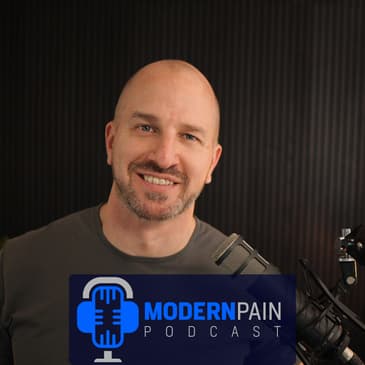
In this episode of the Modern Pain Podcast, host Mark Kargela challenges clinicians to rethink their approach to pain treatment. He discusses how the pursuit of certainty can lead practitioners to rely too heavily on specific tools, neglecting the complexity and individual nature of pain. Using the parable of the blind men and the elephant, he illustrates the pitfalls of mistaking partial perspectives for the whole truth. Mark advocates for a values-based approach, emphasizing the importance of understanding patients' personal goals and experiences to provide meaningful care.
*********************************************************************
📸 - Follow us on Instagram - https://www.instagram.com/modernpaincare/
🐦 - Follow us on Twitter - https://www.twitter.com/modernpaincare/
🎙️ - Listen to our Podcast - https://www.modernpaincare.com
____________________________________
Modern Pain Care is a company dedicated to spreading evidence-based and person-centered information about pain, prevention, and overall fitness and wellness
Welcome back to the Modern Pain Podcast where we challenge the way we think about pain, movement, and health care. I'm Mark Kargela and today's episode is one that might hit close to home because we're going to talk about something that many of us, whether we like to admit it or not, struggle with, certainty, specifically how the search for certainty can lead us to hide behind our tools instead of addressing what really matters.
Announcer:This is the Modern Pain Podcast with Mark Kargela.
Mark Kargela:You've probably heard the parable of the blind man and the elephant, six blind men, each touch a different part of an elephant. One feels the tusks and says, this is a spear. Another touches the trunk and insists it's a snake. Another grabs the leg and believes it's a tree. Each is convinced their perception is reality, yet none see the full picture. Now think about how we approach pain. Some clinicians see it as a fascial issue, others as joint dysfunction, trigger points, subluxation or neural sensitivity among many other things We could probably create a massive list of things clinicians claim can be wrong with someone and leading to pain. Some of these perspectives can offer something useful, while some have been thoroughly debunked yet continue to be pushed today, likely due to the discomfort leaving them would provide the believing clinician. Regardless of where you stand, I would ask you a question. Are we mistaking our perspective for the whole truth? Maybe these theories don't just serve to explain pain. They give us as clinicians confidence in what we do and that confidence in turn helps patients develop positive expectations, trust the process, and experience better outcomes. But the real question is, are we using our tools because they actually help someone return to what they value or are we using them because they make us feel competent, in control, and comfortable? As we start our careers, we crave confidence and competence. Courses that teach these tools often appeal to us because of the certainty and conviction demonstrated by the instructors. But looking back, I see a graveyard of theories and tools that once made me feel confident. Each one was promising certainty, only ultimately to fall short. None of them resolved the fundamental uncertainty I encountered every day in the clinic. Perhaps the key isn't in chasing certainty, but in creating space for our patients to express their expertise in their own experience. What have they lost? What do they believe is causing their pain? Instead of leading with tools, maybe we should start by listening, validating their struggles, acknowledging the difficulty of their journey, and then guiding them towards a new direction. More passive tools rarely provide long term solutions, but meaningful dialogue and a shift toward value living just might. Pain is complex, human beings are complex, and yet we often find comfort in a structured approach. Manual therapy, movement correction, dry needling, pain education, because it makes us feel more certain. But certainty isn't the same as truth. And if we're unwilling to engage in the uncertainty and complexity of pain, we may be missing what our patients actually need from us. Here's the uncomfortable reality. Pain is complex and so are people. Sitting in the gray area of uncertainty is hard. It's emotionally exhausting. And when we're struggling with our own imposter syndrome, feelings of failure, or just questioning whether we're good enough as clinicians, the pursuit of certainty becomes incredibly attractive. We see our patients avoid pain all the time, avoiding movement, avoiding activities they love, because they're afraid of making things worse. But here's the thing. We do the same thing. We avoid uncertainty. We avoid sitting in the discomfort of not having all the answers. And our escape is often in tools that claim certainty, techniques, protocols, frameworks that promise to fix the problem. But deep down, we know this approach has limits. It makes us feel better in the short term, but it fails to deliver real lasting results for people in the long run. This pattern escaping uncertainty by clinging to rigid systems is a perfect example of experiential avoidance. Instead of engaging with the emotions that come with complexity, we try to bypass them. And while this might help us feel more confident in the moment, it keeps us from addressing the deeper, more meaningful issues at play. So how do we break the cycle? We start by flipping the script. Instead of applying a tool first and hoping it leads somewhere valuable, we need to start with values and then work backward. What does this person truly want to get back to? Running with their kids, playing an instrument, traveling. if we don't clarify this up front, we risk getting stuck in symptom chasing instead of actually helping them re engage in meaningful life activities. Pain relief alone is not the goal. Restoring meaning is. If we can center care around values first, our tools become just that. Tools, rather than the defining feature of our approach. They serve a purpose, but they're not the purpose. Of course, there are times when mechanical factors matter. I'm not saying that's not the case. And we need ways to test and address them in our clinical processes. But if we're honest with ourselves, sometimes we get stuck applying the same interventions trying to fix something that might not need fixing. We need a process to recognize when someone is trending away from valued living, when they're focusing on more symptom resolution than actually living the life that they want. That's when we have to be willing to step away from our favorite frameworks and shift to a values based approach. Maybe what they need isn't another manual technique or corrective exercise. Maybe they need permission to return to the things they love, reassurance that they're safe, and a plan to help them gradually re engage with life. And here's the hardest part of all of this. Sometimes, what people really need is a space to talk about what they've lost. The emotions of losing what matters to them, the frustration of being stuck, the fear of re engaging with life. As clinicians, we have to be willing to have these tough conversations. Not just hand them another exercise or another passive treatment. But if we're stuck in our own fear of not knowing, if we're avoiding our discomfort with uncertainty, we won't be able to help guide people with theirs. That's why we have to be willing to diffuse from our own negative thoughts. To recognize when our avoidance is driving our clinical decisions and make the choice to lean into the messiness of real human experience. So what do you think? Have you ever caught yourself leaning in too much on your favorite approach instead of stepping back to ask that bigger question? Have you seen a shift in your own practice when you focus on values over interventions? I'd love to hear your thoughts. Send me a message, drop a comment, or share this episode with someone who might appreciate this perspective. And if this conversation hit home for you, and if you're ready to get more comfortable with uncertainty to move past symptom modification and start truly helping patients get back to what truly matters in their lives. I want to help. I work with clinicians who are ready to step beyond the tools and techniques and start creating meaningful change. Reach out, let's talk and start making a real impact. As always, if you're enjoying these conversations, make sure to subscribe and leave a review. It helps more people find these discussions and challenge the way we approach pain rehab and healthcare until next time, we will talk to you all next week.
Announcer:This has been another episode of the Modern Pain Podcast with Dr. Mark Cargilla. Join us next time as we continue our journey to help change the story around pain. For more information on the show, visit modernpaincare. com. This podcast is for educational and informational purposes only, and is not a substitute for medical advice or treatment. Please consult a licensed professional for your specific medical needs. Changing the story around pain. This is the Modern Pain Podcast.