Many PT’s don’t believe they possess the skills to set themselves apart from other PT’s
What really sets you apart from other options? It’s not “physical therapy” or your manual therapy skills.
It’s your “soft” skills.
The questions you ask.
The touch.
The time you have for patients.
Your follow up (automated and in person).
Your personality, marketing, and enrollment process.
If you’re looking to launch a cash practice this year, you need the CashPT® Checklist.
It’s the step-by-step checklist to launch a physical therapy cash practice. -> Go to www.CashPTchecklist.com or DM me the word “checklist” on instagram and I’ll send you the link to download it today. 🤙
Connect with Aaron:
Facebook: https://www.facebook.com/AaronLeBauer
Instagram: https://www.instagram.com/aaronlebauer/
CashPT Nation FB Group: https://www.facebook.com/groups/CashPTNation
9 Profit Accelerators: https://www.aaronlebauerlive.com/9-profit-accelerators-webinar-registration
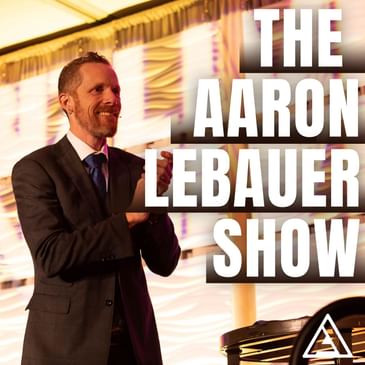
[00:00:00] Hey, what's up? It's Aaron. Welcome back to the Aaron LeBauer Show. I was going to say the Cash PT Lunch Hour, but it's the Aaron LeBauer Show now. It has been for over a year. What we're going to talk about today are the skills that you need to set yourself apart from other Physical Therapists and other Physical Therapy Practices so you can launch a Cash Practice and be successful. If you're new to the podcast, hi, welcome. My name is Dr. Aaron LeBauer. I'm in PT school. I saw
[00:00:29] 43 patients in one day on my first clinical rotation and that's the day I decided to start a Cash Practice. I launched my Cash Practice right out of PT school when I graduated Elon within about four weeks as soon as I got licensed to practice PT. I've had 100% Cash Practice since that time. In 2011, 2012, people started asking me to help them with their businesses. I launched a course
[00:00:58] called the Cash PT Blueprint in 2014. Our Platinum Mastermind, I think, was 2016, 2017. We launched that and in that time, I've helped thousands of physical therapists launch, grow, and scale cash-based practices, hybrid practices, and even some people with their insurance-based practices. And today, I want to address a common question that I get from physical therapists who are ready
[00:01:25] to start, who want to start a Cash Practice but don't feel quite ready, or some who do and don't feel like they're getting good results or good enough results to justify high prices or justify going out of network, et cetera. The question is, or is something like this where I'll say, hey, between, you know, people want, hey, I'm thinking about starting. They'll get a copy of our book. I'll say, cool. What's the number one thing keeping you from starting now? Like, why do you want to
[00:01:51] wait two more years or, you know, you know, another few months? And they're like, well, I need to finish this certification, or I need to level up my skills. I need to do more con ed. I want to get OCS. I'll say, like, the certifications, patients don't really care about those, but I know you do. And number one, you have to feel confident in your skills and in your results to be able to charge high enough prices.
[00:02:20] And so what I want to do is go over today a couple of the skills and treatment techniques that I think are really important and can really take you a long way in providing an amazing experience for your patients and something that's different from others. I'm going to give you a couple things here. Let me just kind of preface to say, like, these treatment skills, these are great. These
[00:02:46] are what works for me. And I don't always talk about treatment strategies. I don't always talk about clinical pearls, clinical mentor, like clinical mentorship, etc. Because I do believe that there's a lot of ways to help patients. Some people just get better getting off the couch. Other people just get better with time. Some people never change. Sometimes it's, you know, the manual therapy. Sometimes it's the exercise. Sometimes it's the dry needling. Sometimes it's voodoo. I don't know,
[00:03:14] whatever you believe it is. There's lots of different reasons that people get better. And so what I focused on is teaching all the things around that. And I understand that I have 20 years, 25 years of clinical expertise or clinical experience. And, you know, so maybe I take that for granted. I was a massage therapist for 10 years before I started my PT practice. So I graduated massage
[00:03:39] therapy school in 1999. So 1999, I graduated massage therapy school 2009. I graduated, I started my cash practice, I graduated in 2008. So I just want to share some of my favorite treatment techniques, and to say that there might be different ones for you. And that's okay. But I do think this is important. And it's what a lot of you want to know, what are the skills that make me valuable,
[00:04:04] um, so I can charge cash. You know, before I even get to them, let me just say that you've probably undervalue what you do because healthcare is seen as a service. It should be like, it feels like it should be free. Everyone should have access to it and right in the right to it. And, um, with healthcare and our current insurance climate, it's not a one-to-one exact exchange for the value you provide. So it kind of gets confused in there. PT schools don't do a great
[00:04:33] deal of explaining how valuable you are to your patients. So let me start off with just this one example. Let's say, and this is, this is one of the easiest examples for me, especially the pelvic floor patients. We all understand that. Let's say there's a patient and they're because of pain, they're unable to have sex and intercourse with their partner because of pain. And many of you, pelvic PTs, you know, this patient, they come in and they tell you this, or maybe it's not the
[00:05:02] very first thing they tell you, but it's basically the problem. And within two to six visits, sometimes one or one to three visits, you've educated them. You've done some hands-on therapy. You've done something that's radically changed their life that everyone has missed. So it's a really easy example to talk about it with pelvic PT because we all know like one of the number one ADLs is being able to be intimate with your partner. Um, and if you're unable to do that, like people will go
[00:05:29] and do like, they'll spend tons of money, tens of thousands of dollars, a hundred thousand dollars on treatments and medications when sometimes it is just like, um, a hypertonic muscle or a trigger point, or maybe it's something way more complicated, but just for an example, I think a lot of people can resonate with that. Like if, if you could snap your fingers and provide that patient with that result in like two seconds, however long it takes me to snap my fingers and charge them a hundred
[00:05:59] percent guarantee a result for $2,000, most patients would be absolutely I'd pay that. Right. Can we talk about that with knee pain? It's so much more complex. And, you know, so many people will be like, yeah, whatever. My knees are shot and I'm just going to never run and never squat again. And, you know, woe is me. Like, could I snap my fingers and give you a knee that can do anything you want? Yeah. But so-and-so says you shouldn't squat below 90 degrees. Anyways, it's a much harder,
[00:06:24] um, like analogy to make. So just understand that you are making a massive difference in your patient's lives. It's more valuable than any amount of money that they will pay you. And while yes, there's some education involved and I'm going to, I want to talk about some of these, um, treatment techniques. A lot of it is the results that we provide people are massive. And so don't undervalue
[00:06:53] that. So let's talk about this. Most people don't believe they possess the skills to set themselves apart from other PTs. So let's talk about some of those skills. Number one, hands-on manual therapy and soft tissue, um, treatment techniques like, um, you know, like mobilization, manipulation, um, trigger point therapy. But look, it's more than just 20, 30 to 45 seconds of hands-on care,
[00:07:18] which when I was in PT school, I've told this, uh, story on the podcast before. Um, one day, uh, professor, I know who I would love to name her, but I don't want to be that guy, but she's probably retired by now. But anyways, she was like, patients only need 30 to 45 seconds of hands-on care. And we're talking about pivins and pavins, like these passive introvertebral motion. I don't even know if research showed what it shows. Apparently it showed that 30 seconds of it was
[00:07:45] fine and made a positive impact. And I just, my hand just went straight up and I said, um, you know, I didn't even wait for her to call me. I was like, you know what? I don't agree with that. And I don't want the other 40 something people in here to believe that that is the absolute truth because up to this point, I've made my career as a massage therapist on patients, not getting touched
[00:08:08] in the PT session or even with their orthopedic surgeon. So as a massage therapist, I, I had patients come to me and tell me, Aaron, you're the first person to touch me where I hurt. Oh my gosh. Like when we're talking about the QL, the, um, trapezius, you know, um, the scalene, suboccipital, infraspinatus, VMO, hamstring, you know, piriformis. I mean, these aren't like,
[00:08:37] like, uh, gastroc soleus. I mean, these aren't like magical muscles that are really hard to find. You learn about these muscles in anatomy. You learn about them in cadaver lab. You should learn about them in your soft tissue lab, but we did, you know, only two, three hour labs and massage therapy at Elon. Um, the, and no one wanted to be my partner because they, I guess they were intimidated by the 30 something year old, you know, massage therapist in class. And I was like, well, I should
[00:09:06] be the one teaching this anyways. So I kind of skipped those days where I left after about 20 minutes and I realized no one to be my partner. And I was like, whatever. Um, but the soft tissue, like people want to be touched. One of my PT mentors said, um, is Bob Duvall. Um, he said, we need to meet our patients affective needs. And I was like, well, I don't know what that means. It's a big word. Patients need to know we know where they hurt. So we need to be able to touch
[00:09:32] them where they hurt and we need to be able to treat them. And so we need to get good in our hands-on and soft tissue skills are manipulation. Yeah. Manipulation, but not everything needs to be cracked and cranked. Um, sometimes just some good mobility, mobilization. It feels right to patients. It doesn't need to be forced sometimes, you know, a good stretch, a good, uh, you know, patient feeling safe, a good like rotation where they feel good. It'll allow things to cavitate and
[00:10:01] boom, I could show you some things. I mean, I was, we were learning like this lumbar roll and I wasn't really quite getting it. I said, you know what, let me try this leg pull technique. I learned from John Barnes, um, and MFR one or two, um, 10, 15 years ago. And, uh, I did it. I pulled across the body and clunk. I got the cavitation I was looking for without forcing anything. So, you know, if you're
[00:10:26] looking for some great hands-on soft tissue skills and you want to be around other PTs and OTs, you know, I can't, you know, um, not recommend John Barnes, uh, MFR one and two, you know, any more highly. It's great. Um, the soft tissue skills and the hands-on techniques and just kind of developing your sense of touch, um, and awareness of another person's body is, is great. And it's, and it's
[00:10:52] really, um, it's really been an amazing, uh, series of con ed classes that I've taken. I took a lot of them as a massage therapist and I was participating. He's one of the reasons I went to PT school. I was participating in his seminars as an, a seminar assistant where I was basically, I wasn't doing the teaching. I was just walking around and assisting people with their hand placement and feeling comfortable on the tables and working with other people. Um, and I've done
[00:11:18] a lot of that. I've taken pretty much all his classes. There might be a new one out there that I haven't taken. Um, and been involved with that community for a long time, longer than I've been a PT. And it's great. And, you know, whatever, um, you learn, I think that it's focusing on the trigger points, focusing on the tissue, the fascia, whatever. I think one of the things that is really valuable is creating a safe, comfortable space for patients to feel like they can let go,
[00:11:46] feel like they can, uh, share what they're feeling, their thoughts, their fears, and even just allow their body muscles and tissues to downregulate their nervous system and just feel comfortable and safe on your table, whether you're in a gym or a quiet private treatment room. So that's one of the foundational skills that I, I teach foundational classes that, um, I recommend, especially to
[00:12:09] the clinicians that work for me. Okay. Um, number two, uh, skill right now is trigger point dry needling. And do I think it's better than trigger point therapy, like with your hands or MFR or other manual therapies? Yes. And no, not really to me. It's the thing that I like right now. It's quick and easy, but it's not nearly as comfortable. Um, but it's really powerful. And one of the
[00:12:37] reasons that it really resonates with me is because when I became a massage therapist, um, our tech, we did a 10 month program. It was, you know, for context, four hours a day, 750 total hours in 10 months and a majority of it, a good half of it was studying trigger point therapy, um, from Janet Travell and Janet Travell, you know, she wrote the big, you know, the big, whether the trigger point books are two big red volumes. And she was, I think, was she John F.
[00:13:06] Kennedy's personal physician? She was a cardiologist and she mapped a lot of the trigger points with saline injections. You probably already know this. Maybe you don't. Um, I had a, a colleague who I knew invited me to one of the dry needling, um, seminars and it happened to be through myopain and Jan Dahmerholt. And one of the, not my CI, but one of the other, um, residents in sports medicine in Atlanta when I was there as a student, um, was also a teacher. So I
[00:13:31] went and I was like, Oh, I'm definitely going to go because I realized it was taught off of, um, Janet Travell's same philosophy of treating the trigger points and the trigger point patterns. And it just made sense to me. It just clicked with what I was already doing. So versus some of the other ones that seem a little bit more like maybe some acupuncture, use electrotherapy, um, and Easton on the needles, you know, whatnot. This one just really worked for
[00:13:58] me. It was just an extension of what I was already doing with my thumbs, fingers, elbows. I already knew how to find the trigger points. That wasn't the hard part. Hard part was just learning the contraindications and directions and using my hands in a little bit different way. Um, to do some needling. Uh, and so that was with Jan Dahmerholt, myopain. Also, um, I know Ada Zylstra who, um, is now working with EIM and teaching, um, trigger point dry needling and their,
[00:14:24] um, classes and seminars are, are really amazing as well. Um, and so they, they do some slightly different, uh, techniques and, you know, but very similar. And I think that, you know, between those two, if you want to learn some dry needling, it's great. I mean, I know there's other techniques out there now that are coming up that people are really jumping on and sometimes it's patients who are like, Oh, I need needling. I need, um, what's it called? What's the new one? Uh,
[00:14:52] stem wave, et cetera. And that's great. Um, just one thing, let me caution you with, with MFR, with needling, with stem wave, et cetera. If really that's what we're marketing it right now, it might set you apart. And I'll say that dry needling doesn't really set me apart because a lot of people here in Greensboro do dry needling. And if I'm selling dry needling, people are going to go and try to find the place where they can get needling the cheapest, because if they think
[00:15:18] it's all about needling, well, why would I pay more for dry needling? Why would I pay 150 bucks for dry needling here when I can get it for 75 over there? Same thing's going to happen with stem wave. Same, I'm sure. I don't know. The same thing happened with ultrasound back in the seventies or eighties, but I need that therapeutic ultrasound. Uh, can't tell if the machine is on. Um, anyways, um, dry needling is great. Um, I like it. My resonates with my body, even though it's
[00:15:43] very uncomfortable. So does MFR. Um, you know, I like to mix and match them. I typically, if I'm treating a patient, I'm going to, I'll talk about number three in a minute. I want to take them through an SFMA, see where the limitations are, see where the mobility issues are. And I'll do some, a little bit of mobilizations, uh, manipulation, do, um, needling in one or two areas and finish
[00:16:08] with some MFR. And I finished with MFR because it feels good down regulates. And I want people leaving my clinic feeling good. Like, Oh, like that's it. Oh my God. That's the spot. Like, that's what I'm looking for. And I don't want them to like leave, like totally keyed up where sometimes needling can do that. Um, MFR kind of really feels good. And I'll always end if someone's super keyed up, I'll end with like some cervical work, um, suboccipital release, et cetera, just
[00:16:36] cause it feels good and everyone loves it. And the cool thing is, is insurance isn't going to deny me payment for the patient when I treat their neck, even though they came in with a low back or hip problem or an ankle issue. I can still work on a neck because it feels good. Um, and so that's, those are a couple of the ones that I like, you know, remember I was trained as a massage therapist. So there's a lot of massage techniques, um, rocking, shaking, rebounding, some trigger point
[00:17:03] therapy, like with my thumbs, my elbows, my knuckles. Sometimes, you know, I'll tell patients this when they're afraid of kneeling. Sometimes the needles hurt less than actually my thumb. If my thumb or finger is pressing on a trigger point and the skin is super sensitive, Ooh, it can hurt a lot, but the needle isn't really triggering, um, receptors in the skin as much as it is in the muscle. And it can feel even more comfortable. Other people are just
[00:17:30] apprehensive about needles or dang it. Getting needled sometimes is really, really uncomfortable. So those are some of the main treatment techniques I use that, I mean, I'd recommend like if you're coming out of school and you're like, what's going to set me apart. I'll talk about that in a minute. And I kind of addressed it earlier. It's not your treatment techniques are going to set you apart, but you need to have some skills to feel comfortable. Like you're getting some good results.
[00:17:56] Um, one of the things that it took me a long time to learn and long time to get was corrective exercises. And along with that came an evaluation framework that really made sense to me. And so I had some friends, um, the same person here, uh, Rob Balkin who introduced me to Edo and dry needling also recommended, you know, Aaron, you should check out, you know, SFMA when it comes to town. And at the time I think I was having like second baby was on the way
[00:18:25] and I was just busy. And I was just like, I can't, I can't make that. But a few years later, like, so I started using the top tier, um, which is, I think it's 10 movement patterns. Um, Lee Burton, Kyle Kessel, Greg Rose, Brett Jones, maybe a couple other people in there who've kind of developed this over the years. Brett main, Brett's my kettlebell trainer, but he, I met him when he was teaching FMS. And so I did the FMS one SFMA one weekend in Denver long time ago.
[00:18:54] And then I did SFMA two with Greg Rose. Um, and I met, I got to meet Greg cook and Lee Burton one day when I dropped in on them at the clinic, I'm a way up to the mountains in Virginia. And I ended up, um, getting gray on the podcast for a great, uh, episode, um, a couple of years ago. So you should check that out as well. But what I was using the top tier just to, you know, it's like cervical flexion, rotation, back scratch test, touch your toes, rotate all the way around lean. Was it lean
[00:19:23] back, um, stand on one leg for 10 seconds and squat. And so I started picking up, you know, practice patterns and I would do that. I'd work on people's neck or shoulder and they do it again, and be like, Oh, it feels much better. And that's not the whole thing. I mean, what they have are like kind of a set of a framework for what should be optimal or what should be somewhat normal ish. Um, is, are things different left to right? Okay. Let's take a look at those movements
[00:19:51] and let's break it down. So to see, to see, is it really a soft tissue or, or joint issue, or is it a motor control and stability issue? And based on which one of those it is, then, okay, now I know, okay, where am I going to do some MFR needling and where do I need to focus on some stability exercises? And that's been really helpful for me. Um, but what it really did, the number one thing it did is it took all the crap I learned at PT school. I was like,
[00:20:19] I don't need this to treat patients and make them feel better. Because remember I was a PT, I was a massage therapist already doing some MFR trigger point, uh, like hand therapy, not needles. Um, and helping patients. And they were saying, Aaron, no one's been able to touch me where I hurt or help me get here. I've been to PT, OT, the orthopedic surgeon, et cetera. And you're the first person to actually help me. I can, now I know when I tweak my back, I need to go see my massage
[00:20:44] therapist. Now, like, you know, now I can work out, ride bikes, run. I mean, I had one of my patients was able to go, um, compete in an Ironman after working on it. He was told he had a sports hernia and wouldn't, and shouldn't do it. He didn't have a hernia. He didn't actually have a hernia. He had, um, like a hip flexor impingement. And I worked with him, you know, on the soft tissue techniques and he was able to run and, you know, when he couldn't before and ride his bike, et cetera.
[00:21:11] And, um, you know, I wasn't diagnosing not a sports hernia as a massage therapist, but I was like, this isn't right. I was like, let me try working in this area. He's telling me, I have symptoms. So my God, that relieves the pain. I'm like, Oh yeah. Right. But the learning the SFMA took a lot of the things that I learned, a lot of the things that were logical to me that didn't make sense in PT school, took all the special tests that learned at PT school and put them into a, I want to say formula or framework that really just made sense and, and made a lot
[00:21:41] of logic, logical sense for me. And so did it change how I practice? It changed how I treated people and it changed some of the effectiveness of what I did. And it also allows me to set myself apart by saying, Hey, one of the things that we do is we can take you through a 10 point total body diagnostic exam and determine, is it actually a joint or muscle stiffness or tightness issue? Or is it a motor control or stability problem? Because sometimes when you have a motor control or stability
[00:22:09] problem, it feels like you've got a, um, tight muscle. Your body still can feel tight, tight, but it's not short. So, you know, and people go, Oh, ha. That's why, you know, I stretch and stretch or roll and roll or do these things and it doesn't get better. So, um, I think I took SFMA two with, um, Greg Rose. I took SFMA one with Kyle Kessel and SFMA two, we're learning more of the corrective exercise stuff and we're doing something. And, and Greg Rose goes,
[00:22:38] what's, he looks at me and nods his head. He goes, what's wrong with your ankle? I'm like, well, you're jousting. And this was, I guess we were doing like this dorsiflexion, uh, mobility, you know, half kneeling thing. And he's like, well, you're, you know, your knees doing, I guess it's your knees going out to make up for the motion. I don't know. I can't remember what it was, but he looked at me. It was like, yeah, your, your ankle doesn't have the mobility. It should. And we tested it. Of course it was, um, less than the right and less than it should be. Well,
[00:23:06] a couple of years prior, the first CrossFit class I had gone to the, uh, the, whoever the CrossFit coach was, you know, my first, very first class I'd done the prep training recommended. I get a bar and put, I think maybe two, 10 or 15 pound weights on it to do some, I don't know where they like when you squat thrusters or something like that. My knee didn't feel very good. I was like, I was like, is this form right? He's like, yeah, it looks good. He's like, well, I don't understand
[00:23:31] why your knee's hurting. I'm like, well, my knee's hurting. Well, once I realized, once Greg was like, yeah, what's up with your ankle, I was like, oh, that was the problem with the squat is because my ankle didn't have the mobility and I'm getting it into my knee. Okay. Like that was, that was like a good aha moment for me, but that was, showed me personally the power of like this type of evaluation, um, and framework. So there's a lot of different ones out there, you know, McKenzie and
[00:24:01] whoever else, um, uh, Gary Gray. I don't know these guys, but the Gray Cook stuff, the SMA, um, some of the FMS stuff, dude, super awesome. It's a weekend to learn. Um, you know, um, and then the other thing you could do is you could just go find your local massage therapy school. You could be a, become a massage therapist. You don't really need to, but you could go take some of their con ed
[00:24:29] classes, just some massage therapy, deep tissue, et cetera. Even if it's just practice getting better at touching people with your hands. Um, but let me share one thing with these in MFR. I think, uh, I think a weekend MFR course might be 800 bucks these days, 600 bucks. Um, trigger point dry needling is probably somewhere between a thousand and $1,500 for the course fee for the three day
[00:24:52] weekend. Um, SFMA is probably somewhere in that, uh, I think $800 range. Plus you go out of town to any of these and you're paying a hundred to $200 a night. Um, so we're spending 1500 to $2,000. Oh yeah. Plus the flight airfare where you got to drive and pay gas. So you're spending a thousand minimum, um, to go to one of these classes, which is great. Totally worth it. Probably 1500 to 2000,
[00:25:22] especially if you consider you take a day or two off, um, from work and you're not seeing patients that day. So let's say it's $1,500. Well, guess what? Um, those skills are going to help you feel more confident, but those skills aren't necessarily going to bring more patients in the door. So just keep that in mind. Um, they're worth every penny. Otherwise I wouldn't have done it myself or recommended or paid my employees to go do them. And when you're looking at getting help with growing
[00:25:51] your business and your cash practice, understand that you're going to justify. It's easier to spend 1500 bucks on con ed because you can get a certification than it would be to spend 1500 bucks on a course, learning how to do marketing or business or sales or, you know, creating a cash practice. I just know that because that's what we've been told is important. Our certifications and training, et cetera. And it's important. What I'm going to do is say that, um, it, while it's
[00:26:20] important, it's not the key to growing your business and, and setting yourself apart and feeling confident. The key to feeling confidence, getting in some reps and trusting yourself, trusting your intuition. And so part of that is the next one I'm saying is number five, just project some confidence. Like you might be completely unconfident that the person in front of you, you can help, but what other choice do they have? Okay. So a lot of my patients I've
[00:26:46] seen over the years have come to me and they've been like Dr. LaBauer, Aaron, I've been to see everyone. I've been told there's nothing they can do for me that it's all in my head. I'm like, well, I'm going to give you my best shot. I'm going to help you or I can help you. And over the years, over time, I realized when people tell me that, like you're in the right place, but part of it is just projecting confidence because it's the worst thing that can happen. Really? They come to see you. If you're doing some dry needling, the worst thing that happens is you can puncture a lung. But if
[00:27:13] you're, if you're trained in dry needling and you're paying attention and you have half a brain, you're not going to puncture someone's lung. The worst thing you can do really is burn them with an ice pack. And I hope, I hope you're not using ice packs on back pain in your clinic and charging people because no one's going to pay for that because they get ice at home. So, you know, really the worst that can happen is they leave going, that was a waste of my time. That was a waste of my dollars. That's really, maybe the worst thing that can happen is you get a one-star review
[00:27:43] from a cranky patient that was never in your clinic in the first place. I don't know. I have one of those. What I'm saying is it's about the confidence because you're a doctor, you know more than the person coming in. You might be uncertain and unclear about it, but I guess what? I guarantee you that surgeon doesn't know for certain that the surgery is going to fix the problem, but guess what? He's going to tell the patient that. A little overconfident in my book, but they're going to be
[00:28:11] like, yeah, this is exactly what we're going to do. This is how we're going to do it. And we're going to fix you right up, Mrs. Jones. Mrs. Jones is going to be like, sure. Great. And a lot of times they're going to, just because of that confidence, they're going to get better, right? Placebo effect. Just project some confidence. Just be confident in yourself. I had a patient who was a, who was a lacrosse coach, sent in one of his players. Player came in, his back was hurting. You know,
[00:28:41] he was basically told just to do the stim and roll it. And he was like, I got a game tomorrow. I evaluated him. I did some MFR with him. I did some, uh, some trigger point therapy. This was before I did needling. I don't know that I would have needled him, but maybe I would have at this point. I put some, uh, I put some like tiger balm on his back. I gave him a couple exercises to do at home to relieve the symptoms. And I was like, yeah, man, you're going to crush it tomorrow. You know, let me know after the game, how you did. Guess what? It was his highest scoring
[00:29:07] game of the, of the, of his career. Um, and the team won and it was great. And then I got 10 more referrals. Um, and I didn't even see the guy again, but what I did was I gave him confidence because I knew he was 21 years old, 20 years old, strong. He could move well. He just was a little tight and stiff from probably overdoing it on some lifts, um, or something like that. Um,
[00:29:33] give, you know, give, give people confidence because you're not lying to them. You just got to project confidence, even if you're doubting yourself, because, um, I know that, uh, I know that you can help them. I know that you're already well ahead of them. Recognize that there's nothing you have to change. And this is, this would be the next one would be nothing. You don't need
[00:29:58] anything more than what you already have. You already have the skills and certifications you need to help patients get better. You've graduated from PT school. What more do you need? You already know way more about the body injury disease than the patient in front of you, unless you're treating another physical therapist. And guess what? You're probably fine. You already have everything you need to help them get better. You're already ahead of 95% of the patients that are going to come to see you.
[00:30:28] So remember the movie, you may or may not know this, but catch me if you can with Leonardo DiCaprio. It was a movie about Frank Abagnale, who was, um, one of the, uh, you know, it was a con artist who now works with federal government and, and teaches people about con artists. Um, he taught courses at like, I think it was at Brigham Young University and he was asked, how did you teach the class? And you didn't know anything about advanced sociology. And he said, all I had to do is read one chapter ahead of the
[00:30:56] students, right? He was a con artist. He, he pretended to be a Pan Am pilot, you know, a school teacher. I mean, a ton of other things he wrote. He just wrote tons of checks, but how do you teach a class through a whole semester of school? He just had to be one chapter ahead. So all you have to be is one chapter ahead. If you go to one MFR class, one dry needling class and one in SFMA one, you're going
[00:31:21] to be three, more than three chapters ahead of the patients because they haven't even been to PT school. So realize that there's nothing more that you really need other than recognizing that you were already ahead and feeling confident. And you know what? Remember this patients are going to be difficult to deal with, not because they're difficult people, but because they're scared, they're in pain,
[00:31:47] they're impatient. And our culture is one of results now, but they need to work for it. And they're not always going to feel better right after you work on them. Sometimes they're going to feel worse. And so they're going to be like, well, Dr. Lavao, I'm no better. Or when am I going to get better? Or they come in agitated. But guess what? Between when you're seeing them now and when you saw them last time, they've had some good days. So we have to go back and say, hey, tell me what progress
[00:32:14] have you made? What's changed since last time? Good, bad, or nothing? Just let me know like what changes. Okay. What times do you remember this week that you felt good? And sometimes you'll get those patients that no, they don't ever have any positive things to record. Okay. Then we give them a homework. Hey, I want you to keep a diary and check in three times a day. Let me write down when you felt the worst and when you felt the best. And we start, we can track that and see. And so they're having more
[00:32:44] days and times where it feels good. But maybe the question you ask is, how are you doing? What do you, what does it feel like now? You know, what's your pain one to 10? And they're like, oh, it's worse. It's not changed. Well, it's not changed, but there's more times when it's not there than when they first saw you. So there has been progress. People don't see it as progress because of the framing of the question or what they're focused on. They're focused on pain when they run, but not
[00:33:13] the fact that, you know, they're not waking up sore or they're not waking up and their feet don't hurt when they hit the floor the first time, but it still hurts when they run or after they run. Okay. It still hurts. Okay. If we make it about the function and the goal and not the pain, we're more likely to help people. And that's one of the things that I've learned over the years is when we make it about pain, pain free, people have expectations that can't be met. Sometimes pain will never go away, but they'll be able to run a marathon.
[00:33:43] Sometimes the pain will go away in one visit, but they still move like crap and then they get injured. And sometimes the pain doesn't change, but they get better or maybe they don't. And we have to be able to manage all of those. And that can be really difficult. Okay. Let me tell you about one other thing that I think a lot of people ask is like, well, I'm a new grad or I'm a, I'm graduating soon. I don't want to start my own practice until I get some experience.
[00:34:13] Like if you're, if you know, you want to start a business, the best time to start is now. And granted, yeah, it'd be great to have some experience. I had some experience as a massage therapist, but I had no experience as a PT, um, other than what was in school. And people were asking me questions like, I didn't, I didn't know the answers to, I was doubting myself, but you know what I do? I'd ring up my clinical instructor, Alan Ling, or I'd ring up Bob Duvall and be like, Hey Bob, I've got this
[00:34:39] patient. They're telling me this. This is what I found. What are you thinking? And both of them would go, well, I think I know what's up, but tell me what your thought process is. And I'd tell them and they're like, that's exactly what I was thinking. You're doing the right thing. You're on the right track. I don't think, I think I called Bob twice and Alan four times and neither of them, you know, shared anything with me that I wasn't already doing. It was more about just having the confidence that I was on the right track. And so if you need a clinical mentor, just call one
[00:35:07] of your CIs, get your business started, ask one of your CIs, say, Hey, it's okay if I call you about some patient cases, you know, in the future, I guarantee you, they'll probably say yes, unless they're a total asshole. And you know, we all have one of those that we would never call, but work with them or find someone new. There's a lot of people out there doing clinical mentorships and pelvic floor and orthopedics and sports, et cetera. Work with them. They'll help you in our groups, like in our platinum mastermind group or, you know, our PT business ignition group. A lot of
[00:35:37] times people will ask clinical, um, clinical questions because it can be helpful. I've had a lot of new grads come through our mastermind and they'll ask clinical questions and it's awesome. We've even got a thread in there on clinical pearls. So working with a clinical mentor would be great. I mean, I'm happy to do that for you. Um, it's not my passion and it's not my number one thing, but I've got, like I said, I've got 20 something, was it 25 years of clinical experience to go on? Um, it's kind of like
[00:36:04] second nature to me. Um, I mean, you know, like it's great. Um, I'd be happy to help. And what I'd rather do is work with you on business stuff, but this comes along with it. And that's why we're chatting here today. Here's one more thing that I want to share that kind of sets our clinic apart, but it's a hard sell as well is we have small private quiet treatment rooms. And why is that?
[00:36:31] Because it came from a massage therapy background where you do a massage in a private treatment room. And I feel like that sets us apart, but just like the dry needling, just like, um, trigger point, like dry needling, um, MFR. I'm not advertising private quiet treatment rooms because the only people that would find that as a benefit are people that have been treated in a like open gym setting and didn't like it. So number one, they had to have been to PT before. Number two, they had to have
[00:36:57] not liked that type of setting. So, um, I think it's great. I think it sets us apart. It makes our, the vibe in our clinic very different than others. And, um, for a lot of you, maybe that's not the right vibe, but that's something that we have. And that's something that we do. And it's pretty easy to do that. Um, it's not easy if you're renting space in a CrossFit box, um, or a gym, if they don't have a room, um, it's probably
[00:37:22] something you need to have if you're doing pelvic floor PT or, you know, any work with, you know, like trauma, et cetera. Um, I prefer it. Um, and sometimes like, you know, Dr. Chris is over there and he treats people with the doors open because that's kind of what he's used to. Um, but it's also, he's over there a lot of times by himself and it's just convenient to do. Um, but private quiet treatment rooms, that's a way to set yourself apart, but that's not a clinical
[00:37:48] skill. What really sets you apart from others? Here's the real answer. It's not in quotes, physical therapy. It's not your manual therapy skills. It's not your dry needling. It's not the treatment techniques. Those can give you confidence, but you know what? You don't need to spend tens of thousands of dollars on con ed to gain confidence. What you need are small wins. You need to be able to work with patients and get some small wins. You need to be able to work with patients, get some big
[00:38:17] wins and just getting some reps in the door. And if you're, especially if you're just getting started in your first five years, maybe 10, you might not feel very confident because you don't have 10, 20 years of confidence. I can tell you what, talking to patients now, I'm much more confident because I've seen a lot more than I was when I first started. What really sets you apart? It's kind of the soft, it's really the soft skills and you don't learn this at con ed and you don't learn these in PD school. This is the questions you ask, the seven whys, you know, the, the total body
[00:38:46] diagnostic framework, making it about what patients really want, not about their range of motion, et cetera. Like having those real conversations, your touch, your hands on touch, touching patients where they hurt, the ability to get your hands on people, the ability to have like a good vibe and attitude and your personality, having your personality come out in your treatment, whether you're an introvert or extrovert, the touch in your time and the time you have for patients,
[00:39:13] not being rushed, not, you know, taking notes with your back to patients. I've seen that. I've seen people doing eval and they're taking notes is an insurance-based clinic because they have to do all the documentation and their backs to the patient. You know, how much time do you have for people? Like you don't need to rush your follow-up, um, automated and in-person systems. Like do,
[00:39:38] how do we follow up on phone calls, email, text messages, et cetera, being present with people, um, giving them small things. Like I was doing a tour of our clinic. I was like, you know, I've always wanted to have coffee in here and coffee for the patients as they wait, but people don't wait long enough to even make coffee. I mean, patients, our patients don't wait more than five minutes. You know, this is not enough time to make some coffee or maybe it is, but it's not enough
[00:40:03] time to drink it. Um, your personality. I talked about that. Your marketing, your marketing, your avatar, your USP, your promise, your message, your market message match. Those things set you apart more than anything, because like I said, we're not marketing physical therapy. People say, how can I open a physical therapy clinic and charge twice as much cash as the insurance does down the street?
[00:40:28] Because we're not delivering the same service. We're not delivering the same, uh, promise and we're not marketing the same person. We're not talking to the same, the same people, but we're not just selling, Hey, physical therapy, it's labower physical therapy. That's what you're going to get. Like it's the best you get, you know, it's not some slogan like that. It's helping specific people, niche of people do these specific activities and feel the specific way. Like that's what we do.
[00:40:57] It may not have anything to do with physical therapy. Um, and your enrollment process, like so many people are afraid of sales and they're like, okay, in order to charge $200 an hour, I have to be really good at these things and have a lot of confidence. You don't, I've got new grads charging $300, uh, new grads. I mean, you know, within their first year charging $300 for an hour per visit, um, charging $200 per visit and seasoned grads who have 20 years of clinical skills and
[00:41:26] mentorship and they were mentors and CIs, et cetera, afraid to charge $125 a visit. And the difference isn't the skill level level. That's the confidence that what you're charging for is worth it. And if you were stuck in an old mindset of I'm charging for physical therapy, then you're never charge more because people won't pay more. We have to promise something, not even just promise. We have to build a, um, result that's bigger than just the physical therapy. That's why it doesn't
[00:41:53] matter really what treatment techniques you use. And if you can get people across the finish line or you can build a goal with them and stretch the gap then, and they trust you enough to get you there. That's part of this enrollment process is asking the right questions and stretching the gap and creating, um, this gap between where the patients are now and where they really want to be. You know, like they were told never run again. Okay, well let's get you back to a 5k. Yeah, but you know what? They used to be an endurance runner. They've always dreamed of competing in
[00:42:23] a marathon. Mrs. Jones, I can absolutely help you compete in a marathon. Is that something you'd like to work on together? Absolutely. Okay, great. That's an 18 to 24 month process. Okay. So what we can, what we're going to do is we're going to work on getting you to a 5k first without your knee pain and without feeling, not worrying about it doing any more damage. And then once we get there, we'll reassess and see what does this plan look like to get you, you know,
[00:42:48] because Mrs. Jones at some point had run, you know, 10 miles maybe, but got injured on their way to the half marathon. Okay, we're going to work and then we'll work this longer term plan. And that's a big gap, right? Wouldn't you agree? Yeah. Okay, great. So that's what we're going to work on together. Okay. And that's part of the enrollment process. That's going to set you apart because everyone else is going to be putting them on the bike and the upper body erg and maybe the treadmill
[00:43:15] and they're happy to give them range of motion, but they're not even worrying or focusing on, you know, running, running 10 miles. Like, you know, once you get your range of motion, your strength back, you're good. Insurance, I'm going to pay for more. So that's really one of the places that you set yourself apart. It's the marketing and the enrollment process. And we can call the enrollment process sales, but I don't want to say that too loud and scare you off.
[00:43:38] But really what I want you to understand is that that process is really where you set yourself apart and we're not going to promise something we can't deliver on. And we're not going to promise something that is unreasonable, but what we really have to do is build a why and build meaning behind it. And then that's what patients are going to pay for. The rest of this just gives you the confidence to make that offer.
[00:44:05] But really, if I could snap my fingers and give you the confidence to charge 200, 225, 250 a visit and not bat an eye about it because people can't afford it. And let's say, yes, some people don't have that cash. Well, you know what? There's other programs we can do where you can make even more per hour. We do semi-privates. Just imagine what six people semi-private Pilates,
[00:44:28] 75 bucks a piece. That's 450 bucks if we got six people in there. So you see what I'm saying? Is it 450? No, that's $325. Still more. So we can do those kinds of things too. Like there's all possibilities. People are really fixated on it being one-on-one. Cash-based doesn't have to be one-on-one, but one person at a time, get on the upper body erg, the hot pack, do some roller.
[00:44:57] Let me do a manipulation. Okay. Do this exercise with the tech and come back two more times this week to do that. Like, like I know that helps some people, but it doesn't help a lot of people. And that's why I got into PT is because the people that that didn't help were coming to see me as a massage therapist, we were ignoring a segment of the population and insurance is part of the problem, but it's not the only problem. We're ignoring it. And we're not willing to stand up
[00:45:24] for insurance and say, Hey, but these people need a different type of care. They need a different program. And it doesn't have to be one-on-one. It's just what I chose because I was doing massage therapy, but I can help 20 people at a time. It's just the expectations are slightly different. What they're paying for is different. And you know what? If you're not going to do it, if I'm not going to do it, personal trainers are going to do it. Um, not even personal trainers are going to stretchologists are going to do this kind of thing. Um, so we need to be on it and we
[00:45:52] need to stake our claim and we need to differentiate ourselves from just rehab technicians, which is what most people think physical therapy is. And so that is how you're going to differentiate and set yourself apart from pivot physical therapy, from the people that break through physical therapy, from the other cash practice owner down the street, who's not taking one of my programs or listened to this episode. That's how you're going to do it. And so if you're looking to launch a cash
[00:46:19] practice this year, I'd love to send you a copy of the cash PT checklist. This is a free downloadable guide and it's a checklist. The exact checklist that I use to launch my practice that we've updated over time is about 26 steps and things that you need to get your practice off the ground. It's a step-by-step checklist to launch a physical therapy cash practice. So you can get it by going
[00:46:42] to cashptchecklist.com. That's cashptchecklist.com or DM me the word checklist over on Instagram and I'll send you the link to download it today. This is, uh, Aaron LeBauer for the Aaron LeBauer show. I will see you next time. Um, DM me the word checklist on Instagram, follow me and, uh, my Autobot will send you a link to download it or go to cashptchecklist.com. Um, look out for an invitation to join us for the free launch training that's coming up and I'll talk to you soon. Peace.