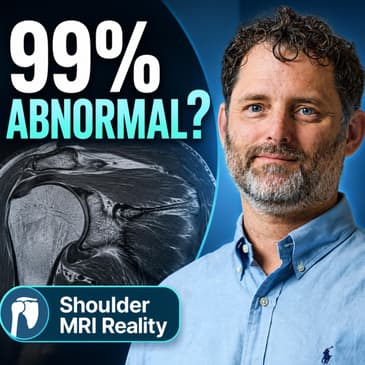
In this episode, host Leda McDaniel speaks with Dr. Thomas Ibounig, shoulder and elbow surgeon at Helsinki University Hospital and researcher with the Finnish Centre for Evidence-Based Orthopaedics.
Dr. Ibounig discusses his 2026 JAMA study, “Incidental Rotator Cuff Abnormalities on Magnetic Resonance Imaging.” The conversation explores how common rotator cuff abnormalities are on MRI, including in asymptomatic individuals, and what that means for clinicians interpreting imaging findings in patients with shoulder pain.
The study used a representative Finnish population sample, bilateral 3 Tesla MRI imaging, shoulder surgeon clinical examination, and extensive questionnaire data to examine the relationship between imaging findings, symptoms, clinical tests, and broader patient factors.
Dr. Ibounig explains why MRI findings and isolated clinical tests may not identify the source of pain as reliably as clinicians often assume. He also discusses why terminology matters when explaining imaging to patients, how structural findings can become over-medicalized, and why future research needs to look beyond anatomy toward psychological, occupational, metabolic, and longitudinal contributors to shoulder pain.
This episode is especially relevant for orthopedic manual physical therapists, surgeons, sports clinicians, educators, and anyone helping patients make sense of shoulder MRI findings.
Link to referenced study:
https://jamanetwork.com/journals/jamainternalmedicine/fullarticle/2844659
Key Takeaways
- MRI abnormalities are extremely common after age 40.
- Dr. Ibounig reports that nearly every shoulder over 40 in the study showed some abnormality on MRI.
- Abnormal does not always mean pathological.
- Findings such as tendinopathy, partial-thickness tears, and even some full-thickness tears may be part of aging rather than the clear source of symptoms.
- Symptoms and imaging do not map cleanly.
- Full-thickness rotator cuff tears were more common in symptomatic shoulders, but many findings were also present in asymptomatic shoulders.
- Clinical tests may not add as much certainty as clinicians hope.
- Even a thorough clinical exam did not clearly improve the ability to distinguish symptomatic from asymptomatic rotator cuff findings.
- Language matters.
- Telling a patient their shoulder is “torn” or “broken” can create fear, even when the finding may be common for their age.
- Shoulder pain needs a broader explanatory model.
- Dr. Ibounig emphasizes that future research should explore pain mechanisms beyond structure, including psychological, metabolic, occupational, and longitudinal factors.
- Clinical humility is essential.
- One of the episode’s strongest messages is that experience often brings less certainty, not more.
00:00:04 --> 00:00:04 Okay, great.
00:00:04 --> 00:00:05 I think we're rolling.
00:00:06 --> 00:00:09 Welcome to AAOMPT hands-on,
00:00:09 --> 00:00:11 hands-off podcast.
00:00:11 --> 00:00:12 My name is Lita McDaniel.
00:00:12 --> 00:00:15 I am a physical therapist and a fellow
00:00:15 --> 00:00:16 of AOMPT,
00:00:17 --> 00:00:18 and I have the extreme pleasure of
00:00:19 --> 00:00:21 speaking with Dr. Thomas Ibunig today,
00:00:22 --> 00:00:25 who is the primary author on a recent
00:00:25 --> 00:00:27 study that came out in twenty twenty six
00:00:28 --> 00:00:28 in JAMA.
00:00:30 --> 00:00:33 that we will be talking about today titled
00:00:33 --> 00:00:36 incidental rotator cuff abnormalities on
00:00:36 --> 00:00:38 magnetic resonance imaging.
00:00:40 --> 00:00:40 Welcome, Thomas.
00:00:41 --> 00:00:43 Thanks so much for being with us today.
00:00:44 --> 00:00:44 Pleasure to be here.
00:00:46 --> 00:00:48 And just a brief introduction, Dr.
00:00:49 --> 00:00:51 Obonig is a shoulder and elbow surgeon at
00:00:51 --> 00:00:53 Helsinki University Hospital.
00:00:54 --> 00:00:55 And he's also a part-time researcher at
00:00:55 --> 00:00:58 the Finnish Center for Evidence-Based
00:00:58 --> 00:00:58 Orthopedics.
00:00:59 --> 00:01:01 So he's joining us from Helsinki.
00:01:01 --> 00:01:02 So we're quite lucky.
00:01:03 --> 00:01:06 As we kind of kick off the conversation,
00:01:06 --> 00:01:08 I was wondering if you might just briefly
00:01:08 --> 00:01:10 describe your clinical and research
00:01:10 --> 00:01:13 background and some of your interests as a
00:01:13 --> 00:01:14 clinician and researcher.
00:01:16 --> 00:01:18 Yeah, as you introduced,
00:01:18 --> 00:01:19 I'm a shoulder and elbow surgeon at the
00:01:20 --> 00:01:21 Helsinki University Hospital.
00:01:22 --> 00:01:23 And that, of course,
00:01:23 --> 00:01:26 involves clinical work and doing
00:01:26 --> 00:01:26 surgeries.
00:01:27 --> 00:01:29 But then I'm also very interested in
00:01:29 --> 00:01:32 research because I think it widens our
00:01:32 --> 00:01:35 perspective on things.
00:01:35 --> 00:01:36 And then on the other hand,
00:01:36 --> 00:01:38 the clinical work keeps us grounded and
00:01:38 --> 00:01:39 then connected to the patients.
00:01:41 --> 00:01:42 So I really like that setup that it's
00:01:43 --> 00:01:45 part-time research and part-time clinical
00:01:45 --> 00:01:45 work.
00:01:46 --> 00:01:47 That's excellent.
00:01:47 --> 00:01:49 And could you speak to a little bit
00:01:49 --> 00:01:51 of your kind of inspirations or research
00:01:51 --> 00:01:54 interests that led you into this
00:01:54 --> 00:01:56 particular study and some of your other
00:01:56 --> 00:01:56 work?
00:01:58 --> 00:01:59 Well, by nature,
00:01:59 --> 00:02:02 I always like to understand what I'm doing
00:02:02 --> 00:02:03 before I'm doing it.
00:02:03 --> 00:02:06 So I'm very, very much into
00:02:06 --> 00:02:09 not only treating and treatment outcomes,
00:02:09 --> 00:02:11 but what we are treating,
00:02:11 --> 00:02:12 why we are treating it,
00:02:13 --> 00:02:16 what's behind the rationale of our
00:02:16 --> 00:02:16 treatments.
00:02:18 --> 00:02:22 I think that during my specialization,
00:02:22 --> 00:02:25 I was always looking at studies and
00:02:25 --> 00:02:30 treatments and I found somehow there was a
00:02:30 --> 00:02:32 dissonance between what we are doing and
00:02:32 --> 00:02:32 treating
00:02:33 --> 00:02:36 and what we know about imaging findings,
00:02:37 --> 00:02:40 how common abnormal imaging findings are
00:02:41 --> 00:02:41 in other joints.
00:02:41 --> 00:02:42 For example,
00:02:42 --> 00:02:46 a very important study for me was the
00:02:46 --> 00:02:50 study on meniscal tears published in NAME
00:02:50 --> 00:02:52 in two thousand and eight.
00:02:52 --> 00:02:56 So that really opened my mind or my
00:02:56 --> 00:02:58 eyes because I was coping a lot of
00:02:58 --> 00:03:02 knees and resecting meniscus and the
00:03:02 --> 00:03:03 patients
00:03:04 --> 00:03:06 came to our outpatient department after
00:03:06 --> 00:03:08 three months and they were really happy
00:03:08 --> 00:03:11 with the knee and so it was kind
00:03:11 --> 00:03:13 of hard to understand why we shouldn't be
00:03:13 --> 00:03:14 doing that but then when I saw the
00:03:14 --> 00:03:17 study that actually those meniscal tears
00:03:17 --> 00:03:20 are as common in people without pain as
00:03:20 --> 00:03:23 in patients then I really started to think
00:03:23 --> 00:03:24 that something is not fitting into that
00:03:25 --> 00:03:27 picture and something isn't right and are
00:03:27 --> 00:03:30 we treating the right things or is
00:03:31 --> 00:03:32 Is there something else involved?
00:03:32 --> 00:03:36 So that's how I started to dig into
00:03:36 --> 00:03:38 that subject.
00:03:39 --> 00:03:40 Yeah, that's great background.
00:03:41 --> 00:03:42 I think that's really interesting as well.
00:03:43 --> 00:03:45 So that kind of leads us naturally into
00:03:45 --> 00:03:47 the study that we're here to discuss with
00:03:47 --> 00:03:48 you today.
00:03:48 --> 00:03:51 So would you mind kind of giving us
00:03:52 --> 00:03:54 the background of the motivation for this
00:03:54 --> 00:03:58 particular study and how you got such a
00:03:58 --> 00:03:58 large...
00:03:59 --> 00:04:01 study off the ground like this by my
00:04:01 --> 00:04:03 last count there are eighteen authors on
00:04:03 --> 00:04:06 this study uh it's quite an undertaking so
00:04:07 --> 00:04:08 the study that we're referring to if
00:04:08 --> 00:04:11 you're just jumping in with us is the
00:04:11 --> 00:04:13 recent jama study from twenty twenty six
00:04:13 --> 00:04:15 incidental rotator cuff abnormalities on
00:04:15 --> 00:04:21 magnetic resonance imaging yeah so as i'm
00:04:21 --> 00:04:23 a shoulder and elbow surgeon i i wanted
00:04:23 --> 00:04:25 to see or to find out or get
00:04:25 --> 00:04:28 a better picture on how and because of
00:04:28 --> 00:04:29 course
00:04:30 --> 00:04:32 as a surgeon we are very much into
00:04:32 --> 00:04:35 fixing things where we like to to look
00:04:35 --> 00:04:39 at structures identify structures uh find
00:04:39 --> 00:04:40 out what's broken and then we start fixing
00:04:41 --> 00:04:43 it so so very very much into into
00:04:43 --> 00:04:46 that and and too too little in in
00:04:47 --> 00:04:50 into other things probably but uh so so
00:04:50 --> 00:04:50 then
00:04:51 --> 00:04:52 Then I wanted to see, well,
00:04:52 --> 00:04:53 how does the shoulder look like?
00:04:53 --> 00:04:54 What's normal?
00:04:54 --> 00:04:55 What's abnormal?
00:04:55 --> 00:04:57 Before we start treating something as
00:04:57 --> 00:04:57 abnormal,
00:04:57 --> 00:05:00 we first need to have a baseline on
00:05:00 --> 00:05:01 what's normal and what's not normal.
00:05:03 --> 00:05:06 And we have, of course,
00:05:06 --> 00:05:10 some studies showing us that some of those
00:05:10 --> 00:05:12 changes we are treating are actually quite
00:05:12 --> 00:05:13 common in people without pain,
00:05:13 --> 00:05:17 but then some representative large studies
00:05:17 --> 00:05:18 from the general population
00:05:19 --> 00:05:21 we were actually lacking at that point and
00:05:21 --> 00:05:24 that was the reason why we planned this
00:05:24 --> 00:05:27 study and as you said it's quite a
00:05:27 --> 00:05:29 large study and we have eighteen authors
00:05:29 --> 00:05:29 but
00:05:30 --> 00:05:32 This study is based on the health to
00:05:32 --> 00:05:34 thousand survey that was performed in
00:05:34 --> 00:05:34 Finland.
00:05:34 --> 00:05:36 That was much, much bigger.
00:05:36 --> 00:05:37 So there were like hundreds of doctors
00:05:37 --> 00:05:40 involved all over Finland in doing the
00:05:40 --> 00:05:44 health to a thousand study and setting up
00:05:44 --> 00:05:49 that large study with just a couple of
00:05:50 --> 00:05:52 or ten to fifteen people was actually
00:05:52 --> 00:05:53 quite an undertaking.
00:05:53 --> 00:05:55 And it took us a long time over
00:05:55 --> 00:05:57 ten years to plan, get funding,
00:05:58 --> 00:05:59 get everything set up.
00:06:01 --> 00:06:05 uh before we could get rolling yeah yeah
00:06:06 --> 00:06:09 absolutely so you did mention that the
00:06:09 --> 00:06:12 sample was um kind of a sub sample
00:06:12 --> 00:06:14 from this broader health two thousand
00:06:14 --> 00:06:17 study getting into the study design for
00:06:17 --> 00:06:20 your particular study on mri in shoulder
00:06:20 --> 00:06:21 um
00:06:23 --> 00:06:26 Can you talk about the sampling process
00:06:26 --> 00:06:29 and selection and how you chose the.
00:06:30 --> 00:06:33 Population to get in touch with and screen
00:06:33 --> 00:06:35 and things like that for your particular
00:06:35 --> 00:06:35 study.
00:06:36 --> 00:06:37 Yeah,
00:06:37 --> 00:06:39 so that was one of the questions right
00:06:39 --> 00:06:40 from the start.
00:06:40 --> 00:06:41 Do we want to.
00:06:41 --> 00:06:43 Base our sample on.
00:06:44 --> 00:06:46 an already existing sample or do we want
00:06:46 --> 00:06:48 to draw a completely new sample from the
00:06:48 --> 00:06:49 general population?
00:06:50 --> 00:06:51 And of course now we are orthopedic
00:06:51 --> 00:06:53 surgeons or my research group is mainly,
00:06:54 --> 00:06:56 was mainly consisting of orthopedic
00:06:56 --> 00:06:57 surgeons.
00:06:57 --> 00:06:59 So we don't have a lot of expertise
00:06:59 --> 00:06:59 into that,
00:06:59 --> 00:07:03 but luckily we got in contact with the
00:07:03 --> 00:07:05 National Institute of Health and Welfare
00:07:05 --> 00:07:08 and epidemiologists that helped us think
00:07:08 --> 00:07:10 about those questions and
00:07:10 --> 00:07:13 and we we decided to to go with
00:07:13 --> 00:07:16 a previous sample because one thing that
00:07:16 --> 00:07:18 we have not yet published but that we
00:07:18 --> 00:07:20 want to look at a look at is
00:07:20 --> 00:07:24 also a longitudinal uh aspects like we we
00:07:24 --> 00:07:27 have from the health two thousand study a
00:07:27 --> 00:07:30 lot of things uh collected in in the
00:07:30 --> 00:07:33 year two thousand uh risk factors uh
00:07:33 --> 00:07:37 lifestyle um blood samples working history
00:07:38 --> 00:07:38 that we
00:07:40 --> 00:07:43 intend to analyze and look at how do
00:07:43 --> 00:07:46 these things affect both shoulder
00:07:46 --> 00:07:47 symptoms,
00:07:47 --> 00:07:49 but also imaging findings in the long
00:07:49 --> 00:07:49 term.
00:07:49 --> 00:07:51 So that was one reason why we wanted
00:07:51 --> 00:07:53 to use that old sample.
00:07:55 --> 00:07:58 And the other reason was that we know
00:07:58 --> 00:08:00 that nowadays a general health surveys
00:08:01 --> 00:08:03 have a participation rate of fifty around
00:08:03 --> 00:08:05 fifty if we are good at it.
00:08:06 --> 00:08:07 And that, of course,
00:08:07 --> 00:08:08 always leads to a selection bias.
00:08:08 --> 00:08:11 And then you cannot be completely sure how
00:08:11 --> 00:08:13 representative your population in the end
00:08:13 --> 00:08:14 is.
00:08:14 --> 00:08:16 But using the health two thousand study
00:08:17 --> 00:08:19 that had a participation rate of eighty
00:08:19 --> 00:08:22 nine percent made us
00:08:23 --> 00:08:25 made us able that although in our sub
00:08:25 --> 00:08:27 study, we did not reach that.
00:08:27 --> 00:08:29 Eighty nine percent of the patient rate,
00:08:29 --> 00:08:32 but we knew what would have been a
00:08:32 --> 00:08:36 representative sample and we could control
00:08:36 --> 00:08:38 for it and also make statistical
00:08:38 --> 00:08:43 adjustments so that in our final results,
00:08:43 --> 00:08:45 we got a representative sample of the
00:08:45 --> 00:08:47 general Finnish population.
00:08:49 --> 00:08:49 Yeah, that's great.
00:08:49 --> 00:08:51 That was definitely clear in how you
00:08:51 --> 00:08:52 described it in the paper.
00:08:52 --> 00:08:54 And thanks for explaining that for our
00:08:54 --> 00:08:54 audience.
00:08:54 --> 00:08:57 I think that's an important point that you
00:08:57 --> 00:08:59 were doing the best you could to make
00:08:59 --> 00:09:00 sure that it was representative.
00:09:01 --> 00:09:03 So describe for us a little bit about
00:09:03 --> 00:09:05 what you did in this study and what
00:09:05 --> 00:09:05 you all found.
00:09:07 --> 00:09:11 So then going back or coming back to
00:09:12 --> 00:09:13 being representative, of course,
00:09:13 --> 00:09:15 we had to make some
00:09:16 --> 00:09:17 some cut-offs.
00:09:17 --> 00:09:20 So we wanted to have a modern imaging,
00:09:20 --> 00:09:22 three Tesla MRI pictures,
00:09:23 --> 00:09:24 and they were not available, of course,
00:09:24 --> 00:09:25 all over Finland in smaller villages.
00:09:25 --> 00:09:30 So we had to cut some corners and
00:09:30 --> 00:09:32 restrict our sample to the five university
00:09:32 --> 00:09:33 hospital districts.
00:09:33 --> 00:09:34 But actually,
00:09:34 --> 00:09:35 the majority of the Finnish population
00:09:36 --> 00:09:38 lives within those areas.
00:09:38 --> 00:09:44 So that was one of our main things
00:09:44 --> 00:09:45 that we
00:09:46 --> 00:09:48 based on our study on the five university
00:09:48 --> 00:09:49 hospital districts,
00:09:52 --> 00:09:55 three Tesla MRI imaging of both shoulders,
00:09:55 --> 00:09:58 and then also a thorough clinical
00:09:58 --> 00:10:00 examination by shoulder surgeons,
00:10:01 --> 00:10:04 and then also a variety of questionnaires
00:10:04 --> 00:10:04 assessing
00:10:06 --> 00:10:08 basic health parameters,
00:10:08 --> 00:10:10 lifestyle risk factors,
00:10:12 --> 00:10:13 and then also shoulder-specific and
00:10:13 --> 00:10:15 work-specific questions.
00:10:15 --> 00:10:18 Also a lot of psychological questions on
00:10:18 --> 00:10:21 pain catastrophizing, pain self-efficacy,
00:10:22 --> 00:10:23 anxiety and depression,
00:10:23 --> 00:10:24 and stuff like that.
00:10:27 --> 00:10:27 Great.
00:10:27 --> 00:10:30 And so putting all this data together,
00:10:31 --> 00:10:33 what are your takeaways from the study?
00:10:34 --> 00:10:36 How did you can you describe a little
00:10:36 --> 00:10:40 bit about how you analyze the data?
00:10:40 --> 00:10:42 And there was some discussion of different
00:10:43 --> 00:10:44 regression models within the paper,
00:10:45 --> 00:10:47 but I'm curious your insight into
00:10:48 --> 00:10:49 the choices for the three different
00:10:49 --> 00:10:52 regression models that were described and
00:10:52 --> 00:10:54 how you tried to make sense of the
00:10:54 --> 00:10:56 potential relationships between as you
00:10:56 --> 00:10:58 described not only the imaging findings
00:10:59 --> 00:11:02 but quite a comprehensive clinical battery
00:11:02 --> 00:11:05 of tests with sheer credit we think about
00:11:05 --> 00:11:07 a lot as orthopedic manual physical
00:11:07 --> 00:11:10 therapists of utilizing imaging as not a
00:11:10 --> 00:11:13 standalone finding but as part of our
00:11:13 --> 00:11:16 information that we analyze in conjunction
00:11:16 --> 00:11:17 with
00:11:17 --> 00:11:19 quite a thorough clinical exam we kind of
00:11:19 --> 00:11:21 pride ourselves on that so how do you
00:11:21 --> 00:11:23 do that from a research standpoint
00:11:23 --> 00:11:25 factoring in all of those different
00:11:26 --> 00:11:27 variables to try to make sense of it
00:11:29 --> 00:11:31 yeah that's that's a good question of
00:11:31 --> 00:11:34 course not not an easy not an easy
00:11:35 --> 00:11:36 question to to tackle because there are
00:11:36 --> 00:11:38 many different ways and probably not none
00:11:38 --> 00:11:40 of those ways are completely perfect but
00:11:40 --> 00:11:42 so i think that what what we achieved
00:11:42 --> 00:11:45 with our sample was that we we we
00:11:45 --> 00:11:47 got a very very good um
00:11:48 --> 00:11:51 certainty on the prevalence of those
00:11:51 --> 00:11:53 imaging findings in asymptomatic and
00:11:53 --> 00:11:57 symptomatic shoulders but then of course
00:11:58 --> 00:12:01 those imaging findings and symptoms they
00:12:01 --> 00:12:04 could be caused for example looking at the
00:12:04 --> 00:12:06 shoulder also by other structures not only
00:12:06 --> 00:12:08 the rotator cuff so how do you want
00:12:08 --> 00:12:10 to make sure that not
00:12:11 --> 00:12:13 osteoarthritis of the shoulder,
00:12:13 --> 00:12:14 AC joint problem,
00:12:15 --> 00:12:17 biceps problems are the cause of symptoms.
00:12:18 --> 00:12:19 So the first adjustment
00:12:19 --> 00:12:22 that we performed in addition to the
00:12:22 --> 00:12:25 adjustment according to age, sex,
00:12:25 --> 00:12:26 region and education,
00:12:26 --> 00:12:30 which would be general risk factors or
00:12:31 --> 00:12:32 factors affecting prevalence.
00:12:33 --> 00:12:35 So we looked at other imaging findings and
00:12:35 --> 00:12:36 adjusted for those.
00:12:37 --> 00:12:39 And we saw that the difference in
00:12:39 --> 00:12:40 prevalence between symptomatic and
00:12:40 --> 00:12:43 asymptomatic shoulders was reduced a
00:12:43 --> 00:12:45 little bit regarding full thickness
00:12:45 --> 00:12:46 rotator cuff tears.
00:12:47 --> 00:12:51 So when the difference in prevalence in
00:12:51 --> 00:12:53 our base sample was eight point one
00:12:53 --> 00:12:53 percent,
00:12:54 --> 00:12:56 six point five percent in asymptomatic
00:12:56 --> 00:12:58 shoulders and fourteen point six percent
00:12:58 --> 00:12:59 in symptomatic shoulders.
00:13:01 --> 00:13:03 Then after adjusting for these other
00:13:03 --> 00:13:04 imaging abnormalities,
00:13:05 --> 00:13:08 the prevalence difference was reduced to
00:13:08 --> 00:13:09 six point seven percent,
00:13:09 --> 00:13:10 so a little bit reduced.
00:13:11 --> 00:13:14 And then we thought, OK, well,
00:13:14 --> 00:13:15 no one is treating
00:13:16 --> 00:13:20 uh or at least no no surgeon admits
00:13:20 --> 00:13:22 that he's he or she is treating only
00:13:23 --> 00:13:25 based on imaging findings alone so of
00:13:25 --> 00:13:26 course we have the clinic clinical
00:13:26 --> 00:13:29 examination playing playing a very big
00:13:30 --> 00:13:32 role into that so we also wanted to
00:13:32 --> 00:13:32 look well
00:13:33 --> 00:13:36 How does clinical examination findings,
00:13:37 --> 00:13:38 if we use those,
00:13:38 --> 00:13:41 we should be able to better identify those
00:13:41 --> 00:13:44 with symptoms and those with no symptoms,
00:13:45 --> 00:13:47 symptomatic rotator cuff tears.
00:13:48 --> 00:13:51 And we were really surprised or we were
00:13:51 --> 00:13:53 on one hand surprised and then on the
00:13:53 --> 00:13:55 other hand not surprised that actually the
00:13:55 --> 00:13:57 difference diminished completely and we
00:13:57 --> 00:13:57 didn't get
00:13:58 --> 00:14:01 any improvement in in our diagnostics
00:14:02 --> 00:14:06 using these clinical tests um and i think
00:14:06 --> 00:14:09 that's also i think that orthopedic
00:14:09 --> 00:14:13 surgeons are not good at or very
00:14:14 --> 00:14:16 structural orientated but from what i
00:14:18 --> 00:14:19 From my experience,
00:14:19 --> 00:14:22 although physiotherapists are much better
00:14:22 --> 00:14:25 in accepting the fact that pain or
00:14:25 --> 00:14:27 symptoms are not only based on structural
00:14:27 --> 00:14:27 problems,
00:14:28 --> 00:14:31 I think where physical therapists also are
00:14:31 --> 00:14:33 a little bit biased probably is those
00:14:33 --> 00:14:35 clinical maneuvers and clinical
00:14:36 --> 00:14:36 examination.
00:14:36 --> 00:14:38 We're very fond and proud of
00:14:39 --> 00:14:41 all our maneuvers that we have and then
00:14:41 --> 00:14:44 we are really especially when we are
00:14:44 --> 00:14:47 really experienced very much able to
00:14:47 --> 00:14:53 identify with certain maneuvers the cause
00:14:53 --> 00:14:56 of pain and symptoms but then when we
00:14:56 --> 00:14:59 look at the literature actually no first
00:14:59 --> 00:15:01 of all i think that also regarding
00:15:01 --> 00:15:04 clinical examination we have some lack of
00:15:04 --> 00:15:07 good studies but but those studies that we
00:15:07 --> 00:15:08 have actually showed at our
00:15:10 --> 00:15:12 isolated clinical examination maneuvers
00:15:13 --> 00:15:15 are like the flip of a coin mostly.
00:15:15 --> 00:15:17 So they also don't seem to help us
00:15:18 --> 00:15:21 on their own as much as we would
00:15:21 --> 00:15:21 think.
00:15:23 --> 00:15:25 And then I think it's putting all those
00:15:26 --> 00:15:28 things together and that's really
00:15:28 --> 00:15:32 difficult to, at least at the moment,
00:15:32 --> 00:15:34 I think that AI might help us in
00:15:34 --> 00:15:34 this,
00:15:34 --> 00:15:36 but putting all those small pieces of the
00:15:36 --> 00:15:37 puzzle together
00:15:38 --> 00:15:41 uh and and doing research on that is
00:15:41 --> 00:15:45 really difficult so although single
00:15:45 --> 00:15:47 maneuvers or a single image might not be
00:15:47 --> 00:15:50 able to to show us the cause of
00:15:50 --> 00:15:54 pain at least with a very high certainty
00:15:55 --> 00:15:57 putting all those stuff together might
00:15:57 --> 00:15:58 help us a little bit more.
00:15:58 --> 00:16:00 In our model, it did not work out.
00:16:00 --> 00:16:03 And I don't think that single maneuvers
00:16:03 --> 00:16:05 are very good or a single imaging,
00:16:05 --> 00:16:07 but then there might be some things and
00:16:07 --> 00:16:10 maybe it's even more patient history or
00:16:10 --> 00:16:13 patient baseline characteristics that play
00:16:13 --> 00:16:18 a bigger role in showing us what's the
00:16:18 --> 00:16:20 cause of symptoms in each individual
00:16:20 --> 00:16:20 patients.
00:16:20 --> 00:16:22 Because I think that it probably
00:16:23 --> 00:16:26 depends a lot on the person where the
00:16:26 --> 00:16:28 pain comes from.
00:16:28 --> 00:16:30 Yeah, I think those are great insights.
00:16:30 --> 00:16:33 And I think you're right that we tend
00:16:33 --> 00:16:36 to have some bias to think that our
00:16:36 --> 00:16:39 clinical examination findings are a little
00:16:39 --> 00:16:41 bit more robust or allow us to diagnose,
00:16:41 --> 00:16:44 but we need to take the same
00:16:45 --> 00:16:48 research-based lens to those tests as we
00:16:48 --> 00:16:51 do to a standalone imaging finding.
00:16:51 --> 00:16:53 So just to come back to what you
00:16:53 --> 00:16:53 were describing,
00:16:54 --> 00:16:55 and if I'm understanding correctly,
00:16:56 --> 00:16:57 what you're basically saying is the
00:16:58 --> 00:17:00 addition of those clinical examination
00:17:00 --> 00:17:03 tests did not improve the ability to use
00:17:04 --> 00:17:07 imaging to detect asymptomatic rotator
00:17:07 --> 00:17:08 cuff tear.
00:17:08 --> 00:17:11 Is that what you're describing from the
00:17:11 --> 00:17:12 study findings?
00:17:12 --> 00:17:14 And then can you talk a little bit
00:17:14 --> 00:17:15 more about just
00:17:15 --> 00:17:17 one of the big findings that we've kind
00:17:17 --> 00:17:20 of danced around but the high prevalence
00:17:20 --> 00:17:23 of asymptomatic pathology that showed up
00:17:23 --> 00:17:27 on imaging yeah yeah so exactly so so
00:17:27 --> 00:17:29 using and and and we did a really
00:17:29 --> 00:17:33 thorough uh battery of of clinical tests
00:17:33 --> 00:17:36 so we used all basically all commonly used
00:17:36 --> 00:17:40 rotator cuff tests both pain provocation
00:17:40 --> 00:17:42 tests and then also only functional tests
00:17:42 --> 00:17:43 measuring strength
00:17:44 --> 00:17:45 and lag signs.
00:17:46 --> 00:17:47 And we looked at both of these,
00:17:48 --> 00:17:51 both pain provocation and strength or
00:17:51 --> 00:17:53 functional measurements also separately
00:17:54 --> 00:17:55 because we wanted to see, well,
00:17:55 --> 00:17:57 maybe pain does not tell us as much,
00:17:57 --> 00:18:00 but maybe those functional impairments
00:18:00 --> 00:18:03 help us to identify those symptomatic
00:18:03 --> 00:18:03 tears better.
00:18:04 --> 00:18:07 But it did not help us.
00:18:08 --> 00:18:08 And of course,
00:18:08 --> 00:18:11 one explanation for that could be
00:18:12 --> 00:18:14 that the majority of full thickness
00:18:14 --> 00:18:17 rotator cuff tears that we found were
00:18:17 --> 00:18:18 quite small,
00:18:19 --> 00:18:23 small supraspinatus tears where you
00:18:23 --> 00:18:30 probably would not expect a large strength
00:18:30 --> 00:18:32 deficit or functional impairment.
00:18:33 --> 00:18:34 And then again, pain,
00:18:34 --> 00:18:36 if we're just looking at pain,
00:18:36 --> 00:18:37 then a small rotator cuff tear or no
00:18:37 --> 00:18:41 tear could be as painful the shoulder.
00:18:42 --> 00:18:43 So maybe it's related to that,
00:18:43 --> 00:18:45 but still it just shows that there is
00:18:46 --> 00:18:50 a lot of uncertainty both around imaging
00:18:50 --> 00:18:54 and those clinical tests that just needs
00:18:54 --> 00:18:57 further investigations.
00:18:58 --> 00:18:59 But yeah,
00:18:59 --> 00:19:01 as you said that one of our findings
00:19:01 --> 00:19:03 or the most important finding was that
00:19:03 --> 00:19:05 basically every shoulder over the age of
00:19:05 --> 00:19:07 forty had some abnormalities on the scan.
00:19:09 --> 00:19:11 Ninety nine percent altogether.
00:19:11 --> 00:19:12 Of course,
00:19:13 --> 00:19:15 here we also have to again look at
00:19:15 --> 00:19:18 what kind of abnormality we're talking
00:19:18 --> 00:19:18 about.
00:19:18 --> 00:19:21 So majority of these abnormalities in
00:19:21 --> 00:19:22 younger age groups
00:19:23 --> 00:19:26 were tendinopathy and then partial
00:19:26 --> 00:19:26 thickness tears.
00:19:27 --> 00:19:30 But then as age increased, we didn't find,
00:19:30 --> 00:19:30 for example,
00:19:30 --> 00:19:32 any full thickness tear in in forty year
00:19:32 --> 00:19:32 olds.
00:19:33 --> 00:19:34 But over the age of forty five,
00:19:35 --> 00:19:38 those full thickness tears started to
00:19:38 --> 00:19:38 appear.
00:19:38 --> 00:19:40 And then over the age of seventy,
00:19:41 --> 00:19:45 they were already over twenty percent in
00:19:45 --> 00:19:45 cases.
00:19:48 --> 00:19:48 And yeah,
00:19:48 --> 00:19:51 so what was also surprising was that there
00:19:51 --> 00:19:53 was actually quite a high percentage of
00:19:53 --> 00:19:54 partial thickness tears.
00:19:55 --> 00:19:57 In our overall sample,
00:19:57 --> 00:20:00 there were over sixty percent of those
00:20:00 --> 00:20:03 partial thickness tears and there was no
00:20:03 --> 00:20:06 difference at all between the symptomatic
00:20:06 --> 00:20:09 and asymptomatic shoulders regarding those
00:20:09 --> 00:20:10 partial thickness tears.
00:20:12 --> 00:20:14 Yeah, it's quite profound,
00:20:14 --> 00:20:15 just the high percentage and some of the
00:20:15 --> 00:20:16 graphics in the article,
00:20:17 --> 00:20:20 how many individuals have shoulder
00:20:20 --> 00:20:22 pathology on imaging that are
00:20:22 --> 00:20:22 asymptomatic.
00:20:22 --> 00:20:26 So I think that's quite important to our
00:20:26 --> 00:20:27 overall research base.
00:20:27 --> 00:20:29 So commend you all for adding that to
00:20:29 --> 00:20:31 what we know about this issue.
00:20:33 --> 00:20:35 I guess my next question would be to
00:20:35 --> 00:20:37 kind of describe how you think that this
00:20:38 --> 00:20:39 fits into our broader understanding of
00:20:39 --> 00:20:40 shoulder pain,
00:20:40 --> 00:20:42 how we diagnose shoulder pain,
00:20:42 --> 00:20:42 how we treat it.
00:20:43 --> 00:20:45 You alluded to the fact early on as
00:20:45 --> 00:20:46 a surgeon,
00:20:46 --> 00:20:48 it kind of changes maybe some of your
00:20:48 --> 00:20:49 treatment habits.
00:20:49 --> 00:20:50 choices.
00:20:50 --> 00:20:52 Can you speak to that after doing this
00:20:52 --> 00:20:53 specific study?
00:20:53 --> 00:20:55 And you mentioned the meniscus study,
00:20:55 --> 00:20:57 but now that you have been a part
00:20:57 --> 00:20:59 of this research and have seen what goes
00:20:59 --> 00:21:01 on in shoulders potentially in this
00:21:01 --> 00:21:01 sample,
00:21:02 --> 00:21:03 how does this inform your clinical
00:21:03 --> 00:21:05 practice and what are your recommendations
00:21:05 --> 00:21:10 for our broader orthopedic community?
00:21:10 --> 00:21:10 Well,
00:21:12 --> 00:21:14 Not only this study, but overall the,
00:21:15 --> 00:21:17 the older I get and the more experienced
00:21:17 --> 00:21:18 I experience,
00:21:18 --> 00:21:21 I get the less sure I am what
00:21:21 --> 00:21:22 I'm actually doing.
00:21:22 --> 00:21:25 So as a, as a young doctor, uh,
00:21:25 --> 00:21:28 fresh from med school, you're quite soon,
00:21:29 --> 00:21:30 uh, get to a point where I think,
00:21:30 --> 00:21:30 you know,
00:21:30 --> 00:21:32 everything and you understand everything
00:21:32 --> 00:21:33 and that's how you should be doing it.
00:21:33 --> 00:21:34 And,
00:21:34 --> 00:21:35 and the more I look into this and
00:21:35 --> 00:21:36 the more I think about it,
00:21:37 --> 00:21:38 the less sure I'm,
00:21:38 --> 00:21:40 I don't think that at the moment we
00:21:40 --> 00:21:40 are.
00:21:41 --> 00:21:43 And I'm not talking about trauma and
00:21:43 --> 00:21:46 fractures and real injuries,
00:21:46 --> 00:21:52 but all those non-traumatic pain problems
00:21:52 --> 00:21:53 that we have,
00:21:54 --> 00:21:56 I'm not sure that we know at all
00:21:56 --> 00:21:56 what we are doing.
00:21:58 --> 00:22:01 And the majority of research is focused on
00:22:02 --> 00:22:05 just comparing different treatment methods
00:22:05 --> 00:22:08 or looking at new methods to treat.
00:22:08 --> 00:22:10 But I think that we should just put
00:22:10 --> 00:22:10 more effort
00:22:11 --> 00:22:14 first into understanding where does pain
00:22:14 --> 00:22:16 come from what's the reason of pain how
00:22:16 --> 00:22:20 do we identify the cause of pain in
00:22:20 --> 00:22:22 each individual patients because i'm sure
00:22:22 --> 00:22:24 that there are some rotator cuff tears for
00:22:24 --> 00:22:26 example that are the cause of symptoms and
00:22:26 --> 00:22:29 then there is so many of those that
00:22:29 --> 00:22:31 that don't explain the symptoms but how do
00:22:31 --> 00:22:31 we
00:22:33 --> 00:22:35 identify the right ones and then target
00:22:35 --> 00:22:37 the right treatment at those patients.
00:22:38 --> 00:22:39 I don't think that we have the answer
00:22:39 --> 00:22:39 yet.
00:22:40 --> 00:22:44 Our study, I think, provides some answers,
00:22:44 --> 00:22:48 but it even poses more questions on
00:22:48 --> 00:22:52 unsolved issues that we first need to
00:22:52 --> 00:22:54 understand that we know too little,
00:22:54 --> 00:22:56 and then in the next step,
00:22:57 --> 00:23:01 focus more on those basic basic studies to
00:23:01 --> 00:23:04 help us improve our understanding on pain
00:23:04 --> 00:23:05 pathologies
00:23:06 --> 00:23:08 Yeah, well said.
00:23:08 --> 00:23:10 So if you were to give advice to
00:23:10 --> 00:23:11 our clinicians out there,
00:23:11 --> 00:23:13 whether those are medical doctors in
00:23:13 --> 00:23:16 orthopedics or a lot of our audience are
00:23:16 --> 00:23:19 physiotherapists in orthopedics or
00:23:19 --> 00:23:22 OMPT-related practices,
00:23:23 --> 00:23:24 what would you say are the clinical
00:23:24 --> 00:23:26 takeaways from a study like this,
00:23:27 --> 00:23:29 and how could it inform our clinical care
00:23:29 --> 00:23:31 to be more evidence-based?
00:23:33 --> 00:23:36 So one takeaway is that imaging findings
00:23:36 --> 00:23:39 or then abnormal clinical examination
00:23:39 --> 00:23:42 findings are very common and both in
00:23:42 --> 00:23:44 symptomatic and asymptomatic persons.
00:23:44 --> 00:23:54 And we should before we too quickly target
00:23:54 --> 00:23:58 or well,
00:23:58 --> 00:24:01 let's maybe let's start that one new.
00:24:04 --> 00:24:07 I think that terminology is extremely
00:24:07 --> 00:24:08 important.
00:24:08 --> 00:24:14 So what we find and how we translate
00:24:14 --> 00:24:16 those findings to the patients is
00:24:16 --> 00:24:17 extremely important.
00:24:17 --> 00:24:19 We can cause a lot of damage.
00:24:20 --> 00:24:20 For example,
00:24:20 --> 00:24:22 if we have an imaging finding and we
00:24:22 --> 00:24:24 know that ninety nine percent of persons
00:24:24 --> 00:24:25 will have that imaging finding.
00:24:26 --> 00:24:27 And then we tell a patient,
00:24:28 --> 00:24:29 you have a tear or you have something
00:24:29 --> 00:24:30 that is broken in your shoulder,
00:24:30 --> 00:24:34 you make a healthy person into a patient
00:24:34 --> 00:24:35 or a sick person.
00:24:35 --> 00:24:37 So we really have to think how we
00:24:37 --> 00:24:41 frame our findings and looking at certain
00:24:41 --> 00:24:42 age group,
00:24:42 --> 00:24:45 what is not normal in a twenty-year-old is
00:24:45 --> 00:24:47 completely normal in the fifty-year-old.
00:24:47 --> 00:24:51 So we have to adjust our interpretation of
00:24:51 --> 00:24:54 findings according to that and also
00:24:54 --> 00:24:57 then translate those findings in the right
00:24:57 --> 00:24:57 way to the patients.
00:24:59 --> 00:25:00 Not saying something is broken,
00:25:00 --> 00:25:03 but actually what we see is completely
00:25:03 --> 00:25:04 normal.
00:25:04 --> 00:25:05 It's a little bit of wear,
00:25:06 --> 00:25:08 like your beard is gray or your hair
00:25:08 --> 00:25:09 is gray.
00:25:09 --> 00:25:11 Your shoulder looks the same.
00:25:11 --> 00:25:12 Nothing to worry about.
00:25:12 --> 00:25:14 Taking away the worry,
00:25:16 --> 00:25:20 giving the patient some trust that
00:25:20 --> 00:25:21 everything is going to be all right.
00:25:21 --> 00:25:22 They're not going to die.
00:25:23 --> 00:25:25 Their pain will get better probably no
00:25:25 --> 00:25:26 matter what we do.
00:25:28 --> 00:25:30 I'm a strong believer in physiotherapy and
00:25:30 --> 00:25:31 exercise treatment,
00:25:32 --> 00:25:34 but I would say that also that needs
00:25:34 --> 00:25:36 some further evaluation,
00:25:36 --> 00:25:40 how beneficial it is and how often
00:25:40 --> 00:25:42 patients would get better on their own or
00:25:42 --> 00:25:45 just get better by the fact that they
00:25:45 --> 00:25:48 know there is nothing to worry about.
00:25:48 --> 00:25:49 Keep on doing what you're doing.
00:25:50 --> 00:25:52 You don't have to be afraid that you're
00:25:52 --> 00:25:54 damaging your shoulder if you're doing too
00:25:54 --> 00:25:55 much or this or that.
00:25:55 --> 00:26:00 But then also maybe getting the patients
00:26:00 --> 00:26:02 to understand that what you have been
00:26:02 --> 00:26:04 doing as a twenty-year-old might not be
00:26:05 --> 00:26:06 any more possible as a sixty-year-old.
00:26:06 --> 00:26:09 And that doesn't mean that something is
00:26:09 --> 00:26:10 broken or abnormal.
00:26:10 --> 00:26:13 It's just some facts that we have to
00:26:13 --> 00:26:14 accept and modify.
00:26:17 --> 00:26:18 Yeah, well said.
00:26:18 --> 00:26:19 I agree with that.
00:26:19 --> 00:26:21 Do you think that this has changed your
00:26:21 --> 00:26:23 own clinical practice and how often you're
00:26:23 --> 00:26:25 recommending and performing surgeries or
00:26:25 --> 00:26:28 your work with colleagues in your hospital
00:26:28 --> 00:26:29 care setting?
00:26:30 --> 00:26:30 Well,
00:26:30 --> 00:26:33 we have been always very critical in our
00:26:33 --> 00:26:35 study group and in our working
00:26:35 --> 00:26:36 environment.
00:26:36 --> 00:26:40 So already when our research group is also
00:26:40 --> 00:26:40 very much
00:26:41 --> 00:26:45 um into uh doing placebo placebo control
00:26:45 --> 00:26:48 trials um uh and and and and taking
00:26:49 --> 00:26:50 taking those findings into clinical
00:26:50 --> 00:26:53 practice so we have been also very always
00:26:53 --> 00:26:57 very uh very um trying to make sure
00:26:57 --> 00:26:59 that we are not treating too much
00:27:00 --> 00:27:00 Of course,
00:27:00 --> 00:27:03 it helps in a public healthcare setting
00:27:03 --> 00:27:08 where your salary is not depending on the
00:27:08 --> 00:27:09 amount of surgeries you do.
00:27:10 --> 00:27:13 It probably helps a little bit.
00:27:15 --> 00:27:19 I wouldn't say that this specific study
00:27:19 --> 00:27:21 has changed the way we are treating
00:27:22 --> 00:27:23 patients at our hospital.
00:27:23 --> 00:27:25 We have always been very critical,
00:27:27 --> 00:27:29 but for sure it has
00:27:30 --> 00:27:34 put even more effort into research that
00:27:34 --> 00:27:38 helps us find those reasons for pain.
00:27:38 --> 00:27:41 If the structural finding is not the
00:27:41 --> 00:27:42 explanation,
00:27:42 --> 00:27:43 then we have to look what else could
00:27:43 --> 00:27:44 be the explanation.
00:27:44 --> 00:27:47 Absolutely.
00:27:48 --> 00:27:49 Speaking to that,
00:27:49 --> 00:27:52 do you have further research that you are
00:27:52 --> 00:27:54 participating in currently that may help
00:27:54 --> 00:27:57 to inform some of this broader.
00:27:58 --> 00:28:01 Understanding of pain mechanisms is
00:28:01 --> 00:28:02 applied to this population or the
00:28:02 --> 00:28:04 integration of an evaluation of
00:28:04 --> 00:28:05 potentially.
00:28:06 --> 00:28:09 pain mechanisms within this context.
00:28:09 --> 00:28:12 I know that just adds more data collection
00:28:12 --> 00:28:14 and complexity to a study like this,
00:28:14 --> 00:28:16 but if we think about reconciling the
00:28:17 --> 00:28:18 imaging findings with the clinical exam
00:28:19 --> 00:28:21 and that didn't quite provide the insight
00:28:21 --> 00:28:25 that maybe one might expect as a
00:28:25 --> 00:28:26 clinician,
00:28:26 --> 00:28:30 then you're talking about taking a look
00:28:30 --> 00:28:32 from more of a broad nervous system
00:28:32 --> 00:28:33 perspective,
00:28:33 --> 00:28:33 which
00:28:34 --> 00:28:37 we definitely do in OMPT education and
00:28:37 --> 00:28:38 practice.
00:28:38 --> 00:28:40 How might that look from a research
00:28:40 --> 00:28:40 setting,
00:28:40 --> 00:28:42 or do you have ideas on how you
00:28:42 --> 00:28:43 might apply that in the future?
00:28:44 --> 00:28:48 Well, I mean, basically the whole...
00:28:48 --> 00:28:51 As we already were suspecting that maybe
00:28:51 --> 00:28:56 the imaging is not a very good explanation
00:28:56 --> 00:28:57 for many symptoms,
00:28:57 --> 00:29:00 we tried to also assess in our study
00:29:01 --> 00:29:03 a lot of those other possible
00:29:04 --> 00:29:07 explanations, the psychological parts,
00:29:07 --> 00:29:19 the work strain and metabolic reasons.
00:29:19 --> 00:29:22 So we assessed all of those facts and
00:29:22 --> 00:29:22 not only
00:29:23 --> 00:29:25 in the year two thousand twenty three,
00:29:25 --> 00:29:27 but also in the year two thousand and
00:29:27 --> 00:29:28 two thousand eleven.
00:29:28 --> 00:29:30 So we have we have data from three
00:29:31 --> 00:29:31 time points.
00:29:32 --> 00:29:33 We are going to we are planning on
00:29:33 --> 00:29:35 using that data from the Health two
00:29:36 --> 00:29:40 thousand study and our data and see what
00:29:41 --> 00:29:43 what parameters in the year two thousand
00:29:43 --> 00:29:46 or two thousand eleven could explain
00:29:46 --> 00:29:49 symptoms or imaging findings or a
00:29:49 --> 00:29:50 combination of those.
00:29:51 --> 00:29:53 and and hopefully we get a better picture
00:29:54 --> 00:29:57 so so basically um part of the image
00:29:57 --> 00:30:01 study uh research now that the structural
00:30:01 --> 00:30:05 things are are analyzed uh our next big
00:30:05 --> 00:30:09 big um part will be looking at those
00:30:09 --> 00:30:12 other potential explanations for for
00:30:12 --> 00:30:12 symptoms
00:30:14 --> 00:30:14 Great.
00:30:14 --> 00:30:15 Well,
00:30:15 --> 00:30:16 we have some things to look forward to
00:30:16 --> 00:30:19 as far as research coming from your group.
00:30:20 --> 00:30:21 Anything else that you want to leave our
00:30:21 --> 00:30:24 listeners with in describing this study or
00:30:25 --> 00:30:29 clinical pearls just for our physiotherapy
00:30:29 --> 00:30:32 audience, orthopedic audience?
00:30:32 --> 00:30:32 Well,
00:30:32 --> 00:30:35 I think that physiotherapists are much
00:30:35 --> 00:30:35 better in
00:30:38 --> 00:30:41 in treating patients than many surgeons.
00:30:42 --> 00:30:45 So maybe it's the other way around that
00:30:46 --> 00:30:49 we surgeons should listen more to you guys
00:30:49 --> 00:30:52 on what we should be doing.
00:30:52 --> 00:30:53 Well, I appreciate that.
00:30:53 --> 00:30:55 That's quite the compliment.
00:30:56 --> 00:30:56 Dr. Abunig,
00:30:56 --> 00:30:58 thank you so much for your time and
00:30:59 --> 00:31:01 sharing your research and clinical insight
00:31:01 --> 00:31:01 with us today.
00:31:02 --> 00:31:03 Best of luck in the future.
00:31:03 --> 00:31:06 We'll definitely be following you.
00:31:06 --> 00:31:06 Thanks a lot.
00:31:06 --> 00:31:08 All right.