
I used this one from amazon - https://amzn.to/3NyBuU2
I removed the bottom hook and replaced it with a carabiner
Step 2 - Attach straps or Mobilization Belt to the Crane Scale
I used these lashing straps originally, but eventually replaced them with my EDGE Mobility Belt as it was wider and more comfortable to push/pull against) - Mobility Belt https://edgemobilitysystem.com/collections/mobilization-belts/products/edge-mobility-belt-8ft
Lashing Straps - https://amzn.to/3sZLcFC
Step 3 - Attach Exercise Handles
I used these from amazon - https://amzn.to/3sZLcFC
as they already had carabiners attached to them
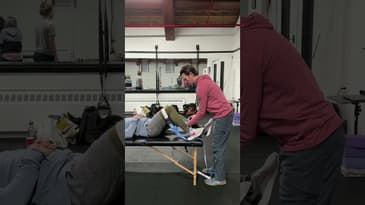
if testing UEs, the patient and PT need to hold on either ends of the device (PT needs to counter the patient's pull) so hands will be attached to the top ring, and bottom carabiner
if testing LEs, the patient needs to have their LE looped around the lashing strap or mobilization belt and the PT counters with the exercise handle on the bottom of the crane scale
Step 4 - Get Objective with Your Muscle Testing
I usually have the patient sitting or standing for UE testing
they can be supine or standing for hip flexion, standing balancing against a table for hip extension, seated for knee extension/flexion, sidelying or standing for hip abduction
You can also test them in more functional positions that mimic their activity or sport
One of my favorites is testing trunk SB like a farmer's carry (they pull up with left hand - Crane Scale below, to test R lateral chain)
Tare the Crane Scale to get it to zero as the pull/weight of the scale/belt needs to be zeroed
set it to Peak Hold so that the maximum amount of force produced is kept on the screen (otherwise it will go back to zero or the lowest force placed on it after the test is complete)
Instruct them to meet your resistance and eventually give maximum effort, a good 5-7 second hold should do
Repeat on both sides, it's suggested that a 10% difference in maximum force produced is significant
play around with what works best for you and your patients, just be consistent with your cues and testing positions
make sure both you and the patient are stabilized prior to testing