A patient with fractures across his pelvis was writhing in pain—then breathing exercises helped him stand and lift his feet, pain-free in the moment. On this episode of The Optimal Body, Doc Jen and Dr Dom, both doctors of physical therapy, unpack what hands-on techniques can—and can’t—do, from adjustments and myofascial release to dry needling, acupuncture, ultrasound, and laser. They explain why a spinal adjustment can affect areas several segments away, why a “pop” doesn’t mean bones moved back into place, and why sham needling can bring similar relief. The bigger takeaway: these tools may offer a temporary window to move, but lasting change comes from building movement and load.
Needed Discount:
Jen trusted Needed Supplements for fertility, pregnancy, and beyond! Support men and women’s health with vitamins, Omega-3, and more. Used by 6,000+ pros. Use code OPTIMAL for 20% off at checkout!
We Think You'll Love:
For full show notes and resources visit https://jen.health/podcast/477
What You'll Learn:
What You'll Learn:
00:30 Why Question the Claims Behind Techniques?
00:55 Adjustments and Manipulations: What the Pop Does—and Doesn’t—Mean
05:12 Adjustments: Short-Term Relief and a Window for Movement
09:07 Therapeutic Ultrasound and Laser
14:10 Myofascial Release
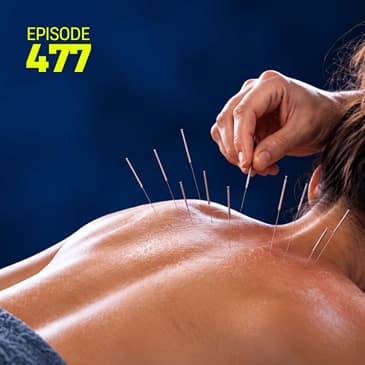
18:44 Dry Needling and Acupuncture
22:01 Breathwork and Pain
Hosted by Simplecast, an AdsWizz company. See pcm.adswizz.com for information about our collection and use of personal data for advertising.
[00:00:05] [SPEAKER_02] Welcome to the Optimal Body Podcast. I'm Dr. Jen and I'm Dr. Dom and we are doctors of physical therapy bringing you the body tips and physical therapy pearls of wisdom to help you begin to understand your body, relieve your pains and restrictions and answer your questions. Along with expert guests, our goal of the Optimal Body Podcast is really to help you discover what optimal means within your own body. Let's dive in.
[00:00:28] [SPEAKER_01] Okay, this is a fun episode because we get to chat through five specific things today that are not that they're myths, they're real techniques and tools. But we're going to talk about like, what is hyped up? You know, what is overhyped? What is over promoted, overstated? And what the research actually says that these tools can help with in our body?
[00:00:55] [SPEAKER_03] Yeah. And this is coming a little bit from a couple episodes ago, we talked about adjustments and manipulations, the claims that people make when it comes to adjustments. And we thought that it would be, you know, kind of cool to rapid fire through five different techniques and talk a little bit more about what the claims are.
[00:01:14] [SPEAKER_01] Well, we got a specific request, which is specific to you, like request what you want to hear about, because the request was, what's the difference between real mechanisms versus the stuff that just woo woo that doesn't really do anything because it's confusing out there in social media. I'd like to believe like, what, what should I put my money toward? What should I invest in my time in? What really matters? And so, again, ask the questions because we will do the podcasts on them.
[00:01:40] [SPEAKER_03] Yeah. And so kind of like we talked about previously, if you didn't hear adjustments and manipulations, I think there's a big one here because a lot of people who do these techniques will claim, oh, this segment is out of place or your pelvis was out. Your hips were misaligned. One leg's longer than the other. Now I do this technique and your leg length is even or your pelvis isn't twisted anymore or your spine is back into alignment.
[00:02:06] [SPEAKER_03] And these are the claims that we have a problem with, not necessarily the techniques, but these claims.
[00:02:12] [SPEAKER_01] Right. I mean, you hear that cavitation, you hear that pop and you're like, oh, finally, I'm back into place. I've even talked to a chiropractor who I went to when I was pregnant and she was like, yeah, it's just so frustrating when people don't hear that cavitation and they think that it didn't do anything for their body where she's like, no, you don't have to hear that in order to feel relief. And I'm like, yeah, exactly. Like, I'm glad we're speaking the same language.
[00:02:36] [SPEAKER_03] Yeah. Which is like, again, people associate so much when they hear these things, then they think, oh, the pop moved something, put me back into place. And they get into this belief that my body goes out of place. So if that pain starts to come back, oh, my body's going back out of place.
[00:02:52] [SPEAKER_03] And that is just so far from the truth. It's so far from the reality. There's plenty of imaging studies that have shown that what is actually happening is gas forms in the joint. When we do the technique, the manipulation or adjustment, it creates a pressure change in the joint. Gas is released. This is where we hypothesize the pop comes from. It isn't actually coming from bones popping back into place.
[00:03:22] [SPEAKER_01] Right. And I seen a comment from someone, another physical therapist was trying to explain this process. And someone was like, well, there's trapped gas in there. You see, that's why we need to do this technique to release it. And it's like, no, it's not trapped. It because we move and we stretch a joint, then gas goes into that cavity and it just moves based on the pressure. It's not trapped. It didn't it wasn't resting there. It's something that comes as we create the movement. And that's the same reason why you can crack and, you know, crack a joint.
[00:03:52] [SPEAKER_01] And then two seconds later, you can't do it again. Right. We have to have time for like the gas to form again when we start to move more.
[00:04:00] [SPEAKER_03] Taking a quick pause from the episode to talk about a company that has helped Jen and I so much, especially when we were trying to conceive when Jen was in her prenatal and postpartum phases. And even to today, Jen is taking their creatine and protein supplements to make sure that she is getting everything that her body needs. That's my favorite thing about Needed Supplements is they have something for you, regardless what phase of life you are at or what your nutritional goals are.
[00:04:26] [SPEAKER_03] And something that I think is really exciting is they just came out with their prenatal multi gummy because I know pills and powders aren't for everybody, especially if you're really nauseous in that first trimester. You might need a different option. And the thing is, 95% of women stay nutritionally depleted even when taking a standard prenatal because most of those standard prenatals are dosed to the bare minimum. But needed prenatal multi gummy is different.
[00:04:53] [SPEAKER_03] It has eight times more nutrition than the leading prenatal gummy and four times more than the average leading prenatals, including any capsules or powders. So if you're pregnant, postpartum, looking to become pregnant, or if you're in any phase of life and you feel like you could focus on your nutrition just a little more, head over to thisisneeded.com and use code optimal for 20% off your first order.
[00:05:18] [SPEAKER_03] That's T-H-I-S-I-S-N-E-E-D-E-D.com and use code optimal for 20% off your first order. All right, let's get back into the episode. Another issue that we have with these types of claims is there are palpation studies.
[00:05:35] [SPEAKER_03] There are studies that have shown that, especially between providers, if you have 100 providers come and try to point at one specific vertebrae or try to palpate one specific bony prominence on someone's hip or something, very unreliable that everyone is going to be able to hit the same point. I'm sure there is a spectrum of skill level on providers that are more familiar and less familiar with the body.
[00:06:02] [SPEAKER_03] But what this shows is that when we say, oh, I'm manipulating, I'm adjusting this specific segment of your spine, we don't really have great evidence that shows every provider is going to be able to find that exact segment and target that exact segment. And this points to what these techniques actually do. When we do an adjustment, especially on the spine, what did you say?
[00:06:27] [SPEAKER_03] It was that adjustment can have an effect two to six segments above and below where the adjustment was taking place. It can essentially crack vertebrae up to a span of 12 vertebrae in your spine, which doesn't sound super specific to me.
[00:06:46] [SPEAKER_01] Right.
[00:06:47] [SPEAKER_03] Sounds like a more regionally applied technique that then also has global effects on our body.
[00:06:53] [SPEAKER_01] Right. And it's the same reason why you get the adjustment right and they're like, oh, your hips look like they are aligned now. Or you see your ankle bone or your heels are now aligned. It's because we created neurological change in the body. So that's what we want to talk about. Like what is actually changing? So neurophysiological change means that when we manipulated the body in this way,
[00:07:21] [SPEAKER_01] we connected to the brain and the brain connected to the tissue so that there was a release of pressure. There wasn't so much tone within that muscle anymore. And when we relax tone of the muscle, we increase the range of motion around that spinal segment or around that joint. So that now we have just a difference in how we are resting. Right.
[00:07:45] [SPEAKER_01] But also we know from studies that being able to just check someone passively on a table is one of the most unreliable ways of getting someone back into functional movement and standing, running, jumping and what they actually want to be doing. Like just looking at someone lying on a table is almost not helpful.
[00:08:36] [SPEAKER_03] Yeah. I want to do this technique to you because I think I can reduce your pain. I think I can increase your ease in your body and your mobility so that we can then get into some movement so that you can prevent this from happening again. So that what you do, the exercise you do will help you get out of this pain rather than being relied on me. So it gives us that window of opportunity.
[00:08:59] [SPEAKER_01] Yeah. We just want you to know you're not out of place.
[00:09:01] [SPEAKER_03] Yeah. You're not out of place.
[00:09:02] [SPEAKER_01] You're not fragile. We literally can't like put something back together with our hands.
[00:09:07] [SPEAKER_03] And we'll talk about this more in a couple on myofascial release. Next up, therapeutic ultrasound or laser treatments. This one. So this one's going to attack the PT outpatient clinics because I know you. I worked in a clinic where as an aid, everyone would come in and I would put on that hot pack,
[00:09:36] [SPEAKER_03] put on the e-stim. We should have put stim on here. And then I would, they would get done with the hat after their eight to 12 minutes on that. And then I would ultrasound something. And I might forget to turn the machine on. I might actually turn the machine on. That's not the point. But, you know, some of the claims are like, oh, this ultrasound or this laser helps to break up or zap the inflammation or it speeds up your healing.
[00:10:05] [SPEAKER_03] It stimulates some tissue repair in that area.
[00:10:09] [SPEAKER_01] Yes, that is. I mean, that's large claims, right? So ultrasound, what we know, there's weak to minimal evidence for most musculoskeletal conditions. Like the resonance of what it's actually going to be able to get deep enough to promote, you know, we're essentially just heating up the area, which we could do other ways to help promote tissue healing.
[00:10:37] [SPEAKER_01] Do we need an ultrasound to think that we're getting deeper in the tissue to heal, to create, you know, the natural process of tissue healing? Or can we just get you moving?
[00:10:52] [SPEAKER_03] Yeah. The amount of energy it puts into the area and puts into the joint. You know, there's some claims that depending on what sound wave you're using, you get deeper or you're working more shallow. And there's so many different types of laser. It's going to be hard for us to talk about all of them or generalize them all into one category. I think for this, we were talking more about just like the red light.
[00:11:14] [SPEAKER_01] Yeah.
[00:11:14] [SPEAKER_03] The red light lasers.
[00:11:16] [SPEAKER_01] Because that's like the low level lasers that are seen in most PT clinics.
[00:11:20] [SPEAKER_03] Yeah, many clinics. And again, the energy you're putting into the joint, it just isn't significant. When I think about why clinics did this, you know, as I went through PT school and now I look back and I'm like, oh, it's just a billing thing.
[00:11:33] [SPEAKER_01] A thousand percent. It's for insurance.
[00:11:35] [SPEAKER_03] Because unfortunately, insurance, for some reason, reimburses for those things that don't have a lot of evidence that they actually do anything. There are so many sham studies that show that whether you turn the machine on or off, people have the same outcomes. So again, as long as you're telling them, oh, this is speeding up your healing.
[00:11:55] [SPEAKER_01] The SIBO effect.
[00:11:56] [SPEAKER_03] You know, you don't even have to turn the machine on. You like save the energy, save the power. So again, is it doing a whole lot? It might be putting a little bit of energy into the tissues.
[00:12:08] [SPEAKER_01] But much stronger evidence for actually like, especially when we're talking about laser is going to heal my tendinopathy. Right. Well, much stronger evidence is that progressive smart exercise programming that works at your tissue capacity and then slowly progresses from there to exercises that are relevant to what you need to be doing is going to help with tendinopathy in the long run way more than these tools.
[00:12:46] [SPEAKER_03] Yeah. So I'm like, this is working. It gets people warmed up, you know, with the hot packs and the Easter.
[00:12:55] [SPEAKER_01] And you're talking to them. You create a good conversation.
[00:12:58] [SPEAKER_03] They're like given you're the aid, you're spending the most time with them, chatting them up. So I'm, you know, like and stim, honestly, if I could like take 10 minutes a day and put stim on my mid back with a hot pack.
[00:13:10] [SPEAKER_01] Feels good. Feel great. Feels great.
[00:13:13] [SPEAKER_03] Get up back feels a little bit looser.
[00:13:16] [SPEAKER_01] So talking to the pain modulation pathways.
[00:13:19] [SPEAKER_03] And stim is not specifically what we were talking about there. We're addressing more ultrasound and and laser. And it's not zapping away your inflammation. It's not effectively heating up or adding energy into the tissue more than moving would. The evidence shows minimal, minimal significance in benefits, period, outside above placebo. So like, yeah.
[00:13:42] [SPEAKER_01] Is it worth your time? Probably not, to be honest. And if you're really talking about inflammation, let's look at your whole overall lifestyle. Are you sleeping? I'm not. So I probably should. Are you what? What kind of nutrients are you getting in your diet? Are you hydrating? Are you super stressed out? You know, are you moving every day or are you sedentary? Those are what's going to improve your inflammation and your healing more than your ultrasound or your laser. Bigger fish.
[00:14:11] [SPEAKER_03] Bigger fish to fry there.
[00:14:12] [SPEAKER_01] Yes.
[00:14:13] [SPEAKER_03] Okay. Myofascial release. A big one. Yeah. This is a big one.
[00:14:17] [SPEAKER_01] Your fascia is dehydrated. So we're going to need to rehydrate that.
[00:14:21] [SPEAKER_03] Yeah. Yeah. Rehydrating the fascia or you've got these adhesions or we have to break up that scar tissue with this technique.
[00:14:30] [SPEAKER_01] Which if you've been around the podcast, our podcast for a while.
[00:14:34] [SPEAKER_03] You know how we feel.
[00:14:35] [SPEAKER_01] Yeah, exactly. I don't think we need to say it done. But, you know, manual therapy has some great short-term effects. Again, similar to the adjustment. So just like the adjustment opens up that window of opportunity to have that improved mobility, that relaxed muscle tension so that we can then help you sustain that range of motion and sustain that pain modulation in exercise of what you want to be doing in your everyday.
[00:15:03] [SPEAKER_01] That's what we're doing. We're not breaking up scar tissue. Not real. Adhesions. And we can see imaging studies that show adhesions. But overall, we know that they're so deep. They're so tight. Like unless we're actually going to do...
[00:15:25] [SPEAKER_03] Like a surgical release.
[00:15:26] [SPEAKER_01] Right. Unless we're actually going to cut the tissue.
[00:15:29] [SPEAKER_03] If you put someone under anesthesia and you can like go in there with a tool and maybe like work out some of the gunk adhering the fascial layers together. But what is required for true tissue remodeling is load. And so, again, myofascial techniques, what they do help do is allow tissue to relax. Allow that neuromodulation to allow us to relax more in that area.
[00:15:58] [SPEAKER_03] Great benefit. Now let's do movement. Now let's load the tissue.
[00:16:03] [SPEAKER_01] We also see an ultrasound like there is some slide and glide happening when we touch and we put pressure into an area. Especially if we're doing like sustained long holds into an area. We are getting... So in that moment, again, this is all like temporary changes that we can start to create.
[00:16:21] [SPEAKER_03] You're pushing the tissue to its range. Right. Like you're helping stretch it in a way to its maximal range.
[00:16:28] [SPEAKER_01] Well, we can create circulation. We can help with fascial gliding. We can help with that improved mobility in that moment. Again, so that we can start to restore your movement patterns and have you feeling better in your body so that you can go and do more movement. The whole point of tools and manual techniques is to help you feel something different so that you can go and do the exercises necessary to actually help you feel long-term change. They're all temporary, which is a tool.
[00:16:55] [SPEAKER_01] It's an access point into your body and into your movement that you might not have had available.
[00:17:00] [SPEAKER_03] And again, blaming the adhesions or the scar tissue between your fascial layers on why you have pain. Again, I think that's a bit of a misnomer. It could be... It could be... It contributed to why you feel more tight in the area. But again, pain is a much larger picture than blaming it on this one small thing. Let's get you moving differently. And if our goal is to remodel that tissue, then it has to come through load. That has to come through movement. Yeah. So...
[00:17:28] [SPEAKER_01] Yeah. And like, please know that harder is not better. Like when someone's working on you and you are wincing and you're in pain and you're fighting it, like we're actually doing... We're reversing the effects, right? Because we're trying to get you to relax in that muscle tension, not tense up around it. So the whole point is that it should feel good. You should feel better. You should feel improved movement. You shouldn't feel like you're bruised after or... You know, like that's ridiculous. That's not the point of manual therapy.
[00:17:57] [SPEAKER_03] And manual therapy, yeah, is going to be a little bit different for everyone. It really needs to be something that you feel is working with your body. Yes. That you're able to breathe and relax into.
[00:18:07] [SPEAKER_01] And some like harder pressures. Some like smaller pressures.
[00:18:11] [SPEAKER_03] I like more of the deep pressure. I almost like it as a challenge in some ways to like, how relaxed can I stay while they're really digging in? And I know that I've worked on other big people who ask for that. And I get them. And I'm like, okay, especially being in rural Minnesota, I would get these big burly guys in there. And I'll just crank on them and they'd walk up being like, oh, that feels... I feel so great. I feel so loose.
[00:18:40] [SPEAKER_03] And I'm like...
[00:18:41] [SPEAKER_01] Whatever's going to talk to the nervous system better.
[00:18:43] [SPEAKER_03] So it worked for them.
[00:18:44] [SPEAKER_01] Yeah. Okay, number four, dry needling or acupuncture, which I want to first acknowledge there is a different reasoning behind both of them. Right?
[00:18:56] [SPEAKER_03] Semantics. Language.
[00:18:57] [SPEAKER_01] I know, but I just want to make that very clear. Acupuncture has, you know, it's going down Chinese medicine route. There's a purpose around the meridians as to the effect that you're trying to create.
[00:19:09] [SPEAKER_03] Not going to claim to be experts on that at all.
[00:19:13] [SPEAKER_01] Haven't studied that. Dry needling. We are targeting tissue tension. We are targeting things that are not moving well or in pain and trying to get tissues to relax.
[00:19:24] [SPEAKER_03] Absolutely. But some of the claims. We released your trigger point. We reset the muscle. We restored your energy flow. What is actually happening? So this is interesting for me for acupuncture. Again, not something that we're massive experts in. But for me, I've probably gotten acupuncture a handful of times, if that. And I've loved it every time.
[00:19:51] [SPEAKER_03] I always walk out feeling very relaxed because, again, it's the whole experience. You go into a room that has some nice essential oils, wafting, wafting, low light. You lay down, you relax. And there really is like for a lot of people, a spiritual component almost to acupuncture as well.
[00:20:12] [SPEAKER_03] So taking all these things into account, it doesn't surprise me at all that people walk out of the room with less pain, feeling more relaxed. It helps downregulate your nervous system.
[00:20:24] [SPEAKER_01] I got to just take a nap. That was amazing.
[00:20:26] [SPEAKER_03] I was going to say, like you just get to lay there for an hour. Like, sounds incredible. So it doesn't surprise me that in the research, it shows like it helps to downregulate pain. There's moderate evidence for short-term pain relief. For dry needling, it's interesting because sham needling often produces a similar result.
[00:20:49] [SPEAKER_03] So what we claim as physical therapists or people who've talked to me about dry needling is they find the tight bands and they try to needle right into those tight bands of muscle. And so doing a sham needle where you're not going as deep or you're not going through the taut band itself produced a similar result.
[00:21:08] [SPEAKER_01] So it's interesting. And like, just anecdotally, like I've talked to many patients, some they feel great with and some they hate it, you know? So it's like, find the tool that works for you to get the result. The result is getting you moving better. It's feeling less restricted. It's feeling, you know, but the whole point is that, you know, it's not the strongest evidence. If we really want strong evidence, we've got to look at like our overall lifestyle factors and how we're moving.
[00:21:34] [SPEAKER_03] Right. And it's the evidence is it's likely just modulating your central nervous system.
[00:21:40] [SPEAKER_00] As is everything.
[00:21:41] [SPEAKER_03] Especially with acupuncture, with dry needling. Yeah. Maybe there's some local, you know, peripheral nervous system thing going on. But in general, we're just trying to modulate our pain response. Yeah. And like you said, you know, we've seen people who tell us, oh, I got dry needled. I was flared up for a week. You know, so not the best way for everyone to modulate their nervous system.
[00:22:05] [SPEAKER_02] No.
[00:22:05] [SPEAKER_03] And on to one of our favorites, breath work. As the fix for pain elimination or to eliminate pain.
[00:22:14] [SPEAKER_01] Just breathe and your pain will go away. You're stuck in a sympathetic mode. Here's the thing. Like there is really cool tricks that we could do when we get someone to relax, just like all these other techniques that we're talking about. We get someone to relax, to feel something different and they feel worlds of like, oh my gosh, my pain just melted away.
[00:22:36] [SPEAKER_03] Yeah. I mean, it's my one of my favorite stories that I've talked about on multiple podcasts is a guy who got in a snowmobile accident, had fractures all over his pelvis and I got him breathing. He was writhing in pain when I walked into the room. I got him breathing. And by the time I walked out, he was standing at the edge of the bed doing little like I wouldn't call it marching. He wasn't marching his knees up, but doing like little foot lifts.
[00:22:58] [SPEAKER_01] Which is amazing.
[00:22:59] [SPEAKER_03] And he said, he claimed during all that, he felt no pain. And I saw him later on, months later when he was just in outpatient rehab and he said, that breathing stuff changed my life. I do it every day. So there is power. There is power to modulate our autonomic nervous system.
[00:23:18] [SPEAKER_01] And there's strong evidence that does show when we focus on breath work, we can get some quick change. It is that it's that quick, temporary change that we're getting. We're not saying that we've magically healed you. You just breathe a little differently.
[00:23:35] [SPEAKER_03] Many people will stand up, go into life, encounter the first stress that they encounter and immediately be back. You know, our nervous system is smart. So yes, we can breathe and get it to change and modulate. And it knows where we go when we're in our fight and flight or our stressed state.
[00:23:54] [SPEAKER_01] It's not a structural fix. It's something that has to literally be practiced. One of the last patients I just saw in person, she's literally like shoulders up to her ears. So tense and tight, so tense and tight and has been told some really scary messages about her body, which puts your body in more protective mode.
[00:24:19] [SPEAKER_01] And so, yes, of course, I did breathing techniques, not only on the table with her, but also in movement, in lunges, in exercise, in mobility. So when you're able to take that breath work that is so powerful that you feel a difference and not only just use it laying down, but then use it through movement, it becomes such a powerful tool to integrate more mobility and movement and less fear of certain exercises in your body. Like it is a really cool tool.
[00:24:49] [SPEAKER_01] Something that I would say is number one on this list of facts.
[00:24:52] [SPEAKER_03] And kind of the pattern we see across the five of these is that, again, we're talking more about nervous system modulation, modulating the pain, modulating our perception of what we're feeling so that we can then maybe use that to do exercise, to load tissues in our body in a way that we can have more long-term change. Because a lot of these are short-term, short-lived.
[00:25:20] [SPEAKER_01] Clinician-derived, passive.
[00:25:23] [SPEAKER_03] Yeah. Like things that we rely on someone doing to us other than the breath work, which is why that's one of our favorites. Right, exactly. That's something that you can practice at any time on your own.
[00:25:33] [SPEAKER_01] Yeah. Thinking that you're getting a structural fix from something that someone else is doing to you.
[00:25:37] [SPEAKER_03] Yeah. And like a lot of them are driven by expectation, especially those clinician ones. Like what are they telling you it's doing? And do you believe that? And that's why there is such strong placebo effect. Because if we truly believe something is doing this to our body, that drives a lot of the change is our perception that something is changing. And that's why I feel better. So we like to hear messaging around these tools that has more to do with what's actually happening.
[00:26:05] [SPEAKER_03] We're just using this as a tool to modulate the way your body feels, to give you a little bit more mobility, give you a little bit more relaxation. So then we can try doing some exercises because that is what's really going to help empower you to prevent this from coming back.
[00:26:19] [SPEAKER_01] Just know you're not fragile. No one else is putting you back together. You get to use the tools that you like if you want to. But move.
[00:26:30] [SPEAKER_03] Thanks so much for listening to another episode. I hope that one of these resonated. These are techniques that so many people will encounter. And we just want to give you a little more information about what it's actually doing. Please consider passing this along if you know of anybody who's struggling or who's so reliant on certain techniques. Pass this along to them because we want to get this information to the people that will actually help.
[00:26:51] [SPEAKER_03] And if you are looking for a way to get on that path to potential long-term change, to empower yourself to make the change in your own body, go check out Jen Health. You can always start your free trial, get into one of our plans. We have plans for every part, every area of the body. And you can get your first full month for just $20 if you use code OPTIMAL at checkout. Of course, we'll see you next time on the Optimal Body Podcast.