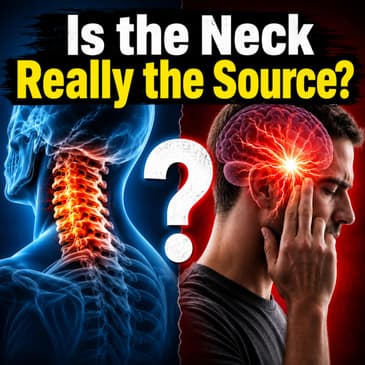
Neck pain and headache often travel together. But as Gwen Jull and Zhiqi Liang explain in this episode, that does not automatically mean the cervical spine is driving the headache.
In this AAOMPT and IFOMPT collaborative episode, hosts Amy McDevitt and Michael Boney explore the evolving science around cervicogenic headache, migraine-associated neck pain, sensitization, and clinical examination.
Gwen Jull discusses the development and validation of physical criteria for cervicogenic headache, emphasizing the need for a cluster of comparable musculoskeletal signs involving joint, movement, and muscle impairments.
Zhiqi Liang expands the conversation into migraine, reminding clinicians that neck pain can be part of a migraine presentation rather than proof of a cervical source. She challenges clinicians to rethink the meaning of symptom reproduction during upper cervical examination and to consider sensitivity, irritability, and migraine cycles when examining and treating these patients.
Together, the guests make a compelling case for more careful clinical reasoning: listen to the patient’s story, examine without over-provoking symptoms, look for comparable signs, and match treatment to the impairments that are actually present.
Big takeaway:
The neck may matter — but clinicians need to prove it through the whole clinical picture.
Timestamped Chapters00:00 — Welcome to Hands On, Hands Off
00:31 — Introducing the AAOMPT and IFOMPT collaboration
01:19 — Meet Gwen Jull and Zhiqi Liang
03:19 — Why headache and neck pain matter to manual physical therapists
03:40 — Major shifts in clinical thinking around cervicogenic headache
04:09 — Validated physical criteria for cervicogenic headache
05:37 — Joint, movement, and muscle signs
07:33 — The physiotherapist’s role in differential diagnosis
08:02 — How headache can refer pain into the neck
08:51 — Are cervicogenic headache and migraine distinct or a spectrum?
09:26 — Migraine as a primary neurological condition
11:33 — Sorting out mixed headache presentations
12:05 — Patient history clues: migraine vs cervicogenic headache
13:27 — Comparable signs and why intensity matters
14:51 — How much does pain location matter?
16:20 — Why no single feature is enough
17:17 — Neck pain in migraine may not be a neck problem
17:53 — Rethinking symptom reproduction during examination
19:22 — How to decide whether the neck is a driver
20:01 — Avoiding confirmation bias
21:27 — Why non-provocative examination matters
23:08 — Scapular dysfunction and other regional contributors
24:37 — Broadening beyond the diagnostic cluster
26:05 — Sensory-motor control, dizziness, and balance
28:41 — Local cervical findings and global systems
29:31 — Listening for migraine evolution over time
30:46 — Central sensitization and comparable physical findings
31:28 — PIVM vs PAVM assessment considerations
32:08 — Avoiding symptom provocation in migraine
33:04 — Migraine cycles and changing sensitivity
34:36 — Trial treatment and rigorous re-evaluation
35:41 — Individualized care beyond guidelines
36:19 — Who may benefit from a cervical-focused approach?
37:07 — Education, exercise, sleep, stress, and lifestyle strategies
39:02 — Let the physical exam guide treatment
39:46 — PTs as rehabilitation experts, not just pain reducers
41:38 — One assumption clinicians should rethink tomorrow
42:12 — Don’t forget the jaw
42:27 — Neck pain may reflect sensitivity, not source
43:16 — Final reflections and closing
00:00:05 --> 00:00:07 Okay, welcome to the Hands On,
00:00:07 --> 00:00:09 Hands Off podcast.
00:00:09 --> 00:00:11 And this is brought to you by AOMT.
00:00:11 --> 00:00:14 And today we're excited to host our second
00:00:14 --> 00:00:17 of a four part series or four episodes
00:00:17 --> 00:00:19 in collaboration with iFOMT.
00:00:19 --> 00:00:20 So over this series,
00:00:20 --> 00:00:23 we intend to bring you conversations with
00:00:23 --> 00:00:25 internationally recognized leaders in
00:00:25 --> 00:00:28 orthopedic manual physical therapy.
00:00:28 --> 00:00:29 And I'm gonna turn it over to Michael.
00:00:31 --> 00:00:31 Thank you, Amy.
00:00:32 --> 00:00:32 Hi, everyone.
00:00:32 --> 00:00:34 My name is Michael Boney.
00:00:34 --> 00:00:36 I am the co-chair of the IFOMT Learning
00:00:36 --> 00:00:38 and Professional Development Task Force,
00:00:39 --> 00:00:41 and also an associate professor at York
00:00:41 --> 00:00:42 University in Canada.
00:00:43 --> 00:00:45 Very happy to be joining Amy McDevitt,
00:00:45 --> 00:00:46 the AOMT member at large,
00:00:47 --> 00:00:48 and also associate professor at the
00:00:48 --> 00:00:50 University of Colorado in the United
00:00:50 --> 00:00:50 States.
00:00:51 --> 00:00:53 So just a little bit about IFOMT.
00:00:53 --> 00:00:55 IFOMT represents manual and
00:00:55 --> 00:00:57 musculoskeletal physical therapists around
00:00:57 --> 00:00:57 the world.
00:00:58 --> 00:01:00 and attempts to set up educational
00:01:00 --> 00:01:02 standards and clinical standards that are
00:01:02 --> 00:01:05 driven by the available scientific and
00:01:05 --> 00:01:05 clinical evidence.
00:01:06 --> 00:01:09 And you can learn more about IFOMT at
00:01:09 --> 00:01:11 ifomt.org as well,
00:01:11 --> 00:01:14 and check out some of the Learning Zone
00:01:14 --> 00:01:16 webinars and educational resources that
00:01:16 --> 00:01:17 are available there.
00:01:18 --> 00:01:19 And today together,
00:01:19 --> 00:01:21 we are thrilled to welcome two guests to
00:01:21 --> 00:01:24 help us better understand the science
00:01:24 --> 00:01:26 behind headaches and neck pain, Dr.
00:01:26 --> 00:01:29 Gwendolyn Jol and Dr. Ziki Liang.
00:01:29 --> 00:01:30 So welcome to you both.
00:01:31 --> 00:01:32 And I'm going to pass it over to
00:01:32 --> 00:01:35 Amy to introduce Dr. Gwendolyn Jol.
00:01:35 --> 00:01:36 So Dr.
00:01:36 --> 00:01:39 Gwendolyn Joel is an emeritus professor in
00:01:39 --> 00:01:40 physiotherapy at the University of
00:01:40 --> 00:01:41 Queensland, Australia.
00:01:42 --> 00:01:44 She is a specialist musculoskeletal
00:01:45 --> 00:01:46 physiotherapist and fellow of the
00:01:46 --> 00:01:48 Australian College of Physiotherapists.
00:01:49 --> 00:01:51 Her career has combined teaching,
00:01:51 --> 00:01:53 research, and clinical practice.
00:01:53 --> 00:01:55 Her research has principally been
00:01:55 --> 00:01:57 concerned with the diagnosis and
00:01:57 --> 00:01:59 management of idiopathic neck pain,
00:01:59 --> 00:02:00 cervicogenic headache,
00:02:01 --> 00:02:02 and whiplash associated disorders.
00:02:03 --> 00:02:05 and quantifying the dysfunction in the
00:02:06 --> 00:02:07 cervical motor system as a basis for
00:02:07 --> 00:02:11 research-informed therapeutic exercise for
00:02:11 --> 00:02:12 the rehabilitation of neck disorders.
00:02:13 --> 00:02:15 Gwen has taught extensively nationally,
00:02:15 --> 00:02:16 internationally,
00:02:17 --> 00:02:18 has published over three hundred
00:02:19 --> 00:02:20 peer-reviewed articles,
00:02:20 --> 00:02:22 forty book chapters, three textbooks,
00:02:23 --> 00:02:24 as well as editing the third and fourth
00:02:24 --> 00:02:28 edition of Grieve's Modern Manual Therapy,
00:02:28 --> 00:02:30 now called Musculoskeletal Physiotherapy.
00:02:32 --> 00:02:34 And I have this distinct pleasure of
00:02:34 --> 00:02:36 introducing Dr. Zeki Liang,
00:02:36 --> 00:02:39 who is a specialist musculoskeletal
00:02:39 --> 00:02:40 physiotherapist as awarded by the
00:02:40 --> 00:02:43 Australian College of Physiotherapists and
00:02:43 --> 00:02:45 lecturer in physiotherapy at the
00:02:45 --> 00:02:46 University of Queensland.
00:02:47 --> 00:02:49 Her research is on neck pain and
00:02:49 --> 00:02:51 headaches, especially migraine,
00:02:51 --> 00:02:53 for which she's received IFOM's David Lam
00:02:54 --> 00:02:54 Memorial Award.
00:02:55 --> 00:02:57 She was a guest editor for the journal
00:02:57 --> 00:02:59 Musculoskeletal Science and Practice,
00:03:01 --> 00:03:03 which was a special issue on headache and
00:03:03 --> 00:03:03 neck pain,
00:03:04 --> 00:03:06 and is also the founding member of the
00:03:06 --> 00:03:07 special interest group for
00:03:07 --> 00:03:09 physiotherapists within the International
00:03:09 --> 00:03:10 Headache Society.
00:03:11 --> 00:03:13 Ziki also maintains an active clinical
00:03:13 --> 00:03:15 role in managing patients with headache at
00:03:15 --> 00:03:17 the university's physiotherapy headache
00:03:17 --> 00:03:18 clinic.
00:03:19 --> 00:03:22 So we are so privileged and honored to
00:03:22 --> 00:03:24 have this esteemed group of experts join
00:03:24 --> 00:03:27 us today to help us explore neck pain
00:03:27 --> 00:03:28 and really more specifically the
00:03:28 --> 00:03:31 management of individuals with migraine
00:03:31 --> 00:03:32 associated neck pain.
00:03:32 --> 00:03:34 So I think we're going to go ahead
00:03:34 --> 00:03:35 and dive in and I'm going to ask
00:03:35 --> 00:03:37 a question that I would love for both
00:03:37 --> 00:03:39 of you to manage here.
00:03:40 --> 00:03:41 Across your careers,
00:03:42 --> 00:03:44 I know some of the work that you've
00:03:44 --> 00:03:47 been doing with NAHRU has really shaped
00:03:47 --> 00:03:50 how we think about neck pain and headache,
00:03:50 --> 00:03:53 from defining cervicogenic headache to now
00:03:53 --> 00:03:56 exploring migraine and sensitization.
00:03:56 --> 00:03:58 So what do you see as the most
00:03:58 --> 00:04:01 important shift in clinical thinking over
00:04:01 --> 00:04:02 that time?
00:04:02 --> 00:04:04 And I think I'll start with Gwen first,
00:04:04 --> 00:04:05 and then we'll go to Ziki to kind
00:04:06 --> 00:04:08 of piggyback on that answer.
00:04:09 --> 00:04:09 Yes,
00:04:09 --> 00:04:11 thanks Amy and thanks for the
00:04:11 --> 00:04:13 introductions and certainly a pleasure to
00:04:13 --> 00:04:13 be here.
00:04:15 --> 00:04:17 I might call it an advance over time
00:04:18 --> 00:04:21 and I think probably from my perspective,
00:04:21 --> 00:04:23 especially in relation to cervicogenic
00:04:23 --> 00:04:23 headache,
00:04:24 --> 00:04:26 has been that we have a validated set
00:04:26 --> 00:04:29 of physical criteria that we can diagnose
00:04:29 --> 00:04:32 a cervical musculoskeletal disorder,
00:04:32 --> 00:04:34 which is underpinning our cervicogenic
00:04:34 --> 00:04:35 headache.
00:04:35 --> 00:04:37 and if i'm allowed i might do a
00:04:37 --> 00:04:39 little bit of history because it did take
00:04:39 --> 00:04:42 time to develop and i mean we've known
00:04:42 --> 00:04:44 for ages that the neck can cause a
00:04:44 --> 00:04:47 referred pain into the head but it really
00:04:47 --> 00:04:49 wasn't until the nineteen sixties that it
00:04:49 --> 00:04:52 was actually proven that cervicogenic
00:04:52 --> 00:04:54 headache was related to a joint disorder
00:04:55 --> 00:04:57 And then we saw furthermore the
00:04:57 --> 00:04:59 development by Shorstad where he did the
00:04:59 --> 00:05:02 criteria and the most important diagnostic
00:05:03 --> 00:05:05 element was that you did a joint block
00:05:06 --> 00:05:07 to eliminate the headache.
00:05:08 --> 00:05:10 But the physical criteria in SURE-SARDS
00:05:10 --> 00:05:11 and even the International Headache
00:05:11 --> 00:05:14 Society today are still relatively
00:05:14 --> 00:05:15 general.
00:05:17 --> 00:05:19 And we saw it as an opportunity to
00:05:19 --> 00:05:20 really sort of develop them.
00:05:21 --> 00:05:22 We were doing, well, first of all,
00:05:23 --> 00:05:25 our early research showed that manual
00:05:25 --> 00:05:27 examination could quite accurately depict
00:05:28 --> 00:05:30 a painful zygopath seal joint,
00:05:30 --> 00:05:32 and that was shown against diagnostic
00:05:32 --> 00:05:32 blocks.
00:05:33 --> 00:05:36 We were investigating motor control in the
00:05:37 --> 00:05:39 neck and we were able to show that
00:05:39 --> 00:05:42 cervicogenic headache was associated with
00:05:42 --> 00:05:44 dysfunction in the muscles.
00:05:44 --> 00:05:46 And so the next study really put it
00:05:46 --> 00:05:47 all together.
00:05:47 --> 00:05:49 And so we looked at a whole
00:05:49 --> 00:05:52 musculoskeletal screen to see what could
00:05:52 --> 00:05:55 identify cervicogenic headache against
00:05:55 --> 00:05:57 migraine and tension type headache.
00:05:58 --> 00:05:59 and that's where it came out that the
00:05:59 --> 00:06:02 combination of a joint disorder plus a
00:06:02 --> 00:06:05 movement disorder plus a muscle disorder
00:06:05 --> 00:06:08 characterized collectively cervicogenic
00:06:08 --> 00:06:10 headache and that distinguished them from
00:06:11 --> 00:06:14 tension type headache and migraine so we
00:06:14 --> 00:06:16 had that set of criteria and
00:06:17 --> 00:06:18 Which sounds good,
00:06:18 --> 00:06:20 but we shouldn't really be terribly
00:06:20 --> 00:06:22 surprised about that because that's a
00:06:22 --> 00:06:24 typical musculoskeletal disorder.
00:06:24 --> 00:06:26 You don't just get one thing going wrong
00:06:26 --> 00:06:28 in the musculoskeletal system.
00:06:28 --> 00:06:29 So it was that group.
00:06:30 --> 00:06:33 And then there was really good validating
00:06:34 --> 00:06:36 research done by Scott Getzoyn from
00:06:37 --> 00:06:37 Chicago.
00:06:38 --> 00:06:39 I hope you know his paper because that
00:06:39 --> 00:06:41 was very important because he validated
00:06:41 --> 00:06:44 that group of musculoskeletal signs that
00:06:44 --> 00:06:45 Again,
00:06:45 --> 00:06:49 against double-blind diagnostic blocks.
00:06:49 --> 00:06:51 So we have a validated set of criteria,
00:06:51 --> 00:06:54 and I think that's been extraordinarily
00:06:54 --> 00:06:56 important because it not only helps us
00:06:56 --> 00:06:58 diagnose cervicogenic headache,
00:06:58 --> 00:07:00 but it actually also helps us,
00:07:00 --> 00:07:01 and I'm sure Ziggy will talk about,
00:07:02 --> 00:07:04 helps us to identify cervical
00:07:04 --> 00:07:07 musculoskeletal dysfunction in other forms
00:07:07 --> 00:07:08 of headache as well.
00:07:08 --> 00:07:12 So my thoughts are on that diagnostic.
00:07:13 --> 00:07:14 Three R jobs signs.
00:07:15 --> 00:07:15 Yeah,
00:07:15 --> 00:07:17 and I appreciate you clarifying that
00:07:17 --> 00:07:18 because I think it's important, you know,
00:07:18 --> 00:07:21 as physios to be able to have the
00:07:21 --> 00:07:24 ability to identify those and not just
00:07:24 --> 00:07:26 rely on our MD, you know,
00:07:26 --> 00:07:29 counterparts to sometimes, you know,
00:07:29 --> 00:07:30 make that diagnosis.
00:07:30 --> 00:07:32 So I think that's quite liberating.
00:07:33 --> 00:07:33 Yeah,
00:07:33 --> 00:07:35 and certainly I've worked with
00:07:35 --> 00:07:37 neurologists who basically used to send
00:07:37 --> 00:07:40 patients to me for the express purpose
00:07:40 --> 00:07:42 because they couldn't differentiate
00:07:42 --> 00:07:45 whether there was a cervical component or
00:07:45 --> 00:07:45 not.
00:07:46 --> 00:07:47 So they've referred me for the distinct
00:07:47 --> 00:07:49 thing of me doing a differential diagnosis
00:07:50 --> 00:07:51 of the next role, basically.
00:07:52 --> 00:07:54 Yeah, I thank you for that.
00:07:54 --> 00:07:55 And Ziki,
00:07:55 --> 00:07:56 what would you like to add to that
00:07:56 --> 00:07:58 in terms of some of these more critical
00:07:58 --> 00:08:00 shifts in our thinking clinically over
00:08:00 --> 00:08:01 time?
00:08:02 --> 00:08:04 So Gwen talks about how we've known for
00:08:04 --> 00:08:06 a long time that the neck can refer
00:08:06 --> 00:08:07 pain into the head as headache.
00:08:07 --> 00:08:09 So the opposite is also true.
00:08:09 --> 00:08:11 I think the most latest recognition,
00:08:11 --> 00:08:12 I mean, again,
00:08:12 --> 00:08:14 we've known it for a long time that
00:08:14 --> 00:08:16 because of a trigeminal cervical nucleus,
00:08:16 --> 00:08:18 pain from the head can be referred into
00:08:18 --> 00:08:18 the neck as well,
00:08:19 --> 00:08:20 and it goes both ways.
00:08:20 --> 00:08:22 But I think it's only more recently that
00:08:22 --> 00:08:23 there's been more research and recognition
00:08:23 --> 00:08:26 that yes, in some headache forms,
00:08:26 --> 00:08:27 especially primary headache,
00:08:28 --> 00:08:30 the neck pain can actually be coming from
00:08:30 --> 00:08:31 the headache instead of coming from the
00:08:31 --> 00:08:31 neck.
00:08:31 --> 00:08:33 And that's where that diagnostic criteria
00:08:33 --> 00:08:36 that Gwen talked about is so useful now
00:08:36 --> 00:08:37 because that really helps us distinguish
00:08:37 --> 00:08:39 whether the neck pain is coming from the
00:08:39 --> 00:08:41 neck or is it actually being referred from
00:08:41 --> 00:08:41 the headache.
00:08:43 --> 00:08:43 Yeah,
00:08:43 --> 00:08:45 and I think Michael has a similar
00:08:45 --> 00:08:46 question, but a little bit different,
00:08:46 --> 00:08:48 and I'll let him kind of go in
00:08:48 --> 00:08:48 that direction.
00:08:48 --> 00:08:50 Yeah, thank you.
00:08:51 --> 00:08:53 So it's interesting that you're talking
00:08:53 --> 00:08:54 about diagnosis,
00:08:54 --> 00:08:56 and there's so much overlap between
00:08:56 --> 00:08:58 symptoms with respect to headache and
00:08:58 --> 00:09:01 migraine related to neck versus related to
00:09:01 --> 00:09:01 head.
00:09:01 --> 00:09:02 So, Zeki,
00:09:02 --> 00:09:03 it's very interesting that you say it
00:09:03 --> 00:09:04 could kind of work bilaterally through
00:09:04 --> 00:09:06 that trigeminal cervical nucleus.
00:09:06 --> 00:09:08 Because there is so much overlap,
00:09:08 --> 00:09:09 especially between neck pain and the
00:09:09 --> 00:09:11 cervicogenic headache and migraine.
00:09:12 --> 00:09:14 Do you see these then as truly distinct
00:09:14 --> 00:09:16 conditions or more of a spectrum?
00:09:17 --> 00:09:20 And maybe Ezekiel will defer to you to
00:09:20 --> 00:09:22 answer first and invite Gwen to...
00:09:24 --> 00:09:26 Well, that's a great question, Michael,
00:09:26 --> 00:09:28 because I think there's some confusion out
00:09:28 --> 00:09:29 there for some clinicians.
00:09:30 --> 00:09:33 This is definitely distinct, right?
00:09:33 --> 00:09:35 Cervical headache is a secondary headache
00:09:35 --> 00:09:36 is referred from the neck.
00:09:37 --> 00:09:39 Migraine is a primary headache.
00:09:39 --> 00:09:41 The pathophysiology is entirely different.
00:09:41 --> 00:09:43 It's a neurological condition is.
00:09:43 --> 00:09:47 A brain disorder is a sensory processing
00:09:47 --> 00:09:48 disorder within the brain.
00:09:48 --> 00:09:48 So,
00:09:49 --> 00:09:51 although the both conditions can coexist
00:09:51 --> 00:09:52 sometimes,
00:09:52 --> 00:09:54 but they are definitely separate.
00:09:54 --> 00:09:56 So the challenge is working out whether
00:09:56 --> 00:09:58 someone has one or the other,
00:09:58 --> 00:09:59 or they have both.
00:09:59 --> 00:10:00 And if so,
00:10:00 --> 00:10:02 are they contributing to each other?
00:10:02 --> 00:10:03 So that's the real challenge for
00:10:03 --> 00:10:04 clinicians.
00:10:04 --> 00:10:05 Yeah,
00:10:05 --> 00:10:07 that definitely is a challenge to try to
00:10:07 --> 00:10:09 differentiate the two because there's so
00:10:09 --> 00:10:11 much overlap there as well.
00:10:11 --> 00:10:12 Gwen,
00:10:12 --> 00:10:13 would you like to add to that or?
00:10:14 --> 00:10:15 No,
00:10:15 --> 00:10:20 just really agree that they are quite
00:10:20 --> 00:10:21 distinct disorders.
00:10:21 --> 00:10:23 And as you said,
00:10:23 --> 00:10:25 there's overlap and people can have mixed
00:10:25 --> 00:10:25 headaches.
00:10:25 --> 00:10:28 So it's not a simple picture,
00:10:29 --> 00:10:31 but to me they are very distinct,
00:10:32 --> 00:10:34 different headache forms.
00:10:36 --> 00:10:38 People talked about a continuum,
00:10:38 --> 00:10:39 or they have talked about a continuum for
00:10:39 --> 00:10:40 a long, long time.
00:10:40 --> 00:10:43 But I think mainly now that's been
00:10:43 --> 00:10:46 discarded because they used to talk about
00:10:46 --> 00:10:48 a continuum of tension type headache and
00:10:48 --> 00:10:50 migraine and that sort of thing.
00:10:50 --> 00:10:52 But now that they're looking more
00:10:52 --> 00:10:54 neurophysiologically at the different
00:10:54 --> 00:10:55 headache forms,
00:10:56 --> 00:10:58 they're finding quite distinct differences
00:10:58 --> 00:10:59 between the different headaches.
00:11:01 --> 00:11:02 Sorry.
00:11:02 --> 00:11:03 Yeah, sorry.
00:11:03 --> 00:11:04 I was just going to say that,
00:11:04 --> 00:11:04 you know,
00:11:05 --> 00:11:07 you've certainly seen patients who've only
00:11:07 --> 00:11:08 got cervical genic headache.
00:11:08 --> 00:11:09 It's very clear.
00:11:09 --> 00:11:11 And you've seen the ones who've only got
00:11:11 --> 00:11:11 migraines.
00:11:11 --> 00:11:13 It's very distinct.
00:11:13 --> 00:11:15 And then you've got the ones in the
00:11:15 --> 00:11:16 middle who are a bit more challenging
00:11:16 --> 00:11:19 because they have probably a bit of both.
00:11:19 --> 00:11:20 And those are the ones that you've really
00:11:20 --> 00:11:21 got to work out.
00:11:21 --> 00:11:22 Is it more cervical genic headache with
00:11:23 --> 00:11:23 migraines?
00:11:24 --> 00:11:26 minor migraine like features but it's
00:11:26 --> 00:11:28 still more survivogenic headache or is
00:11:28 --> 00:11:31 this really migraine and does it have any
00:11:31 --> 00:11:33 cervical involvement at all?
00:11:34 --> 00:11:35 Yeah.
00:11:35 --> 00:11:37 And so I guess speaking to that, Zeke,
00:11:37 --> 00:11:39 in order to kind of boil it down
00:11:39 --> 00:11:40 for the average clinician, I think,
00:11:41 --> 00:11:41 you know,
00:11:42 --> 00:11:43 I think the clinical practice guidelines,
00:11:43 --> 00:11:44 for example,
00:11:44 --> 00:11:47 do a nice job of describing how to
00:11:47 --> 00:11:48 identify the cervicogenic headache.
00:11:48 --> 00:11:50 But what are some of those other maybe
00:11:50 --> 00:11:53 clinical findings that give you confidence
00:11:53 --> 00:11:54 that you're dealing with maybe a
00:11:54 --> 00:11:56 cervicogenic headache rather than a
00:11:56 --> 00:11:58 migraine or a tension type?
00:11:59 --> 00:11:59 You know,
00:12:00 --> 00:12:01 how do we kind of help the clinician
00:12:01 --> 00:12:02 sort that out a little bit?
00:12:05 --> 00:12:07 Gwen can add on to this after I've
00:12:07 --> 00:12:08 discussed some of this,
00:12:08 --> 00:12:11 but I think in the patient interview,
00:12:11 --> 00:12:13 when you start asking and listening to the
00:12:13 --> 00:12:14 patient about what they're describing
00:12:14 --> 00:12:15 about the headache,
00:12:15 --> 00:12:17 you can start to see differences, right?
00:12:17 --> 00:12:19 If it's more cervicogenic,
00:12:19 --> 00:12:21 they'll describe this very mechanical
00:12:21 --> 00:12:22 neck-related pattern,
00:12:22 --> 00:12:24 where it's things to do with the neck
00:12:24 --> 00:12:26 that's stirring up the headache, you know?
00:12:27 --> 00:12:28 Whereas with migraine,
00:12:28 --> 00:12:29 they might describe that,
00:12:29 --> 00:12:31 but then they will also describe perhaps
00:12:31 --> 00:12:33 other triggers, you know,
00:12:33 --> 00:12:34 migraine related triggers like
00:12:34 --> 00:12:37 menstruation, environmental stimuli, like,
00:12:37 --> 00:12:38 you know, being in the sun,
00:12:38 --> 00:12:41 being dehydrated, eating certain foods.
00:12:41 --> 00:12:43 And they will also describe other symptoms
00:12:43 --> 00:12:45 that are not as typical in cervicogenic
00:12:45 --> 00:12:46 headache, like the photophobia,
00:12:46 --> 00:12:47 the phonophobia.
00:12:48 --> 00:12:49 nausea, vomiting,
00:12:49 --> 00:12:51 intolerance to physical activity.
00:12:51 --> 00:12:54 So a distinct additional set of symptoms
00:12:54 --> 00:12:57 that will make you think about this is
00:12:57 --> 00:12:59 actually more looking like migraine rather
00:12:59 --> 00:13:01 than cervicogenic headache.
00:13:01 --> 00:13:02 And then when it comes to the physical
00:13:02 --> 00:13:05 examination, as Gwen mentioned before,
00:13:06 --> 00:13:08 if it is a cervical disorder,
00:13:08 --> 00:13:09 a cervicogenic headache,
00:13:09 --> 00:13:12 then we really are expecting to find those
00:13:12 --> 00:13:13 impairments,
00:13:13 --> 00:13:15 those group of impairments across muscle,
00:13:16 --> 00:13:16 articular,
00:13:16 --> 00:13:17 and movement domain
00:13:17 --> 00:13:20 that typically we find in all other
00:13:20 --> 00:13:22 musculoskeletal disorders.
00:13:22 --> 00:13:23 Actually,
00:13:25 --> 00:13:27 I might use the word comparability,
00:13:28 --> 00:13:30 that you've got to find signs that are
00:13:30 --> 00:13:33 comparable to whichever headache it is.
00:13:34 --> 00:13:35 And even when we start to think
00:13:35 --> 00:13:37 cervicogenic headache, as you were saying,
00:13:37 --> 00:13:38 Michael, there's overlap.
00:13:38 --> 00:13:40 Even with cervicogenic headache,
00:13:40 --> 00:13:43 they can complain of photophobia or
00:13:43 --> 00:13:45 phonophobia, et cetera.
00:13:45 --> 00:13:49 But the intensity compared to that in a
00:13:49 --> 00:13:53 migraine patient is much, much less.
00:13:53 --> 00:13:58 And when we're looking at and short start
00:13:58 --> 00:14:00 described all that at the beginning.
00:14:00 --> 00:14:02 So there's multiple symptoms that overlap.
00:14:02 --> 00:14:03 But I think the word to keep in
00:14:03 --> 00:14:06 your head or keep in your mind is
00:14:06 --> 00:14:07 comparability.
00:14:07 --> 00:14:09 So it's comparability in the intensity of
00:14:09 --> 00:14:10 different symptoms.
00:14:11 --> 00:14:13 and then also when you're doing an
00:14:13 --> 00:14:15 examination of the neck if people are
00:14:15 --> 00:14:18 complaining of a eight out of ten headache
00:14:19 --> 00:14:21 and yet your joint signs you know they've
00:14:21 --> 00:14:24 maybe got a two out of ten pain
00:14:24 --> 00:14:27 you know minor stiffness etc it doesn't
00:14:27 --> 00:14:29 make sense you know that and then you
00:14:29 --> 00:14:31 know range of movement might be pretty
00:14:31 --> 00:14:34 well normal and their muscle function is
00:14:34 --> 00:14:35 relatively normal
00:14:36 --> 00:14:38 Joint signs are not great.
00:14:38 --> 00:14:39 It's just not adding up.
00:14:40 --> 00:14:41 And I think you've got to keep adding
00:14:41 --> 00:14:44 up all the different components of your
00:14:44 --> 00:14:47 examination in the differential diagnosis.
00:14:47 --> 00:14:47 Comparability.
00:14:47 --> 00:14:49 Go ahead, Amy.
00:14:51 --> 00:14:52 Oh, I was just going to ask,
00:14:53 --> 00:14:55 how much weight do you put in location?
00:14:56 --> 00:14:56 You know,
00:14:56 --> 00:14:57 I think many of us clinically are looking
00:14:58 --> 00:14:59 for this ram's horn presentation,
00:14:59 --> 00:15:01 and it's almost like a peripheralization,
00:15:01 --> 00:15:03 centralization phenomena if we're maybe
00:15:04 --> 00:15:06 challenging the, you know,
00:15:06 --> 00:15:07 various articular facets.
00:15:07 --> 00:15:09 But how much clout do you put in
00:15:09 --> 00:15:11 location as a differentiating factor for
00:15:12 --> 00:15:12 you?
00:15:12 --> 00:15:14 Interesting.
00:15:18 --> 00:15:18 Well,
00:15:18 --> 00:15:21 there's a lovely study by a fellow called
00:15:21 --> 00:15:21 Cooper.
00:15:22 --> 00:15:24 And instead of irritating something and
00:15:24 --> 00:15:26 then mapping where the area of pain was,
00:15:26 --> 00:15:28 what he did was he had people with
00:15:28 --> 00:15:30 neck pain and headache and neck pain,
00:15:30 --> 00:15:31 et cetera.
00:15:31 --> 00:15:33 And then he did joint blocks and he
00:15:33 --> 00:15:35 mapped where they got relief.
00:15:36 --> 00:15:36 Okay,
00:15:36 --> 00:15:38 so they were genuine patients with genuine
00:15:38 --> 00:15:39 pain pictures,
00:15:39 --> 00:15:41 and he mapped the areas of relief.
00:15:42 --> 00:15:43 And when you look at that map,
00:15:44 --> 00:15:46 whether it's an O-one, well,
00:15:46 --> 00:15:47 they didn't do O-one,
00:15:47 --> 00:15:49 but whether it's a C-one, C-two, three,
00:15:49 --> 00:15:49 et cetera,
00:15:50 --> 00:15:53 they had massive overlapping areas of
00:15:53 --> 00:15:53 pain.
00:15:53 --> 00:15:54 Interesting.
00:15:55 --> 00:15:57 The other interesting thing is, too,
00:15:57 --> 00:15:59 that one of the big features of
00:15:59 --> 00:16:01 cervicogenic headache is that it starts in
00:16:01 --> 00:16:03 the suboccipital area and then spreads
00:16:04 --> 00:16:04 into the head.
00:16:05 --> 00:16:09 And that's always been posed as one of
00:16:09 --> 00:16:11 the big signs that it starts as a
00:16:11 --> 00:16:12 neck pain and develops into a headache.
00:16:12 --> 00:16:13 And that's still valid.
00:16:14 --> 00:16:15 But as Ziggy will tell you in her
00:16:15 --> 00:16:17 experience with migraine patients,
00:16:17 --> 00:16:19 I'll often say it starts in my neck
00:16:19 --> 00:16:20 and then develops into a headache.
00:16:20 --> 00:16:22 So it's all about...
00:16:23 --> 00:16:25 putting the whole picture together.
00:16:25 --> 00:16:26 You can't rely,
00:16:26 --> 00:16:29 you absolutely can't rely on any single
00:16:30 --> 00:16:31 feature, basically.
00:16:31 --> 00:16:32 Interesting.
00:16:32 --> 00:16:34 Yeah.
00:16:34 --> 00:16:36 So that's really, go ahead, Ziki.
00:16:37 --> 00:16:38 I was just going to mention,
00:16:38 --> 00:16:39 there was also that study that Glenn,
00:16:39 --> 00:16:41 I think you were involved in,
00:16:41 --> 00:16:43 that they found that the pain maps that
00:16:43 --> 00:16:45 patients were drawing for migraine and
00:16:45 --> 00:16:47 cervicogenic headache were exactly the
00:16:47 --> 00:16:47 same.
00:16:48 --> 00:16:51 predominance of pain here and here so very
00:16:52 --> 00:16:54 similar across the populations if you only
00:16:54 --> 00:16:57 look at pain areas and that pain being
00:16:57 --> 00:17:00 such a common prodromal symptom sometimes
00:17:00 --> 00:17:02 it's not necessarily pain sometimes they
00:17:02 --> 00:17:04 describe it more as like a tightness or
00:17:04 --> 00:17:06 stiffness but some kind of symptom in that
00:17:07 --> 00:17:08 cervical spine especially in the upper
00:17:08 --> 00:17:11 cervical region spreading into the back of
00:17:11 --> 00:17:12 the head and then behind the eye is
00:17:12 --> 00:17:14 very typical for some patients with
00:17:14 --> 00:17:15 migraine so
00:17:16 --> 00:17:17 Very similar.
00:17:17 --> 00:17:17 Very similar.
00:17:17 --> 00:17:18 Okay.
00:17:19 --> 00:17:20 That's so interesting because it really
00:17:20 --> 00:17:22 challenges the traditional physiotherapy
00:17:22 --> 00:17:23 thinking.
00:17:23 --> 00:17:25 Like we always think if it starts in
00:17:25 --> 00:17:25 the neck,
00:17:25 --> 00:17:27 it's definitely got to be coming from a
00:17:27 --> 00:17:28 cervicogenic cause.
00:17:28 --> 00:17:30 And yet this seems to be like this
00:17:30 --> 00:17:33 shift in this recent work that the idea
00:17:33 --> 00:17:34 that neck pain in migraine,
00:17:35 --> 00:17:36 it's not always coming from the neck,
00:17:36 --> 00:17:38 even though it seems like it's being
00:17:38 --> 00:17:39 coming from the neck.
00:17:39 --> 00:17:41 So it's not really a cervical problem,
00:17:41 --> 00:17:43 but rather more a migraine problem.
00:17:43 --> 00:17:45 Is that what you're getting at then, Ziki?
00:17:45 --> 00:17:45 Yeah.
00:17:48 --> 00:17:49 So we should be really thinking outside
00:17:49 --> 00:17:51 the box and thinking that it could be
00:17:51 --> 00:17:52 one or the other.
00:17:53 --> 00:17:53 Yes.
00:17:53 --> 00:17:54 And you know,
00:17:54 --> 00:17:55 the other thinking that we should be
00:17:55 --> 00:17:58 challenging as well is the thinking that
00:17:58 --> 00:18:00 if you press on something and you
00:18:00 --> 00:18:01 reproduce the pain,
00:18:01 --> 00:18:03 then that's the cause of the pain.
00:18:03 --> 00:18:04 That's the source.
00:18:04 --> 00:18:06 And we found that that's not the case,
00:18:06 --> 00:18:06 you know.
00:18:06 --> 00:18:07 So in, you know,
00:18:07 --> 00:18:09 there's been several studies now by Dean
00:18:09 --> 00:18:11 Watson where they push on the upper
00:18:11 --> 00:18:14 cervical spine and then it reproduces the
00:18:14 --> 00:18:14 headache.
00:18:14 --> 00:18:16 But this can be done in any kind
00:18:16 --> 00:18:17 of headache, cervical genic headache,
00:18:17 --> 00:18:19 my brain tension type headache.
00:18:19 --> 00:18:21 And even in healthy controls,
00:18:21 --> 00:18:23 in some people with no history of
00:18:23 --> 00:18:23 headache,
00:18:23 --> 00:18:25 if you push on the upper cervical spine,
00:18:25 --> 00:18:26 it can refer pain in the head.
00:18:27 --> 00:18:30 So just reproducing the pain alone doesn't
00:18:30 --> 00:18:32 necessarily tell us that that's the source
00:18:32 --> 00:18:33 of the symptoms.
00:18:33 --> 00:18:35 What it tells us is that there's a
00:18:35 --> 00:18:37 relationship between the two regions,
00:18:37 --> 00:18:37 right?
00:18:37 --> 00:18:38 There's probably some kind of
00:18:38 --> 00:18:40 sensitization going on.
00:18:40 --> 00:18:42 So there's that referral of pain from one
00:18:42 --> 00:18:43 region to the other.
00:18:44 --> 00:18:46 But how the two regions are connected,
00:18:46 --> 00:18:48 what's driving one and what's causing one,
00:18:50 --> 00:18:51 that doesn't tell us on its own.
00:18:54 --> 00:18:54 Wow.
00:18:55 --> 00:18:55 So interesting.
00:18:55 --> 00:18:57 It certainly changes the paradigm that
00:18:57 --> 00:18:59 I've had for many years.
00:18:59 --> 00:19:03 So thank you for sharing this.
00:19:04 --> 00:19:06 Because musculoskeletal disorders,
00:19:06 --> 00:19:07 if you're talking about knee pain or
00:19:07 --> 00:19:07 something,
00:19:08 --> 00:19:09 then typically if you push on something
00:19:09 --> 00:19:10 that's painful,
00:19:10 --> 00:19:12 you'll be thinking that I've located the
00:19:12 --> 00:19:13 source of pain.
00:19:14 --> 00:19:16 But that's not necessarily true when it's
00:19:16 --> 00:19:18 something in the upper cervical spine.
00:19:20 --> 00:19:21 So then how do you sort out,
00:19:22 --> 00:19:23 and this is for both of you to
00:19:23 --> 00:19:25 answer, when you have a patient,
00:19:25 --> 00:19:26 for example,
00:19:26 --> 00:19:28 that's presenting with migraine and they
00:19:28 --> 00:19:30 also have a component of some neck pain
00:19:30 --> 00:19:31 or cervical pain,
00:19:32 --> 00:19:34 how do you determine whether the neck is
00:19:34 --> 00:19:35 the driver?
00:19:35 --> 00:19:36 Because I think as a clinician,
00:19:36 --> 00:19:38 I feel like if the neck is the
00:19:38 --> 00:19:39 purported driver,
00:19:39 --> 00:19:40 then I feel like I have something to
00:19:40 --> 00:19:41 offer.
00:19:41 --> 00:19:43 If the neck isn't the purported driver,
00:19:43 --> 00:19:45 then maybe I feel a little bit less
00:19:45 --> 00:19:46 useful in that scenario.
00:19:46 --> 00:19:47 But
00:19:47 --> 00:19:49 how is how do you sort this out
00:19:49 --> 00:19:51 and is the neck pain just part of
00:19:51 --> 00:19:53 this broader sensitization picture and
00:19:53 --> 00:19:56 what does that actually mean great
00:19:56 --> 00:19:59 question amy i might start and then gwen
00:19:59 --> 00:19:59 you add on
00:20:01 --> 00:20:01 Yeah,
00:20:02 --> 00:20:04 I think the first thing is you've got
00:20:04 --> 00:20:05 to go in with an open mind, right?
00:20:05 --> 00:20:07 You just say there, Amy,
00:20:07 --> 00:20:08 that sometimes we're keen to help patients
00:20:08 --> 00:20:10 and we have confirmation bias.
00:20:10 --> 00:20:11 So we think, oh,
00:20:11 --> 00:20:12 I'm looking for something in the neck,
00:20:12 --> 00:20:14 I'm going to find something.
00:20:14 --> 00:20:15 So you must go in with an open
00:20:15 --> 00:20:16 mind and think that, okay,
00:20:17 --> 00:20:18 the neck pain that this patient is
00:20:18 --> 00:20:19 describing,
00:20:19 --> 00:20:21 it sounds related to the migraine,
00:20:22 --> 00:20:23 but is there something wrong with the
00:20:23 --> 00:20:23 neck?
00:20:24 --> 00:20:25 It can be either or.
00:20:26 --> 00:20:27 And if there was something wrong with the
00:20:27 --> 00:20:27 neck,
00:20:27 --> 00:20:30 what do I expect to find if this
00:20:30 --> 00:20:32 was just someone complaining about the
00:20:32 --> 00:20:34 same kind of neck pain without the
00:20:34 --> 00:20:35 migraine?
00:20:35 --> 00:20:37 I'll be expecting that if I look at
00:20:37 --> 00:20:38 the range of motion,
00:20:39 --> 00:20:40 it will probably be limited and
00:20:40 --> 00:20:42 directionally limited perhaps to what they
00:20:42 --> 00:20:44 were complaining about.
00:20:44 --> 00:20:46 then I will find the same kind of
00:20:46 --> 00:20:49 limitation when I do a passive examination
00:20:49 --> 00:20:50 of range of motion.
00:20:51 --> 00:20:53 I'll be expecting some kind of muscle
00:20:53 --> 00:20:55 impairment that's related to the
00:20:55 --> 00:20:56 functional limitation.
00:20:57 --> 00:20:58 If they say they couldn't do something
00:20:58 --> 00:21:01 like maybe look down for a long time,
00:21:01 --> 00:21:03 maybe the cervical extensors could be weak
00:21:03 --> 00:21:03 or impaired.
00:21:04 --> 00:21:06 So matching up the picture as we do
00:21:06 --> 00:21:09 in all our other neck patients and seeing
00:21:09 --> 00:21:11 whether we'll find the same comparable
00:21:11 --> 00:21:13 signs that Gwen was talking about.
00:21:13 --> 00:21:15 to then go, all right,
00:21:15 --> 00:21:17 this person has all the impairments that
00:21:18 --> 00:21:19 matches up to what they're telling us
00:21:19 --> 00:21:20 about the neck pain.
00:21:20 --> 00:21:23 This makes me more confident that they
00:21:23 --> 00:21:25 actually have neck pain that's coming from
00:21:25 --> 00:21:26 the neck.
00:21:26 --> 00:21:27 And notice here,
00:21:27 --> 00:21:28 I haven't mentioned anything about
00:21:28 --> 00:21:29 reproducing pain.
00:21:30 --> 00:21:32 And Gwen will probably want to talk about
00:21:32 --> 00:21:34 this because again,
00:21:34 --> 00:21:35 the third thing that we would like to
00:21:35 --> 00:21:37 challenge clinicians about is that when
00:21:37 --> 00:21:39 examining patients with headache,
00:21:39 --> 00:21:41 perhaps what we're aiming to do sometimes
00:21:41 --> 00:21:43 is not to reproduce any pain.
00:21:44 --> 00:21:45 Would you like to talk about that, Gwen?
00:21:47 --> 00:21:49 This is my hobby horse, by the way,
00:21:50 --> 00:21:55 because it is so important that your
00:21:55 --> 00:21:57 manual examination is non-provocative.
00:21:58 --> 00:22:01 And even from the point of to be
00:22:01 --> 00:22:04 very, very mindful that your thumbs,
00:22:04 --> 00:22:06 if you're doing provocative tests like
00:22:06 --> 00:22:06 PAs,
00:22:07 --> 00:22:09 posterior anterior glides on the neck,
00:22:09 --> 00:22:12 that your actual thumbs aren't hurting the
00:22:12 --> 00:22:14 patient because that is a source of so
00:22:14 --> 00:22:16 many false positives.
00:22:16 --> 00:22:18 that you've really got to think relaxed
00:22:18 --> 00:22:19 hands, soft,
00:22:20 --> 00:22:22 and feeling for actual joint signs,
00:22:22 --> 00:22:24 just not tenderness.
00:22:25 --> 00:22:26 Tenderness will be there,
00:22:26 --> 00:22:27 whatever sort of headache.
00:22:27 --> 00:22:28 If you just push hard enough,
00:22:28 --> 00:22:29 it'll be tender.
00:22:30 --> 00:22:34 So you can't rely on just tenderness
00:22:34 --> 00:22:34 alone.
00:22:35 --> 00:22:38 It just emphasises the importance of very,
00:22:38 --> 00:22:39 very skilled tenderness.
00:22:39 --> 00:22:40 manual handling to be sure.
00:22:41 --> 00:22:43 And then it's just reinforcing Ziggy's
00:22:43 --> 00:22:45 point about comparability.
00:22:45 --> 00:22:46 You know, if they've got that,
00:22:47 --> 00:22:48 as I said before,
00:22:48 --> 00:22:49 eight out of ten headache,
00:22:49 --> 00:22:52 but two out of ten joint signs and
00:22:52 --> 00:22:54 only mild muscle dysfunction,
00:22:54 --> 00:22:55 it's not making sense.
00:22:55 --> 00:22:57 And so it's getting that clinical picture
00:22:58 --> 00:23:01 throughout the whole of the history taking
00:23:01 --> 00:23:03 and understanding what the headache is
00:23:03 --> 00:23:05 through to what you're actually finding in
00:23:05 --> 00:23:07 your physical examination.
00:23:08 --> 00:23:10 I just might add one other thing here,
00:23:10 --> 00:23:12 because I'm sure there are a whole lot
00:23:12 --> 00:23:13 of people who are upset that we're just
00:23:14 --> 00:23:15 concentrating on movement,
00:23:15 --> 00:23:17 joint and muscle function.
00:23:18 --> 00:23:20 They can have other problems as well.
00:23:21 --> 00:23:22 Those three are fundamental.
00:23:22 --> 00:23:24 So they may have dysfunction in their
00:23:24 --> 00:23:26 axial scapular region.
00:23:26 --> 00:23:28 And we actually found that in another
00:23:28 --> 00:23:30 study that was done in Thailand,
00:23:31 --> 00:23:32 that if you had a downwardly rotated
00:23:33 --> 00:23:33 scapular,
00:23:34 --> 00:23:36 you are more likely to have C-one-two
00:23:36 --> 00:23:38 joint dysfunction and headache.
00:23:38 --> 00:23:41 So a critical part of treatment of those
00:23:41 --> 00:23:43 patients are that you look at axial
00:23:43 --> 00:23:44 scapular muscle control.
00:23:44 --> 00:23:45 I mean,
00:23:45 --> 00:23:46 people may have a forward head posture,
00:23:47 --> 00:23:48 but they don't have to have one.
00:23:48 --> 00:23:50 You can have a cervicogenic headache and
00:23:50 --> 00:23:51 not have a forward head posture.
00:23:52 --> 00:23:54 We've also found that about one out of
00:23:54 --> 00:23:57 ten subicogenic headache may have neural
00:23:57 --> 00:23:58 tissue mechanosensitivity,
00:23:59 --> 00:24:00 but it's only one.
00:24:00 --> 00:24:01 So they may have it,
00:24:01 --> 00:24:04 but it's not one of those core components
00:24:04 --> 00:24:05 that they must have.
00:24:06 --> 00:24:09 So I just wanted to, before I forgot,
00:24:10 --> 00:24:12 I just want people to understand that I'm
00:24:12 --> 00:24:13 not saying that everything else is
00:24:13 --> 00:24:14 irrelevant.
00:24:15 --> 00:24:16 People will have other sorts of signs,
00:24:17 --> 00:24:19 but they must have those core ones and
00:24:19 --> 00:24:22 they must be comparable in magnitude to
00:24:22 --> 00:24:23 the headache that the patient's
00:24:23 --> 00:24:24 complaining of.
00:24:24 --> 00:24:26 If you want to say it's a cervicogenic
00:24:26 --> 00:24:26 headache,
00:24:27 --> 00:24:27 Otherwise,
00:24:27 --> 00:24:29 what you're finding is that they have got
00:24:30 --> 00:24:33 a cervical component maybe to a migraine
00:24:33 --> 00:24:34 or tension-type headache,
00:24:35 --> 00:24:36 or they've got a mixed headache.
00:24:36 --> 00:24:37 You know,
00:24:37 --> 00:24:40 all of those other things can be there.
00:24:40 --> 00:24:42 And then you're suggesting,
00:24:42 --> 00:24:43 what I'm hearing, I think,
00:24:43 --> 00:24:44 is you're suggesting that we kind of
00:24:44 --> 00:24:49 broaden our minds out of this diagnostic
00:24:49 --> 00:24:50 cluster and think about things like
00:24:51 --> 00:24:52 scapular endurance,
00:24:52 --> 00:24:53 and then would you include deep neck
00:24:54 --> 00:24:56 flexor endurance and extensor endurance?
00:24:57 --> 00:24:58 Yep, absolutely.
00:24:58 --> 00:24:58 I mean,
00:24:58 --> 00:25:02 you still do a full examination of the
00:25:02 --> 00:25:04 cervical region and the axioscapular
00:25:04 --> 00:25:04 region.
00:25:05 --> 00:25:07 Because, I mean, if you've got scapula,
00:25:08 --> 00:25:10 the interesting thing about that study,
00:25:10 --> 00:25:10 by the way,
00:25:11 --> 00:25:13 it's by a girl called Wannapum,
00:25:14 --> 00:25:15 is her surname.
00:25:16 --> 00:25:18 What she found was that most of the
00:25:18 --> 00:25:22 people who had scapular dysfunction that
00:25:23 --> 00:25:24 eased when you corrected it,
00:25:24 --> 00:25:26 The most common was, in fact,
00:25:26 --> 00:25:28 a downwardly rotated scapula.
00:25:28 --> 00:25:30 And when you think of the insertion of
00:25:31 --> 00:25:32 levator scapulae,
00:25:32 --> 00:25:35 which originates from your transverse
00:25:35 --> 00:25:37 processes of C-I, II, and III,
00:25:37 --> 00:25:39 you can see the compressive forces if
00:25:39 --> 00:25:41 their scapula is hanging on the levator
00:25:41 --> 00:25:41 scapulae.
00:25:42 --> 00:25:43 So it's a big provocateur.
00:25:44 --> 00:25:46 of cervicogenic headaches yeah yes so
00:25:46 --> 00:25:48 sorry Amy this is really good because I
00:25:48 --> 00:25:50 don't want people to understand that you
00:25:50 --> 00:25:52 just look at those three things and that's
00:25:52 --> 00:25:54 it you've got to do a comprehensive
00:25:55 --> 00:25:58 musculoskeletal examination it's just in
00:25:58 --> 00:26:01 your diagnosis to make it those three
00:26:02 --> 00:26:03 components must be there
00:26:04 --> 00:26:05 in addition to whatever.
00:26:05 --> 00:26:07 We haven't talked about sensory motor
00:26:07 --> 00:26:07 control either.
00:26:08 --> 00:26:09 And dizziness,
00:26:09 --> 00:26:11 lightheadedness is very common.
00:26:11 --> 00:26:13 And it's common in migraine as well as
00:26:13 --> 00:26:15 some cervicogenic headache.
00:26:15 --> 00:26:17 So they can have problems with
00:26:17 --> 00:26:20 proprioception, balance, et cetera.
00:26:21 --> 00:26:24 And just stop me raving if you want
00:26:24 --> 00:26:31 to, but in our trial,
00:26:33 --> 00:26:34 what we actually showed,
00:26:34 --> 00:26:36 now they were very responsive.
00:26:36 --> 00:26:38 So we know that a multimodal program of
00:26:38 --> 00:26:39 manual therapy,
00:26:39 --> 00:26:42 therapeutic exercise and education is
00:26:42 --> 00:26:44 highly efficacious in the long term.
00:26:44 --> 00:26:46 But we also looked at those who didn't
00:26:46 --> 00:26:47 recover as well.
00:26:48 --> 00:26:50 And the outstanding feature was they
00:26:51 --> 00:26:52 complained of lightheadedness,
00:26:52 --> 00:26:53 unsteadiness.
00:26:53 --> 00:26:54 And in that trial,
00:26:54 --> 00:26:57 we did nothing for sensory motor control.
00:26:58 --> 00:27:00 And since there's been another study where
00:27:00 --> 00:27:02 they have looked at adding sensory
00:27:02 --> 00:27:04 patients with neck pain, dizziness,
00:27:04 --> 00:27:04 et cetera,
00:27:05 --> 00:27:08 where they added sensory motor exercises
00:27:09 --> 00:27:11 to the regular motor control manual
00:27:11 --> 00:27:13 therapy and the outcomes were far
00:27:13 --> 00:27:14 superior.
00:27:14 --> 00:27:16 So it's addressing the dysfunctions that
00:27:16 --> 00:27:17 are really there.
00:27:17 --> 00:27:17 Yeah.
00:27:17 --> 00:27:20 So it's not that narrow little cluster.
00:27:20 --> 00:27:24 I mean, in any neck pain patient,
00:27:24 --> 00:27:26 cervicogenic headache or whatever,
00:27:26 --> 00:27:28 I'll always look at joint position sense,
00:27:28 --> 00:27:30 movement sense, balance, et cetera,
00:27:30 --> 00:27:32 as part of my routine screen,
00:27:32 --> 00:27:34 especially if they're complaining of
00:27:34 --> 00:27:35 lightheadedness or dizziness.
00:27:36 --> 00:27:36 Yeah,
00:27:36 --> 00:27:38 that was going to be my follow-up is
00:27:38 --> 00:27:40 what would you consider some of those
00:27:40 --> 00:27:42 seminal sensory motor tests?
00:27:42 --> 00:27:43 And it sounds like joint position error
00:27:44 --> 00:27:45 and doing a balance assessment,
00:27:46 --> 00:27:48 all of those things are really important.
00:27:48 --> 00:27:49 And also eye movement control.
00:27:51 --> 00:27:52 you can test that as well.
00:27:53 --> 00:27:56 And that was one of the things,
00:27:56 --> 00:27:59 because I mean, when I, my earlier career,
00:27:59 --> 00:28:02 I didn't even know the word sensory motor.
00:28:02 --> 00:28:04 And so I had never thought of looking
00:28:04 --> 00:28:06 at balance and all of that sort of
00:28:06 --> 00:28:07 thing in neck pain patients.
00:28:07 --> 00:28:09 But once we started,
00:28:09 --> 00:28:10 and that was Julia Treleaven really
00:28:10 --> 00:28:13 started looking at sensory motor control.
00:28:14 --> 00:28:15 And that was the joy of having a
00:28:16 --> 00:28:17 practice as well as being an academic.
00:28:17 --> 00:28:19 You go out and try everything on your
00:28:19 --> 00:28:20 patients that night.
00:28:20 --> 00:28:24 and i was i was absolutely amazed at
00:28:24 --> 00:28:27 how many neck pain patients had very poor
00:28:27 --> 00:28:30 balance and things like that so yes it's
00:28:30 --> 00:28:33 to emphasize the breadth of you want to
00:28:33 --> 00:28:35 look at the articular system neuromuscular
00:28:35 --> 00:28:38 system sensory motor system the whole
00:28:38 --> 00:28:39 package yeah
00:28:40 --> 00:28:42 So what you're getting at then, Gwen,
00:28:42 --> 00:28:43 it sounds like is that there's really an
00:28:43 --> 00:28:45 interaction between perhaps some of the
00:28:45 --> 00:28:47 local cervical findings and maybe some of
00:28:47 --> 00:28:49 the more global systems with that regional
00:28:49 --> 00:28:50 interdependence,
00:28:50 --> 00:28:52 whether it's in the scapular thoracic
00:28:52 --> 00:28:56 region and maybe even some consideration
00:28:56 --> 00:28:58 within central sensitization within the
00:28:58 --> 00:28:59 brain,
00:28:59 --> 00:29:01 especially if it's been going on for some
00:29:01 --> 00:29:01 time.
00:29:02 --> 00:29:04 How does that then how does a clinician
00:29:04 --> 00:29:05 then differentiate?
00:29:05 --> 00:29:07 Like if somebody has had a headache for
00:29:07 --> 00:29:10 months on end and they've got a
00:29:10 --> 00:29:12 combination of these findings,
00:29:12 --> 00:29:15 let's say even some central sensitization,
00:29:15 --> 00:29:17 I'm sure that gets challenging for the
00:29:17 --> 00:29:19 average clinician to differentiate,
00:29:19 --> 00:29:19 you know,
00:29:19 --> 00:29:22 whether this is truly migraine based or
00:29:22 --> 00:29:24 cervicogenic based or a combination
00:29:24 --> 00:29:24 thereof.
00:29:31 --> 00:29:33 I think you still have to come back
00:29:33 --> 00:29:34 to the patient interview and very
00:29:35 --> 00:29:37 carefully listen to the patient.
00:29:37 --> 00:29:39 So often people might come in and say
00:29:39 --> 00:29:40 they've had more than ten years of this
00:29:41 --> 00:29:41 headache.
00:29:41 --> 00:29:42 And what we want to know is,
00:29:43 --> 00:29:44 has this headache changed?
00:29:45 --> 00:29:46 What is different about it?
00:29:46 --> 00:29:48 And we haven't talked about red flags yet,
00:29:48 --> 00:29:50 but that's something we keep in our back
00:29:50 --> 00:29:51 of our minds,
00:29:51 --> 00:29:52 if this is a red flag headache.
00:29:53 --> 00:29:55 But typically people with migraine,
00:29:55 --> 00:29:58 they might have started off earlier and
00:29:58 --> 00:29:59 the migraine symptoms could have been very
00:29:59 --> 00:30:01 typical when it first began, you know,
00:30:01 --> 00:30:03 and it would match the international
00:30:03 --> 00:30:05 classification of headache disorders
00:30:05 --> 00:30:07 criteria perfectly.
00:30:07 --> 00:30:08 But as time goes on,
00:30:08 --> 00:30:10 sometimes it evolves a bit.
00:30:10 --> 00:30:12 And a typical story might be someone who
00:30:12 --> 00:30:12 say, you know,
00:30:12 --> 00:30:14 previously the triggers were very clear.
00:30:14 --> 00:30:16 It was menstruation.
00:30:16 --> 00:30:17 It was more like a menstrual migraine.
00:30:18 --> 00:30:19 But now I don't know what triggers it.
00:30:20 --> 00:30:20 Anything might.
00:30:21 --> 00:30:23 you know it just comes on but when
00:30:23 --> 00:30:25 it comes on it has the same features
00:30:25 --> 00:30:29 as my previous migraine maybe some things
00:30:29 --> 00:30:31 have changed a little bit but overall it
00:30:31 --> 00:30:33 is still migraine you know but then now
00:30:33 --> 00:30:35 i still have the neck pain and then
00:30:35 --> 00:30:37 it's our job as a clinician to work
00:30:37 --> 00:30:39 out in a physical exam whether they have
00:30:40 --> 00:30:42 comparable signs of impairments that can
00:30:42 --> 00:30:44 fully explain this neck pain
00:30:46 --> 00:30:48 So certainly you can have central
00:30:48 --> 00:30:50 sensitization happening,
00:30:50 --> 00:30:52 but we should still be able to find
00:30:52 --> 00:30:53 some comparable signs.
00:30:54 --> 00:30:56 The real challenge is doing physical
00:30:57 --> 00:31:00 examinations that do not entirely rely
00:31:00 --> 00:31:01 just on pain itself.
00:31:02 --> 00:31:03 Because if someone's irritable,
00:31:03 --> 00:31:05 so just thinking about an acute irritable
00:31:05 --> 00:31:07 patient of any disorder that comes to us,
00:31:08 --> 00:31:09 if they're that irritable,
00:31:10 --> 00:31:11 everything that you do is painful and it's
00:31:11 --> 00:31:13 not going to be, it's confounded by pain,
00:31:13 --> 00:31:13 right?
00:31:13 --> 00:31:16 You can't rely on the finding then.
00:31:16 --> 00:31:18 So it's doing very skillful examination
00:31:18 --> 00:31:21 that doesn't produce the pain to let you
00:31:21 --> 00:31:21 know,
00:31:21 --> 00:31:24 is this function impaired or is it
00:31:24 --> 00:31:25 confounded by pain?
00:31:26 --> 00:31:27 And a good one would be the PIVM
00:31:28 --> 00:31:29 examination.
00:31:30 --> 00:31:31 A PIVM assessment is typically
00:31:31 --> 00:31:34 non-provocative as compared to the PAVM
00:31:34 --> 00:31:35 assessment.
00:31:35 --> 00:31:37 So if the PAVM assessment is showing up
00:31:37 --> 00:31:38 lots of pain,
00:31:39 --> 00:31:40 but then in your PIVM assessment you're
00:31:40 --> 00:31:43 not finding any true hypomobility,
00:31:43 --> 00:31:45 then you're but me questioning is the pain
00:31:45 --> 00:31:48 that are reproduced on the PAVMs more
00:31:48 --> 00:31:50 sensitization rather than a true articular
00:31:51 --> 00:31:53 kind of positive joint sign.
00:31:54 --> 00:31:57 So that's what putting the picture
00:31:57 --> 00:31:59 together is about when it comes to
00:31:59 --> 00:32:00 sensitization.
00:32:01 --> 00:32:03 That sounds like a key takeaway is
00:32:03 --> 00:32:05 suggesting that we really should be
00:32:05 --> 00:32:07 avoiding provoking symptoms in these kinds
00:32:07 --> 00:32:09 of patients.
00:32:10 --> 00:32:11 In migraine, especially,
00:32:11 --> 00:32:14 and I'm embarrassed to say that I've
00:32:14 --> 00:32:16 triggered migraine in a few of my patients
00:32:16 --> 00:32:17 over the years,
00:32:17 --> 00:32:18 and that's why I've learned
00:32:18 --> 00:32:19 to be more cautious.
00:32:20 --> 00:32:22 And it's because in migraine,
00:32:22 --> 00:32:24 the hormone of migraine is sensitivity.
00:32:24 --> 00:32:25 And in some of these patients,
00:32:25 --> 00:32:27 we know that their neck is sensitive.
00:32:27 --> 00:32:28 And they will tell us that.
00:32:28 --> 00:32:28 They say,
00:32:29 --> 00:32:30 if I go to the dentist or the
00:32:30 --> 00:32:31 hairdresser,
00:32:31 --> 00:32:32 my neck is in a certain position or
00:32:32 --> 00:32:34 someone does a massage there,
00:32:35 --> 00:32:36 it triggers my migraine.
00:32:36 --> 00:32:37 So you know that it's sensitive.
00:32:38 --> 00:32:39 You've got to be extra careful.
00:32:39 --> 00:32:42 um then there are the ones whose their
00:32:42 --> 00:32:44 neck pain gets aggravated with anything
00:32:44 --> 00:32:46 right it's there almost all the time you
00:32:46 --> 00:32:48 know that they're sensitized got to be
00:32:48 --> 00:32:51 careful you have the ones that are that
00:32:51 --> 00:32:54 don't appear that sensitize but don't
00:32:54 --> 00:32:56 forget that migraine goes through a cycle
00:32:56 --> 00:32:58 so the sensitivity can go up and down
00:32:59 --> 00:33:00 so you might see them at times where
00:33:00 --> 00:33:02 they're not sensitive and then you might
00:33:02 --> 00:33:03 see them at times when they're more
00:33:03 --> 00:33:06 sensitive and they may not realize that
00:33:06 --> 00:33:07 And this has happened to me in the
00:33:07 --> 00:33:10 past where I've done some kind of manual
00:33:10 --> 00:33:12 treatment for someone and they've done
00:33:12 --> 00:33:12 really well.
00:33:12 --> 00:33:14 They responded really well.
00:33:14 --> 00:33:15 And then the second time they came,
00:33:16 --> 00:33:16 I did the same treatment.
00:33:16 --> 00:33:18 They responded really well.
00:33:18 --> 00:33:19 Third time they came,
00:33:19 --> 00:33:20 they didn't look any different to me,
00:33:21 --> 00:33:22 but they were clearly in a bit of
00:33:22 --> 00:33:24 a prodromal phase and they were starting
00:33:24 --> 00:33:25 to get a bit sensitized.
00:33:25 --> 00:33:26 I did the same treatment,
00:33:27 --> 00:33:28 and they ended up having a migraine
00:33:28 --> 00:33:29 attack.
00:33:29 --> 00:33:31 So you've got to be really careful in
00:33:31 --> 00:33:34 monitoring the symptoms as you are going
00:33:34 --> 00:33:37 along, because sometimes, unwittingly,
00:33:37 --> 00:33:38 that person might already be, you know,
00:33:39 --> 00:33:41 elevated in their sensation on their
00:33:42 --> 00:33:43 migraine trajectory,
00:33:43 --> 00:33:45 and you might then trigger a migraine
00:33:45 --> 00:33:45 attack.
00:33:47 --> 00:33:48 Gwen, what would you like to add?
00:33:52 --> 00:33:53 Oh, sorry.
00:33:53 --> 00:33:54 It's not to say that you'll never use
00:33:54 --> 00:33:55 provocative techniques.
00:33:55 --> 00:33:56 You might.
00:33:56 --> 00:33:57 Yeah.
00:33:57 --> 00:33:58 Sometimes it's useful to use them.
00:33:59 --> 00:34:00 You just have to be careful of who
00:34:00 --> 00:34:02 you use them and monitor carefully.
00:34:02 --> 00:34:03 Yeah.
00:34:03 --> 00:34:04 That's great.
00:34:04 --> 00:34:05 Great advice.
00:34:06 --> 00:34:06 Yeah,
00:34:07 --> 00:34:10 the only thing I'd add is that we're
00:34:10 --> 00:34:13 sort of saying we're making it out to
00:34:13 --> 00:34:16 be simple, you know,
00:34:16 --> 00:34:17 have comparable signs or don't.
00:34:18 --> 00:34:20 It may take you two or three times,
00:34:20 --> 00:34:20 you know,
00:34:20 --> 00:34:22 seeing the patient two or three times to
00:34:22 --> 00:34:23 actually work it out.
00:34:24 --> 00:34:26 And it's often good to have a trial
00:34:26 --> 00:34:30 treatment and discuss it with the patient
00:34:30 --> 00:34:31 that, sorry,
00:34:31 --> 00:34:33 we're not a hundred percent sure of what's
00:34:33 --> 00:34:35 going on and we're going to do this
00:34:35 --> 00:34:35 as a trial.
00:34:36 --> 00:34:37 And then you've got to rigorously
00:34:38 --> 00:34:38 re-evaluate,
00:34:38 --> 00:34:40 are you really having an effect?
00:34:41 --> 00:34:42 And you need to do that over time
00:34:43 --> 00:34:45 because, as Zia was saying,
00:34:45 --> 00:34:48 migraine gets very sort of cyclic and,
00:34:48 --> 00:34:50 you know, you can do something one day,
00:34:50 --> 00:34:53 but it's got to be maintained if we're
00:34:53 --> 00:34:54 going to do something.
00:34:54 --> 00:34:56 It can't come back two days later.
00:34:56 --> 00:34:59 But it can take you two or three
00:34:59 --> 00:35:00 treatments to really try to work it out
00:35:00 --> 00:35:01 what's going on.
00:35:02 --> 00:35:03 Yeah, I think that's important.
00:35:03 --> 00:35:05 And I think it takes the pressure off
00:35:05 --> 00:35:05 of the clinician.
00:35:05 --> 00:35:05 I mean,
00:35:06 --> 00:35:08 if we were treating someone with shoulder
00:35:08 --> 00:35:09 pain, you know,
00:35:09 --> 00:35:13 we're still orienting ourselves to their
00:35:13 --> 00:35:16 body and their expectations and all those
00:35:16 --> 00:35:16 things.
00:35:16 --> 00:35:18 So I think that's lovely that you're
00:35:18 --> 00:35:20 saying that the expectation shouldn't be
00:35:20 --> 00:35:21 that you figure it all out in the
00:35:21 --> 00:35:22 first session,
00:35:22 --> 00:35:24 because that's a lot of pressure,
00:35:24 --> 00:35:26 especially for a cyclic condition.
00:35:28 --> 00:35:30 I think that's realistic even for an
00:35:30 --> 00:35:33 experienced clinician that it sometimes
00:35:33 --> 00:35:34 takes you more than one session,
00:35:34 --> 00:35:36 let alone a less experienced clinician.
00:35:37 --> 00:35:38 So that's wonderful to hear.
00:35:38 --> 00:35:40 Yep.
00:35:41 --> 00:35:43 So in terms of like trying to cater
00:35:43 --> 00:35:44 care, you know,
00:35:44 --> 00:35:45 we have our clinical practice guidelines,
00:35:45 --> 00:35:47 which I like them because I think it
00:35:47 --> 00:35:49 gives learners great guidance.
00:35:49 --> 00:35:51 And I think it gives even seasoned
00:35:51 --> 00:35:52 clinicians great guidance.
00:35:52 --> 00:35:54 But what we don't get from practice
00:35:54 --> 00:35:55 guidelines are things like
00:35:56 --> 00:35:59 individualized care or precision and so
00:35:59 --> 00:36:01 what are some of the features that help
00:36:01 --> 00:36:04 you identify maybe I'll start with with
00:36:05 --> 00:36:06 Zeke this time what what are some of
00:36:06 --> 00:36:07 the features that help you identify who
00:36:07 --> 00:36:10 might actually benefit from more of a
00:36:10 --> 00:36:14 cervical focused approach for someone that
00:36:14 --> 00:36:17 has migraine and that component of neck
00:36:17 --> 00:36:17 pain
00:36:19 --> 00:36:20 I think the first thing is that in
00:36:20 --> 00:36:21 the patient interview,
00:36:21 --> 00:36:23 the patient is telling me a story that
00:36:23 --> 00:36:26 the two symptoms are highly interrelated.
00:36:26 --> 00:36:29 One seems to aggravate the other and vice
00:36:29 --> 00:36:29 versa.
00:36:31 --> 00:36:32 Sometimes the patient says they're
00:36:32 --> 00:36:33 separate and straight away you know if I
00:36:33 --> 00:36:34 treat the neck,
00:36:35 --> 00:36:36 only the neck is going to improve.
00:36:36 --> 00:36:37 It's not going to affect the other.
00:36:37 --> 00:36:39 There are two different conditions.
00:36:39 --> 00:36:41 So if I see that there's a strong
00:36:41 --> 00:36:44 relationship in the symptom presentation,
00:36:44 --> 00:36:46 then in the physical examination,
00:36:47 --> 00:36:50 have we got some significant findings that
00:36:50 --> 00:36:51 we can address?
00:36:52 --> 00:36:54 If there are very mild findings,
00:36:54 --> 00:36:56 you've got to think about what else is
00:36:56 --> 00:36:58 there in my toolbox that I could be
00:36:58 --> 00:37:00 offering as greater value to this patient.
00:37:01 --> 00:37:02 Because as physios,
00:37:02 --> 00:37:04 we have other strategies that we can help
00:37:04 --> 00:37:06 patients with, not just treating the neck.
00:37:07 --> 00:37:08 we can give them very good advice and
00:37:08 --> 00:37:09 education.
00:37:10 --> 00:37:10 In fact,
00:37:10 --> 00:37:12 when we talked to a lot of our
00:37:12 --> 00:37:13 patients in the pilot study,
00:37:13 --> 00:37:15 the participants told us that despite
00:37:15 --> 00:37:16 having migraine for many years,
00:37:17 --> 00:37:18 there were still things that they didn't
00:37:18 --> 00:37:20 quite understand about their own migraine
00:37:20 --> 00:37:22 condition and how to manage it.
00:37:22 --> 00:37:24 Things like exercise prescription is
00:37:24 --> 00:37:25 wonderful.
00:37:25 --> 00:37:27 We know that regular aerobic exercise,
00:37:27 --> 00:37:29 physical activity helps.
00:37:30 --> 00:37:32 And a physiotherapist is well trained to
00:37:32 --> 00:37:34 prescribe that and in a way that,
00:37:34 --> 00:37:35 you know,
00:37:35 --> 00:37:36 is graded for the patient and helps the
00:37:37 --> 00:37:38 patient understand that when you first
00:37:38 --> 00:37:39 start exercising,
00:37:39 --> 00:37:41 it might trigger mild symptoms,
00:37:41 --> 00:37:42 but your body gets used to it,
00:37:42 --> 00:37:43 your brain adjusts to it.
00:37:44 --> 00:37:45 And, you know, you gradually persist.
00:37:45 --> 00:37:47 So strategies around lifestyle
00:37:47 --> 00:37:50 modifications, sleep, stress, you know,
00:37:50 --> 00:37:53 those kinds of things are all very useful
00:37:53 --> 00:37:53 as well.
00:37:53 --> 00:37:54 So you've got to weigh that up against
00:37:55 --> 00:37:56 what I'm finding in the neck,
00:37:57 --> 00:37:59 what else is there that this patient is
00:37:59 --> 00:38:01 not doing the best, you know,
00:38:01 --> 00:38:02 for their migraine,
00:38:03 --> 00:38:04 which is going to be of greater value
00:38:05 --> 00:38:06 on the first day.
00:38:06 --> 00:38:08 And then what else can I add to
00:38:08 --> 00:38:08 it, you know,
00:38:08 --> 00:38:09 and over a period of time,
00:38:09 --> 00:38:12 see which things actually work out to be
00:38:12 --> 00:38:12 the best.
00:38:13 --> 00:38:13 Yeah,
00:38:13 --> 00:38:15 I like that because it sounds like you're
00:38:15 --> 00:38:17 integrating a little bit of maybe
00:38:17 --> 00:38:19 motivational interviewing or opportunities
00:38:19 --> 00:38:21 to think about behavior change based on
00:38:21 --> 00:38:23 some of those other lifestyle factors that
00:38:23 --> 00:38:27 could be part of the presentation or part
00:38:27 --> 00:38:28 of what's driving the presentation,
00:38:28 --> 00:38:29 I suppose.
00:38:30 --> 00:38:31 Gwen, what are your thoughts?
00:38:33 --> 00:38:36 I'd agree the finding out everything
00:38:36 --> 00:38:38 about, sorry,
00:38:39 --> 00:38:40 finding out everything about the
00:38:40 --> 00:38:44 individual and their lifestyle, et cetera,
00:38:44 --> 00:38:45 et cetera.
00:38:45 --> 00:38:47 You can do a lot for them in
00:38:47 --> 00:38:50 the education and things that we see are
00:38:50 --> 00:38:51 common sense.
00:38:52 --> 00:38:54 Often the patient doesn't see,
00:38:54 --> 00:38:55 hasn't occurred to the patient.
00:38:57 --> 00:38:59 From the individualization,
00:39:02 --> 00:39:03 I think that you've got to let the
00:39:03 --> 00:39:05 physical examination guide your treatment
00:39:05 --> 00:39:06 approach.
00:39:06 --> 00:39:08 For example,
00:39:08 --> 00:39:10 if you've found dysfunction in the deep
00:39:10 --> 00:39:12 neck flexors and the deep neck extensors,
00:39:12 --> 00:39:13 exercise them.
00:39:13 --> 00:39:15 If you find the joint signs,
00:39:15 --> 00:39:16 mobilize them.
00:39:17 --> 00:39:19 Manual therapy is very effective.
00:39:19 --> 00:39:22 If you find sensory motor dysfunction,
00:39:22 --> 00:39:23 you've got to treat it.
00:39:23 --> 00:39:25 So it depends on what the patient's got.
00:39:27 --> 00:39:28 The scapular dysfunction,
00:39:28 --> 00:39:29 if they haven't got any,
00:39:29 --> 00:39:30 it's a waste of time doing hours and
00:39:31 --> 00:39:32 hours of scapular exercise.
00:39:32 --> 00:39:35 So it's always to let the physical
00:39:35 --> 00:39:38 examination guide you.
00:39:39 --> 00:39:41 The other point I'd just like to say,
00:39:41 --> 00:39:43 and this is a general point,
00:39:44 --> 00:39:47 We get fixated on pain, you know,
00:39:47 --> 00:39:48 and pain relief and all of that sort
00:39:48 --> 00:39:49 of thing.
00:39:49 --> 00:39:51 And so in many of the clinical trials,
00:39:52 --> 00:39:56 the outcome measure is VASs or whatever.
00:39:56 --> 00:39:57 But we've also got to think about
00:39:58 --> 00:40:00 rehabilitation because we are
00:40:00 --> 00:40:01 rehabilitation experts.
00:40:02 --> 00:40:04 And so it was also evidence that just
00:40:04 --> 00:40:06 because the pain goes,
00:40:06 --> 00:40:08 it doesn't mean that the muscle function
00:40:08 --> 00:40:10 automatically returns or the sensory motor
00:40:10 --> 00:40:12 function automatically returns.
00:40:12 --> 00:40:12 Absolutely.
00:40:13 --> 00:40:13 Yeah,
00:40:13 --> 00:40:16 so I think we've got to change our
00:40:16 --> 00:40:19 mindsets a little bit and keep thinking of
00:40:19 --> 00:40:22 ourselves as rehabilitation experts,
00:40:22 --> 00:40:23 and we've got to rehabilitate the
00:40:23 --> 00:40:25 articular system, muscle system,
00:40:25 --> 00:40:26 sensory motor system.
00:40:27 --> 00:40:28 And in doing that,
00:40:28 --> 00:40:29 we will get pain relief,
00:40:29 --> 00:40:31 but not have pain relief as our sole
00:40:32 --> 00:40:32 focus.
00:40:33 --> 00:40:34 I think that's been a...
00:40:38 --> 00:40:40 bad thing of clinical trials where there
00:40:40 --> 00:40:43 was all this focus was on patient outcomes
00:40:43 --> 00:40:46 of pain but that is just part of
00:40:46 --> 00:40:47 the story and especially when you know
00:40:48 --> 00:40:50 that neck pain and headaches are recurrent
00:40:51 --> 00:40:53 disorders and so the best thing that we
00:40:53 --> 00:40:56 can do for the patient is really help
00:40:56 --> 00:40:59 them to rehabilitate their musculoskeletal
00:40:59 --> 00:41:02 system to the best of their ability and
00:41:02 --> 00:41:03 our ability
00:41:04 --> 00:41:04 Yeah,
00:41:04 --> 00:41:07 that's lovely to recognize really that
00:41:07 --> 00:41:09 change in what we need to be,
00:41:09 --> 00:41:11 you know, putting weight in.
00:41:12 --> 00:41:12 You know,
00:41:12 --> 00:41:15 I think pain is just a small sliver
00:41:15 --> 00:41:15 of it.
00:41:15 --> 00:41:16 You know,
00:41:16 --> 00:41:17 I love that we're using different measures
00:41:17 --> 00:41:19 like the promise and talking about
00:41:19 --> 00:41:20 function and pain interference and
00:41:20 --> 00:41:21 different things like that.
00:41:22 --> 00:41:24 I'm going to let Michael kind of carry
00:41:24 --> 00:41:27 us home here with a question to kind
00:41:27 --> 00:41:29 of wrap up a little bit of this
00:41:29 --> 00:41:30 session that I think we would love for
00:41:30 --> 00:41:32 both of you to answer in your own
00:41:32 --> 00:41:35 way based on your experience and knowledge
00:41:35 --> 00:41:36 of the topic.
00:41:37 --> 00:41:38 Thank you, Amy.
00:41:38 --> 00:41:40 So my last question to both of you,
00:41:41 --> 00:41:42 I'd love to hear what you have to
00:41:42 --> 00:41:43 say on this.
00:41:43 --> 00:41:45 In terms of, you know, assumption,
00:41:45 --> 00:41:47 what's one assumption about neck pain and
00:41:47 --> 00:41:49 headaches that you think clinicians should
00:41:49 --> 00:41:51 rethink starting tomorrow?
00:41:53 --> 00:41:54 And maybe, Zekia,
00:41:54 --> 00:41:56 I'll invite you and then I'll invite Greg.
00:41:56 --> 00:41:57 Yeah.
00:41:57 --> 00:41:58 All right.
00:41:58 --> 00:41:59 I've got a feeling we're going to have
00:41:59 --> 00:42:00 the same answer here.
00:42:02 --> 00:42:03 We'd still love to hear from both of
00:42:03 --> 00:42:03 you.
00:42:04 --> 00:42:06 Before I talk about the one assumption,
00:42:06 --> 00:42:07 I just want to mention we've been talking
00:42:07 --> 00:42:09 about neck pain, but don't forget the jaw.
00:42:09 --> 00:42:10 So we didn't mention the jaw,
00:42:10 --> 00:42:12 but certainly don't forget about that.
00:42:13 --> 00:42:16 So the one assumption is neck pain can
00:42:16 --> 00:42:17 be just sensitivity.
00:42:17 --> 00:42:19 So just by pushing on something and it's
00:42:19 --> 00:42:20 painful in the neck and it gives you
00:42:20 --> 00:42:21 a headache,
00:42:21 --> 00:42:23 doesn't mean that the neck is the source
00:42:24 --> 00:42:25 of the pain necessarily.
00:42:25 --> 00:42:26 It could be just sensitivity.
00:42:26 --> 00:42:26 Right.
00:42:27 --> 00:42:27 Yeah,
00:42:27 --> 00:42:30 and it is the same thing that the
00:42:30 --> 00:42:31 presence of neck pain with headache
00:42:31 --> 00:42:34 doesn't automatically mean it's a cervical
00:42:34 --> 00:42:36 musculoskeletal disorder.
00:42:36 --> 00:42:37 I think that's very,
00:42:37 --> 00:42:39 very important because in Ziggy's work and
00:42:39 --> 00:42:41 work that's now nearly completed in
00:42:41 --> 00:42:42 tension type headache,
00:42:43 --> 00:42:46 cervical musculoskeletal signs in patients
00:42:46 --> 00:42:48 with neck pain and tension type headache
00:42:49 --> 00:42:49 and migraine,
00:42:50 --> 00:42:52 it's only present in thirty to forty
00:42:52 --> 00:42:52 percent.
00:42:53 --> 00:42:56 So of people with migraines or tension
00:42:56 --> 00:42:58 type headaches with neck pain,
00:42:58 --> 00:43:00 the neck function we found to be normal.
00:43:01 --> 00:43:02 So I think it's very,
00:43:02 --> 00:43:05 very important that we remember that it
00:43:05 --> 00:43:07 doesn't automatically mean that it's a
00:43:07 --> 00:43:09 cervical musculoskeletal thing and that
00:43:09 --> 00:43:12 treating it as a cervical musculoskeletal
00:43:12 --> 00:43:13 disorder will be the cure.
00:43:13 --> 00:43:14 It won't be.
00:43:14 --> 00:43:14 Right.
00:43:16 --> 00:43:16 Yeah,
00:43:16 --> 00:43:18 I think that's great because you're
00:43:18 --> 00:43:20 helping us to discriminate a little bit
00:43:20 --> 00:43:23 better and make sure that we're at least
00:43:23 --> 00:43:25 ready to identify it.
00:43:26 --> 00:43:29 So this has been a wonderful just
00:43:29 --> 00:43:30 dialogue.
00:43:30 --> 00:43:33 And I think we're very appreciative to
00:43:33 --> 00:43:36 both of you for all of your insight
00:43:36 --> 00:43:37 and all the research that you've done in
00:43:37 --> 00:43:38 this area,
00:43:38 --> 00:43:38 which
00:43:38 --> 00:43:39 You know,
00:43:39 --> 00:43:40 just in the in the twenty five,
00:43:40 --> 00:43:41 twenty six years that I've been
00:43:41 --> 00:43:42 practicing,
00:43:42 --> 00:43:45 it's amazing to me how much the needle
00:43:45 --> 00:43:46 has moved in this area.
00:43:46 --> 00:43:48 And I think there's other areas of
00:43:48 --> 00:43:50 musculoskeletal pain where we can't say
00:43:50 --> 00:43:51 we've seen as much movement.
00:43:51 --> 00:43:53 But I think this is one area that
00:43:53 --> 00:43:55 I believe a lot of strides have been
00:43:55 --> 00:43:55 made.
00:43:55 --> 00:43:58 And I'm excited to see what else the
00:43:58 --> 00:43:58 two of you,
00:43:59 --> 00:44:00 in addition to the other individuals that
00:44:00 --> 00:44:02 work in your lab,
00:44:02 --> 00:44:04 discover in the next couple of years.
00:44:04 --> 00:44:07 Thank you so much.
00:44:09 --> 00:44:09 Thank you.
00:44:09 --> 00:44:10 I'll echo Amy's comments.
00:44:10 --> 00:44:12 So thank you for both of you and
00:44:12 --> 00:44:16 giving us some insight.
00:44:16 --> 00:44:16 Okay.
00:44:16 --> 00:44:17 Thank you so much.